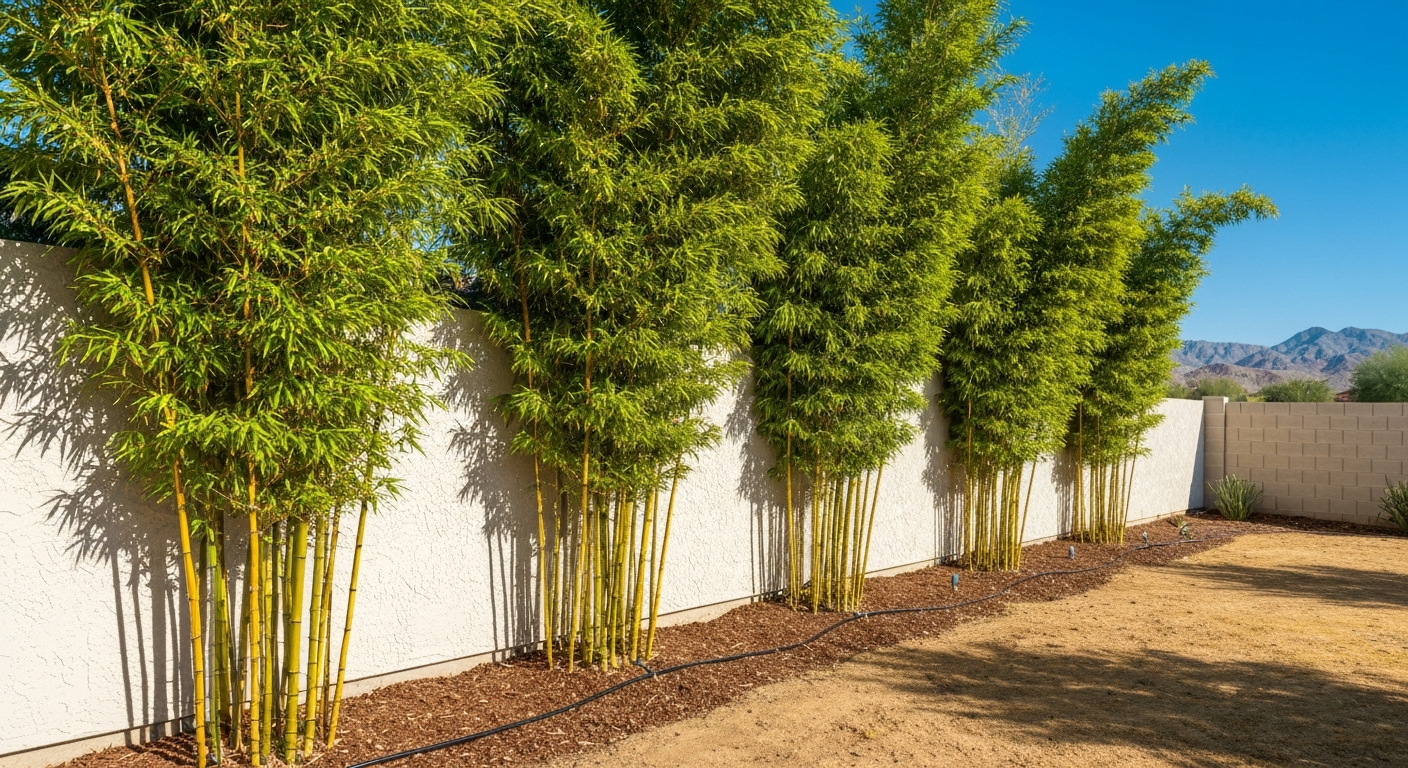
Yes, bamboo really does grow quickly, and in some cases it grows at a speed that seems almost unbelievable. The fastest-growing species can put on several feet in a single day under ideal conditions. But the honest answer is more nuanced than a single headline number: how fast your bamboo grows depends heavily on the species you're growing, where you live, how you're caring for it, and what stage of establishment it's in. This guide gives you the full picture.
Does Bamboo Grow Quickly? Timelines and How to Speed It Up
Marcus Hartwell
24 Mar 2026
How fast bamboo actually grows
The short answer: bamboo is one of the fastest-growing plants on Earth, but the numbers vary widely by species. Moso bamboo (Phyllostachys edulis), widely regarded as the speed champion, can grow more than 20 meters tall in a single growing season, typically completing that growth sprint in roughly 45 to 60 days. During peak growth, individual shoots have been measured elongating at up to about 114.5 cm per day for the whole shoot, with individual internodes hitting maximum elongation rates around 11.8 cm per day when the internode is between 6 and 18 cm long. One older study cited Phyllostachys reticulata reaching shoot elongation rates as high as 120 cm per day.
In practical, backyard-scale terms, here's what realistic timelines look like across the growth stages:
| Timeframe | What to Expect |
|---|---|
| Per day (peak growth season) | Fast species: 30–90 cm/day at peak; average garden bamboo: 2–10 cm/day |
| Per week (active growing) | Fast species: 0.5–2 m; common garden varieties: 15–60 cm |
| Per season (one spring/summer) | A mature, established clump can produce full-height new culms in 45–60 days |
| First 1–3 years | Slower overall while rhizomes/roots establish; culm height increases year over year |
| Year 3–5 onward | Full growth potential kicks in; new shoots can approach species maximum height |
The key thing to understand is that bamboo doesn't grow like a tree, adding height and girth over many years. Each culm shoots up to its maximum height in one single season and never gets taller after that. Life-history descriptions often summarize this as bamboo culms emerging and then reaching full height within a single growing season, commonly around 3 to 4 months (instead of continuously adding height year after year like many trees) full height in one single season. The fast growth you've heard about happens in that spring shooting window, and only after the plant has spent years building up an underground energy reserve.
Why bamboo can grow so fast
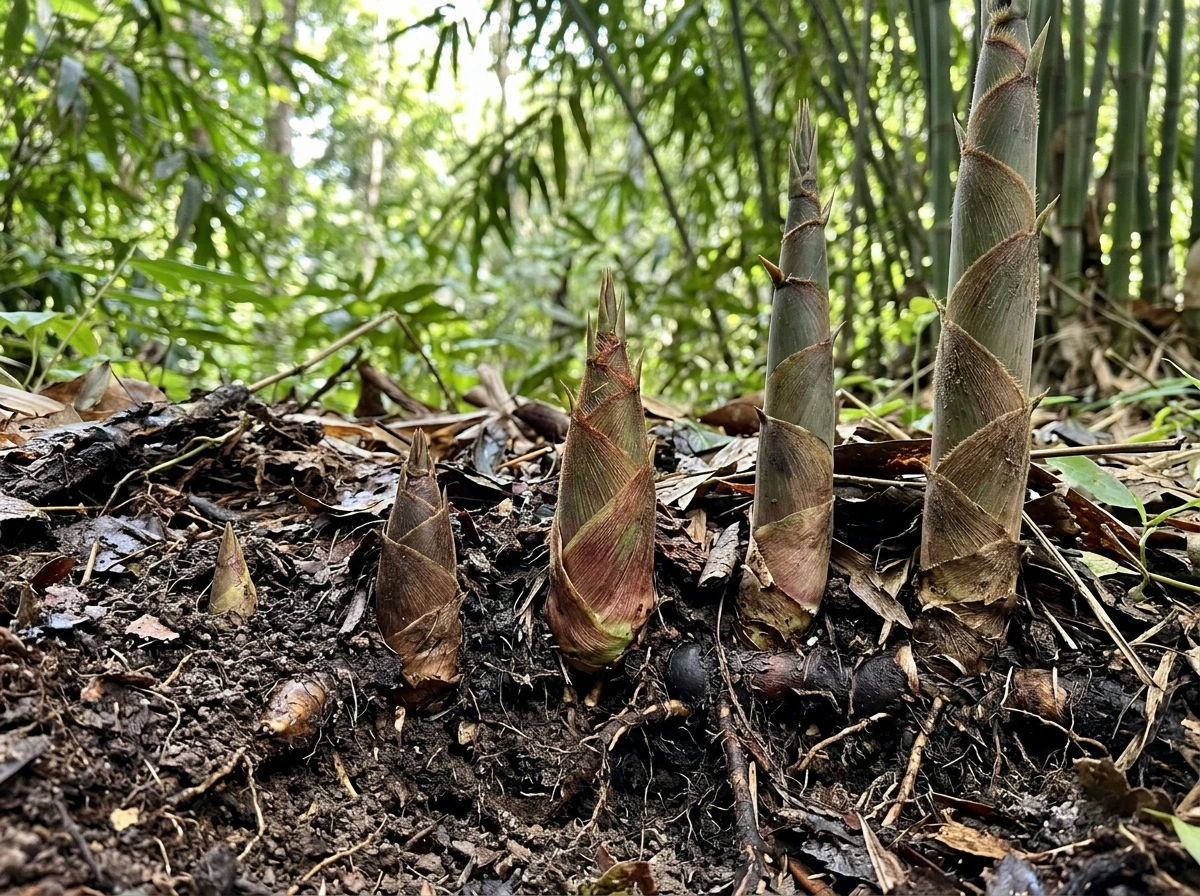
Bamboo's speed comes down to a biological strategy that's fundamentally different from most woody plants. When a bamboo shoot emerges from the ground, all the internodes (the segments between nodes) are already pre-formed and stacked inside the sheath. Growth happens by rapid cell elongation happening simultaneously across multiple internodes at once, not by generating new cells at a single tip the way most plants grow. It's essentially like extending a telescope: every segment stretches out at the same time.
This process is powered by the rhizome system underground. Before a shoot ever breaks the surface, the plant has been quietly storing carbohydrates and energy in its root network for years. When spring temperatures and moisture levels hit the right threshold, the plant releases that stored energy in a concentrated burst, fueling the rapid culm elongation you see above ground. The shoot essentially arrives pre-programmed with its final height already determined by the energy available in the rhizome at the time of emergence.
This is also why young, newly planted bamboo appears to grow slowly for the first couple of years. The plant is prioritizing underground rhizome development over above-ground height. Once the root system reaches a critical mass, everything changes. Old-time bamboo growers have a saying for this: 'First year sleeps, second year creeps, third year leaps.' It's not just a catchy phrase, it's an accurate description of the growth pattern.
How bamboo growth is actually measured
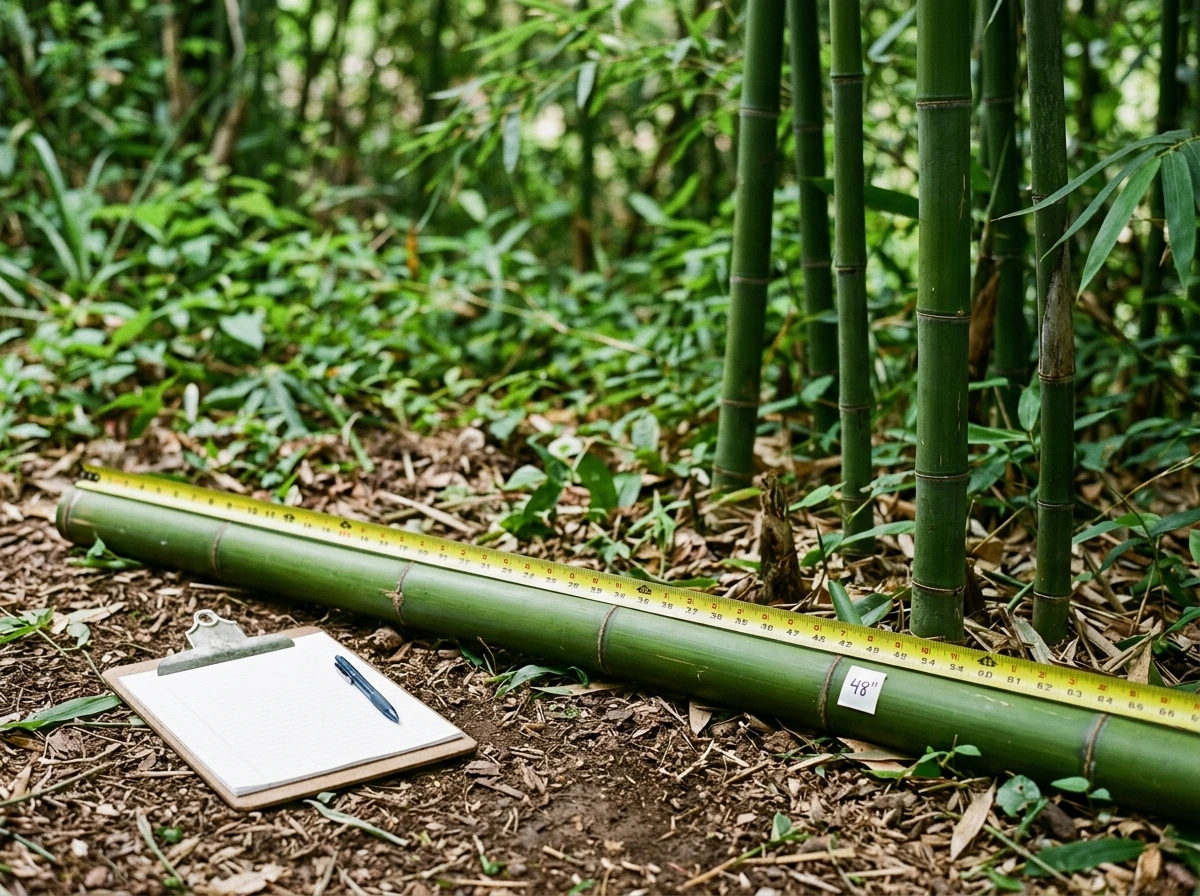
When people talk about bamboo growth rates, they're usually talking about two different things: rhizome spread and culm elongation. These are worth separating because they behave differently and matter for different reasons.
Rhizome growth (underground spread)
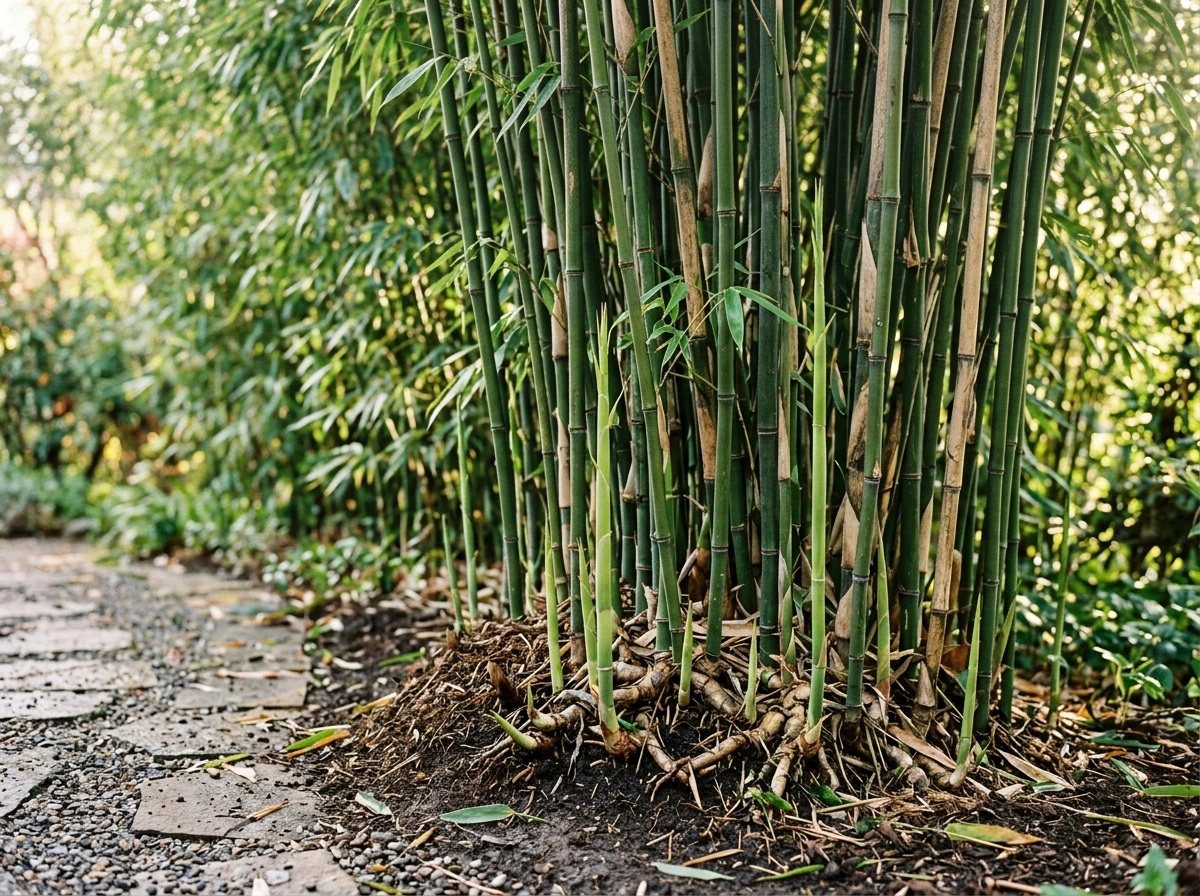
Rhizomes are the horizontal underground stems that either spread outward (in running bamboos) or expand in a tight arc (in clumping bamboos). Running types like most Phyllostachys species can spread their rhizomes several feet per year, which is what makes them invasive if uncontrolled. Clumping types like Fargesia expand their root network slowly, maybe a few inches to a foot per year. Rhizome growth is hard to observe directly but is the foundation for how much shooting energy the plant can generate each spring.
Culm elongation (above-ground height gain)
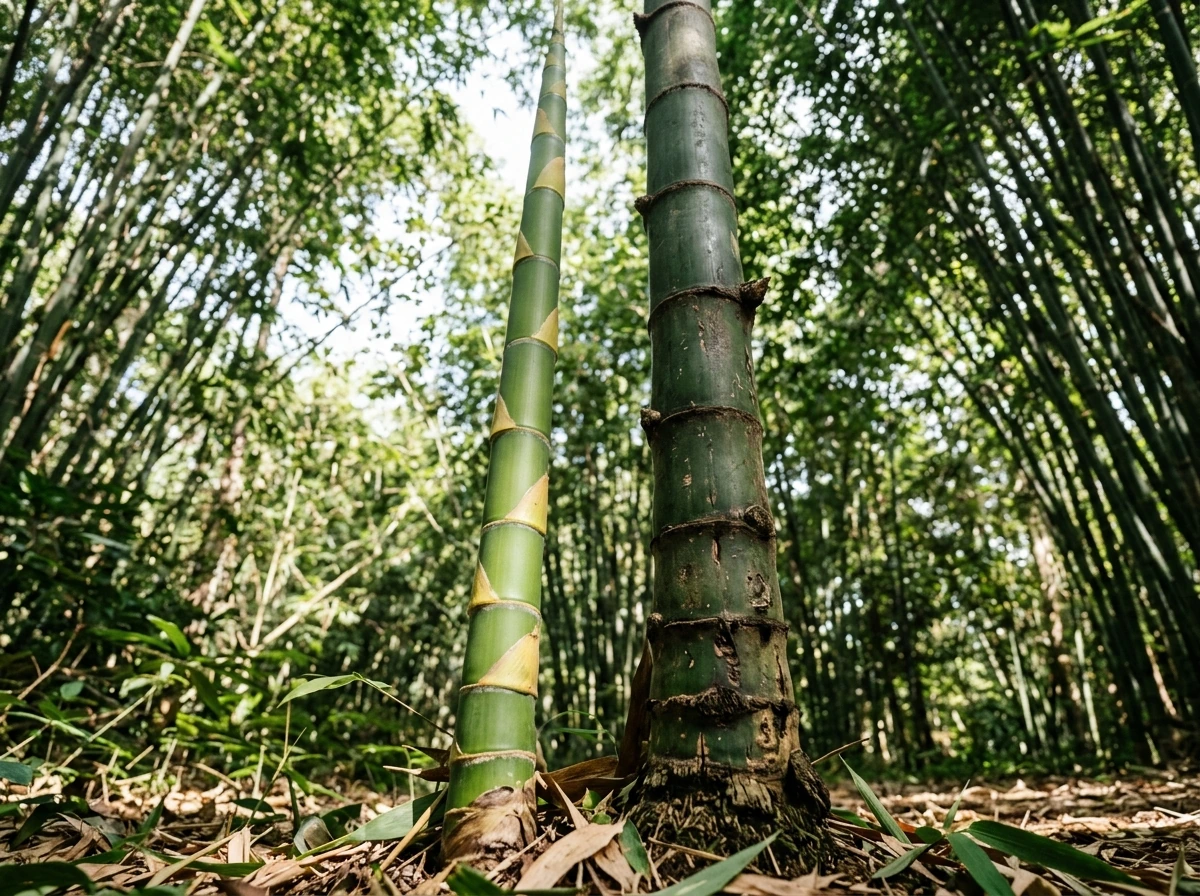
Culm growth is what most people are watching and measuring. In field studies of Moso bamboo, researchers tracked culm heights daily and found the rapid growth stage lasted about 40 days before culms hit their maximum height. During that window, growth is fastest in the middle of the elongation phase. Early on, newly emerged shoots grow slowly. Then they accelerate dramatically, peak, and taper off. If you're measuring your bamboo's progress in the garden, daily measurements during shooting season are genuinely worth doing, because the changes are visible and rapid.
What makes bamboo grow fast (the variables you can actually control)
Bamboo's growth ceiling is set by its genetics, but most plants in home gardens are running well below that ceiling because one or more conditions are limiting them. Here's what matters most:
Sunlight
Most fast-growing bamboo species want full sun, meaning at least 6 hours of direct sunlight per day. Shade-tolerant species like Fargesia will manage in partial shade, but even they grow faster with more light. If your bamboo is planted under a tree canopy or against a north-facing wall and seems sluggish, inadequate light is almost certainly part of the problem.
Water
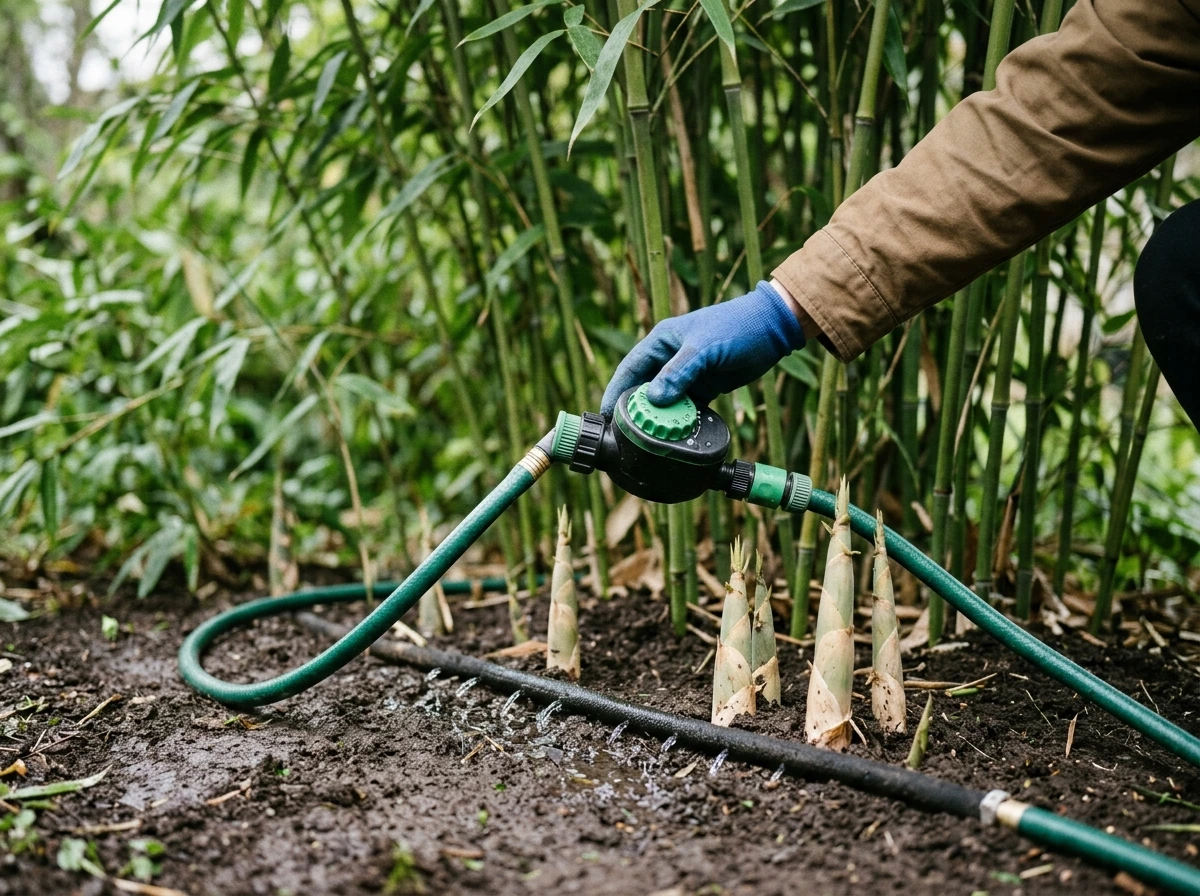
Bamboo needs consistent moisture, especially during the shooting season in spring. Deep watering two to three times per week during dry spells is far better than frequent shallow watering. The soil should stay moist but never waterlogged. Good drainage is critical because bamboo roots don't tolerate sitting in standing water. A simple finger test works: if the soil is dry 2 inches down, it's time to water.
Soil quality and drainage
Bamboo grows best in loamy, well-draining soil with a slightly acidic to neutral pH, roughly 5.5 to 7.0. Compacted clay soils throttle root development and slow everything down. If you're working with heavy soil, mixing in compost, aged wood chips, or perlite to improve drainage and aeration will make a noticeable difference. Bamboo grown in good loam consistently outperforms the same species grown in dense clay or nutrient-poor sandy soil.
Fertilization and nitrogen
Nitrogen is the single most important nutrient for bamboo growth. A high-nitrogen fertilizer applied in early spring, just as temperatures warm and before shoots emerge, gives the plant the fuel it needs for that shooting burst. Bamboo HQ recommends a spring “fuel the growth flush” approach, noting that nitrogen-rich feeding is the most visible driver of bamboo growth response. A balanced slow-release fertilizer mid-summer supports rhizome development. Avoid heavy fertilizing in fall, which can push soft growth that gets damaged by frost. For most garden bamboos, an application of a lawn-type high-nitrogen fertilizer (like a 30-0-4 or similar) in March or April is a simple, effective approach.
Temperature and humidity
Bamboo shoots emerge when soil temperatures consistently hit around 55 to 65°F (13 to 18°C), depending on species. Warm, humid springs trigger the shooting season. Cool, late springs delay it. In climates with cold winters, the underground rhizomes survive but the plant may take longer to get going in spring. Tropical and subtropical climates (think Florida or coastal Texas) can support nearly year-round growth in some species, while temperate zones see growth concentrated in a spring-to-summer window.
How to make your bamboo grow faster at home
These are the practical steps that consistently move the needle. Do these right and you'll see a real difference, especially starting in year two or three of a planting.
- Plant in the ground if at all possible: Container-grown bamboo is restricted by root volume and dries out faster. Ground planting allows rhizomes to spread and build the underground energy bank that powers fast culm growth.
- Choose the right spot: Full sun, shelter from strong drying winds, and proximity to a water source. Wind desiccates leaves and stresses the plant, slowing growth.
- Amend your soil before planting: Mix compost and organic matter into the planting hole generously. You're investing in the root environment for the next decade.
- Water deeply at planting and during the first growing season: New transplants need frequent watering for the first 6 to 12 months to overcome transplant shock and establish roots. This is the most common place where people underperform.
- Mulch heavily: Apply 3 to 4 inches of wood chip or straw mulch around the plant, kept a few inches from the culm base. This retains moisture, moderates soil temperature, and feeds soil biology as it breaks down.
- Fertilize in early spring with a high-nitrogen product: Time it to just before or as shoots begin to emerge, typically late February to April depending on your climate.
- Remove weak or damaged culms: Cutting out thin, weedy culms redirects the plant's energy toward producing larger, faster culms the following season.
- Be patient with new plantings: Year one growth is almost always underwhelming. That's normal. Don't over-fertilize to compensate; you risk burning roots on an already-stressed plant.
A few things to avoid: Don't plant bamboo in a spot that floods or stays soggy. Don't cut new shoots that are actively elongating thinking it will stimulate more growth; it won't, it just removes a culm. Don't plant a tropical species in a climate that regularly freezes hard, and don't expect a clumping species to produce a dense screen as quickly as a running type will.
Growth speed by species and type (clumping vs running, and where you live)
Not all bamboo grows at the same pace, and one of the biggest mistakes new growers make is picking the wrong species for their climate. Here's how the major categories compare:
| Type | Example Species | Typical Annual Height Gain | Spread Speed | Best Climate |
|---|---|---|---|---|
| Running (monopodial) | Phyllostachys edulis (Moso), P. aureosulcata | 2–10+ m per season at maturity | Aggressive; several feet/year | Temperate (USDA zones 5–10) |
| Running (monopodial) | Phyllostachys nigra (Black bamboo) | 1–3 m per season at maturity | Moderate spread | Temperate/mild (zones 7–10) |
| Clumping (sympodial) | Fargesia murielae, F. robusta | 0.3–1 m per season | Slow; inches/year | Cool temperate (zones 4–9) |
| Clumping (sympodial) | Bambusa oldhamii | 3–6 m per season at maturity | Slow spread, tall culms | Subtropical/tropical (zones 9–12) |
| Indoor/container | Fargesia, small Phyllostachys | Much slower than ground-planted | Contained by pot | Any climate indoors |
Running bamboos are the speed demons of the bamboo world. They're what you're picturing when you imagine bamboo shooting up several feet in a week. But they require containment (root barriers or regular rhizome pruning) or they'll spread far beyond where you want them. Clumping bamboos are better behaved and often more cold-hardy, but they grow significantly more slowly both in height and spread. For detailed growth timelines by specific species, there's more to dig into on questions like how fast black bamboo grows and how fast bamboo grows in particular regions like Florida or Texas, where climate factors shift the numbers considerably.
Location matters enormously. A Phyllostachys species that reaches 8 meters in coastal Japan may only reach 4 to 5 meters in the colder, drier interior of the United States. Conversely, subtropical climates extend the growing season and can dramatically increase annual growth totals compared to temperate zones.
Why your bamboo isn't growing fast (and what to do about it)
If your bamboo seems stuck or disappointingly slow, the problem almost always falls into one of these categories. Work through this list honestly before assuming something is wrong with the plant itself.
It's still in the establishment phase
This is the most common reason. If your bamboo is less than two to three years in the ground, it is almost certainly still prioritizing rhizome development underground. The aerial parts may look unchanged while significant root expansion is happening below. Give it time and keep up with watering and feeding. You should see a noticeable jump in culm height in year two or three.
The plant is in too much shade
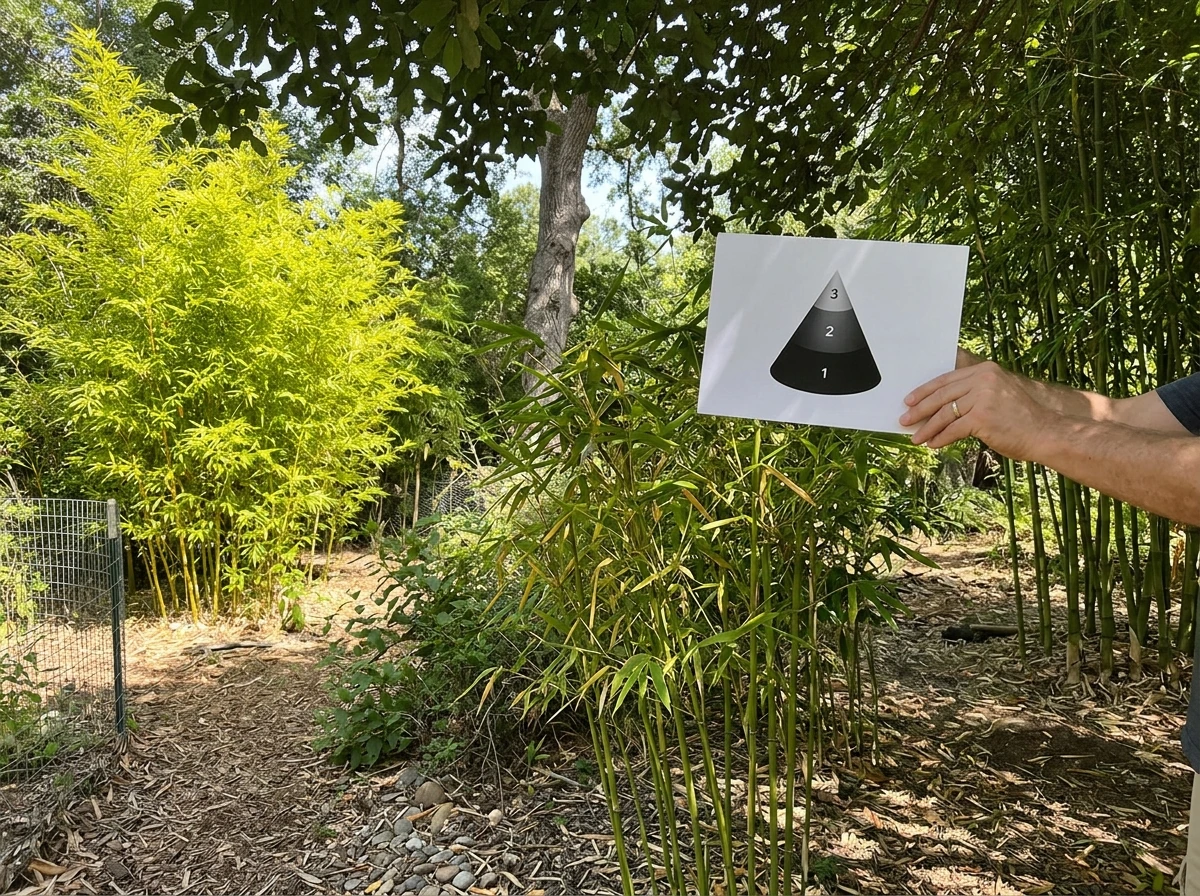
Check your sun exposure honestly. If your planting site gets less than 4 to 6 hours of direct sun per day for a sun-loving species, that alone will halve or more the growth rate. Consider whether the position can be improved or whether transplanting to a sunnier spot makes sense.
Inconsistent or inadequate watering
Bamboo that dries out repeatedly between waterings won't reach its growth potential. During the shooting season especially, consistent soil moisture is non-negotiable. If you're relying on rainfall and your area has had a dry spring, supplement with irrigation. Check soil moisture at 2 to 3 inches depth; if it's dry, water thoroughly.
Poor soil or drainage problems
If water pools around your bamboo after rain or the soil stays muddy for days, your drainage is restricting root health and growth. You may need to amend the soil with coarse grit and compost or consider raised planting to get the root zone above the waterlogged layer.
No fertilizer, or wrong timing
Bamboo in nutrient-poor soil without supplemental feeding will grow slowly and produce thin culms. A spring nitrogen feed is your single highest-leverage action. If you've never fertilized, start this spring and compare the shooting response to previous years.
Wrong species for your climate
A Moso bamboo planted in zone 6 will survive but may not thrive the way it would in zone 8 or 9. A tropical Bambusa species planted where winter temperatures drop below 20°F will be fighting for survival rather than growing. Match species to your USDA hardiness zone and local humidity levels. If you're uncertain about what grows best in your region, this is worth researching specifically, because the species choice has more impact on growth speed than almost any cultural practice.
Container-bound roots
Bamboo in a pot that's too small will circle its roots and stall. If you're growing in containers, size up to a pot at least 18 to 24 inches in diameter and depth, and repot every one to two years as the root ball expands. Expect container bamboo to grow noticeably slower than the same species in the ground regardless of care.
The bottom line is this: bamboo is genuinely one of the fastest-growing plants you can grow, but it has to be the right plant in the right place with the right care. Give it full sun, consistent water, good soil, and a spring nitrogen boost, and you'll start seeing the kind of growth that made bamboo famous. Shortchange any one of those factors and you'll wonder what all the fuss was about.
FAQ
If I planted bamboo today, when will it start shooting up fast?
Most bamboo shows slow or minimal above-ground change for the first 1 to 2 years because energy and carbohydrates go into rhizome growth. Plan for the first visible “shooting” jump in year two or three, even if the plant is alive and green.
Does bamboo grow faster in summer or in spring?
The dramatic height increase happens during the spring shooting window, when soil temperatures rise and moisture is available. In many regions, once shoots emerge and culms reach their max height, later months mostly add growth through new culms and rhizome expansion rather than continuing vertical stretching.
How can I tell whether my bamboo is growing from rhizomes instead of stalled from a problem?
Check for signs below the surface by looking for new shoots emerging later than you expect, and for increasing clump thickness or rhizome activity around the plant. If the bamboo is under 3 years old, lack of height alone usually indicates underground work, not necessarily poor health.
Should I water more often during shooting season to speed growth?
More frequent shallow watering often underperforms. For faster shooting, prioritize deep watering that keeps soil consistently moist at the root depth, roughly 2 to 3 inches down, without waterlogging.
Will fertilizer make my bamboo shoot taller immediately?
Fertilizer supports the ability to shoot, but you usually will not see instant height gains. Apply early spring nitrogen as temperatures warm, then let the plant convert that stored fuel into shoot growth during the next shooting cycle.
Can I prune or cut emerging shoots to get more shoots and faster growth?
Avoid cutting shoots that are actively elongating. Removing them removes the culm and does not increase overall shoot speed, it just reduces the harvestable growth you were waiting for.
Is it possible for bamboo to be “invasive” even if it is growing slowly?
Yes. Running types can spread underground rhizomes even when above-ground growth seems modest, especially if conditions delay shooting. Containment planning (root barrier or regular rhizome control) should be done before the plant is established.
Do clumping bamboo varieties ever shoot fast like running types?
They can still produce a spring burst, but clumping bamboos generally do not spread or fill as quickly as running types. If you need a fast, dense screen, choose a clumping species known for quicker maturity in your climate rather than assuming all bamboos behave the same.
My bamboo got taller but the culms are thin. Does that mean it is not growing quickly enough?
Thin culms usually indicate limiting factors like low nitrogen, poor soil structure, or inconsistent water rather than “too slow” timing. A spring high-nitrogen feed and improved drainage or soil aeration often produce thicker culms over subsequent shooting seasons.
Why did my bamboo not shoot when neighbors’ bamboo did?
Common causes include cooler soil (late spring), less direct sun than expected, or species mismatch with your local conditions. Also check whether your irrigation or rainfall was enough to keep the root zone moist when shoots should have started.
Will bamboo in a pot grow as quickly as bamboo in the ground?
Usually no. Container bamboo is more restricted, so it commonly grows noticeably slower even with good care. Use a larger pot (at least 18 to 24 inches in diameter and depth) and expect slower shoot performance than in-ground plants.
At what soil temperature does bamboo typically start shooting in spring?
Shooting often begins when soil temperatures consistently reach about 55 to 65°F (13 to 18°C), with species and local conditions shifting the exact timing. Cooler springs delay the onset even if the plant is established.
Next Article
Can Bamboo Grow in Las Vegas? Guide to Success in Desert
Yes, bamboo can grow in Las Vegas with the right species, irrigation, shade, and containment; step-by-step planting and保护