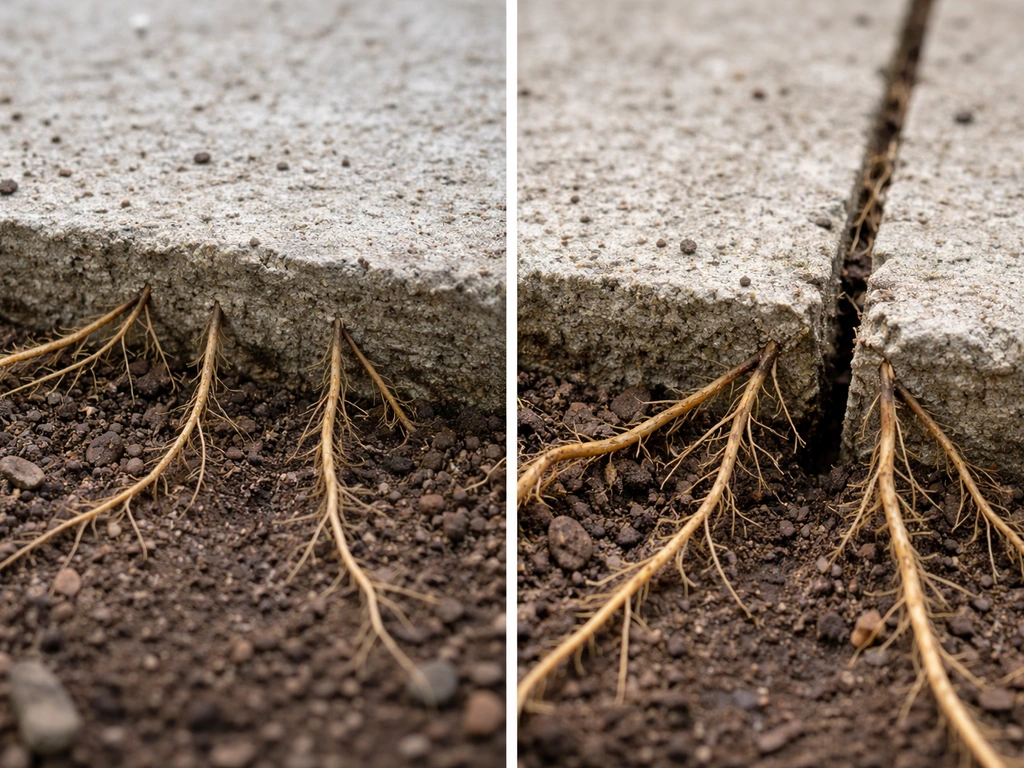
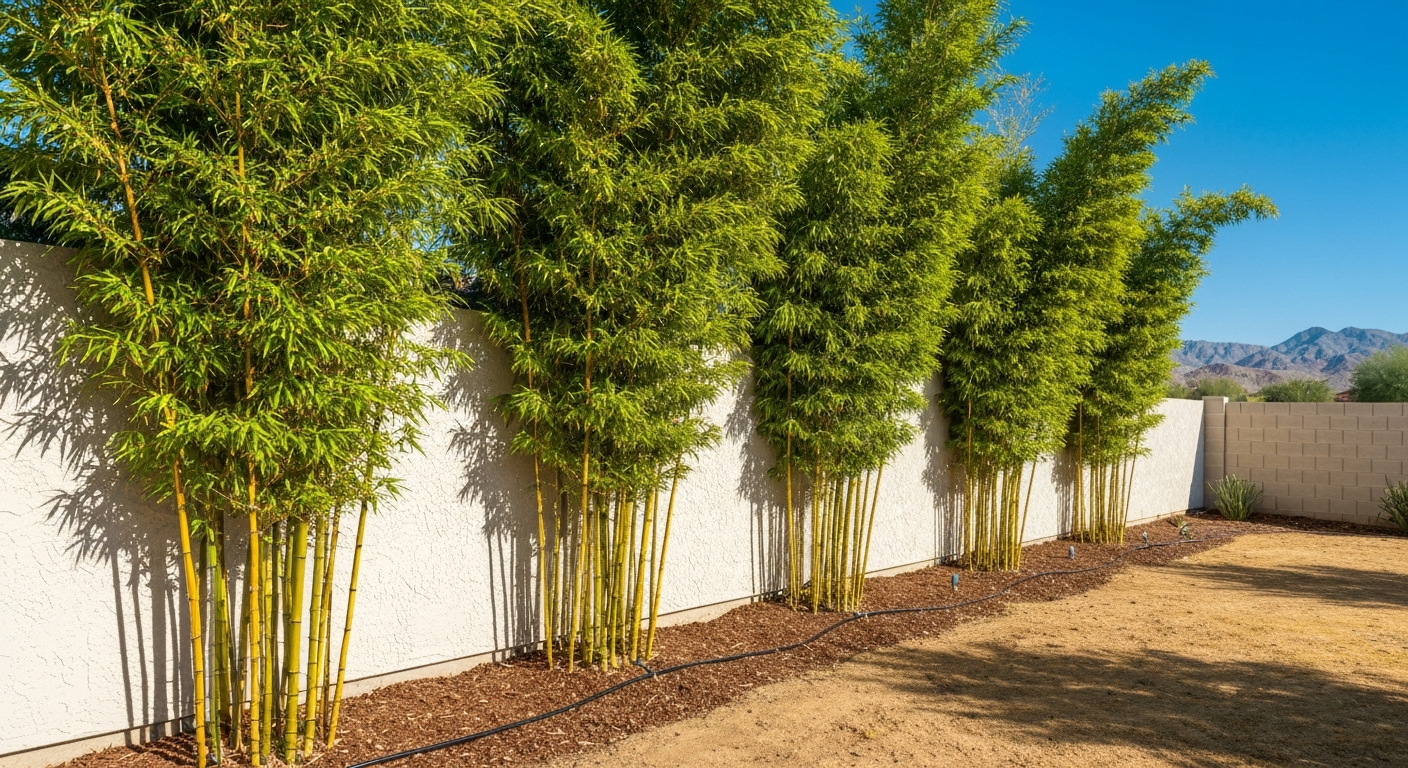
So why does bamboo have such a fearsome reputation around driveways, patios, and foundations? Because real-world concrete almost never stays perfectly solid and intact forever. Concrete cracks, joints open up, edges chip, and drain pipes develop gaps. Bamboo rhizomes are extraordinarily good at finding and exploiting those openings. That's where the real risk lives, and that's what this guide is about.
Where bamboo actually gets through: cracks, joints, gaps, and debris
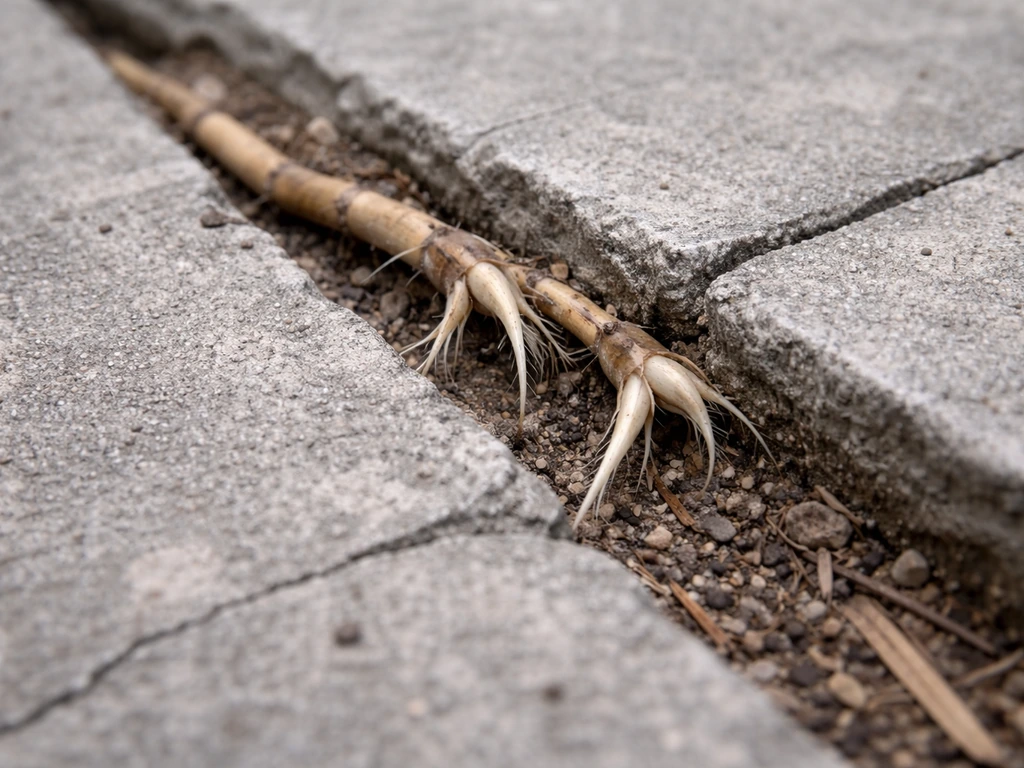
Fairfax County's guidance on running bamboo is direct about this: roots can push through brickwork, drains, cavity walls, and patios, specifically by exploiting cracks. That word "exploiting" is accurate. Bamboo rhizomes don't tunnel like a mole. They spread horizontally through the soil, and when they encounter a gap, joint, or soft spot in a hard surface, they follow the path of least resistance straight through it. Over time, as the rhizome thickens inside the crack, it can widen the gap further, which accelerates damage.
The most vulnerable spots on any property are expansion joints in driveways and patios (those intentional gaps every few feet), the edge where a concrete slab meets soil, mortar joints in older brickwork, drainage pipe connections and sleeves, and any spot where tree roots have already started separating concrete from its base. If you have a mature bamboo grove within 15 to 20 feet of any of these, you should be paying close attention.
- Expansion joints and control joints in concrete patios, sidewalks, and driveways
- The soil-to-slab edge where concrete meets the ground
- Mortar joints in brick walls, retaining walls, and pavers
- Drain pipe connections, underground sleeves, and conduit gaps
- Pre-existing cracks from freeze-thaw cycles or settling
- Areas where old tree roots have already undermined the concrete base
Foundations deserve special mention. A modern poured concrete foundation in good condition is unlikely to be penetrated by bamboo rhizomes alone. But older foundations with mortar joints, cracks from settling, or areas where waterproofing has failed are a different story. If your home is older and you're growing running bamboo near the foundation, that's a combination worth taking seriously.
How fast bamboo roots spread toward concrete: timelines and variables
This is where the timeline question gets real. Running bamboo rhizomes can spread outward by 15 feet or more in a single growing season under good conditions. NC State Extension also notes that running bamboos can spread up to 15 feet a year. Alabama Cooperative Extension specifically calls out golden bamboo and other large species as capable of spreading 15 feet per year. Bamboo Garden's FAQ cites the same extreme-case figure. That's not a slow creep, that's your bamboo reaching a new concrete surface in one or two seasons if it's planted nearby.
Aboveground shoot growth is even faster during peak sprouting season, with documented rates of 10 to 80 cm per day and some peer-reviewed sources citing maximum culm growth up to 120 cm per day for the fastest running species. Underground rhizome extension follows a similar seasonal burst pattern, with research citing 75 to 1,000 mm of rhizome growth per day during peak growing season. Those numbers vary enormously based on species, soil conditions, moisture, and temperature.
The variables that determine how fast rhizomes spread toward your concrete are species type (running vs. clumping, covered next), soil moisture (wet, loose soil accelerates spread significantly), temperature (warm climates like the Southeast US or coastal California see faster year-round growth than cooler northern climates), and how established the bamboo is. A two-year-old plant behaves very differently from a ten-year-old grove with a dense, established rhizome network. In warm, moist climates with running bamboo, you could realistically see rhizomes reaching a driveway edge within one to two seasons if the plant is mature and the concrete is within 15 feet.
Clumping vs. running bamboo: which types actually pose the risk
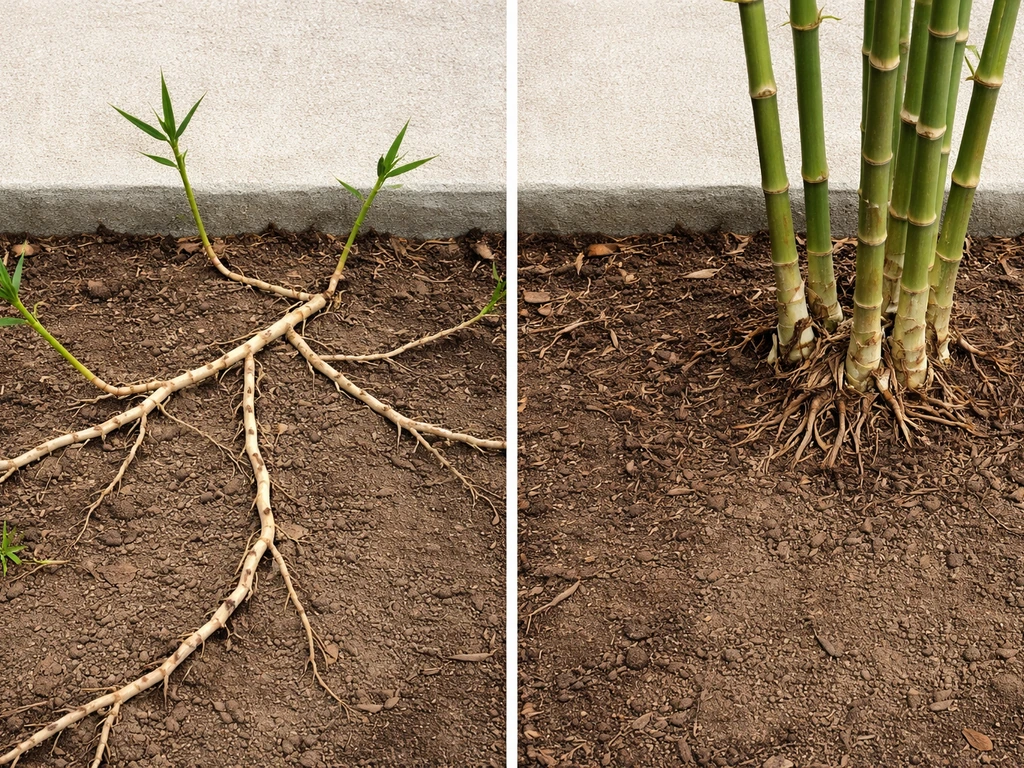
Not all bamboo is equally aggressive near hard surfaces, and this distinction is probably the most important thing to understand before you panic or plant. The two main rhizome types are monopodial (running) bamboo and sympodial (clumping) bamboo, and their behavior near concrete is genuinely different.
| Feature | Running (Monopodial) | Clumping (Sympodial) |
|---|
| Rhizome habit | Spreads horizontally, long runners | Stays tight to the base, short rhizomes |
| Annual spread | Up to 15+ feet per season | A few inches to a couple of feet |
| Risk to nearby concrete | High, especially within 20 feet | Low to moderate at close planting distance |
| Common examples | Golden bamboo (Phyllostachys), Arrow bamboo | Fargesia, Bambusa, Dendrocalamus |
| Control difficulty | High, requires active management | Relatively easy to manage |
| Best approach near structures | Root barrier or avoid entirely | Generally safe with a few feet of clearance |
Running bamboo is the category responsible for almost every concrete horror story you'll read. Species like golden bamboo (Phyllostachys aurea) and arrow bamboo send out long, fast-moving rhizomes that can travel under driveways, through expansion joints, and into foundation cracks before you've noticed a problem. Clumping bamboo, by contrast, grows from a tight central mass. Its rhizomes are short and don't wander far. A clumping variety like Fargesia planted three to four feet from a patio poses very little practical risk. If you're considering new bamboo near a structure, clumping types are almost always the right choice.
The challenge is that many homeowners inherit running bamboo they didn't plant, or were sold a running variety without being told what it was. If you're not sure what you have, check whether new shoots pop up several feet away from the main clump. If they do, you have a runner, and you should treat it accordingly.
What to do today: inspect, measure, and contain
If you're reading this because you have bamboo growing near concrete right now, here's your practical starting point. Don't wait until you see shoots poking through a crack. By then, the rhizome has been under the slab for a while and removal is harder.
- Measure the distance from your bamboo's outermost culms (canes) to the nearest concrete surface. If it's under 15 feet and you have running bamboo, treat this as an active concern.
- Walk every joint, crack, and edge of nearby concrete and look for small shoots, soil disturbance, or raised sections. Early signs are subtle, often just a slight heave or a hairline crack that wasn't there before.
- Probe the soil along the path between the bamboo and the concrete with a long screwdriver or soil probe. If you hit rhizomes running in that direction, you'll feel them as firm, woody horizontal roots a few inches below the surface.
- If you find rhizomes already heading toward or under a structure, cut and remove them immediately. Use a sharp spade, sinking it straight down around the grove perimeter to sever rhizomes, then pull out the wayward sections by hand. This is rhizome pruning and it works well when done consistently.
- Document what you find with photos and measurements. This helps you track whether the problem is progressing and makes it easier to explain if you're dealing with a neighbor's bamboo or planning a professional assessment.
For immediate containment when rhizomes are already moving toward concrete, trenching is your fastest option. Dig a trench about 12 inches deep along the path between the bamboo and the structure, cut any rhizomes you find, and either install a barrier in that trench or fill it temporarily while you plan a more permanent solution. Cutting rhizomes without removing them doesn't fully solve the problem, the cut ends can re-root, so pull them out.
Root barriers that actually work, and the mistakes that let bamboo through anyway
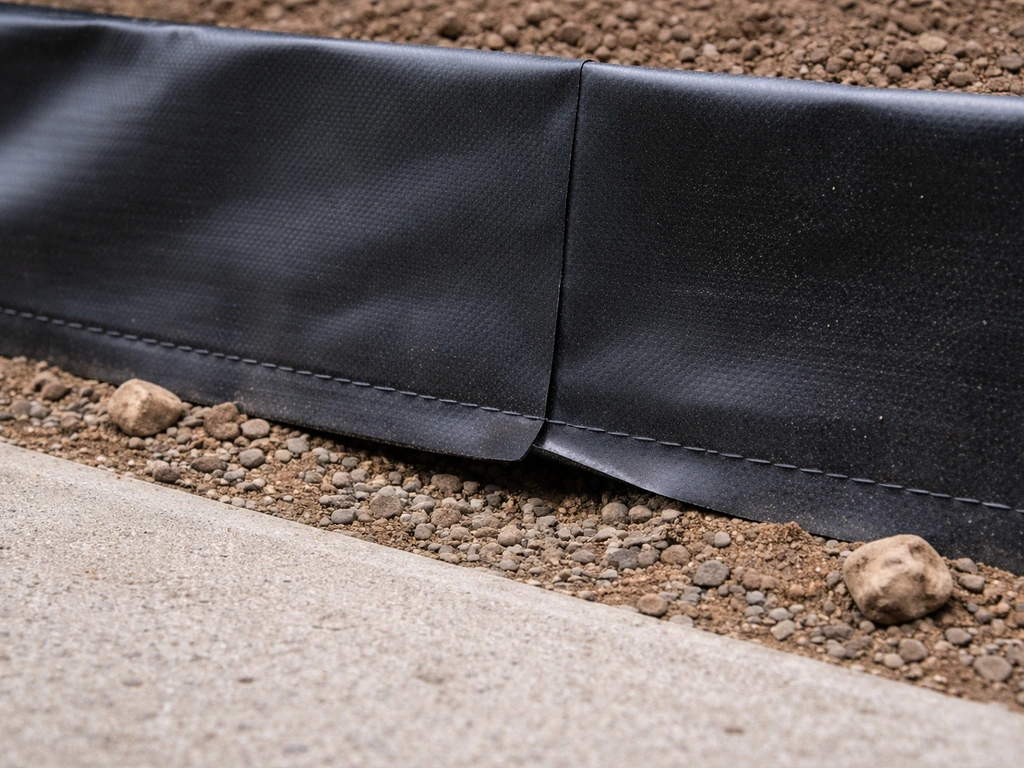
A properly installed root barrier is the most reliable long-term solution for keeping running bamboo away from concrete. The key word is "properly." I've seen a lot of barrier installations that give people a false sense of security because they got the depth, material, or seaming wrong.
The material that works is high-density polyethylene (HDPE) geomembrane. Products like DeepRoot's BB series specify a wall thickness around 0.30 inches and a depth of 24 to 36 inches (the BB24 is 24 inches deep, the BB36 goes to 36 inches). The smooth surface of HDPE is important because it diverts rhizomes downward rather than giving them anything to grip. Thin plastic sheeting, landscape fabric, and corrugated plastic do not work. Bamboo can also grow through plastic when there are seams, tears, or gaps that rhizomes can exploit rather than when the plastic is truly intact can bamboo grow through plastic. Rhizomes will punch through them or find gaps at the seams.
Depth matters a lot. In most temperate climates, 24 inches is a reasonable minimum, but in warmer regions where bamboo roots run deeper, 36 inches gives you more security. The barrier should be installed vertically, creating a complete perimeter around the bamboo grove rather than just a line between bamboo and structure.
The seam is where most DIY barrier installations fail. There's some disagreement in the industry about overlap length. Bamboo Garden recommends only 2 to 3 inches of overlap at seams, warning that longer overlaps create a gap that rhizomes can slip between. Bamboo Sourcery recommends 12 inches of overlap. Rhizome Barrier Supply recommends a 4-foot overlap to form a complete circle. The consistent message across all these sources is that the seam is the weak point. Whatever overlap you use, press the joint together firmly and orient it so the overlapping section faces away from the bamboo (so pressure pushes the seam closed rather than open). Consider using waterproof tape or bamboo barrier staples at the joint.
The other critical mistake is not leaving a lip above grade. The barrier should extend 2 to 3 inches above the soil surface. Rhizomes are opportunistic and will go over the top of a barrier buried flush with the ground. LeBeau Bamboo's planting guide specifically warns that rhizomes can escape over the top if you're not monitoring regularly, recommending at least two inspections per year, once in late spring after the main shooting season and once in early fall.
Preventing future spread near foundations, driveways, and patios
If you don't have a bamboo problem yet but are planning to plant, or you want to make sure a recently contained problem doesn't come back, prevention is simpler and cheaper than remediation. Here's how to set yourself up for long-term success.
First, choose clumping bamboo if you're planting within 10 to 15 feet of any hard surface. This single decision eliminates most of the risk. If you want a running species for privacy or aesthetics, plan your barrier installation before you plant, not after the bamboo is established. Installing a barrier around an existing mature grove is significantly harder than installing one at planting time.
Second, seal your concrete. Any expansion joint, crack, or gap near bamboo should be filled with a flexible polyurethane or epoxy sealant. This doesn't stop rhizomes from spreading underground, but it removes the entry points they'd otherwise exploit. Reseal every two to three years, since freeze-thaw cycles and soil movement will reopen gaps.
Third, establish an annual rhizome-pruning routine even if you have a barrier installed. Tradewinds Bamboo Nursery recommends using a sharp spade or rhizome cutter to work around the perimeter of the grove each year, cutting any rhizomes that have extended toward the boundary. This keeps the root network from building pressure against the barrier and dramatically reduces the chance of a breach. Do this in late fall or early spring before new growth starts.
Fourth, keep an eye on neighboring properties if you live somewhere with a lot of ornamental bamboo, like the mid-Atlantic, Southeast, Pacific Northwest, or parts of California. Running bamboo doesn't respect property lines. Fairfax County actually has formal guidance and enforcement expectations for running bamboo precisely because neighbor-to-neighbor spread is such a common issue. If your neighbor has an uncontrolled running bamboo grove, the rhizomes are your problem too, whether the plant is on your land or not.
Bamboo's behavior near other materials follows similar principles to what you've read here. The question of whether bamboo can push through metal, plastic sheeting, or landscape fabric depends on the same logic: intact, solid barriers resist penetration while gaps, seams, and weak points invite it. Whether can bamboo grow through metal or not, the real issue is always whether there are openings or weak points it can exploit can bamboo grow through a metal surface. The same rhizome habits that make running bamboo dangerous near concrete make it a concern near any below-grade structure with openings.
The bottom line is that bamboo near concrete is a manageable problem, not an inevitable disaster. If you are also worried about indoor conditions, bamboo can develop mold in damp areas, especially when it stays wet and unventilated bamboo grow mold. Running bamboo requires active management. Clumping bamboo near concrete, with a few feet of clearance, is rarely a problem at all. If you inspect regularly, prune rhizomes annually, install a proper HDPE barrier if needed, and seal any concrete openings, you can grow bamboo near hardscapes without losing the battle.