No, bamboo does not grow faster on mud in Minecraft. It grows at the same speed on mud, dirt, and sand. The block type you plant bamboo on affects where it can be planted, not how quickly it grows. That is the direct answer, and the rest of this guide will show you exactly why that is, how bamboo growth actually works, and how to set up a fast, efficient farm regardless of which valid block you use.
Does Bamboo Grow Faster on Mud in Minecraft? Tests

Marcus Hartwell
12 Apr 2026
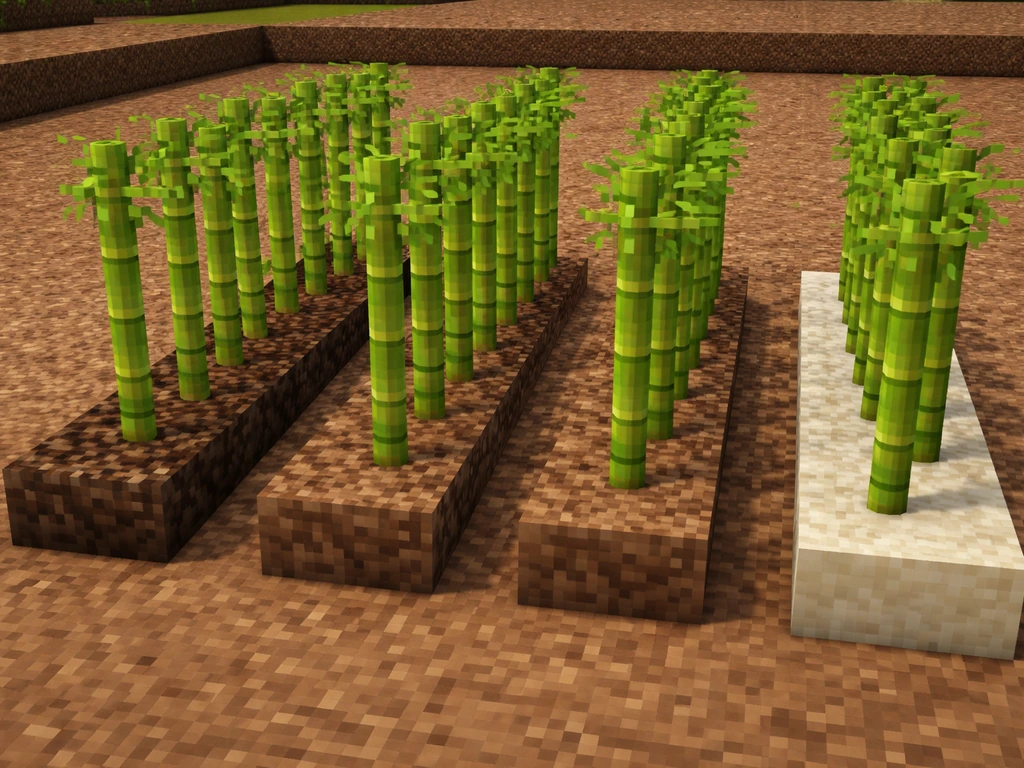
Bamboo growth on mud, dirt, and sand: can you even plant it there?
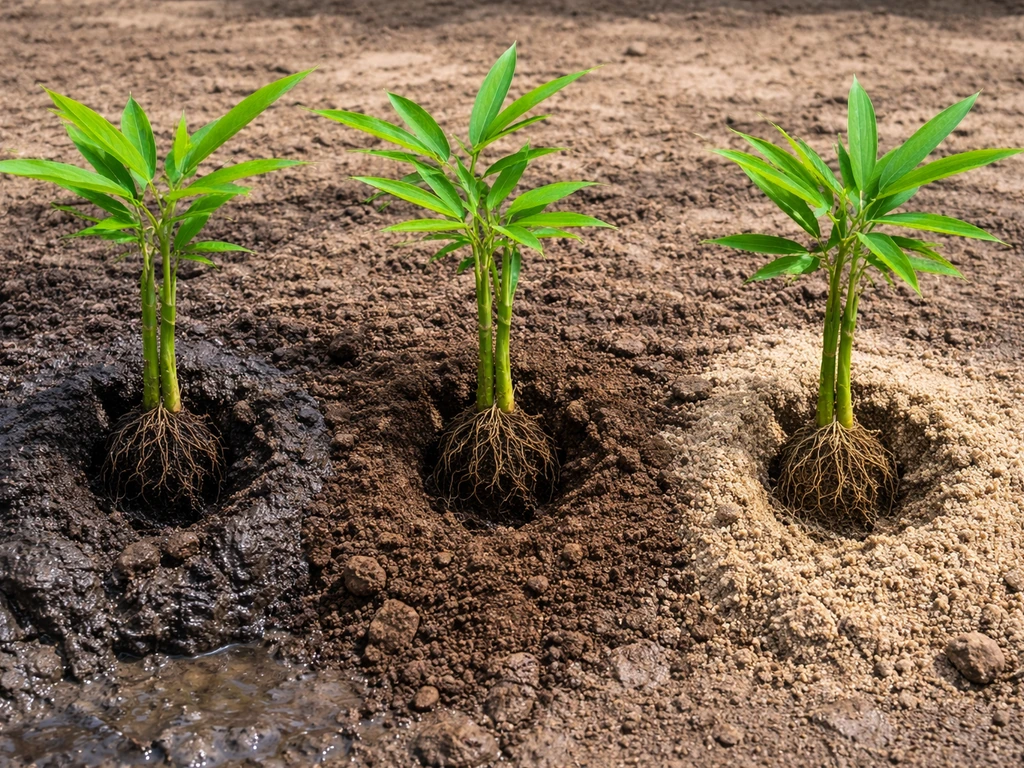
Yes, bamboo can be planted on all three. According to the Minecraft Wiki, valid placement blocks for bamboo include mud, dirt, sand, red sand, gravel, and several other block types. So if you have been wondering whether mud is even a legal surface, the answer is yes. Bamboo will snap into place on a mud block just as readily as it does on dirt or sand. There is no trick to it: just right-click the block with a bamboo item and it plants.
One thing worth knowing is what happens underneath the bamboo once it starts growing. When a bamboo sapling becomes a full bamboo plant, the game converts the block it is planted on into a 'blank" rel="noopener noreferrer">bamboo rooted' version of that block. So dirt becomes bamboo rooted dirt, sand becomes bamboo rooted sand, and so on. This is purely a cosmetic and mechanical tagging thing. It does not change the growth rate.
Does the soil block type actually affect bamboo speed?
It does not. Bamboo growth in Minecraft is driven entirely by the random tick system, not by which valid block the bamboo is sitting on. On average, at the blank" rel="noopener noreferrer">default random tick speed in Java Edition (which is 3), each bamboo plant grows roughly once every 4096 game ticks, which works out to about 204.8 seconds per growth stage. That timer is the same whether your bamboo is rooted in mud, dirt, or sand. The block below is just a foundation. It does not act as a growth multiplier or growth inhibitor.
This is a common misconception worth clearing up directly, because players often look for substrate-based optimizations the way you might in real-world gardening. In real life, soil quality absolutely affects bamboo growth rate. In Minecraft, the game simply does not model that. If you want to understand what bamboo grows fastest on in Minecraft, the honest answer is that no valid block gives you a speed advantage over any other.
Mud vs sand vs dirt: faster, slower, or exactly the same?
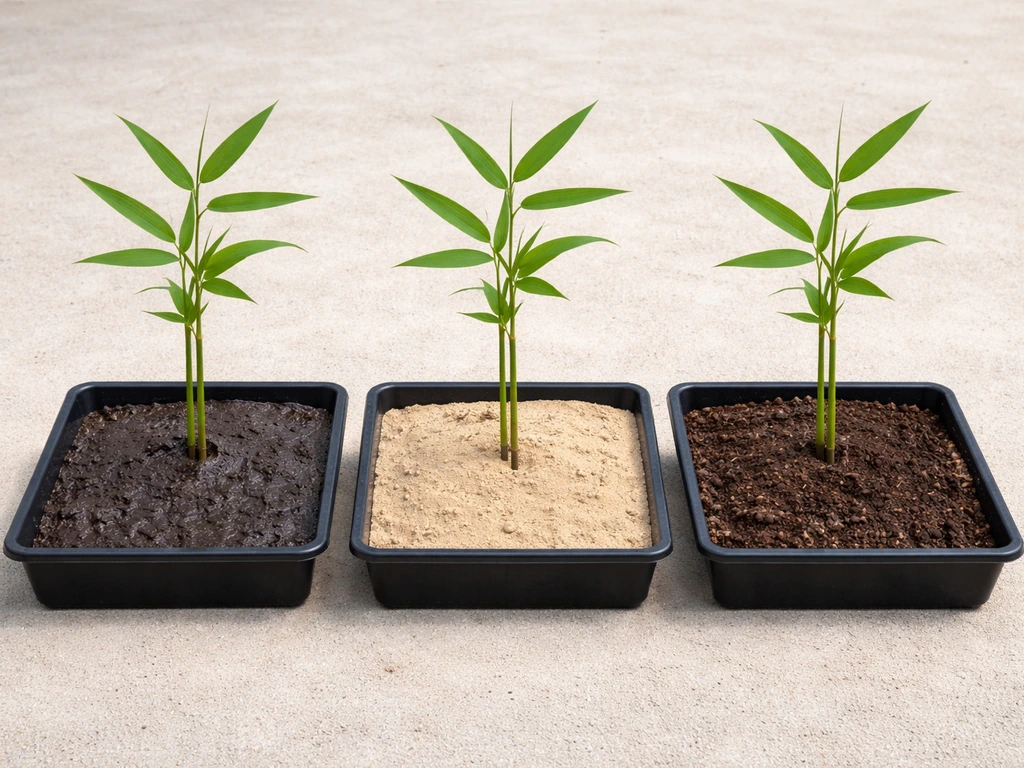
Exactly the same. Here is a direct comparison across the three most commonly questioned blocks:
| Block | Can bamboo be planted? | Growth speed vs dirt | Notes |
|---|---|---|---|
| Dirt | Yes | Baseline | Most common, converts to bamboo rooted dirt |
| Mud | Yes | Same as dirt | Valid in Java and Bedrock; no speed bonus |
| Sand | Yes | Same as dirt | Converts to bamboo rooted sand; no speed penalty |
| Red Sand | Yes | Same as dirt | Behaves identically to sand |
| Gravel | Yes | Same as dirt | Less commonly used but equally valid |
If you have seen claims online that mud is faster or that sand slows things down, those are myths. The random tick system does not discriminate between valid substrate types. The only thing that separates mud from dirt in a bamboo farm context is aesthetics and availability.
If you are specifically curious about which block bamboo grows fastest on in Minecraft, the practical answer is: any valid block you already have plenty of. Do not go out of your way to farm mud just because you think it might give you a growth edge. It will not.
How to set up a working bamboo farm
Setting up a bamboo farm is straightforward once you know the rules. Here is the layout I use and recommend:
- Choose your base block: dirt, mud, or sand all work equally well. Pick whichever is easiest to source in your world.
- Place bamboo saplings with at least one block of horizontal space between each plant. Bamboo can attempt to spread to adjacent valid blocks during growth ticks, so tight packing without spacing can cause unexpected spread.
- Make sure there is at least 16 blocks of open vertical space above each planting spot. Bamboo tops out at 12 to 16 blocks tall depending on the variant, and hitting a ceiling stops all upward growth.
- Ensure the top of each bamboo stalk has light level 9 or higher. This is a hard requirement. If the top of the plant is in shadow, the plant stops growing entirely, regardless of what block it is planted on.
- For automated harvesting, place pistons 1 or 2 blocks above the base to cut the bamboo and let it regrow from the stalk. A simple observer clock or hopper timer works well for triggering the pistons.
- Build your collection system: hoppers underneath or water streams funneling cut bamboo into a chest all work cleanly.
One thing I always check before calling a farm 'done' is the light situation. Bamboo farms in enclosed spaces are a frequent source of frustration because players block natural light without realizing it. If you are farming indoors, you need to actively add light sources at the top of the growth column. For players wondering whether bamboo can grow indoors in Minecraft, the answer is yes, but lighting is the thing that most commonly gets people.
What actually controls how fast bamboo grows
Since the block type does not matter, here is what actually does:
- Random tick speed (gamerule randomTickSpeed): In Java Edition, the default is 3. In Bedrock Edition, the default is 1. A higher value means more random ticks per chunk per game tick, which means faster growth. If your Bedrock bamboo farm feels painfully slow compared to a Java farm you have seen on YouTube, this is almost certainly why.
- Light level at the bamboo top: Must be 9 or above. This is the single most important environmental factor players overlook. No valid block in the world will make up for insufficient light.
- Chunk loading: Bamboo only receives random ticks if its chunk is loaded. If you are far away and the chunk is unloaded, the bamboo simply pauses. This is why farms near your spawn or base grow more consistently.
- Vertical clearance: If the bamboo top is blocked by a solid block, it stops growing. Check that your farm design does not accidentally create a ceiling.
- Adjacency and spreading: Bamboo can attempt to spread to adjacent valid blocks during a growth tick. This is not a speed boost for existing stalks, but it does expand the farm footprint over time if you leave open valid blocks nearby.
A lot of people also ask about water. Whether water makes bamboo grow faster in Minecraft is a fair question given how hydration affects crops like wheat. For bamboo specifically, water does not provide a growth speed bonus the way it does for farmland-dependent crops. Bamboo is not planted on farmland at all, so the farmland hydration mechanic does not apply.
Similarly, if you have ever considered building a bamboo farm in the Nether for a different playstyle, it is worth reading up on whether bamboo can grow in the Nether before you invest resources. The Nether has some unique constraints that affect where and how bamboo can survive.
Troubleshooting when bamboo won't grow or seems slow
If your bamboo is sitting there doing nothing, work through this checklist before assuming something is broken:
- Check the light level at the top of each stalk. Use a debug screen (F3 on Java) or a light-level overlay mod. If any stalk top is below light level 9, add torches, lanterns, or sea lanterns nearby.
- Check your edition and random tick speed. Bedrock's default of 1 makes bamboo grow noticeably slower than Java's default of 3. If you are on Bedrock survival and growth feels glacial, that is expected behavior. You can increase randomTickSpeed in a world where cheats are enabled.
- Confirm the chunk is loaded. Stand near the farm or set up a chunk loader if you want the farm to run while you are exploring.
- Look for ceiling obstructions. Even a single block directly above a stalk's maximum height will halt growth. Remove anything within 16 blocks above the planting surface.
- Check that the block below is actually a valid substrate. If you accidentally placed bamboo on, say, a stone block, it will not plant at all in most cases. Mud, dirt, and sand are safe choices.
- Verify the bamboo is not already at max height. A fully grown bamboo stalk will not grow taller and appears 'stuck.' If you are not harvesting it, nothing will appear to happen.
- Give it more time. At default Java random tick speed, roughly 204.8 seconds per growth stage is the average. Over a short observation window, variance in random ticks can make growth look inconsistent even when everything is set up correctly.
A quick test to confirm growth speed in your world
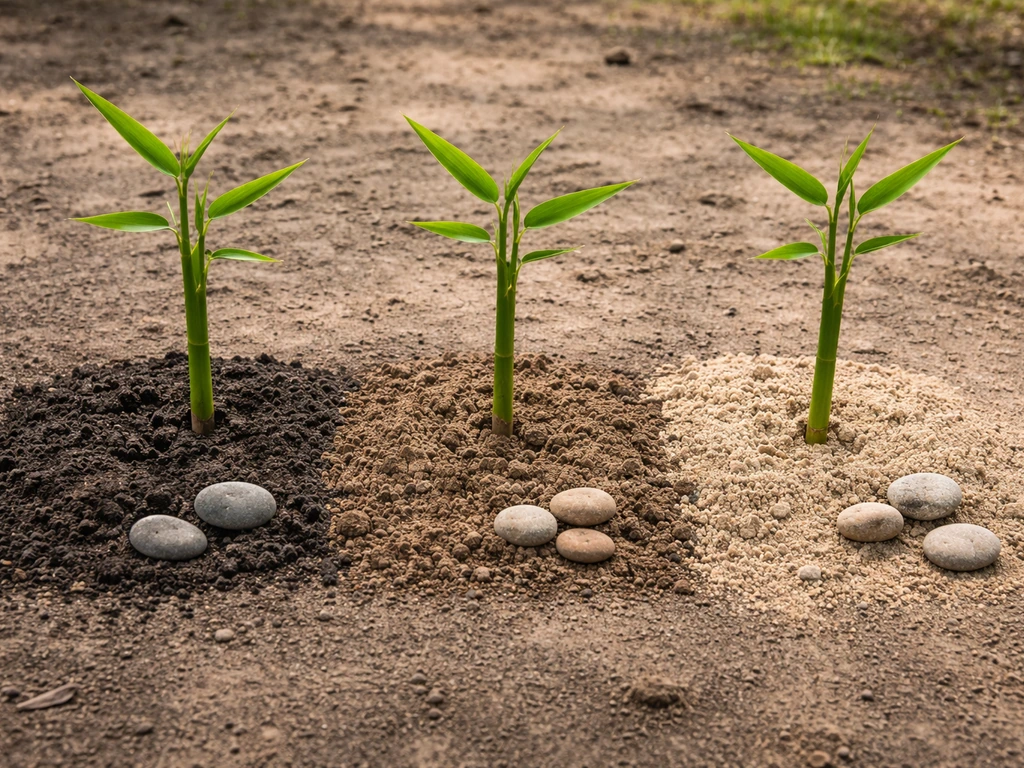
If you want to verify that mud, dirt, and sand genuinely grow at the same rate in your specific world, here is the simplest test you can run:
- Place three identical bamboo saplings side by side: one on mud, one on dirt, one on sand. Make sure all three have identical light levels above them (use the same light source equidistant from each).
- Mark the starting height of each stalk (screenshot or write it down).
- Come back after 10 to 15 minutes of in-game time while staying in the same loaded chunk. Do not wander off and unload the area.
- Compare the heights. Over a long enough window, all three should show similar growth stage counts. Short windows will show variance because random ticks are probabilistic, not scheduled.
- If one plant is consistently outpacing the others after multiple observation windows, check for accidental light differences or chunk boundary issues rather than assuming the block type is the cause.
Running this test yourself is genuinely useful because it removes the guesswork. Once you have watched mud, dirt, and sand grow at the same pace side by side, you will never second-guess the substrate choice again. Spend that mental energy on optimizing light levels and tick speed instead. Those are the levers that actually move the needle on bamboo farm output.
FAQ
If mud does not speed up bamboo, what actually determines how quickly bamboo grows?
Bamboo growth is driven by random ticks and the game’s overall ticking rules. In practice, the biggest levers are that the bamboo has valid growth space (enough air above and enough height for the plant to reach), the chunks stay loaded long enough, and the server or world tick speed is not reduced.
Does bamboo need to be directly adjacent to water or any specific block to grow faster?
No. Bamboo is not grown using farmland-style hydration, so water does not add a speed bonus. Water can still be useful for logistics like harvesting or preventing adjacent mobs from spawning, but it will not change growth timing.
How can I tell whether my bamboo is waiting on random ticks rather than being blocked by the farm design?
If growth stalls, check two things first: whether the bamboo has unobstructed space for the next stage, and whether the area is receiving random ticks (for example, the plant being in loaded chunks). If you see intermittent growth across multiple plants, timing is likely random-tick related, not a substrate issue.
Do mud rooted blocks behave differently from their normal versions when mined or interacted with?
The “bamboo rooted” state is a tagging conversion used by the game when bamboo reaches a full plant. Functionally, it does not create a growth multiplier, but it can affect what block you get when you break or remove bamboo, since you are now dealing with the rooted variant instead of the original substrate.
Does the rule about equal speed on mud, dirt, and sand apply to both Java and Bedrock editions?
The common substrate-speed misconception is usually answered the same way across editions, but mechanics can differ slightly in implementation details. If you are on Bedrock, the safest approach is to run a side-by-side test in your world, because tick timing and random-tick behavior can vary by edition and device settings.
Will bamboo grow faster if I place it on gravel or other “valid” blocks too?
No valid substrate provides a growth speed advantage. Gravel and other allowed placement blocks affect only whether bamboo can be planted there, not the growth interval, so the throughput still depends on tick rate, spacing, and lighting.
If I speed up bamboo production with higher tick speed, does substrate choice start to matter?
No. Increasing tick speed changes how quickly random ticks occur overall, which speeds up growth uniformly. But the substrate types themselves still do not provide a relative multiplier, so mud will not outpace dirt or sand even in a modified environment.
Why might my bamboo grow normally on one side of the farm but slower on another, even on the same block type?
The most common causes are chunk loading and obstruction. Bamboo growth depends on random ticks, so if one side of the farm is in a chunk that is not kept loaded, or if one column has different clearance for the next stage, growth will diverge even when the blocks below match.
Can bamboo grow indoors, and what is the most common indoor mistake?
Bamboo can grow indoors as long as the column has enough light and space, but the most common mistake is blocking sunlight and forgetting to supply light directly at the bamboo’s growth area. Use consistent lighting at the height of the plants, not just at the floor.
Does mining bamboo affect growth for the remaining plants, and how should I harvest to avoid interrupting yields?
Harvesting does not change the growth speed logic, but it can affect your farm’s rhythm if you break supporting blocks or accidentally remove plants in the stages that would have matured next. A practical approach is to harvest full stalks while leaving younger stalks intact, so random ticks keep cycling efficiently across the farm.
Next Article
Can Bamboo Grow in Las Vegas? Guide to Success in Desert
Yes, bamboo can grow in Las Vegas with the right species, irrigation, shade, and containment; step-by-step planting and保护