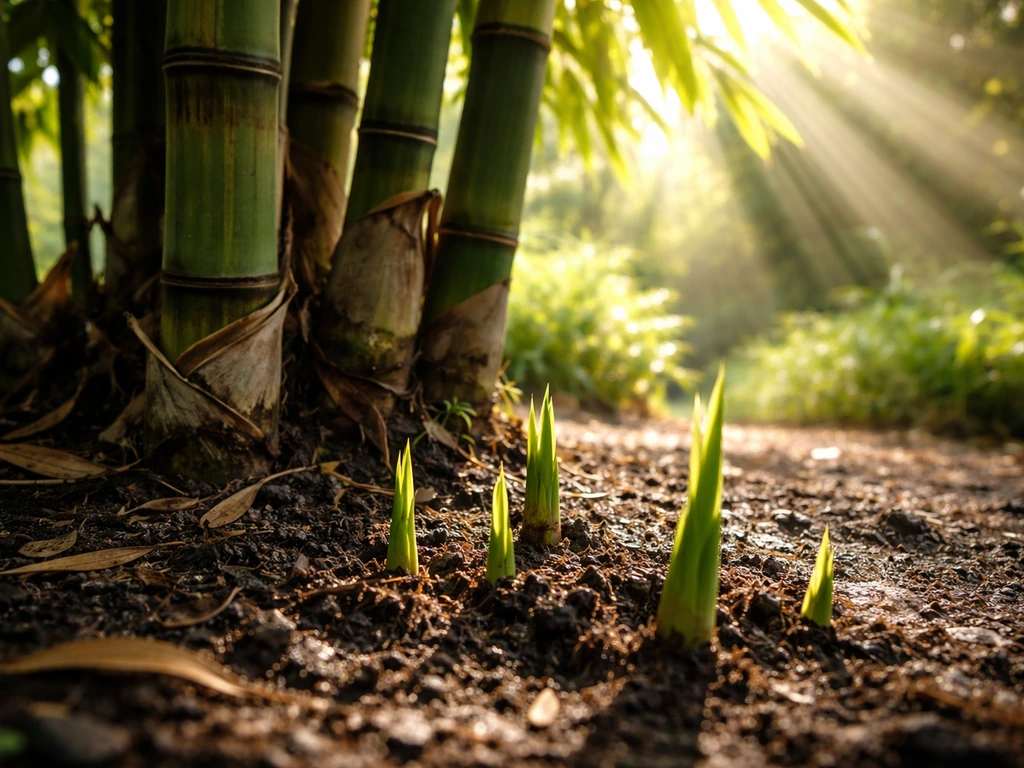
Bamboo can grow anywhere from about 1 foot tall to over 100 feet, depending entirely on the species and where you're growing it. That's not a cop-out answer, it's the honest reality of a plant family that includes hundreds of species ranging from ground-cover dwarfs to full-on timber giants. If you're trying to figure out what height to expect from your bamboo, the most useful thing I can do is walk you through the real ranges, what drives them, and how to get the most out of whatever species you've chosen.
How Tall Can Bamboo Grow? Typical vs Maximum Heights
Marcus Hartwell
3 Apr 2026
Typical bamboo height ranges (and why there's no single number)
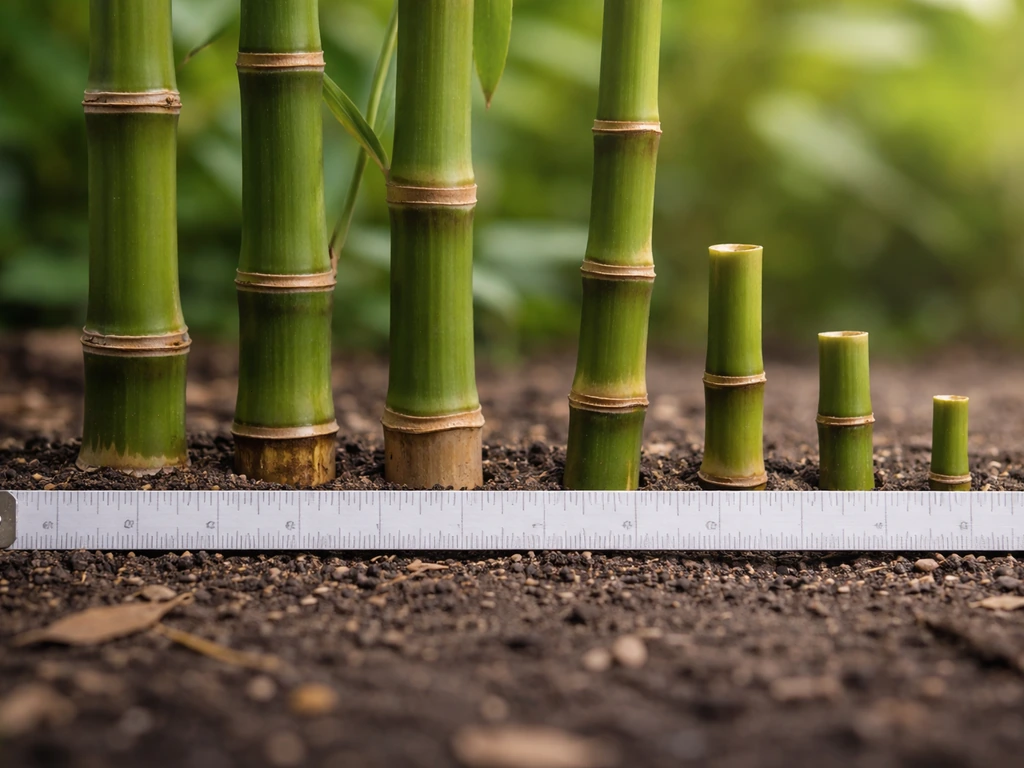
The reason you won't find one definitive height for bamboo is that the word "bamboo" covers a massive group of grass species with wildly different growth ceilings. Broadly speaking, the landscape breaks down into three tiers. Dwarf and groundcover varieties top out at 1 to 3 feet. Mid-size ornamental types, the ones most people buy from garden centers, reach 10 to 35 feet under good conditions. Timber and giant species push 40 to 100-plus feet, given the right climate and soil. Most gardeners are working somewhere in that middle tier, planting species like Phyllostachys aurea (golden bamboo) or Fargesia varieties that are rated for their region.
What makes this more complicated is that the same species can land at very different heights depending on where it's growing. A Phyllostachys edulis (Moso bamboo) grove in its native subtropical China will behave very differently from one planted in a marginal climate zone in the American Southeast. All culms in a grove are essentially clones of the original plant, which means the genetic ceiling on height is fixed, but environmental conditions determine whether the plant ever approaches that ceiling. Think of it like human height: genetics sets the potential, but nutrition and environment determine whether you reach it.
Giant bamboo and bamboo "tree" varieties: expected max height
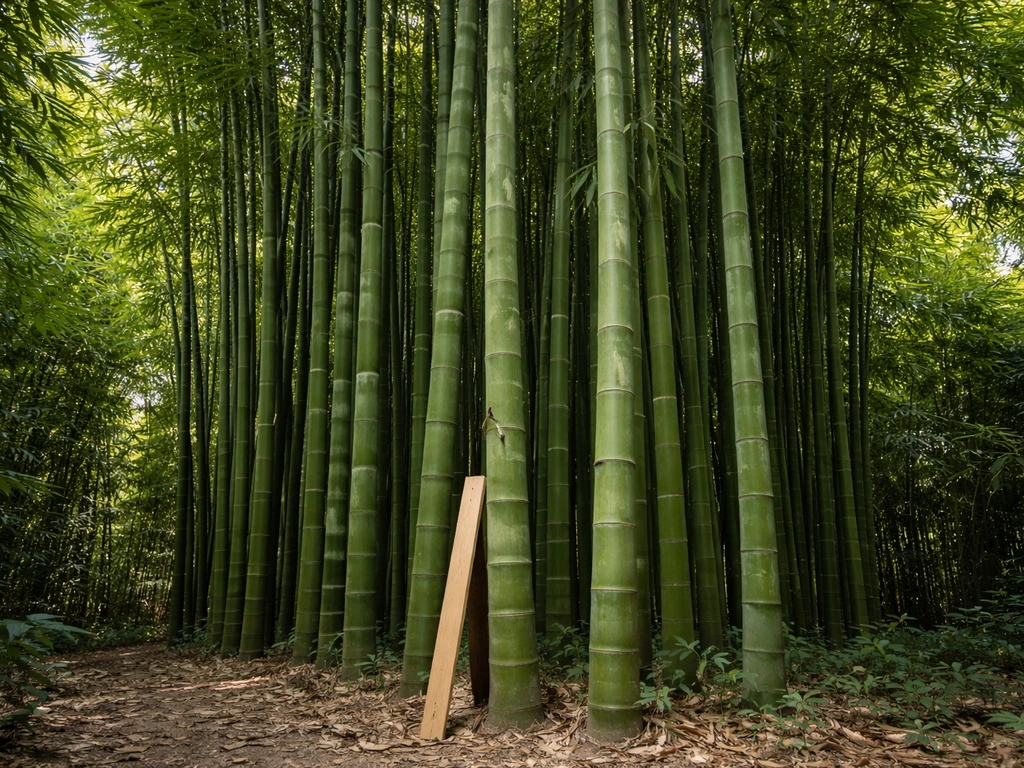
When people ask about "bamboo trees" or giant bamboo, they're usually thinking about the truly impressive timber species. Bambusa oldhamii, giant timber bamboo, is one of the most common of these in the U.S., especially in warmer climates like Florida and the Gulf Coast. Nursery data puts its mature height at 40 to 60 feet, with some sources listing up to 60 feet under ideal conditions. It's thick-walled, upright, and legitimately impressive in person.
Moso bamboo (Phyllostachys edulis) is arguably the most famous of the giant species worldwide and can exceed 60 feet in optimal conditions. If you're curious about its full potential, how tall Moso bamboo grows gets into the specifics of what this species can do under different conditions. Then there's black bamboo (Phyllostachys nigra), which is more ornamental in scale but still reaches impressive heights, if you're considering that one, understanding how tall black bamboo grows will give you a more realistic target for your planting.
One important thing to understand about all bamboo species: a new culm (cane) emerges from the ground at its full diameter and reaches its full height within a single growing season of roughly three to four months. It doesn't thicken or grow taller in subsequent years the way a tree does. The clump or grove gets taller year over year by producing progressively taller new culms as the root system matures, not by the existing canes getting bigger.
Growth rate and timelines: how fast bamboo rises and when it slows
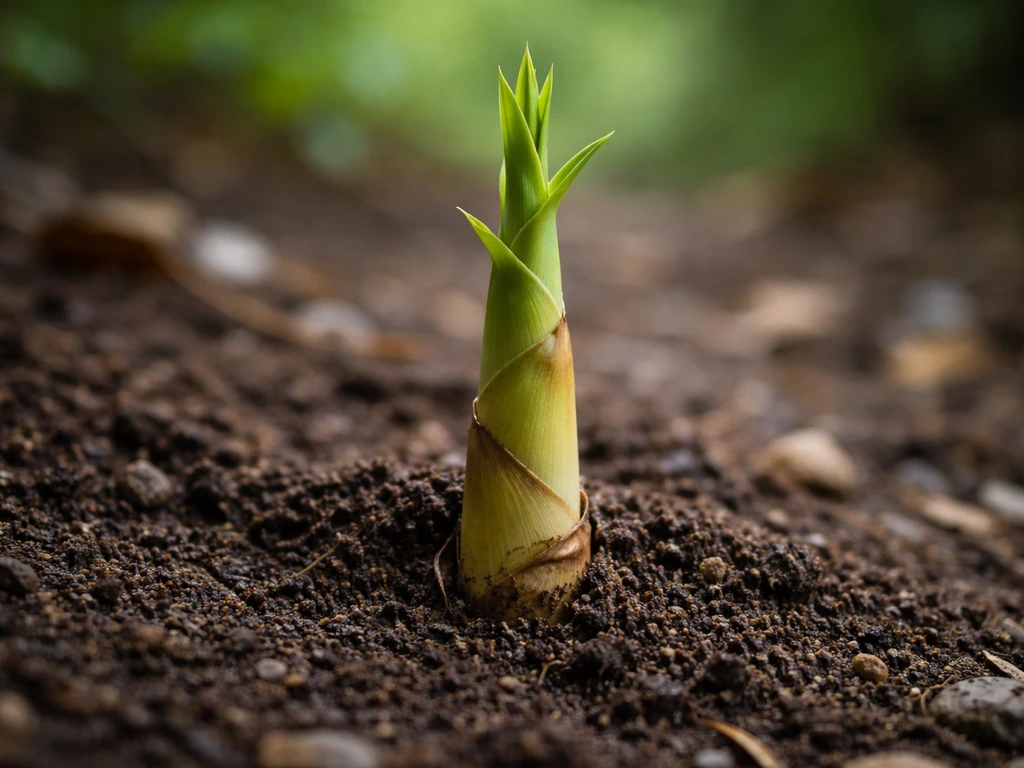
Bamboo's growth speed is genuinely remarkable, and I say that as someone who's watched it in person. Published research on Moso bamboo has recorded shoot elongation of up to 114.5 cm (about 45 inches) in a single day under peak conditions, and more moderate fast-growth figures in the literature typically range from 7.5 to 100 cm per day depending on species and growth stage. Even on the conservative end, that's visible growth you can almost watch happen.
That said, "fast growth" has an important qualifier: it only applies during the active shooting season, which in most temperate climates is spring. Outside of that window, established canes don't elongate. The plant is busy storing energy in its rhizome system, preparing for the next year's shoots to emerge even taller. This is why new bamboo plantings can feel disappointingly slow in the first couple of years, the plant is investing underground before it shows off above ground. A common industry rule of thumb is "sleep, creep, leap", year one the plant sleeps, year two it creeps, and by year three it starts to leap. By years four and five, you'll typically see the species approaching its characteristic height range.
What actually determines how tall your bamboo gets
Species is the biggest variable, nothing else overrides it. But assuming you've chosen a species suited to your region, here's what separates bamboo that reaches its potential from bamboo that stalls out halfway there.
Climate and temperature
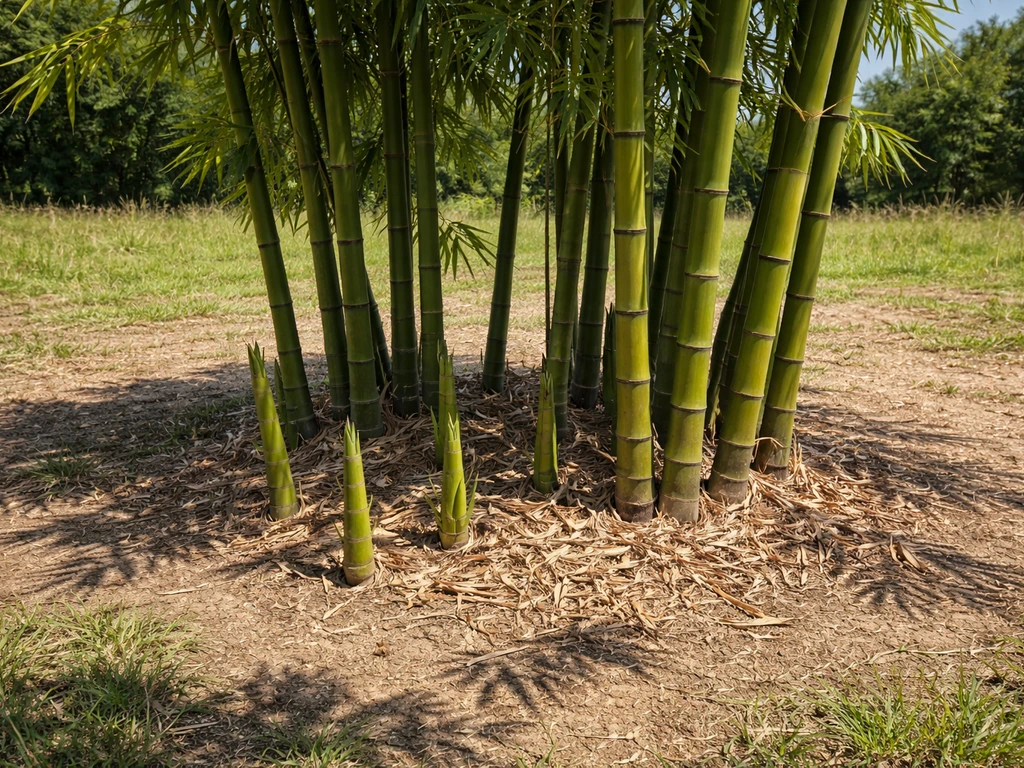
Temperature directly affects shoot emergence and the overall vigor of a grove. Research specifically on Bambusa oldhamii confirms that different temperature regimes produce measurably different rates of shoot emergence and growth. Running bamboos tend to be more cold-tolerant than clumping bamboos, which is why you see Phyllostachys species thriving further north than Bambusa species. If you're in a colder zone and pushing the limits of a species' range, expect it to stay significantly shorter than published maximums. A Moso planting in northern Georgia is going to underperform compared to the same species growing in its native conditions in Zhejiang province, that's just climate math.
Sunlight
Most tall-growing bamboo species want full sun to reach their height potential, at minimum 6 hours of direct sun daily. Shade-tolerant species exist, but the timber giants are not among them. Planting a giant timber bamboo in a shaded yard and expecting 50-foot canes is setting yourself up for disappointment. Full sun drives the photosynthesis that fuels the explosive spring shooting season.
Soil pH and fertility
Bamboo prefers a soil pH in the range of 6.0 to 7.0. If your soil is sitting at pH 5.5 or lower, which is common in the Southeast and Pacific Northwest, you'll want to add lime to bring it up into that range before planting. Acidic soil locks up nutrients the plant needs, regardless of how much fertilizer you apply. Once pH is dialed in, bamboo responds well to a nitrogen-heavy fertilizer regime during the growing season, since nitrogen drives the leafy, rapid growth that's characteristic of the plant.
Water
Insufficient water, particularly during hot or windy weather, is one of the most common reasons bamboo fails to establish or underperforms on height. During the first year, consistent watering is non-negotiable. Once established in the ground, bamboo typically needs watering about once a week, or twice a week in hot, dry conditions, because the larger soil volume retains moisture longer than a pot would. Don't let new plantings dry out between waterings during the first growing season.
How to actually grow tall bamboo: a practical setup
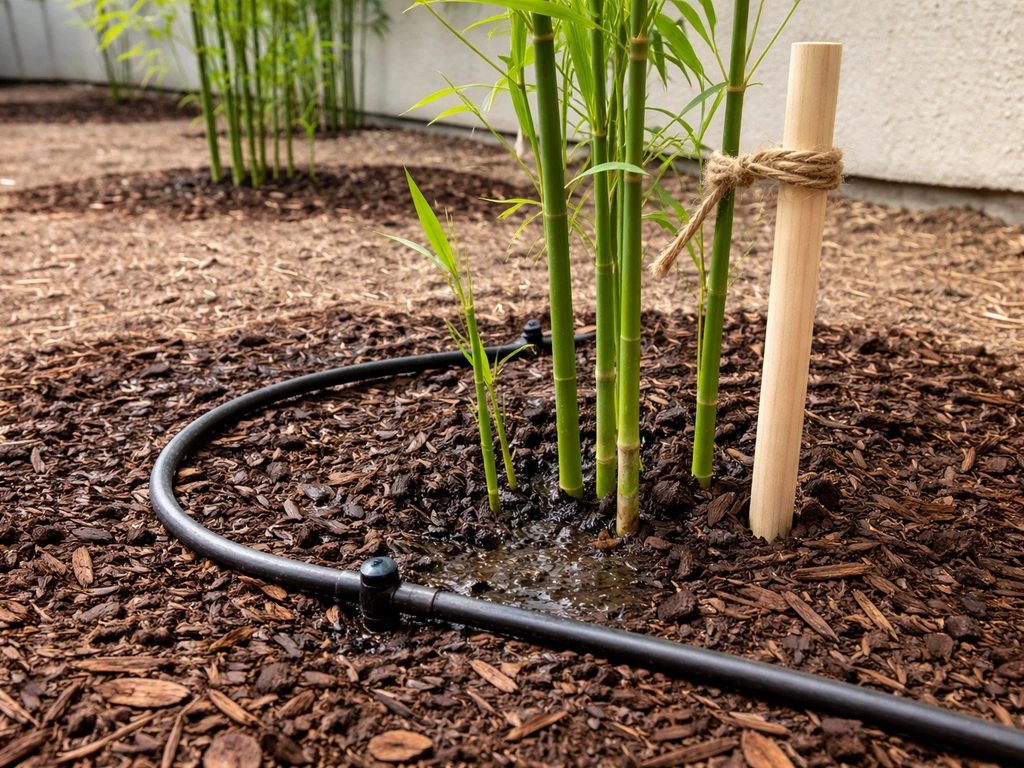
If your goal is maximizing height, here's the practical sequence I'd recommend following from the start:
- Choose a species rated for your USDA hardiness zone and confirm its published mature height is what you're actually after. Don't assume all bamboo grows tall.
- Test your soil pH before planting. If it's below 6.0, incorporate agricultural lime to bring it up toward the 6.0–7.0 sweet spot.
- Amend the planting area with compost to improve drainage and organic matter — bamboo likes well-drained, fertile soil, not clay-heavy or waterlogged ground.
- Plant in a location with at least 6 hours of direct sun per day. For running species, install a rhizome barrier at least 2 feet deep around the perimeter before planting.
- Water deeply at planting and maintain consistent moisture through the first growing season. Don't rely on rainfall alone during establishment.
- Apply a nitrogen-rich fertilizer (like a lawn fertilizer) in early spring just before shooting season begins, and again in midsummer if the plant is actively growing.
- Be patient through years one and two. Resist the urge to over-fertilize or disrupt the root system. The underground investment pays off in year three and beyond.
- Remove weak or crowded culms in early spring to concentrate the plant's energy into the strongest new shoots, which will come up taller and thicker over time.
One thing worth knowing about site selection: if you're considering bamboo as a windbreak or privacy screen, understanding which species grow well in your specific region matters as much as height. Where Moso bamboo grows best gives a good picture of the kind of climate and site conditions this species needs to perform at its best, and the same principles apply to evaluating other giant species for your area.
Rhizomes, spread, and keeping your bamboo focused
"How far does bamboo grow" is a question about width as much as height, and it matters a lot for management. The two main bamboo types, running and clumping, behave very differently underground. Clumping bamboo spreads slowly in a tighter radius and is much easier to manage. Running bamboo produces aggressive horizontal rhizome networks and can spread well beyond its original planting zone if left uncontrolled. This isn't a scare tactic, it's just something you need to plan for upfront.
For running species, a buried HDPE rhizome barrier at least 2 feet deep around the planting area is the standard recommendation from extension services and bamboo growers alike. The Missouri Botanical Garden specifically cites a two-foot deep barrier as the appropriate depth for controlling running bamboo. Inspect the barrier edge annually and cut back any rhizomes attempting to escape. Containment doesn't hurt height, in fact, by keeping energy focused in the planting zone rather than spreading outward indefinitely, a well-contained running bamboo grove often produces taller, more vigorous culms.
Spacing also matters. Depending on the species, clumps may need 2 to 10 or more feet of space to develop fully and reach mature height. Crowding bamboo slows the development of the rhizome mat and limits how tall each successive year's shoots can grow. Give it room, and it will use that room productively.
Indoor growing and pot limits: what bamboo actually reaches at home
If you're growing bamboo in containers, indoors or on a patio, the honest answer is that you'll get noticeably less height than in-ground plants. Container-grown bamboo typically ends up about 10 to 20 percent smaller than the predicted mature size for that species, and for giant varieties, the gap can be even larger. The container limits root expansion, which directly caps how much energy the plant can generate and store.
Bamboo rhizomes are vigorous enough that they'll spiral down the inside of a pot and can crack or burst the container walls within a couple of years if left unchecked. This means you'll need to repot regularly, typically every two to three years, and trim roots back to keep the plant healthy without letting it become rootbound. A long, narrow planter might give you a nice screen effect, but don't expect it to approach the heights listed on the plant tag. For a realistic picture of what bamboo in pots can and can't do, how tall bamboo grows in pots breaks down the specifics by container size and species.
Indoor bamboo is a further step removed from the plant's potential. Without full outdoor sun and the ability to develop an extensive root system, most indoor bamboo stays in the ornamental range and won't come anywhere near the heights you'd see in a garden bed. Clumping species in large pots on a bright, south-facing porch or balcony are your best bet for meaningful height if outdoor ground planting isn't an option.
Running vs clumping: a quick comparison
| Characteristic | Running Bamboo | Clumping Bamboo |
|---|---|---|
| Typical max height | 15–75+ ft depending on species | 8–50 ft depending on species |
| Spread behavior | Aggressive horizontal rhizomes, can spread widely | Slow, tight outward expansion |
| Cold tolerance | Generally higher cold tolerance | Less cold tolerant overall |
| Containment needed? | Yes — 2-ft deep barrier strongly recommended | Usually not, but monitor edge growth |
| Best for tall privacy screens? | Yes, especially Phyllostachys species | Yes, especially Bambusa species in warm climates |
| Container performance | 10–20% smaller than in-ground potential | 10–20% smaller than in-ground potential |
| Time to peak height | 3–5 years from planting | 3–7 years from planting |
If maximum height is your primary goal and you're in a warm climate (USDA zones 8–11), a clumping timber species like Bambusa oldhamii is hard to beat, 40 to 60 feet of upright, non-invasive canes that won't take over your neighbor's yard. If you're in a cooler zone and need cold hardiness alongside impressive height, a running Phyllostachys species with a proper rhizome barrier is the more practical path.
How to tell if your setup is on track
By the end of year two, you should see noticeably thicker and taller new culms emerging than what came up in year one. If the shoots in year two look similar to year one, same diameter, same height, that's a signal that something is limiting growth, usually water, fertility, pH, or sun exposure. Check those four variables first before concluding the species is underperforming. By years three to five, a well-sited planting of a timber species should be producing canes that are approaching or within striking range of the species' listed mature height. If you're there, you're doing it right.
The practical next step is simple: match your species to your climate zone, sort out your soil pH before you plant, give it full sun and consistent water through establishment, and install containment for any running species from day one. Do those things and bamboo will reward you with the kind of growth that genuinely surprises people, including, eventually, you.
FAQ
If I plant bamboo in-ground, will it automatically reach the maximum height shown on nursery tags?
Not automatically. The tag height is a genetic ceiling achieved only when the species matches your climate and gets full sun, correct soil pH (about 6.0 to 7.0), and consistent watering during the first year. If any one of those is off, bamboo often stalls at a fraction of the advertised mature height.
How can I tell early whether my bamboo will become tall or stay short?
Look at year two culm growth. If the new canes are the same height and diameter as year one, something is limiting growth, usually sun, water consistency, soil pH, or nitrogen (fertility). Measure direct sun hours and check soil pH before making big changes.
Why do my existing bamboo canes not grow taller after they emerge?
Because a culm reaches its full height within a single growing season after it shoots from the ground. Later years mostly add new, taller culms from the rhizome system, not increases in the height of canes already present.
Does fertilizing help bamboo grow taller, or are other factors more important?
Fertilizer helps, but it cannot compensate for the big growth blockers. For height, prioritize full sun, correct pH (acidic soil can lock up nutrients), and establishment watering first. Then use nitrogen-heavy feeding during the active shooting season to support the leafy rapid growth that fuels those tall shoots.
What’s the fastest way to maximize bamboo height, during what season should I focus?
Plan for the active shooting season in your area, typically spring in temperate climates. Water and fertility matter most before and during that window. Once the season ends, established canes generally stop elongating while the plant stores energy underground.
Will bamboo grow taller if I prune it or cut back canes?
Pruning can tidy appearance, but it does not create “extra height” on existing culms because height is determined when that culm shoots. If you remove canes, you may redirect energy to producing new culms, but aggressive pruning can temporarily reduce how fast the grove reaches its mature range.
How much spacing do I need if my goal is maximum height, not just screening?
Give it room for rhizome mat development. Crowding can limit how vigorous the successive shoots become, so they do not approach the species’ typical mature height. For clumping species, spacing can vary widely, often several feet up to 10 or more depending on the species.
Is running bamboo more likely to reach greater height than clumping bamboo?
It can, but height depends on the same fundamentals (sun, pH, water, species genetics). Running bamboo’s advantage or disadvantage is mostly about management, because containment affects how much of the plant’s energy stays in the planting zone versus escaping. Well-contained running bamboo can produce very vigorous, tall culms.
What happens if I do not install a rhizome barrier for running bamboo?
You may still get tall canes initially, but the grove can spread beyond what you planned, and the growth becomes harder to control. Over time, rhizomes escaping can reduce how effectively your original area fills in, and it can create future “mystery” issues with underperformance and difficult cleanup.
Can I grow tall bamboo indoors or on a porch in a pot?
In most cases, container and indoor conditions cap height well below in-ground expectations because the root system cannot expand as widely. Even outdoors on a porch, pots typically produce shorter growth, often around 10 to 20 percent smaller for many species, and sometimes more for giant types.
My bamboo looks healthy but is not getting taller, could soil pH really be the cause?
Yes. If your soil is too acidic (for example pH 5.5 or lower), nutrients can become unavailable even if you fertilize. Correcting pH before planting, and rechecking if growth stalls, is one of the most common “missing pieces” for achieving expected height.
How do I manage watering if my bamboo is in sandy soil or a hot windy location?
In hot or windy conditions, plan for more frequent watering during establishment and possibly beyond, since dry air and fast-draining soil reduce available moisture. A good rule for mature plantings is roughly weekly watering, or about twice a week in hot, dry weather, but monitor soil moisture rather than watering on autopilot.
Next Article
How Long Does Bamboo Take to Grow From Cutting to Maturity
Timeline from cutting to maturity: how long bamboo takes to grow, what controls years, and how to speed establishment.