Michigan's climate realities: zones, winter cold, and microclimates
The 2023 USDA Plant Hardiness Zone Map (built on 1991–2020 climate normals) is your starting point. Michigan spans a wide range: Detroit and the southern Lower Peninsula sit in Zones 5b–6b, the central Lower Peninsula is typically 5a–5b, and much of the Upper Peninsula drops to 4a–4b. Those zone labels represent average annual extreme minimum temperatures, and they tell you the baseline, not the worst-case scenario.
The worst-case scenario matters enormously for bamboo. Record lows across Michigan are punishing: Detroit has recorded −31.1°F, Grand Rapids −31.1°F, Lansing −33.9°F, Marquette −36.7°F, and Escanaba −34.4°F. Those are rare events, but they happen, and a rare −30°F night can kill a bamboo plant that routinely survives −10°F winters. When you see a species rated "hardy to −15°F," understand that means it will die if you get one of those historic cold events without protection.
Microclimates can shift your effective zone by half a zone to a full zone. A south-facing wall in Grand Rapids that blocks northwest winds is genuinely warmer than the official zone label for that zip code. Urban heat islands in Detroit or Lansing push conditions closer to Zone 6 in many neighborhoods. Conversely, low-lying frost pockets in rural areas can be colder than the map suggests. Before you buy anything, spend a winter paying attention to your specific yard: where snow lingers, where wind funnels, and where frost hits hardest.
Pick the best bamboo types for Michigan: clumping vs. running
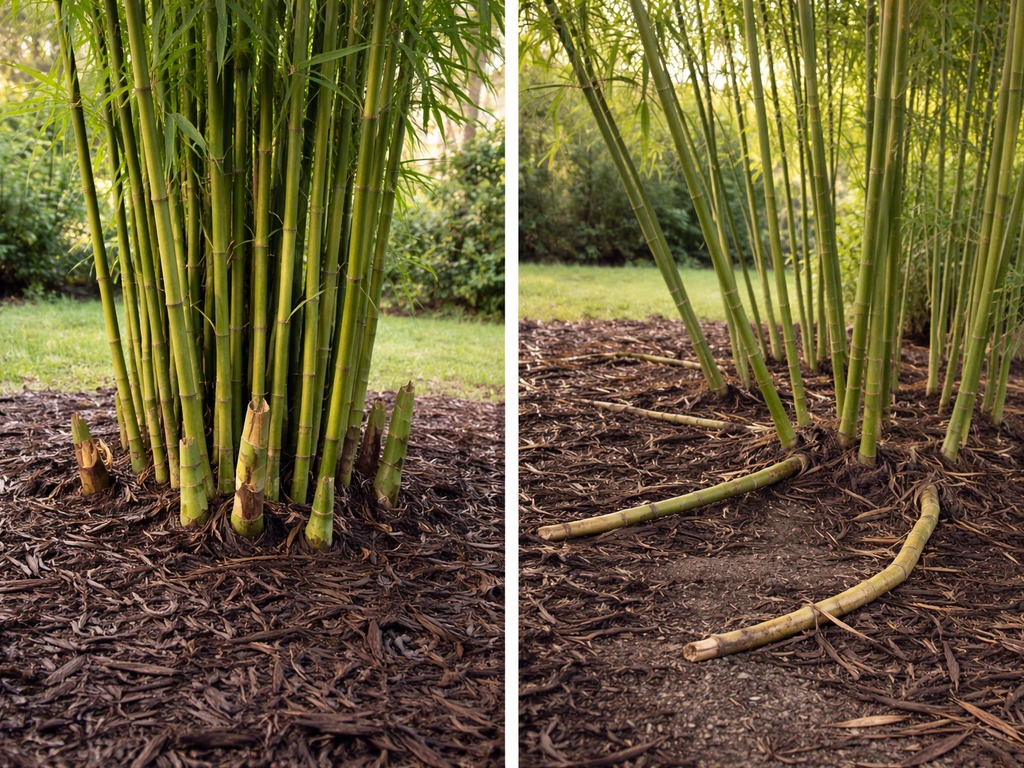
There are two fundamentally different types of bamboo for Michigan gardens, and they behave very differently. Running bamboos (Phyllostachys and related genera) spread aggressively via rhizomes and can be invasive if not contained, but they tend to be extremely cold-hardy. Clumping bamboos (mostly Fargesia species) stay in a tidy, expanding clump, spread very slowly, and are your best choice if you want something manageable without a containment system. For Michigan specifically, here are the species that make the most sense.
Best running bamboos for Michigan
Phyllostachys bissetii (Bissett's Bamboo) is the one I'd point most Michigan gardeners toward first. It's rated cold-hardy to around −10°F as a standard tolerance, and it is consistently described as one of the most cold-tolerant Phyllostachys options available. For Zone 5b and warmer areas of the state, it performs reliably. Some cold-hardy running varieties are reported to tolerate lows in the −25°F to −30°F range for Zone 4-class conditions, which opens options for more protected spots in the Upper Peninsula too, though I'd treat that as a stretch goal rather than a guarantee without extra winter prep.
Best clumping bamboos for Michigan
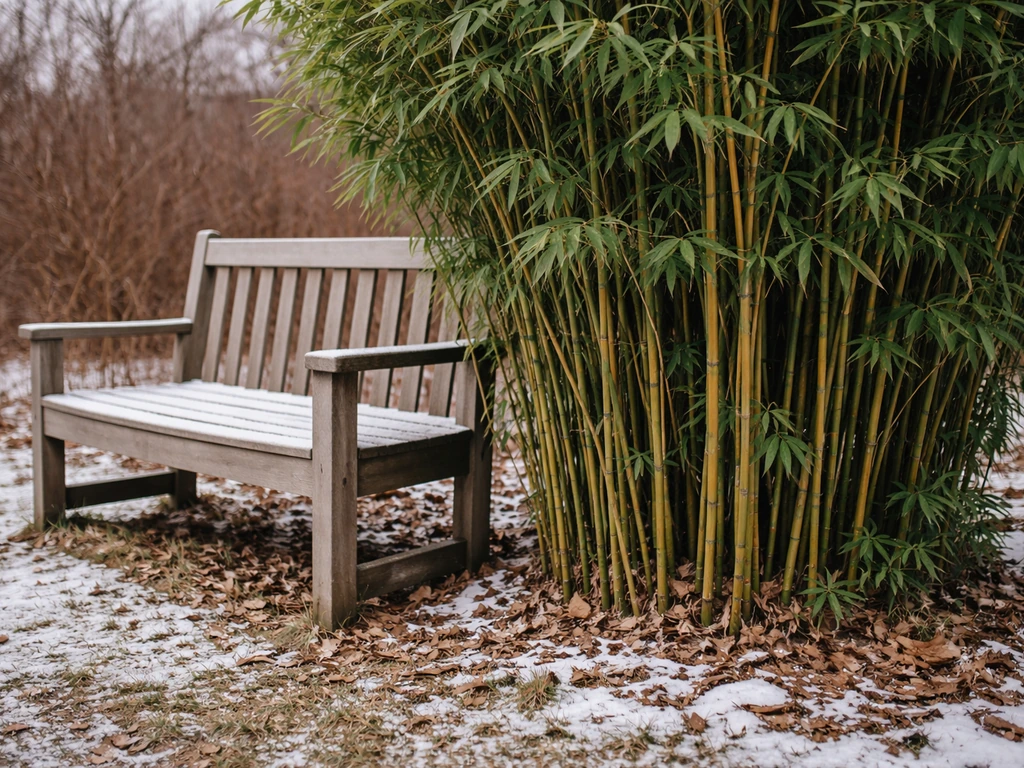
Fargesia species are the clumping workhorses for cold climates, and Michigan is actually a decent match for them climatically. Fargesia nitida is marketed as extremely cold-hardy, capable of surviving Zone 5 conditions, and once established it handles Michigan winters well in the southern Lower Peninsula. A scholarly look at fountain and umbrella bamboos confirms they can survive winter lows near −25°C to −30°C (roughly −13°F to −22°F) for short periods once they are mature and established. Fargesia robusta is another solid option but is rated somewhat less hardy (closer to Zone 7a), making it a better fit for the warmest corners of southeast Michigan rather than the state broadly. One important note for Michigan specifically: Fargesias prefer partial shade and cool summers with nighttime temperature drops, which is a pretty good description of much of Michigan's climate. That makes them a natural fit here in a way they aren't in southern states.
| Species | Type | Cold Hardiness | Best Michigan Zones | Notes |
|---|
| Phyllostachys bissetii | Running | ~−10°F (standard); some varieties to −25°F | 5a–6b | Needs rhizome barrier; very vigorous |
| Fargesia nitida | Clumping | Zone 5 (~−20°F) | 5a–6b | Prefers partial shade; no containment needed |
| Fargesia murielae | Clumping | ~−22°F established | 5a–6b | Good for shadier spots; elegant form |
| Fargesia robusta | Clumping | Zone 7a (~0°F to 10°F) | 6a–6b only | Southeast Michigan sheltered spots only |
| Other cold-hardy Phyllostachys spp. | Running | Varies; −10°F to −25°F | 5b–6b | Always check specific cultivar rating |
My recommendation: if you're in southern Lower Michigan and want something low-maintenance, start with Fargesia nitida. If you want faster growth and a taller screen, go with P. bissetii and commit to proper containment. If you're in the Upper Peninsula, stick with the hardiest Fargesia options and plan on extra winter protection for the first two years.
Site, soil, and light: setting bamboo up to actually survive
Site selection in Michigan is about two things: maximizing winter protection and getting the drainage right. For sun, most running bamboos want full sun to partial shade (six or more hours of direct sun). Clumping Fargesias actually do best with partial shade, especially from the hot afternoon sun in summer, which happens to be easy to find in Michigan's tree-lined yards. A south or southeast-facing exposure with a windbreak on the north or northwest side is the gold standard for winter survivability in this state.
Soil is where I see Michigan gardeners make the most mistakes. Bamboo thrives in well-draining, slightly acidic soil with a pH around 5.5–6.5. The single fastest way to kill bamboo is to plant it somewhere waterlogged, especially over winter when saturated roots and freeze-thaw cycles are fatal. Michigan has a lot of heavy clay soils, particularly in the Lower Peninsula. Clay is workable if drainage is good, but if your soil drains poorly, you need to fix that before planting, not after. Work in generous amounts of organic matter, consider raised mounding to improve drainage around the planting area, or excavate a proper planting bed and backfill with amended soil. Skipping this step is not optional.
Mulching is part of the soil strategy too, not just winter care. A 3–4 inch layer of organic mulch over the root zone keeps moisture consistent in summer and provides critical insulation in winter. Just keep mulch pulled back slightly from the base of the culms to prevent rot at the crown.
How to grow bamboo in Michigan: step-by-step
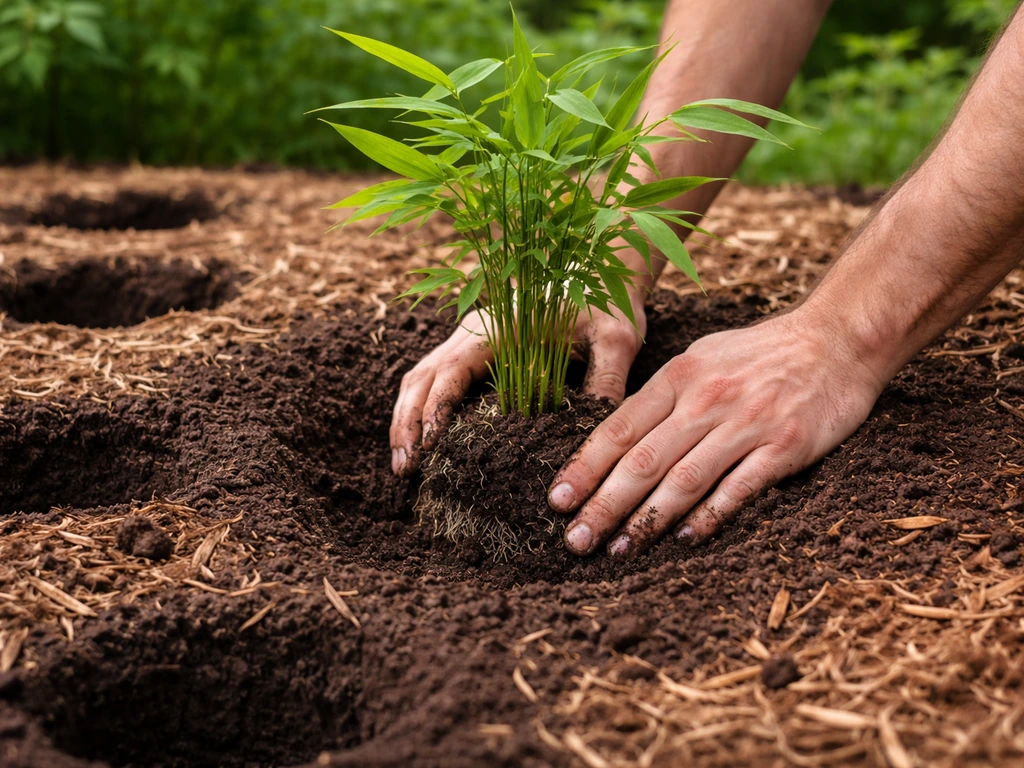
Timing your planting correctly is critical in Michigan. Both Bamboo Garden and Bamboo Sourcery are clear that for Zone 5 and 6 climates, spring is definitively the best time to plant. You want bamboo in the ground as early in spring as the soil is workable, giving it the entire growing season to establish a root mass before its first Michigan winter. Fall planting is a risk I wouldn't take here, because the plant simply doesn't have enough time to harden off before hard freezes arrive.
- Choose your species based on your USDA zone and the table above. Verify your exact zone at the 2023 USDA Plant Hardiness Zone Map before buying.
- Pick a site with the right light (partial shade for Fargesia, more sun for Phyllostachys) and test drainage by digging a 12-inch hole, filling it with water, and watching how fast it drains. If it's still standing after an hour, you have a drainage problem to solve first.
- Amend soil if needed. Work compost or aged organic matter into the top 12–18 inches. Target a pH of 5.5–6.5 with a simple soil test, available at any Michigan extension office.
- If planting a running bamboo, install your rhizome barrier before or at planting time, not after. More on this in the containment section below.
- Dig a hole roughly twice as wide as the root ball and the same depth. Set the plant at the same level it was growing in the container, never deeper.
- Backfill with amended soil, firm gently, and water deeply immediately after planting.
- Apply 3–4 inches of organic mulch over the root zone, keeping it slightly away from the culm bases.
- Water deeply every one to two days for the first several months of establishment. The practical test: if the soil is dry at 4 inches depth, the plant needs more water. Deep, infrequent watering builds deeper roots; shallow daily sprinkles do not.
- Continue regular deep watering through late summer and into fall, tapering off as temperatures drop and the plant goes dormant.
What to expect in year one (and when it gets exciting)
I want to be honest with you about first-year bamboo, because the expectation gap is real. During the first season, bamboo puts most of its energy underground, building the root system it will need to support future growth. You may see very little above-ground action. Some plants push a few small shoots; others look almost exactly the same size as when you planted them. This is normal, not a sign of failure. Do not dig it up. Do not stop watering.
For clumping Fargesia types, expect roughly 1–3 feet of height gain per year once established, though year one may produce less than that. Running Phyllostachys types tend to be more aggressive once the root system is developed, often producing noticeably taller and thicker shoots in years two and three. The popular saying in the bamboo world is "first year sleeps, second year creeps, third year leaps," and in Michigan's cooler climate that timeline may stretch a bit compared to warmer states. By year three or four, established cold-hardy running bamboos can produce impressive growth and a real privacy screen.
If you're curious how bamboo performance compares across the Midwest, similar growing dynamics play out just across Michigan's borders. growing bamboo in Ohio follows many of the same patterns since much of Ohio shares Zone 5 and 6 conditions with southern Michigan. The zone overlap makes species selection very comparable between the two states.
Winter care, containment, and the things that actually go wrong
Winter protection strategies
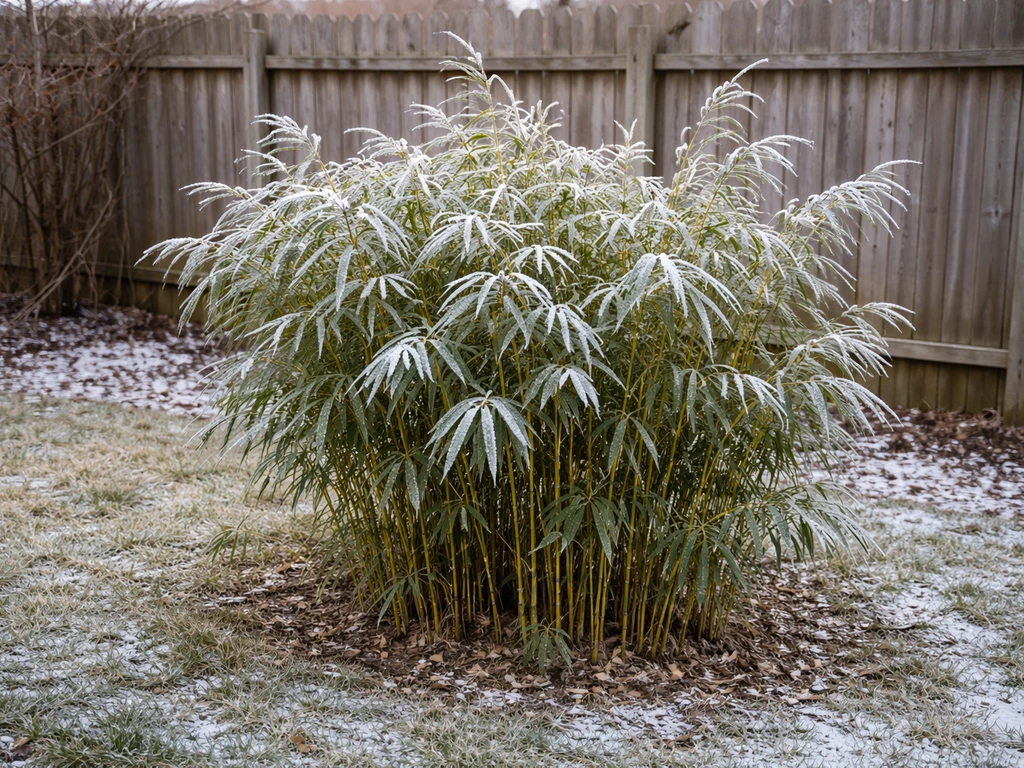
The most underrated winter threat to bamboo in Michigan is not actually the air temperature: it's desiccation. Frozen ground means roots cannot take up water, but cold dry winds keep pulling moisture out of the leaves and culms. The plant dries out from the top while it can't replace moisture from below. To combat this, apply 4–6 inches of loose organic mulch over the root zone before the ground freezes. For plants in their first or second winter, consider blank" rel="noopener noreferrer">wrapping the culms loosely in burlap to reduce wind exposure. Anti-desiccant sprays applied to the foliage in late fall can also help. Container-grown specimens should be moved to an unheated garage or shed for their first winter, which is actually a solid strategy for getting P. bissetii established in borderline-cold areas of northern Michigan.
If you lose foliage over winter, don't panic and don't cut the plant down in February. Wait until late spring, when you can verify whether the crown and roots survived. Often, bamboo that looks completely dead in March will push new growth from the base in May once the soil warms. Cut back dead culms only after you see new shoots emerging from the ground.
Rhizome barrier installation for running bamboo
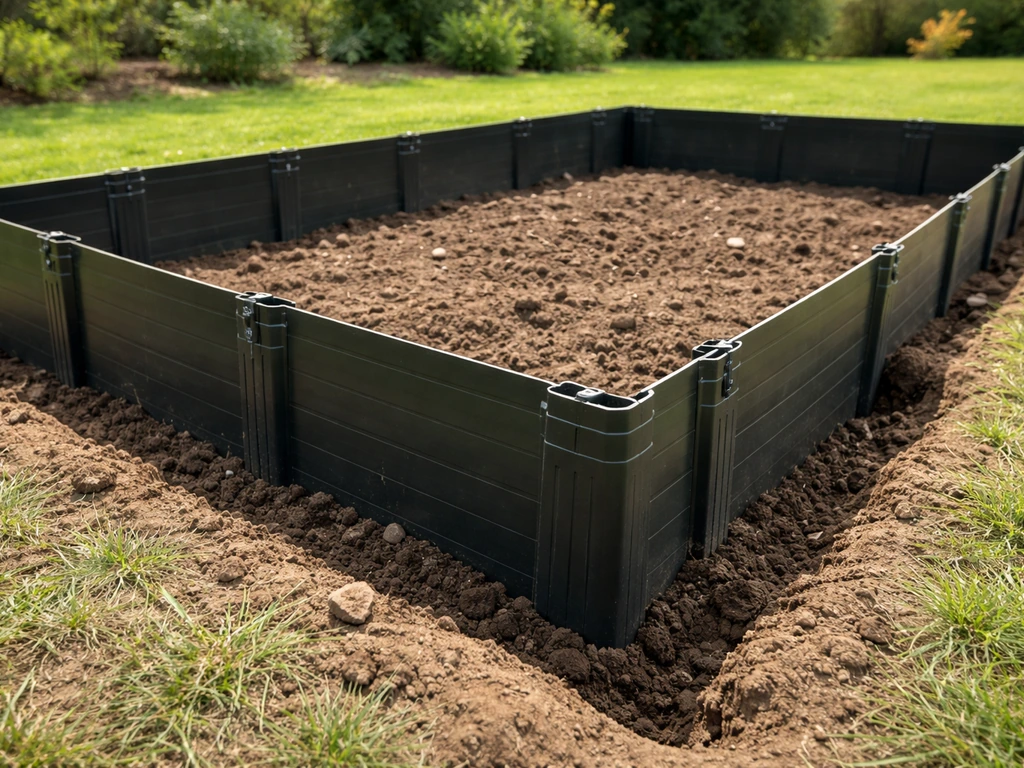
If you plant any running bamboo in Michigan, containment is non-negotiable. Running bamboo rhizomes spread underground, often 3–5 feet per year once established, and they will come up in your neighbor's lawn, through your garden beds, and under your fence if not properly contained. The standard installation uses a high-density polyethylene (HDPE) barrier, typically 60–80 mil thickness (thicker is better; 80 mil is worth the extra cost) and 30–36 inches deep. University of Maryland Extension recommends installing a rhizome barrier for running bamboo, including sinking the barrier to the recommended depth so rhizomes cannot roll over above ground 30–36 inches deep. The trench should be dug to the full depth, the barrier inserted with roughly 2 inches remaining above grade so rhizomes cannot roll over the top, and the ends overlapped and secured tightly. Common installation mistakes include going too shallow, not leaving the barrier above grade, and leaving gaps at the seam where ends meet.
Even with a perfect barrier, check the perimeter annually in early spring before new shoots emerge. Rhizomes that hit the barrier often turn and run along it until they find a way around or over. Trim any rhizomes that have crept over the top edge with a sharp spade. Skipping annual inspection for two or three years can let running bamboo establish outside the barrier in ways that become very difficult to reverse.
Common problems and how to fix them
- Yellow leaves in summer: usually overwatering or waterlogged soil. Check drainage and reduce watering frequency.
- No new shoots in year one: normal. The root system is establishing underground. Keep watering and be patient.
- Foliage die-back after winter: likely desiccation damage. Wait for spring, check for new shoots from the crown, and cut back dead growth only after new growth confirms the plant survived.
- Culms not recovering after a severe freeze: check whether the crown (the point at ground level) is still firm and green just below the soil surface. A dead crown means the plant did not survive. A living crown usually means new culms will emerge.
- Spreading outside the barrier: inspect the barrier for gaps, areas where rhizomes rolled over the top, or spots where the barrier has shifted. Cut escaping rhizomes immediately and repair the barrier.
Your next steps this season
Here is exactly what to do if you want bamboo in your Michigan garden this year. First, look up your specific USDA zone using your zip code on the 2023 map. Then walk your yard and identify the most sheltered, best-draining spot with the right light for the species you're considering. Test or amend your soil before you buy anything. Order or purchase cold-hardy species (P. bissetii or Fargesia nitida are your safest bets for most of the state) from a reputable nursery that specifies hardiness ratings, and plan to get them in the ground as early in spring as possible.
If you're interested in how bamboo growing conditions shift across neighboring states, it's worth knowing that bamboo in Illinois deals with similar zone challenges across its north-south span, and the species recommendations overlap significantly with what works in southern Michigan. Likewise, if you're near the Indiana border, the same cold-hardy species that thrive in southern Michigan are the ones recommended for bamboo growing in Indiana, so if you're sourcing locally across state lines, nursery options and species availability are largely the same.
For those near the Wisconsin border or with friends gardening there, growing bamboo in Wisconsin pushes into some of the coldest viable bamboo territory in the Midwest, and many of the same survival strategies (deep mulching, wind protection, spring planting) are even more critical there than they are in most of Michigan. The species overlap is real, but Wisconsin growers generally have a narrower margin for error.
The bottom line: Michigan is a perfectly viable state for outdoor bamboo with the right species and the right approach. Get your zone right, choose a cold-hardy species, plant in spring, keep it watered through establishment, mulch heavily before winter, and you'll have thriving bamboo. Skip any of those steps and you'll be replacing a dead plant next year.