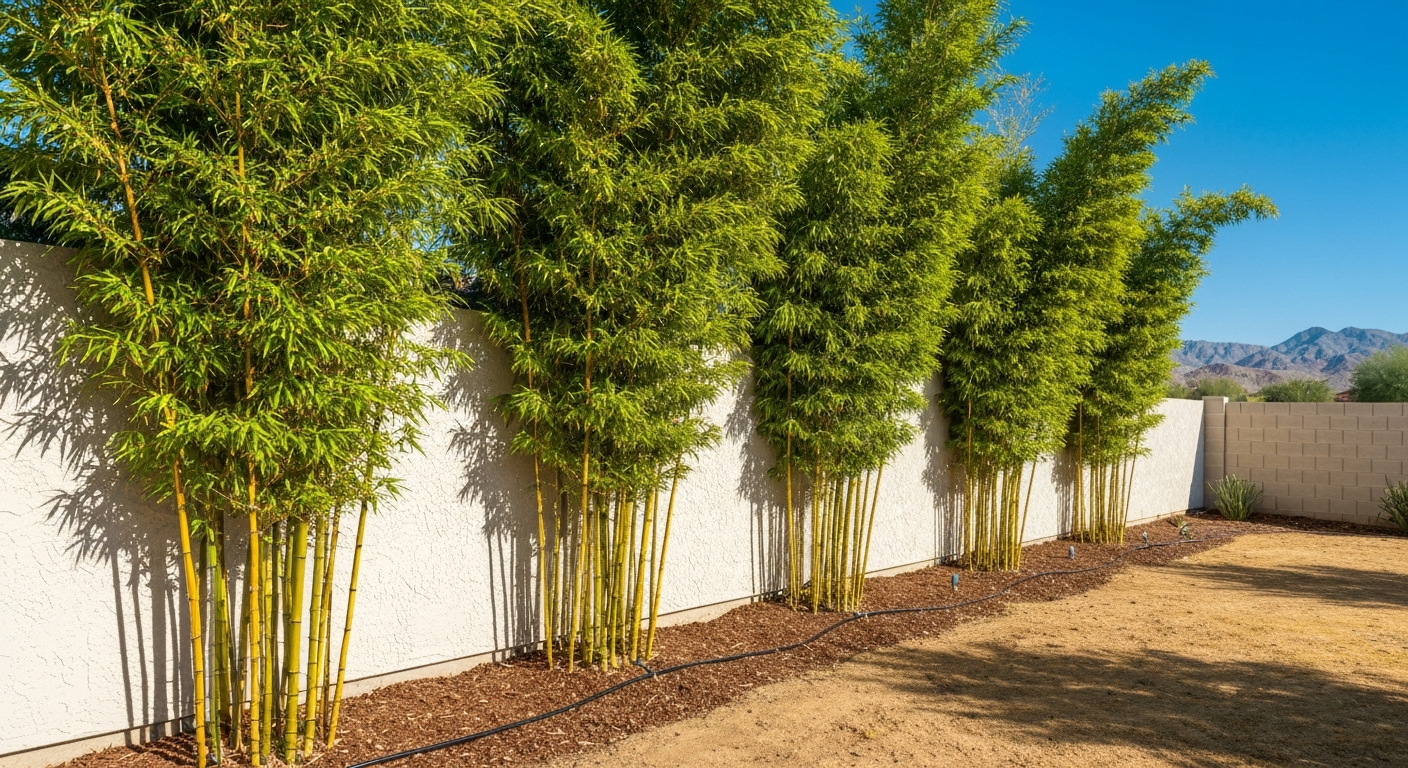
Yes, bamboo can grow in Minnesota, but you have to be strategic about which species you choose and how you protect it through winter. The state spans USDA Hardiness Zones 3b through 5a, which means winter lows regularly hit -20°F to -10°F in much of the state. Most bamboo sold at garden centers will die outright in those temperatures. A handful of cold-hardy species, particularly certain Fargesia and Phyllostachys cultivars, can survive and even thrive with the right site selection, mulching, and wind protection. Get those details right, and you can absolutely grow bamboo in Minnesota.
Can Bamboo Grow in Minnesota? Cold-Hardy Options and How-To
Marcus Hartwell
27 Apr 2026
Can bamboo survive Minnesota winters?
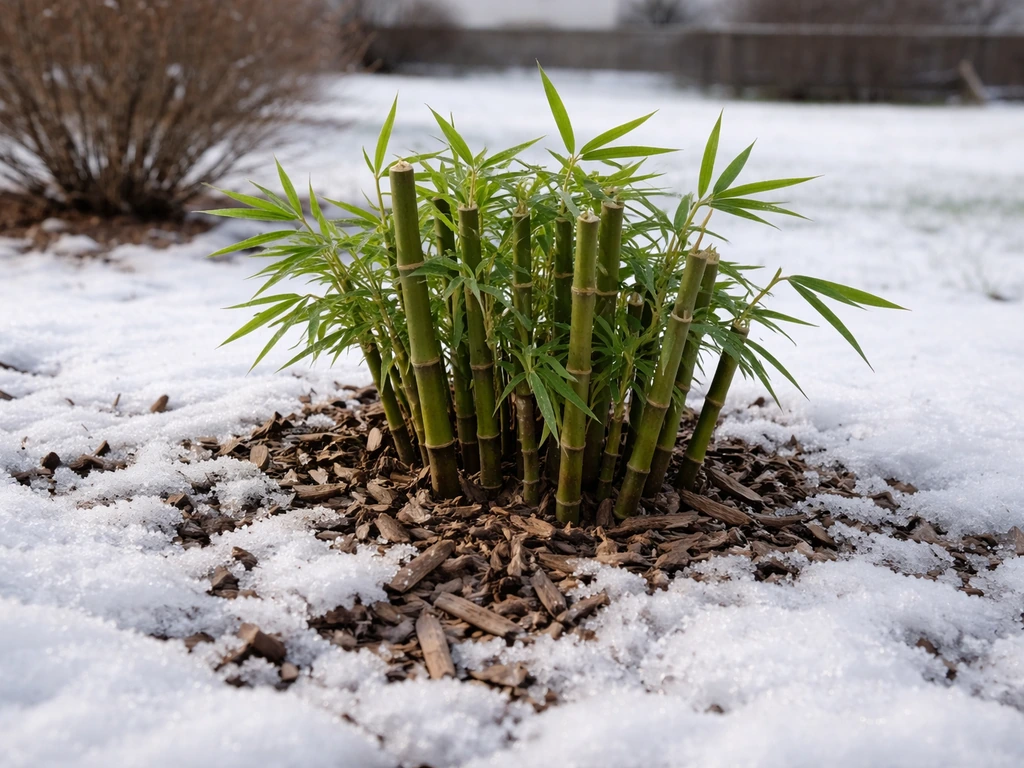
Minnesota winters are genuinely brutal for most bamboo. The cold itself is one challenge, but the combination of deep freezing, freeze-thaw cycles, and drying winter winds is what kills most plants. Bamboo is evergreen, which means its leaves are exposed to cold, desiccating winds all winter long. When the ground is frozen, the roots cannot replace moisture that the leaves lose to wind, and the foliage burns or dies entirely, a process very similar to the winter burn UMN Extension describes in evergreen trees and shrubs.
The hardiness zones tell part of the story. Zone 4, which covers a large portion of Minnesota, sees minimum winter temperatures between -30°F and -20°F. Zone 5a in the southeast corner gets down to about -20°F. Any bamboo you plant needs to be rated well below those thresholds to survive with its rhizomes intact. Even if the above-ground canes die back in a particularly bad winter, a truly cold-hardy species will push up new growth from surviving rhizomes in spring, which is what you are actually trying to protect.
Frost timing matters too. UMN Extension reports that the average last frost date in southern Minnesota falls in early May, while northern areas can see freezing temperatures as late as late May or even early June. The Minnesota DNR treats these as probabilities, not fixed dates, meaning a cold snap can still arrive after your expected frost-free window. That late-season unpredictability has real implications for newly planted bamboo, which is far more frost-sensitive than an established plant with a deep rhizome system.
Best bamboo types for Minnesota: clumping vs. running, and the cold-hardy picks
The first decision you need to make is not just about cold tolerance, it is about rhizome type. Bamboo is categorized into two fundamental growth habits: clumping (pachymorph rhizomes) and running (leptomorph rhizomes). That distinction affects both how it spreads underground and which species are realistically cold-hardy enough for Minnesota.
Clumping bamboo: the low-maintenance, non-invasive choice
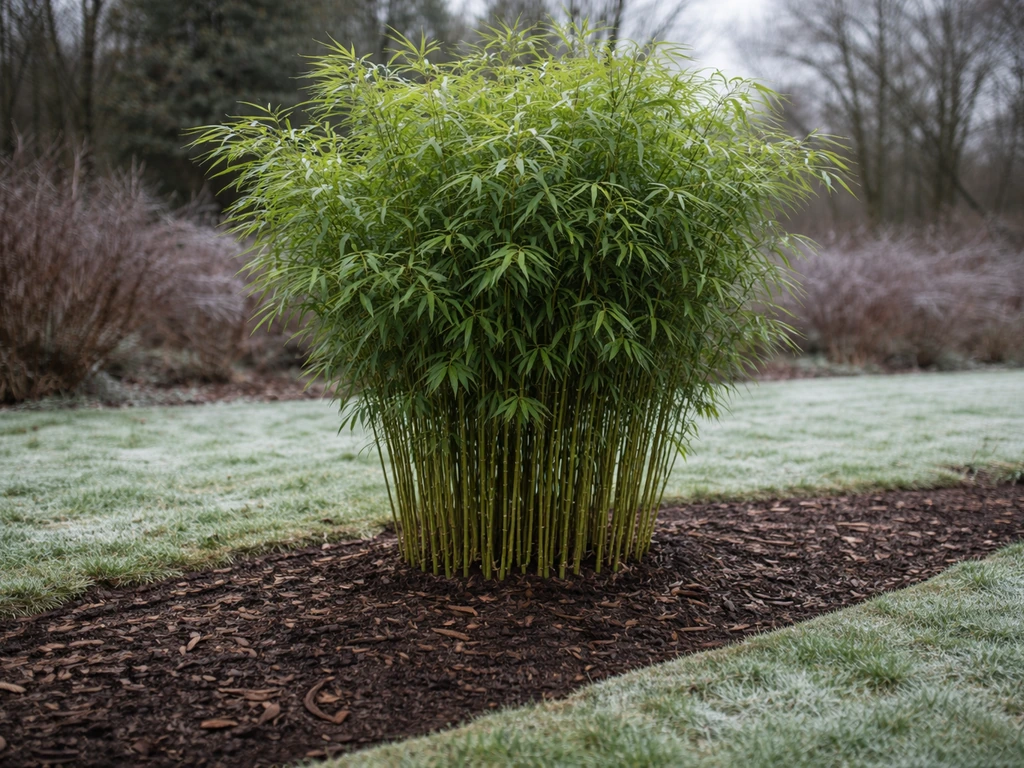
Clumping bamboo grows outward slowly from a central root mass, adding only a few inches per year to its diameter. It is described as non-invasive in habit because it stays where you put it. The Fargesia genus is the main clumping group worth considering for Minnesota. Fargesia rufa is marketed specifically for exceptional cold hardiness and tolerance of sun and wind, which makes it one of the most practical choices for this climate. It is compact, forms a tidy clump, and will not take over your yard. If you want bamboo with minimal management and no containment headaches, start with Fargesia rufa.
Running bamboo: powerful spreaders that need serious containment
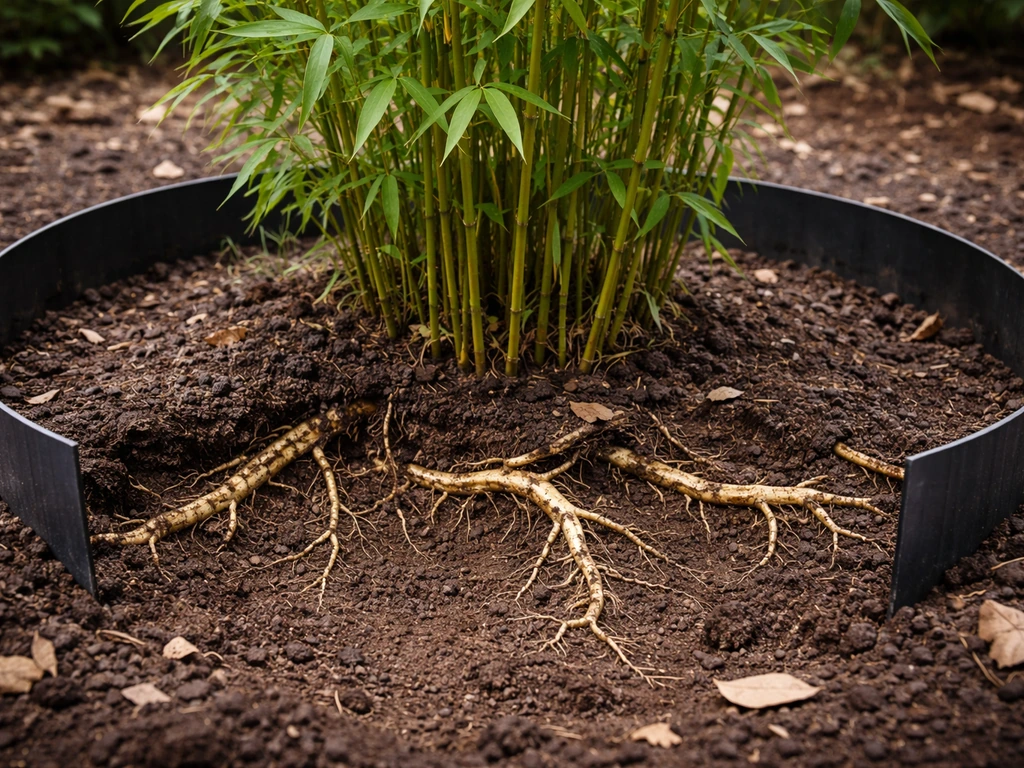
Running bamboo can produce rhizomes that travel many feet from the parent plant in a single season. A few running species do have the cold hardiness for Minnesota. Phyllostachys bissetii is rated to about -10°F and is considered one of the more cold-tolerant running bamboos. Phyllostachys aureosulcata (yellow groove bamboo) is listed as hardy to USDA Zone 4, which makes it a realistic candidate for the warmer parts of Minnesota.
But be very clear-eyed about what you are taking on: both are classified as running bamboos, and running bamboo requires a physical rhizome barrier sunk vertically into the ground, typically a 30-inch-wide roll of HDPE barrier material installed around the perimeter of the planting area, with annual visual monitoring for rhizomes that try to escape over or under the barrier.
One species to specifically avoid is golden bamboo, Phyllostachys aurea. It is listed on invasive species databases and is rhizomatous and aggressive. It is also rated for Zone 8, meaning it has no realistic chance of surviving a Minnesota winter anyway. Do not be tempted by cheap or readily available plants that are not rated for your zone.
| Species | Type | Cold Hardiness | Best For Minnesota |
|---|---|---|---|
| Fargesia rufa | Clumping | Zone 4 or colder | Yes, top pick for most gardeners |
| Phyllostachys aureosulcata | Running | Zone 4 (to about -20°F) | Yes, with rhizome barrier |
| Phyllostachys bissetii | Running | About -10°F (Zone 6 margin) | Maybe, in southern MN only |
| Phyllostachys aurea (golden bamboo) | Running | Zone 8 only | No, will not survive + invasive |
Outdoor planting plan: site, sun, soil, spacing, and timing
Site selection is where you win or lose the game in Minnesota. The single most important factor, after choosing the right species, is wind protection. Windbreaks are specifically used for [wind protection](https://extension. umn.
edu/node/6731), and they can reduce bamboo exposure during cold, windy conditions when paired with appropriate, hardy plants for the site. Cold, drying winds in winter are a primary cause of bamboo death in cold climates. [The WSU cold-hardy bamboo guidance explicitly advises avoiding northern wind exposure. ](https://s3.
wp. wsu. edu/uploads/sites/2080/2021/02/trifold-bamboo-brochure-bkluthrevised2021. pdf) Plant bamboo on the south or southeast side of a building, fence, or established windbreak.
That structure will block prevailing cold northerly winds and also capture a few extra degrees of radiated heat, which can make a meaningful difference in a marginal hardiness situation.
Bamboo wants full sun to light partial shade. In Minnesota's short growing season, more sun means more energy for the plant to harden off before winter, which improves cold tolerance. Aim for at least 6 hours of direct sun daily for most species.
Soil drainage is critical. Bamboo does not tolerate waterlogged roots, and Minnesota's spring thaw creates exactly those conditions in heavy clay soils. If your soil drains slowly, amend it with compost and coarse sand, or build a raised bed. Well-drained, loamy soil with a slightly acidic to neutral pH is ideal.
For timing, plant bamboo after your last frost date, but also early enough in the season to give the plant several months to establish a root system before the ground freezes. In southern Minnesota that means planting in mid-May to early June. In northern Minnesota you have a narrower window, roughly late May to early June at the latest. This gives roots about 4 to 5 months of growth before hard freezes arrive.
For clumping Fargesia, spacing of 3 to 5 feet apart is typical for a privacy screen that fills in over several years. For running bamboo in a contained planting, you can start with a single plant and let it fill the contained area, since it will spread on its own.
Winter protection and overwintering strategies
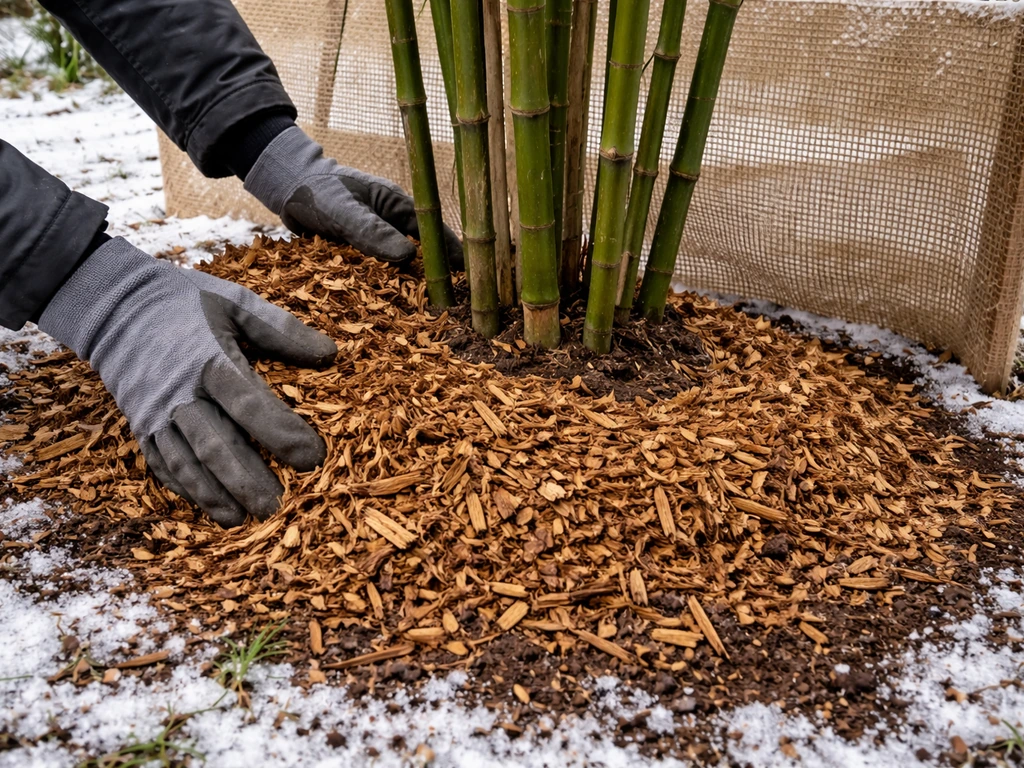
Ground-planted bamboo
Mulch is your most important tool for protecting bamboo rhizomes in the ground through a Minnesota winter. Apply a 4 to 6 inch layer of shredded wood mulch or straw over the root zone before the ground freezes, extending at least 12 inches beyond the visible culms in every direction. The goal is to insulate the rhizomes against the deepest cold, even if the above-ground canes sustain some damage. As long as the rhizome system survives, the plant will regenerate in spring.
For wind protection, use a burlap screen or a temporary windbreak structure on the north and west sides of the planting during the first two to three winters while the plant establishes. You can also wrap the canes loosely in burlap to reduce desiccation, though established plants with good site selection often do fine without this step. The concept is the same as what UMN Extension describes for protecting woody perennials from winter burn: reduce wind exposure and moisture loss from foliage.
Water the plant deeply before the ground freezes in late fall. A well-hydrated plant enters winter in much better condition than a dry one, because the cells are more resistant to freeze damage and the plant has moisture reserves when the ground is frozen and roots cannot uptake water.
Container-grown bamboo overwintering
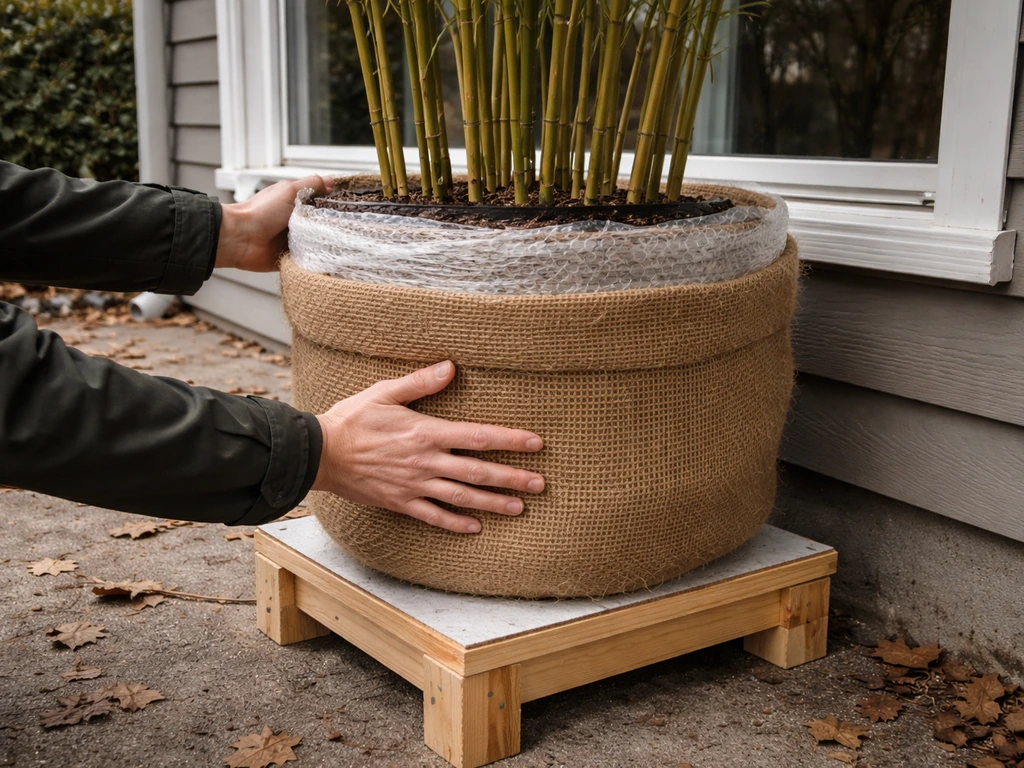
Containers are popular for bamboo in cold climates because you can move the plant indoors, but they come with real limitations. Container roots freeze far faster than in-ground roots because there is no insulating soil mass around the pot. A bamboo planted in the ground at Zone 4 hardiness might survive; the same plant in a container outdoors in Minnesota will almost certainly die because the roots experience temperatures close to ambient air temperature, which can drop to -20°F or lower.
If you grow bamboo in a container and want to keep it outdoors year-round, you need to insulate the pot heavily, wrapping it in multiple layers of burlap and packing insulation around it, or sinking the container into the ground to take advantage of soil insulation. The more reliable approach for Minnesota is to move container bamboo into an unheated but frost-free garage or shed for winter, where temperatures stay above 20°F or so. It does not need much light in dormancy, just protection from hard freezes.
Container and indoor options for short growing seasons
Container growing lets you sidestep hardiness limits entirely, which is a legitimate strategy in Minnesota if you have space to overwinter the pot indoors. Large, decorative bamboo in a container on a patio or deck works well during Minnesota's growing season, which runs roughly May through September. Phyllostachys bissetii is noted as a candidate for container culture specifically because of its cold hardiness and compact growth in containers. Fargesia species are also well-suited to containers because their clumping habit means they will not break through pot walls or escape through drainage holes the way running bamboo can.
Speaking of which: do not grow running bamboo long-term in a container as a containment strategy. UMD Extension is explicit that this does not work. Rhizomes from running bamboo can escape through drainage holes and even break through pot walls over time. If you want running bamboo and you are growing it in a container, plan to either divide and repot it regularly or accept that it is a temporary setup.
For fully indoor bamboo, true bamboo (Bambusoideae) can be grown as a houseplant, but it struggles in typical indoor conditions, preferring high humidity, strong light, and consistent moisture. A bright south-facing window or supplemental grow lighting helps considerably. Keep in mind that most indoor bamboo will not achieve the impressive size of outdoor plants because the growing conditions are simply too limiting. Manage expectations: indoor bamboo in Minnesota is a conversation piece, not a privacy screen.
What to expect: establishment timeline and realistic growth rates
There is an old saying about bamboo: the first year it sleeps, the second year it creeps, and the third year it leaps. That holds true in Minnesota, and the cold climate may stretch the timeline slightly. In year one, almost all of the plant's energy goes underground to establish the rhizome system. You will likely see little to no new cane growth, and the existing canes may look stressed or suffer some tip die-back after the first winter. Do not give up. This is normal.
By year two, a well-established plant starts pushing up new shoots in spring, typically as soil temperatures warm past 50°F. In southern Minnesota that happens in late April to May. The new culms will emerge and reach their full height within a matter of weeks (bamboo culms do not grow taller after they emerge, so what comes up is what you get that season). You will start to see the planting fill in noticeably.
Year three and beyond is when the planting really takes off, assuming the rhizome system has had time to mature. Clumping Fargesia will add width slowly and steadily. Running varieties, if properly contained, will fill their allotted space more aggressively. Realistic height expectations for cold-hardy species in Minnesota: Fargesia rufa typically reaches 6 to 10 feet. Phyllostachys aureosulcata can get taller in warmer parts of the state, potentially 15 to 20 feet in favorable conditions, though Minnesota's shorter season moderates maximum heights compared to what the same plant achieves in Zone 7 or 8 climates.
Common mistakes and how to fix them fast
- Buying the wrong species: Most bamboo at big-box garden centers is not cold-hardy enough for Minnesota. Always check the USDA hardiness zone rating before buying. If it is not rated for Zone 4 or colder, leave it on the shelf.
- Skipping the rhizome barrier: If you plant running bamboo without a physical barrier sunk at least 24 to 30 inches into the ground, you will be fighting it for years. Install the barrier at planting time, not after the fact.
- Not mulching before winter: Skipping fall mulching is the most common reason bamboo rhizomes die over winter in Minnesota. Mulch heavily before the ground freezes, every single year until the plant is very well established.
- Planting in a wind-exposed location: A north-facing or open, unprotected spot will desiccate the plant all winter. If you cannot provide a windbreak, bamboo is the wrong plant for that spot.
- Expecting fast growth in year one: New plantings look slow and sometimes stressed. That is rhizome development happening underground. Give it two full growing seasons before deciding whether it is working.
- Leaving containers outside unprotected: Container bamboo has almost no cold protection compared to in-ground plants. Either move containers inside or insulate them aggressively before temperatures drop below 20°F.
- Treating container planting as a fix for invasiveness: Running bamboo in a pot will eventually escape or break the container. Use clumping species in containers, or commit to regular division and repotting.
If your bamboo did not come back after winter, check the rhizomes before giving up entirely. Scratch the rhizome tissue: if it is still green or white inside, the plant may still be alive and could push new growth as soil warms. Dead rhizomes will be brown, dry, and hollow. If the rhizomes are dead, the plant is gone and you will need to start over, ideally with better site selection and winter prep the second time around.
Minnesota sits at the cold edge of what bamboo can handle, but it is absolutely doable with the right choices. Gardeners in similarly cold or even colder parts of the country, like Montana or Alaska, face even greater challenges, while those in milder regions like Washington State or California have a much easier time with a wider species selection. Can bamboo grow in California? Yes, many species are more likely to thrive there because winters are generally milder and the growing conditions are less punishing than in cold states milder regions like Washington State or California.
If you are wondering can bamboo grow in Alaska, the key is choosing truly cold-hardy species and planning for serious winter protection. If you are outside Minnesota, you may be wondering can bamboo grow in Montana with the same cold-hardiness and protection strategies. If you live in a milder climate, you may be wondering, can bamboo grow in California?
In milder areas, including Washington State, the right bamboo species and protection can make growing bamboo much more achievable can bamboo grow in washington state. In milder places, including Hawaii, bamboo can be much easier to grow depending on the species and local conditions.
If you are in Minnesota and you choose a genuinely cold-hardy species, protect it through its first two winters, and give it a sheltered, wind-protected site, you have a real chance at bamboo that thrives for years. A Reddit permaculture thread about protecting hearty bamboo in very cold conditions also emphasizes the need for wind protection and the importance of setting expectations with caveats from real-world experience protect it through its first two winters.
FAQ
My bamboo got killed in the winter, how do I tell if the rhizomes survived?
If your bamboo canes die back but the clump or rhizome is alive, it can regrow. The best check is after the worst cold has passed, scrape a small section of rhizome and look for green or white tissue inside. If it is brown, dry, and hollow, that portion is dead and regrowth is unlikely.
Is it too late to plant bamboo in Minnesota after summer? What month is safest?
Avoid planting too late in the season. In Minnesota, even “cold-hardy” bamboo needs several months to establish roots, so late-summer or fall planting greatly increases the risk of death from frozen, stressed roots plus winter wind desiccation.
Do I really need winter wind protection and thick mulch for every winter, or only the first year?
New plantings are much more sensitive to sudden freezes, so the first winter and sometimes the second are the time to overdo protection. Use wind shielding on the north and west sides plus a deep, wide mulch layer that insulates the rhizome zone well beyond the canes.
If I install an HDPE barrier for running bamboo, does that fully eliminate escape, or do I still need monitoring?
Yes, especially for running types. Even with a barrier, rhizomes can sometimes sneak above ground or find weak points at edges. Do an annual visual check in late winter or early spring, and also inspect where the barrier meets adjacent soil, paving, or raised beds.
Why does my bamboo survive outside in the yard but die when planted in a container?
Container bamboo is the most common failure mode. In Minnesota, outdoor pots lose insulating soil mass, so roots can freeze even when the same species might survive in-ground. If you keep a container outdoors for winter, you must either insulate the pot extremely well or move it to a frost-free protected space.
How do I water and manage soil moisture in Minnesota so spring thaw does not rot the rhizomes?
Bamboo generally prefers evenly moist soil during establishment, but never waterlogged conditions. In Minnesota’s spring thaw, heavy clay can stay saturated, and that can rot or suffocate roots, which makes winter survival worse. If drainage is slow, use raised beds or amend heavily with coarse material.
Which type is better for Minnesota, clumping or running bamboo, if I want minimal management?
Yes. Fargesia clumping bamboos are usually easier to manage because they expand slowly and are less likely to invade, while running bamboos require barrier integrity and ongoing checks. If your goal is low maintenance privacy without “containment headaches,” choose clumping species.
A nursery says the bamboo is hardy for my zone, but it still seems risky. What site factors matter most?
Hardiness ratings do not guarantee success if the site exposes plants to drying northerly winds. A species that is “just barely” cold tolerant can still fail due to winter burn-like desiccation, so prioritize shelter and sun (south or southeast exposure) over chasing a slightly lower-rated species.
Are there any “popular” bamboo varieties I should avoid in Minnesota even if they look hardy?
Golden bamboo (Phyllostachys aurea) is a poor choice in Minnesota for two reasons: it is both aggressive and not realistically adapted to the state’s winter lows. Even if you try to protect it, you are taking a high risk of winter loss and potential spread.
How much sun does bamboo need in Minnesota for good winter survival?
Start with the most sunlight you can give it. While bamboo tolerates light shade, Minnesota’s short season means more direct sun helps energy storage and hardening off before winter. Aim for at least about 6 hours of direct sun, especially during the first couple of years.
Next Article
Can Bamboo Grow in Las Vegas? Guide to Success in Desert
Yes, bamboo can grow in Las Vegas with the right species, irrigation, shade, and containment; step-by-step planting and保护