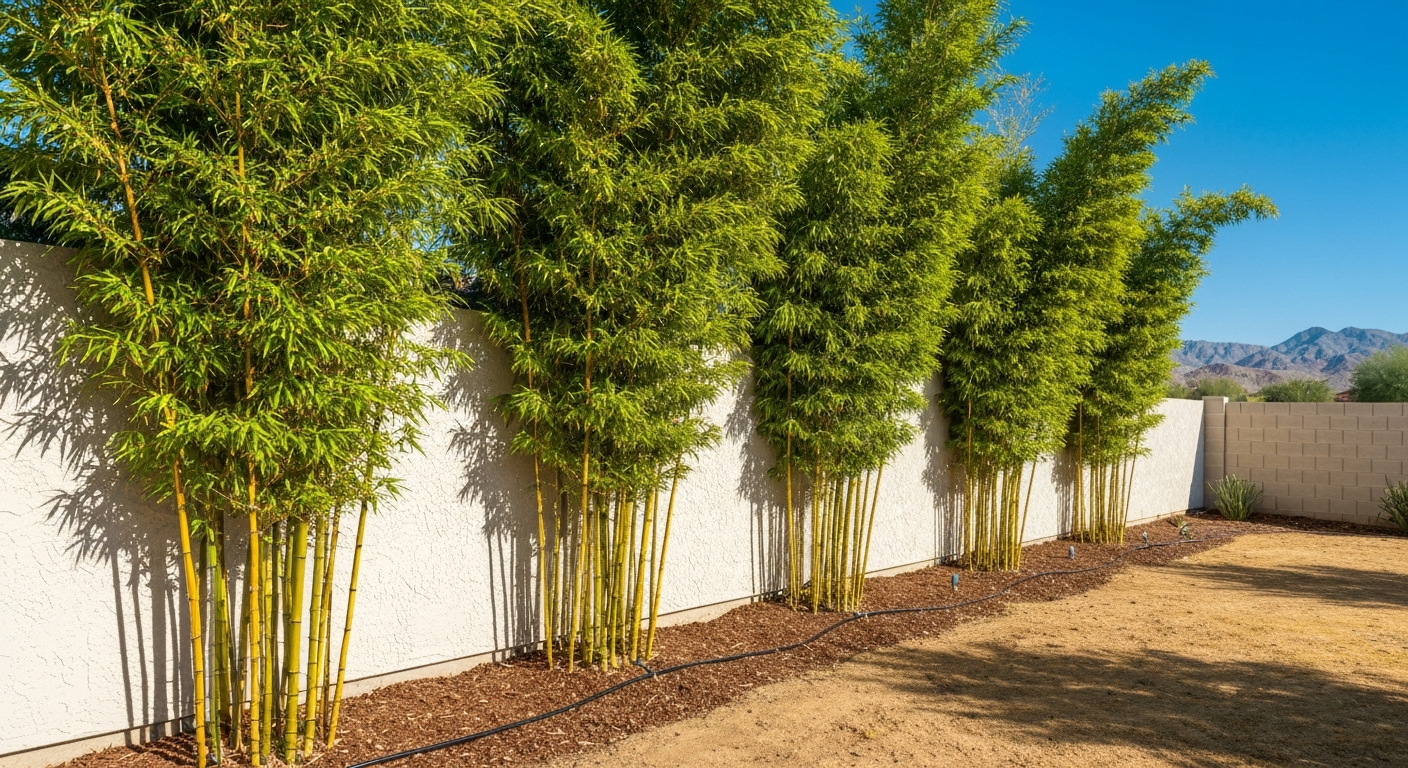
Yes, you can grow bamboo indoors, but not all bamboo and not without meeting some specific conditions. The short answer is: clumping bamboo species, particularly Fargesia varieties, are the most practical choice for indoor containers. Running bamboo types like Phyllostachys are possible to contain indoors but come with real management challenges that most home growers underestimate. If you're willing to get the light, humidity, and container setup right, indoor bamboo is genuinely achievable. If you're expecting something low-maintenance that thrives in a dim corner, this probably isn't the plant for you.
Can I Grow Bamboo Indoors? Yes With the Right Setup

Marcus Hartwell
13 Apr 2026
Running vs. Clumping: Which Type Actually Works Indoors
The biggest decision you'll make before buying a single pot is whether to grow running or clumping bamboo. These two groups behave very differently underground, and that difference matters enormously in a container.
Running bamboo spreads via aggressive underground rhizomes that can travel several feet per year in open soil. Indoors in a container, those rhizomes hit the container walls and can't go further, which sounds like a built-in solution but actually causes problems. The plant becomes stunted when rhizomes fill the pot, and you'll be dividing or repotting far more frequently than you probably want. Black bamboo grown indoors (Phyllostachys nigra) is one of the more popular running varieties attempted indoors, and it can be done, but expect to manage it aggressively.
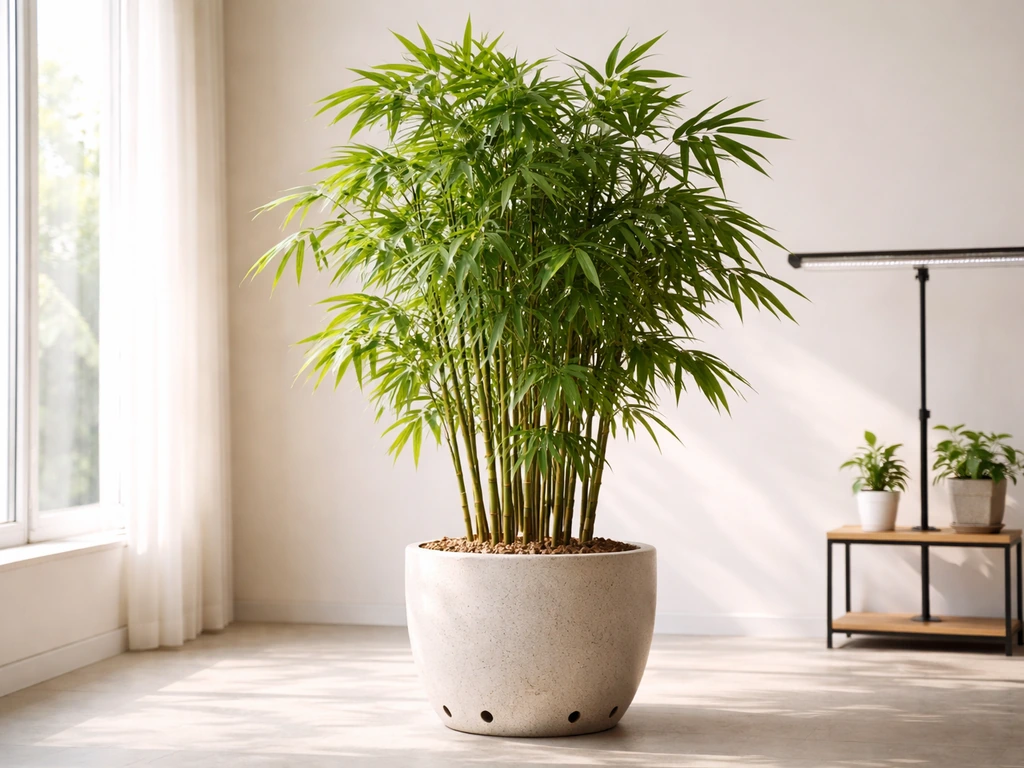
Clumping bamboo, by contrast, expands gradually outward from a central base rather than sending out far-traveling runners. This makes it a far more sensible choice for indoor containers. Fargesia rufa ('Green Panda') and other Fargesia species are the go-to recommendations for indoor growers. They stay contained naturally, grow at a measured pace, and tolerate the lower light levels found in most homes better than many running types. The distinction between these two growth habits is something bamboo grown in planters depends on entirely, so get clear on which type you have before you invest in a setup.
The Indoor Conditions Bamboo Actually Needs
Light: The Non-Negotiable
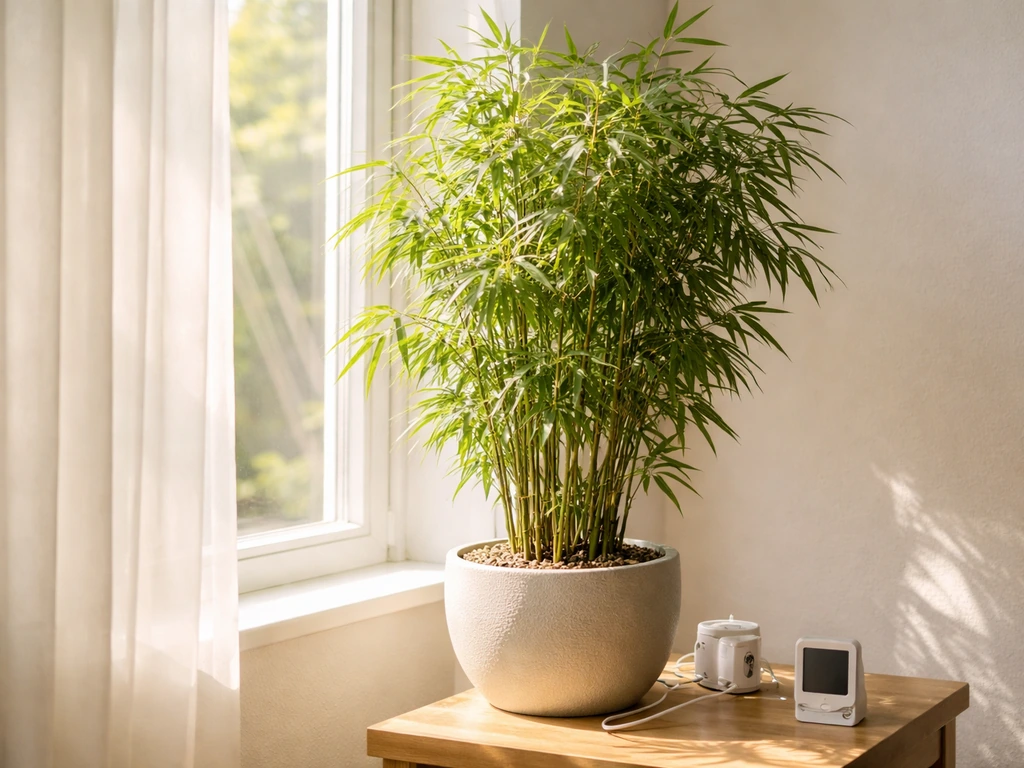
Light is where most indoor bamboo attempts fail. Fargesia rufa, one of the best indoor candidates, wants at least six hours of direct sunlight per day under ideal outdoor conditions. Indoors, you're almost always working with reduced light intensity, so placement matters enormously. A south-facing window is your best option in the Northern Hemisphere. East or west-facing windows can work for Fargesia, but you'll see slower growth and potentially more yellowing leaves. North-facing windows alone are not sufficient for any bamboo species.
If your home doesn't offer enough natural light, supplemental grow lighting is a practical fix. Use Daily Light Integral (DLI, mol·m−2·day−1) to calculate how much total light your plants receive over a day and apply that as an input for lighting or plant production decisions [supplemental grow lighting is a practical fix](https://www. pubs. ext.
vt. edu/content/dam/pubsextvt_edu/spes/spes-720/SPES-720. pdf). [The key metric to understand is daily light integral (DLI), which measures the total amount of light a plant receives over a full day.
](https://en. wikipedia. org/wiki/Dailylightintegral) For bamboo, targeting a DLI of around 20 to 30 mol/m²/day is a reasonable indoor goal. A full-spectrum LED grow light running 12 to 14 hours per day at moderate intensity can hit that range without cooking the plant or running up your electricity bill significantly.
Temperature and Humidity
Bamboo is more sensitive to temperature swings than most people expect. For Fargesia varieties, the ideal indoor temperature range is roughly 15 to 25°C (59 to 77°F), which aligns well with normal household conditions. The problem isn't usually the average temperature, it's the extremes: cold drafts near windows in winter, dry heat from radiators or vents, and the sudden temperature drops that happen when a window is left open on a cold night. Keep your bamboo away from heating and cooling vents, and avoid placing it right against a single-pane window where temperatures near the glass can swing dramatically.
Humidity is another underrated factor. Most homes run at 30 to 50% relative humidity, especially in winter with forced-air heating running. Bamboo prefers humidity closer to 50 to 70%. A simple fix is to run a small humidifier nearby or place the pot on a tray filled with pebbles and water, keeping the waterline below the drainage holes. Grouping plants together also raises local humidity naturally. Misting the leaves is a short-term option but doesn't maintain humidity levels through the day.
Airflow
Indoor bamboo benefits from gentle airflow. Stagnant air encourages fungal problems and spider mite infestations. A ceiling fan on low, or simply keeping a window cracked during mild weather, goes a long way toward keeping the plant healthy. Just make sure any airflow isn't cold or hot blasts directly on the plant.
Container Setup: Pot Size, Soil, and Drainage
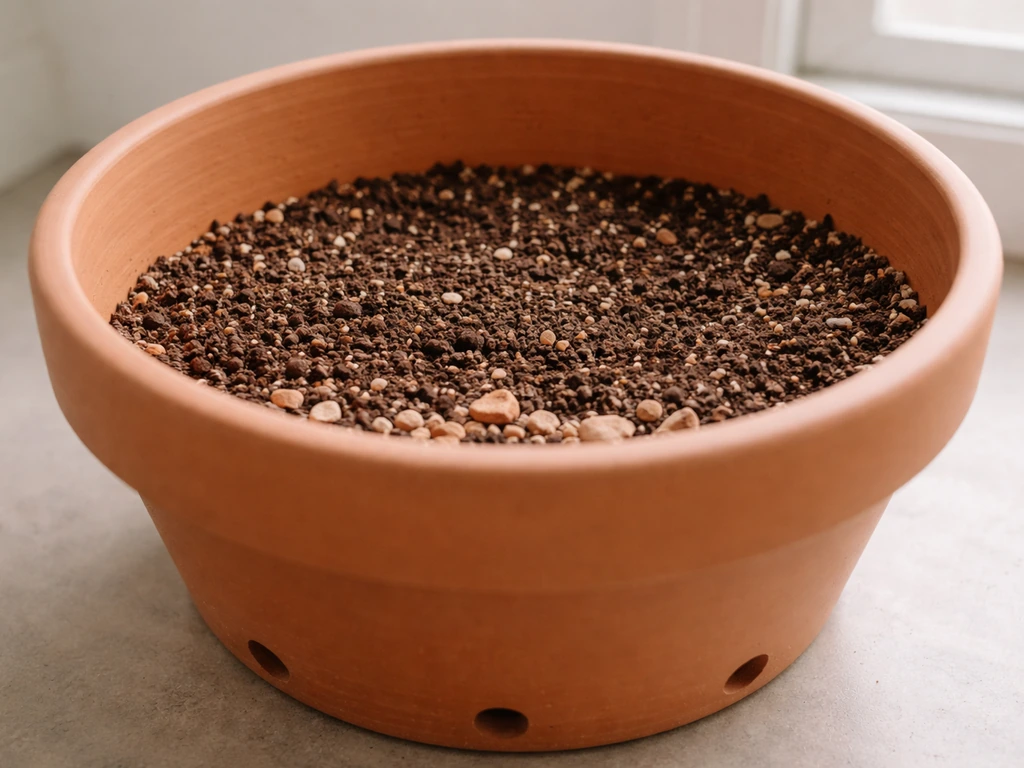
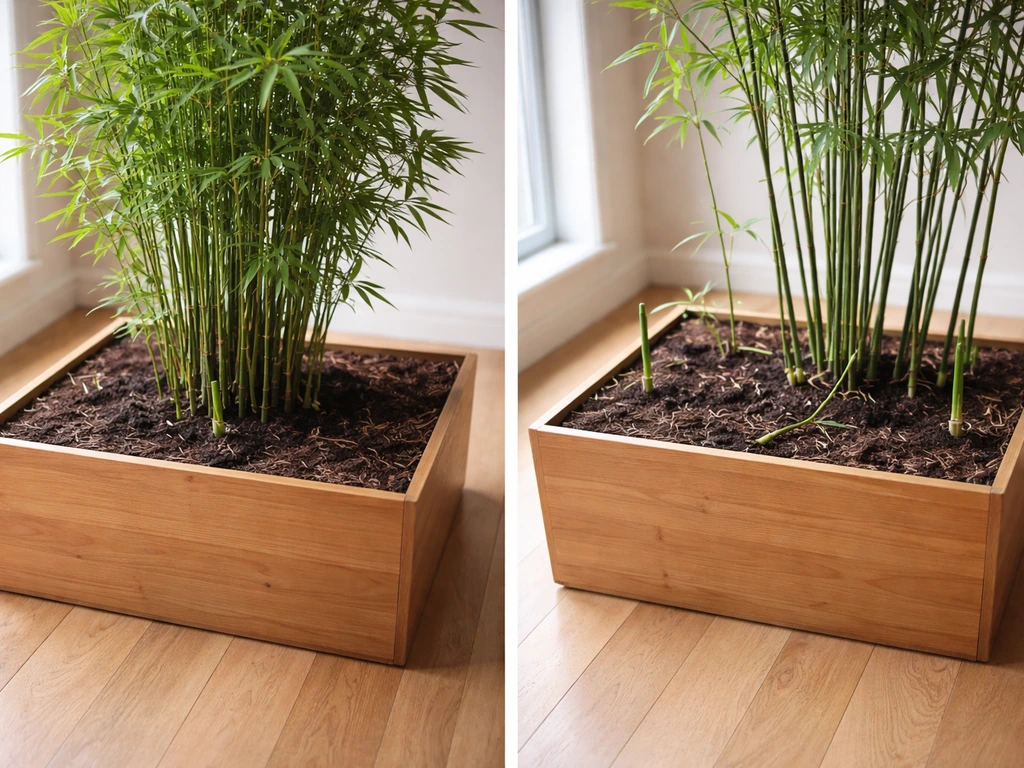
The container you choose sets the ceiling for how well your indoor bamboo grows. Start with a pot that's genuinely large, at least 15 to 20 gallons for a mature clumping bamboo. Smaller containers restrict root and rhizome development too quickly, leading to stunted growth and stressed plants that need repotting within a year or two. A wide, deep pot is better than a narrow, tall one since bamboo rhizomes spread laterally. This same thinking applies whether you're exploring bamboo in planter boxes or working with traditional round pots.
Drainage is critical. The most common bamboo killer indoors is overwatering combined with poor drainage, not underwatering. Your pot must have adequate drainage holes, and they need to actually work. If you're using a saucer, don't let water pool in it for more than an hour after watering. A pot that retains standing water at the bottom will cause root rot faster than almost any other mistake you can make.
For soil, skip standard potting mix and build something faster-draining. A good indoor bamboo mix is roughly 60% quality potting soil, 30% perlite or coarse sand, and 10% compost. This gives you the water retention bamboo needs while ensuring excess drains quickly. Bamboo prefers a slightly acidic to neutral pH, somewhere between 5.5 and 7.0. If you're using municipal tap water high in calcium or chlorine, letting it sit overnight before watering or switching to filtered water can help maintain that pH range over time.
For growers interested in experimenting beyond traditional soil setups, it's worth knowing that bamboo growing in hydroponics is a real possibility, though it requires more technical setup and monitoring than most home growers want to take on.
Watering, Feeding, and Pruning
Watering
The simplest watering rule for container bamboo is to check the top inch of soil, and water when it looks and feels dry. When you do water, water thoroughly until it drains out the bottom holes. This flush-and-drain approach is far better than frequent shallow watering, which encourages surface roots and salt buildup in the soil. During active summer growth, you may need to water two to three times per week, and during heat waves, potentially every day. In winter when growth slows, cut back significantly, maybe once a week or less. The plant tells you what it needs: drooping or curling leaves mean it's thirsty, yellowing lower leaves with wet soil usually means overwatering.
Fertilizing
Bamboo in containers needs more regular feeding than in-ground plants because nutrients leach out with every watering. A balanced slow-release fertilizer with roughly equal nitrogen, phosphorus, and potassium, something like a 14-14-14 formulation, applied in early spring and again in midsummer works well for most indoor setups. Avoid heavy nitrogen applications in fall and winter, as pushing new growth when light levels are low leads to weak, leggy shoots. A light liquid feed every four to six weeks during the growing season can supplement the slow-release granules if your plant looks pale or growth seems sluggish.
Pruning and Root Management
Indoor bamboo pruning has two goals: keeping the plant at a manageable height and maintaining container health. For height, simply cut unwanted culms (canes) down to the base. Don't cut canes partway up, as bamboo doesn't regenerate from a cut culm the way many plants do. Removing old or yellowing canes at the base keeps the plant looking tidy and redirects energy to healthy new shoots.
Root management is the bigger long-term task. Every two to three years, you'll need to either repot into a larger container or divide the root mass. Dividing means cutting the root ball roughly in half with a sharp saw or machete, then replanting each division in its own pot. This is the same division approach recommended for bamboo grown in troughs and applies equally well to standard pots indoors. If you skip this step, the roots will fill the container completely, the plant will become stunted, and you'll see leaf dieback even with good watering and feeding.
How Fast Will It Grow, and How Big Will It Get?
Expect significantly slower growth indoors than you'd see from the same species planted outside. Fargesia rufa in a garden might put up new culms 4 to 6 feet tall in its second or third year. The same plant in an indoor container is likely to produce shorter culms, maybe 2 to 4 feet, with noticeably less vigor. This isn't a failure, it's just the reality of reduced light, lower humidity, and restricted root space.
In the first year, most newly potted bamboo focuses on root establishment rather than above-ground growth. Don't panic if you don't see much happening above the soil line. By year two, assuming conditions are right, you should start seeing new culms emerging, particularly in spring and early summer. Most indoor clumping bamboo tops out at 4 to 8 feet in a container, which is genuinely useful for a privacy screen or a dramatic living accent. The same container constraints that limit your running bamboo apply here too: once roots fill the pot, above-ground growth slows considerably. Growing bamboo hydroponically can potentially accelerate nutrient uptake and growth, but managing that system reliably indoors is a different skill set.
What Type of Bamboo Works Best Indoors: A Quick Comparison
| Feature | Fargesia (Clumping) | Phyllostachys nigra (Running) |
|---|---|---|
| Rhizome behavior | Spreads slowly outward from center | Aggressive lateral runners |
| Container suitability | High — natural containment | Moderate — requires aggressive management |
| Typical indoor height | 4–8 feet | 6–15 feet (hard to limit) |
| Light requirement | Moderate (tolerates some shade) | High (prefers full sun) |
| Repotting frequency | Every 3–4 years | Every 1–2 years |
| Indoor difficulty level | Beginner-friendly | Intermediate to advanced |
| Best for | First-time indoor growers | Experienced growers with bright space |
If you're choosing between the two, go with a clumping Fargesia variety for your first indoor bamboo. It's more forgiving, grows at a pace that matches indoor conditions, and won't take over your container in a single growing season.
Common Problems and How to Fix Them
Yellowing Leaves
Yellow leaves are the most common complaint from indoor bamboo growers, and they have several possible causes. Lower leaves yellowing and dropping naturally is normal as the plant matures, nothing to worry about. Widespread yellowing across the whole plant usually points to overwatering or poor drainage. Check that your drainage holes aren't blocked and that you're not watering before the topsoil has had a chance to dry slightly. Yellowing with dry soil, on the other hand, often signals low humidity or underwatering.
Insufficient Light
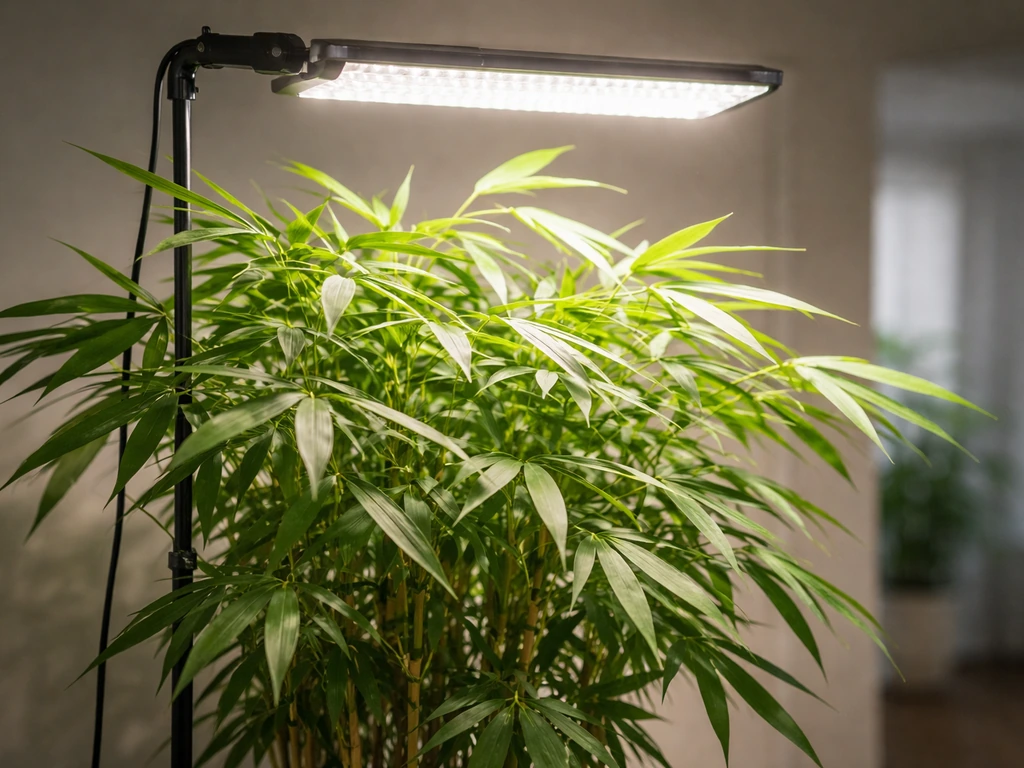
If your bamboo is producing thin, weak culms and losing leaves faster than it gains them, inadequate light is the likely culprit. Move the plant to a brighter location or add a grow light. Even an inexpensive full-spectrum LED panel running 12 to 14 hours per day can make a noticeable difference within a few weeks.
Spider Mites and Scale
Dry indoor air is an open invitation for spider mites, which appear as tiny moving dots on the undersides of leaves, often accompanied by fine webbing. Increase humidity, improve airflow, and treat with insecticidal soap or neem oil applied to the undersides of leaves. Scale insects look like small brown bumps on culms and leaves; remove them physically with a soft brush dipped in rubbing alcohol, then follow up with neem oil. Both pests are far easier to control when caught early, so inspect your plant monthly.
Root Rot
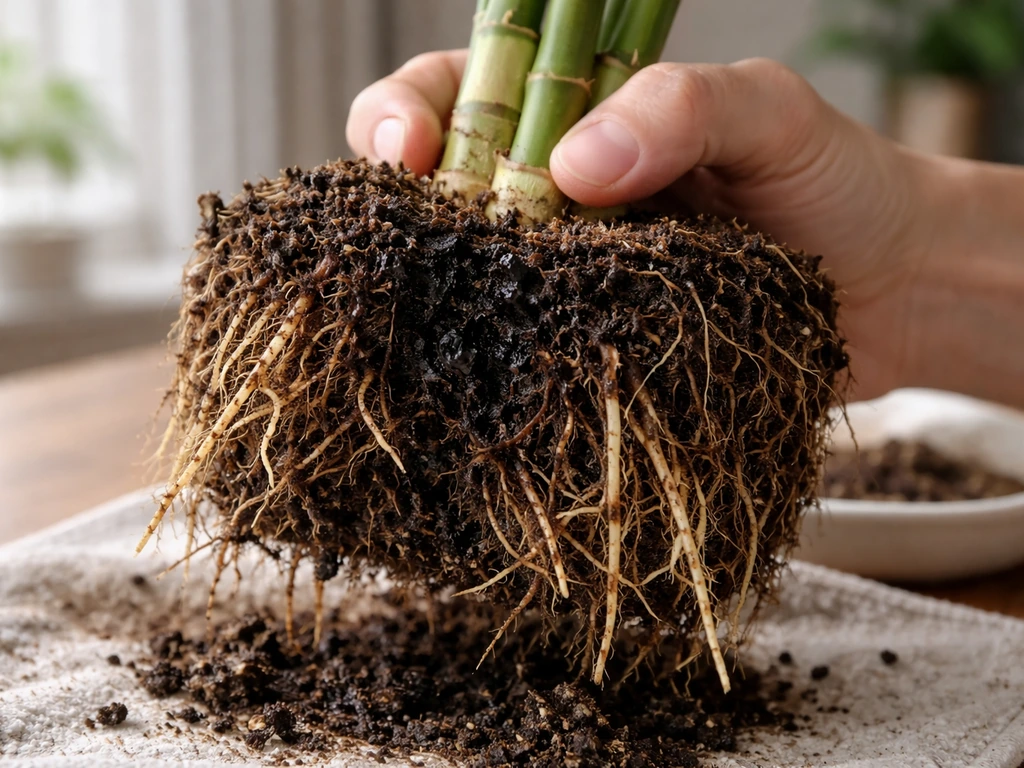
Root rot from overwatering is the indoor bamboo killer most people don't catch until it's too late. Signs include mushy black roots (visible when you unpot the plant), a sour smell from the soil, and a plant that wilts despite wet soil. If you catch it early, remove the plant from its pot, trim away all black or mushy roots, let the remaining root system air dry for an hour, and repot in fresh, well-draining mix. Cut back on watering significantly going forward.
Outgrowing the Container
If your bamboo has stopped producing new culms, existing leaves are browning at the tips, and water seems to run straight through the pot without being absorbed, the plant has probably filled its container completely. This is a normal part of the cycle, not a failure. Your options are to divide the root mass and repot into two containers, or move up to a significantly larger pot. For running varieties especially, this maintenance cycle happens more quickly and needs to be treated as a regular part of your care routine rather than an emergency.
Your Next Steps
Start with a Fargesia rufa or similar clumping species, put it in a 15 to 20 gallon container with excellent drainage, and place it in the brightest spot in your home. Get the watering rhythm right by checking the soil before watering rather than sticking to a fixed schedule. Feed it a balanced slow-release fertilizer in spring and midsummer, and plan to divide or repot every three years or so. If you do that, indoor bamboo is genuinely rewarding. It grows, it looks dramatic, and it stays contained without the rhizome-escape concerns that make running bamboo stressful outdoors.
FAQ
Can I grow bamboo indoors in a basement or garage?
Yes, but only if you can get strong light and consistent indoor temperatures. In most homes, a garage or basement is too dim unless you add grow lighting and protect plants from cold drafts. If you use a grow light, aim for the same DLI target (about 20 to 30 mol/m²/day) and keep the bamboo within the ~15 to 25°C (59 to 77°F) range.
Will a root barrier make running bamboo easy to grow indoors?
Some people try to “contain” running bamboo with barriers, but in a container the practical issue is root fill and stunting, not escape. Barriers also complicate division and can trap circling roots. If your goal is low maintenance, choose clumping Fargesia from the start.
Will my indoor bamboo grow year-round, or should I expect a winter slowdown?
Expect slow seasonal behavior and a growth pause in winter. Even with good care, you may see less or no new culms during low-light months, and watering frequency should drop because the soil dries more slowly. Don’t increase fertilizer in winter, it can lead to weak growth.
How close can indoor bamboo be kept to a window in winter?
If the plant is near a window, temperature swings from the glass can matter more than room temperature. Use a buffer (a few feet away from the window or insulated stand) and avoid placing it where cold drafts hit. In winter, don’t let leaves touch a single-pane window surface.
Can I divide and repot indoor bamboo myself, and when is the best time?
Yes, but only if you do it safely and correctly. Use clean, sharp tools, remove the division from a wet root ball if roots are circling, and replant into fresh draining mix right away. Keep the division in bright, indirect light for about a week and water lightly to avoid shock, then return to your normal schedule.
What should I do if my bamboo looks droopy but the soil feels wet?
Overwatering often looks like “the plant is thirsty” because drooping can be caused by root stress. Before watering, check the top inch of soil and confirm drainage works by watering and confirming runoff is quick. If the pot takes a long time to drain, fix drainage rather than adding more water.
Does tap water affect indoor bamboo, and should I change my watering water?
Clean, non-alkaline water is important because bamboo is sensitive to pH drift. If you use tap water, consider filtering or letting it sit overnight, then periodically flush the pot with a small amount of water to prevent salt buildup. If leaves keep yellowing despite good drainage, check water quality and soil age.
How can I tell if my grow light is strong enough, without measuring DLI?
DLI is the best indoor light metric, but you can also use a practical check: if the leaves look paler or culms get thinner over a few weeks, your light is likely insufficient. Increase light gradually, shorten or lengthen the photoperiod based on plant response, and keep the lamp far enough away to avoid heat stress.
If I use a humidifier or pebble tray, do I still need airflow?
A pebble tray can help locally, but it often won’t raise humidity enough on its own in dry winters. For better results, run a humidifier near the plant and aim for the higher end of the preferred range. Also, keep a small airflow so leaves dry gently, not constantly wet.
My bamboo stopped making new culms. How do I troubleshoot the cause?
If there’s no new growth for a while, check the “big three” first: light level, whether the container is root-filled, and watering consistency. If water runs straight through and the plant is packed in, it’s time to divide or move to a larger pot even if conditions otherwise look correct.
Should I fertilize right away after repotting an indoor bamboo?
Thin, weak shoots can come from low light, but if new growth is also pale or the plant looks chronically underpowered, you may need fertilizer. Use a slow-release balanced option in spring and midsummer as recommended, then pause fall and winter. If you recently repotted, skip fertilizing for a few weeks since fresh mix can already contain nutrients.
Can I keep spider mites and scale from taking over without full chemical treatments?
Yes, for indoor clumping bamboo. If you keep humidity up, provide gentle airflow, and inspect undersides of leaves monthly, you can control pests early and often with spot treatments like insecticidal soap. Isolate the plant if you see active mites or scale to prevent spread to other houseplants.
Next Article
Can Bamboo Grow in Las Vegas? Guide to Success in Desert
Yes, bamboo can grow in Las Vegas with the right species, irrigation, shade, and containment; step-by-step planting and保护