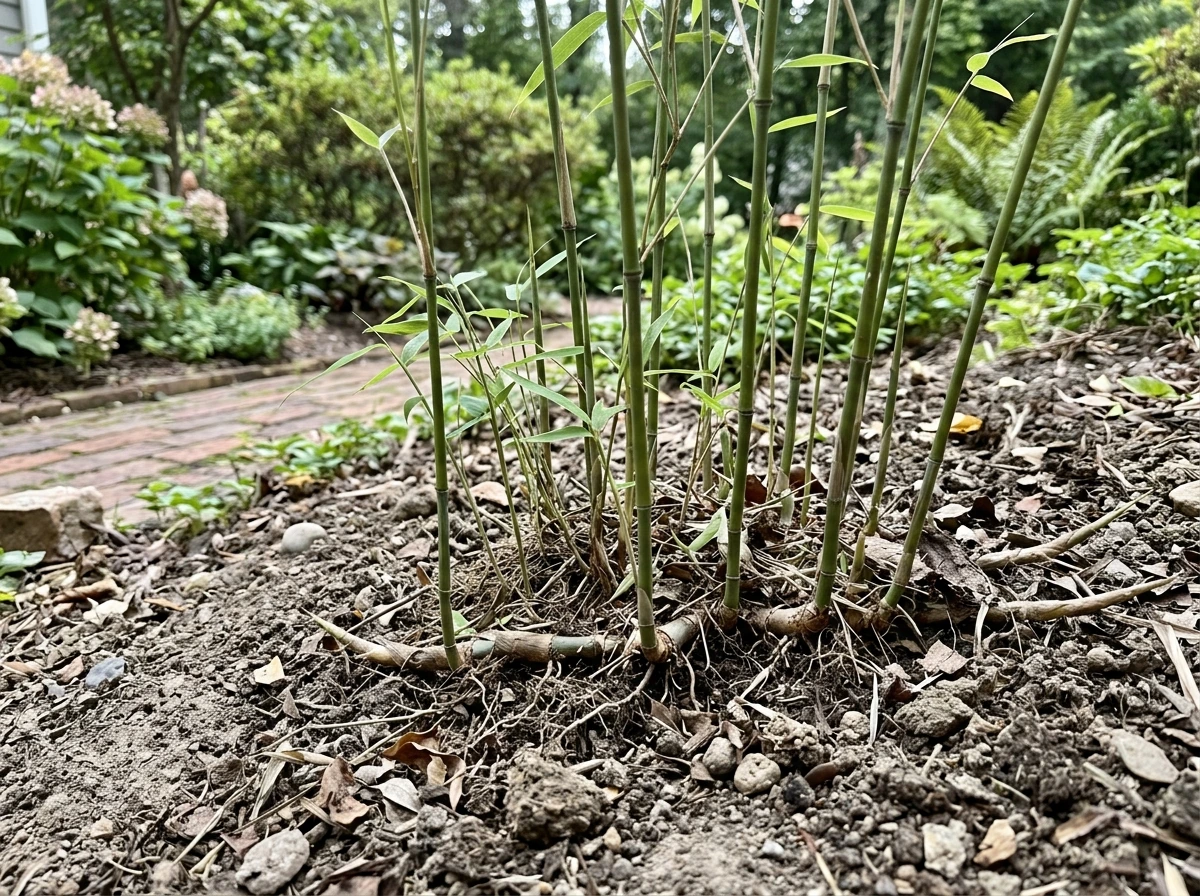
Bamboo grows natively across a massive swath of the globe: tropical and subtropical Asia (especially the monsoon belt from India through southern China and into Southeast Asia), sub-Saharan Africa, Latin America, and northern Australia. But the honest answer to 'where does bamboo grow on a map' is that it depends entirely on which of the roughly 1,400 species you're asking about. To get a useful answer, you need to look at a specific species and its native range rather than “bamboo” as a whole where do bamboo trees grow. If you want the best answer, focus on the native range of the specific species you're considering and how your climate matches it. Some species thrive in humid tropical lowlands; others survive Himalayan winters that dip to -20°C (-4°F). Getting this distinction right is what separates a successful planting from a dead grove.
Where Does Bamboo Grow Map Guide: Climate, Species, and Steps
What 'bamboo' actually means on a map
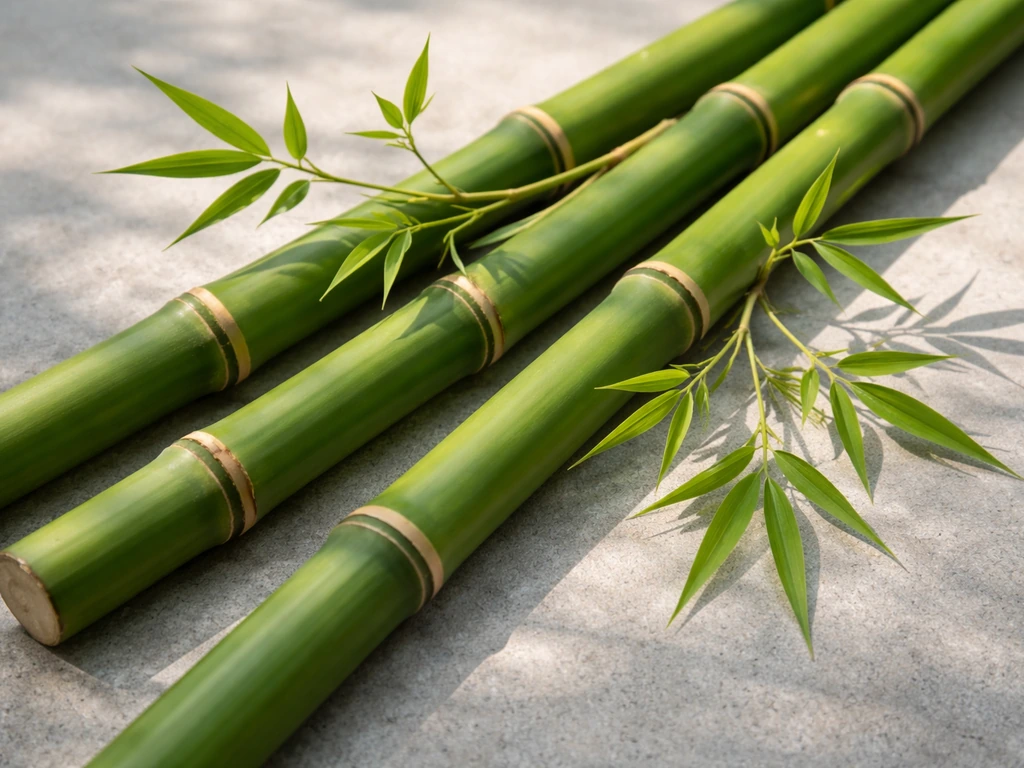
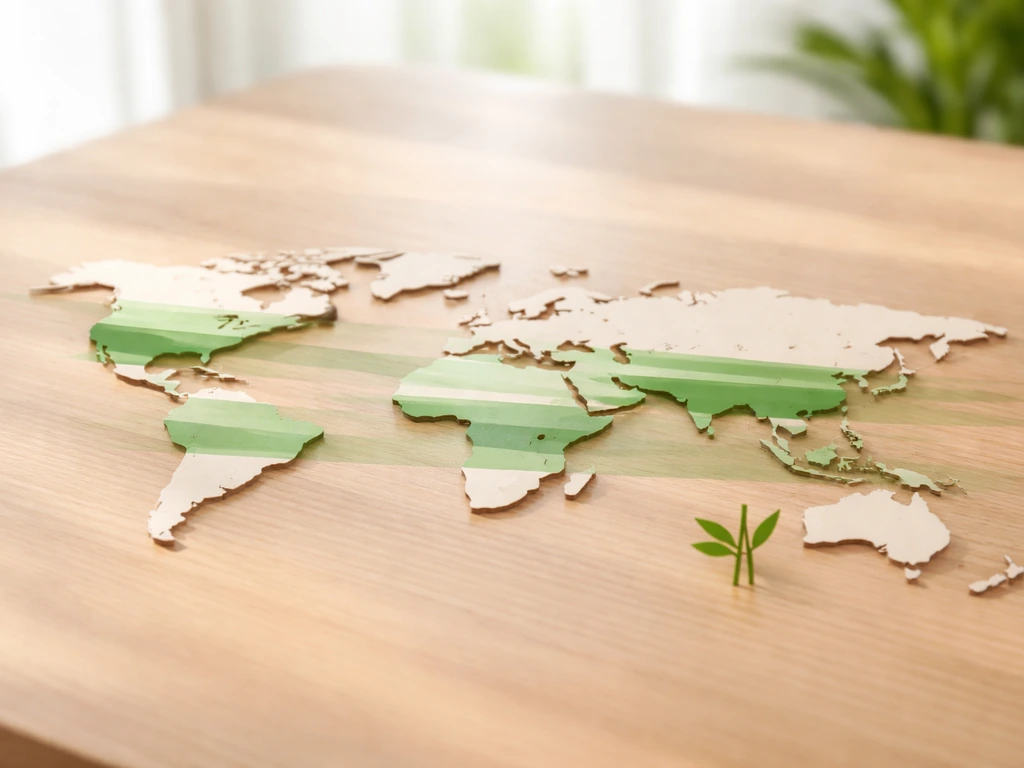
Bamboo is not one plant. It's a subfamily of grasses, Bambusoideae, with around 100 genera and 1,400 species. When you look at a bamboo distribution map, you're usually looking at the combined footprint of all those species stacked together, which creates the misleading impression that bamboo grows everywhere warm and rainy. In reality, most maps blend species with wildly different tolerances. A map showing bamboo in Siberia and bamboo in Borneo doesn't mean you can grow the same plant in both places.
The native range is dominated by Asia and the Asia-Pacific. If you are wondering where bamboo grows in the world, it starts with understanding those native ranges and how they vary by species. The Southeast Asian monsoon zone, running through southern and southwestern China, Indochina, and the Indian subcontinent, is the global core: by some estimates, it contains around 80 percent of the world's bamboo species and roughly 90 percent of total bamboo forest area. The Americas have a legitimate native bamboo presence too, mostly in South and Central America, but with a sharp gap through the Atacama Desert that shows clearly on any native-range map. Europe and the continental US have almost no native bamboo at all; what grows there has been introduced and often naturalized.
This matters because when you see bamboo growing in gardens across France, the Pacific Northwest, or New England, it's usually an introduced species that someone decided to plant. It can grow there, but it's not native, and that distinction affects how maps should be read.
How climate determines whether bamboo survives in your area
Temperature is the single biggest filter. Tropical species like Bambusa bambos are native to the wet tropical biome from the Indian subcontinent to Indochina and can't handle sustained frost. Temperate running bamboos in the genus Phyllostachys are far tougher: Phyllostachys aureosulcata survives down to around -18°C (0°F), which covers USDA hardiness zone 6 and warmer. In zone 5 or colder, the canes die back every winter, but roots survive and send up new growth in spring, so you get bamboo, just not the tall grove you were imagining. Clumping Fargesia species are the cold-tolerance champions: Fargesia murielae handles about -15°C, while many other Fargesia species tolerate -20 to -25°C, making them viable across much of continental Europe and northern North America.
Humidity and seasonality matter almost as much as cold minimums. Bamboo is fundamentally a forest plant adapted to regular moisture. It doesn't do well in arid climates even when temperatures are within range. The Atacama gap in South American native bamboo isn't about latitude; it's about extreme aridity. If you're in a dry climate with cold winters (think the high plains of North America or central Anatolia), you're fighting two problems at once.
Rainfall, sunlight, and soil: what bamboo actually needs by type
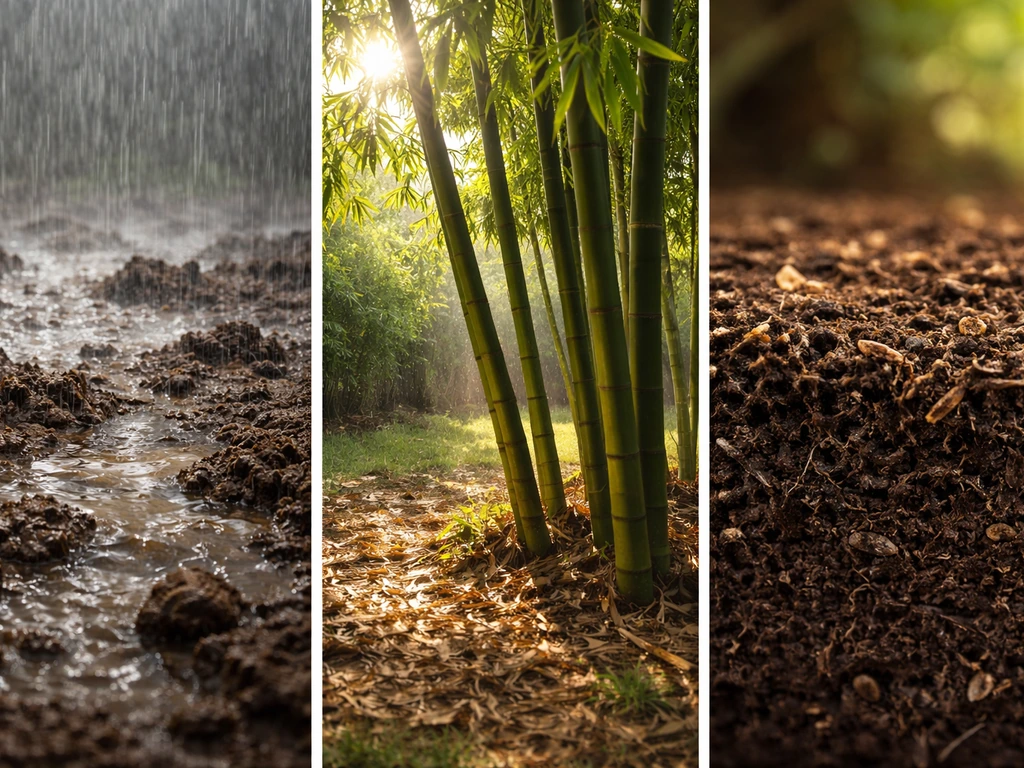
Most tropical and subtropical clumping species grow in monsoon climates with 1,000 to 3,000 mm of annual rainfall. That's a wide range, but the pattern matters too: a long dry season can stress bamboo even if the annual total looks adequate. Running bamboos like Phyllostachys are more forgiving of drier summers as long as the soil doesn't dry out completely around the roots during establishment.
Bamboo generally prefers full sun but tolerates partial shade, and it rewards you with faster, taller growth in full sun. For soil, aim for well-drained sandy loam to clay loam with a pH between roughly 4.5 and 6.0. The two failure modes I see most often are poor drainage and thin, compacted soil with no organic matter. Bamboo roots won't survive waterlogged conditions, and moso bamboo (Phyllostachys edulis) is particularly vulnerable to winter waterlogging, even when temperatures are within its -17 to -18°C survival range. Good drainage isn't optional; it's part of the cold-hardiness equation.
During establishment, keep the soil consistently moist but not puddled. A thick layer of mulch over the root zone helps enormously, both for moisture retention and soil temperature buffering. Compost worked into the planting area gives new rhizomes something to grow into.
How to actually use bamboo distribution maps
The most useful tools for mapping bamboo distribution at the species level are GBIF (Global Biodiversity Information Facility) and Plants of the World Online (POWO) from Kew. Both let you look up specific species, not just 'bamboo' as a generic category. On POWO, each genus and species page separates native range from 'Introduced into' regions, which is exactly what you need. Phyllostachys aureosulcata, or yellow groove bamboo, is native to China’s Zhejiang Province, which is a useful example for native-range mapping blank" rel="noopener noreferrer">native range from 'Introduced into' regions. When you see Bambusa listed as native to Tropical and Subtropical Asia and introduced into dozens of other regions, that tells you the conditions under which it naturalized and gives you a clue about climate match.
The trap most people fall into is searching for a generic 'bamboo map' and assuming any region colored on that map is equally suitable for the species they want to grow. GBIF occurrence data is species-level, so if you search for Phyllostachys aurea, you'll see actual documented occurrences, many of which are introduced garden or naturalized populations in the US Southeast, Pacific Coast, and parts of Europe. That's genuinely useful for ground-truthing whether a species can survive in a climate similar to yours.
One caution: distribution maps work at regional scales. Your actual site could be a frost pocket that's two zones colder than the surrounding area, or a south-facing urban courtyard that's a zone warmer. The USDA Plant Hardiness Zone Map, which is built on average annual extreme minimum winter temperatures in 10°F increments, includes explicit warnings about microclimate variation: heat islands from pavement or buildings can push you a full zone warmer, while low-lying areas collect cold air and behave colder. Always cross-reference a regional map with your actual site.
Matching a bamboo species to your location
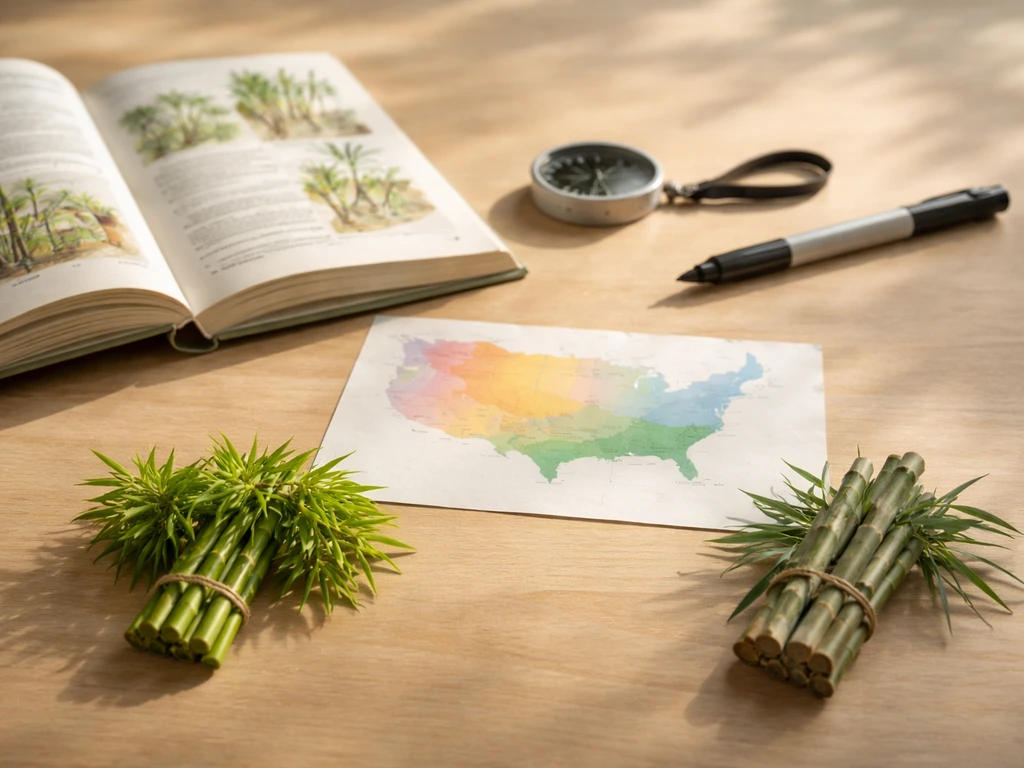
The fastest way to screen for viability is to start with your USDA hardiness zone (or equivalent for your country), then cross-check against species minimums. Here's a practical framework:
| Climate / Zone Range | Suitable Bamboo Types | Key Notes |
|---|---|---|
| Tropical (no frost, humid) | Bambusa, Dendrocalamus, Gigantochloa | Widest species choice; monitor water in dry seasons |
| Subtropical (rare light frost, USDA zones 9-10) | Most Bambusa, Phyllostachys, many clumpers | Protect new plants from occasional frost |
| Warm temperate (USDA zones 7-8) | Phyllostachys aurea, P. nigra, P. edulis, Fargesia | P. edulis needs good drainage in winter |
| Cool temperate (USDA zones 6-7) | Phyllostachys aureosulcata, Fargesia murielae, F. robusta | Canes may die back in coldest winters; roots survive |
| Cold temperate (USDA zones 4-5) | Cold-hardy Fargesia species | Fargesia tolerates -20 to -25°C; limit choices carefully |
Beyond zone, ask two more questions: does your annual rainfall pattern match the species' moisture needs, and does your soil drain freely? If your answer to either is no, you'll need to compensate with irrigation or raised beds before you commit to a planting.
Running vs clumping bamboo: this changes everything about where you plant
Running bamboos (primarily Phyllostachys and Pleioblastus) spread through aggressive horizontal rhizomes that can travel several meters a year. Clumping bamboos (Fargesia, Bambusa, Dendrocalamus) expand slowly outward from a central base, typically adding just a few inches of diameter per year. This difference is not just a garden tidiness question; it determines whether bamboo is a viable choice at a given site at all.
In the US, several states and counties have ordinances specifically targeting running bamboo because of its spread into neighboring properties. Connecticut, for example, recommends that running bamboo only be planted with a root barrier extending at least 28 inches deep. The Connecticut Nursery & Landscape Association handout similarly advises that a barrier for running bamboo should extend about 28, 30 inches deep into the soil root barrier extending at least 28 inches deep. Industry practice puts that deeper, at 30 inches with 80-mil HDPE barrier material, and some guidance goes to 30 to 36 inches. Even with a barrier, annual maintenance, which means cutting back any rhizomes that surface or escape, is required.
In practice: if you're in a smaller yard, near a property line, or in a regulated area, clumping bamboo is the right category to shop from. Running bamboo belongs on large properties with space to expand, or in contained situations where you've committed to active management. The species that tend to be most cold-hardy (especially Phyllostachys) are also the most aggressive runners, which is part of why temperate-zone gardeners face this tradeoff more acutely.
What to do if outdoor bamboo won't work where you live
If your climate is genuinely outside the range of any outdoor-viable species, or if you're in an apartment or renting a property where ground planting isn't an option, container growing is a realistic alternative. Bamboo in large containers (minimum 15-20 gallons for anything you want to grow tall) can survive indoors near a bright south or west-facing window, or outdoors in summer with shelter in winter. The tradeoff is that most bamboos will grow much more slowly and stay significantly smaller in containers.
For genuinely cold or arid locations, a greenhouse or heated structure extends the range dramatically. A minimally heated greenhouse that stays above freezing lets you grow subtropical species that would otherwise die outside. The key management change indoors is humidity: bamboo suffers in dry heated air, so regular misting or a humidity tray is worth the effort.
If your goal is screening or privacy and outdoor bamboo isn't feasible, it's worth knowing that lucky bamboo (Dracaena sanderiana) is sold as 'bamboo' but isn't bamboo at all. It's a popular indoor plant but a completely different genus. True bamboo indoors requires more light and space, but it can work.
Your next steps, starting today
Here's a practical sequence you can work through right now to go from 'where does bamboo grow' to 'what should I actually plant': If you’re wondering where does balsa wood grow, the best starting point is to compare its tropical habitat needs and frost tolerance to your local climate.
- Find your USDA hardiness zone (or your country's equivalent) using your zip code or coordinates. Write down your zone number and your average last and first frost dates.
- Go to Plants of the World Online (powo.science.kew.org) or GBIF (gbif.org) and search for species that match your zone. Start with genus-level searches: Fargesia for cold climates, Phyllostachys for temperate, Bambusa or Dendrocalamus for warm and tropical.
- Cross-check rainfall: look up your average annual precipitation and, more importantly, whether you have a pronounced dry season. If your dry season coincides with summer growing season, flag irrigation as a requirement.
- Assess your soil drainage. Dig a hole about 12 inches deep, fill it with water, and check back in two to four hours. If water is still standing, you have a drainage problem that needs solving before you plant.
- Decide on running vs clumping based on your site size, property lines, and local regulations. If in doubt, start with a clumping species.
- Check GBIF occurrence records for your top candidate species filtered to your country or region. If you see documented occurrences in a climate similar to yours, that's real-world confirmation the species can establish there.
- If outdoor planting isn't viable this season (wrong time of year, soil not ready, zone too cold), pot up a specimen now indoors or in a greenhouse to start learning the plant before committing to a ground installation.
- Plan realistically for establishment: most bamboo takes two to three years of minimal top growth while it builds its root system. Don't judge a new planting by the first summer.
The question of where bamboo grows is really a series of smaller questions about species, climate, rainfall, and site. Work through them in order and you'll arrive at a short list of species that will actually thrive where you are, rather than a generic answer about a plant that's native half a world away.
FAQ
I found a “bamboo grows here” map for my region. How do I tell if it matches the specific bamboo I want?
Use species-level sources, then compare three things: the species native minimum winter temperature, its native rainfall pattern (especially length of dry season), and the growth habit (runner vs clumper). A region can match temperature but still fail due to low humidity, poor drainage, or frost pockets.
Why do some bamboo distribution maps show bamboo in very cold places, even though most bamboos are tropical?
Those maps often combine occurrences across many species and also include introduced or naturalized populations. Some temperate bamboos can survive freezing by dying back above ground and regrowing from surviving rhizomes, so you may see “bamboo presence” without the same tall, evergreen growth you expect in the tropics.
Can I rely on my USDA hardiness zone alone to decide whether bamboo will live outdoors?
Not by itself. USDA zones use average extreme minimums, but bamboo is heavily affected by microclimate and winter soil moisture. A site that is marginal by zone can still succeed with good drainage and wind exposure, or fail with waterlogged winters and frost pockets.
What’s the difference between “native range” and “introduced into” on mapping tools, and which matters for me?
Native range tells you where the species evolved and is naturally adapted, introduced regions show where it has survived after planting. For gardening, introduced populations can still be viable, but they are a weaker signal than native range if you are trying to predict performance under your specific winter and rainfall conditions.
I live in a dry climate that’s not too cold. Will bamboo still grow?
Dryness can be a deal-breaker even when temperatures are within the species tolerance. Bamboo generally needs consistently moist soil and dislikes prolonged dry seasons. If you attempt it, plan on irrigation during establishment and consider raised beds or deeper, moisture-retentive soil to prevent root-zone drying.
Are running bamboos only a problem where they are native?
No, the aggressiveness is about rhizome behavior, not origin. Running bamboos can spread wherever conditions let them establish, especially with mild winters and regular moisture. Before planting, check local ordinances and install a root barrier plan if you are near property lines.
Do clumping and running bamboo handle winter water differently?
Yes. Many bamboos dislike waterlogged roots in winter, but some temperate species can be more sensitive than others. If a species is known to be vulnerable to winter waterlogging, focus on drainage, raised planting areas, and limiting standing water around the rhizomes during cold months.
How can I confirm whether occurrences in GBIF are wild, naturalized, or just garden escapes?
GBIF occurrence points are not always labeled clearly. A practical approach is to filter by country or region, look at the pattern (scattered points near towns versus continuous natural spread), and cross-check with cultivated records from the same area. If points cluster around settlements, treat it as evidence of survival, not proof of stable native-level establishment.
What if my yard has both a warm sunny area and a colder spot?
Treat them as separate microclimates. A frost pocket can be several degrees colder than surrounding ground, and urban heat near walls can be warmer. Do a simple test by tracking frost dates or using local weather observations, then match the bamboo species to the colder spot or plant in raised, well-drained ground.
Is “bamboo” on sale in stores always true bamboo?
No. Lucky bamboo is commonly sold as “bamboo” but it is a Dracaena, not a Bambusoideae grass. If you want true bamboo performance outdoors or in large containers, confirm the botanical name on the tag.
I want tall bamboo for privacy, but my yard is small. What should I do if running bamboo is risky?
Choose clumping types and also verify spacing and mature size, clumping still expands but more slowly and less invasively. If you must use a runner in a small space, you need active management (regular barrier checks and rhizome cutting), not just a barrier installation once.
Can Bamboo Plants Grow in Soil? Wet Conditions Guide
Learn if bamboo, including Chinese bamboo, grows in soil, how to handle wet conditions, and step-by-step planting care.