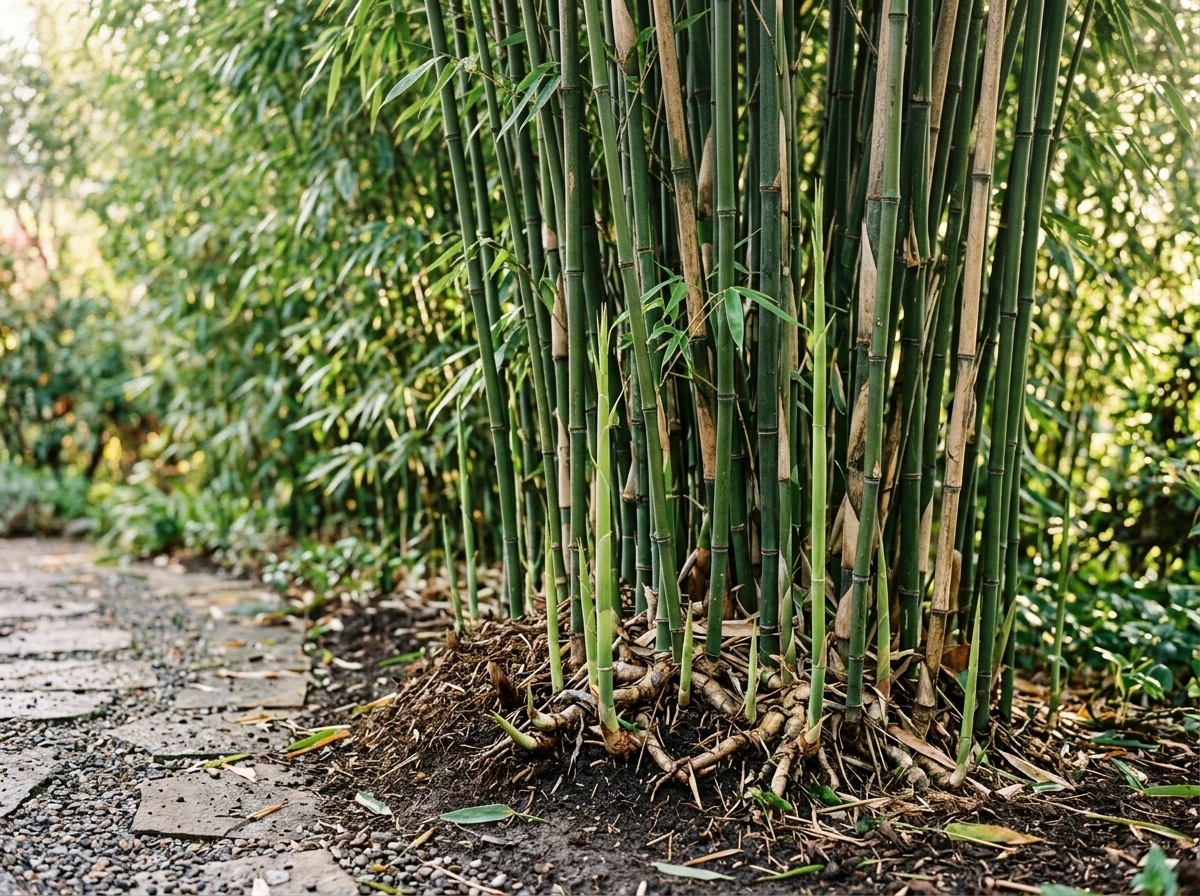
Black bamboo (Phyllostachys nigra) grows at a moderate pace by bamboo standards, typically adding 3 to 5 feet of height per year once it settles into the ground, though you won't see that kind of momentum in year one. Monrovia classifies its growth rate as 'Moderate,' and that's an honest label. If you're expecting the explosive speed you sometimes read about with timber bamboos, dial that back a little. Black bamboo is worth growing for its dramatic appearance, but it rewards patience more than impatience.
How Fast Does Black Bamboo Grow Timeframes and Tips
Marcus Hartwell
24 Mar 2026
What to realistically expect for growth speed
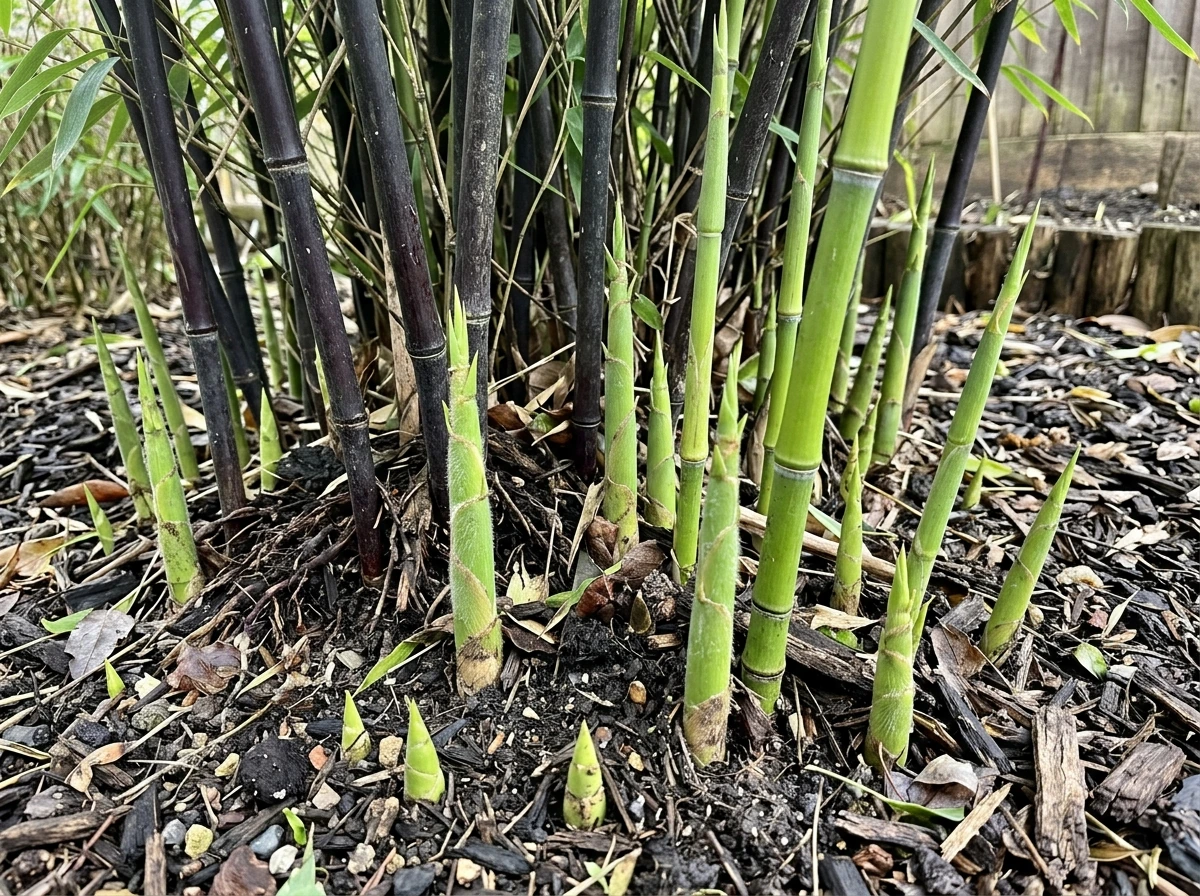
In the ground, a healthy, established black bamboo plant will shoot new culms each spring during a concentrated flush period. Those culms can gain noticeable height in a matter of weeks during the shooting season, which is one of the more dramatic things to watch in a garden. But the key word is 'established.' During the first one to two years after planting, most of the plant's energy goes underground, into building out the rhizome network. Above ground, things can look deceptively slow. That's not a sign something is wrong, it's just how Phyllostachys bamboos work.
The American Bamboo Society records black bamboo's maximum typical height at around 30 feet with culm diameters up to 2 inches at maturity. In real-world UK or northern US gardens, most plants will top out well below that, usually in the 15 to 20 foot range. In warmer climates like the US Southeast or Pacific Coast, you're more likely to approach those upper limits over a decade or so. Think of the 30-foot figure as a ceiling for ideal conditions, not a promise.
How long it takes to hit common milestones
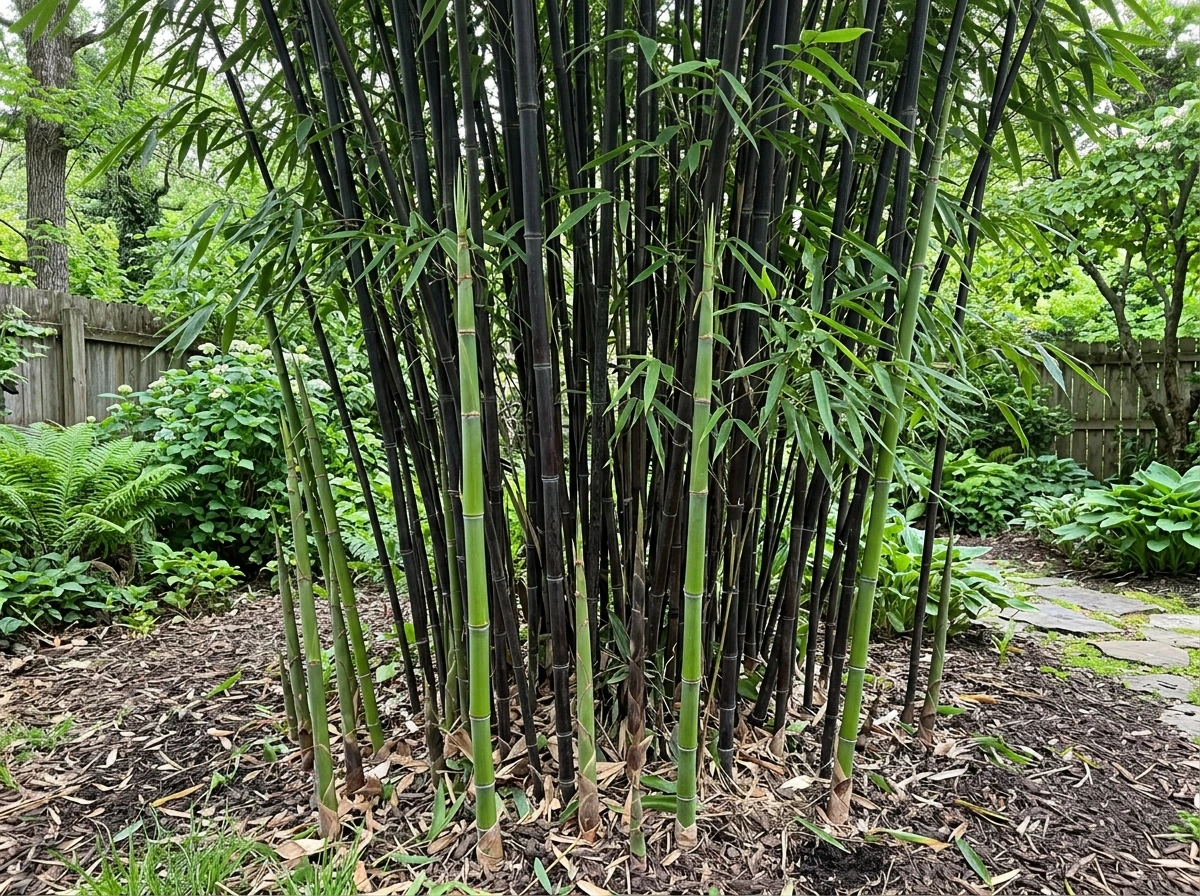
The clearest milestone most growers care about isn't height, it's color. New culms always emerge green, no matter how old or established your plant is. They turn that signature jet black over one to three years, with two to three seasons being the most commonly observed window. So if you plant a green-culmed nursery specimen today and expect black canes by summer, that's not going to happen. By year two or three, you should start seeing the dark color development that makes this species so distinctive.
Here's a rough timeline of what to expect from a nursery-grown transplant planted into the ground in spring:
| Timeframe | What's happening above ground | What's happening below ground |
|---|---|---|
| Year 1 | Little to no new culms; existing culms may grow slightly | Rhizomes establishing, spreading outward |
| Year 2 | First new culms appear, often taller than original plant | Rhizome network expanding significantly |
| Year 3 | Multiple new culms per season, early culms starting to blacken | Stand beginning to behave like a mature colony |
| Years 4–6 | Annual culm flushes become reliable; plant reaches 10–15 ft in good conditions | Rhizomes well established; running habit becomes active |
| Year 7+ | Approaching mature height; dense stand possible; deep black canes visible | Full mature colony behavior; containment matters more now |
This timeline assumes planting a container-grown specimen of decent size (around 1 to 1.5 meters tall from a nursery) into prepared ground in a temperate climate. Your mileage will vary based on zone, soil, and how much attention you give the plant early on.
Starting from seed: a longer road
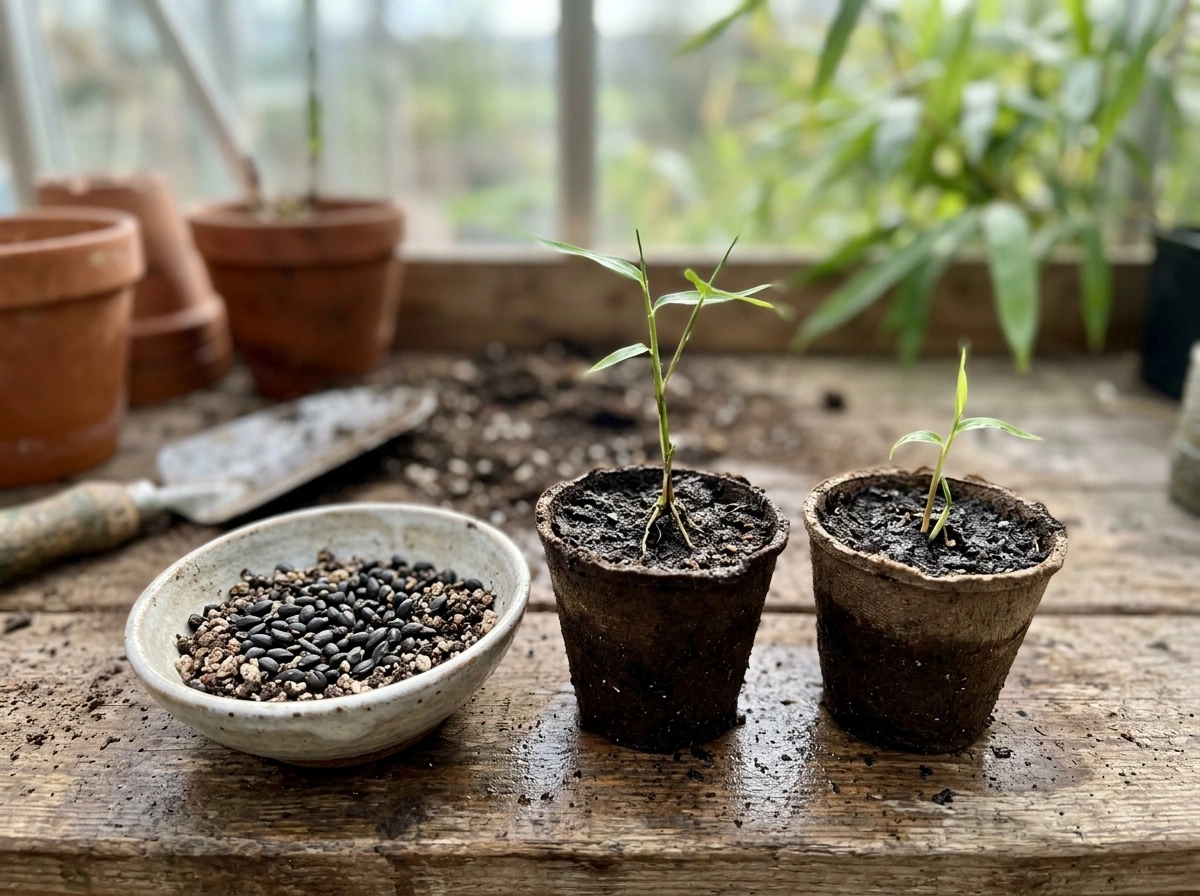
Growing black bamboo from seed is doable, but you should go in with realistic expectations because it adds years to the timeline. Germination itself is reasonably fast under good conditions, somewhere between 5 and 40 days depending on seed freshness, storage conditions, and temperature. Vendor claims vary a lot here, with some reporting as few as 5 to 10 days and others noting up to 40 days for older or poorly stored seed. Fresh seed in warm, moist conditions will sprout faster.
The real challenge isn't germination, it's the years that follow. A seedling spends its first two to three years just building enough root and rhizome mass to start producing meaningful culms. You're essentially running the same 'first year underground' phase as a transplant, except you're starting from a much smaller base. Realistically, seed-started plants won't match the size of a nursery transplant for at least three to four years, possibly longer in cooler climates. If your goal is a tall, dramatic stand of black bamboo in the near term, buying a 1 to 1.5 meter nursery plant and putting it in the ground will get you there years faster than starting from seed.
If you do start from seed, keep seedlings in warm (around 65 to 75°F), humid conditions with bright indirect light for the first several months. Don't rush them into the ground before they've developed a decent root ball, and don't expect the culm-blackening milestone until year four or five at the earliest.
What actually controls how fast yours will grow
Climate and hardiness zone
Black bamboo is rated for USDA zones 7 to 10, though it can survive in zone 6 with some protection. In warmer zones (8 and above), you'll see faster establishment and taller culms year over year. In zone 7 or borderline zone 6 gardens, expect slower annual height gains and smaller maximum culm diameter. Cold winters don't kill the plant in most cases, but they do slow rhizome development, which directly limits how many new culms you get the following spring. Growers in Florida will see noticeably faster progress than those in the mid-Atlantic or Pacific Northwest, where cooler winters slow the whole cycle down.
Sunlight
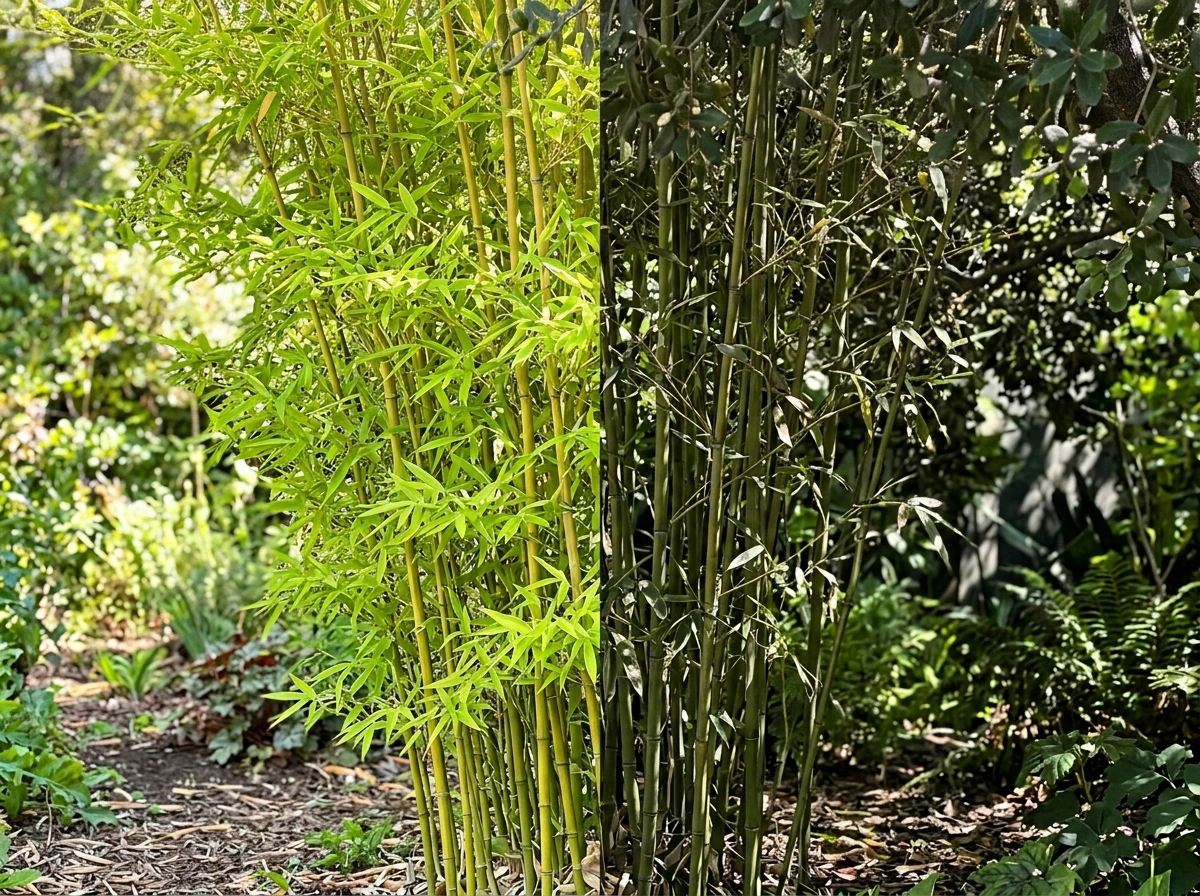
Full sun to partial shade is the sweet spot for black bamboo. More sun generally means stronger, faster culm growth. Planting in light shade or dappled conditions tends to produce lankier culms and somewhat slower overall growth compared to a sunnier site. If you're trying to maximize speed, don't tuck this plant in a shady corner. Six or more hours of direct sun per day is ideal. That said, in very hot climates (think how fast does bamboo grow in texas), afternoon shade can actually be beneficial and prevent stress that would otherwise slow growth.
Soil quality and drainage
Phyllostachys nigra prefers fertile, moist, well-drained soil. It does not like waterlogged conditions or prolonged drought. Either extreme will trigger the same visible stress symptom: yellowing leaves. If you see yellow foliage and you haven't had a dry spell, check your drainage. Compacted or clay-heavy soils slow rhizome expansion and limit how quickly the stand fills out. Amending with compost before planting makes a meaningful difference in first-year establishment. Aim for a soil pH in the range of 5.5 to 7.0, with loamy, organic-rich texture being the ideal.
Watering
Consistent moisture, especially during the spring shooting season, is one of the biggest factors in how much height a culm puts on in a given year. A culm that emerges during a dry spell will be shorter and thinner than one that has steady water throughout its development. Once a culm stops growing (usually within a few weeks of emergence), it will never get taller or wider, so that shooting window is critical. Water deeply and regularly during spring and early summer. Outside of the shooting season, black bamboo is fairly resilient, but it still needs consistent moisture to keep the rhizome system healthy.
Fertilizer
Bamboo responds well to nitrogen, which drives leafy, vigorous growth. For in-ground plants, a balanced fertilizer applied in early spring just before the shooting season begins gives the plant what it needs when demand is highest. For container plants, a balanced slow-release fertilizer like a 14-14-14 formulation is a good fit, because it avoids the risk of salt buildup that can come with frequent liquid feeding in confined soil volumes. Don't over-fertilize in fall; pushing late-season growth can produce soft tissue that's more vulnerable to cold damage.
How to speed things up (and what holds plants back)
If your black bamboo seems stuck, the most common culprits are root restriction (especially in containers), underwatering during the shooting season, or a shady planting spot. Here's what actually moves the needle:
- Plant in the ground rather than a container if speed is your goal. In-ground rhizomes have room to expand freely, and that directly translates to more and taller culms each year.
- Prepare the planting hole generously. A hole two to three times the width of the root ball, backfilled with compost-amended soil, gives the rhizomes a fast start into fertile ground.
- Water heavily during spring shooting. This is the single season where water has the most direct impact on culm height. Don't let the soil dry out from March through June.
- Apply a nitrogen-rich fertilizer in early spring, just as new shoots begin to emerge. Time this right and you'll see visibly bigger culms that season.
- Give the plant full sun. Moving a struggling bamboo from shade to sun is often the simplest fix for slow growth.
- Be patient through year one and two. Removing dead or weak culms keeps the plant tidy and redirects energy to new growth, but don't mistake slow early establishment for a sick plant.
- If growing from seed, use a heat mat to maintain consistent soil temperature of 68 to 75°F during germination, and don't let seedling soil dry out completely.
One thing that genuinely stalls growth and often goes undiagnosed: rhizome barriers that are installed too tightly or at the wrong depth. The RHS recommends planting black bamboo with around 3 meters (9 feet) of spacing to accommodate its spreading habit. If you've installed a barrier that's too close, you may inadvertently be creating the same root restriction problem as a container. Barriers are essential for running bamboos like Phyllostachys nigra, but they need to be placed at least 12 to 18 inches deep and allow reasonable spread before they redirect rhizomes upward.
Indoor vs outdoor, and container vs ground
The short version: outdoor, in-ground planting will always outperform everything else for growth speed. But not everyone has that option, so here's how the different scenarios stack up.
| Setup | Expected Growth Rate | Key Limitation | Best Practice |
|---|---|---|---|
| Outdoor, in-ground | Fastest (3–5 ft/year at maturity) | None inherent; climate is the main variable | Full sun, amended soil, spring fertilization |
| Outdoor, container | Moderate to slow (1–2 ft/year) | Root restriction once container fills | Repot every 2–3 years; use 14-14-14 slow-release fertilizer |
| Indoor, container | Slow (less than 1 ft/year typically) | Low light, low humidity, root restriction | Aim for 40–60% humidity; bright indirect light; consistent watering |
| Greenhouse/conservatory | Moderate (similar to outdoor container) | Humidity management; pest pressure | Maintain warmth and airflow; monitor for spider mites |
Indoor black bamboo is possible but genuinely challenging. The plant prefers around 40 to 60 percent relative humidity, which most homes don't naturally provide in winter when heating systems dry the air. You'll likely need a humidifier nearby or regular misting to keep the plant from declining. Light is the other bottleneck: a south-facing window is the minimum, and even then, indoor light levels are significantly lower than outdoor sun, which is why indoor plants grow so much more slowly. If you're growing black bamboo indoors as a temporary measure before transplanting outside, keep expectations modest. If it's a permanent indoor plant, plan for a much slower growth timeline and prioritize keeping it healthy over pushing it fast.
For container growing outdoors, the biggest practical issue is root restriction. Bamboo in planters becomes genuinely stunted once the rhizomes run out of room to expand, because there's no fresh soil volume to push into. A container that looked fine at planting will start limiting the plant within two to three years. Upsizing to a larger container or root-pruning and refreshing the soil every few years keeps outdoor container plants growing at a reasonable pace. The RHS spacing guidance of around 3 meters apart applies to in-ground planting, but it gives you a sense of how much lateral space this plant wants when left to its own devices.
Getting a realistic estimate for your own situation
If you want to figure out roughly what to expect from your specific setup, run through this quick checklist before you plant or before you decide something is wrong:
- What USDA zone are you in? Zone 8 and above: expect the faster end of the range. Zone 7 or below: add one to two years to most milestones.
- Is the planting spot getting 6+ hours of direct sun? If not, expect slower culm growth and lankier form.
- Is your soil well-draining and reasonably fertile? If it's clay-heavy or compacted, amend it before planting.
- Are you planting in the ground or a container? Container plants need upsizing every two to three years to avoid stalling.
- Did you start from seed or a nursery transplant? Add three to four years to the milestones above if starting from seed.
- Are you watering consistently during spring? This is the highest-leverage intervention for maximizing culm height.
Black bamboo is one of the most visually striking plants you can grow in a temperate garden, and it genuinely earns that reputation once established. The growth speed won't blow you away in year one, but by year three to five in the ground, you'll have a plant that turns heads and produces those dramatic black canes that make the wait worthwhile. Set honest expectations, get the conditions right early, and let the rhizomes do their work.
FAQ
Why is my black bamboo not turning black yet even though it’s growing?
Typically you will not see the “black canes fast” outcome immediately. After planting, new culms emerge green and need roughly one to three years to develop the jet-black color, with two to three seasons being most common. Growth speed in the first year mainly goes into underground rhizome expansion, so even if height gains happen slowly, the color milestone is unlikely to arrive in year one.
Does black bamboo keep growing taller all season?
It helps to separate height growth from culm completion. A culm shoots up during the shooting window (often just a few weeks), then stops increasing in height and width. If you under-water or skip feeding right during that short period, the next culms may still arrive normally, but each one can be shorter than it could have been.
What actually determines how fast black bamboo grows, climate or care?
For black bamboo, the fastest growth is usually achieved once two things are true: the rhizome network is established and you are meeting the shooting-season basics (sun, consistent moisture, and enough nutrients). In cool or borderline climates, faster year-over-year height gains often take longer to appear because cold winters slow rhizome development and reduce the number of new culms the next spring.
My leaves are turning yellow, how do I know if it’s drought or poor drainage?
Stress patterns can look similar even though the causes differ. Yellow leaves can point to waterlogging or prolonged drought, but to identify which, check drainage by observing how quickly the soil dries after watering and whether the base stays soggy for days. Compacted or clay-heavy soil tends to stay wet too long and can limit rhizome expansion, which slows the stand from filling in.
When should I fertilize black bamboo if my goal is faster growth?
Yes, but the key is timing. Fertilizing in early spring just before the shooting season begins is most effective, because it supports the period when the plant is putting resources into new culms. Avoid pushing late-season growth with fall feeding, since soft late growth is more vulnerable to cold damage.
How much sun does black bamboo need to grow fastest?
For the fastest results in the ground, avoid shade corners. A site with at least six hours of direct sun per day generally supports stronger, faster culm growth. In very hot climates, some afternoon shade can prevent stress, but if you are consistently below that sun level, culms tend to be leggier and growth slower.
Will black bamboo die in zone 6, and will it still grow fast?
Black bamboo will generally survive cooler winters in the lower end of its range, but cold slows the rhizomes, which then limits culm output next spring. In zone 6 or borderline conditions, expect slower annual gains and smaller mature culm diameters unless you protect the root zone and keep the plant from drying out in winter.
Why is my outdoor container black bamboo growing slower than plants in the ground?
Container growth is often slower mainly because of root restriction. Many planters start limiting rhizome expansion within two to three years, even if the plant looks fine at first. If you want faster growth, the practical move is to upsize the container or periodically refresh the soil and manage roots so the rhizomes always have room to expand.
Can rhizome barriers slow down black bamboo?
If you use a rhizome barrier, placement matters as much as using one. A barrier installed too tightly or at the wrong depth can create an artificial “root restriction” zone. A typical target is about 12 to 18 inches deep, and you still need enough space so rhizomes can spread naturally before they are guided.
Is it faster to grow black bamboo from seed or from a nursery plant?
Seeds can work, but they add years. Even if germination is quick, seedlings typically spend two to three years building enough underground mass before meaningful culm production begins. Realistically, seed-started plants often lag behind nursery transplants by at least three to four years, sometimes longer in cooler climates.
Can I start black bamboo indoors to speed things up?
Yes, but timing is everything. Indoor growth is usually limited by low light and low humidity, especially in winter when indoor air dries. If you keep expectations realistic and plan a later transplant, you can use indoors as a head start, but the “fast outdoor growth” timeline usually only appears after moving to a sunny, outdoor site.
Next Article
Does Bamboo Grow Quickly? Timelines and How to Speed It Up
Answer if bamboo grows quickly, typical timelines, why it’s fast, and how to speed growth with care steps and fixes.