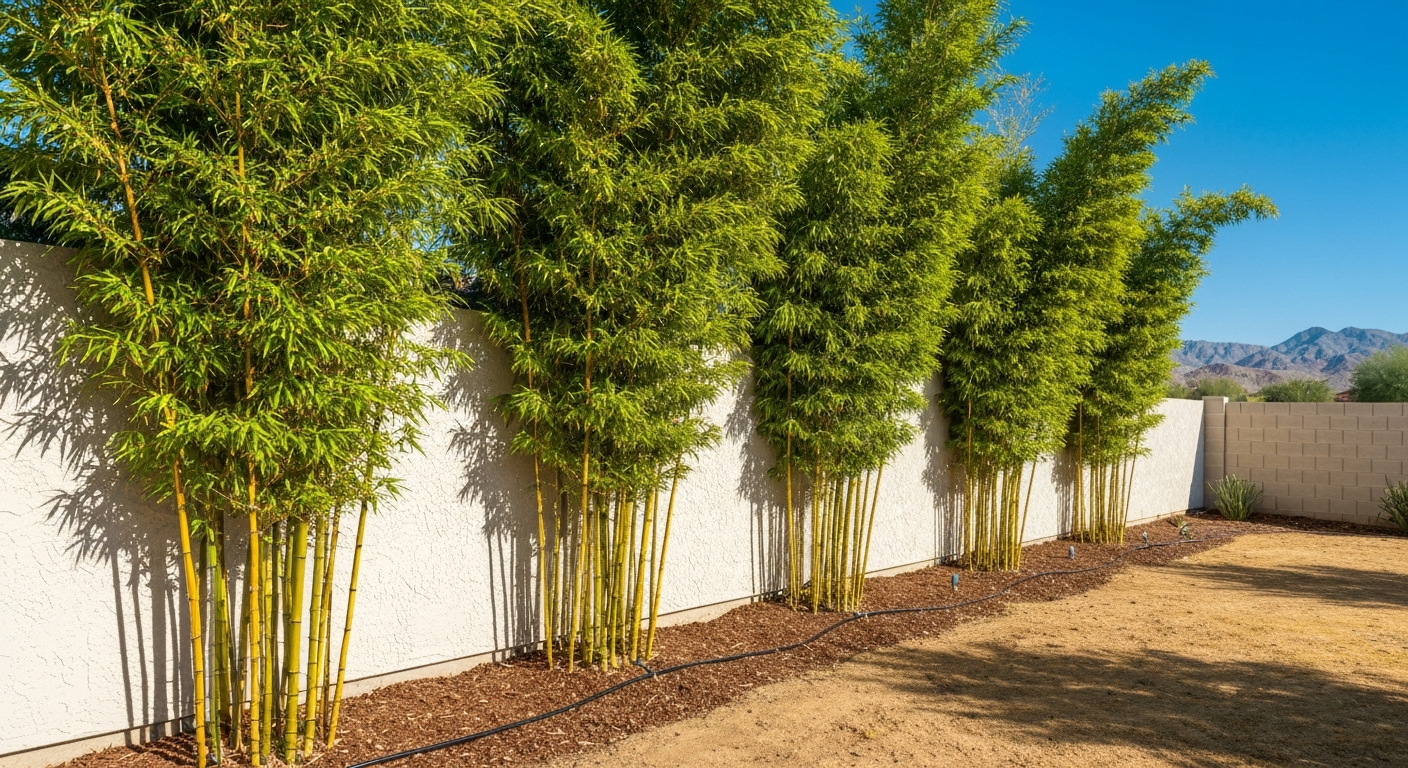
Moso bamboo (Phyllostachys edulis) can grow over a meter in a single day during its spring shooting phase, that is not a myth. Scientific measurements from more than 510 culms across 17 populations recorded a whole-shoot peak of 114.5 cm in 24 hours. Independent field studies logged sustained daily gains of 61 to 78 cm across the late-April to early-May window, and under optimal subtropical conditions a new shoot can reach its full mature culm height in roughly 45 to 60 days from emergence. But those headline numbers apply to established groves in warm climates with ideal soil. If you are planting from a nursery division in zone 7, or keeping a plant in a container on your patio, your experience will look quite different. This guide works through the real numbers, daily peaks, seasonal patterns, and honest multi-year timelines, for every starting point and setting.
How Fast Does Moso Bamboo Grow: Timelines & Growth Rates
What this guide covers and who it's for
Whether you are sizing up a privacy screen project, thinking about a small timber planting, or just genuinely curious about one of the world's fastest-growing plants, this article gives you the growth numbers you actually need. I have organized it to answer the most common questions in order: how fast on a given day, how fast across a season, what the first few years look like from different starting points, what slows things down, and whether your climate or setup is realistic for Moso. Gardeners in warmer states like Georgia will find Moso very viable; growers in places like Ohio will need to understand the zone-edge limitations before committing. Container and indoor growers get their own section too, because Moso in a pot is a genuinely different beast.
The headline growth numbers
Here is the quick version before we dig into the details. These figures come from peer-reviewed field studies and are the most reliable numbers currently in the literature.
| Metric | Typical range | Peak recorded / notes |
|---|---|---|
| Daily whole-shoot growth (spring phase) | 61–78 cm/day | 114.5 cm/24 h (Plant Cell, 2022; 510+ culms) |
| Daily internode growth (single internode) | ~10–12 cm/day | ~11.8 cm/24 h for internode 18 |
| Days from emergence to full culm height | 45–60 days | Optimal subtropical sites; natural stands |
| Screening height (1.8 m) from nursery division | 1–2 growing seasons | Well-rooted stock, zones 8–9 |
| Screening height (4 m+) from nursery division | 2–5 years | Depends on zone, soil, spacing |
| Harvestable/timber-quality culms | 3–5 years post-establishment | Mechanical properties peak ~2–4 years |
| Seed-grown plant to first timber shoot | 5–10+ years | Variable; seed propagation not recommended for timber |
One clarification worth making now: the 114.5 cm/day figure is for the whole shoot, meaning dozens of internodes are all elongating simultaneously. A single internode peaks at around 11.8 cm/day. Both numbers are real; they just measure different things. Reviews sometimes quote ~100 cm/day as a round-number peak, which is consistent with the measured range. Frontiers in Forests and Global Change (2024) reports a range of reported daily shoot elongation for P. edulis of roughly 10–114.5 cm/day depending on measurement scale, local climate and stage of rapid growth range of reported daily shoot elongation (roughly 10–114.5 cm/day).
How Moso actually grows: shoots, culms, and rhizomes
Understanding how Moso grows makes the numbers make sense. Moso is a running bamboo (leptomorph rhizome type), meaning it spreads laterally through underground rhizomes that can extend several meters in a single season. Each spring, new shoots emerge from buds on those rhizomes. These shoots are not seedlings, they are pre-formed structures packed with the cells for every internode the shoot will ever have. The shoot does not produce new cells at the tip the way a tree does. Instead, each internode has its own meristem at its base, and all those meristems are active at once during the rapid growth phase. That is why whole-shoot elongation is so dramatic: you might have 50 or more internodes all growing simultaneously. Once a culm reaches its full height at the end of that one spring season, it never gets taller. It hardens, lignifies, and stays at that height for its entire life.
The rhizome network is the engine of the whole grove. In the early years after planting, most of the plant's energy goes into building that network rather than producing tall culms. This is why year one and year two can feel slow and frustrating, the plant is investing underground. By years three to five in a good site, the rhizome mass is large enough to fuel increasingly impressive spring shoots, and that is when you see the 'takes off' moment that Moso is famous for.
What the spring shooting season actually looks like
In natural stands in East and Central China and Japan, Moso shoots typically emerge in early spring (March to April depending on elevation and latitude) and reach full culm height by late May or early June. The growth rate is not linear across those 45 to 60 days. Shoots start slow, accelerate sharply into the phase where you can almost watch them move, then taper off as internodes harden. The Li et al. (2018) field measurements captured this well: the shoot hit its first peak rate of 77.8 cm/day around April 28 and maintained rates of 61 to 78 cm/day through the late-April to early-May window before slowing as the culm approached full height.
In the United States, the shooting window shifts based on your climate. In coastal Georgia or the Gulf Coast, shoots can emerge in late February or March. In zone 7 Virginia or Tennessee, expect April. In zone 6b areas (the edge of Moso's reliable range), shooting may not start until late April or even May, and the season is compressed. A compressed season means fewer days at peak growth rates, which is one reason zone-edge plants consistently underperform compared to warm-climate groves, it is not just cold winters, it is a shorter spring.
The factors that control how fast yours will grow
Climate and USDA zone
Moso's best growth happens in USDA zones 8 to 9, where mean annual temperatures run roughly 14 to 20°C and winters are mild enough that rhizomes suffer minimal cold damage. The plant can survive in zones 6b to 7 but will be noticeably shorter, slower, and will lose a lot of above-ground culm in hard winters (the rhizomes often survive even when culms die back). If you are in Ohio, for example, Moso can live, but managing realistic expectations is important, you will not be getting 20-meter culms. For regional specifics on rates and realistic growth expectations, see how fast does bamboo grow in Ohio. The subtropical performance ceiling is simply not achievable at zone 6. Georgia, on the other hand, sits well within the productive range, and growers there can expect results much closer to what the research literature describes. For local, climate-adjusted growth estimates, see the guide on how fast does bamboo grow in Georgia.
Soil type, pH, and drainage
Moso wants deep, fertile, well-drained loam or sandy loam with a soil pH of roughly 4. Regional Moso cultivation recommendations (Hunan forestry planting guide) specify deep, fertile, well‑drained loam or sandy loam with soil pH 4.5–7.0 and emphasize good drainage to prevent rhizome rot and reduced shoot emergence rates blank" rel="noopener noreferrer">Hunan forestry planting guide / regional Moso cultivation recommendations (soil depth, pH 4.5–7.0, drainage). 5 to 7.0. That is a usefully wide range. The drainage requirement is non-negotiable: rhizomes sitting in waterlogged soil will rot, shoot emergence rates drop, and the grove never builds the mass it needs. If your site has a high water table or heavy clay that holds puddles after rain, you will need to amend or raise the bed before planting. I have seen more failed Moso plantings blamed on drought or cold when the real culprit was poor drainage killing rhizomes slowly over winter.
Sunlight, water, and fertilizer
Full sun (6 or more hours per day) produces the fastest growth. Moso tolerates partial shade but culm height will be reduced. Water is critical during the shooting season, this is when the plant is moving the most water, and the Frontiers in Forests and Global Change (2024) work on shoot sheath transpiration confirms how water-dependent the rapid growth phase is. Consistent soil moisture, not waterlogging, is the goal. On fertilizer, container trials show strong responses to nitrogen and potassium formulations. For in-ground plants, a balanced slow-release fertilizer applied in early spring before shooting, and again in early summer, gives the rhizome network the nutrition to fuel the next season's shoots.
Year-by-year scenarios: seed vs. division vs. container
Your starting material is the single biggest variable in how long Moso takes to do anything useful. Here is what each path looks like realistically.
Growing Moso from seed: realistic milestones for years 1–5
I want to be blunt about seed propagation: for most gardeners, it is not the right path for Moso. Seeds are scarce (Moso flowers gregariously and rarely, on a cycle of roughly 50 to 60 years, and the most recent major flowering event was in the 1960s to 1980s), viability drops quickly after harvest, and germination rates are variable even with gibberellic acid (GA3) pre-treatments used in research protocols. The Plant Signaling and Behavior (2022) germination study confirms that seed-grown Moso is achievable but laborious, and the timeline is long.
If you do start from seed, here is what the first five years look like in a zone 8 to 9 climate with good conditions:
- Year 1: Germination takes 2 to 4 weeks under warm conditions. Seedlings reach 15 to 30 cm by end of first growing season. Culms are pencil-thin or thinner.
- Year 2: Root system develops. Plants may reach 60 to 120 cm. Culm diameter remains very small — under 1 cm. The plant is prioritizing root mass.
- Year 3: First meaningful culm size improvement. Some plants produce shoots 1.5 to 2.5 m tall with culms 1 to 2 cm in diameter. Still far from screening height reliably.
- Year 4: Rhizome network begins to establish. Shoot emergence increases. Heights of 2 to 4 m are possible in ideal conditions.
- Year 5: A well-tended seed-grown plant in a warm zone may start to look like a young grove. Screening heights (1.8 m+) are achievable but timber-quality culms (3 to 5 cm+ diameter) are still likely years away.
Compare that to the 1 to 3 seasons a nursery division needs to reach screening height, and it is easy to see why commercial operations and most serious gardeners do not use seed. Seed propagation makes sense for research, for breeding work, or if you happen to have access to fresh seeds and enjoy the long game.
Growing from planted rhizomes or divisions: timelines to screening height
This is the standard and recommended method. A well-rooted nursery container or field-dug division planted in spring will typically push its first new shoots within weeks, or at the latest in the following spring season. Here is what the timeline looks like:
| Year after planting | Expected height range | What is happening |
|---|---|---|
| Year 1 (spring after planting) | 1–3 m from first new shoots | Rhizome establishes; culms thinner than mature average |
| Year 2 | 2–5 m; culm diameter increasing | Rhizome network expanding; shoot count increases |
| Year 3 | 3–8 m in zones 8–9; privacy screen achieved | Full rhizome mass building; each new shoot taller and thicker |
| Year 4–5 | Approaching grove maturity; 8–15 m possible in best climates | Timber-quality culms (3–5 year lignification) becoming harvestable |
| Zone 7 equivalent — add 1–2 years to each milestone | Heights will be roughly 50–70% of zone 8–9 figures | Shorter seasons and cold winters slow rhizome development |
The 1.8 m (6 ft) screening threshold is achievable within one to two growing seasons from a quality nursery division in zone 8 to 9. Reaching 4 m (about 13 ft) for a more substantial visual barrier typically takes two to five years depending on climate, spacing, and starting plant size. Wider spacing (3 to 5 m between plants) is often recommended for timber production; tighter spacing (1 to 2 m) builds screening density faster. Mechanical property studies confirm that culms harvested at three years are structurally mature enough for most structural and pulp uses, with bending and tensile strength continuing to improve up to about four years.
Container-grown and indoor Moso: a genuinely different timeline
Moso can be grown in containers, and it is a dramatic specimen plant when well managed. But I want to be realistic: container-grown Moso is a fundamentally limited version of the plant. Nursery observations and pot trials consistently show that large bamboos in containers reach roughly half to three-quarters of the height they would achieve in the ground. The rhizome cannot run, so the grove-building dynamic that powers those explosive spring shoots simply does not happen at the same scale. The plant also needs repotting every two to three years as the root mass fills the container, and irrigation demands increase sharply after three to five years in the same pot.
Indoors, the constraints compound further. Light levels are typically the limiting factor, even near a south-facing window. Container nutrition trials show that Moso seedlings are highly responsive to nitrogen and potassium, so fertilizing consistently matters more indoors where you control all inputs. Expect shoot heights of 1 to 3 m indoors in a large container under good light, compared to potentially 15 m or more in the ground in a warm climate. For more on what indoor growing looks like in practice, the specifics of container care and light management deserve their own treatment. For more detail on how fast does bamboo grow indoors, see the indoor growth and container care section for realistic rates and management tips.
If your goal is a patio screen or an impressive ornamental statement, a large container works. If your goal is timber, a privacy hedge, or a living wall, in-ground planting in the right climate is the only realistic route.
Managing Moso: what affects perceived growth speed
Containment and rhizome barriers
Moso is an aggressive runner and will spread well beyond its original planting footprint if not managed. Rhizome barriers (60 cm deep HDPE sheeting is the standard recommendation) or root pruning at the edges each autumn are necessary if you are planting near structures, property lines, or neighbors' gardens. This is not just a courtesy issue, uncontrolled spreading can send rhizomes under foundations or into neighboring yards within a few seasons. Some gardeners skip barriers and use annual rhizome pruning instead; this works but requires discipline every fall before the rhizomes harden.
Pruning and thinning
Removing old, thin, or damaged culms each year keeps the grove vigorous and redirects energy into new, taller shoots. A common mistake is letting every shoot that emerges stand, this sounds productive but actually dilutes the grove's resources and produces a lot of spindly culms rather than a few strong ones. For timber production, thinning to the strongest shoots each season and removing culms older than four to five years is standard practice.
Pests and problems to watch for
- Shoot borers (various Delia and moth species): tunneling larvae damage emerging shoots and reduce seasonal gain; check shoots early and remove affected ones
- Aphids and scale: more common on stressed or container plants; manageable with insecticidal soap
- Root rot from poor drainage: the most underrated growth killer; fix soil drainage before blaming climate or variety
- Mealybugs: occasional on indoor/container plants in low-humidity environments
- Deer and rodent browsing: new shoots are highly palatable; protection in the first two seasons is worth the effort
Is Moso the right choice for your climate?
Moso is not a universal bamboo. It is the right choice in the right place, and being honest about that saves a lot of frustration. Here is how I think about the main regional scenarios:
| Region / Zone | Moso suitability | Realistic expectation |
|---|---|---|
| Zones 8b–9b (Deep South, Pacific coast CA, Gulf Coast) | Excellent | Performance closest to research literature; 15 m+ culms possible; screening in 1–2 seasons |
| Zone 8a (Georgia Piedmont, Carolinas, Pacific NW) | Very good | Strong growth; 8–12 m culms realistic; screening in 2–3 seasons |
| Zone 7 (Mid-Atlantic, Tennessee, Arkansas) | Moderate | Survives well; 4–7 m culms; slower grove build; 3–5 seasons to privacy screen |
| Zone 6b–7a (Virginia mountains, Kansas, southern Ohio) | Marginal | Rhizomes usually survive; above-ground culms may die in hard winters; 2–4 m culms; multi-year setback risk |
| Zone 6a and colder (northern Ohio, most of Midwest/NE US) | Not recommended | Rhizome damage likely in severe winters; consider cold-hardy running bamboos (P. bissetii, P. nuda) instead |
| Container / indoor (any zone) | Limited but possible | 1–3 m shoots; no timber potential; ornamental and specimen use only |
For the best regional planning, I recommend cross-referencing your local USDA 2023 Plant Hardiness Zone with PRISM Climate Group data for your specific site (elevation and proximity to cold air drainage matter more than most people realize), and checking NOAA NCEI extreme minimum temperature records for your station. A site that averages zone 7 but hits -15°C every decade is effectively zone 6b for rhizome survival purposes.
What to expect visually: a time-lapse perspective
One of the most striking things about Moso is that its rapid-growth phase is genuinely visible in real time. During peak spring growth, you can mark a shoot in the morning and see a measurable change by afternoon. Over a few days, a shoot that was knee-high will clear your head. This is why Moso time-lapse videos are so compelling, they are not cheating by speeding up slow change, they are just making obvious what is already fast. A three-day window during peak shooting in a mature grove, where shoots go from 1 m to 3 m, is not unusual. The growth then slows, branches unfurl, leaves emerge, and within a few weeks the culm has hardened into its permanent form. For the whole-season arc, from first shoot tip above soil to a 15 m culm with full leaf canopy in 60 days, Moso is genuinely unlike any other temperate plant.
Practical takeaways: answering the real questions
Here is the condensed version for people who want to make a decision:
- How long until a privacy screen? From a quality nursery division in zone 8+: 1 to 2 seasons to 1.8 m, 2 to 5 seasons to a substantial 4 m+ screen. Zone 7: add 1 to 2 years to those estimates.
- When will you get timber-quality culms? Plan on 3 to 5 years post-establishment for structurally mature culms. Mechanical properties (bending, tensile strength) improve from year 1 to year 3 or 4.
- Should you grow from seed? Only if seeds are freely available, you have patience for 5 to 10+ years, and your goal is not a screen or timber planting. Use nursery divisions for practical projects.
- Can you grow it in a container? Yes, for ornamental or specimen purposes. Expect roughly half to three-quarters of in-ground height, high water needs, and regular repotting. Not suitable for timber or full screening use.
- Is Moso right for your zone? Zones 8 to 9 are the sweet spot. Zone 7 works with management. Zone 6b is marginal. Below zone 6b, choose a hardier running bamboo species.
- What is the single best thing you can do to speed growth? Fix drainage before you plant. Healthy rhizomes in well-drained, fertile soil will outperform the same plant in waterlogged or compacted ground every time.
FAQ
How fast does Moso bamboo (Phyllostachys edulis) grow during its peak spring elongation?
Under favourable spring conditions Moso shoots can elongate extremely fast. Whole‑shoot peak rates reported in the literature range roughly 60–115 cm per day, with individual studies recording maximum single‑shoot increases up to 114.5 cm in 24 hours. Internode‑scale peaks are smaller (examples ~10–12 cm/day for a single internode) because many internodes elongate simultaneously when the shoot is in its rapid‑growth phase. These rates apply to field stands in optimal subtropical/temperate spring conditions and only during the rapid elongation window.
How long does one shoot take to reach full culm height after emergence?
In favourable subtropical/temperate spring conditions Moso shoots commonly reach their mature culm height in one season—typically about 45–60 days from emergence to full height. Timing depends on local temperatures, moisture and site conditions; cooler or drier sites slow the process.
What are realistic timelines to get a privacy screen (e.g., 6–8 ft or taller) from Moso bamboo?
Timeline depends on planting material: - Transplanted divisions or well‑rooted nursery rhizomes: expect screening heights of ~1.8 m (6 ft) to 2.4 m (8 ft) within 1–3 growing seasons; taller screens (≈4 m / ~13 ft) commonly take 2–5 years depending on plant size at transplant, spacing and climate. - Seed‑grown plants: substantially slower; it may take many more years (often 5–10+) to reach comparable screening size because seedlings need time to establish a rhizome network.
When are Moso culms 'timber‑quality' or suitable for harvest for structural uses?
Culm mechanical properties (strength and lignification) increase during the first years. Many commercial programs and studies treat culms aged about 3 years as harvestable for structural or industrial uses. Properties improve noticeably from year 1 through years 2–4, so typical target harvest ages are ~3 years for a balance of strength and productivity; some operations may wait longer depending on end use.
How does propagation method (seed vs rhizome/division vs container) change growth timelines?
- Rhizome/division (field or large container transplants): fastest route to usable size; expect shoots the first spring after planting and screening within 1–3 seasons if healthy nursery stock is used. - Seed: germination is possible but seeds are scarce and short‑lived, germination rates vary and seedlings establish much more slowly; reaching screening/timber size from seed commonly takes multiple additional years (often 5–10+). - Container culture: possible but constraining—the same plant in a pot typically achieves a smaller stature (roughly half to three‑quarters of in‑ground height depending on pot size and care) and requires frequent repotting and irrigation; timelines to screening or timber are longer than equivalent in‑ground divisions.
Which environmental and cultural factors most affect Moso growth speed and how should I manage them?
Key controls and practical steps: - Temperature / climate: best in warm temperate/subtropical climates (roughly USDA zones 8–9 for best vigour). Cooler climates reduce shoot production and growth rates. - Soil: deep, fertile, well‑drained loams (pH ~4.5–7.0) are ideal; avoid poorly drained sites. - Water: consistent moisture during shoot emergence promotes rapid elongation; avoid waterlogging. - Sunlight: full sun to light shade increases vigour (denser stands tolerate shade but grow slower). - Nutrition: regular fertilization (adequate N and K) improves shoot number and growth. - Spacing: allow room for rhizome spread and light penetration—denser spacing increases screening faster but can reduce individual culm diameter. Manage these to move toward the faster end of expected timelines.
Can Bamboo Grow in Las Vegas? Guide to Success in Desert
Yes, bamboo can grow in Las Vegas with the right species, irrigation, shade, and containment; step-by-step planting and保护