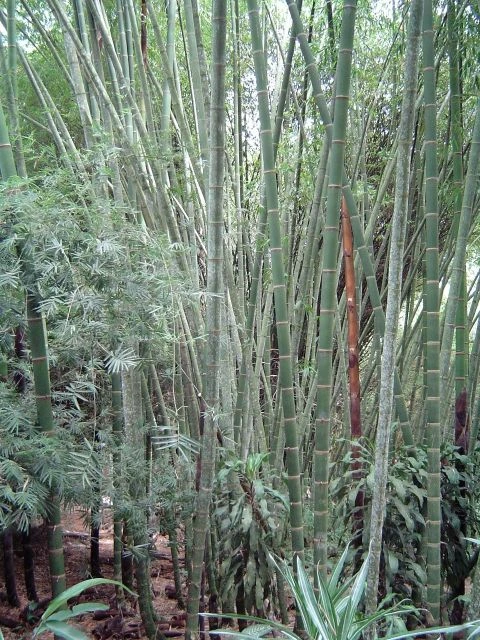
Yes, bamboo can grow in New Mexico, but you need to pick the right species and commit to a care routine that accounts for the state's brutal combination of cold winters, scorching summers, low humidity, and near-constant wind. You can also grow certain cold-hardy bamboo in Utah, but the key is choosing the right species and matching irrigation and winter protection to your specific location bamboo can grow in New Mexico. This is not a plant-it-and-forget-it situation. The good news is that cold-hardy running bamboos like Phyllostachys bissetii, Phyllostachys nuda, and Fargesia species are genuinely tough enough to survive most of New Mexico's climate zones, and with the right setup, you can have a thriving grove within three to five years.
Can Bamboo Grow in New Mexico? How to Succeed
Marcus Hartwell
4 Jul 2026
Quick Answer: Can Bamboo Grow in New Mexico (and Is It Worth Trying)

New Mexico spans USDA Hardiness Zones 5 through 8, depending on where you are. Albuquerque sits around Zone 7a-7b with a last frost around April 11 and first frost around November 1. Santa Fe is colder at roughly Zone 6b, with frost windows stretching from late March into early October. Southern cities like Las Cruces land in Zone 8a, with a last frost as early as March 21 and a long frost-free season through mid-November. That range means your options vary a lot by location, but the majority of the state falls in zones where cold-hardy bamboo species are rated to survive.
It is worth trying if you are realistic about two things: water and wind. New Mexico's aridity is the bigger day-to-day challenge compared to cold for most of the state. The climate question for Mexico is similar, since bamboo needs dependable moisture and the right shelter to thrive in the right regions New Mexico's aridity. Bamboo is a heavy drinker, and you will need a consistent drip irrigation setup to keep it alive through the dry months. If you are willing to do that and pick a wind-sheltered spot, you have a genuinely good shot. If you want a zero-maintenance screen plant, this is not the right choice for your yard.
New Mexico Climate Factors That Make Bamboo Tricky
Cold is the obvious concern, but it is rarely the main killer in New Mexico. Most of the lower elevations in the state stay warm enough for several cold-hardy species, and even in Santa Fe or Taos, the right species can survive. The real challenges are more nuanced.
- Aridity and low humidity: New Mexico averages under 15 inches of rainfall per year across much of the state. Bamboo evolved in humid subtropical climates and reacts to drought stress with visible leaf curl, browning tips, and reduced culm production. Without supplemental irrigation, bamboo in NM will struggle to establish and may die back entirely.
- Summer heat: Albuquerque routinely sees temperatures above 95°F in July. At those temperatures, bamboo loses moisture faster than its roots can replace it unless you are watering consistently. Phyllostachys species handle heat reasonably well, but Fargesia types prefer cooler conditions and may underperform in the southern part of the state.
- Wind: This is underestimated. New Mexico's persistent spring winds, which regularly hit 30-50 mph in some corridors, desiccate bamboo leaves rapidly and can shred new culms in the shooting season. A windbreak or a sheltered planting position is not optional—it is essential.
- Late freezes and temperature swings: The diurnal temperature variation in New Mexico is extreme. A warm March day followed by a hard freeze can push bamboo into sending up early shoots, which then get killed by frost. This cycle is tiring for the plant and slows development over time.
- Alkaline, low-organic soil: Most NM soils are sandy or clay-heavy, alkaline (pH 7.5-8.5), and low in organic matter. Bamboo prefers slightly acidic to neutral soil (pH 5.5-7.0) and rich, well-draining conditions. You will need to amend.
Gardeners in Colorado and Arizona face versions of these same challenges (cold plus aridity in Colorado, heat plus aridity in Arizona), but New Mexico is uniquely difficult because it stacks several of these stressors together depending on season. If you are wondering about bamboo growth in Colorado, the biggest hurdles are similarly cold winters and dry air, so choosing the right species for your specific zone matters. Plan your approach around water first, wind second, and cold third.
Pick the Right Bamboo: Species, Types, and Cold Hardiness
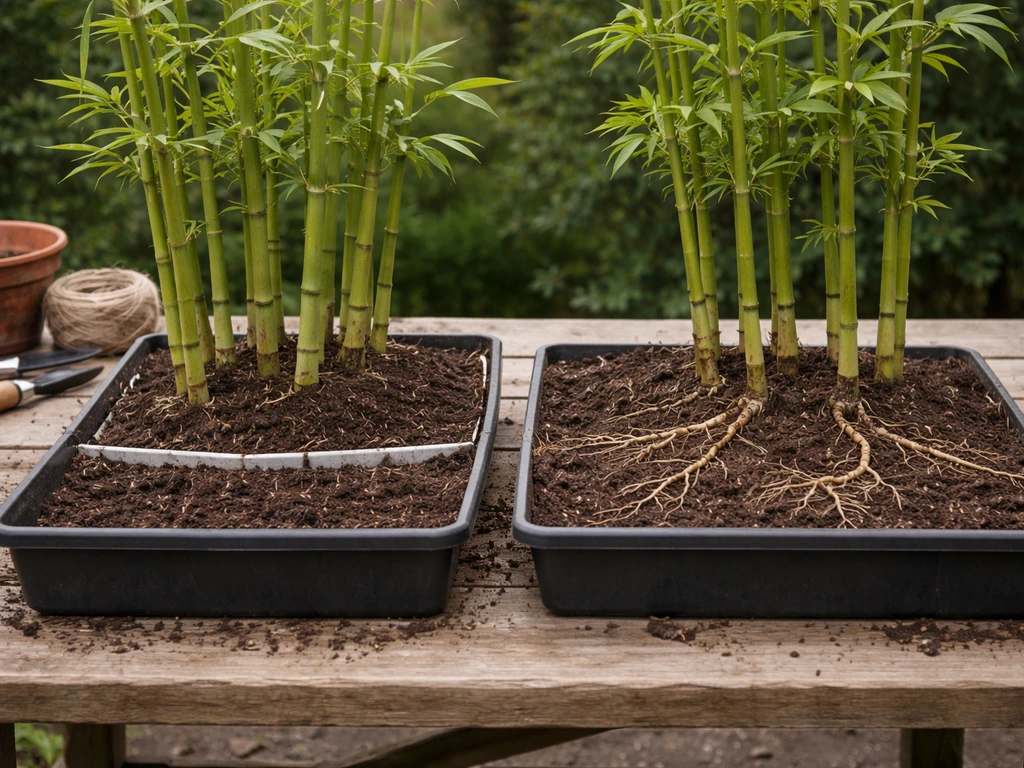
The first decision is clumping versus running bamboo. Clumping types (mostly Fargesia species) spread slowly and stay contained naturally. BambooGarden.com’s “Cold Hardy Bamboo” listing includes a hardiness or minimum-temperature column for multiple species, which helps you compare species minimums against New Mexico winter minima Clumping types (mostly Fargesia species) spread slowly and stay contained naturally.. Running types (most Phyllostachys species) spread aggressively via rhizomes and need a physical root barrier to keep them in bounds. For cold hardiness in New Mexico, running Phyllostachys species generally dominate, though Fargesia species work well in cooler northern parts of the state.
| Species | Type | Min Temp Rating | Best NM Zones | Notes |
|---|---|---|---|---|
| Phyllostachys bissetii | Running | -15°F (Zone 5) | 5-8 | One of the toughest all-around choices; handles wind and cold well |
| Phyllostachys nuda | Running | -20°F (Zone 5) | 5-8 | Exceptionally cold-hardy; good for Santa Fe and northern NM |
| Phyllostachys heteroclada | Running | -5°F (Zone 6-7) | 6-8 | Water bamboo; tolerates wetter soils but manages NM heat okay |
| Phyllostachys aureosulcata | Running | -15°F (Zone 5) | 5-8 | Yellow-groove bamboo; reliable cold performer and good height |
| Fargesia robusta / murielae | Clumping | -10 to -20°F | 5-7 | Best for cooler elevations like Santa Fe; struggles with extreme summer heat |
| Phyllostachys aurea (Golden bamboo) | Running | 5°F (Zone 7) | 7-8 | Only suitable for southern NM; frost-sensitive above zone 7 |
For most of New Mexico, Phyllostachys bissetii is the safest starting point. It is rated to Zone 5 (-15°F), handles full sun and wind better than most, and still produces attractive, dense culms. If you are in Albuquerque or south, you have more options. If you are in Santa Fe, Taos, or above 6,500 feet in elevation, stick with bissetii, nuda, or a Fargesia. Avoid Phyllostachys aurea outside of the southern valley areas, it is just not cold-hardy enough for most of the state.
Best Planting Strategy: In-Ground vs Container, and Microclimate Placement
In-Ground Planting
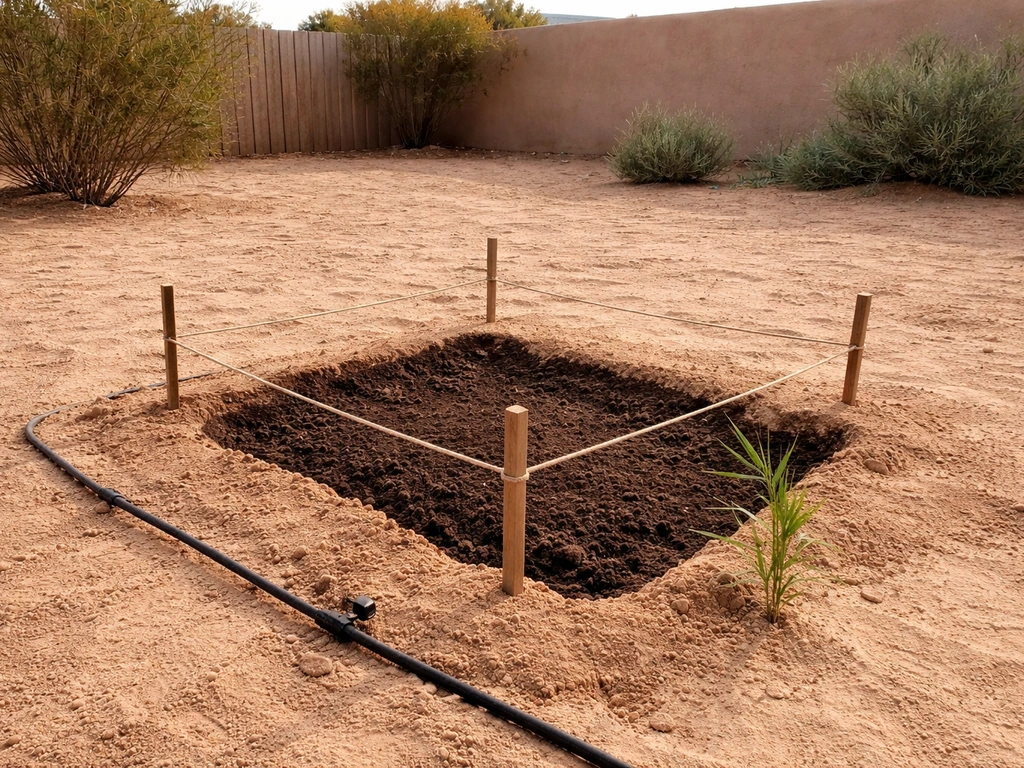
In-ground is the better long-term strategy for New Mexico if you pick a wind-protected, south- or east-facing spot. An established in-ground grove develops deep roots that buffer against both heat and cold, and the soil insulates rhizomes during winter far better than a container will. The tradeoff is that running bamboo in ground requires a 60-mil HDPE root barrier installed to at least 22 inches deep, with the top edge sitting about 2 inches above grade to redirect rhizomes upward where you can spot and cut them. Do not use cheap plastic sheeting, it will not hold against Phyllostachys rhizomes. The industry standard for aggressive running types is 60-mil minimum, stepping up to 80-mil for vigorous species.
Container Growing
Containers work for smaller clumping bamboo or as a starting strategy before committing to a permanent bed. The real limitation is winter exposure: container roots are surrounded by air rather than insulated by soil, so a plant that is rated to Zone 6 in-ground may only survive Zone 7-8 temperatures when potted. A large, thick-walled container (half-whiskey barrel size or bigger) in a sheltered spot helps. Do not leave containers on concrete in winter, concrete conducts cold directly into the root zone. Move them against a south-facing wall, or better yet, sink the pot into the ground in late fall for the winter. Keep soil lightly moist through winter; a fully dried root ball in a cold container can kill the plant even when temperatures are not extreme. Be aware that long-term container growing of running bamboo is genuinely difficult, rhizomes will find drainage holes and eventually crack weaker pots.
Microclimate Placement
The single best thing you can do to improve your odds in New Mexico is to find the right microclimate. Look for a spot that has a south- or southeast-facing wall or fence nearby for reflected heat and wind protection, gets afternoon shade (especially in southern NM where afternoon sun is intense), and is sheltered from prevailing west and southwest winds. The north side of a building is not ideal, too cold and too shaded. A courtyard, enclosed garden corner, or spot protected by an existing fence on the windward side is close to ideal. These microclimates can effectively push your functional growing zone up by half a zone to a full zone.
Soil Prep, Irrigation, and Mulching for Arid Conditions
Soil Preparation
Most New Mexico soils need significant amendment before planting bamboo. Work in 4-6 inches of compost or aged organic matter into the top 12-18 inches of the planting area. This improves water retention, lowers pH slightly toward the 6.0-7.0 range bamboo prefers, and gives rhizomes something to travel through easily. If your native soil is heavy clay, also mix in coarse sand or perlite to improve drainage, bamboo cannot tolerate waterlogged roots even though it needs consistent moisture. If you have sandy soil, more compost is the answer. Do a basic soil pH test before planting; if your soil reads above 7.5, incorporate sulfur or acidic compost to bring it down over time.
Irrigation
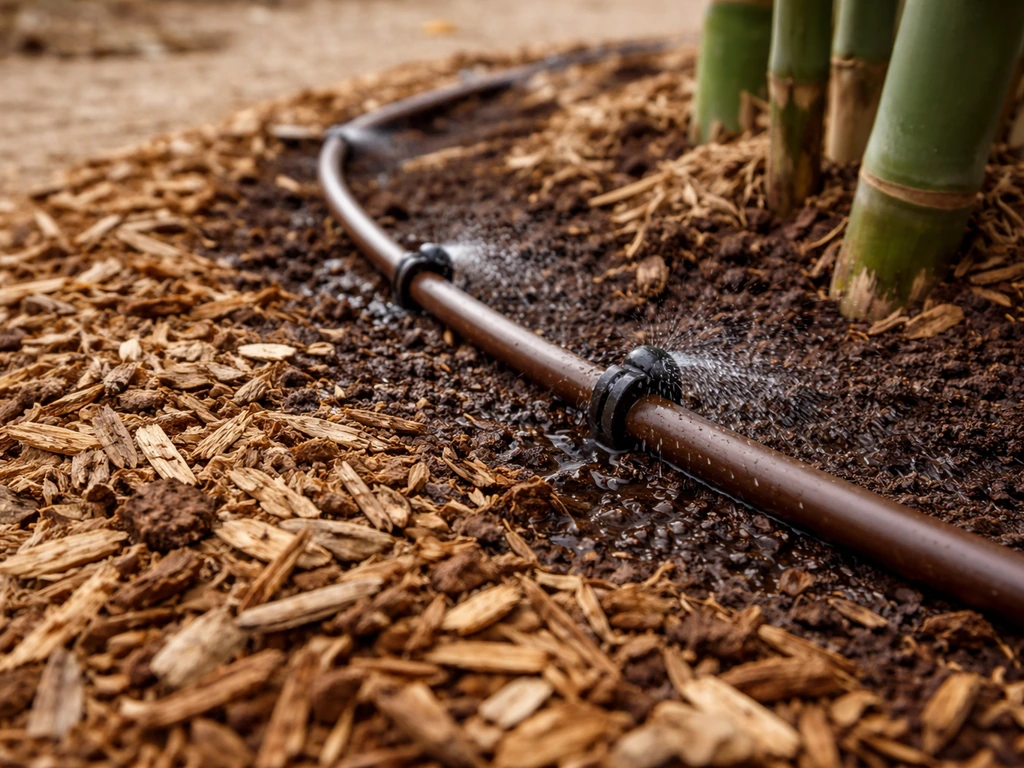
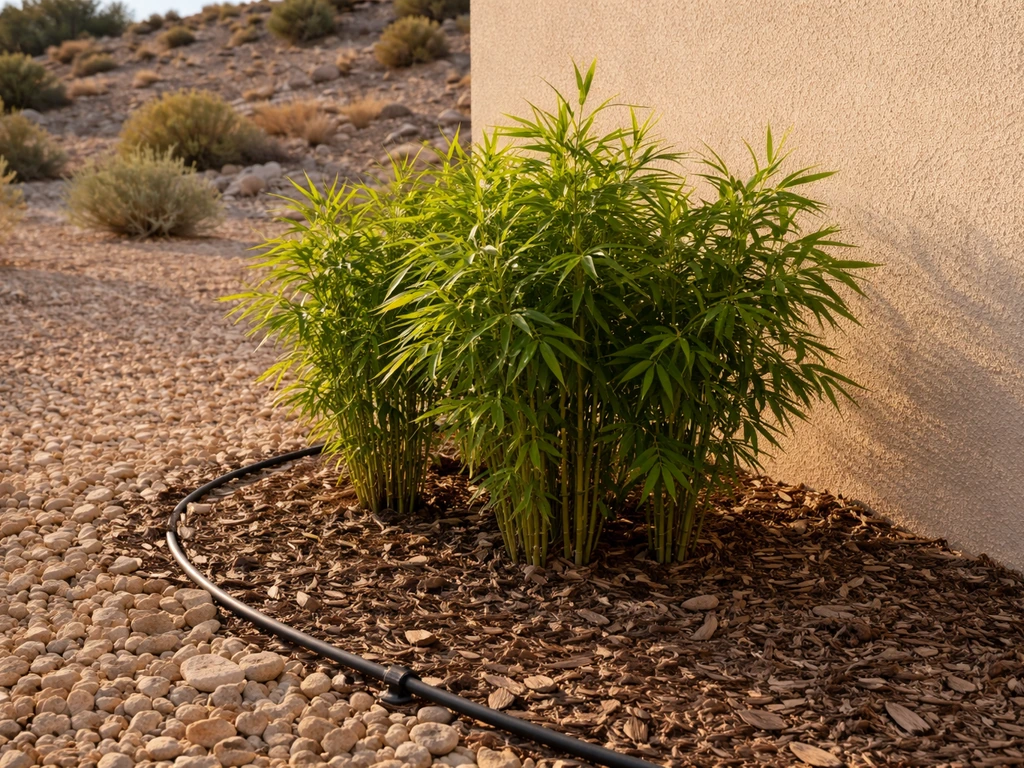
Drip irrigation is not optional for bamboo in New Mexico, it is the only practical way to deliver the consistent moisture bamboo needs without wasting water to evaporation in the dry, hot air. Because Phoenix is also hot and dry, the same drip-irrigation approach helps many bamboo species establish, but you still need cold-hardy varieties and smart siting Phoenix, Arizona. A drip system with emitters rated at 1-2 gallons per hour, positioned near the base of each culm cluster and spaced throughout the rhizome zone, delivers water where it counts. Run the system deeply but less frequently during cooler months, and increase frequency (not necessarily volume per session) during the peak summer heat of June through August. Subsurface drip, where available, eliminates surface evaporation almost entirely and keeps moisture in the root zone where bamboo needs it. During the first year of establishment, bamboo needs especially consistent watering, twice weekly deep watering is not excessive when temperatures are above 90°F.
Mulching
Mulch is one of your most powerful tools in New Mexico. Apply 3-4 inches of organic mulch (wood chips, shredded bark, or straw) across the entire root zone, keeping it a few inches back from culm bases to prevent rot. Mulch does three jobs simultaneously in NM: it conserves soil moisture by dramatically slowing evaporation, moderates soil temperature extremes so rhizomes are not baking in summer or freezing in winter, and slowly breaks down to add organic matter to your amended soil. Refresh the mulch layer each spring before the shooting season starts.
Fertilizing and Care for Healthy Culms and Rhizome Expansion
Bamboo is a heavy feeder, especially nitrogen. A high-nitrogen lawn fertilizer (like a 30-0-4 or similar formulation) applied in early spring as shoots emerge, and again in midsummer, is the standard approach for established bamboo. Use roughly the same rate you would apply to a lawn, about 1 pound of actual nitrogen per 1,000 square feet per application. Avoid high-phosphorus fertilizers unless a soil test shows a genuine deficiency; excess phosphorus in alkaline NM soils can actually lock up micronutrients. For new plantings in the first year, a balanced slow-release fertilizer mixed into the soil at planting gives a gentler start and helps develop the root system without forcing excessive top growth before the plant is established.
Phosphorus and nitrogen together can help buffer drought stress at the physiological level. Research on Phyllostachys species shows that adequate N and P application measurably reduces oxidative stress during dry periods and supports photosynthetic efficiency, which translates practically to a bamboo that looks and performs better through New Mexico's dry stretches. Do not skip fertilizing and then wonder why your bamboo is struggling in August.
Beyond feeding, the main care task is managing the planting. Remove old, dead, or weak culms each year in late winter before the shooting season. This opens up light and air circulation inside the grove and directs energy into new, healthy culms. Inspect the root barrier annually in spring, look for rhizomes arching over the top edge and cut them off. Do not let this slide; once a running bamboo sends rhizomes under a fence or into a neighbor's yard, it becomes a serious problem.
Winter Protection and Troubleshooting Common New Mexico Problems
Winter Protection
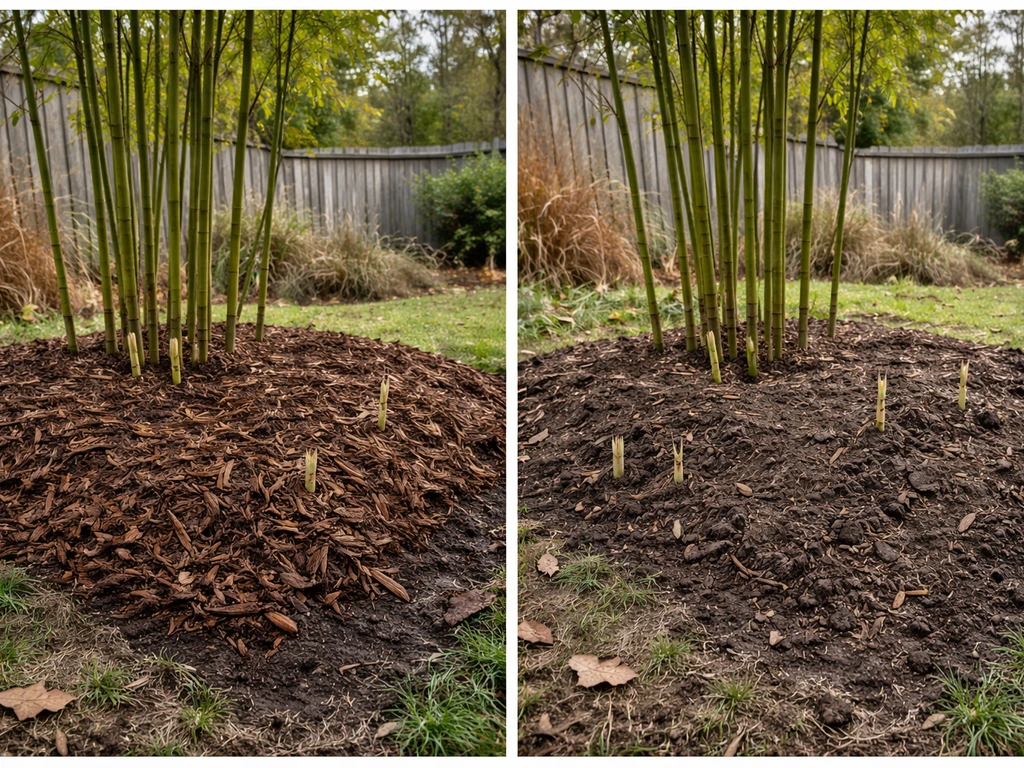
For in-ground bamboo in zones 5-6, add an extra 2-inch layer of mulch over the rhizome zone in late October before hard freezes arrive. This insulates the rhizomes, which are the plant's survival engine. Above-ground foliage may die back or look terrible after a hard freeze, that is okay as long as the rhizomes survive. Do not panic and pull the plant out. Wait until late spring, and if the roots are alive, new growth will emerge. For container bamboo in exposed locations, move containers to a sheltered spot against a south wall, or sink them into the ground before the first hard freeze. Wrap the pot in burlap or bubble wrap if temperatures regularly drop below the container's effective zone limit.
Common Problems and Fixes
- Leaf curl and tip browning: Almost always a water stress signal in NM. Check your drip system for clogged emitters (salt and mineral deposits are common in NM's hard water) and increase watering frequency during heat spikes. This is not a disease—it is drought stress.
- Foliage dieback after winter: Normal for many Phyllostachys species in colder NM zones. Cut back dead canes to the ground in early spring. If the rhizomes are intact, new shoots will emerge. The plant recovers; it just takes a season.
- Slow growth or no new shoots: Usually one of three causes: insufficient water, insufficient nitrogen, or the plant is still in its establishment phase (first 1-2 years). Address all three before assuming the plant is a failure.
- Rhizomes escaping containment: Inspect the barrier edge in spring and prune any rhizomes that arch over. If a rhizome escapes and travels 5-10 feet before you notice, trace it back and cut it close to the barrier—do not just cut the shoot tip.
- Wind damage to new culms: New shoots are soft and snap easily in high spring winds. If you are in a windy corridor, stake individual culms with bamboo canes during their first few weeks of growth until they harden off. Alternatively, time your planting to have the grove established before peak wind season.
- Alkaline soil lockout: If leaves are yellowing between the veins (interveinal chlorosis), this is often iron deficiency triggered by high soil pH. Apply chelated iron as a foliar spray or soil drench and work to lower pH over time with sulfur and acidic organic mulch.
What to Expect: Growth Rate, Timelines, and How to Measure Success
Be honest with yourself about the timeline. Bamboo follows a well-known pattern: sleep, creep, leap. In year one, almost nothing visible happens above ground, the plant is building its rhizome network. In year two, you might see a few new culms that are slightly taller or thicker than what you planted. By year three, if you have been watering and fertilizing consistently, you should see real shooting activity. The 'leap' phase in New Mexico tends to start in years three to four rather than the two to three years often cited for more humid climates, simply because the environmental conditions here slow establishment.
For Phyllostachys bissetii in Albuquerque conditions with good irrigation and fertilization, realistic expectations are: culm heights of 8-15 feet within five years, with new culms each spring adding to the grove density. You will not see the 20-30 foot giants that Phyllostachys species produce in the humid Southeast. New Mexico's conditions cap height somewhat, though the plants will still be genuinely impressive. In southern NM near Las Cruces (Zone 8a), growth will be faster and potentially taller because the frost window is shorter and the growing season is longer. If you are asking can bamboo grow in Las Vegas, the same key factors apply: cold hardiness, frost timing, and choosing a microclimate that protects the rhizomes.
Measure success by rhizome spread and new culm count each spring, not just height. A grove that sends up 10-15 new culms per shooting season is a thriving, healthy planting even if individual culm height is modest. Track your drip system performance each summer and note which areas of the grove look best, that tells you where your irrigation is working well. If you are comparing notes with gardeners trying bamboo in similarly challenging western states like Utah or Colorado, you will find NM's lower-elevation zones (Albuquerque and south) are actually more forgiving than either of those states for many species.
The first step today: check your USDA hardiness zone by city, pick a species rated at least one full zone colder than your zone (so you have a safety margin), identify the most wind-sheltered and south-facing spot in your yard, and price out a drip irrigation kit if you do not already have one installed. Those four decisions made well will do more for your bamboo than anything else. Arizona can work too, but you will need to match bamboo to the right cold hardiness and plan for intense heat, low humidity, and wind.
FAQ
Can bamboo survive New Mexico winters if the above-ground canes die back?
Yes, but only if you treat winter as a survival season, not a rest season. For running bamboo in-ground, add an extra mulch layer over the rhizome zone in late October, and avoid irrigating heavily once nights are consistently freezing. For containers, the root ball can be colder than the air, so move pots to a sheltered south wall and keep soil lightly moist, not dry-out.
What’s the first thing to fix if my bamboo looks unhealthy in summer?
In most New Mexico situations, it is the water delivery system and wind exposure that determine success, not whether you fertilize heavily. If shoots look pale or stunted in spring, use a nitrogen-rich fertilizer once as shoots emerge, then reassess after 2 to 3 weeks. If growth is weak during summer drought, check drip coverage and emitter spacing first, because under-watering often looks like “needs fertilizer.”
How often do I need to replace or adjust a root barrier for running bamboo?
For running bamboo, root barrier installation is a one-time project that needs yearly inspections. Each spring, look for rhizomes arching up over the barrier edge and cut them off promptly. Also confirm the barrier is installed deep enough (at least around 22 inches) and that the top edge sits slightly above grade so rhizomes are redirected back upward where you can manage them.
Can I grow bamboo in New Mexico if my yard has heavy clay soil?
You can, but avoid planting bamboo where water pools or where irrigation runoff constantly saturates the root zone. In clay areas, mixing compost plus some drainage amendment helps, but you still need to verify drainage by observing how quickly the soil dries after a deep watering. If the ground stays wet for days, bamboo roots can suffer even if you water “on schedule.”
Is clumping bamboo a better option than running bamboo in colder or windy parts of New Mexico?
Fargesia usually tolerates cooler, shadier conditions better than many Phyllostachys species, so it can be a practical choice for the colder northern parts of New Mexico or for yards with less sun. However, it still needs consistent moisture and wind protection, and it will not provide the same fast, aggressive spread as running types. Choose clumping if you want containment and lower maintenance around the bed edges.
Can I keep bamboo in a pot year-round in New Mexico?
It depends on size and exposure. A large, thick-walled container in a sheltered spot or one sunk into the ground before hard freezes can work for clumping bamboo and sometimes for running bamboo as a temporary strategy. For long-term success with running types, in-ground is usually far more reliable because soil insulates the rhizomes, while container roots get hit by colder air.
Do I need mulch for bamboo in New Mexico, or can I rely on drip irrigation alone?
Yes, but be strategic. Apply mulch across the root zone in the spring and keep it a few inches away from culm bases to prevent rot. Rebuild the mulch layer annually because wind can blow it off and summer sun can thin it, reducing the moisture-saving benefit when your drip system is running.
How do I adjust fertilizer if my New Mexico soil is alkaline?
Fertilizer is best treated as a supplement to a solid watering plan. In New Mexico’s alkaline soils, excess phosphorus can interfere with micronutrients, so only apply a fertilizer with more phosphorus if a soil test confirms a deficiency. If your soil pH is high (above about 7.5), incorporate sulfur or acidic compost gradually over time rather than trying to “fix” pH with repeated heavy fertilizing.
What should I do if my running bamboo rhizomes are escaping the bed?
If you see rhizomes escaping or starting to colonize nearby areas, do not wait until next spring. Cut off escaping rhizomes immediately and inspect the barrier right after, then check again in late winter. Escapes can become a bigger problem than winter damage because bamboo will exploit the first gap it finds.
How do I know my bamboo is truly thriving in New Mexico, not just surviving?
Measure success by new culm count and how fast the grove is thickening, not just how tall individual culms get. A “healthy but modest” grove is common in New Mexico, especially in cooler northern zones, because the leap phase often starts later than in humid climates. Track rhizomes spreading and the number of culms emerging each spring to judge whether your water and shelter choices are working.
Next Article
Does Bamboo Grow in Mexico? How to Grow It Successfully
Yes, bamboo grows in Mexico. Learn which types fit local climates and get step-by-step growing, planting, and spread con