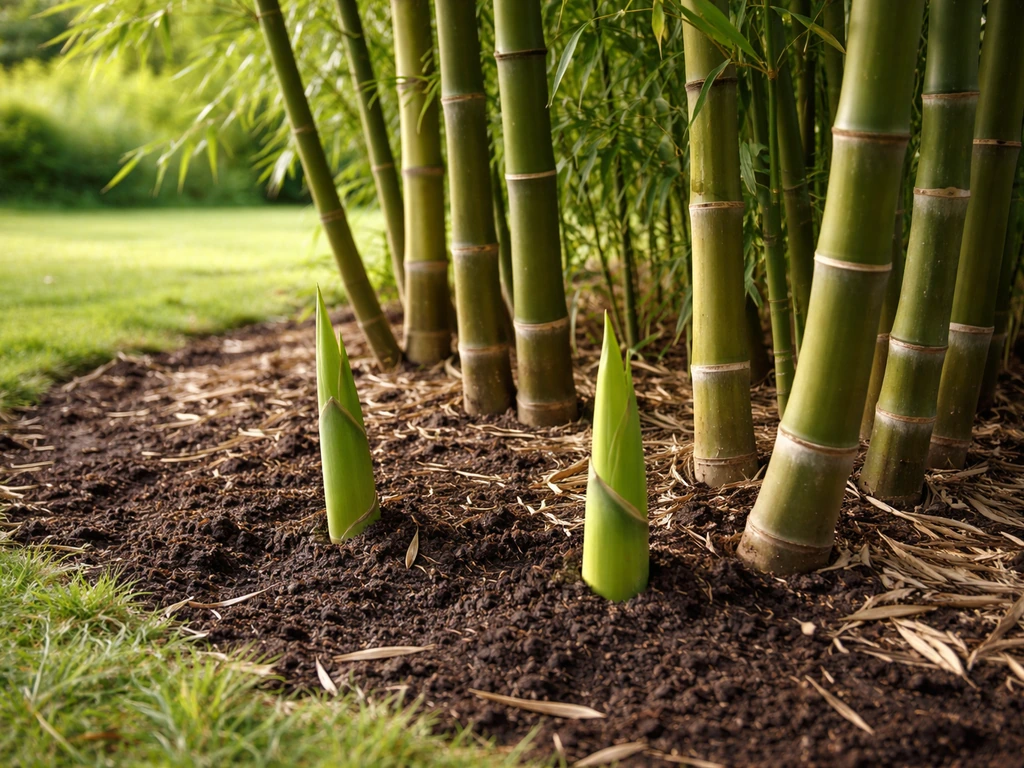
Yes, bamboo needs light to grow well. It's a photosynthesizing plant, so without adequate light it can't produce the energy it needs to push out new shoots or build strong culms. That said, 'enough light' varies by species and setup. Most outdoor bamboos thrive in full sun to partial shade, and some tolerate fairly shady conditions. Indoor bamboo needs bright, indirect light or supplemental grow lighting to stay healthy. The short version: bamboo won't die in a dim corner immediately, but it will struggle, grow slowly, and show you clear signs something is wrong.
Does Bamboo Need Light to Grow? Sunlight Guide
Marcus Hartwell
30 Apr 2026
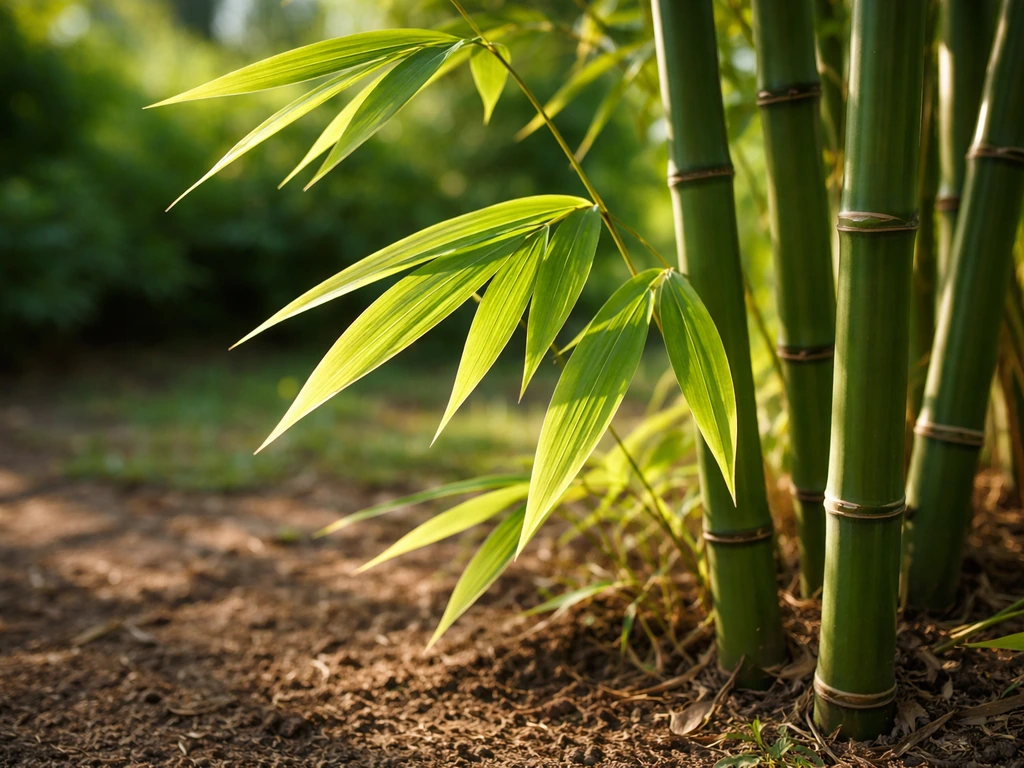
How bamboo actually uses light
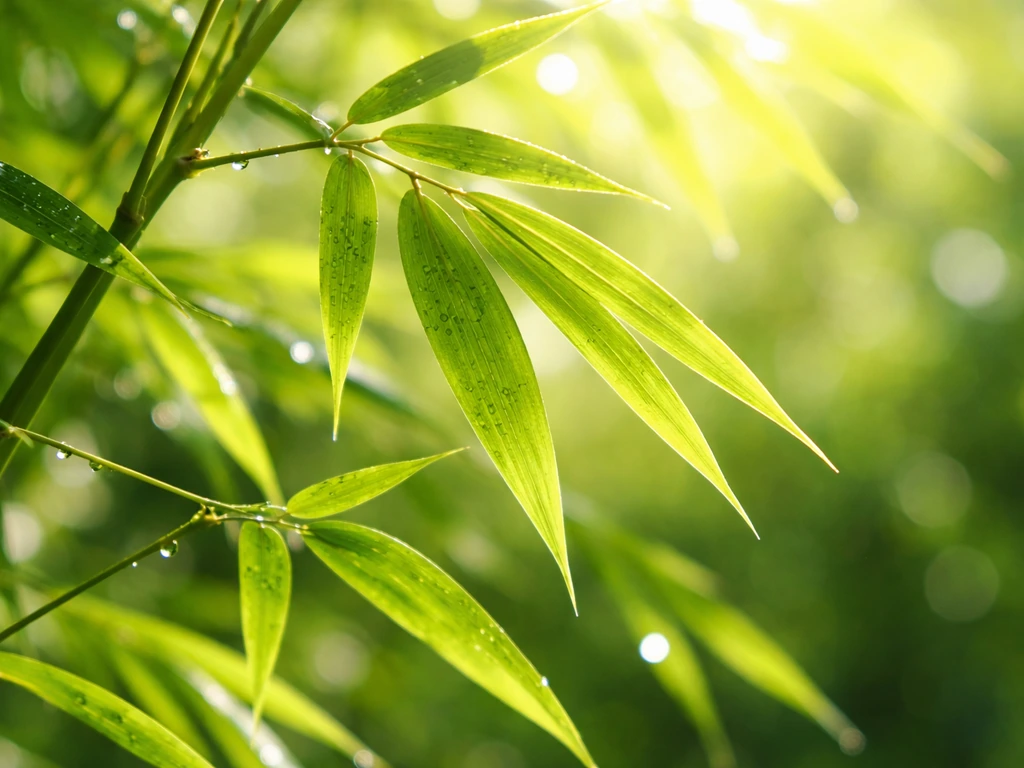
Like all plants, bamboo converts light into sugars through photosynthesis, and those sugars fuel everything: root development, new shoot emergence, culm height, and leaf density. Research on Dendrocalamus latiflorus (a large tropical clumping bamboo) showed that light intensity directly affects both shoot emergence rates and key photosynthetic traits. Less light means fewer new shoots and weaker biochemical performance in the leaves. Research on Dendrocalamus latiflorus (clumping bamboo) in an open-access study reports that interactive effects of light intensity and nitrogen supply significantly affect shoot emergence and associated photosynthetic traits. Studies on Indocalamus species found that reducing light availability lowered the rate of new bamboo production and reduced the leaves' carbon sequestration capacity, which is basically the plant's energy budget.
So when you ask whether bamboo 'needs' light, the answer isn't just a yes or no about survival. It's about how well the plant performs. Adequate light is the throttle on bamboo's growth engine. Turn it down and growth slows, turns weak, and eventually becomes visible in the plant's appearance.
What counts as 'enough' depends on the species. A broad rule of thumb: most bamboos want at least 4 to 6 hours of direct or bright light per day to grow at a reasonable rate. Full sun species can handle 6 to 8 hours or more. Shade-tolerant species can get by on 2 to 4 hours of direct light plus ambient brightness. More detail on specific types is below.
Outdoor light: full sun, partial shade, and which type your bamboo prefers
Outdoor bamboo has a wider tolerance range than most people expect. The two main categories, running (monopodial) and clumping (sympodial), both include species adapted to different light levels, so you can't just say 'all bamboo needs full sun.'
Running bamboos like Phyllostachys aurea (golden bamboo) are noted by Oklahoma State University Extension as tolerating 'sun or shade.' That's a surprisingly wide range, and in practice golden bamboo will grow in dappled shade under large trees, though it grows more vigorously in open sun. Clumping bamboos like Chilean bamboo are listed as preferring 'sun to light shade,' while Bambusa multiplex (hedge bamboo) is rated for 'part shade to full sun.' University of Arizona Cooperative Extension notes that many types can tolerate some afternoon shade, which matters a lot in hot climates where intense afternoon sun combined with heat stress can actually do more harm than shade.
In practice, here's how to read your outdoor site: morning sun with afternoon shade (east-facing spots) generally works well for most bamboo species. Full sun from 8am to 4pm works for sun-tolerant running bamboos and most established clumping types. Dense shade from tree canopy or a north-facing wall all day is the situation you want to avoid, as that's where growth becomes noticeably sparse and weak.
| Bamboo Type | Example Species | Outdoor Light Tolerance | Notes |
|---|---|---|---|
| Running | Phyllostachys aurea (golden bamboo) | Full sun to full shade | Most vigorous in sun; tolerates shade better than most |
| Clumping | Chilean bamboo | Full sun to light shade | Prefers some protection from harsh afternoon sun |
| Clumping | Bambusa multiplex (hedge bamboo) | Part shade to full sun | Flexible; good for varied garden sites |
| General clumping types | Various | 4–6+ hours direct light preferred | Some afternoon shade acceptable in hot climates |
Indoor light: windows, grow lights, and where to place your bamboo
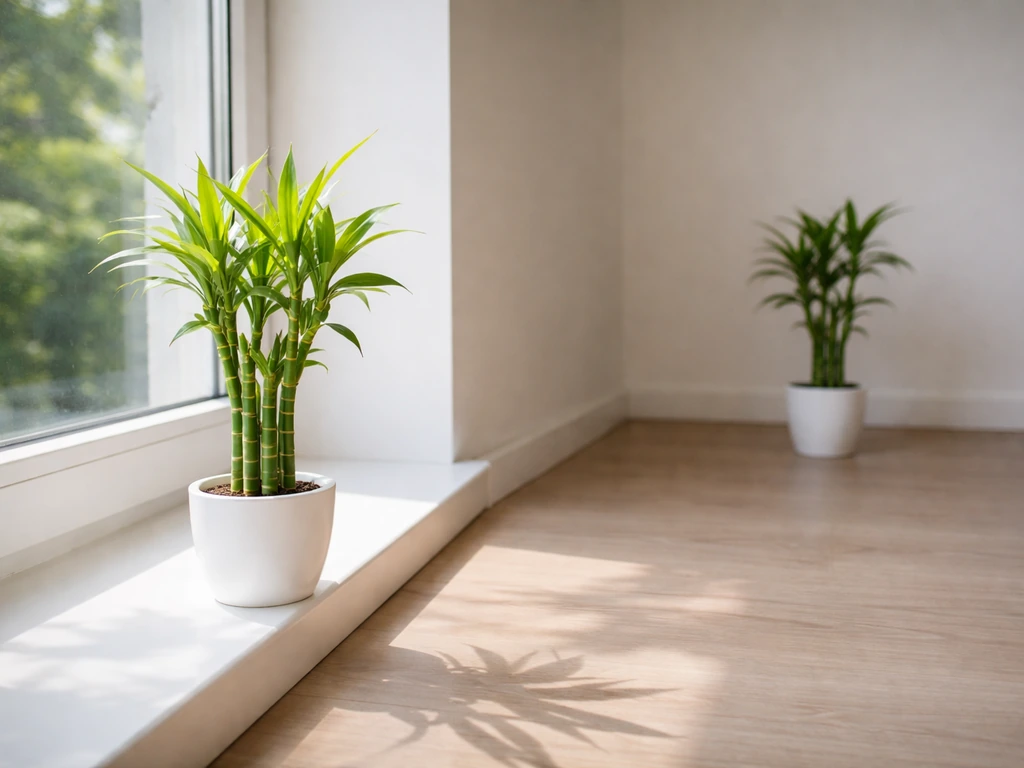
Indoor bamboo is a different challenge. Most homes don't offer the light intensity bamboo wants outdoors, so placement and supplementation matter a lot. The best spot indoors is a south-facing or west-facing window where the plant gets several hours of direct or near-direct sun daily. East-facing windows work if they're unobstructed. North-facing windows are generally too dim for most bamboo species to thrive long-term.
If natural light is limited (say, you're in a north-facing apartment or the plant is more than a few feet from any window), a grow light makes a significant difference. Full-spectrum LED grow lights set 6 to 12 inches above the canopy and run for 12 to 14 hours per day can compensate for low window light reasonably well. This isn't a perfect substitute for outdoor sun, but it keeps the plant actively growing rather than barely surviving.
One thing to watch for indoors: bamboo placed too close to a south-facing window in summer can get leaf scorch from the intense reflected heat and direct glass-amplified sun. A few inches back from the glass, or a sheer curtain as a diffuser, usually solves this. The goal is bright light without the heat spike.
- South or west window: best for indoor bamboo, aim for 4+ hours of direct sun
- East window: acceptable for moderate-light species, less ideal for high-sun types
- North window: too dim for most bamboo; supplement with grow lights
- Grow lights: full-spectrum LED, 12–14 hours daily, positioned 6–12 inches above foliage
- Avoid heat pockets near glass in summer: a sheer curtain or slight distance from the pane helps
Signs your bamboo isn't getting enough light
Bamboo will tell you it's light-starved pretty clearly if you know what to look for. The classic symptom pattern is what horticulturists call etiolation: the plant stretches toward whatever light it can find, producing long, weak internodes (the segments between nodes), small pale leaves, and an overall spindly appearance. The stems lose their green intensity and start looking yellowish or washed out. New culms that emerge are noticeably thinner and shorter than previous ones.
In research terms, etiolation happens because the plant is allocating energy to vertical stem elongation in a search for light rather than to leaf development and root growth. You end up with a plant that looks tall but is structurally weak and photosynthetically underpowered. If you're noticing reduced or absent new shoot production alongside yellowing foliage, low light is one of the first things to investigate alongside watering habits and soil conditions.
- Pale yellow or washed-out leaves (chlorosis)
- Long, thin, weak stems or culms with unusually large gaps between nodes
- Small leaves compared to the plant's previous growth
- Leaning or bending strongly toward a light source
- Slow or no new shoot emergence despite warm temperatures and adequate watering
- New culms shorter and thinner than older ones
If you're seeing these signs, the fix is increasing light, but do it gradually. Moving a bamboo that's been sitting in dim indoor conditions directly into full afternoon sun outdoors can cause leaf scorch and transplant shock within days. The solution is a gradual transition, which is covered in the next section.
What to do today: a simple plan to improve light conditions
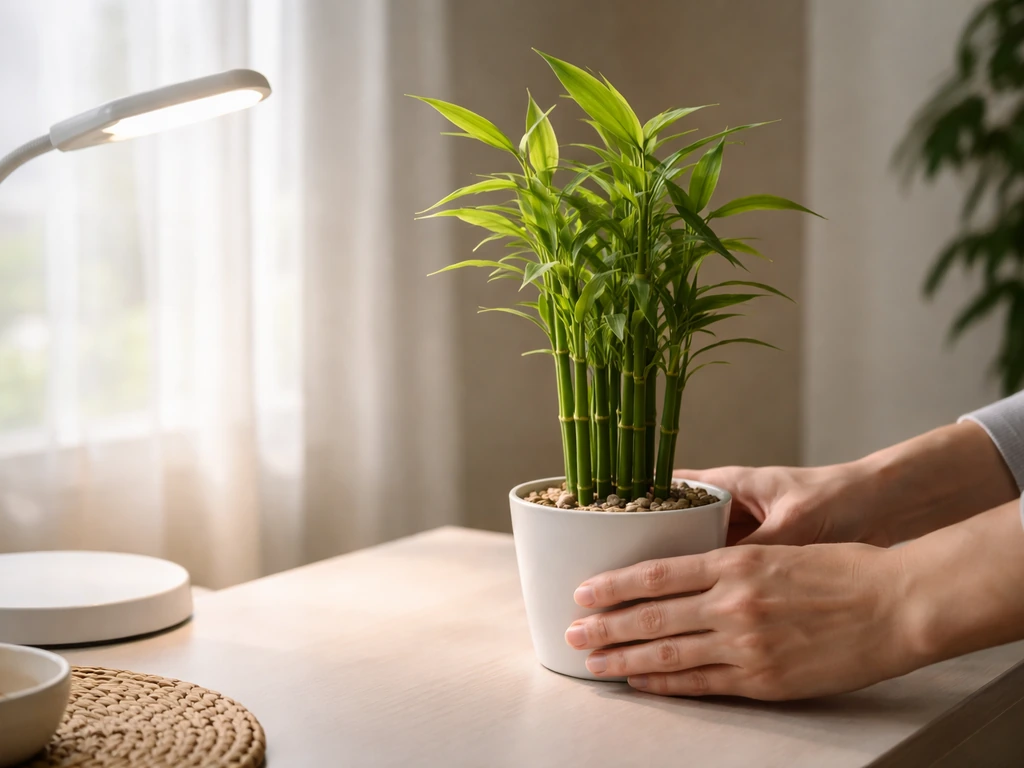
If your bamboo isn't getting enough light, here's how to fix it without stressing the plant. The core principle, backed by Penn State Extension's hardening-off guidance and University of Arizona Extension's acclimation recommendations, is gradual exposure increases. Start with 2 to 3 hours of mild sun in a sheltered location, then add a couple of hours per day over one to two weeks until you reach the target exposure. This applies whether you're moving an indoor plant outside, repositioning an outdoor container, or transitioning a recently purchased plant.
- Assess your current setup: count how many hours of direct or bright light your bamboo actually receives (not just 'near a window' but hours of real brightness hitting the leaves).
- If indoors and underlit, move the plant to your brightest window today. South or west is best. If no good window is available, order or set up a full-spectrum LED grow light.
- If moving from indoors to outdoors, start with 2 to 3 hours in a spot with morning sun and shelter from afternoon wind and intense sun. Do this for 3 to 4 days before increasing.
- Add 1 to 2 hours of sun exposure every few days, watching for leaf scorch (brown crispy tips or patches) which means you're moving too fast.
- For outdoor plants in permanent shade, consider whether the spot can be improved by pruning overhanging branches to let in more dappled light, or whether the plant should be relocated.
- Once at target light levels (4 to 6 hours minimum for most species, 6 to 8 for sun-loving types), monitor for new growth over the next 4 to 6 weeks. Etiolated stems won't fix themselves, but new growth should emerge stronger and greener.
One realistic note: if your bamboo has been severely light-deprived for a long time, improving light won't instantly reverse the damage to existing culms. Those weak, pale stems will stay that way. What improves is the new growth going forward. Trim the worst etiolated culms back to the ground once new healthy shoots start emerging. This keeps the plant looking tidy and redirects energy to the stronger new growth.
Light is just one piece of the bamboo growing equation, of course. How much sun bamboo specifically needs, whether it can genuinely thrive in low-light conditions, and how light interacts with water requirements are all worth understanding in more depth depending on your setup. If you're also figuring out space, the room bamboo needs to spread and grow depends on the species and whether it runs or clumps how much room bamboo needs to grow.
If you’re wondering how much sun bamboo needs to grow well, aim for the species’ preferred range and adjust based on whether it’s indoor or outdoors How much sun bamboo specifically needs. Water needs vary by species, temperature, and sunlight, so once you dial in light you can also fine-tune watering how light interacts with water requirements.
If you are growing bamboo in Animal Crossing: New Horizons, the space it needs to grow depends on how much room the clump has and what tile layout you’re using how much space does bamboo need to grow acnh. Can bamboo grow in low light depends on the species, and it usually needs at least some bright light or supplementation to avoid slow, weak growth. But if you're starting from 'is light even necessary?
' the answer is a firm yes, and the steps above will get you moving in the right direction today.
FAQ
If bamboo does not get much light, will it still survive?
Yes, bamboo can keep photosynthesizing in low light, so it may not die quickly, but it typically shifts into “maintenance mode” (slow root activity, fewer new shoots, weaker culms). If you want growth instead of survival, aim for bright conditions, or supplement indoors with a grow light that reaches the canopy level.
How can I tell if my bamboo is light-starved versus having a watering problem?
Etiolation is the most reliable clue, look for pale or yellowish leaves, long weak internodes, and spindly, stretched stems. However, yellowing can also come from watering issues, nutrient deficiency, or root stress, so check soil moisture and look for whether the plant is actively forming new shoots.
Can bamboo get too much light indoors?
Too much direct sun indoors can cause leaf scorch, especially near a hot south-facing window in summer. A simple fix is to move the plant a few inches back from the glass, use a sheer curtain to diffuse, or switch to morning sun exposure while you acclimate.
Does watering change if I increase bamboo’s light?
In general, water needs rise as light increases because the plant uses more energy and transpiration increases. If you boost sunlight or turn on grow lights, re-check the soil frequently and reduce the risk of soggy roots by adjusting watering to when the top layer starts to dry, not on a fixed schedule.
What’s a practical grow-light setup if my window light is weak?
For indoor grow lights, consistency matters. Run the light 12 to 14 hours per day and keep the fixture far enough above the canopy to avoid heat and over-intensity stress, then adjust by observing leaf color and whether new growth tightens up (shorter internodes) instead of stretching.
How quickly can I move indoor bamboo outside to more sun?
Start with mild exposure and increase gradually over 1 to 2 weeks, especially when moving from indoor shade to outdoor sun. Jumping straight to intense afternoon sun can trigger scorch and shock, and you may not see improvement for several weeks because new culms develop over time.
Will dappled shade under trees be enough for bamboo growth?
Yes, but the “hours of sun” rule is less important than total brightness and light quality. A plant under trees can work if it still receives strong ambient light, but dense, all-day canopy shade usually reduces growth noticeably, so use repositioning or thinning overhead foliage if possible.
Is morning sun with afternoon shade better than full sun in hot weather?
Generally, running and clumping bamboos tolerate different light levels, but even within the same category, species and local heat matter. In hot climates, providing afternoon shade can protect leaves from heat stress, while still giving enough morning brightness for photosynthesis.
Should I cut off pale, weak culms if my bamboo has been in low light?
Trim only after you see healthy new shoots starting, because existing etiolated culms will not suddenly “green up” and stiffen. Cutting back the worst weak culms helps the plant redirect energy to stronger growth, but avoid heavy pruning during the darkest low-light period.
Next Article
What Does Bamboo Need to Grow A Practical Checklist
Practical checklist answering what bamboo needs to grow: light, soil, watering, climate, feeding, planting, and quick tr