The quick answer: no, bamboo does not take 5 years to grow above ground
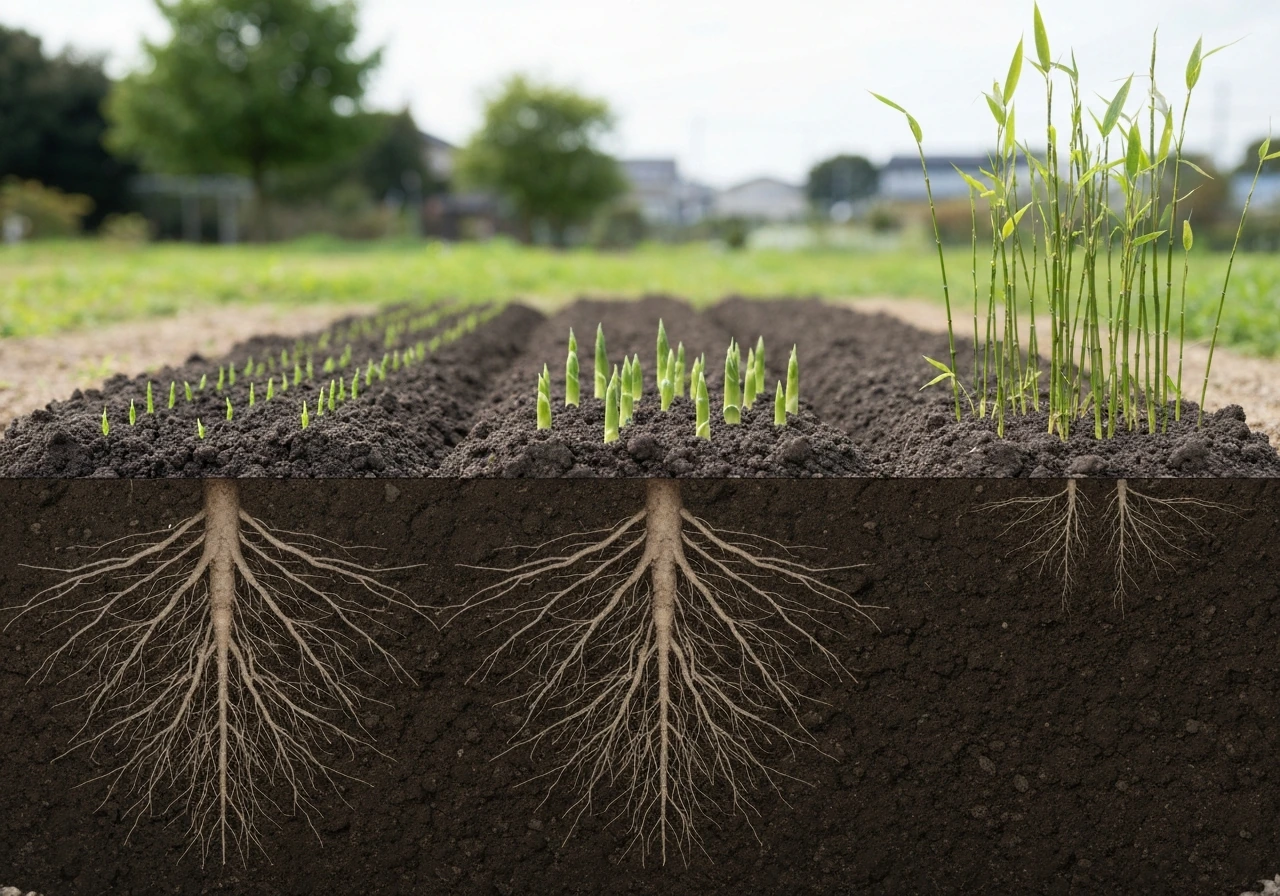
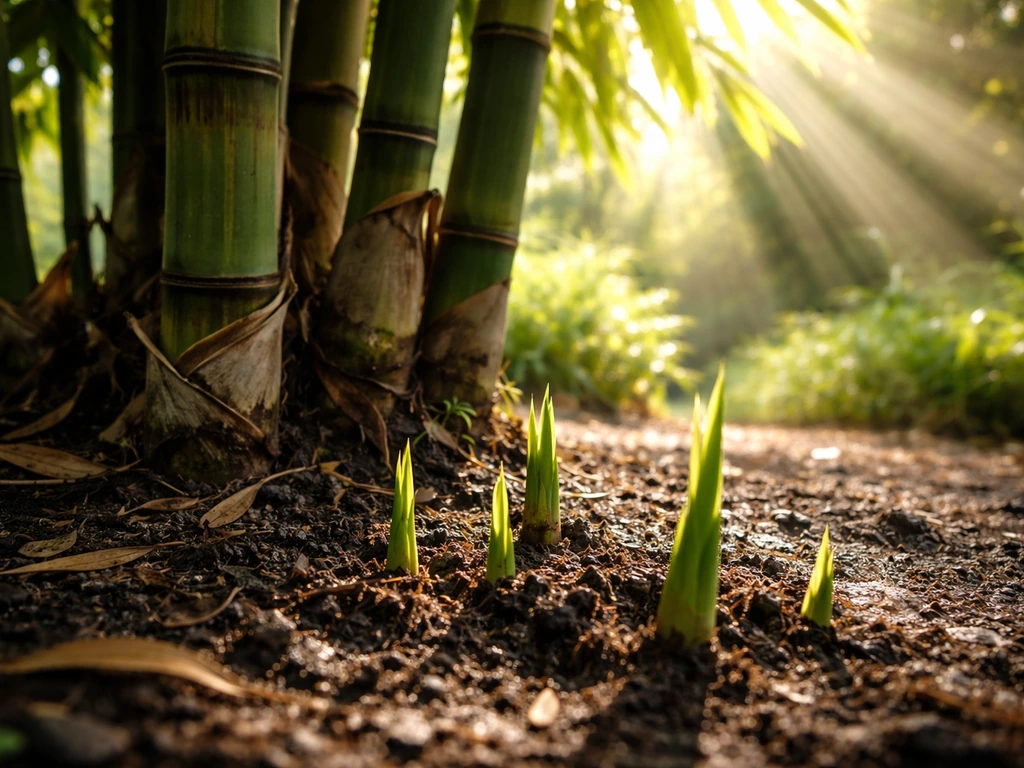
The "5 years" idea is a myth, but it is a myth with a kernel of truth buried in it. Bamboo does not spend five years doing nothing and then suddenly explode out of the ground. What actually happens is that a newly planted bamboo prioritizes underground rhizome development for the first one to three years, and during that time above-ground growth can look underwhelming. Once the root system is established, visible growth accelerates fast, sometimes dramatically so. The confusion comes from mixing up two different timelines: time to first shoot, and time to reach full usable maturity. If someone tells you bamboo takes 5 years, they usually mean 3 to 5 years to reach harvestable culm strength or full grove density, not 5 years before you see a single green shoot. In most garden situations, you will see new shoots within the first or second growing season, and if you want a deeper look at the full picture, how long does bamboo take to grow covers the complete timeline from planting to maturity.
Why bamboo looks slow at first (it's all happening underground)
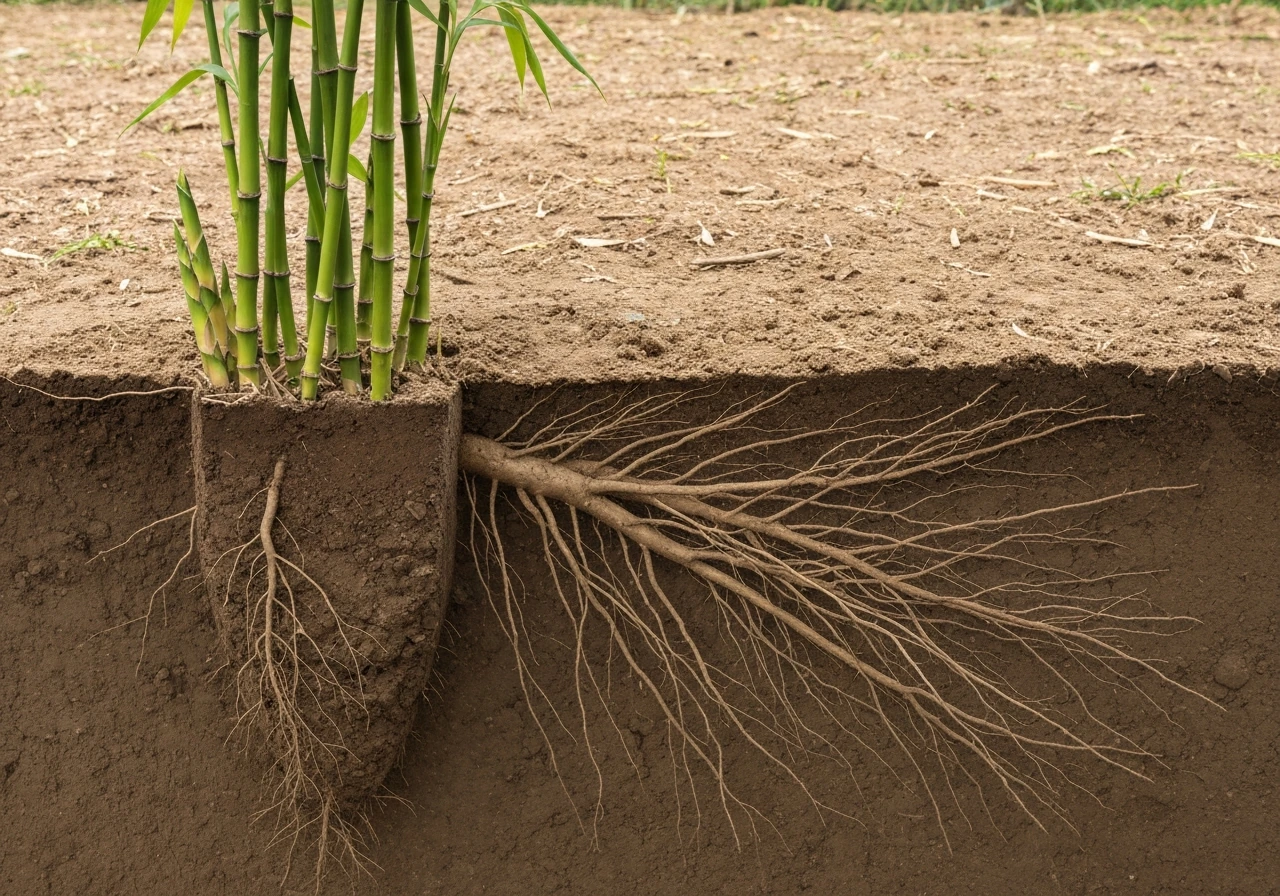
Think of bamboo like an iceberg. The part you see above ground is only a fraction of what the plant is actually building. After you put a new bamboo in the ground, almost all of its energy goes into extending its rhizome system, which is the horizontal underground network that will eventually send up new culms. University of Maryland Extension and Alabama Cooperative Extension System both describe how running bamboos, in particular, grow by sending rhizomes horizontally beneath the soil, producing new shoots from lateral buds along those runners. That process takes time, and while it is happening, you might look at your plant and think it is not doing anything. It absolutely is. It is just doing it where you cannot see it.
This is also why how long does bamboo grow underground is such a useful question to understand before you panic about slow above-ground progress. The rhizome network is the engine. Once that engine is built, culm shooting can happen with almost shocking speed. The US Forest Service documents golden bamboo (Phyllostachys aurea) emerging in April and reaching its full height in roughly a month. A foot of growth per day during active shooting is not just a nursery sales pitch; it is a documented biological reality for established plants. The key word is "established. The US National Invasive Species Information Center (US NAL) profiles blank" rel="noopener noreferrer">golden bamboo (Phyllostachys aurea), which can help provide context on establishment and management concerns. " You have to be patient for that first establishment phase, typically one to three years depending on species, climate, and starting plant size.
Does Chinese bamboo really take 5 years? What the species story actually is
When people search for "Chinese bamboo," they are usually referring to one of two different things. The first is a motivational metaphor (the Chinese bamboo tree parable, which describes a plant that supposedly does nothing for four years and then grows 90 feet in year five). The second is actual bamboo species originating from China, which includes some of the most popular landscaping and edible-shoot bamboos in the world. The parable version is a teaching story, not botany. Real bamboo grown in China does not behave that way.
In practice, species like Phyllostachys nigra (black bamboo) and Bambusa multiplex (a common clumping type from southern China) are both grown widely in the American Southeast. University of Georgia's Cooperative Extension lists these among the species commonly cultivated in Georgia. Neither of them sits dormant for five years. If you want specifics on the Chinese bamboo timeline, how long does it take to grow Chinese bamboo goes deep on those species. The short version: expect first-season or second-season shoots from most Chinese bamboo species, with the grove filling in over three to five years.
A realistic bamboo growth timeline by type
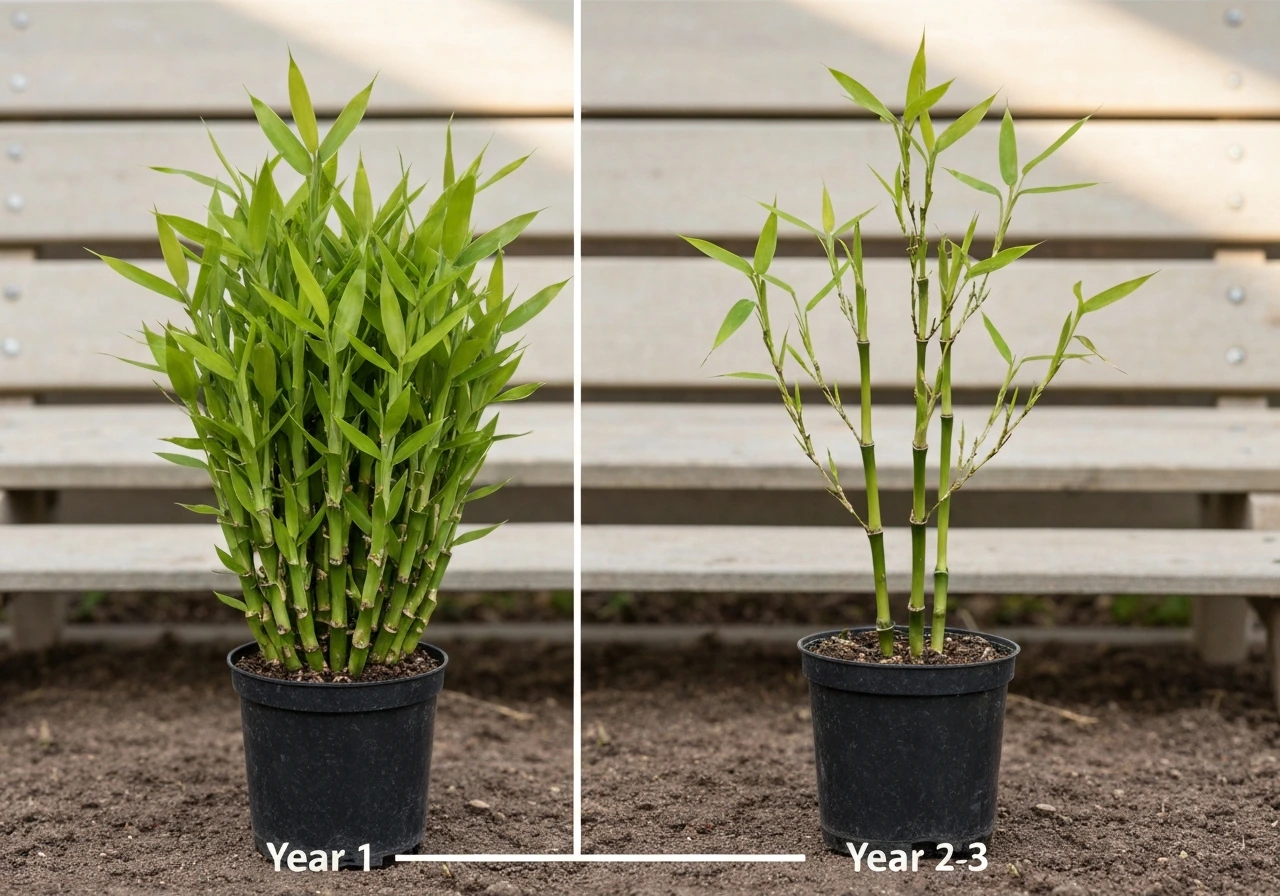
The single biggest factor in your growth timeline is whether you are growing clumping or running bamboo. These two types behave quite differently in the early years, and mixing them up is one of the reasons expectations get distorted.
Clumping bamboo (Bambusa and Fargesia genera)
Clumping bamboo has a tight, non-invasive root habit. It expands slowly outward from a central clump each year, usually adding a ring of new culms around the outside. In year one after planting, you might get a handful of new shoots that are smaller than the original culms. In years two and three, those shoots get progressively taller and thicker. By years three to five, a well-cared-for clumping bamboo can be impressive in size. Because the rhizome stays compact, there is less of that "invisible underground engine building" phase, and visible progress tends to be more predictable year over year. A nursery planting dense enough and with large-enough start plants can give you a useful privacy screen in one to two years.
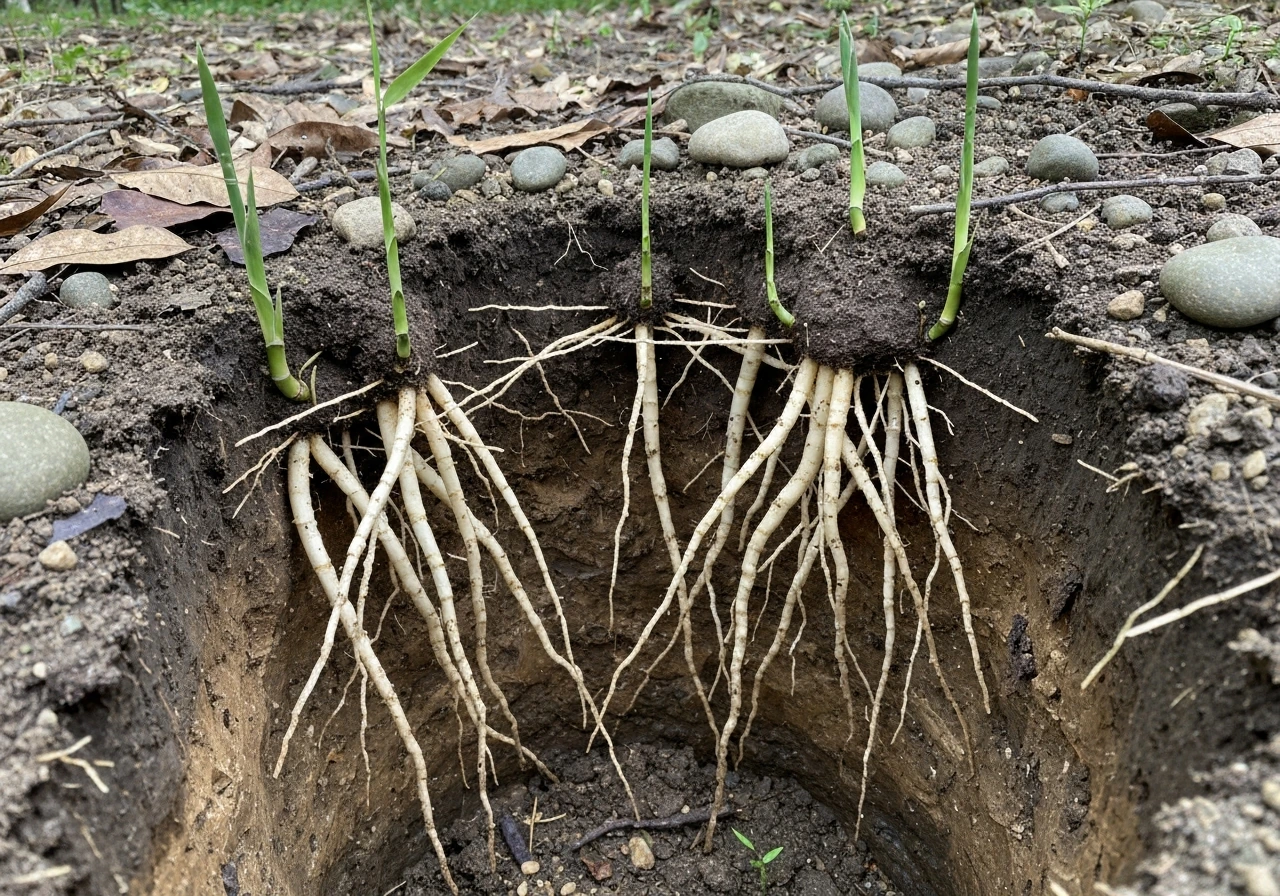
Running bamboo is where the "5 years" myth gets its legs. In years one and two, a running bamboo might send up only a few culms while its rhizomes spread aggressively underground. University of Maryland Extension also notes that bamboo rhizomes can spread “a hundred or more feet” in unobstructed directions, and that missed rhizome fragments can resprout. If you installed a rhizome barrier (a common best practice, with barriers typically installed at 22 to 30 inches deep), you will see the plant bounce back and forth within the contained area before finally shooting upward with energy. Once that rhizome system is established, usually by year two or three, running bamboo can explode. New culms appear annually and each successive generation tends to be taller and thicker than the last. By year four or five, many running bamboos in temperate climates have essentially reached their mature canopy height. The grove is not "fully grown" in five years because it keeps densifying, but it is absolutely visible, tall, and impressive long before year five.
| Type | Year 1 | Year 2–3 | Year 4–5 | Notes |
|---|
| Clumping (e.g., Bambusa multiplex) | Few small new shoots | Steadily taller each season | Dense, mature-looking clump | Predictable, non-invasive spread |
| Running (e.g., Phyllostachys aurea) | Minimal above-ground growth; rhizomes spreading | First strong shoot flush, taller culms | Near-full height, grove filling in | Barrier recommended; very fast once established |
| Fargesia (cold-hardy clumping) | Very slow first season | Modest growth, cold-tolerant | Established clump, moderate height | Best for USDA zones 5–8 without barriers |
What actually controls how fast bamboo grows
Growth speed is not just about species. The same bamboo planted in Georgia and in Minnesota will have a completely different trajectory. Here are the conditions that matter most, ranked roughly by impact.
- Climate and temperature: Bamboo grows fastest in warm, humid climates. Most running species thrive in USDA zones 6 through 10. Cold snaps, late frosts, and hard winters slow rhizome activity significantly. Container-grown bamboo is especially vulnerable to temperature extremes since roots are not insulated by ground soil.
- Sunlight: Most bamboos want at least 4 to 6 hours of direct sun per day. Shaded plants put on less growth and shoot less vigorously. Running types especially struggle to build rhizome mass in heavy shade.
- Soil: Well-draining loamy soil with a pH between 5.5 and 6.5 is ideal. Compacted clay, waterlogged ground, or very sandy soil will all slow establishment. Amending with compost before planting is one of the highest-return things you can do.
- Water: Bamboo is not drought-tolerant during establishment. Consistent moisture, especially in the first two growing seasons, is critical. Once established, most species are more resilient, but water stress during shooting season will produce shorter, thinner culms.
- Fertilizer: A balanced nitrogen-rich fertilizer (something like a 30-10-10 or a lawn-type fertilizer) applied in spring and again in early summer feeds both rhizome development and culm shooting. Nitrogen is the most important macronutrient for bamboo's leafy, cane-heavy growth.
- Pot vs. ground: In-ground bamboo almost always outperforms container bamboo because roots are not restricted and soil temperature is more stable. If you are growing in a pot, use the largest container you can manage and be consistent about watering and fertilizing.
How to make your bamboo grow faster starting today
If you want to compress that timeline, there are concrete steps you can take right now. The biggest gains come from getting the establishment phase right rather than trying to rush the shooting phase later.
- Plant in the right season: Spring is the best time to plant bamboo in most climates. The soil is warming up, and the plant has a full growing season to establish rhizomes before winter. Fall planting works in warmer zones but gives less time for root establishment.
- Start with larger plants: A 5-gallon or 15-gallon nursery bamboo will outpace a 1-gallon plant by years in terms of when you get a real grove. The investment upfront saves years of waiting.
- Amend your soil before planting: Dig a generous planting hole (two to three times the root ball width), mix in compost, and make sure drainage is good. This is your one chance to set up the underground environment properly.
- Water consistently for the first two years: During shooting season (typically spring to early summer), water deeply two to three times per week if rain is not doing the job. Do not let new shoots dry out.
- Fertilize on a schedule: Apply a nitrogen-rich granular fertilizer in early spring just as soil warms, and again in early summer. Avoid fertilizing after late summer, as this can stimulate tender growth that gets damaged by fall frosts.
- Do not prune first-year shoots: Let every culm and leaf stay on the plant during establishment. Leaves are the solar panels that drive rhizome growth. Removing them slows the underground engine you are trying to build.
- Consider spacing carefully: For running types, planting multiple starts 3 to 5 feet apart rather than one single plant will fill in a screen much faster because rhizomes from neighboring plants merge and the grove establishes more quickly.
If you are curious about the cost side of getting started with good-quality plants and soil preparation, how much does it cost to grow bamboo breaks down realistic expenses from starter plants through fertilizer and containment hardware.
Troubleshooting slow bamboo: what is normal and what is a problem
If your bamboo is not doing what you expected, the first step is figuring out whether slow growth is normal establishment behavior or a real problem. Here is how to tell.
Slow growth that is completely normal
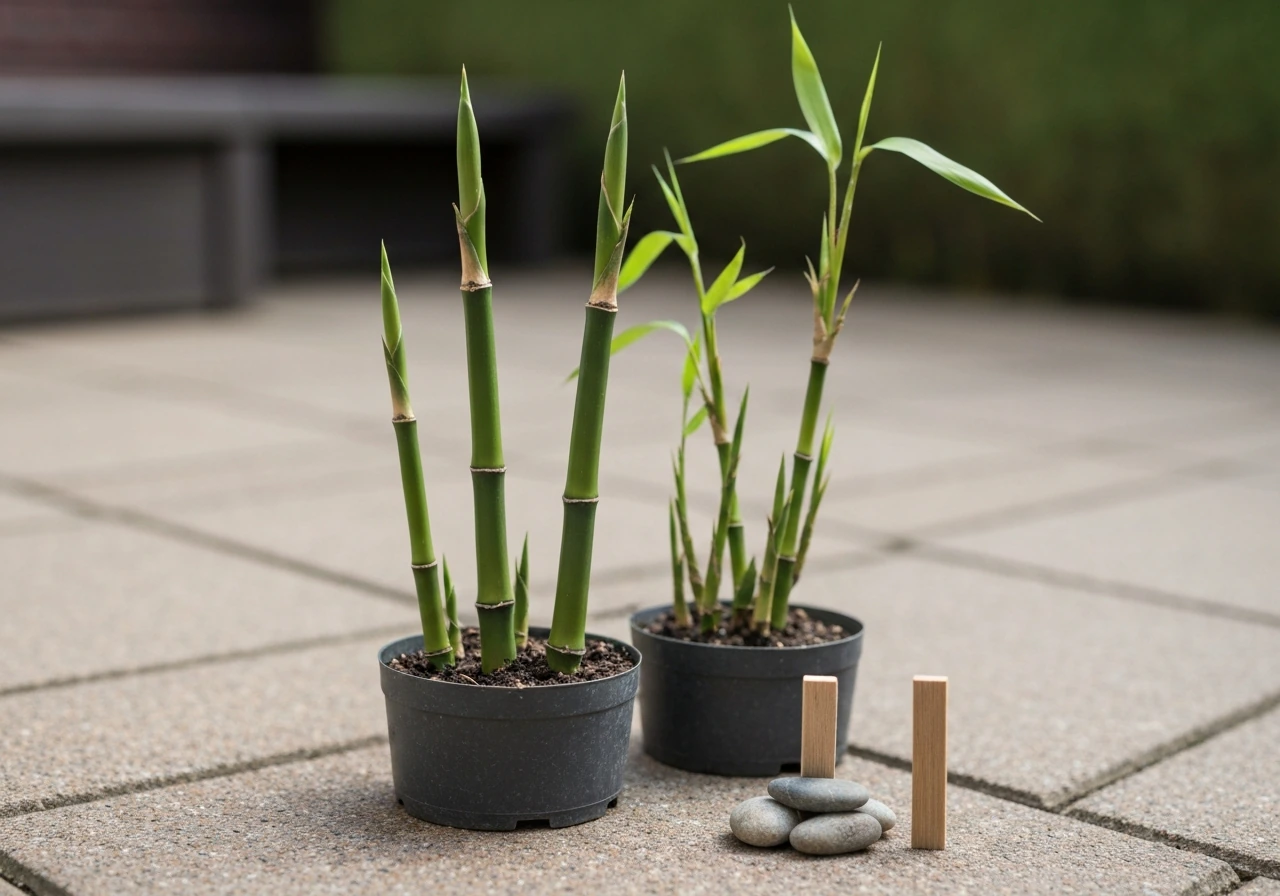
- No new culms in year one: Very common, especially with running types. The plant is building rhizomes. As long as existing culms are green and healthy, this is fine.
- New culms that are shorter than the original plant: Normal in years one through two. Each generation of culms is typically taller than the last, but it takes a few cycles to really ramp up.
- Yellowing of a few older leaves in spring: Bamboo naturally drops some older leaves as new growth pushes through. A modest amount of yellowing in early spring is normal.
- Slow growth in a container: Pots restrict root mass and heat up in summer and freeze in winter. Container bamboo will almost always grow more slowly than in-ground bamboo.
Signs something is actually wrong
- Widespread yellowing or browning of leaves across the whole plant: This usually means drought stress, root rot from poor drainage, or a major nutrient deficiency. Check soil moisture first.
- No growth at all after three full growing seasons in good conditions: If you have done everything right (sun, water, soil, fertilizer) and still see no new culms or rhizome spread after three years, the plant may have been root-damaged at planting, or your climate may genuinely be too cold for that species.
- Mushy culm bases: Root rot from overwatering or compacted, waterlogged soil. This can kill bamboo faster than anything else. Improve drainage immediately.
- Tiny, thin, weak new culms year after year: Almost always a nitrogen deficiency or root restriction. Fertilize with a high-nitrogen product and consider whether the plant is pot-bound or competing with tree roots.
One situation worth noting separately: if you are growing bamboo as part of a game or simulation context (some people search bamboo timelines for that reason), that is a completely different topic from real horticulture. For the real-plant growers, the guidelines above apply. For those playing games with bamboo mechanics, how long does it take bamboo to grow in Dreamlight Valley covers that scenario.
The bottom line on slow bamboo is this: if the plant is green, has healthy leaves, and is in its first two years, trust the process. The underground work is happening. Give it the right conditions, be consistent with water and fertilizer, and the above-ground payoff will come. Bamboo is not a 5-year wait. It is a 1-to-3-year establishment that earns you decades of fast, vigorous growth.