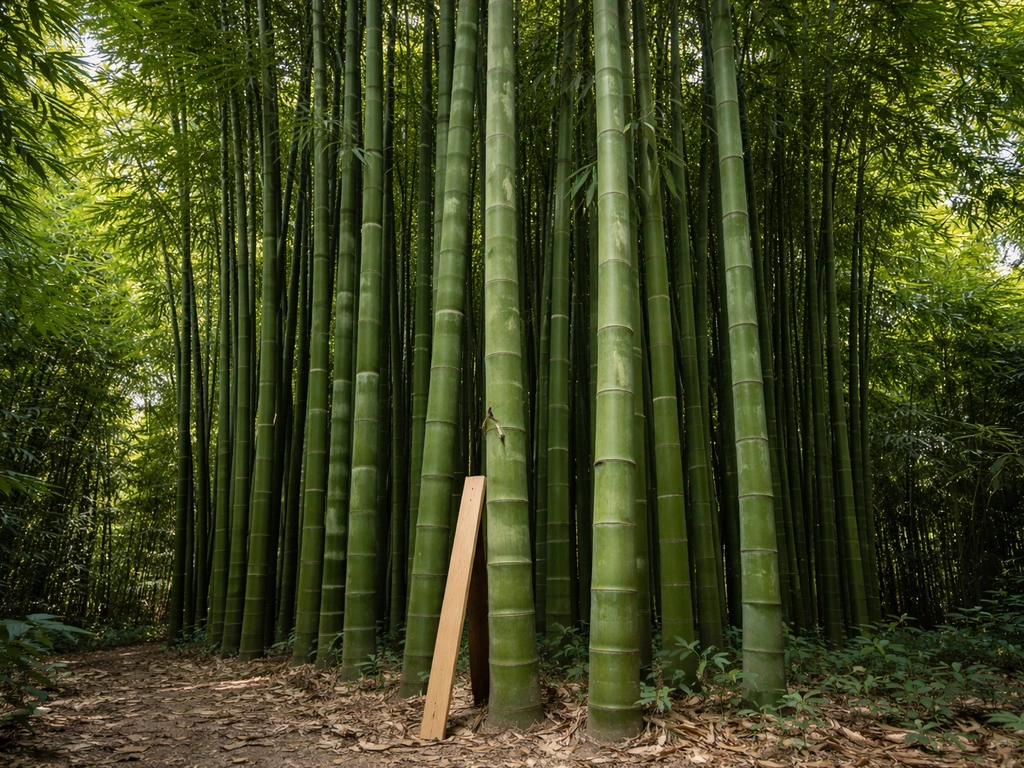
Black bamboo (almost always Phyllostachys nigra when sold at garden centers) typically reaches 20 to 35 feet (6 to 10.7 m) when grown in the ground under good conditions. Another database/listing reports black bamboo can reach about ~6 m (19.7 ft) reach ~6 m (19.7 ft). You'll see plenty of listings that say 13 feet, and others that claim up to 55 feet, both are technically possible, but neither is what most home gardeners can realistically expect. In a well-sited garden bed in a warm temperate climate, 20 to 30 feet is a realistic target over a decade of healthy growth.
How Tall Does Black Bamboo Grow? Real Expectations
Marcus Hartwell
6 Jun 2026
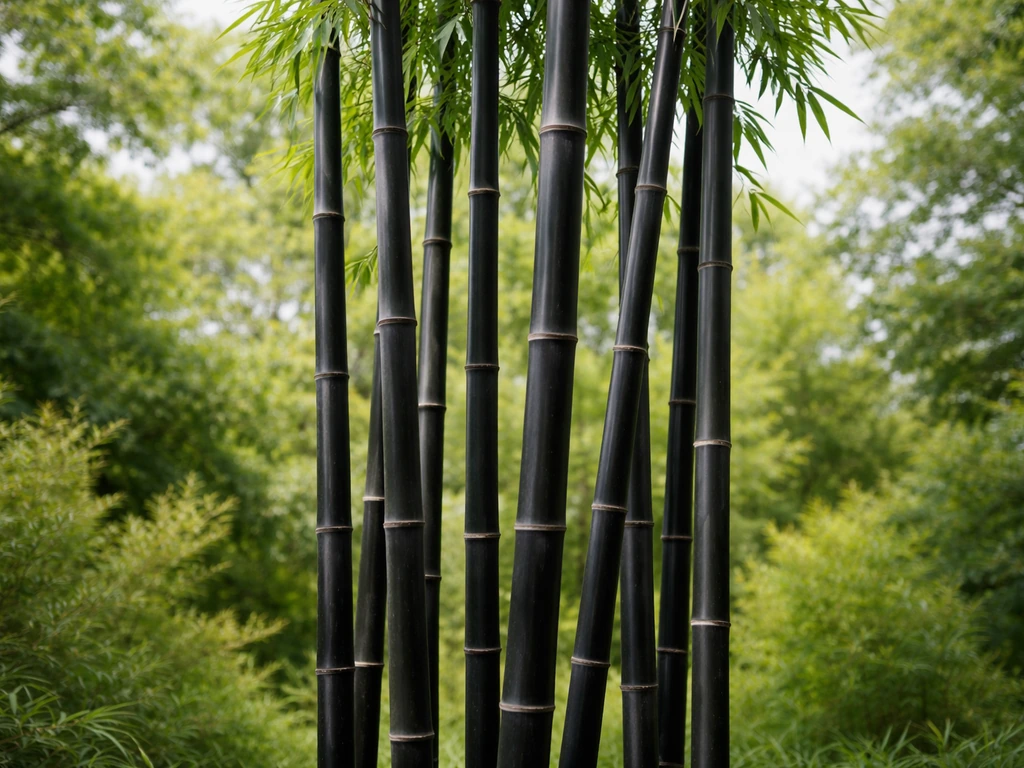
What 'black bamboo' actually means (it matters for height)
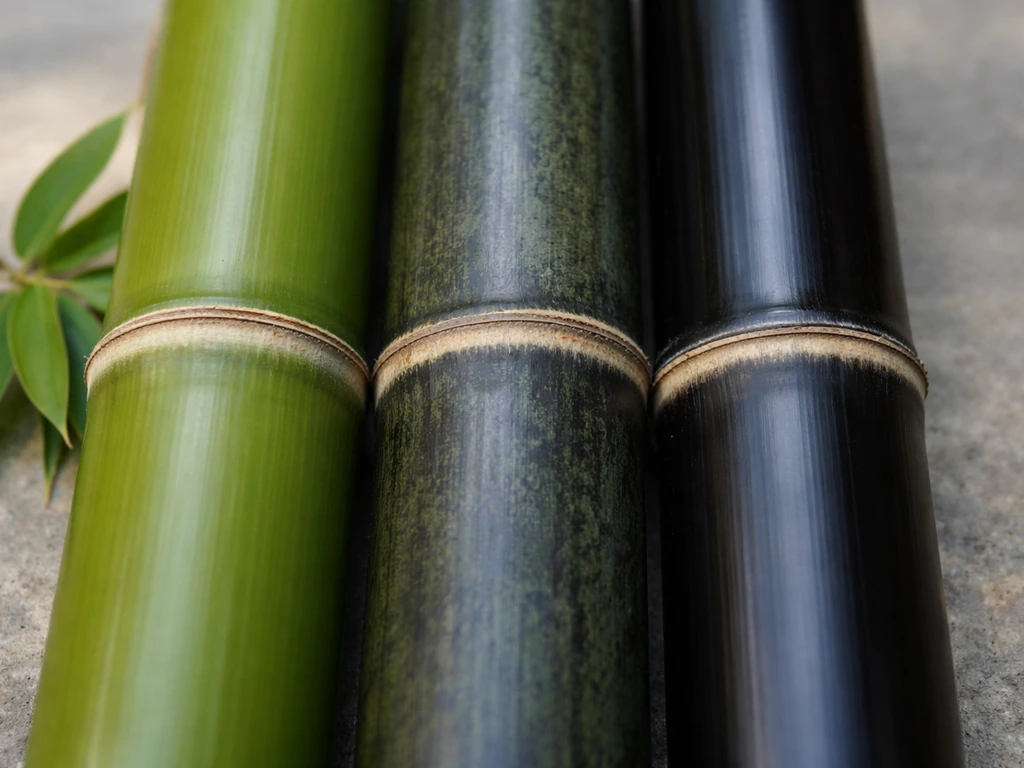
When people ask how tall black bamboo grows, they almost always mean Phyllostachys nigra, the running bamboo whose green culms darken to a deep ebony black by their second or third year. That's the plant sold at virtually every nursery and garden center under the 'black bamboo' label. But the name gets applied loosely. You might find a tag that reads 'black bamboo' on a smaller clumping variety, an ornamental dwarf form, or even a different species entirely. Phyllostachys nigra also has a handful of blank" rel="noopener noreferrer">synonyms and older botanical classifications that still show up on labels and seller pages, so it's worth confirming the exact species before you plan around a height number.
The variety matters too. Phyllostachys nigra 'Henon' (sometimes sold separately as gray bamboo) can push 50 feet in ideal conditions. The straight species, true P. nigra, is more modest. If your tag just says 'black bamboo' with no variety name, assume you have the straight species and plan for 20 to 30 feet in the ground over time.
Typical mature height range
Here's an honest breakdown of the height ranges you'll see reported, and what they actually mean in practice:
| Source / Context | Reported Height | What It Reflects |
|---|---|---|
| Garden center / general listings | ~13 ft (4 m) | Conservative estimate, often for UK or cooler climates |
| Mid-range horticultural databases | ~20 ft (6 m) | Typical for average garden conditions |
| Invasive plant surveys (US) | 20–35 ft (6–10.7 m) | Realistic range for established groves in ground |
| Absolute maximum (ideal conditions) | Up to 55 ft (17 m) | Rare; requires warm climate, excellent soil, years of growth |
The 13-foot figure is real but conservative, it reflects plants in cooler UK-style climates or younger specimens not yet at their peak. The 55-foot maximum is real too, but it describes specimens in near-ideal conditions over many years, not what you'll get in a typical suburban backyard. For most gardeners in the United States, targeting 20 to 30 feet gives you a grounded, achievable expectation.
What actually determines how tall your black bamboo gets
Running vs clumping growth habit
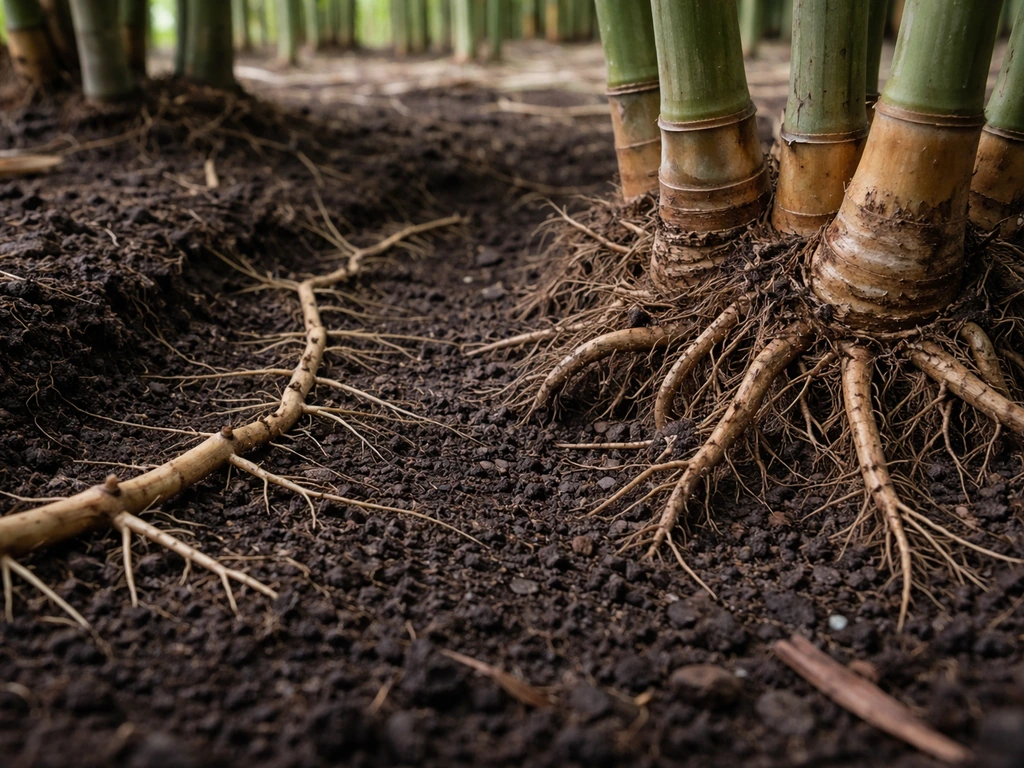
Phyllostachys nigra is a running bamboo, meaning it spreads via aggressive underground rhizomes. That matters for height because running bamboos draw energy from a large, expanding root network, the bigger and more established the rhizome system, the taller and thicker each new culm can be. A newly planted black bamboo will send up short, skinny culms. A well-established grove that has been in the ground for 5 to 10 years will produce culms that are noticeably taller and wider each spring shooting season. If you're containing it with a rhizome barrier, understand that restricting spread also limits the energy available for maximum height.
Climate and hardiness
Phyllostachys nigra is hardy to about -5°F (-20°C), which puts it solidly in USDA zones 7 through 11. In zone 7 (think Tennessee or coastal North Carolina), it will survive cold winters but may get top-killed in harsh years, which resets height progress. In zones 8 through 10, Georgia, the Gulf Coast, Northern California, the Pacific Northwest, it grows most vigorously and comes closest to its upper height potential. Compare that to bamboo in Japan, where similar P. nigra groves in warm, humid coastal regions routinely reach 30 feet or more, versus black bamboo in a Texas panhandle garden that struggles to push past 15 feet because of drought stress and temperature swings.
Sunlight, soil, and water
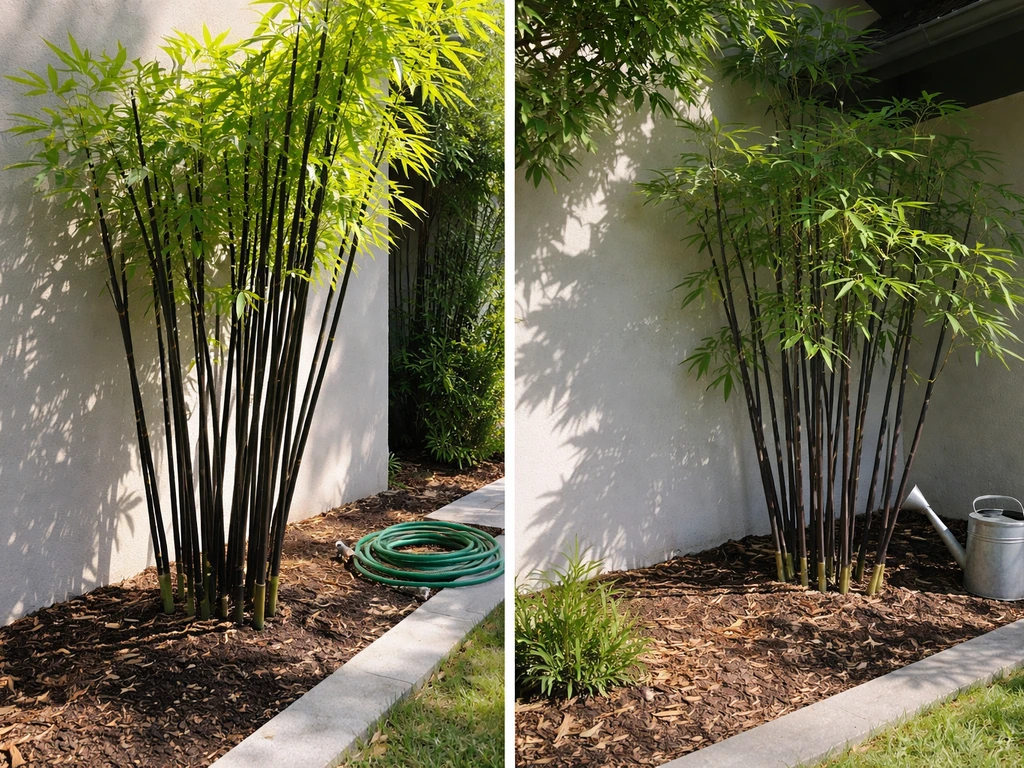
Full sun drives maximum height. Black bamboo prefers at least 6 hours of direct sun daily; in shadier spots it grows slower, stays shorter, and the culms may not blacken as richly. Soil pH in the range of 6.0 to 6.5 (mildly acidic) is ideal. Compacted, waterlogged, or alkaline soils will stunt growth noticeably. Consistent moisture is critical during the shooting season (typically spring) because each culm reaches its final height within a few weeks of emergence, it does not continue to lengthen after that. A culm that shoots during a drought will stay permanently short. Water stress during that window is one of the most common reasons black bamboo underperforms in home gardens.
Spacing, thinning, and maintenance
Overcrowded clumps compete for resources and produce shorter, weaker culms. Thinning out old culms every few years redirects the plant's energy into new growth. Removing culms older than 5 or 6 years (they stop contributing meaningfully to the grove) and keeping the grove at a manageable density consistently improves the height and diameter of new shoots. Fertilizing with a nitrogen-rich feed in early spring, just before shooting season, also makes a measurable difference.
How fast does black bamboo grow, and when will it get tall?
Black bamboo follows the classic bamboo growth pattern: slow for the first few years while it establishes roots, then increasingly vigorous. Here's a realistic timeline:
- Years 1–2: Establishment phase. New culms appear but are often shorter than what you planted. The plant is investing in rhizome development, not height. Expect culms under 6 feet.
- Years 3–4: You'll start seeing noticeably taller culms — often 8 to 15 feet — and the grove begins to look substantial. This is when most gardeners feel rewarded.
- Years 5–7: The grove hits its stride. New culms each spring are taller and thicker than the last. Heights of 15 to 25 feet are common in good conditions.
- Years 8–15+: Mature grove height is approached. In ideal conditions (zones 8–10, good soil, consistent water), culms can push 25 to 35 feet. Maximum heights take the longest and require the best conditions.
Once a new culm emerges from the ground in spring, it reaches its full height in 4 to 8 weeks, sometimes faster. After that, it never grows taller. Height progress from year to year comes from each new cohort of culms being taller than the last, not from existing culms continuing to stretch. That's a key fact many new growers miss.
Indoor vs outdoor height: very different stories
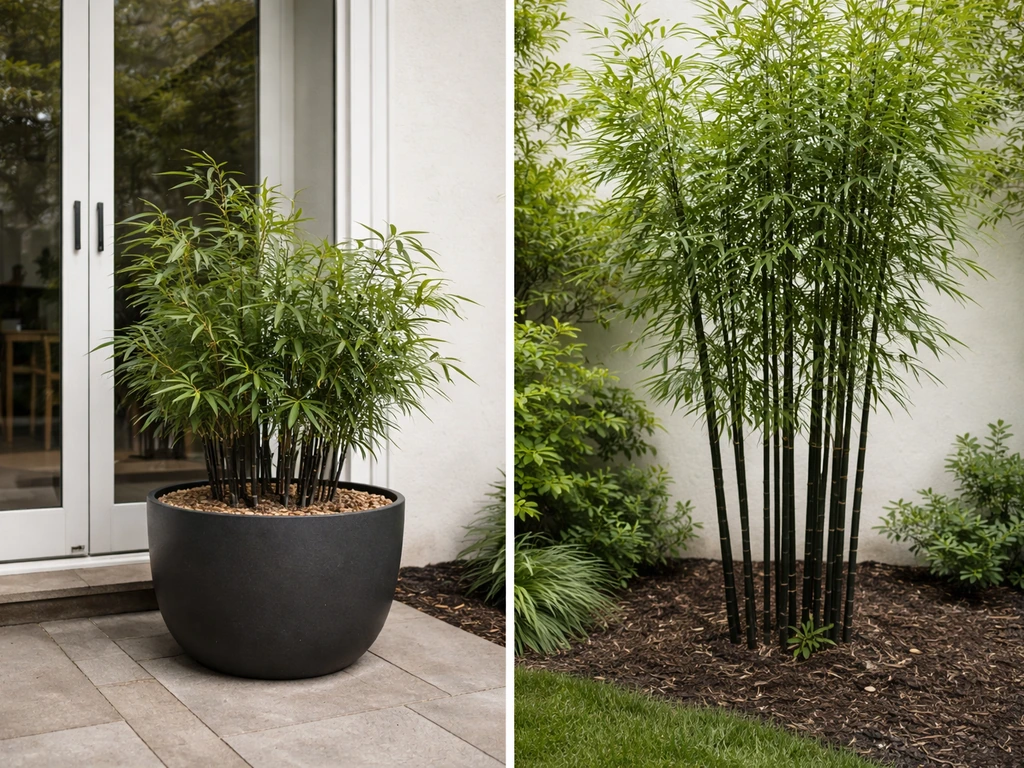
Outdoors in the ground is where black bamboo reaches its potential. Indoors or in containers, you're looking at a completely different plant in practical terms. Container-grown black bamboo, whether inside or on a patio, typically maxes out at 6 to 10 feet, and often less. Container-grown bamboo, including black bamboo, typically tops out around the same range as other potted varieties, rather than reaching the much taller ground-planted heights Container-grown black bamboo. Roots hit container walls, rhizome expansion is stopped, and water and nutrient access is limited. The plant stays alive and even looks attractive, but it won't approach 20 feet in a pot.
Indoors, add low light to those constraints and height expectations drop further, often to 4 to 6 feet for a maintained indoor specimen. Black bamboo can be grown in a container on a sunny deck or courtyard and look spectacular, but anyone expecting grove-scale height from a container planting will be disappointed. If container growing is your situation, it's worth comparing notes with what's achievable growing bamboo in pots more broadly, the height limits are a common theme across species.
Climate and regional suitability at a glance
| USDA Zone / Region | Winter Hardiness | Realistic Height Potential |
|---|---|---|
| Zone 6 and below | May not survive; top-kill likely | Not recommended for ground planting |
| Zone 7 (TN, NC coast, OR inland) | Survives most winters; occasional top-kill | 10–18 ft over time |
| Zone 8 (GA, SC, Pacific NW, TX east) | Reliable; minimal cold damage | 18–28 ft in good conditions |
| Zone 9–10 (Gulf Coast, N. California, PNW coast) | Thrives; no cold stress | 25–35 ft; maximum potential achievable |
| Zone 11+ (tropical) | No cold limits; heat/drought may be the constraint | Variable; depends on moisture |
If you're in a colder zone and love the look of black bamboo, you can still grow it, just set realistic expectations. A zone 7 gardener who protects the root zone with heavy mulch over winter can push performance closer to zone 8 results. But consistent cold damage will always keep heights on the lower end of the range.
It's similar to how moso bamboo performs dramatically differently in the warm, humid hills of Kyushu versus a cold mid-Atlantic winter, climate is the single biggest ceiling on height potential. Moso bamboo has a different native range and typically grows best in warm, humid regions moso bamboo grows. If you're specifically asking how tall moso bamboo grows, its mature height can be different from black bamboo, often reaching much higher under ideal conditions mooso bamboo.
How to estimate your own realistic height
Rather than just quoting a number from a label, work through these steps to figure out what you'll actually get:
- Confirm your exact plant. Check your tag, receipt, or nursery listing for the full botanical name. 'Black bamboo' on its own isn't enough — look for Phyllostachys nigra and any variety name. If it's unlabeled, ask the nursery or photograph the culms and rhizomes for identification.
- Find your USDA hardiness zone. Use the USDA zone map online for your zip code. This is your single biggest height predictor. Zone 8+ gives you the best shot at upper-range heights.
- Assess your planting site. Will it get 6+ hours of full sun? Is the soil well-draining and slightly acidic (pH 6.0–6.5)? Is there a reliable water source nearby? Score yourself honestly — every deficit trims expected height.
- Decide: ground or container? Ground planting opens the full height range. Containers cap you at roughly 6–10 feet regardless of conditions. Make this decision before you buy.
- Plan for containment if needed. If running bamboo worries you, budget for a rhizome barrier (at least 24 inches deep). Know that a tight barrier may also limit maximum height by restricting root spread.
- Set a timeline. Expect 3 to 5 years before the grove looks impressive, and 8 to 15 years to approach mature height. If you need height fast, start with the largest-established division you can find.
- Adjust for your conditions. Start with the mid-range (20–25 ft for zones 8–10 in-ground) and subtract for shade, poor soil, cold winters, or container planting. Add a few feet if you have ideal soil, consistent irrigation, and a warm zone.
Black bamboo is genuinely one of the most beautiful garden plants you can grow, those ebony culms against green foliage are striking. But it rewards patience and good site selection more than almost anything else. Get the species confirmed, get the site right, and give it time. The height will follow.
FAQ
If my black bamboo shoots during spring, can it keep growing taller later in the year?
Yes, but the height won’t rise once a culm has finished “shooting.” The new culms that come up each spring are what add the next height step, and only during that short emergence window (about 4 to 8 weeks) can stress shorten them permanently.
How can I tell whether my nursery’s “black bamboo” will reach 20 to 30 feet or stay much shorter?
Start by checking how the plant is labeled. “Black bamboo” without a variety name is often the straight Phyllostachys nigra, but some sellers use the common name for other species or dwarf forms, which can mature much shorter. If you can find the botanical name on the tag or invoice, use that for your height planning.
Will installing a rhizome barrier stop it from getting tall?
To slow growth and manage height, a barrier helps contain rhizome spread, but it can also reduce the vigor that drives taller culms. If your goal is height, a fully contained system usually tops out lower than an in-ground planting, even with good sun and water.
What height can I expect from black bamboo in a container or indoors?
A container usually limits both root volume and rhizome expansion, so you should not expect grove-scale height. In practice, many container-grown black bamboo will stay around 6 to 10 feet at most, and less indoors because light levels tend to be the limiting factor.
Why does my black bamboo never seem to reach its labeled height in colder winters?
Yes, top-kill from cold snaps can reset the visible height even if the plant survives. In zone 7, heavy winter protection and mulching can help reduce damage, but years with repeated hard cold still tend to keep mature height on the lower end.
Does thinning out old culms actually affect how tall black bamboo gets?
Overcrowding can reduce both culm thickness and the ability to push new shoots tall. A practical rule is to remove older culms (often those older than about 5 to 6 years) and thin the grove to keep resources available for new growth.
Why is my newly planted black bamboo staying short even though it’s getting sun and water?
Recent planting almost always looks “short” for the first season or two because energy goes into establishing rhizomes underground. Expect a lag, then a clearer height climb as the underground network expands over subsequent years.
How do I prevent drought stress from permanently shortening new culms?
Dry shooting season conditions are the most common reason height disappoints. Because each culm reaches final height within weeks of emergence, you want reliable moisture during spring emergence, not just regular watering after growth has already slowed.
Why are my black bamboo culms not turning as black as I expected?
If the culms are not blackening well, it usually signals less than optimal conditions, most often reduced sunlight or stress during shoot development. Blackening can be less rich in shade, and consistent moisture during spring helps the culms develop as expected.
Does Phyllostachys nigra variety (like 'Henon') change the mature height range?
The variety can change the ceiling. For example, Phyllostachys nigra 'Henon' is sometimes sold under other names and can reach higher in ideal settings than the straight species. If your tag includes a variety name, use that to refine the height expectation.
Next Article
How Tall Can Bamboo Grow? Typical vs Maximum Heights
Typical vs maximum bamboo heights, how fast it grows, and step-by-step tips to maximize tall stalk growth.