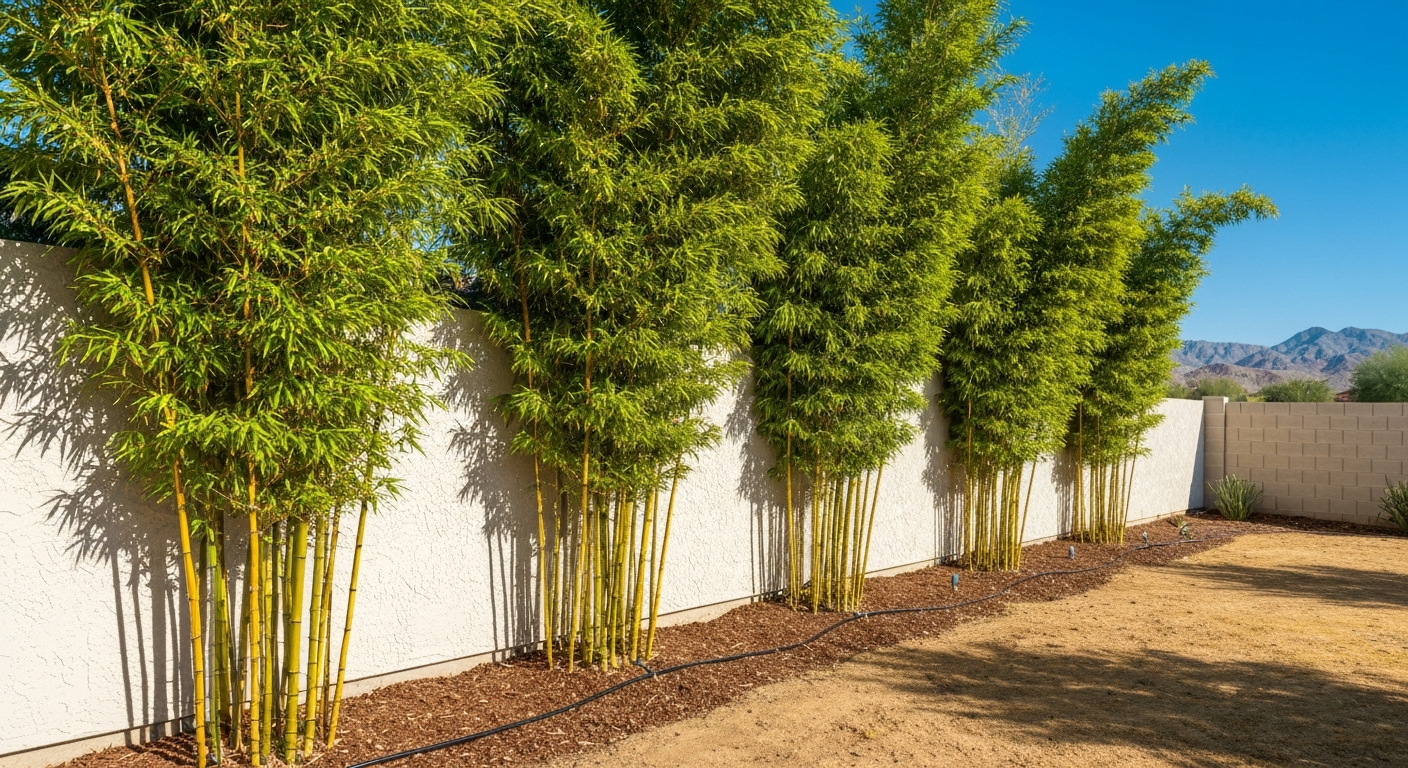
Yes, you can grow bamboo in Canada, but which species you can grow and how well it thrives depends heavily on where you live. In mild coastal areas like Vancouver or Victoria (hardiness zones 7–8), a wide range of bamboos succeed outdoors year-round. In Toronto (zone 6), Quebec City (zone 4–5), and Calgary (zone 4), you are working with a much shorter list of genuinely cold-hardy species, primarily Fargesia clumping bamboos and a handful of tough Phyllostachys running types. With the right species choice, a sheltered site, and proper mulching, Canadian gardeners from the Atlantic coast to the interior can grow bamboo that is both beautiful and well-behaved.
Can You Grow Bamboo in Canada? Cold-Hardy Species & Care
Marcus Hartwell
5 Aug 2026
Canada's hardiness zones and what they mean for bamboo
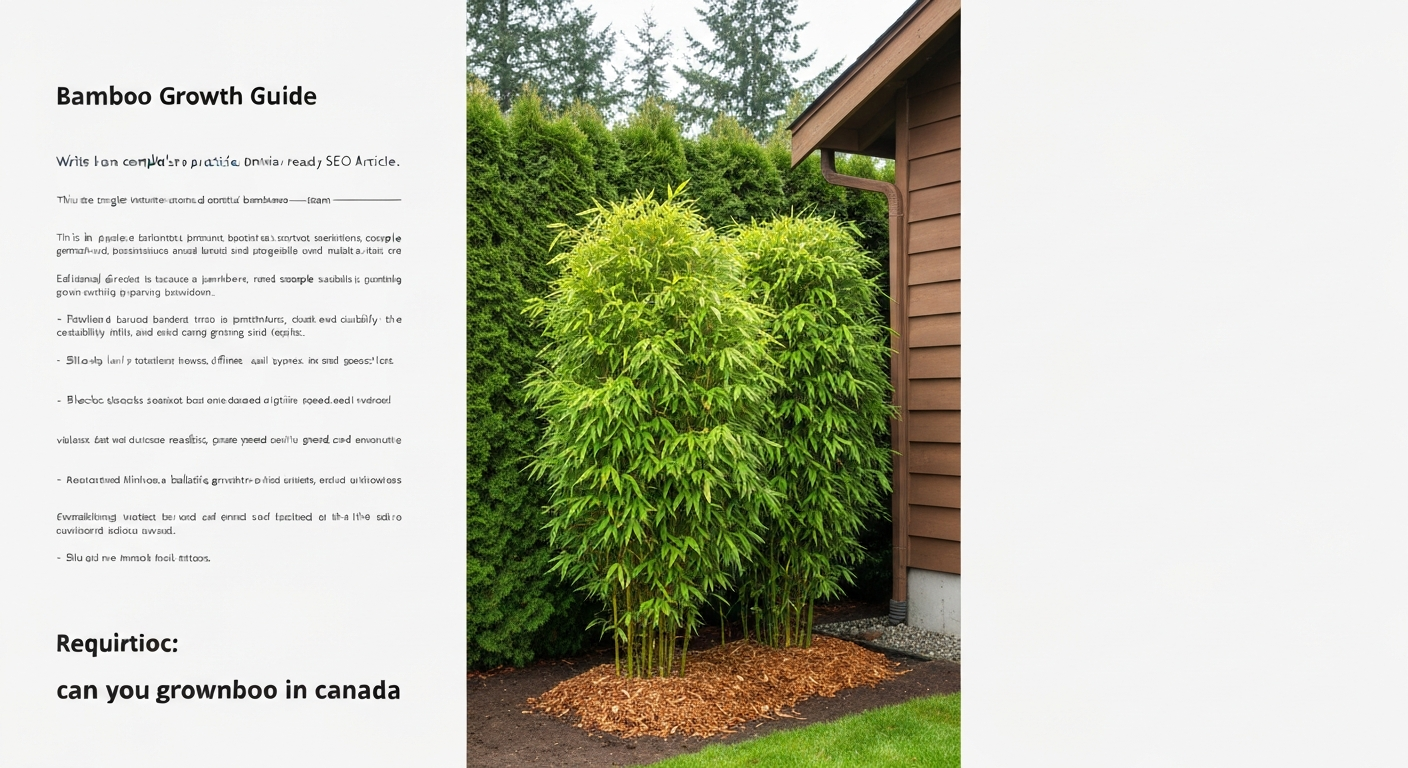
Natural Resources Canada publishes the official Plant Hardiness Zone map, which divides the country into zones 0 through 9 based on long-term climate data. Most bamboo species sold in North America are rated somewhere between zone 4 and zone 8. The practical implication is simple: if you live in a zone colder than a species' minimum rating, expect top-kill every winter at best, and dead roots at worst. Environment and Climate Change Canada's 1991–2020 Climate Normals give us clear numbers for key cities, so let's run through them.
City-by-city hardiness snapshot
| City | Hardiness Zone | Avg. Winter Low | Bamboo Suitability |
|---|---|---|---|
| Vancouver / Victoria, BC | 7–8 | -5°C to -10°C | Excellent — most Fargesia and many Phyllostachys thrive |
| Toronto, ON | 6a–6b | -15°C to -18°C | Good — Fargesia and select Phyllostachys with mulch |
| Ottawa, ON | 5a–5b | -23°C to -26°C | Moderate — cold-hardy Fargesia, shelter and mulch essential |
| Montreal / Quebec City, QC | 4b–5a | -26°C to -29°C | Challenging — only the hardiest Fargesia; container growing is safer |
| Calgary, AB | 4a–4b | -29°C to -34°C | Difficult — container growing or cold-frame protection strongly advised |
| Winnipeg, MB | 3b–4a | -34°C to -37°C | Very difficult — outdoor bamboo is risky; containers moved indoors |
| Halifax, NS | 6a | -15°C to -18°C | Good — similar to Toronto; Fargesia performs well with wind shelter |
Toronto sits right on the edge of what most Phyllostachys species can handle without top-kill. Quebec winters are cold enough that even some Fargesia cultivars need extra protection. Calgary's deep freezes make outdoor bamboo a real challenge without significant microclimate advantages or container strategies. For detailed, Calgary-specific advice on species selection and microclimate strategies, see our guide on growing bamboo in Calgary. If you want more detail on these specific cities, the sibling guides on growing bamboo in Toronto, Ontario, Quebec, and Calgary go much deeper on local conditions. See the sibling guide Can I grow bamboo in Ontario? for province-specific advice. For detailed local advice, see the guide can bamboo grow in Toronto. For a focused look at species, microclimates, and winter care in that province, see our guide "Can bamboo grow in Quebec".
Cold-hardy bamboo species worth growing in Canada
Not every bamboo sold at a garden centre is right for Canada. Tropical and subtropical species like Bambusa and Dendrocalamus will not survive a Canadian winter outdoors, full stop. The genera that actually deliver results here are Fargesia and (in milder zones) certain Phyllostachys. Here are the species I recommend most consistently.
Fargesia (clumping bamboos): the Canadian gardener's best friend
- Fargesia murielae (Umbrella Bamboo): Hardy to approximately -25°C in established plants. Graceful arching culms reaching 2–4 m. One of the most reliable choices for zones 5–6 and possibly colder with mulch and shelter.
- Fargesia nitida (Fountain Bamboo): Slightly more shade-tolerant than murielae. Dark purple culms, hardy to roughly -20°C to -25°C. Excellent for north-facing sheltered spots in zones 5–6.
- Fargesia rufa (Green Panda Bamboo): Faster to establish, slightly less cold-hardy than murielae (reliable to about -20°C). Good for zone 6 gardens and sheltered zone 5 sites. One of the best-selling clumping bamboos in Canada for good reason.
- Fargesia robusta: Taller and more upright than rufa, reaching 3–5 m. Hardy to around -20°C. Useful as a tall screen in zone 6 and warmer parts of zone 5.
- Fargesia scabrida (Asian Wonder): Compact habit, reported cold tolerance to -25°C. Good for smaller gardens and containers in colder zones.
Cold-hardy Phyllostachys (running bamboos): use with containment
- Phyllostachys aureosulcata (Yellow Groove Bamboo): Frequently listed as zone 4 hardy, making it one of the toughest running bamboos for Canadian conditions. Above-ground culms may die back in severe winters, but rhizomes often resprout. Needs a robust containment barrier.
- Phyllostachys nuda: Considered among the hardiest Phyllostachys, surviving to approximately -20°C or lower in some reports. Upright green culms, very vigorous spreader — containment is non-negotiable.
- Phyllostachys bissetii: Reliable zone 5–6 performer, reported to survive to -20°C with culm damage. Dense growth makes it popular as a windbreak, but plan for aggressive rhizome spread.
- Phyllostachys humilis: A shorter, more compact running bamboo reaching 2–3 m, also reliably hardy to zone 5. Easier to contain due to smaller scale.
Clumping vs running bamboo: which should you choose?
This is the most important decision you will make, and it is worth being direct about the stakes. Clumping bamboos (Fargesia and related genera) spread slowly outward from a central crown at a rate of a few centimetres per year. Running bamboos (primarily Phyllostachys) spread via rhizomes that can travel 1–2 m or more per year underground. In a Canadian garden, an uncontained running bamboo can cross a property line, break through asphalt, damage fences, or invade a neighbour's yard within a few seasons.
| Factor | Clumping (Fargesia) | Running (Phyllostachys) |
|---|---|---|
| Spread rate | 2–10 cm/year outward | Up to 1–2 m/year via rhizomes |
| Invasion risk | Very low | High without physical barrier |
| Cold hardiness (best cultivars) | To approx. -25°C | To approx. -20°C (varies by species) |
| Mature height in Canada | 1.5–4 m typically | 2–6 m (zone and species dependent) |
| Containment required? | No (though dividing helps) | Yes — HDPE rhizome barrier at planting |
| Municipal restrictions | Rarely restricted | Increasingly regulated in Canadian cities |
| Best use | Screens, specimens, containers | Larger screens, groves (with barriers) |
The legal and regulatory side
Canadian municipal rules on invasive plants are tightening. Vancouver's development guidelines, for example, advise using clumping bamboo for urban plantings and caution against running Phyllostachys species in developed areas. Peer-reviewed weed-risk assessments consistently show running bamboos pose a substantially greater escape and naturalization risk than clumping types. The EPPO (European and Mediterranean Plant Protection Organization) has flagged certain Phyllostachys species for formal risk assessment, and Canada's Invasive Species Centre monitors bamboo-related risks at the national level. Before planting any running bamboo, check your municipality's bylaws and your province's invasive species regulations. If your neighbour objects and your running bamboo crosses the property line, you may be liable. The simplest solution is to choose clumping Fargesia from the start, especially in zones 4–6 where the cold-hardy Fargesia species perform excellently anyway.
If you do plant running bamboo: root barriers
If you decide to go with a running species, install a continuous HDPE (high-density polyethylene) rhizome barrier at planting, not as an afterthought years later. Most professional installers recommend 1.5–3 mm thick HDPE buried 60–100 cm deep with a 2–5 cm lip left above soil level so you can monitor for escaping rhizomes in spring. Manufacturer product guides for HDPE root barriers typically specify 1.5–3.0 mm (or thicker) HDPE, UV stabilization, and burial depths of 60–100 cm with approved seaming methods for long-term performance HDPE Root Barrier Garden Installation Guide and product specifications (manufacturer/commercial aggregator). Seal all seams with the manufacturer's approved tape or hardware, and inspect the barrier lip every spring. Cut back any rhizomes that have crested the top before they reach soil on the other side. Oregon State University Extension describes this approach as standard best practice for running bamboo management, and I've seen firsthand what happens on properties where barriers were skipped or were too shallow, it is not a quick fix.
Picking the right spot: site selection and microclimates
In Canada, where you plant bamboo matters almost as much as what you plant. A zone 5 garden with a south-facing wall, protection from prevailing northwest winds, and well-draining soil can perform like a zone 6 for bamboo. Think of microclimates as free hardiness upgrades, or penalties if you ignore them.
Light
Most Fargesia species prefer partial shade to dappled light, which makes them ideal for the north or east side of a house, or under the edge of a tree canopy. Full afternoon sun in zones 5 and 6 can scorch Fargesia leaves and increase water stress in summer. Phyllostachys species are generally more sun-tolerant and benefit from full sun in Canadian conditions to support robust culm development. Aim for 4–6 hours of direct sun daily for Phyllostachys and 2–5 hours for Fargesia.
Wind protection
Cold, desiccating winter wind is one of the most common killers of bamboo in Canadian gardens, especially in the Prairie provinces and eastern Canada. Planting on the south or southeast side of a solid fence, wall, or evergreen hedge significantly reduces wind-chill damage to culms and, more importantly, prevents the freeze-drying effect that kills leaves and weakens plants heading into spring. If you're in Calgary or Winnipeg and serious about outdoor bamboo, a wind-sheltered microclimate is not optional, it is the deciding factor.
Drainage and soil preparation
Bamboo roots do not tolerate waterlogged soil. In Canadian gardens with heavy clay, poor drainage kills roots during freeze-thaw cycles because standing water expands and contracts around root systems destructively. Aim for loamy, well-draining soil with a pH of roughly 5.5–7.0. Before planting, work 10–15 cm of compost or aged organic matter into the top 30–40 cm of soil. If your drainage is genuinely poor, raise the planting area 15–20 cm, or plant in a raised bed or container instead. Good drainage also reduces the risk of root rot fungi, which can be a problem in wet, poorly aerated soils.
How to plant bamboo in Canada: step by step
Planting in the ground
- Choose your timing: Plant in late May to mid-June in most Canadian zones, once soil has warmed above 10°C and hard frost risk is past. Spring planting gives the root system one full growing season to establish before winter. Fall planting (September) is possible in zones 6–7 if the plant has 6–8 weeks before first hard frost, but is higher risk.
- Prepare the planting zone: If installing a barrier for running bamboo, dig your trench first (60–100 cm deep) around the intended footprint, set the HDPE barrier in place, and backfill before planting the bamboo inside the contained area.
- Dig the hole: Make the hole 1.5–2 times the width of the root ball and equal in depth. Avoid planting too deep — the root crown should sit at the same level it was in the pot.
- Amend the backfill: Mix the excavated soil with roughly 25–30% compost or aged organic matter. Avoid heavy peat without balancing with lime, as peat acidifies soil. A balanced pH of 5.5–7.0 is ideal.
- Place the plant and backfill: Set the root ball in the hole, fill halfway, water thoroughly to settle air pockets, then fill the rest and water again. Do not pack soil tightly around the crown.
- Mulch immediately: Apply 7–10 cm of wood chip mulch or straw over the root zone, keeping mulch a few centimetres back from the culms to prevent crown rot. Mulch is critical for moisture retention and winter insulation.
- Space plants correctly: For a hedge or screen of Fargesia, space plants 1–1.5 m apart. For Phyllostachys used as a grove inside a barrier, 1.5–2 m between plants allows room to fill out without overcrowding.
- Water in thoroughly: Give the newly planted bamboo a deep soak (5–10 litres per plant) immediately after planting and maintain consistent moisture through the first growing season.
Winter survival strategies for in-ground bamboo
Research published in The Plant Journal (2025) confirms what experienced growers have long observed: bamboo's ability to survive and recover from freezing is strongly tied to its non-structural carbohydrate reserves going into winter. Practically, this means you should stop fertilizing by late August so the plant can harden off, keep mulch deep (10 cm) over the root zone, and avoid cutting culms in autumn. Missouri Botanical Garden recommends mulching bamboo with 5–10 cm of organic material over the root zone for winter protection, irrigating regularly during the first growing season, and fertilizing with a nitrogen‑heavy feed in spring mulch 5–10 cm over the root zone. If you are in zone 5 or colder, wrapping culms in burlap, not plastic, from November until late March helps prevent wind desiccation without trapping damaging moisture. Soil silicon amendments have also shown promise in peer-reviewed pot experiments for improving Phyllostachys cold tolerance, though this is more of a supplementary tool than a primary strategy.
Growing bamboo in containers: a smart option for colder zones
Container growing is one of the most practical solutions for Canadian gardeners in zones 4 and 5. It removes the invasive-spread concern entirely, allows you to bring the plant into a frost-free garage or greenhouse for winter, and lets you grow species that are borderline for your zone. I have seen this work reliably in Calgary gardens where in-ground bamboo is a real gamble.
Choosing the right container
- Minimum dimensions: Choose containers at least 45–60 cm deep and 45–60 cm wide for mid-sized Fargesia species. Shallow containers restrict root development and freeze through much faster in winter.
- Material: Thick-walled fiberglass, heavy-duty polypropylene, or glazed ceramic all insulate better than thin terracotta or standard plastic. Avoid thin-walled pots in outdoor winter conditions — freeze-thaw cycles crack them and damage roots.
- Drainage holes: Non-negotiable. At least 3–5 drainage holes per container. Bamboo roots sitting in standing water in a cold Canadian winter will rot.
- Weight: Large containers filled with soil and a mature bamboo plant are heavy. Plan for where they will overwinter before you fill them — moving a 60 kg pot in November is not easy.
Soil mix for containers
Garden soil alone compacts too quickly in pots and drainage suffers. Use a mix of approximately 60% quality potting compost, 20% perlite or coarse grit, and 20% loam or topsoil for weight and nutrient retention. This strikes a balance between drainage and water-holding capacity. Avoid mixes that are predominantly peat, they dry out unevenly and become hydrophobic when very dry, which is a problem for establishing bamboo.
Wintering potted bamboo in Canada
The root ball in a container exposed to -20°C will freeze solid, which kills most bamboo species even if the culms are rated for that temperature in the ground. The ground insulates in-ground roots; pots do not. In zones 5 and colder, move containers into an unheated but frost-moderated space, an attached garage, cold greenhouse, or insulated shed, once nighttime temperatures consistently drop below -5°C. You want to keep the root ball between -5°C and +5°C through the winter. The plant does not need light during dormancy, so a dark garage is fine. Keep the soil very lightly moist, not wet, not bone dry. If you cannot move the pot, wrap it heavily in bubble wrap or horticultural fleece and sink it to soil level in a sheltered location to borrow ground insulation.
Watering and fertilizing bamboo through the Canadian seasons
Watering schedule
Bamboo needs consistent moisture, particularly during its first two years in the ground and throughout the growing season in containers. Inconsistent watering is one of the most common reasons bamboo looks stressed in Canadian gardens, it is usually not cold damage, it is drought stress.
| Season | In-Ground (established) | In-Ground (first year) | Containers |
|---|---|---|---|
| Spring (May–June) | Water deeply every 7–10 days if no rain | Water 2–3 times per week | Water every 3–5 days; increase as temps rise |
| Summer (July–August) | Water deeply every 7–14 days in dry spells | Water 2–3 times per week | Daily watering may be needed in heat |
| Autumn (Sept–Oct) | Reduce frequency; soil should be moist going into freeze | Continue regular watering until hard frost | Reduce to every 7–10 days as temps drop |
| Winter (Nov–Apr) | None needed; mulch retains moisture | None once frozen | Very lightly moist in storage; check monthly |
Fertilizing: what, when and how much
Bamboo is a grass at heart and responds extremely well to nitrogen. In Canadian conditions, timing matters because over-fertilizing late in the season pushes soft new growth that does not harden off before frost. My practical schedule is this: apply a balanced fertilizer with a higher nitrogen ratio (such as a 20-5-10 or similar lawn-type granular fertilizer) in early May when new shoots are emerging, then again in late June or early July. Use roughly 100–150 g per square metre of root zone for established plants. Stop all nitrogen fertilization by early August at the latest. If you want to support root development heading into winter, a low-nitrogen, phosphorus-rich fertilizer (like a 5-10-10) applied once in late August can help, but this is optional and more relevant for newly planted bamboo in its first season.
For container bamboo, use a slow-release granular fertilizer in spring and supplement with a liquid balanced fertilizer every 3–4 weeks during the growing season (May to late July). Containers leach nutrients much faster than garden beds, so more frequent feeding is appropriate. Always water before fertilizing if the soil is dry to avoid burning roots.
A note on realistic growth rates in Canada
Canadian bamboo grows more slowly than bamboo in Japan or the southern United States, and that is worth being honest about. Fargesia in zone 5 may add only 30–60 cm of height per year in its first few years while it establishes roots. By years 3–5, well-established clumps can put on 60–90 cm of new culm height per season. Phyllostachys in zone 6 with good conditions can shoot up 1–2 m in a single spring flush once the rhizome network matures. Don't write off your bamboo because it looks slow in year one, that energy is going underground into roots, which is exactly what it needs for long-term winter survival.
FAQ
Can you grow bamboo in Canada?
Yes — many bamboos can be grown in Canada, especially in southern regions and protected microclimates. Cold‑hardy clumping genera (Fargesia spp.) and some cold‑tolerant running Phyllostachys spp. have documented survival across parts of Ontario, Quebec, British Columbia and the Prairies when the cultivar matches local hardiness and proper cultural care is applied.
Which bamboo species are recommended for cold Canadian climates?
Clumping (non‑running) recommendations: Fargesia murielae, Fargesia nitida, Fargesia rufa/robusta types, and cultivars selected for −20 to −25°C tolerance. Cold‑tolerant running (containment required) recommendations: Phyllostachys aureosulcata, Phyllostachys bissetii, Phyllostachys nuda and some P. praecox selections — many of these are reported hardy to roughly −20 to −30°C in favorable sites, but they are aggressive rhizome spreaders.
What Canada hardiness zones and cities can grow bamboo reliably?
Use Canada’s Plant Hardiness Zones (NRCan) and local climate normals (ECCC) to match species. General guidance: southern Ontario (Toronto, Ottawa) and southern Quebec (Montreal) grow many Fargesia and some Phyllostachys with success. Coastal BC (Vancouver, Victoria) supports a wider range including less hardy species. Cold inland/Alberta (Calgary) and the Prairies can grow very cold‑hardy Fargesia and a few Phyllostachys in sheltered microclimates; expect more winter protection and slower recovery at low temperatures. Always check cultivar hardiness against local zone and frost‑free period.
Should I choose clumping or running bamboo?
Choose clumping (Fargesia) if you want low invasive risk and easier maintenance — ideal for urban yards and municipal rules. Running (Phyllostachys) offers faster growth and larger culms but requires physical containment (root barrier) or strict management because of high escape/invasion risk. Local bylaws or strata rules may prefer or require clumping types.
How do I plant bamboo (step‑by‑step)?
1) Select a cold‑hardy cultivar matched to your zone and site (sun/shade). 2) Plant in spring or early summer after frost risk. 3) Choose well‑drained loam; amend with compost if heavy clay. 4) Dig a hole twice the rootball width; set crown slightly above surrounding soil. 5) Backfill, firm soil gently, water thoroughly. 6) Mulch 5–10 cm over root zone to conserve moisture and insulate. 7) For running species, install a continuous HDPE rhizome barrier (60–100 cm depth) before planting.
What soil, light, watering and fertilizing does bamboo need?
Soil: fertile, well‑drained loam with organic matter; pH generally tolerant 5.5–7.5. Light: species dependent — many Fargesia tolerate part shade; Phyllostachys prefers full sun for best culm development. Watering: keep evenly moist year‑round, especially first 1–2 seasons; avoid prolonged waterlogging. Fertilizer: spring application of a balanced or nitrogen‑higher feed (e.g., 10‑5‑5 or similar) promotes shoot production; side‑dress with compost annually.
Next Article
Can Bamboo Grow in Las Vegas? Guide to Success in Desert
Yes, bamboo can grow in Las Vegas with the right species, irrigation, shade, and containment; step-by-step planting and保护