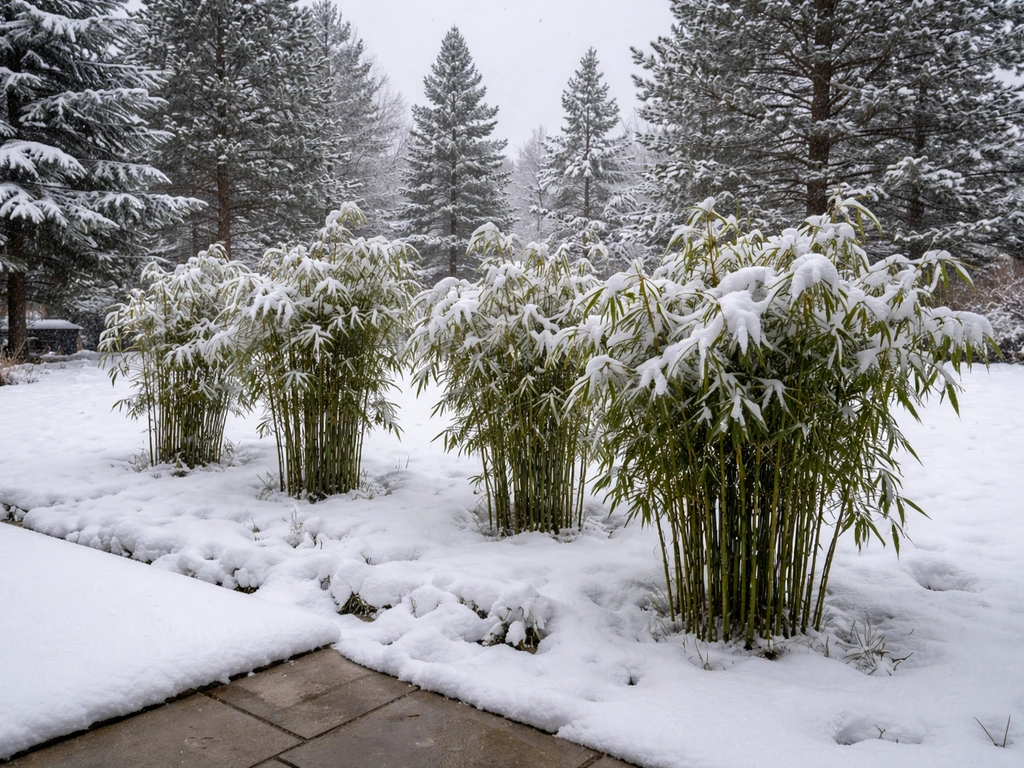
Yes, bamboo can grow in Arizona, but it needs the right species, the right spot, and a real commitment to water management. I won't sugarcoat it: Arizona is not bamboo's natural habitat. The desert heat, low humidity, alkaline soils, and occasional hard freezes create a challenging combination. But gardeners across the state, from Tucson to Flagstaff, have made it work. The key is treating bamboo in Arizona as a high-maintenance plant rather than a set-it-and-forget-it shrub. Do that, and you can absolutely grow a healthy, thriving stand.
Can Bamboo Grow in Arizona? How to Plant and Care
Marcus Hartwell
19 Apr 2026
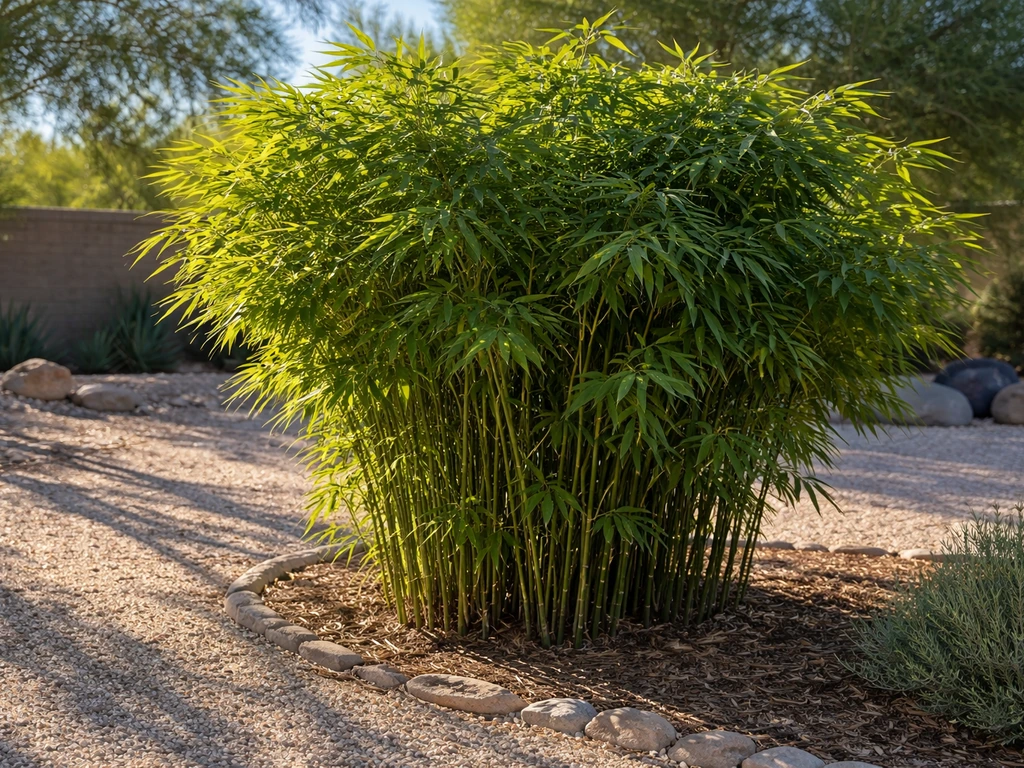
Can bamboo grow in Arizona? The quick answer
Yes, with conditions. If you're wondering whether can bamboo grow in Utah, the key is choosing cold-hardy varieties and creating a protected microclimate to survive freezes and dry winters. Arizona spans multiple USDA hardiness zones, roughly Zone 5b in the high country around Flagstaff down to Zone 10a in the Yuma and lower Sonoran Desert areas, and that range matters a lot for bamboo. The state's lower elevations, including the greater Phoenix metro, are hot enough that only heat-tolerant clumping species survive reliably. Flagstaff and the White Mountains, by contrast, have the opposite problem: hard winters that knock back cold-sensitive bamboo.
The sweet spot for growing bamboo with the least struggle is southeastern Arizona (the Tucson corridor, the Sulphur Springs Valley, and parts of the Sky Islands foothills) and mid-elevation areas in the Verde Valley and around Prescott. That said, bamboo has been grown successfully in Phoenix's suburban microclimates too, which is a topic worth its own deep dive.
If you are specifically asking does bamboo grow in Phoenix Arizona, the answer is yes, but you must choose heat-tolerant clumping species and plan around irrigation and microclimates.
The bottom line for every Arizona region: choose the right species first, then engineer the microclimate second. Get those two things right and bamboo becomes much more manageable.
How Arizona's climate hits bamboo hard
Heat and sun intensity
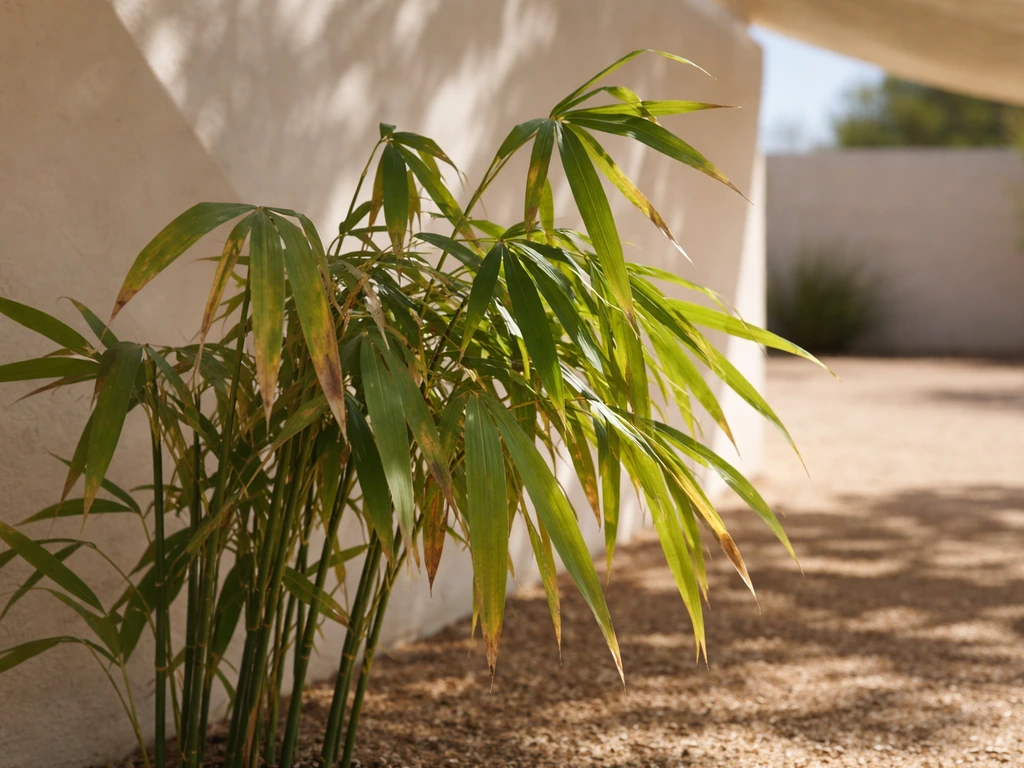
Arizona's summer sun is brutal in a way that many bamboo guides written for the Southeast or Pacific Northwest don't account for. Afternoon temperatures in the low desert routinely exceed 110°F (43°C), and the intense UV radiation scorches leaves even on species rated for heat. Most bamboo species prefer filtered afternoon shade when temperatures climb above 100°F. Without it, you'll see tip burn, bleached culms, and significant leaf drop as the plant tries to reduce its surface area and conserve moisture. This is not disease; it's heat stress, and it's completely preventable if you site the plant correctly.
Dryness and low humidity
Bamboo is a moisture-loving grass at heart. Arizona's relative humidity regularly drops into the single digits during spring and early summer before the monsoon arrives, which is genuinely hostile to bamboo's large leaf surface area. The plant transpires rapidly and can't recharge fast enough from typical desert irrigation cycles. This is why even drought-tolerant bamboo species described in national guides still need supplemental irrigation in Arizona. Think of humidity as an invisible water source that Arizona simply doesn't provide.
Cold snaps and freeze events
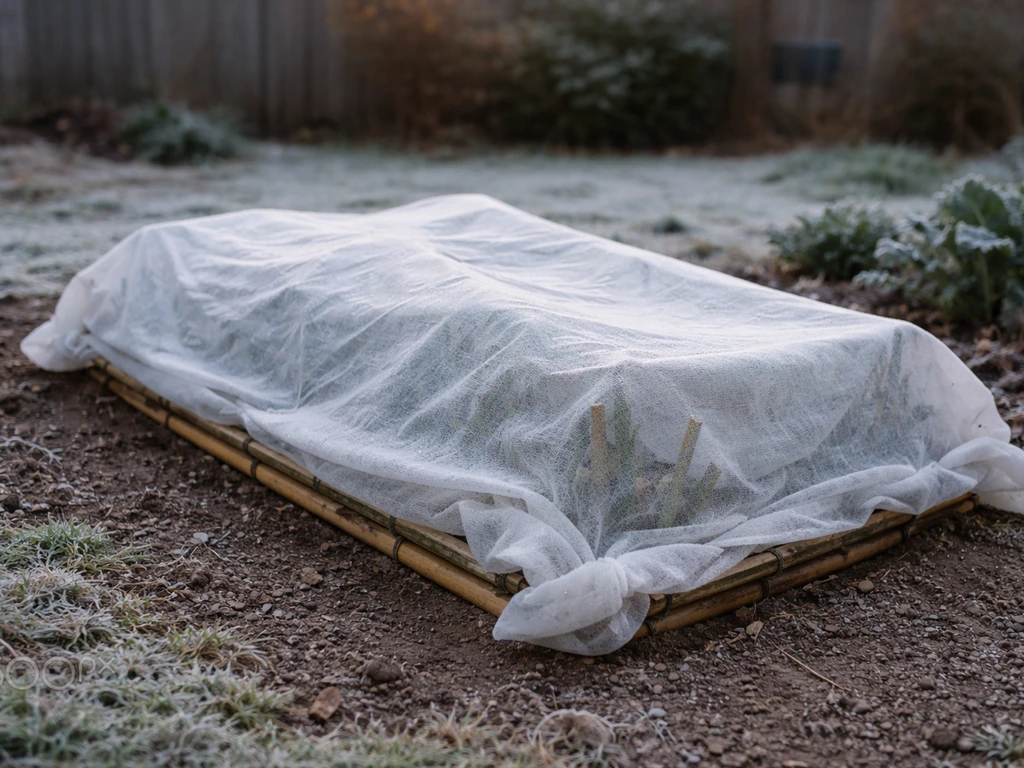
Arizona's cold events are often underestimated by gardeners drawn in by the warm reputation. Flagstaff regularly sees temperatures below 0°F. Even the Phoenix metro, which averages a low around 41°F in January, can get brief dips to 25-28°F that surprise gardeners who planted a species rated to only 20°F. The issue is that desert cold is often accompanied by dry, desiccating winds that damage bamboo far more effectively than the same temperature under humid conditions. Running bamboos tend to recover from freezes better because their underground rhizome network survives and resprouts, but clumping types can suffer serious crown damage.
Wind
Arizona's spring winds, which can hit 40-60 mph in haboob season and during pre-monsoon dust storms, are underappreciated as a bamboo stressor. Wind accelerates evapotranspiration and can physically shred large bamboo leaves or snap newly emerged culms. A windbreak or fence on the southwest exposure is worth more than almost any other investment you can make for an Arizona bamboo planting.
Picking the right bamboo species for Arizona
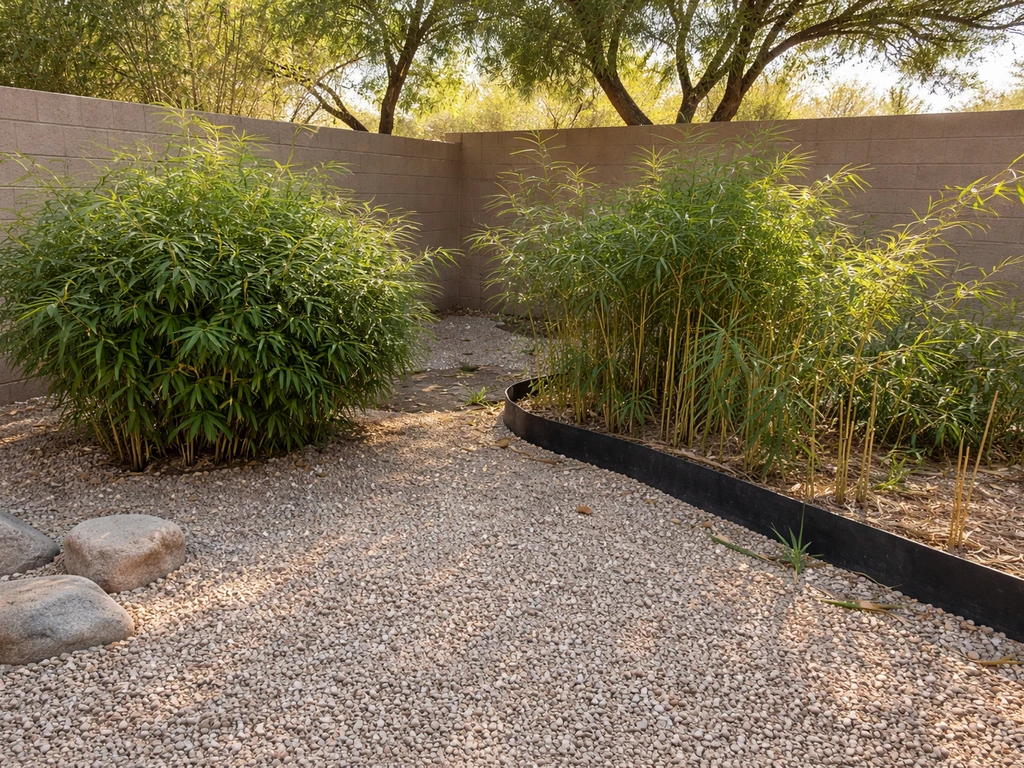
This decision is the single biggest factor in whether your bamboo survives or dies. Get it wrong and no amount of irrigation or mulch will save you.
Clumping vs. running bamboo
Running bamboos (Phyllostachys and related genera) spread aggressively via long horizontal rhizomes. In Arizona, that running habit is partly tamed by the desert soil, but it's still a real concern, especially near irrigation. Clumping bamboos (primarily Fargesia and Bambusa genera) expand slowly from a central crown, making them far more manageable in a home garden. For most Arizona gardeners, clumping bamboo is the right default choice unless you need a large privacy screen quickly and are prepared to install a rhizome barrier.
Species that actually work in Arizona's conditions
| Species | Type | Cold Hardiness | Heat Tolerance | Best Arizona Region |
|---|---|---|---|---|
| Bambusa multiplex (Hedge Bamboo) | Clumping | 15°F (-9°C) | Excellent | Low desert (Phoenix, Tucson) |
| Bambusa oldhamii (Giant Timber) | Clumping | 22°F (-6°C) | Excellent | Low desert, Valley of the Sun |
| Fargesia robusta (Clumping Fargesia) | Clumping | -10°F (-23°C) | Moderate (needs afternoon shade) | Flagstaff, Prescott, mid-elevation |
| Fargesia murielae (Umbrella Bamboo) | Clumping | -20°F (-29°C) | Low (prefers cool climates) | Flagstaff and high elevations only |
| Phyllostachys aurea (Golden Bamboo) | Running | 0°F (-18°C) | Good | Mid-elevation, Tucson area |
| Phyllostachys nigra (Black Bamboo) | Running | 0°F (-18°C) | Moderate | Mid-elevation with irrigation |
| Phyllostachys bissetii | Running | -15°F (-26°C) | Good | Central and northern Arizona |
My general recommendation: for the Phoenix metro and low Sonoran Desert, go with Bambusa multiplex or Bambusa oldhamii. For Tucson and mid-elevation areas, Phyllostachys aurea or Phyllostachys bissetii with a rhizome barrier. For Flagstaff and the high country, Fargesia robusta is your best shot because it's genuinely cold-hardy and can handle full shade from pine trees. Avoid Fargesia in the low desert; it simply cannot tolerate sustained 110°F heat.
A word on invasiveness
Running bamboos are listed as invasive concerns in many states. In Arizona, the dry climate does slow rhizome spread considerably compared to the Southeast, but any running bamboo near a drip irrigation system or near a water feature can spread aggressively. Always install a 24- to 30-inch-deep HDPE rhizome barrier around running species. This is not optional advice; it's the kind of thing that prevents an expensive removal project three years later.
Picking the right spot and getting the soil ready
Location and microclimate
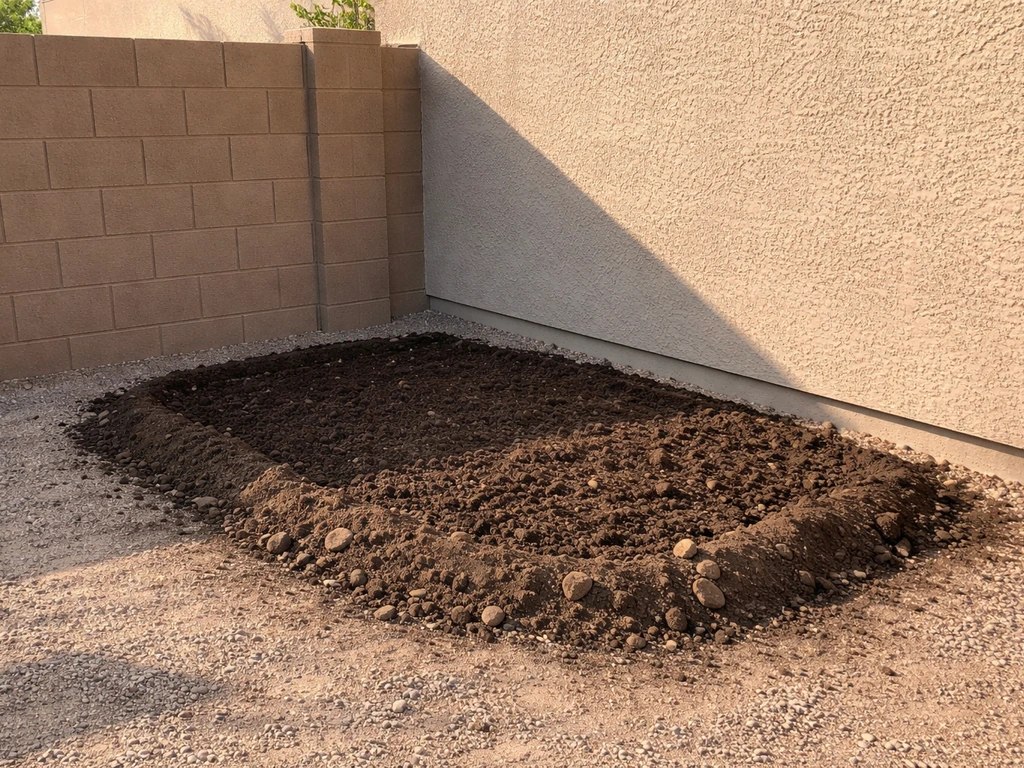
The ideal Arizona bamboo spot has morning sun and afternoon shade, especially from 2 p.m. onward during summer. East-facing walls or north sides of structures work well. Avoid planting against south or west-facing walls in the low desert; the radiant heat from block walls during summer afternoons can push temperatures at the plant base 15-20°F above ambient. A spot shielded from the prevailing southwest winds by a fence or mature shrub is even better. If you're in a high-elevation area like Prescott or Flagstaff, morning sun is welcome and afternoon shade is less critical, but wind protection remains important.
Dealing with Arizona's alkaline soils
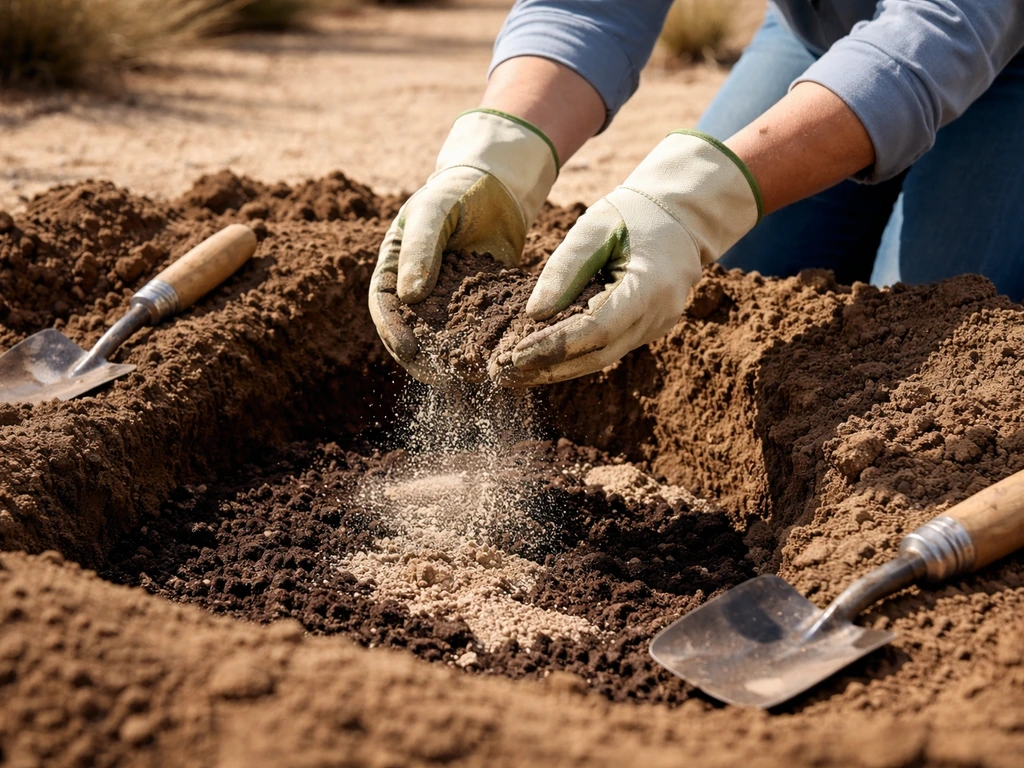
This is where a lot of Arizona bamboo attempts fail silently. Most Arizona soils have a pH between 7. 5 and 8. 5, sometimes higher.
Bamboo prefers slightly acidic to neutral soil, ideally pH 6. 0 to 7. 0. At high pH, bamboo cannot absorb iron and manganese properly, leading to [interveinal chlorosis: the leaves turn yellow-green while the veins stay darker.
](https://extension. arizona. edu/publication/guide-symptoms-plant-nutrient-deficiencies) The University of Arizona Cooperative Extension specifically identifies iron chlorosis from alkaline soils as a significant issue for Arizona gardeners, and bamboo is no exception. To correct this, amend your planting area with elemental sulfur (at rates based on a soil test), and apply iron chelate (EDDHA form is most effective at high pH) as a soil drench at planting time.
Don't bother with standard iron sulfate sprays on alkaline soil; the soil chemistry neutralizes them too fast to be useful.
Before planting, dig a hole or planting bed at least 18 inches deep and 3 feet wide. Mix the native soil roughly 50/50 with a high-quality organic compost. This improves drainage (which Arizona's often caliche-heavy soils desperately need), lowers pH modestly, and adds organic matter that bamboo's root system will exploit rapidly. If you hit caliche (hardpan limestone layer), break through it with a pick or rented breaker. A caliche layer acts like a bathtub, trapping water and drowning roots.
The planting process
- Get a soil test first. County extension offices can point you to labs that test pH, salinity, and nutrient levels. This tells you exactly how much sulfur to add.
- Break up and amend the planting area to at least 18 inches depth with 50% compost.
- Add elemental sulfur per your soil test recommendation and mix thoroughly. Water in well and wait 2-4 weeks before planting if time allows.
- For running bamboos, install your rhizome barrier before planting. Overlap the seam by at least 4 inches and seal with rhizome barrier clamps, not just tape.
- Plant at the same depth the bamboo was growing in the nursery container. Do not bury the crown deeper.
- Water deeply immediately after planting, enough to settle the soil around roots and eliminate air pockets.
- Apply 4-6 inches of wood chip mulch immediately, keeping it a few inches away from the culm bases.
Plant in fall (September through November) in the low desert, or in spring (March through April) at higher elevations. Fall planting in the low desert gives the root system a full cool season to establish before facing its first brutal summer, which dramatically improves survival odds.
Watering bamboo in the Arizona desert
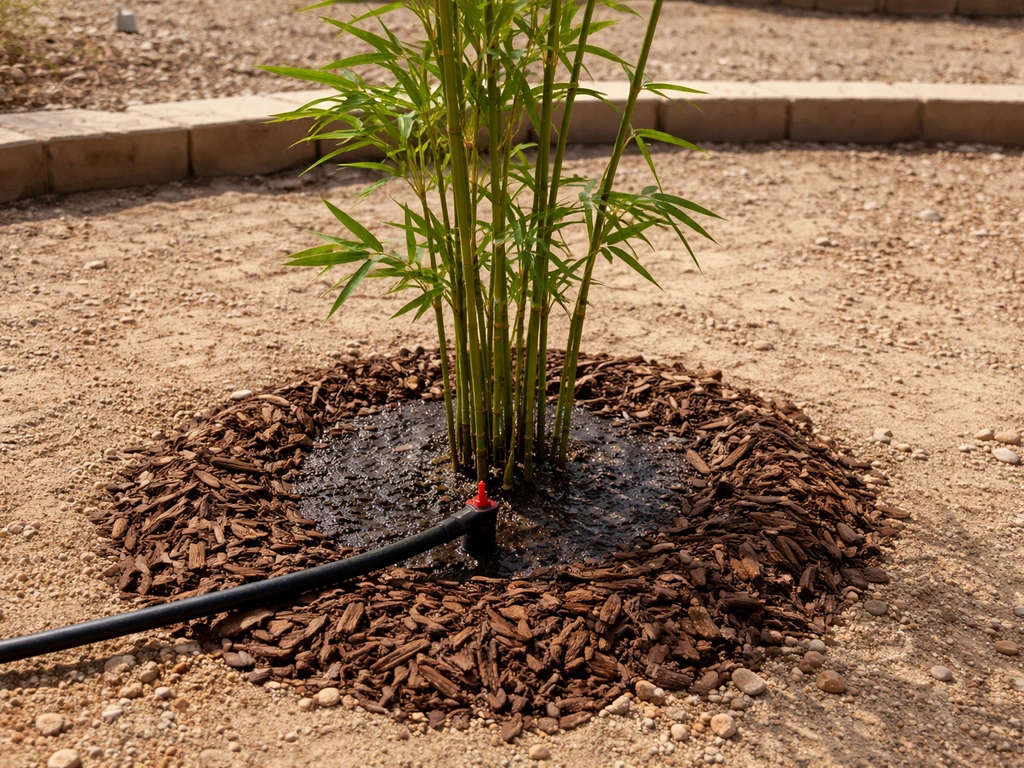
Water is the make-or-break factor for bamboo in Arizona. I've seen established bamboo stands in Tucson that look genuinely lush, and nearly every one of them has a drip system dialed in with a timer. Trying to hand-water bamboo through an Arizona summer is a losing battle for most people.
Irrigation frequency and volume
Newly planted bamboo (first growing season) needs water every 1-2 days during summer in the low desert, and every 3-4 days at higher elevations. This is not indefinite; once established after 12-18 months, you can back off to 2-3 times per week in summer and once per week in cooler months. A mature clumping bamboo of moderate size (10 feet tall, 6 feet wide) in the Phoenix area needs approximately 15-25 gallons per week during summer peak. Use a drip system with multiple emitters spread around the root zone perimeter rather than a single central emitter; bamboo's roots spread wide and need distributed moisture.
Arizona's monsoon season (roughly July through mid-September) provides meaningful rainfall in many parts of the state, typically 3-6 inches total. This helps, but it rarely substitutes for irrigation. Monsoon rains often fall in short intense bursts that run off before the soil absorbs much. Keep your irrigation running and let rainfall be a bonus, not a plan.
Water quality matters too
Many Arizona municipal water sources are moderately to highly alkaline and high in dissolved minerals. Over time, irrigating exclusively with hard tap water raises soil pH further and deposits mineral salts that stress roots. A UA Cooperative Extension version of AZ1411 discusses irrigation water property considerations and emphasizes managing soil and irrigation chemistry, including alkalinity-related issues, to reduce stress on plants [hard tap water can raise soil pH over time](https://extension. arizona.
edu/sites/default/files/2025-03/az1411-2011. pdf). Leach the soil periodically with a deep, slow irrigation (run the system for 2-3 times the normal duration) every 3-4 months to push salts below the root zone. If your water pH is above 8.
0, consider acidifying it slightly with pH-down solution or citric acid before applying. A simple pH meter (under $20) makes this easy to manage.
Seasonal care through the Arizona year
Spring (February through May)
Spring is when bamboo pushes new culms (shoots), and it's the most exciting and most demanding time of year. Apply a balanced slow-release fertilizer with nitrogen, phosphorus, and potassium (a 16-4-8 or similar lawn-type fertilizer works well for bamboo) in late February or early March. Nitrogen drives culm development, and withholding it during shooting season stunts new growth permanently. New culms reach their full height within 60 days of emergence and never grow taller after that, so this is your one shot per year to support maximum growth. Spread fresh mulch in March before soil temperatures climb. Wind protection becomes critical in March and April when haboobs begin.
Summer (June through September)
Summer is about survival and irrigation, not growth. Increase watering frequency as temperatures rise. If leaf rolling occurs (leaves curling lengthwise into a narrow tube), the plant is in drought stress and needs water within hours, not days. Some leaf drop and tip burn during extreme heat events (above 115°F) is normal and not a death sentence, but prolonged defoliation without recovery signals serious stress. Shade cloth (30-50% block) draped over the plant during the worst heat events (typically June before monsoon breaks the heat) can make a meaningful difference. Do not fertilize during peak summer heat; nitrogen pushes tender growth that burns immediately.
Fall (October through November)
This is the second-best window for a lighter fertilizer application, something lower in nitrogen and higher in potassium, to help harden the culms and rhizomes before winter. Reduce irrigation gradually as temperatures drop. This is the best planting season for low-desert gardeners.
Winter (December through January)
In the low desert, winter care is minimal. Water once every 7-10 days and watch for freeze events. If temps are forecast below 25°F, cover the plant with frost cloth (not plastic sheeting) and leave it on overnight. Remove it when daytime temps rise above 40°F to prevent overheating. At higher elevations, many bamboos go semi-dormant. Running species will survive underground even if all above-ground growth dies back; clumping species may need burlap wrapping around the culm cluster in extreme cold. Don't cut back freeze-damaged culms until you're sure new growth is emerging in spring; dead culms provide some insulation to the crown.
Mulching: your most underrated tool
A 4- to 6-inch layer of wood chip mulch over the root zone does multiple jobs at once in Arizona: it moderates soil temperature (keeping roots cooler in summer and warmer in winter), retains moisture, slowly improves soil organic matter as it breaks down, and suppresses weeds. Refresh the mulch layer every spring. This single practice probably does more for Arizona bamboo health than any other maintenance step.
What to expect: growth timeline and fixing problems
Realistic growth expectations
There's an old saying about bamboo: it sleeps, creeps, then leaps. In Arizona, that timeline stretches out a bit compared to wetter climates. Year one, you'll see little visible progress. The plant is building its root system, and that's the right thing for it to be doing.
Year two, you may get a few new culms, possibly taller than the original ones. By year three or four, if you've managed water and soil pH correctly, you'll see a real burst of new culms each spring. A Bambusa multiplex plant in Tucson with good irrigation typically reaches 15-20 feet within 4-5 years. A Phyllostachys aurea in the same conditions might hit 25 feet.
These are slower than the growth rates you'd see in Florida or coastal California, but they're real and they're satisfying.
Common problems and how to fix them
| Symptom | Likely Cause | Fix |
|---|---|---|
| Yellow leaves with green veins (interveinal chlorosis) | Iron deficiency from high soil pH | Apply EDDHA iron chelate as soil drench; add elemental sulfur to lower pH over time |
| Entirely yellow or pale leaves | Overwatering, root rot, or nitrogen deficiency | Check drainage; reduce watering if soil stays soggy; apply nitrogen fertilizer if drainage is fine |
| Leaf rolling (curling into tubes) | Acute drought stress | Water immediately and deeply; increase irrigation frequency |
| Tip burn and brown leaf edges | Heat stress or low humidity | Add afternoon shade; increase mulch; mist foliage in extreme heat if feasible |
| No new culms after 2+ years | Root system stressed by pH, salt, or heat; insufficient nitrogen | Soil test and pH correction; apply nitrogen fertilizer in early spring; check irrigation coverage |
| Culm dieback after freeze | Cold damage beyond species tolerance | Wait for spring; cut dead culms to ground; verify remaining crown is alive before giving up |
| Poor establishment despite watering | Caliche layer trapping water and drowning roots | Probe soil for hardpan; break through caliche and replant with improved drainage |
When bamboo just won't take in Arizona
If you've followed good practices and the bamboo still isn't thriving by year two, the most likely culprits are pH (check your soil) or a hidden drainage problem from caliche. Both are fixable. If you're in the Phoenix metro and struggling, it's worth looking at how gardeners approach bamboo specifically in that urban heat island environment, since the techniques for managing extreme heat are a bit more intensive than for the rest of the state.
Las Vegas has its own desert heat and wind challenges, but with the right species and water plan, bamboo can still succeed Las Vegas-area bamboo growing. Similarly, if you're near the Nevada border, the considerations that apply to Las Vegas-area bamboo growing overlap significantly with Arizona's lower desert conditions.
Bamboo in Arizona is not a passive plant. It rewards attention and punishes neglect more than it would in a more forgiving climate. But the payoff, a dense, rustling, genuinely tropical-feeling stand in the middle of the Sonoran Desert, is completely worth the effort. While this guide focuses on Arizona, the same basic factors like species choice, freeze risk, and consistent irrigation are what determine whether will bamboo grow in Colorado Bamboo in Arizona.
While this guide focuses on Arizona, the same factors also answer whether bamboo grows in Mexico can bamboo grow in Colorado. If you're asking can bamboo grow in Utah, the same rules apply: choose the right cold-tolerant species, plan for freezes, and commit to consistent moisture.
FAQ
What’s the easiest type of bamboo to grow in Arizona for most homeowners?
For beginners, clumping bamboo is usually the easiest because it spreads slowly and is less likely to create a containment problem. If you’re in the low desert, you still must provide afternoon shade and consistent drip irrigation, otherwise even “easy” species will show heat stress (tip burn and leaf drop).
Can bamboo survive Arizona without afternoon shade if it’s on the south side of a house?
In many low-desert locations, south and west walls can make the air and soil much hotter than the weather station reads, so bamboo often struggles even when watered. If you must plant there, add a physical shading plan (shade cloth or a structural overhang) during the hottest months, not just during spring
How do I tell if my bamboo problem is pH/iron chlorosis versus heat or drought stress?
Iron chlorosis typically shows yellow-green leaf tissue while the veins stay darker, and it progresses even when watering is correct. Heat and drought stress usually comes with rapid leaf rolling, bleached leaf color, or widespread tip burn during hot, windy periods, then improvement after the weather cools or shade increases
Is drip irrigation enough, or do I need sprinklers too?
A well-designed drip system with multiple emitters around the root zone is typically the best approach because bamboo needs deep, distributed moisture. Sprinklers can increase humidity near the leaves, but in Arizona’s intense sun they can also promote leaf scorching if applied incorrectly during peak heat, so time them carefully if you use them at all
How often should I water in Arizona if I’m using a timer but I’m not sure my soil drains well?
Set irrigation frequency based on the hottest time of year, but verify performance by checking soil moisture 6 to 12 inches down after watering. If water sits or the soil stays wet too long, your schedule is too aggressive and caliche drainage issues may be trapping water
Do monsoon rains count as watering, and should I shut off irrigation during July to September?
Monsoon rain usually helps but rarely replaces irrigation because it arrives in short bursts that run off or don’t wet deeply enough. Keep your drip schedule running and reduce only if your soil is staying evenly moist after rain events
Can I grow bamboo in Arizona using containers instead of planting in the ground?
Yes, but containers are harder to manage because root zones heat up faster and dry out quicker than in-ground beds. Use a large pot, insulated or shaded sides if needed, and expect more frequent drip adjustments during summer
What’s the biggest mistake people make when planting running bamboo in Arizona?
The most common mistake is assuming the dry climate will prevent spreading, then planting near irrigation lines or without a proper barrier. Running types still expand aggressively, so install a 24 to 30 inch HDPE rhizome barrier and seal edges carefully to prevent escape
How do I install a rhizome barrier so it actually works?
Place the barrier vertically around the planting circle, keep it fully continuous, and extend it below the root expansion zone so rhizomes cannot travel under it. After installation, avoid adding topsoil in a way that creates gaps or weak seams at the barrier edges
When is the best time to fertilize bamboo in Arizona, and what should I avoid?
Fertilize in late February or early March with a balanced slow-release option to support culm growth, then avoid high-nitrogen feeding during peak summer heat. Late-summer nitrogen can create tender growth that burns, and it can reduce cold hardiness
Do I need to fertilize if my bamboo is already growing well?
If growth is vigorous and leaves stay healthy, you may not need heavy extra feeding beyond the scheduled spring application. Overfertilizing in alkaline Arizona soils can worsen stress by promoting salt buildup, so follow the plan and adjust after a soil test
What should I do about freezes in Flagstaff or the high country?
In freezing weather, protect crown clusters rather than focusing only on above-ground culms. Use frost cloth (not plastic), remove it when daytime temps rise to prevent overheating, and wait until spring growth appears before making final decisions on dead-looking culms
Should I cut back bamboo after a freeze?
Don’t rush. Leave freeze-damaged culms until you see new shoots in spring, because dead culms can provide temporary insulation and cutting too early can remove protective cover when temperatures are still fluctuating
Why is my bamboo taking 2 years to look established, and is that normal?
Yes, especially in Arizona. Year one often focuses on root establishment, so visible culm growth may be modest. If pH and drainage are correct, you should generally see a clearer increase in new culms by years two to four
What should I check first if bamboo still isn’t thriving by year two?
Start with soil pH and drainage. If the soil is alkaline, iron and manganese uptake can fail and leaves develop chlorosis, and if you have caliche-driven waterlogging, roots can suffocate even with “enough” irrigation
Next Article
Will Bamboo Grow in Colorado? Species, Care, and Tips
Learn which bamboo species can survive Colorado winters, plus planting, care, containment, and overwintering tips.