Yes, bamboo can grow in Colorado, but you need to be strategic about which species you choose and where you plant it. Colorado's climate is genuinely challenging for bamboo: wide hardiness zones (roughly Zone 4 to Zone 7 depending on elevation and location), punishing winter lows, low humidity, fierce wind, and a short growing season. Get those factors wrong and your bamboo will die back hard or simply fail to establish. Get them right and you can have a thriving grove, a privacy screen, or a graceful clumping specimen that comes back year after year.
Will Bamboo Grow in Colorado? Species, Care, and Tips
Marcus Hartwell
16 Apr 2026
Where in Colorado bamboo actually works
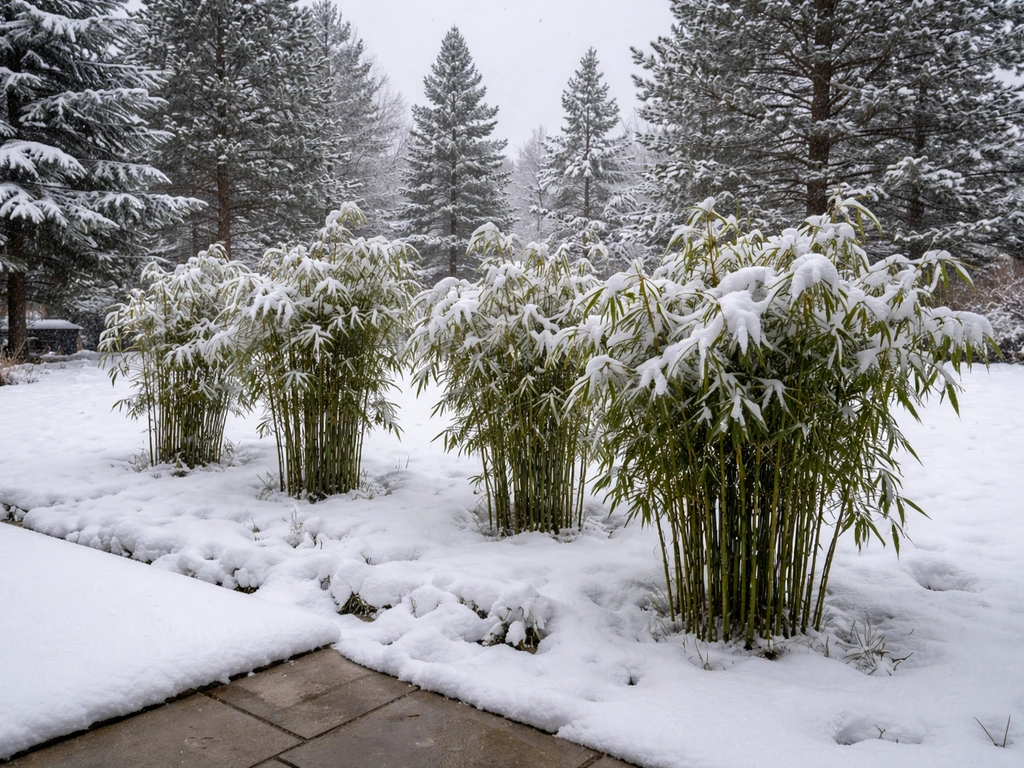
The Front Range corridor, from Pueblo north through Denver and Fort Collins, sits mostly in Zone 5, with winter minimums typically between -20°F and -10°F. That's cold, but it's workable for the right bamboo. Lower-elevation areas in the western slope, places like Grand Junction and the lower Roaring Fork Valley, can reach into Zone 6 or even 6b, giving you a meaningful extra margin. Mountain towns are a different story: high-elevation communities above 7,000 feet are often in Zone 4 or even colder, where average annual extreme minimums can drop below -20°F. Garfield County data, for example, shows stations near Glenwood Springs recording absolute minimums around -20°F, and that's not even the mountain passes. So if you're in Breckenridge, Steamboat Springs, or Telluride, outdoor bamboo is a long shot without significant protection or a greenhouse.
The most reliably suitable areas for outdoor bamboo in Colorado are: Denver metro and its suburbs (Zone 5b-6a), Pueblo and the Arkansas Valley (Zone 6), the Grand Valley near Grand Junction (Zone 6-6b), and south-facing sheltered spots along the Front Range foothills. If you're in one of these areas and can find or create a microclimate with wind protection and reflected warmth, you're in real bamboo-growing territory.
Species that survive Colorado vs. ones that won't
This is the single biggest decision you'll make. Colorado gardeners have two broad categories to choose from: clumping bamboo (Fargesia genus, primarily) and cold-hardy running bamboo (mainly Phyllostachys). Each has trade-offs.
Clumping bamboo: the safest choice for most of Colorado
Fargesia species are the workhorses of cold-climate bamboo gardening. Fargesia rufa (fountain bamboo) is evergreen, grows in neat clumps 6 to 8 feet tall and 5 to 6 feet wide, and is genuinely cold-hardy. It handles Colorado's winters well and is tolerant of most well-drained soils, though it dislikes pure sand. Fargesia nitida is another excellent option: cold-hardy and well-suited to Zone 5 conditions, though it has one important caveat: it does not handle very high summer temperatures well. If you're planting in a hot, exposed Denver suburban yard with western sun exposure, nitida may struggle more than rufa in midsummer. For Colorado's semi-arid, high-UV summers, rufa tends to be more forgiving.
Running bamboo: high payoff, higher risk
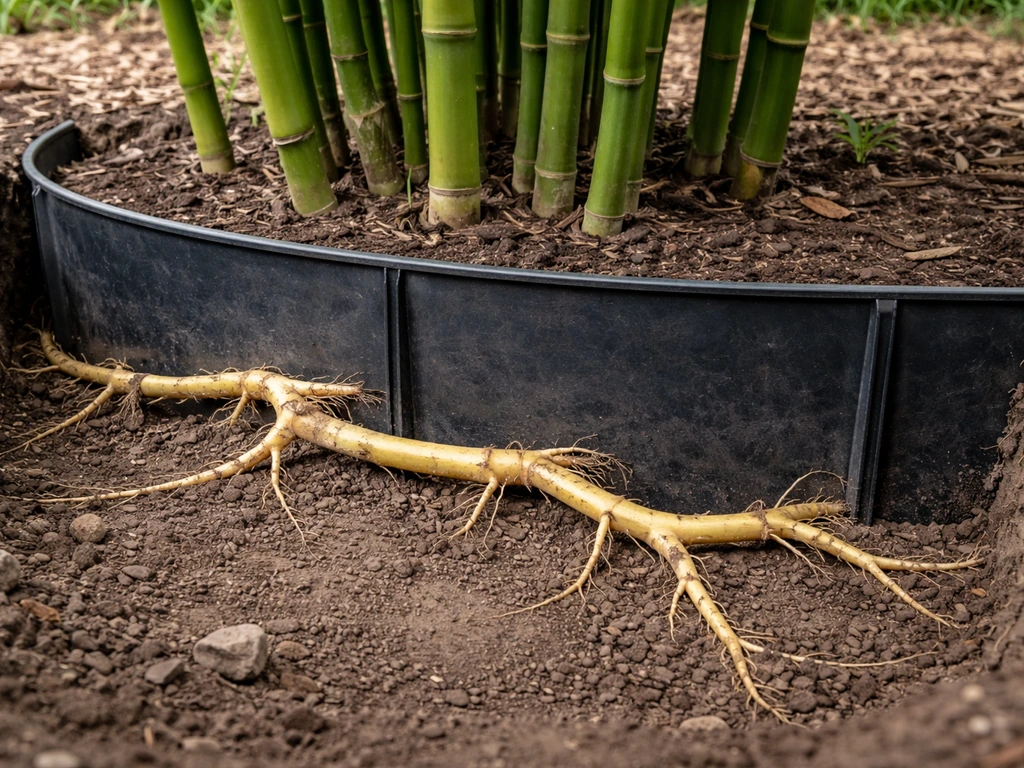
Phyllostachys bissetii is one of the toughest running bamboos for cold climates, with rhizome hardiness down to Zone 4b (-25°F) and stem hardiness to Zone 6b (-5°F). That split matters in Colorado because the crown often survives underground when the canes die back above ground in a hard winter. Phyllostachys aureosulcata (yellow groove bamboo) is rated hardy to Zone 5a (-20°F) and Zone 5b (-15°F), making it a reasonable candidate for Front Range plantings with good site selection. These running species can eventually grow taller and faster than Fargesia, but they require serious containment (more on that below) and the above-ground canes are more vulnerable to cold and wind than the rhizomes.
Species to avoid or approach with extreme caution in most of Colorado include Phyllostachys edulis (moso bamboo), Bambusa species (tropical clumpers), and any variety rated below Zone 5 hardiness. They simply will not survive a typical Colorado winter outdoors.
| Species | Type | Cold Hardiness | Colorado Suitability | Notes |
|---|---|---|---|---|
| Fargesia rufa | Clumping | Zone 5 / -20°F | Excellent – most of Front Range and below | Evergreen, tolerates partial shade, low maintenance |
| Fargesia nitida | Clumping | Zone 5 / -20°F | Good – avoid hot exposed sites | Not heat-tolerant; best in partial shade |
| Phyllostachys bissetii | Running | Rhizome Zone 4b / -25°F | Good – Zone 5+ areas with containment | Canes die back in hard winters; rhizomes survive |
| Phyllostachys aureosulcata | Running | Zone 5a / -20°F | Moderate – protected Front Range sites | Running type; barrier required |
| Phyllostachys edulis (moso) | Running | Zone 7 / 0°F | Poor – most of Colorado too cold | Not recommended for outdoor Colorado planting |
| Bambusa species | Tropical clumping | Zone 8-9+ | Not suitable | Will not survive Colorado winters outdoors |
The climate factors that actually matter in Colorado
Colorado's climate is more nuanced than just "it gets cold." Four factors specifically affect bamboo survival: winter low temperatures, wind exposure, summer heat and UV intensity, and growing season length.
Winter lows are the obvious threat. Zone 4 areas regularly see -20°F to -30°F, which kills the above-ground parts of most bamboo species and can kill rhizomes of all but the most cold-hardy types. Zone 5 areas (-20°F to -10°F) are where cold-hardy bamboo becomes genuinely viable with site selection. Zone 6 zones, which exist in western Colorado lowlands and some protected Front Range pockets, open the door to a wider variety.
Wind is the underrated killer. Colorado's Chinook winds, especially along the Front Range foothills, can be brutal. Wind dramatically increases desiccation in winter: bamboo leaves continue transpiring water even when the soil is frozen, and the plant can't replace that moisture. This is sometimes called winter drought, and it causes browning and dieback even when the temperature alone might not be lethal. A site with a windbreak, whether a fence, a wall, or a building, is not optional, it's a requirement for reliable performance.
Growing season length is also a real constraint. Depending on elevation and location, Colorado's average last killing frost can range from as late as May 15 to even July at higher elevations, and the first killing frost in fall can arrive as early as August. That's a narrow window for bamboo to grow, harden off, and prepare for winter. Bamboo that doesn't get enough growing season before its first winter is at serious risk of failure.
How to actually plant and grow bamboo in Colorado
Timing your planting
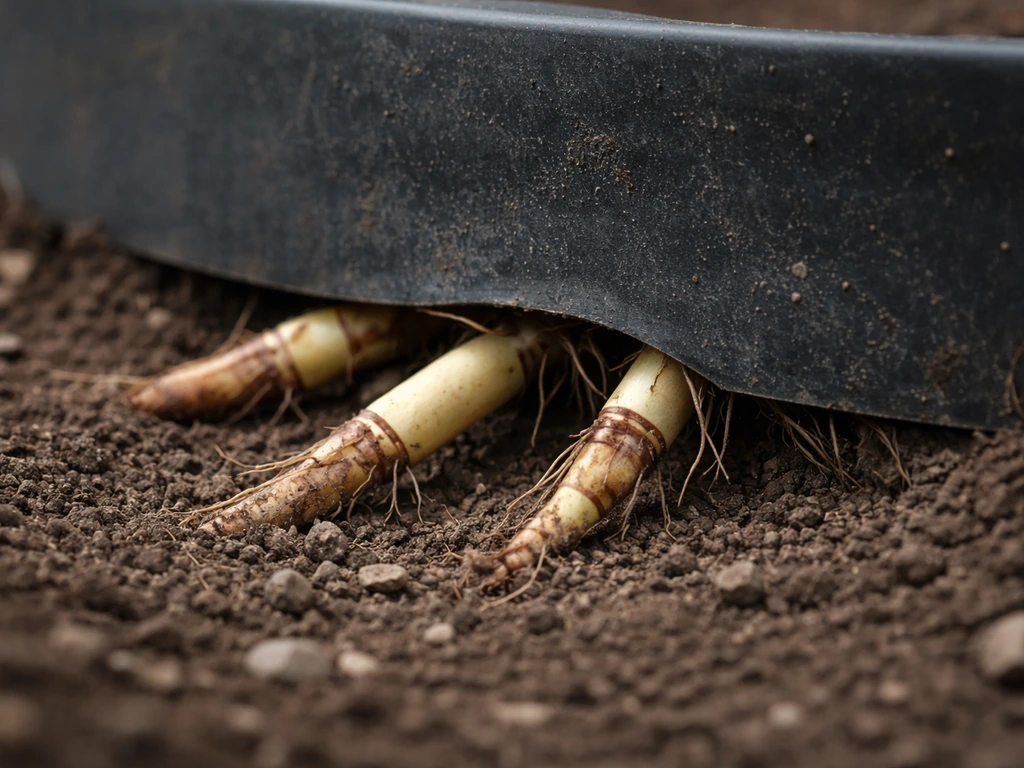
Plant in spring, full stop. Bamboo does not develop full cold-hardiness until it is well established, and spring planting gives the plant an entire growing season to put down roots and build cold tolerance before winter hits. Fall planting in Colorado is a gamble that rarely pays off: the plant doesn't have time to establish, and you're sending it into its first winter already stressed. Aim to get bamboo in the ground after your last frost date and no later than early summer so it has maximum time to establish.
Choosing and preparing your planting site
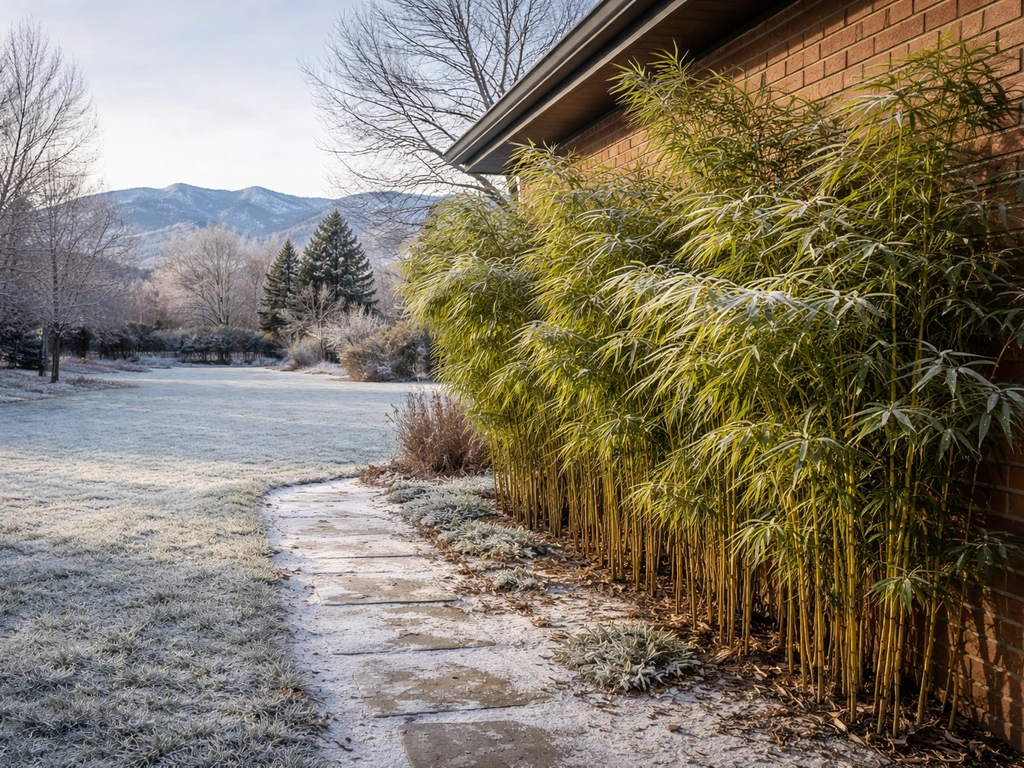
Pick a spot with protection from prevailing winds, which in most of Colorado come from the northwest or west. A south or southeast-facing exposure against a wall, fence, or building gives you both wind protection and reflected heat, which extends your effective growing season and reduces winter damage. Avoid low spots where cold air pools on still nights: frost pockets can drop temperatures 5 to 10°F lower than nearby elevated ground. Partial shade is actually fine for Fargesia species and preferable for nitida, but Phyllostachys generally prefers full sun to part shade.
Soil in Colorado tends to be alkaline, heavy clay or sandy depending on location, and low in organic matter. Bamboo prefers well-drained, slightly acidic to neutral soil rich in organic matter. Amend your planting area generously with compost, and if you're dealing with heavy clay, work in some coarse material to improve drainage. Avoid planting bamboo in spots that stay wet or icy in winter: saturated, frozen soil causes root temperature injury and accelerates dieback. Space plants at least 3 feet apart, though you can plant closer if you need immediate screening and understand you'll need to thin later.
Watering and fertilizing
Colorado's dry climate means you need to water more consistently than gardeners in wetter states. During the first growing season, water deeply and regularly, aiming to keep the root zone consistently moist but never waterlogged. Once established, most hardy bamboo is surprisingly drought-tolerant, but in Colorado's low-humidity summers you'll still need to supplement rainfall. Deep watering once or twice a week is typically more effective than frequent shallow irrigation. Going into fall, make sure the soil is well-watered before freeze-up to reduce the winter drought stress that causes so much dieback here.
For fertilizing, use a high-nitrogen fertilizer (similar to lawn fertilizer) in early spring during shoot season, roughly February through April, and again in early to midsummer. Avoid fertilizing late in the season: pushing new growth in August or September encourages soft tissue that won't have time to harden before cold arrives, which is exactly the kind of growth that gets killed by October frosts.
Containing bamboo so it doesn't take over your yard
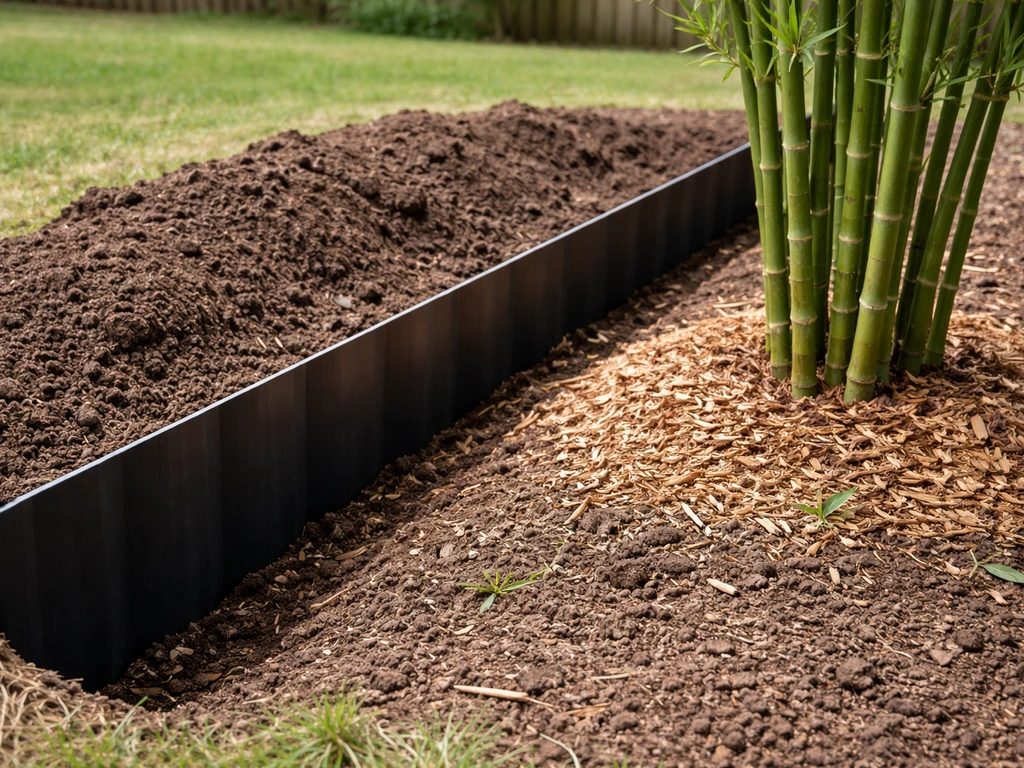
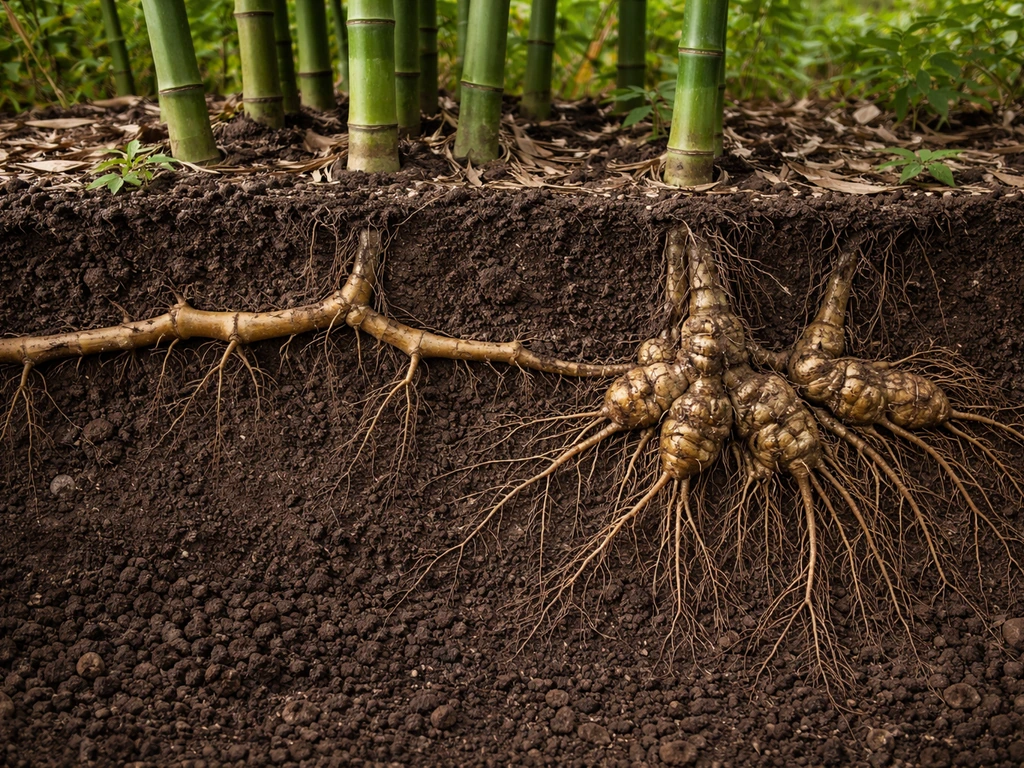
If you're planting any running bamboo species, like P. bissetii or P. aureosulcata, containment is not optional. Running bamboo spreads via underground rhizomes, and those rhizomes move fast once a plant is established. Letting running bamboo spread unchecked in a residential setting is a genuine problem that can affect your yard, your neighbor's yard, and infrastructure.
A physical rhizome barrier is the standard solution. Bamboo rhizomes typically run within the top 4 inches of soil, which is why barrier systems are designed to intercept them before they can escape. The recommended spec from experienced bamboo suppliers is a 60 mil (high-density polyethylene) barrier installed at 30 inches depth, with 2 inches left above ground to prevent rhizomes from going over the top. Some products like the Bamboo Shield-style root control barriers are available at 60 mil thickness and 24 inches depth, which works for most residential situations. The barrier needs to form a complete, sealed loop around the planting area, with no gaps. One inch of gap is all a determined rhizome needs.
In late summer and fall, check the perimeter of the barrier for rhizomes trying to escape over the top or find gaps. Clip any escapees close to the barrier. This annual check takes 20 minutes and prevents years of regret. If you don't want to install a hard barrier, growing bamboo in large containers (at least 15 to 25 gallons, or purpose-built bamboo pots) is a practical alternative, especially for clumping species where containment is less urgent anyway.
Clumping bamboo like Fargesia species is far less aggressive. It spreads slowly outward from the original planting point and rarely requires hard barriers, making it the much lower-maintenance choice for most Colorado gardeners. If you're curious how other dry-climate, neighboring states handle similar containment questions, the challenges are comparable to what gardeners face when asking whether bamboo can grow in Utah, where running types also require barrier management.
What to expect for growth rate and long-term performance
Be realistic here: bamboo in Colorado will not grow at the same pace as bamboo in the Pacific Northwest, the Southeast, or the humid Mid-Atlantic. Colorado's dry climate, short growing seasons, and cold winters all reduce annual growth rates. That said, once established (usually after 2 to 3 years), cold-hardy bamboo species do become vigorous in Colorado conditions.
The first year after planting is often called the "sleeper" year: the plant is establishing its root system and may put out little above-ground growth. The second year shows more shoot activity. By year three, you typically see real growth spurts. Fargesia rufa, in a decent Front Range site, can reach its mature height of 6 to 8 feet within 4 to 5 years of planting. An Alabama and Tennessee Extension fact sheet also lists Fargesia rufa ‘Green Panda’ with a mature size of about 6, 8 feet tall and up to about 8 feet in diameter Fargesia rufa, in a decent Front Range site, can reach its mature height of 6 to 8 feet within 4 to 5 years of planting.. Phyllostachys bissetii can eventually get taller, but in Zone 5 conditions it often takes longer and the cane height may be shorter than in warmer climates due to periodic winter dieback of above-ground culms.
Pruning for bamboo is mostly about removing dead or damaged culms and managing density. In late winter or early spring, cut out any canes that were killed or badly damaged over winter at ground level. This is also the time to thin out old culms to allow new shoots full access to sunlight. Don't prune in fall: removing culms reduces the plant's ability to photosynthesize stored energy going into winter.
Indoor growing, containers, and overwintering in tough spots
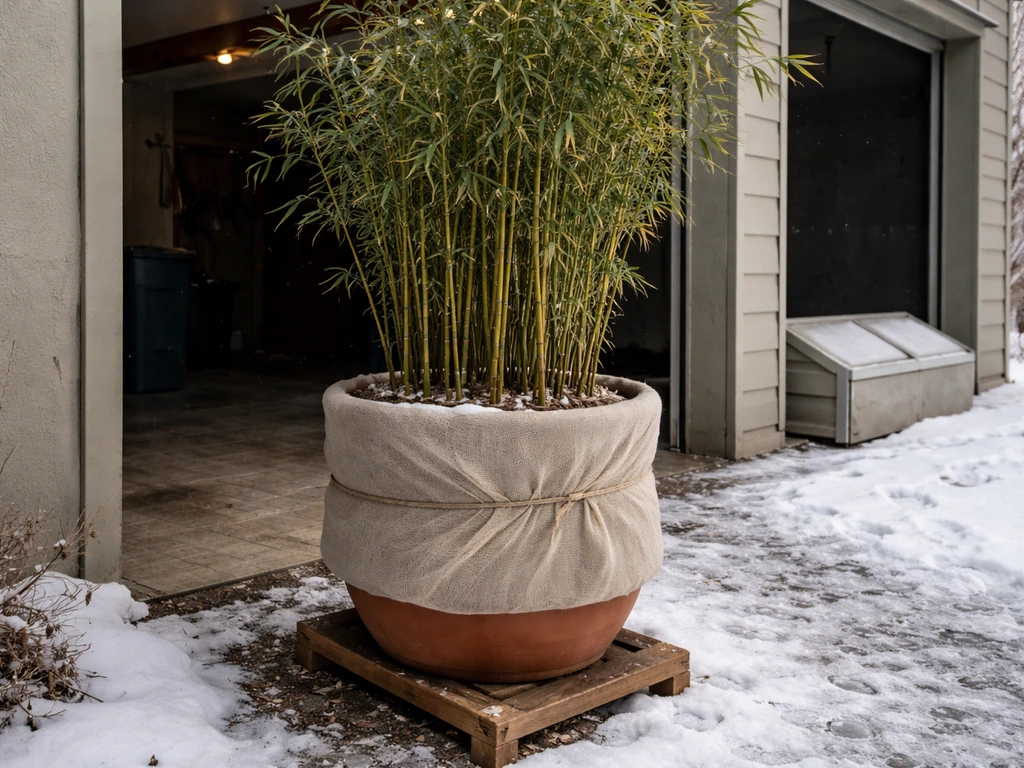
If you're in Zone 4 or at high elevation, or if you want to grow a species that isn't quite cold-hardy enough for your zone, container growing and overwintering indoors is a real option. Many bamboo species do surprisingly well in large pots, and containers can be moved into an unheated garage, shed, or greenhouse for the winter. An unheated space that stays above about 15°F is often enough to protect the root zone of Zone 5 species when air temperatures outside are much colder.
For in-ground bamboo that's borderline for your zone, a few overwintering strategies make a meaningful difference. First, apply a 4-inch layer of mulch over the root zone in late fall to insulate soil temperature and reduce root temperature injury. Remove it in early spring so the soil can warm up and shoots can emerge. Second, wrap young plants loosely in burlap to reduce wind desiccation, especially in their first two winters before they're fully established. Third, water thoroughly before the ground freezes to reduce winter drought stress.
If you want to grow a species rated one zone warmer than your hardiness zone, planting against a south-facing wall with mulching and wind protection can often bridge that gap. The combination of reflected heat, wind protection, and insulated roots can effectively bump your microclimate up a half-zone to a full zone.
For greenhouse growing, bamboo thrives with good light, reasonable temperatures above freezing, and consistent moisture. A cold greenhouse (40°F to 50°F minimum) is sufficient for most cold-hardy species. This approach is also relevant for gardeners in the Four Corners region, where conditions can be similar to what's described for those wondering whether bamboo can grow in New Mexico: elevation and cold winters make indoor or greenhouse cultivation a sensible backup.
Troubleshooting common Colorado bamboo problems
Brown or dead leaves after winter
This is the most common problem Colorado bamboo growers report, and it's almost always caused by winter desiccation, not cold damage alone. The leaves dry out because wind and sun pull moisture from them while the frozen ground prevents the roots from resupplying water. The fix is mostly preventive: water well before freeze-up, apply mulch, and use a windbreak. If your bamboo browns out in winter, don't panic and don't cut it all down in February. Wait until late spring to assess what's truly dead versus what will push new leaves from the culm nodes.
Culm dieback but roots survive
With running bamboo like P. bissetii, it's common for above-ground canes to die back partially or fully in a hard Colorado winter while the underground rhizomes survive and push new shoots in spring. This is not a plant failure, it's how cold-hardy running bamboo behaves at the edge of its range. Cut dead canes to the ground and let the plant regenerate. Over time, as the root system matures, the canes tend to survive winters better because the plant's overall cold-hardiness improves with establishment.
Soil heaving and root disruption
Colorado's freeze-thaw cycles, especially in spring, can cause soil heaving that physically pushes plants out of the ground and breaks shallow roots. This is a real risk in the first winter or two before roots are deep. Mulching helps by moderating soil temperature swings. If you notice a newly planted bamboo has been heaved up, gently press it back down and add mulch around the base.
Poor establishment and slow or no growth
If your bamboo isn't growing after two full seasons, the most common culprits are insufficient water, too much wind exposure, wrong pH (very alkaline Colorado soils can lock up nutrients), or a site that's simply too cold. Test your soil pH and amend if you're above 7.5. Relocating a struggling plant to a more protected, warmer microclimate is often more effective than trying to nurse it in a bad spot.
Rhizomes escaping the barrier
If running bamboo is spreading outside your intended area, check whether rhizomes have gone over the top of your barrier (common if it wasn't left proud of the soil surface) or found a gap in the seal. Dig up and sever escaped rhizomes as far back as you can trace them. Then fix the barrier gap. For gardeners in hotter, drier neighboring climates, this issue comes up just as frequently, and the solutions are the same whether you're in Colorado or asking whether bamboo can grow in Arizona: good containment saves enormous headaches later.
A few final thoughts for Colorado bamboo growers
Colorado is not the easiest bamboo climate in the world, but it's far from impossible. The gardeners who succeed here are the ones who pick the right species (Fargesia rufa is the safest first choice for most of the state), find or create a sheltered microclimate, plant in spring, mulch heavily before winter, and water consistently. The ones who struggle plant the wrong species in an exposed spot, skip the mulching, and plant too late in the season.
If you're in Grand Junction or a warm western slope valley, you have more flexibility than someone in a Denver suburb, and far more than someone in a mountain town above 7,000 feet. Know your zone, understand your site, and match your species to both. Do those three things and bamboo in Colorado goes from a gamble to a genuinely rewarding, low-maintenance plant that can thrive for decades. Those in the desert Southwest often ask similar questions about heat and cold extremes: the strategies for success in Colorado have a lot in common with what works for people asking whether bamboo can grow in Las Vegas or those exploring bamboo growing in Mexico, where extreme climate management is equally central to success.
FAQ
Will bamboo survive Colorado winters without protection if I choose a hardy species?
Sometimes, but not reliably. Even cold-hardy bamboo often browns back when wind drives winter desiccation. If you can, prioritize a windbreak (wall, fence, or building on the northwest or west side), mulch in late fall, and water thoroughly before the ground freezes, because cold alone is not usually the limiting factor.
What zone should I use for deciding “will bamboo grow in Colorado”?
Use your real microclimate, not just the general zone label. A sheltered south-facing spot can behave like a warmer zone than an exposed yard at the same elevation. Also watch for cold-air pooling in low spots, where nighttime lows can be 5 to 10°F colder than nearby ground.
Can I plant bamboo in late summer to get it established sooner?
In Colorado, aim for spring after your last frost, because bamboo does not fully harden off until it is well rooted. Planting in late summer or fall is higher risk because the first winter hits before the plant can build cold tolerance.
How do I tell if dieback is normal winter behavior or true failure?
Wait until late spring to evaluate. For running bamboo, above-ground canes commonly die back while underground rhizomes survive and regrow. If you see no new shoots by late spring or early summer after two seasons, then troubleshoot water, wind exposure, soil pH, and site temperature.
Do clumping bamboo types still need containment barriers in Colorado?
Usually not. Clumping bamboo like Fargesia spreads slowly from the original point and rarely escapes. Containment becomes a requirement mainly with running bamboos (for example Phyllostachys), because rhizomes can move quickly underground.
If I use a rhizome barrier, how can I prevent escapes caused by installation mistakes?
Make the barrier a complete sealed loop with no gaps, and leave a small amount of barrier above soil level (so rhizomes cannot go over the top). Check the perimeter in late summer and fall, especially right after freeze-thaw seasons, and trim any rhizomes you find trying to escape.
How much water does bamboo need in Colorado’s dry winters?
More than most gardeners expect before cold sets in. The most common winter browning is winter desiccation when frozen soil prevents root moisture uptake, while leaves keep losing water. Water deeply before freeze-up and mulch to moderate root-zone temperature swings.
What fertilizer schedule works best for Colorado bamboo?
Use a high-nitrogen fertilizer during shoot season (roughly February through April), and again in early to mid-summer. Avoid late-season feeding in August or September because it encourages soft growth that may not harden before Colorado’s fall frosts.
Why isn’t my bamboo growing after two seasons?
Common causes are insufficient or inconsistent watering during establishment, too much winter wind exposure, and very alkaline soil. Test soil pH, and if it is above about 7.5, amend accordingly, since nutrient lockup can stall growth even when temperatures and watering seem adequate.
Is container growing a good alternative if I’m near the edge of the hardiness range?
Yes, especially for Zone 4 or borderline sites. Use a large container (often 15 to 25 gallons or a dedicated bamboo pot), keep it well-watered, and overwinter in an unheated garage, shed, or greenhouse where temps stay above roughly 15°F to protect the root zone.
Next Article
How Long Does Bamboo Grow Underground? Timelines and Spread
Know how long bamboo grows underground and how far rhizomes spread, plus timelines, care steps, and containment tips.