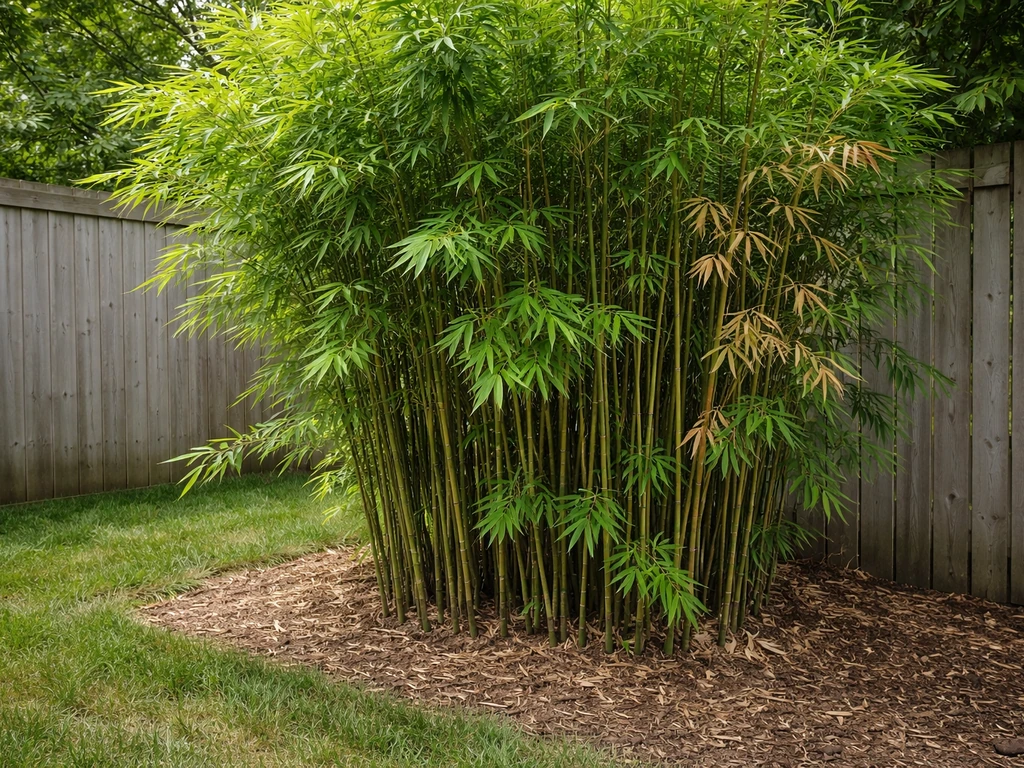
Yes, bamboo can grow in Iowa, but you need to pick the right species and give it real winter protection, especially in the first couple of years. If you're wondering can bamboo grow in Kentucky, the same basics apply: choose cold-hardy species and plan for winter protection. Most of Iowa sits in USDA Zone 5, with northern areas in Zone 5a where temperatures can drop to around -20°F. That rules out tropical bamboos entirely, but a handful of genuinely cold-hardy species, particularly Phyllostachys bissetii and Fargesia sp. 'Rufa', can survive those lows and thrive with the right setup.
Can Bamboo Grow in Iowa? Cold-Hardy Guide and Steps
Marcus Hartwell
21 May 2026
What Iowa's climate actually does to bamboo
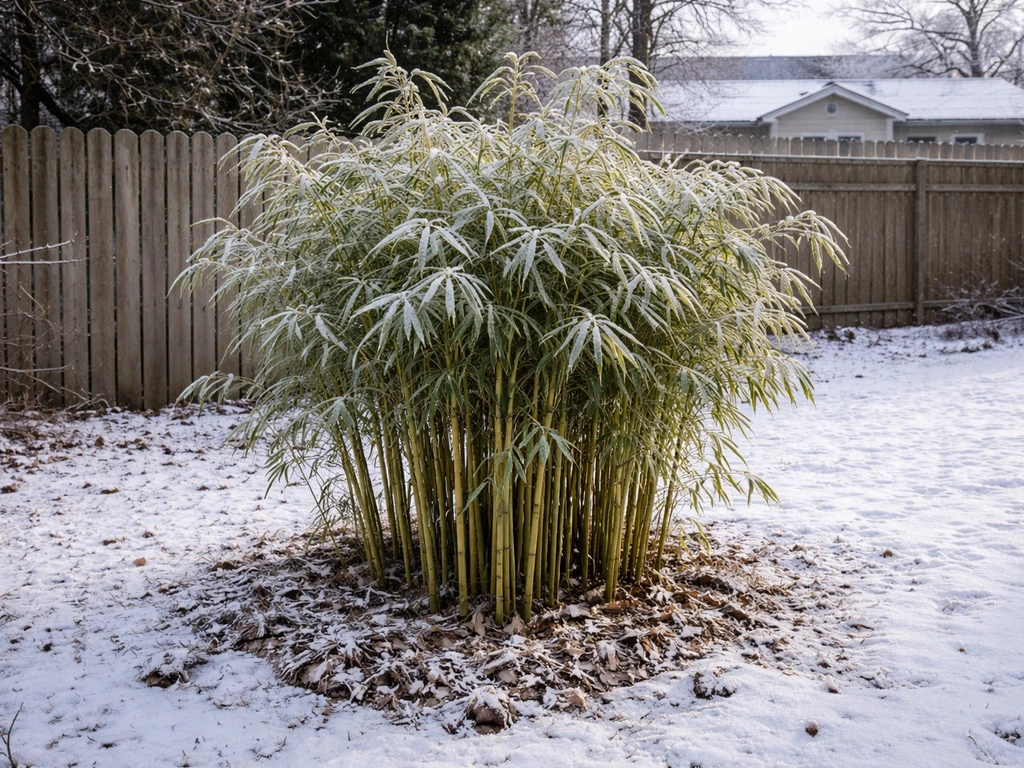
Iowa's winters are the main hurdle. The state is almost entirely Zone 5, meaning average annual extreme minimum temperatures hover between -10°F and -20°F. Northern Iowa (Zone 5a) can push toward the colder end of that range. That's not a death sentence for bamboo, but it does eliminate the vast majority of species sold at garden centers, which are rated for Zone 7 or warmer.
The growing season gives you a workable window, but it's not long. Des Moines averages a last spring frost around April 23 and a first fall frost around October 11, giving roughly 170 frost-free days. Cedar Rapids is slightly shorter, with the last spring frost around April 30 and first fall frost around October 5. That's about 165 days of real growing weather, which is enough for bamboo to push new culms and root aggressively, but it means establishment timing matters a lot. Plant too late in the season and the root system won't be ready for a hard freeze.
Winter cold in Iowa also tends to come with drying winds, which is actually harder on bamboo than the temperature alone. Bamboo is an evergreen plant that keeps transpiring moisture through its leaves all winter, but frozen ground cuts off its water supply. That combination, cold air plus desiccating wind plus frozen roots, is what kills bamboo more often than the temperature itself. Keep that in mind when choosing a planting site.
Choosing the right bamboo for Iowa
This is where most people go wrong. They buy a beautiful bamboo at a nursery, take it home, plant it in August, and wonder why it's dead by February. The issue almost always comes down to cold hardiness ratings. For Iowa Zone 5, you need bamboo rated to at least -10°F, and ideally -15°F or colder to give yourself a real safety margin.
The two species worth growing in Iowa
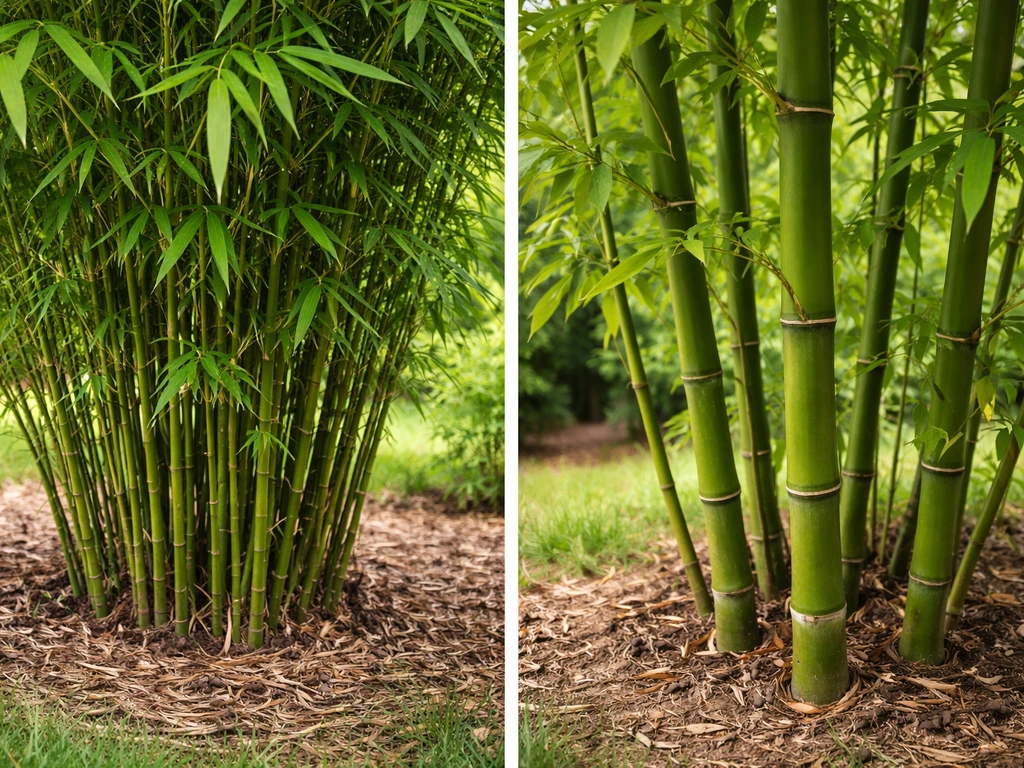
Phyllostachys bissetii is the most reliably cold-hardy running bamboo for Zone 5. It's documented to handle around -10°F to -23°C (roughly -10°F), which puts it right at the threshold for Iowa's toughest winters. It's a running bamboo, so it will spread if you don't manage it, but it's the workhorse choice for Iowa gardeners who want tall, screening bamboo that actually survives. In good conditions it can reach 20 feet or more, and it leafs out densely, making it excellent for windbreaks or privacy screens.
Fargesia sp. 'Rufa' is the top pick if you want a clumping bamboo, meaning it won't run aggressively through your yard. It's rated to -15°F, which gives you a real buffer in Zone 5. It stays smaller (typically 6 to 10 feet), has an arching, graceful habit, and doesn't need containment barriers. If you're worried about bamboo spreading to a neighbor's yard or into a garden bed, Fargesia 'Rufa' is the smarter choice. It also handles partial shade better than most Phyllostachys, which opens up more planting spots.
Running vs. clumping: the practical difference
Running bamboos (Phyllostachys and similar genera) send out horizontal rhizomes that can travel several feet per year once established. This spreading behavior is what gives running bamboo its reputation as invasive, and research confirms running species pose a greater invasion risk than clumping species in the continental U. S. In Iowa, running bamboos are manageable with a proper rhizome barrier, but you need to install that barrier at planting, not after the fact.
Clumping bamboos (Fargesia and related genera) expand slowly from a central base, maybe a few inches per year, and are far less likely to cause problems. For most home gardeners in Iowa, a clumping Fargesia is the lower-maintenance, lower-risk choice. Phyllostachys bissetii is the better pick for large properties or windbreak plantings where spread is acceptable.
| Species | Cold Hardiness | Type | Height | Spread Risk | Best Use |
|---|---|---|---|---|---|
| Phyllostachys bissetii | To about -10°F to -23°C | Running | 15-20+ ft | High without barrier | Windbreak, screen, large property |
| Fargesia sp. 'Rufa' | To -15°F | Clumping | 6-10 ft | Very low | Small garden, partial shade, no-hassle planting |
Where to plant bamboo in Iowa
Site selection can make or break bamboo in a marginal climate. In Iowa, the single most important factor after species selection is wind protection. Cold northwest winter winds are brutal on bamboo foliage, and a plant that's losing moisture through its leaves while its roots are locked in frozen ground is under serious stress. Find a spot on the south or southeast side of a building, fence, or established evergreen hedge. That wall of protection from the north and west can effectively bump your microclimate by a full hardiness zone.
Bamboo also needs at least 4 to 6 hours of direct sun for good growth, though Fargesia 'Rufa' is more tolerant of dappled shade. Avoid low-lying areas that collect cold air on frosty nights, those frost pockets can be several degrees colder than the surrounding yard and will stress bamboo more than necessary. A gentle slope with good air drainage is ideal.
Iowa soil pH typically ranges from 5. Iowa State University Extension notes that Iowa soil pH typically ranges about 5. 5 to 7. 5, and many plants grow best in slightly acidic soil around pH 6.
0, 6. 8 [Iowa soil pH typically ranges from 5. 5 to 7. 5](https://yardandgarden.
extension. iastate. edu/how-to/managing-garden-soil). 5 to 7.
5, and bamboo does best in slightly acidic to neutral soil, around pH 6. 0 to 6. 8. Most Iowa soils will fall in an acceptable range, but it's worth doing a quick soil test through ISU Extension before planting, especially if you're in a highly calcareous (limestone-influenced) area in the north or have heavily compacted clay.
Bamboo tolerates clay but grows faster in well-drained, loamy soil with good organic matter. Work in a few inches of compost before planting to improve both drainage and fertility.
Watering, fertilizing, and what growth looks like year by year
The most important thing to understand about bamboo's timeline is the old saying: sleep, creep, leap. Year one, the plant looks like it's doing nothing. It's not. It's building an underground rhizome network, and that's exactly what you want. Year two it starts pushing a few more culms and you see modest above-ground growth. By year three and beyond, Iowa-grown bamboo can push new culms aggressively in spring, gaining several feet in a single season if the root system is established and the winter was survivable.
Watering is critical in the first season. Keep the root zone consistently moist (not waterlogged) from planting through the first hard frost. Once established, bamboo is reasonably drought-tolerant, but in Iowa's dry summer stretches, supplemental watering during the growing season will noticeably improve growth rate and culm size. Deep, infrequent watering beats shallow daily sprinkles.
For fertilizing, a balanced fertilizer with higher nitrogen encourages the leafy, vigorous growth bamboo is known for. A formulation around 20-5-5 (nitrogen-phosphorus-potassium) applied in spring when new culms are emerging is a practical approach. Avoid heavy fertilization in late summer or fall. You don't want to push soft, lush new growth right before a hard freeze because that tender tissue is the first to die back. One spring feeding and possibly a lighter midsummer feeding is plenty for most Iowa sites.
Getting bamboo through an Iowa winter
Winter protection is non-negotiable for newly planted bamboo in Iowa, and still worth doing for established plants in Zone 5a. The strategy has two parts: protecting the roots from freezing solid and reducing the desiccation stress on the foliage. The WSU “Cold Hardy Bamboo” brochure similarly emphasizes protecting plants from harsh conditions, including avoiding northern wind exposure and using winter protection so cold-hardy bamboos can survive freeze and desiccation stress reducing the desiccation stress on the foliage.
Mulching the root zone
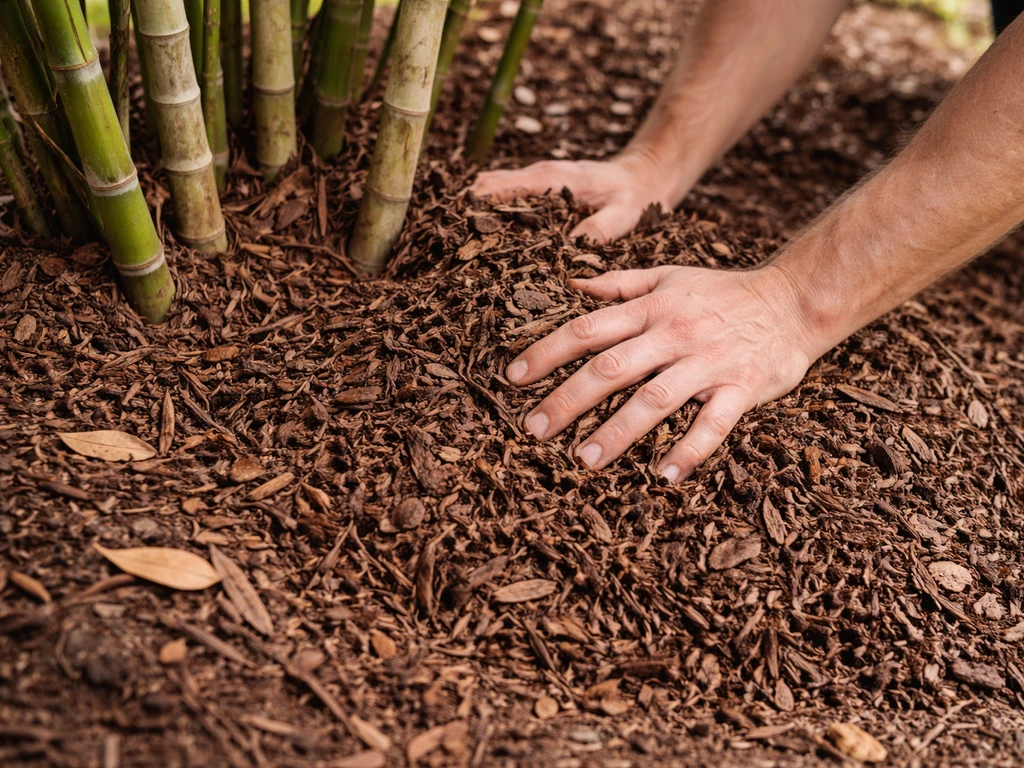
Apply a heavy mulch layer, at least 4 to 6 inches deep, over the root zone before the ground freezes. Wood chips work well because they're slow to decompose and provide persistent insulation through the winter. Shredded leaves are another good option. The goal is to keep the soil from freezing as deeply as it otherwise would, giving roots a better chance of continuing to supply the plant with some moisture during freeze-thaw cycles. For newly planted bamboo (first winter especially), pile the mulch generously right up to the culms.
Protecting the foliage and culms
On smaller plants, you can wrap burlap around the culms loosely to reduce wind desiccation without trapping moisture that could cause rot. Don't use plastic sheeting directly against the foliage. For Phyllostachys bissetii, which can get tall quickly, full wrap is less practical, so focus on the windbreak site selection as the primary defense. Anti-desiccant sprays applied to foliage in late fall can also reduce moisture loss through the leaves, though they need to be reapplied if you get significant rain or ice.
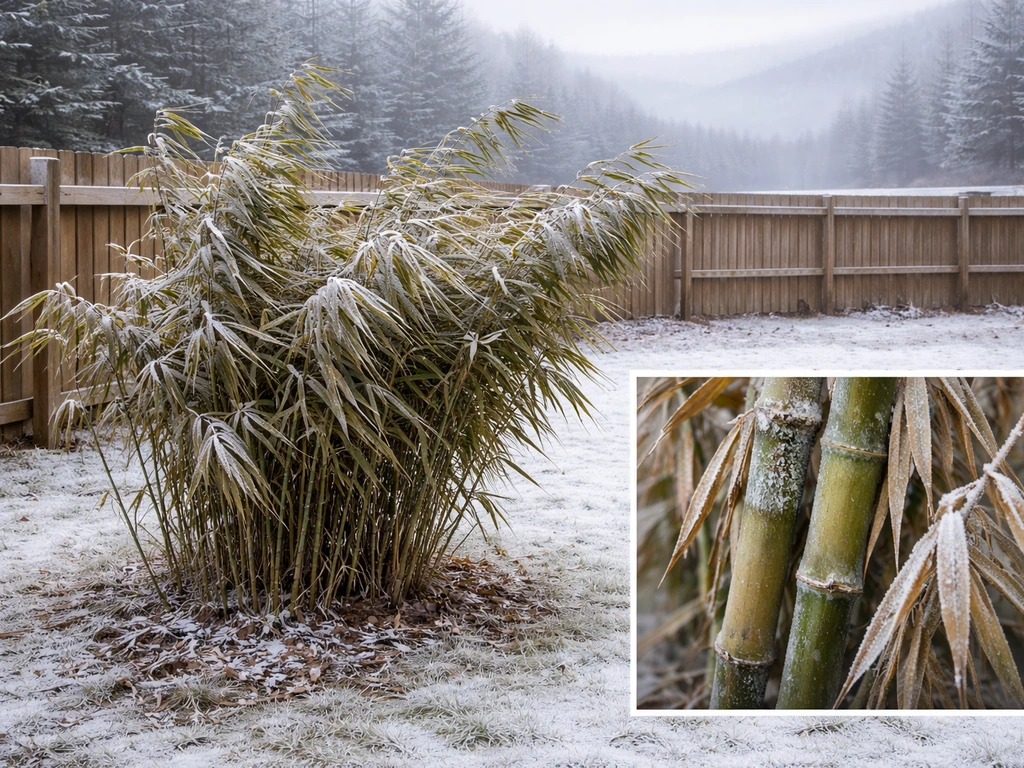
Don't panic if the leaves curl tightly or turn yellowish-brown in a hard cold snap. That's bamboo's normal cold-stress response, where it rolls its leaves to reduce the surface area exposed to freezing air. If the culms themselves are still green and firm by late winter, the plant survived. Cut back any dead foliage in early spring and wait. New leaves and culms will emerge once soil temperatures rise.
Container growing and indoor overwintering as a backup plan
If your yard doesn't have a sheltered south-facing spot, or if you want to grow a species that's marginal for Zone 5, container growing with winter overwintering indoors is a legitimate option. Phyllostachys bissetii actually does reasonably well in containers, and Fargesia is naturally suited to pot culture given its compact clumping habit.
The key is using a large container (15 to 25 gallons minimum for any meaningful growth) with excellent drainage, and moving the plant to an unheated but frost-protected space before temperatures drop below the species' cold hardiness rating. An unheated garage, basement, or enclosed porch works well. You're not trying to keep it warm, just preventing the roots from freezing solid. Bamboo in winter dormancy needs very little water, just enough to keep the root ball from completely drying out. Bring it back outside after your last frost date in spring, which in Des Moines is around April 23.
Container-grown bamboo won't reach the same size as an in-ground planting, but it gives you full control and zero winter mortality risk. It's a good starting point if you're unsure about your site, and you can always transplant it in-ground once you've identified the best microclimate in your yard.
Your practical action plan for growing bamboo in Iowa
- Choose a cold-hardy species: Fargesia sp. 'Rufa' (to -15°F, clumping) for most home gardens, or Phyllostachys bissetii (to about -10°F, running) for larger properties or windbreak use.
- Pick a sheltered site on the south or southeast side of a building, fence, or windbreak, away from cold northwest winter winds and frost-collecting low spots.
- Test your soil pH and amend with compost to target 6.0 to 6.8. Improve drainage in heavy clay before planting.
- Plant in spring after your last frost date (around April 23 in Des Moines) to give the root system maximum establishment time before winter.
- If planting running bamboo (Phyllostachys), install a 24 to 30-inch deep HDPE rhizome barrier at planting, not later.
- Water consistently through the first growing season. Fertilize once in spring with a high-nitrogen fertilizer (around 20-5-5); skip fall feeding.
- Before the first hard freeze, apply 4 to 6 inches of wood chip or shredded leaf mulch over the entire root zone.
- In Year 1, expect minimal above-ground growth. That's normal. By Year 3, you'll see real bamboo behavior.
- If your site is marginal, start in a large container (15-25 gallon) and overwinter in an unheated garage or enclosed porch until you find the right in-ground spot.
Iowa is harder bamboo territory than neighboring Missouri or Kentucky, where winters are milder and the growing season is longer, but it's absolutely doable with the right species and a little extra care. The gardeners who fail with bamboo in Iowa almost always made the same two mistakes: they bought a cold-tender species and planted it in an exposed spot.
Avoid those two errors, give it a protected site and a hardy variety, and Iowa bamboo is not a pipe dream. Avoid those two errors, give it a protected site and a hardy variety, and Iowa bamboo is not a pipe dream, and you can compare that approach with bamboo that will grow in ky. It's just a three-year project.
FAQ
What’s the safest time to plant bamboo in Iowa so it survives the first winter?
Aim to plant early enough that the root system establishes before hard freezes. In most of Iowa, late August planting is risky, because roots are still catch-up mode while winter stress ramps up. If you miss spring, plan for a June or early July install, then prioritize deep mulch immediately after planting.
How do I tell if my bamboo died versus just going through cold stress?
In late winter, if culms are still green and firm, the plant likely survived even if leaves look curled, browned, or shed. Wait until soil temperatures warm and new shoots emerge, cut only the dead-looking foliage in early spring, and avoid digging up the rhizomes until you see clear spring growth.
Do I need a rhizome barrier for Phyllostachys bissetii in Iowa, and how should it be installed?
Yes, if you do not want running spread, install a rhizome barrier at planting time, not after you notice movement. Set it vertically around the planting area, extend it deep enough so rhizomes cannot slip underneath, and make sure the seam is secured so rhizomes cannot pass through gaps.
Can bamboo handle Iowa’s freeze-thaw cycles, or does that cause problems?
Freeze-thaw stress can worsen winter desiccation because roots are repeatedly thawed and refrozen, and wind keeps pulling moisture from foliage. The fix is consistent root-zone insulation, using 4 to 6 inches of wood chip or leaf mulch, plus wind protection from the north and west.
Is watering in winter important for bamboo in Iowa?
For in-ground plants, you typically focus on mulching rather than frequent winter watering, because frozen ground limits uptake. For containers, moisture management is more important, because the root ball can dry out in sheltered but unheated spaces. Water just enough to prevent the potting mix from completely drying when temperatures are consistently below freezing.
What soil drainage issues can ruin bamboo in Iowa, even with the right species?
Poor drainage and compacted clay that holds water can stress roots, especially when combined with winter cold. Before planting, improve drainage with compost and, if your yard holds water after rain, consider raising the planting slightly or selecting a slope with better air and water movement.
Should I fertilize bamboo the same way in spring in both northern and central Iowa?
Use the same general approach, but be cautious about timing. If spring is late in your area, wait until new culms are actively emerging before applying nitrogen, and avoid any late-summer or fall feeding that can produce tender growth vulnerable to early freezes.
Can I grow bamboo in a container in Iowa and skip winter protection outdoors entirely?
Usually not. Even cold-hardy species need the root ball protected from freezing solid in pots, because containers lose heat faster than ground soil. Use a large container with excellent drainage and move it to an unheated but frost-protected area before temperatures drop close to the species’ cold tolerance.
What’s the best bamboo choice if I want privacy but don’t want it to spread into neighboring yards?
Choose a clumping bamboo like Fargesia sp. 'Rufa' for lower spread risk and simpler maintenance. It grows more slowly from the center, typically stays in a defined footprint, and also tolerates partial shade better than many running bamboos.
How much sun does bamboo need in Iowa, and will partial shade work?
Plan for at least 4 to 6 hours of direct sun, because stronger growth comes from consistent light. If you are planting Fargesia 'Rufa', it can handle dappled shade better than Phyllostachys bissetii, so it is the better option if your south-facing shelter is limited.
What common mistakes lead to bamboo failure in Iowa besides choosing the wrong species?
Two other frequent issues are planting too late in the season and placing bamboo in an exposed, wind-swept location. Also avoid deep, soggy planting or heavy late-season fertilization, because those can reduce winter survival even for cold-tolerant species.
Next Article
Can Bamboo Grow in Missouri? Types and How to Grow
Learn which bamboo types thrive in Missouri and get step-by-step planting, watering, winter care, and containment tips.