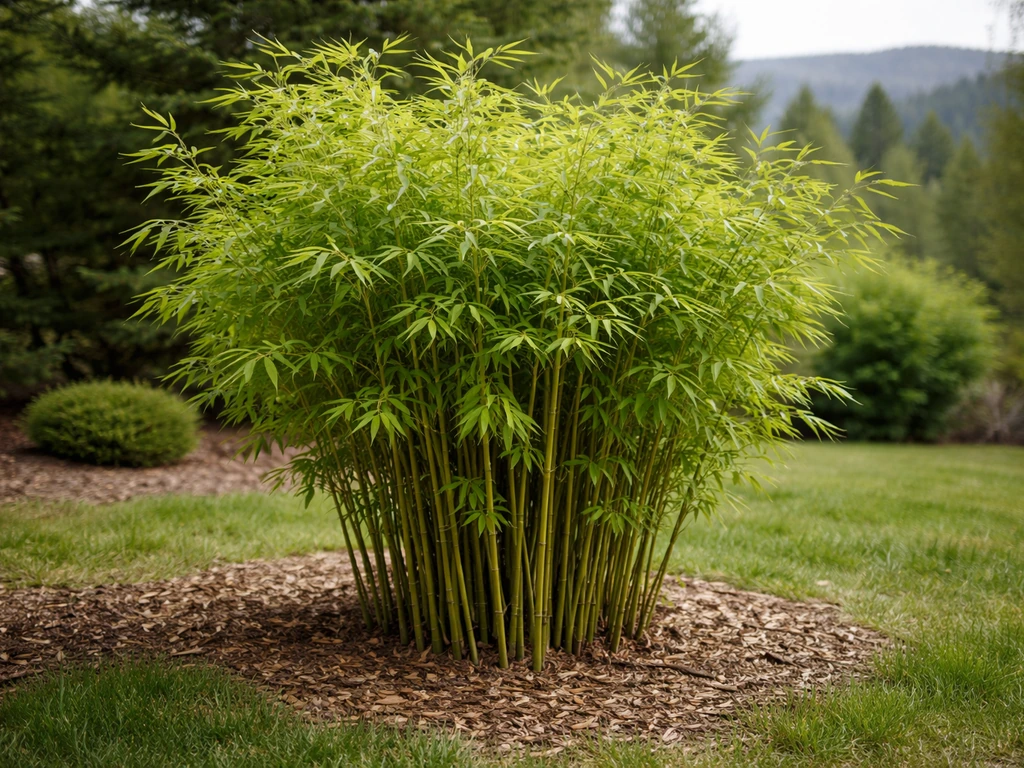
Yes, bamboo can grow in Nebraska, but your success depends heavily on which species you choose and where in the state you're planting. Nebraska spans USDA Hardiness Zones 4a through 6b, meaning winter lows range from about -30°F in the northwestern Panhandle to around 0°F in the southeastern corner near Omaha. Cold-hardy species in the genus Fargesia and several Phyllostachys runners handle those ranges well, but you'll need to match the species to your zone, shelter the planting from Nebraska's notorious desiccating winds, and go in with realistic expectations about winter dieback.
Can Bamboo Grow in Nebraska? Cold-Hardy Species & Planting Tips

Marcus Hartwell
19 Jul 2026
How Nebraska's climate and USDA zones affect bamboo survival
Nebraska is a transitional state climatically, and that's the most important thing to understand before you buy a single culm. The 2023 USDA Plant Hardiness Zone Map places the state in a wide band from Zone 4a (Panhandle, northwest) through Zone 6b (southeast, around Omaha and Nebraska City). Those numbers refer to average annual minimum winter temperatures, and they matter enormously for bamboo survival.
Beyond temperature, the east-west gradient in precipitation is a real complication. Western Nebraska averages as little as 14 inches of annual precipitation, while Omaha receives around 30 inches. The Nebraska State Climate Office at UNL documents that first fall freeze dates arrive earlier in the west and north, sometimes as early as late September, while southeastern Nebraska often doesn't see hard frost until mid-October. The Nebraska State Climate Office (University of Nebraska–Lincoln) publishes climate products and frost/freeze date tables and a 'Temperature thresholds table for Fall' that supply local average last-spring/first-fall freeze dates and other normals useful when deciding which bamboo species to plant and when to protect them Nebraska State Climate Office — Data and climate products provides frost/freeze date tables and a “Temperature thresholds table for Fall” with local average last-spring and first-fall freeze dates and other normals useful when deciding which bamboo species to plant and when to protect them.. A longer frost-free growing season in the east means bamboo has more time to harden off before winter, which meaningfully improves its cold tolerance.
Wind is the factor most people underestimate. Plains winters bring long stretches of dry, cold wind that cause winter desiccation in bamboo leaves and culms even when temperatures aren't record-breaking. Bamboo loses moisture through its leaves year-round, and in frozen ground it can't replace that moisture from the roots. The result is leaf scorch, culm dieback, or complete topkill. The rhizomes usually survive and resprout in spring for most temperate species, but repeated severe winters slow the whole planting down considerably. Windbreaks and sheltered microclimates are not optional in Nebraska; they're core strategy.
Clumping vs. running bamboo: which type fits Nebraska?
Before picking a species, you need to understand the fundamental split between clumping and running bamboo, because it affects both your containment approach and your winter survival odds.
Clumping bamboo (Fargesia and related genera)
Clumping bamboos, primarily the genus Fargesia, spread slowly outward from a central crown by a few inches per year and never run invasively. That's the good news. The even better news for Nebraska is that several Fargesia species are genuinely cold-hardy into Zone 5 and even Zone 4b, making them reliable candidates for most of the state. They typically prefer partial shade and tend to sulk in full intense afternoon sun, which is something to plan around in Nebraska's open landscapes. Heights are modest, usually 8 to 15 feet, but they form dense, attractive clumps that don't require a containment barrier.
Running bamboo (Phyllostachys and others)
Running bamboos spread aggressively via horizontal rhizomes that can travel 10 to 15 feet or more in a single season in good conditions. Genera like Phyllostachys include some of the most cold-tolerant bamboos on the planet, and species such as P. bissetii and P. aureosulcata are rated to Zone 5 or even Zone 4b. They grow taller and faster than clumpers once established, making them attractive for privacy screens and windbreaks. The tradeoff is that without a physical rhizome barrier, they will invade neighboring lawns, gardens, and eventually your neighbor's property. NISIC and multiple university extension services flag Phyllostachys species as invasive in many U.S. regions; in Nebraska they don't naturalize as aggressively as in warmer, wetter climates, but containment is still a legal and practical necessity.
| Type | Cold hardiness potential | Spread behavior | Containment needed? | Best Nebraska use |
|---|---|---|---|---|
| Clumping (Fargesia) | Zone 4b to 6b | Slow, non-invasive clump expansion | No barrier needed | Ornamental accent, hedge, shade garden |
| Running (Phyllostachys) | Zone 4b to 6b (species-dependent) | Aggressive rhizome spread | Yes, 30–36" HDPE barrier or container | Tall screen, windbreak, grove (contained) |
The best cold-hardy bamboo species for Nebraska
Not every bamboo rated to Zone 5 performs the same way in Nebraska's continental climate. The combination of cold winters, dry summers, low humidity, and persistent wind narrows the reliable candidates considerably. Here are the species I'd confidently recommend, organized by growth habit. Clumpers are the lower-maintenance, lower-risk choice; runners deliver more visual impact but demand a serious containment commitment.
For clumping types, Fargesia murielae (umbrella bamboo), Fargesia nitida (fountain bamboo), and Fargesia rufa (green panda bamboo) are the three most widely proven cold-hardy performers in Zone 5 continental climates. For running types, Phyllostachys bissetii and Phyllostachys aureosulcata (yellow groove bamboo) are the most commonly recommended by specialist growers for cold-climate screening in the Great Plains region. Both have demonstrated rhizome survival well below 0°F when the root zone is properly mulched.
Recommended species at a glance
| Species | USDA Hardiness Zone | Mature Height | Growth Habit | Notes for Nebraska |
|---|---|---|---|---|
| Fargesia murielae (Umbrella Bamboo) | Zone 5–9 | 8–15 ft (2.5–4.5 m) | Clumping | Best in partial shade; tolerates Zone 4b with windbreak and mulch; no barrier needed |
| Fargesia nitida (Fountain Bamboo) | Zone 5–9 | 8–12 ft (2.5–3.7 m) | Clumping | Prefers cool, partly shaded sites; excellent for eastern Nebraska; hates hot afternoon sun |
| Fargesia rufa (Green Panda Bamboo) | Zone 5–9 | 6–10 ft (1.8–3 m) | Clumping | More heat-tolerant than other Fargesia; good choice for southeast Nebraska; compact habit |
| Phyllostachys bissetii (Bisset Bamboo) | Zone 4b–9 | 18–28 ft (5.5–8.5 m) | Running | One of the hardiest runners; strong windbreak screen; requires 30–36" rhizome barrier |
| Phyllostachys aureosulcata (Yellow Groove) | Zone 4b–9 | 20–30 ft (6–9 m) | Running | Attractive yellow-and-green culms; cold-hardy into Zone 4b; aggressive spreader, containment essential |
| Phyllostachys nuda | Zone 4a–9 | 20–35 ft (6–10.5 m) | Running | Among the most cold-tolerant Phyllostachys; suited to northern and western Nebraska with protection; invasive potential |
Choosing the right species for your Nebraska zone and site
Your zip code and your specific yard are two different things. Here's a practical decision path to narrow down your choice before you order anything.
- Find your USDA zone using the 2023 map (planthardiness.ars.usda.gov). Enter your zip code for the most accurate local zone.
- If you're in Zone 4a or 4b (Panhandle, northwest Nebraska), only the hardiest runners like P. nuda and P. aureosulcata are good bets in-ground, and only with heavy mulching and a sheltered south-facing microclimate. Fargesia in containers brought inside for winter is a smarter option here.
- If you're in Zone 5a or 5b (central Nebraska, including Lincoln), all three Fargesia species work in-ground, and Phyllostachys bissetii and aureosulcata perform well with proper containment and winter mulch.
- If you're in Zone 6a or 6b (southeast, including Omaha), your options open up considerably. Fargesia rufa handles the warmer summers better than other clumpers, and most cold-hardy Phyllostachys species will thrive with containment.
- Assess your site for wind exposure. An unprotected open field in Zone 5 is a harder site than a sheltered urban backyard in Zone 4b. Factor that in before deciding whether to mulch more heavily, install a windbreak, or choose a hardier species than your zone technically requires.
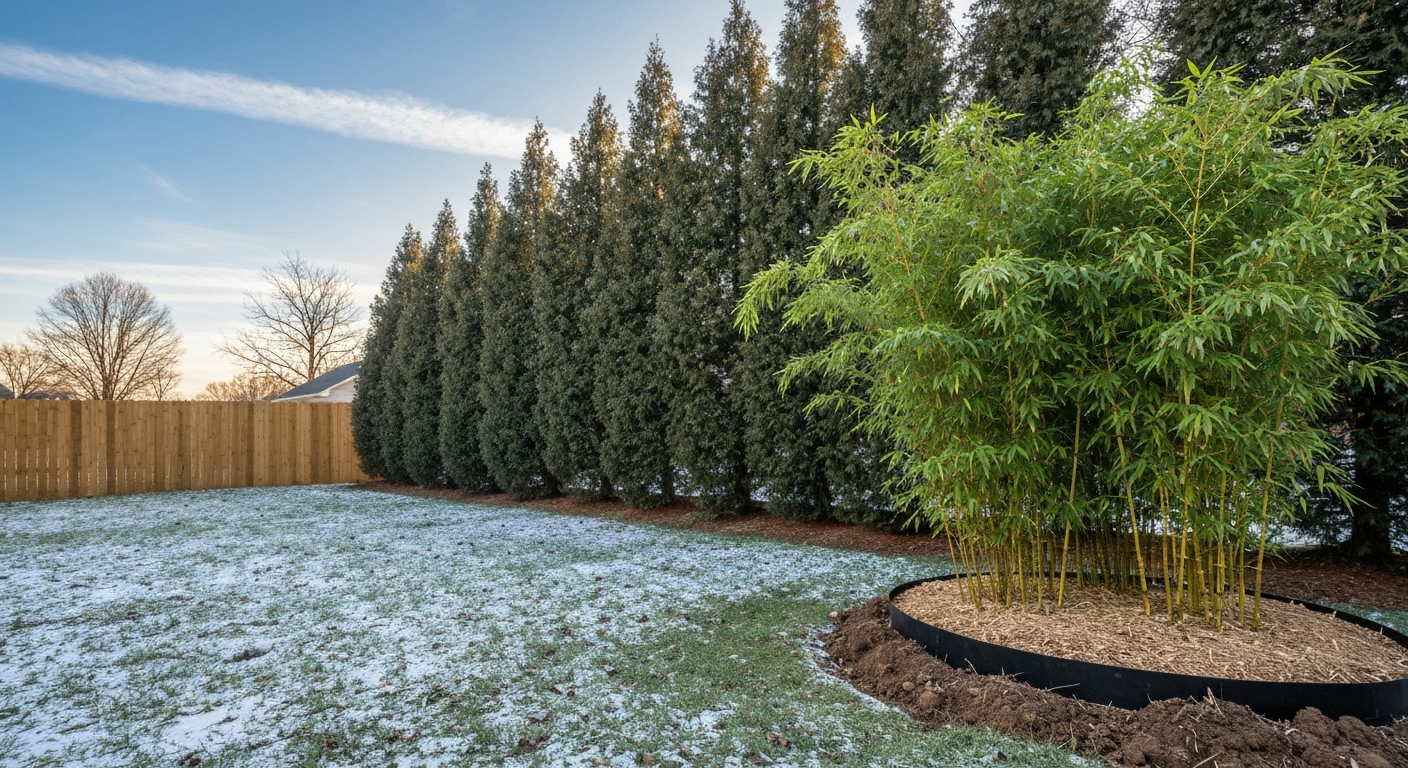
- Decide on containment before you plant a runner. A 30 to 36-inch deep HDPE or polypropylene root barrier with a 2 to 4-inch lip above grade is the standard recommendation from extension sources. Alternatively, large raised beds or heavy containers fully contain running rhizomes without buried barriers.
Site selection, sun, wind, and microclimate tactics for Nebraska
Getting the site right in Nebraska matters as much as species selection. I'd argue it matters more in the western half of the state than almost anywhere else in the Great Plains.
Sun and shade
Fargesia species want morning sun and afternoon shade, especially in Nebraska's hot, dry summers. A spot on the east side of a building, fence, or established tree line is ideal. Full afternoon sun in July and August, combined with low humidity, will stress clumping bamboos even when they're cold-hardy enough for your zone. Phyllostachys runners are more sun-tolerant but still benefit from some afternoon shade in western Nebraska where summer temperatures routinely exceed 95°F.
Wind protection
Nebraska's prevailing winter winds come from the northwest. A south- or southeast-facing exposure backed by a building, dense evergreen windbreak, or solid fence provides the best combination of winter warmth and wind protection. In rural settings, a row of established conifers on the north and west sides of your bamboo planting does the same job. Even a temporary burlap windscreen in the first two winters can make the difference between a thriving plant and a dead one for marginal species.
Soil and moisture
Bamboo prefers well-draining, moderately fertile soil with a pH between 5.5 and 7.0. Most Nebraska soils fall well within that range. The bigger concern in western Nebraska is that dry, frozen ground in winter amplifies winter desiccation injury. Watering bamboo deeply in late fall before the ground freezes, and maintaining a 4 to 6-inch layer of organic mulch over the root zone through winter, keeps the rhizomes from drying out and provides meaningful temperature buffering. WSU extension research backs this up, noting that adequate winter moisture is one of the most effective ways to reduce winter dieback in cold-climate bamboo plantings.
Spacing and planting timing
Plant in late spring after the last frost date for your area, which ranges from late April in southeastern Nebraska to mid-May or later in the Panhandle. This gives rhizomes a full growing season to establish before facing their first Nebraska winter. Space clumping bamboos 3 to 5 feet apart for a hedge effect; they'll fill in over 3 to 5 years. For runners behind a barrier, a single plant can colonize the available space within 2 to 4 seasons depending on conditions.
Container growing as a flexible option
In Zone 4a and 4b areas, or for anyone who wants to avoid the containment barrier work for running bamboo, large containers are a practical solution. A 25 to 30-gallon container with good drainage will support a Fargesia or a small Phyllostachys for several years. Move the container into an unheated garage or shed when temperatures threaten to drop below the species' hardiness threshold. Container bamboo dries out faster than in-ground plants, so consistent watering is more critical, especially through hot Nebraska summers.
What to expect: growth rates and winter dieback in Nebraska
Be honest with yourself about the timeline. In the first year after planting, bamboo puts most of its energy into root establishment, not visible top growth. You may see little to no new culm production. In year two and three, growth picks up noticeably. By years four and five, a well-sited Fargesia in eastern Nebraska should be forming a respectable clump, and a contained Phyllostachys bissetii should be producing culms approaching its mature height range.
Winter dieback of leaves and sometimes culms is normal, especially in the first few winters before the plant is fully established and the rhizome mass is deep and substantial. The peer-reviewed literature on temperate bamboo overwintering is clear on this point: above-ground topkill does not mean the plant is dead. Healthy rhizomes will push new shoots in spring, often vigorously. If you mulch well and pick a sheltered site, you'll see less dieback each successive year as the root system matures.
Containment, legal considerations, and maintenance
Nebraska doesn't currently have a statewide ban on bamboo, but several municipalities have local nuisance ordinances that can apply if running bamboo spreads onto neighboring properties. Before planting any Phyllostachys species, check with your local planning or zoning office and have a frank conversation with adjacent neighbors. Installing a proper rhizome barrier before planting is much easier than trying to contain or remove an established running bamboo later. University of Maryland Extension's containment guidelines recommend an HDPE barrier at least 30 to 36 inches deep, overlapped and secured with stainless steel clamps, with the top lip sitting 2 to 4 inches above soil grade to intercept rhizomes trying to grow over the top.
On the maintenance side, bamboo in Nebraska benefits from annual spring fertilization with a balanced or nitrogen-forward fertilizer once new shoots emerge. Remove any dead or damaged culms after the last frost to keep the planting tidy and to redirect the plant's energy into healthy new growth. Pests and disease are relatively minor concerns in Nebraska's dry climate compared to more humid regions; the main issues are occasional spider mite activity during hot, dry summers (usually manageable with a strong spray of water) and vole damage to rhizomes over winter, which a good mulch layer can actually help conceal from predators.
How Nebraska compares to neighboring states
Nebraska sits in a genuinely challenging middle ground. North Dakota to the north is colder and windier, with more of the state in Zone 3 and 4, making bamboo cultivation there a harder proposition with fewer reliable in-ground species. For specifics about growing bamboo in colder, windier climates, see our guide on can bamboo grow in North Dakota. Idaho's climate varies dramatically from the cold, arid high desert of the south and east to the milder, higher-precipitation northern Panhandle, so bamboo performance there depends entirely on which part of the state you're in. For more on regional suitability, see can bamboo grow in Idaho for details about which Idaho zones and microclimates support bamboo. The Pacific Northwest, especially western Oregon and Washington, benefits from maritime moderation that keeps winters mild and moist, making it one of the easiest bamboo-growing regions in the country and a very different proposition from Nebraska's continental cold. For more on regional differences, see the article titled "does bamboo grow in the Pacific Northwest" which explains how maritime climates affect bamboo success. For specific advice about growing bamboo in western Oregon, see can you grow bamboo in Oregon (ref: 450a697b-7ef4-431b-8040-31dd8dad466b). If you're comparing notes with gardeners in those regions, understand that their success with species like Phyllostachys vivax or Bambusa oldhamii doesn't translate to Nebraska without significant adjustment of expectations and species selection.
Nebraska's best comparison point is actually the northern tier of the Midwest: gardeners in Minnesota, Wisconsin, and the Dakotas who have successfully grown Phyllostachys bissetii or Fargesia murielae behind good windbreaks are your most relevant reference group, not bamboo growers in the Willamette Valley or the Carolinas.
Practical takeaways before you plant
- Confirm your USDA zone using the 2023 map and factor in your specific site's wind exposure and shade before choosing a species.
- In Zone 5 and 6, Fargesia murielae, F. nitida, and F. rufa are the lowest-risk choices for most Nebraska gardeners — no containment needed and genuinely cold-hardy.
- Phyllostachys bissetii and P. aureosulcata are the best runners for cold-climate screening in Nebraska, but install a 30 to 36-inch deep rhizome barrier before the first plant goes in the ground.
- Plant in late spring, mulch heavily before the first winter, water deeply in late fall, and site bamboo on a sheltered south or southeast exposure with protection from northwest winds.
- Expect modest growth in years one and two, stronger growth in years three through five, and normal winter leaf dieback that regrows in spring — that's not failure, that's Nebraska bamboo.
- Container growing is a legitimate, lower-commitment option for Zone 4 gardeners or anyone who wants running bamboo without barrier installation.
- Check local ordinances before planting any running species, and give your neighbors a heads-up.
FAQ
Title for the article — natural, search-oriented
Can Bamboo Grow in Nebraska? Feasibility, Best Species, and How-to Guide
Meta description (≤160 characters)
Yes—cold-hardy bamboo can grow in parts of Nebraska. Learn which species, site and winter‑protection tips, containment options, and timelines.
Short answer: Can bamboo grow in Nebraska?
Yes — bamboo can grow in many parts of Nebraska when you choose cold‑hardy species, match them to local USDA hardiness zones (roughly Zones 4a–6b across the state), and use proper siting and winter protection. Source: 2023 USDA Plant Hardiness Zone Map (USDA ARS) and Nebraska climate normals (NOAA / Nebraska State Climate Office). https://planthardiness.ars.usda.gov/system/files/National_Map_HZ_36x24_300.pdf https://nsco.unl.edu/data/
How does Nebraska’s climate and USDA hardiness zones affect bamboo survival?
Nebraska spans about USDA Zones 4a through 6b, with large east–west gradients in minimum winter temperature and precipitation. Colder zones (Zone 4–5) need the hardiest species or extra winter protection; warmer eastern sites (Zone 5–6) can support more species. Use your county/zip on the USDA hardiness map and local NOAA/Nebraska State Climate Office frost date data to pick species and planting timing. Sources: USDA hardiness map, NOAA climate normals, Nebraska State Climate Office. https://planthardiness.ars.usda.gov/ https://www.ncei.noaa.gov/products/land-based-station/us-climate-normals https://nsco.unl.edu/data/
Which bamboo species are recommended for Nebraska (cold‑hard clumping and running)?
Cold‑hardy clumping genera (safer for containment): Fargesia (examples: Fargesia murielae, F. nitida, F. rufa) — typically hardy to about USDA Zone 5 and often recommended for colder sites and wind‑protected locations. Running (rhizome‑spreading) species that can be cold‑hardy but require containment: Phyllostachys bissetii, Phyllostachys aureosulcata, Phyllostachys nuda. Use cultivar hardiness info from supplier/plant finder before purchase. Sources: American Bamboo Society, RHS, botanic garden plant finders. https://www.bamboo.org/bamboo-planting-and-care/ https://www.rhs.org.uk/plants/63525/fargesia-nitida/details
Quick comparative table of recommended species, USDA hardiness, mature height, and notes
Species | USDA hardiness (typical) | Mature height (typical) | Notes Fargesia murielae (clumping) | Zone ~5–9 | 8–15 ft | Cold‑hardy clumper; prefers partial shade, good for sheltered Nebraska sites. (Missouri Bot. Garden) Fargesia nitida (clumping) | Zone ~5–8 | 8–12 ft | Dense clump, prefers cool, moist, well‑drained soils. (RHS) Fargesia rufa (clumping) | Zone ~4–8 | 6–10 ft | More sun tolerant than some Fargesia; good container candidate. Phyllostachys bissetii (running) | Zone ~5–9 | 15–30+ ft | Very cold‑tolerant runner; fast, good screen but needs barrier or containment. Phyllostachys aureosulcata (running) | Zone ~5–9 | 20–30 ft | Cold‑tolerant runner; often used for screening—can be invasive without containment. Notes/caveats: Zone hardiness ranges are general; cultivar differences occur and microclimate can shift survival. Sources: Botanic garden plant finders, nursery profiles, ABA resources.
Next Article
Can Bamboo Grow in Idaho? Hardy Options, Care Tips
Yes, but only hardy bamboo. Learn Idaho climate limits, best species, planting, watering, and winter protection tips.