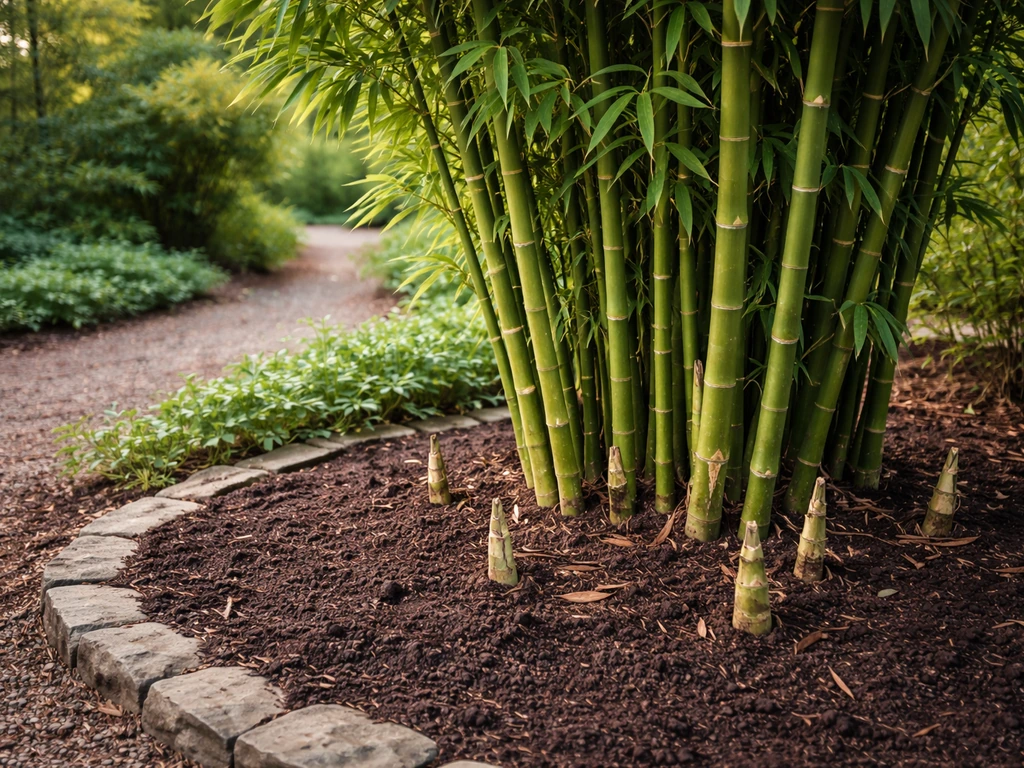
Yes, you can almost certainly grow bamboo where you live. If you're wondering what can you grow with bamboo, it's surprisingly versatile for edible shoots, building materials, and even privacy screening grow bamboo. Bamboo species exist for USDA hardiness zones 5 through 12, covering most of the continental US, the UK, Australia, and large parts of Europe and Asia.
Can You Grow Bamboo? Conditions, Types, and Safety FAQs
Marcus Hartwell
6 May 2026
The real question isn't whether bamboo will grow, it's which type will thrive in your specific conditions and how you manage it once it does. Get those two things right, and bamboo is one of the most rewarding plants you can put in the ground. Once you know your climate, you can narrow down where can you grow bamboo successfully and choose a species that matches it.
Quick yes/no: can you grow bamboo where you live?
Almost certainly yes. There are over 1,400 species of bamboo, ranging from tropical giants that need heat and humidity year-round to cold-hardy runners that survive temperatures as low as -20°F (-29°C). If you're in a temperate climate like the UK, the Pacific Northwest, or the US Mid-Atlantic, cold-hardy clumpers like Fargesia or runners like Phyllostachys aureosulcata will handle your winters without complaint.
If you're in a hot, dry region like Texas or the American Southwest, you'll want to focus on species bred for drought tolerance, water them well through establishment, and give them afternoon shade. Tropical and subtropical zones (Florida, coastal California, Southeast Asia, Queensland) open up the biggest species selection, including the giant timber bamboos that can hit 70 feet tall.
The only places where bamboo genuinely struggles are true deserts with no supplemental irrigation available and areas with extreme, prolonged freezes that cycle repeatedly. Even then, container growing indoors is a real option.
| Climate / Zone | Recommended Type | Example Species | Notes |
|---|---|---|---|
| USDA Zone 5-6 (cold temperate) | Clumping or cold-hardy running | Fargesia robusta, Phyllostachys aureosulcata | Mulch heavily in first winter |
| USDA Zone 7-8 (mild temperate) | Clumping or running | Fargesia nitida, Phyllostachys vivax | Most bamboo thrives; best selection |
| USDA Zone 9-10 (subtropical) | Running or tropical clumping | Phyllostachys edulis (Moso), Bambusa oldhamii | Water during dry seasons |
| USDA Zone 11-12 (tropical) | Tropical clumping or running | Dendrocalamus asper, Guadua angustifolia | Widest range; monitor for spread |
| UK / Western Europe | Cold-hardy clumping | Fargesia murielae, Phyllostachys bissetii | Generally fine; protect in hard frosts |
| Indoor / container growing | Dwarf or compact clumping | Bambusa ventricosa, Fargesia dracocephala | Needs good light; limit to smaller species |
Match bamboo type to your space: clumping vs running
This is honestly the most important decision you'll make. Getting it wrong means either a bamboo that never fills out properly or one that invades your neighbor's yard within five years. The difference comes down to how each type spreads underground.
Running bamboo
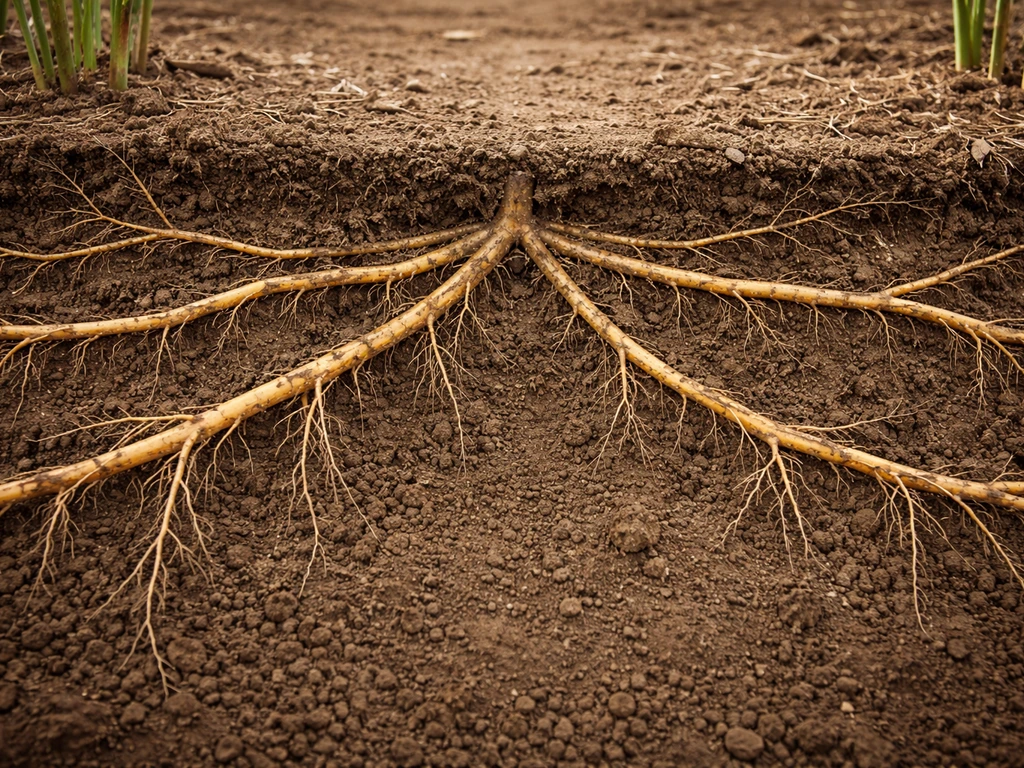
Running bamboo (Phyllostachys, Pleioblastus, and others) spreads via long, lateral rhizomes that can travel 10 to 15 feet or more in a single season. These rhizomes stay shallow, typically less than a foot below the surface according to University of Connecticut extension research, which makes physical containment feasible but absolutely non-negotiable if you have neighbors or a smaller garden. Running types are generally more cold-hardy, grow faster, and include the large timber species most people picture when they think of bamboo. They're best suited to large, open spaces where spread is acceptable, or to situations where you're committing to installing a proper root barrier.
Clumping bamboo
Clumping bamboo (Fargesia, Bambusa, and others) spreads in a tight, outward-expanding circle and doesn't run. A UTIA Extension publication on bamboo lists clumping options like Fargesia cultivars and includes maturity measurements such as roughly 6, 8 feet tall and about 8 feet in diameter for some cultivars [a Fargesia cultivar noted as reaching roughly 6–8 feet tall and ~8 feet in diameter at maturity](https://utia. tennessee. edu/publications/wp-content/uploads/sites/269/2023/10/W220.
pdf). It grows 2 to 6 inches per year in diameter rather than feet, making it the responsible choice for smaller gardens, suburban backyards, and anywhere near property lines. The tradeoff is that clumpers are generally less cold-hardy (Fargesia species are the exception), they tend to be smaller in stature, and they establish more slowly. If you're in zone 7 or warmer and want a big, fast screen, running bamboo is tempting.
If you're in zone 5-6 or have a compact space, a clumper will serve you far better long-term.
My honest recommendation: if you have a typical suburban backyard, start with a clumping Fargesia. They're beautiful, behave themselves, and won't become a regret. If you have half an acre or more and want serious size and speed, go with a contained running type like Phyllostachys vivax or Phyllostachys aureosulcata and install a rhizome barrier from day one.
Best growing conditions: light, soil, water, and drainage
Light
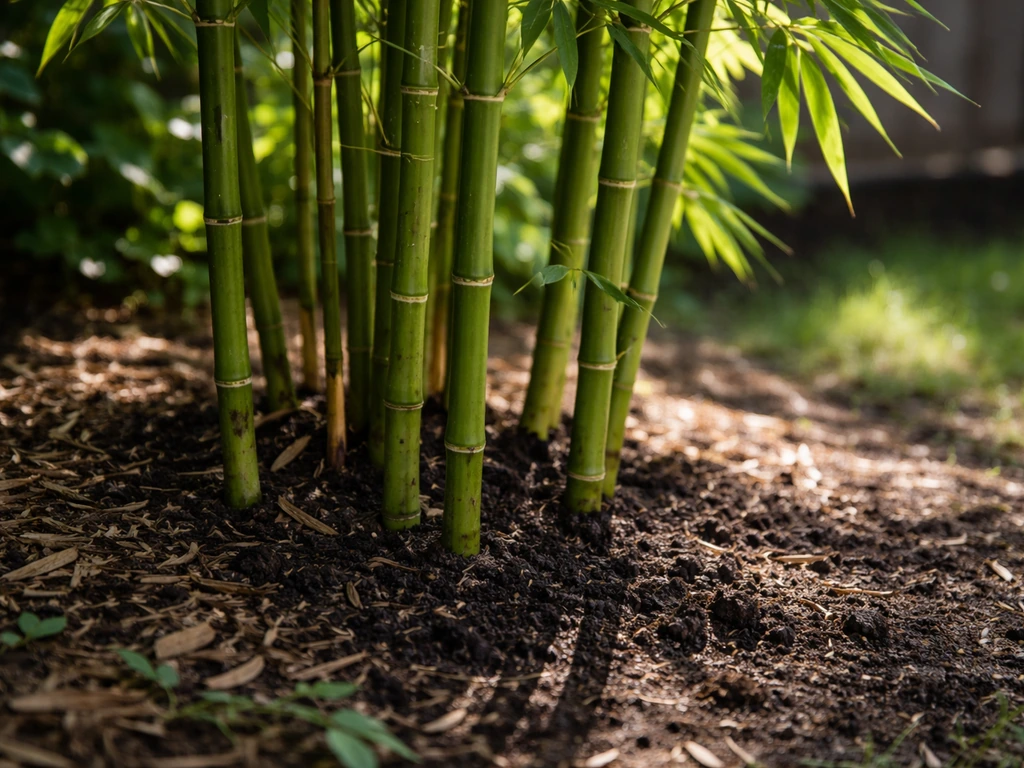
Most bamboo species prefer full sun to partial shade, ideally 4 to 6 hours of direct sunlight per day. Running types, especially the large Phyllostachys species, push harder toward full sun. Fargesia clumpers actually prefer light shade and will struggle in hot, full-sun exposures in warm climates, which is why they're often called 'shade bamboo.' Indoor bamboo needs a south- or east-facing window or supplemental grow lights to avoid becoming leggy and weak.
Soil
Bamboo isn't picky, but it performs best in a loamy, slightly acidic to neutral soil with a pH between 5.5 and 7.0. It dislikes heavy clay that holds water and equally dislikes pure sand that dries out too fast. If you have clay, amend generously with compost and coarse grit before planting. If your soil is sandy, add compost to improve moisture retention. A good handful of balanced, slow-release fertilizer worked into the planting hole gives new plants a solid nutritional start.
Water and drainage
Bamboo needs consistent moisture, especially in its first two growing seasons while the root system establishes. A newly planted bamboo in summer heat may need watering every two to three days. Once established, most species are surprisingly drought-tolerant, though they'll always grow better with regular moisture. The one thing bamboo truly can't tolerate is waterlogged soil. Standing water around the roots will cause rot and kill the plant faster than almost anything else. If your site drains slowly, either raise the planting bed by 6 to 8 inches or choose a different location.
Planting and setup steps
Starting from rhizomes vs starter plants
You can start bamboo from bare rhizomes (underground root sections dug in early spring) or from potted starter plants. Rhizomes are cheaper and sometimes the only option for rarer species, but they take an extra season to produce strong top growth. Potted starter plants, which are typically 1-gallon to 5-gallon nursery specimens, establish faster and give you a visual head start. Either way, the first-year growth will look underwhelming. That's normal. The plant is building its root system underground before it puts energy into canes.
In-ground planting steps
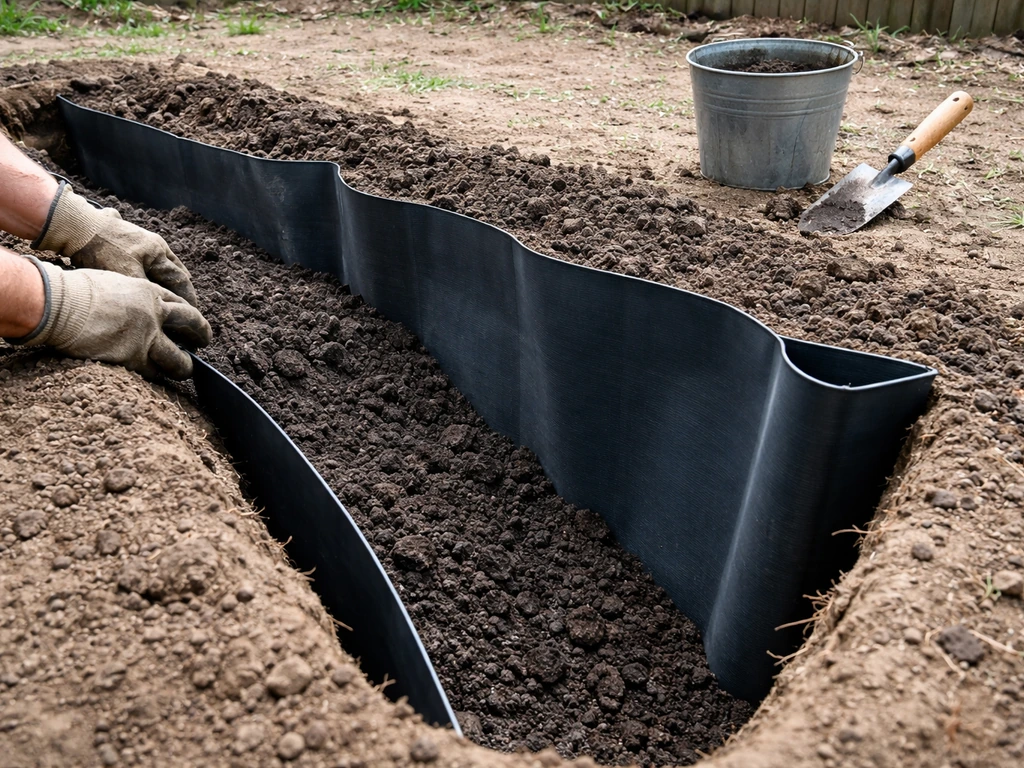
- Choose your location: full sun to partial shade, good drainage, away from structures if planting a running type.
- For running bamboo, install a high-density polyethylene (HDPE) root barrier at least 60 mil thick and 24 to 30 inches deep around the entire planting zone before you put anything in the ground.
- Dig a hole two to three times wider than the root ball and roughly the same depth.
- Amend removed soil with 30 to 40 percent compost by volume, especially in clay or sandy conditions.
- Plant so the top of the root ball sits level with or very slightly above the surrounding soil surface.
- Backfill, firm the soil gently, and water thoroughly until water drains freely from the base of the hole.
- Mulch the surface with 3 to 4 inches of wood chip or straw mulch, keeping it a few inches back from the canes to prevent rot.
- Water every 2 to 3 days for the first 4 to 6 weeks, then taper to weekly deep watering unless conditions are very hot and dry.
Container growing
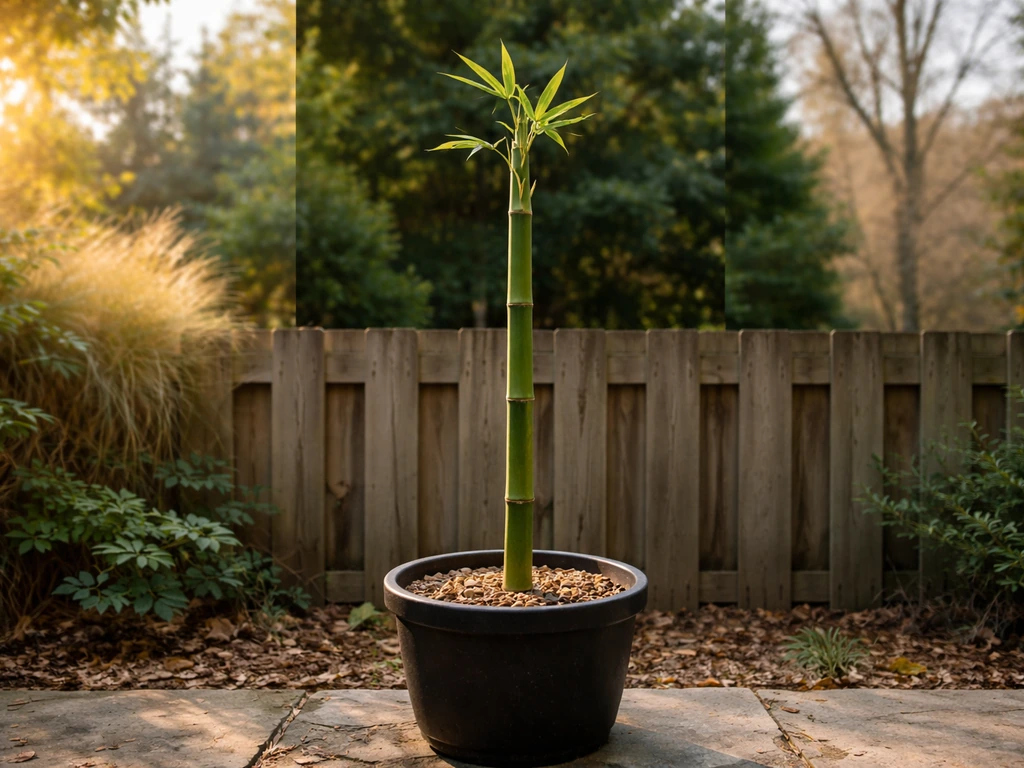
Growing bamboo in containers is a genuinely good option for small spaces, patios, balconies, or indoors, and it naturally solves the containment problem for running types. Use a container at least 20 inches in diameter and equally deep, with drainage holes. Fill with a well-draining mix of potting soil and perlite (about 70/30). Container bamboo dries out quickly, so plan to water more frequently than in-ground plants. Repot or root-prune every 2 to 3 years to prevent the plant from becoming root-bound and declining.
Realistic timelines: how fast bamboo grows and establishes
The old saying about bamboo is that it 'sleeps, creeps, then leaps,' and it's accurate. In year one, most newly planted bamboo produces few or no new canes while the rhizome system develops. In year two, you start to see new shoots emerge, typically shorter than the original canes. By year three, the plant hits its stride and begins producing canes closer to its mature height. Full establishment for a running bamboo grove typically takes 3 to 5 years from planting; a clumping Fargesia may take 5 to 7 years to reach its full spread.
In terms of raw speed once established, some Phyllostachys species produce new culms that grow several inches per day during peak shooting season in spring. Moso bamboo (Phyllostachys edulis), the giant timber species common in China and Japan, can grow 3 feet or more in a single day under ideal conditions, though typical garden specimens in temperate climates are considerably more modest.
In the UK or USDA zone 7, expect new canes to reach 10 to 20 feet on established Phyllostachys plants. If you’re wondering can you grow giant bamboo in the UK, focus on cold-hardy species and manage expectations for growth. In subtropical and tropical conditions, those same species push 40 to 60 feet. If you're growing bamboo specifically for privacy screening, plan on a 2 to 3 year wait before you have a real visual barrier.
Maintenance and containment
Pruning and thinning
Once your bamboo is established, annual maintenance is straightforward. Each spring, remove dead or thin, weak canes at ground level with loppers or a pruning saw. This lets light and air into the grove and keeps it looking tidy. You can also remove the lower side branches on mature canes to create that open, airy look you see in Japanese-style gardens. Never cut the top off a bamboo cane. Bamboo doesn't branch from a cut tip the way most shrubs do, so topping it just leaves an ugly, dead stub.
Watering schedule
Established in-ground bamboo in a temperate climate typically needs supplemental watering only during dry spells of two weeks or more. In hot climates or during summer drought, water deeply once a week rather than lightly more often. A deep, slow watering encourages roots to go deeper. Container bamboo needs more attention, usually every 2 to 4 days in warm weather depending on container size, sun exposure, and ambient temperature.
Containing running bamboo
University of Maryland Extension is clear that containing running bamboo is a long-term, ongoing commitment, not a one-time fix. If you've installed a proper HDPE root barrier, you still need to walk the barrier edge every spring and cut back any rhizomes that have escaped over the top (they often try to go over rather than through).
If you haven't installed a barrier, you'll need to trench around the planting area each spring, cutting through any escaping rhizomes with a sharp spade. Skipping a year or two can mean your bamboo has traveled 10 or 15 feet into areas you didn't intend, and removal at that point is a significant project. This isn't meant to scare you off running bamboo. It's just the real deal: it requires vigilance, not passive ownership.
- Install 60 mil HDPE root barrier 24 to 30 inches deep before planting any running species.
- Inspect the barrier edge every spring and cut back escaping rhizomes immediately.
- Mow or trench the perimeter of uncontained plantings annually in late winter before shoots emerge.
- Never plant running bamboo near foundations, drainage pipes, or fences without a barrier in place.
- Keep in mind that bamboo rhizomes stay shallow (usually less than 12 inches deep), which makes hand-trenching with a spade a realistic control method.
Can bamboo actually grow through a person?
This question comes up often, and the honest answer is: no, bamboo cannot grow through a living person in any normal, real-world scenario. There is a historical legend, sometimes associated with torture methods, that a person could be placed over a bamboo shoot and the bamboo would grow through them. Bamboo shoots do grow remarkably fast and are surprisingly strong, but a living human body is not a passive object. The premise doesn't reflect biological reality. There is no credible modern evidence of bamboo growing through any living person.
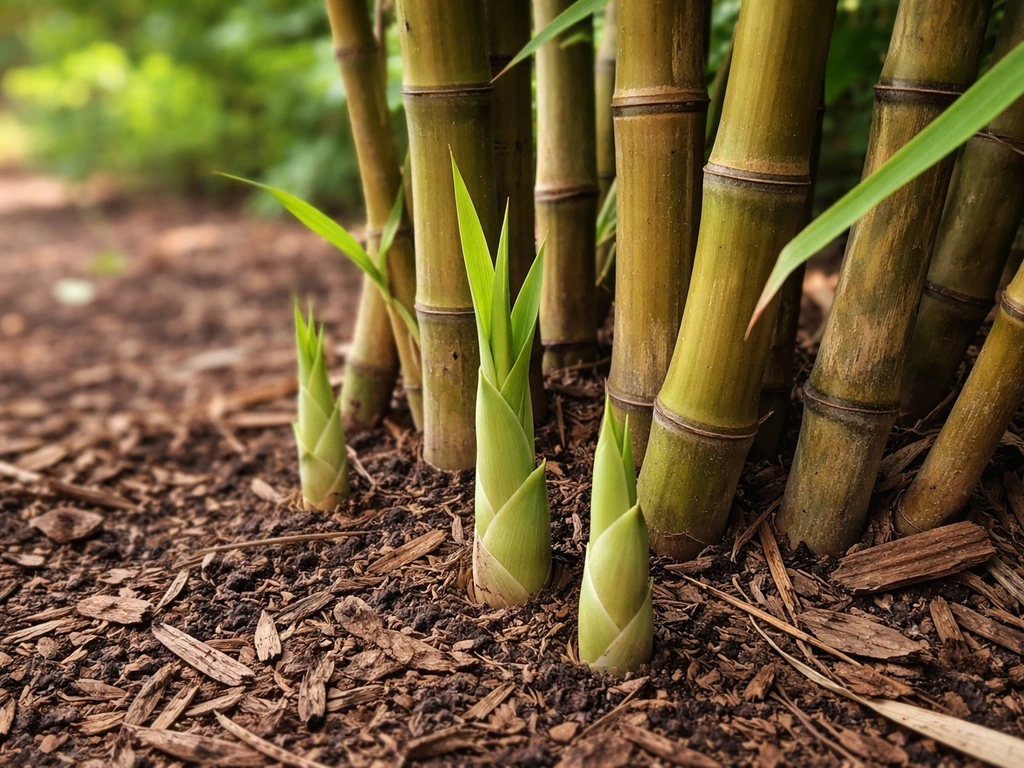
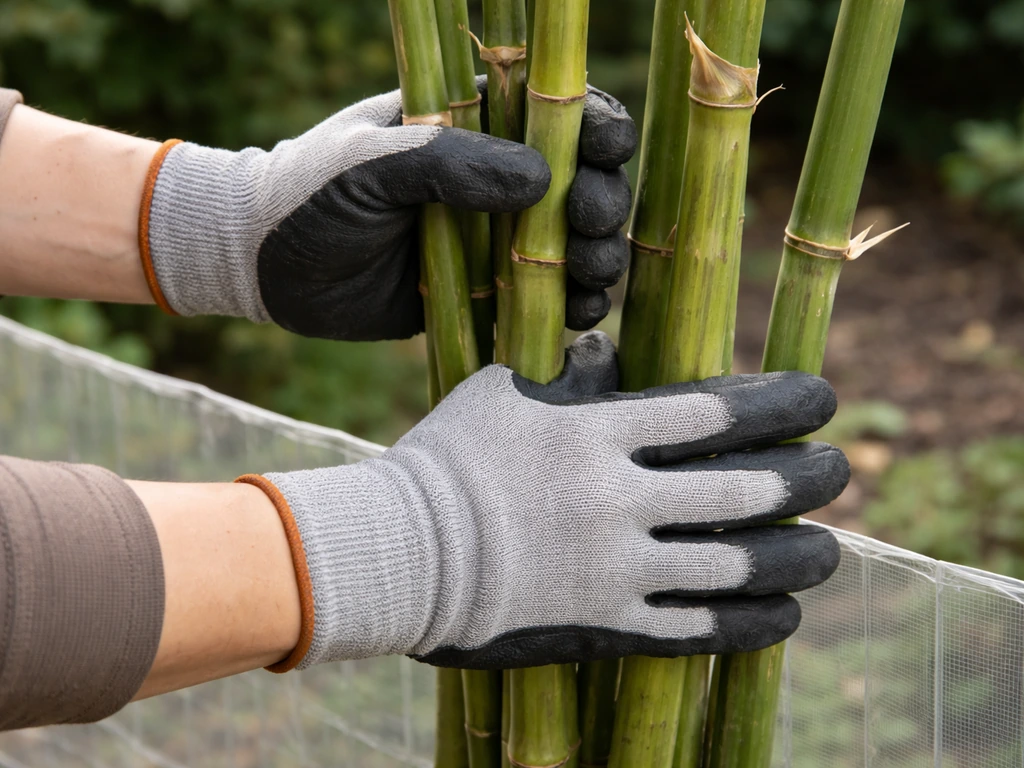
That said, bamboo does pose some real physical hazards worth knowing about. Freshly cut bamboo canes and split stems are razor-sharp, and bamboo splinters are notoriously difficult to remove and can cause infection if left in the skin. New bamboo shoots emerging from the ground in spring are pointed and hard enough to pierce soft materials, including the soles of thin shoes and occasionally garden gloves. When cutting or splitting bamboo, wear heavy gloves and eye protection, and always cut away from your body. These are sensible precautions, not reasons to fear bamboo. Millions of people work with bamboo daily around the world without serious injury. Just treat it with the same respect you'd give any sharp garden tool.
Your next steps
The path from 'thinking about bamboo' to a thriving planting is actually straightforward once you've made two key decisions: clumping or running, and container or in-ground. If you're wondering can you grow bamboo from a branch, the more reliable approach is using rhizomes or starter plants rather than trying to propagate from a cut branch. Start by identifying your USDA zone or climate equivalent and matching it to the species table above.
If you're in a smaller space or near a property line, pick a clumping Fargesia and skip the containment headache entirely. If you want scale and speed and have the space to manage it, go with a Phyllostachys species, install your root barrier first, and expect a 3-year wait before the grove really performs. Either way, prepare your soil well, water consistently through the first two summers, and don't be discouraged by slow first-year top growth.
The root system is doing exactly what it needs to do.
Once you've got the basics down, there's a lot more to explore: which companion plants can thrive under an established bamboo canopy, whether giant bamboo species are a realistic option for cooler climates like the UK, and whether propagation from branch cuttings is a practical way to expand your planting. All of those rabbit holes are worth going down after you've got your first plant in the ground.
FAQ
How do I keep bamboo from spreading if I already planted it and didn’t install a barrier?
Start planning containment immediately, don’t wait for visible roots. Each spring, trench around the clump or grove perimeter and cut any rhizomes you find with a sharp spade, repeating the sweep for at least a couple of seasons because rhizomes can sit shallow and slip under obstacles.
Do I need to use fertilizer specifically for bamboo, or is general garden fertilizer fine?
You can use balanced slow-release fertilizer at planting, but avoid heavy nitrogen boosting. Bamboo responds quickly to excess, which can create fast growth that makes containment harder, and it can also weaken new shoots during stress (heat or drought).
What should I do when bamboo turns yellow or looks weak in the first year?
First-year underwhelming growth is normal because energy goes to rhizomes, but persistent yellowing often points to waterlogged soil or poor drainage. Check for standing water after rain, and if drainage is slow, raise the planting bed or improve soil structure before adding more fertilizer.
Can I grow bamboo in extreme heat, like full sun in a hot climate?
Some species tolerate heat better, but clumping “shade bamboo” types often struggle with hot, full sun. For hot sites, choose species matched to your climate and give afternoon shade during establishment, and water deeply rather than frequent shallow watering.
How often should I water after the second growing season?
In-ground bamboo usually needs only supplemental water during dry spells lasting about two weeks or more. When you do water, do it deeply and less often, aiming for moisture down in the root zone rather than just dampening the surface.
Is bamboo safe near foundations, sidewalks, or sewer lines?
It can be risky, especially with running types, because rhizomes can exploit utility corridors and cracks. Keep running bamboo well away from hardscape and buried pipes, and use a properly installed root barrier designed to withstand rhizome pressure and edge escapes.
What container size is actually enough for bamboo so it doesn’t fail in a small pot?
A minimum of about 20 inches in diameter and depth is a safer starting point, with drainage holes. Smaller containers dry out too fast and can stress shoots and leaves, even if you water frequently.
Should I cut bamboo shoots back if growth is too aggressive or misshapen?
Avoid topping canes, it leaves dead stubs and doesn’t regenerate new branching. Instead, remove only dead, thin, or weak canes at ground level in spring, or prune selective culms for appearance while keeping living cane tips intact.
Can bamboo be grown indoors year-round?
It’s possible, but indoor conditions must provide enough light, either a strong south or east window or supplemental grow lights. Without that, bamboo becomes leggy and weak, and it often needs more frequent watering than outdoor container plants due to faster drying from indoor heat.
What’s the fastest way to expand bamboo plantings: seeds, cuttings, or rhizomes?
For most gardeners, rhizomes or potted starter plants are the reliable options. Attempts to start from branch cuttings are less predictable for bamboo, and seed-based propagation can be slow and inconsistent depending on species and flowering behavior.
How do I protect bamboo shoots from being damaged by frost?
If your winter includes hard freezes, focus on cold-hardy species for your zone. For marginal sites, protect new shoots during early spring cold snaps with light row cover, and avoid fertilizing right before a cold event because fresh growth is more vulnerable.
Next Article
Where Can You Grow Bamboo Best: Home, Outdoors, Setup Guide
See where to grow bamboo outdoors or at home, plus container vs in-ground setup and best groundcovers and companion plan