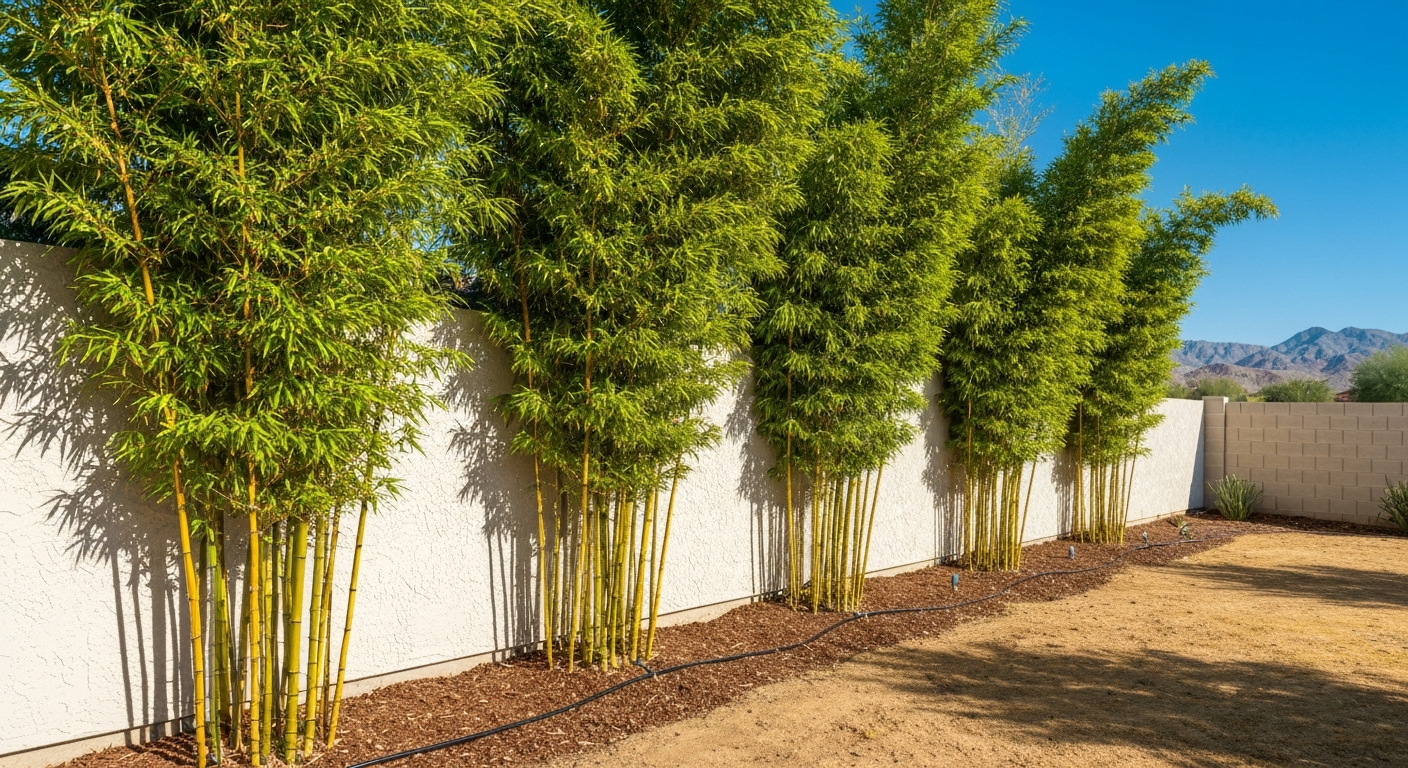
Yes, lucky bamboo regrows reliably after pruning, and it can survive outdoors in a garden if you live in USDA Zones 9 to 12 (with Zone 10 to 11 being the sweet spot). Cut stems sprout new shoots from their nodes, and those cuttings can be rooted in either water or soil to create entirely new plants. The catch is that lucky bamboo is not cold-hardy, hates waterlogged soil, and will not survive a frost, so outdoor planting has real geographic limits that you need to respect before putting it in the ground.
Does Lucky Bamboo Regrow in a Garden? Regrowth, Planting & Care
Marcus Hartwell
13 Jul 2026
Lucky bamboo is not actually bamboo
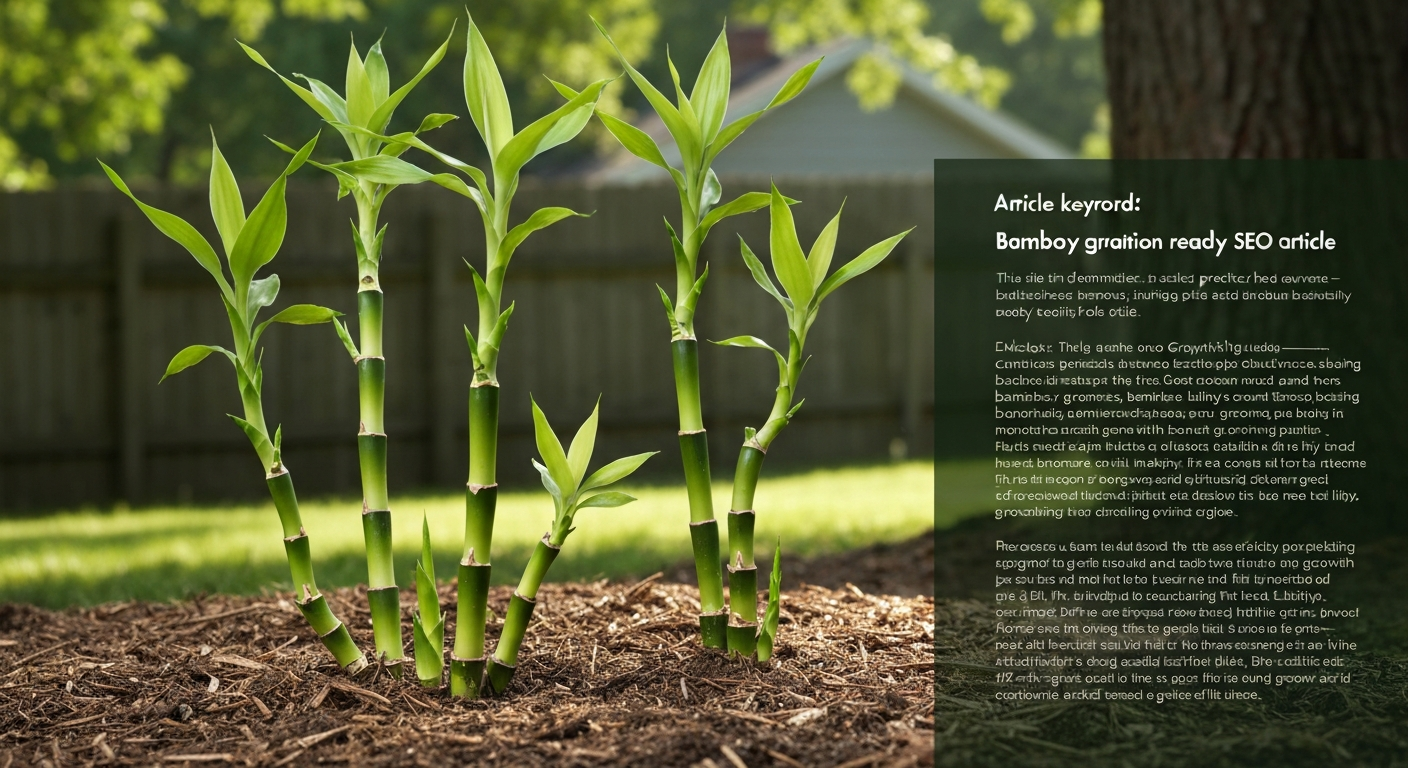
This is probably the most important thing to get straight before anything else. Lucky bamboo is Dracaena sanderiana, a tropical perennial native to West Africa. It belongs to the family Asparagaceae, the same broad family as asparagus and agave, and it is nowhere near the grass family (Poaceae) that true bamboos belong to. The name 'lucky bamboo' is purely a marketing label that stuck because the stems have a segmented, bamboo-like look when the leaves are stripped. Kew's Plants of the World Online and the International Plant Names Index both record the accepted name as Dracaena sanderiana Mast., and Missouri Botanical Garden's Plant Finder describes it plainly as a non-bamboo dracaena. I mention this because if you search for 'bamboo' care advice and apply it to this plant, you will end up with very different results than you expect. True bamboos are grasses that spread aggressively via rhizomes. Dracaena sanderiana spreads only by propagation, grows 3 to 5 feet tall at maturity outdoors, and presents zero invasive risk in a garden setting.
How lucky bamboo responds when you cut it
When you cut a lucky bamboo stem, two things happen. First, the cut top portion, if it has at least one node, can be rooted and grown into a new plant. Second, the lower portion of the original stem does not die. The nodes along the remaining stalk contain axillary buds, and those buds push out new side shoots, usually within a few weeks of the cut. This is exactly the same mechanism that makes cane-type Dracaenas so popular for propagation in commercial greenhouses. Penn State Extension lists tip/stem cuttings, stem‑section (cane) cuttings, and air‑layering for propagating dracaenas, recommending air‑layering for larger or woody canes because it roots the stem while still attached to the parent plant Penn State Extension lists tip/stem cuttings, stem‑section (cane) cuttings, and air‑layering for propagating dracaenas, recommending air‑layering for larger or woody canes because it roots the stem while still attached to the parent plant.. Missouri Botanical Garden's cultural notes explicitly mention cutting back lanky stems to encourage fresh growth, and Iowa State University Extension confirms that nodes on cut cane sections reliably produce both new roots and new shoots.
The practical upshot is that pruning does not harm the plant in any permanent way, provided you use a clean, sharp blade, cut between nodes rather than through one, and do not remove more than about one-third of the plant at a time. If you have been keeping a water-grown lucky bamboo and it is getting leggy or flopping over (a common issue once stems exceed about 2 to 3 feet, as UF/IFAS notes), cutting it back is actually one of the best things you can do for the plant.
Rooting cuttings in water: step-by-step
Water propagation is the method most people start with, partly because it is how most lucky bamboo is sold in the first place. It works well for tip cuttings and short stem sections, and you can watch the roots develop without digging anything up.
- Gather your materials: a clean glass or vase, pebbles or small stones for stability, a sharp clean knife or pruning shears, and chlorine-free water (filtered water or tap water left out overnight both work).
- Take your cutting. A tip cutting should be 4 to 6 inches long with at least two nodes and a few leaves at the top. A stem-section cutting should be 2 to 3 inches long with at least one visible node.
- Remove any leaves from the bottom half of the cutting so they won't sit in the water and rot.
- Place the cutting in the vase so that the bottom node is submerged in about 1 to 2 inches of water. Use pebbles around the base to hold it upright. Do not submerge the whole cutting.
- Set the vase in a bright spot with indirect light. A north- or east-facing window is ideal. Keep the cutting away from heating vents, air conditioning, and direct sun.
- Change the water every 7 days. NC State Extension specifically recommends weekly water changes to prevent bacterial buildup and rot. Use weak liquid fertilizer once a month at about one-quarter the label strength.
- Expect roots to appear in 3 to 5 weeks for tip cuttings. Full stem sections may take slightly longer. Once roots are 1 to 2 inches long, the cutting is established and can either stay in water long-term or be potted into soil.
One thing I have found from experience: water-grown plants tend to stay healthy for months to about a year before the roots become overcrowded or the stems start to yellow. If you are planning to eventually move a cutting outdoors, it is better to transition it to soil sooner rather than later, while the root system is still young and adaptable.
Rooting cuttings in soil: step-by-step
Soil propagation produces a stronger, more resilient root system and is the better method if you plan to grow the plant outdoors long-term. Iowa State University Extension's protocol for cane cuttings is a reliable template here.
- Prepare your potting mix: use a well-draining houseplant or tropical potting mix blended with about 20 to 30 percent perlite or coarse sand. Avoid heavy garden soil, which compacts and holds too much moisture around new roots.
- Take a stem cutting 3 to 5 inches long with at least one or two nodes. If you are working with a thicker cane section, a 2 to 3 inch horizontal segment works well when laid on its side rather than inserted upright.
- Optional but helpful: dip the cut end in a rooting hormone powder or gel (IBA or NAA formulations are standard). Iowa State Extension notes that Dracaena cane sections root without hormone but that hormone treatment can speed up the process. Follow the product label.
- For upright cuttings, insert the base 1 to 1.5 inches deep into the moistened mix, node side down. For horizontal cane sections, press the segment about halfway into the mix so the node makes good contact with the medium.
- Water lightly and cover the pot with a clear plastic bag or dome to maintain humidity around 70 to 80 percent while roots form. Avoid letting the cover touch the leaves.
- Place in bright indirect light at a temperature of 65 to 80°F. Iowa State recommends an air temperature of 65 to 75°F and notes that a seedling heat mat keeping the rooting medium around 75 to 80°F significantly improves results.
- Check moisture every few days. The mix should feel like a wrung-out sponge: damp but not soggy. Never let it dry out completely, but also never leave it sitting in standing water.
- Expect roots and new shoots to emerge in approximately 8 to 10 weeks. Gently tug the cutting to test resistance before considering it rooted. Once established, remove the humidity cover gradually over 5 to 7 days to acclimate the plant to normal air.
When and how to plant lucky bamboo outdoors
Timing your outdoor planting correctly makes a big difference. Lucky bamboo hates cold, and even a brief exposure to temperatures below 37°F can cause physiological damage, as UF/IFAS documents in their commercial production guidelines. Chilling injury at 32 to 37°F is a real risk, and the plant should be kept above 60°F during any transport or transition.
Best season to plant
Plant outdoors only after all frost risk has passed and nighttime temperatures are reliably above 60°F. In Zones 10 to 12, that usually means spring planting from March through May. In Zone 9, wait until late April at the earliest and be prepared to protect the plant or bring it indoors if an unexpected cold snap arrives in the first season.
Hardening off: the step most people skip
If your lucky bamboo has been living indoors in water or a pot, you need to harden it off before putting it directly in the garden. Start by setting the plant outside in a shaded, sheltered spot for 2 to 3 hours per day, then increase outdoor time by about 1 hour each day over 10 to 14 days. This gradually acclimates the plant to outdoor humidity, temperature fluctuation, and wind without shocking it.
Pre-planting checklist
- Nighttime temps are consistently above 60°F
- No frost expected for at least 8 weeks
- Plant has been hardened off for at least 10 days
- If transitioning from water culture, roots have been gradually introduced to moist potting mix first (3 to 4 weeks in a pot before going in-ground)
- Garden bed soil has been tested and amended if needed (see site selection below)
- Planting location provides bright indirect light or partial shade, not full direct sun
Climate limits and USDA zone guidance
Lucky bamboo is a tropical plant from West Africa, so cold is its primary enemy in an outdoor garden. Different sources place the hardiness zone range slightly differently: Missouri Botanical Garden lists Zone 9 to 12 overall but notes Zone 10 to 12 in culture text, NC State Extension gives Zones 10a to 10b, and Gardeners' Path cites Zones 10 to 11 as the outdoor comfort zone. The honest takeaway is that Zone 10 to 11 is where you can grow it outdoors with minimal intervention. Zone 9 is marginal and requires protection in winter. Zone 8 and below, it simply will not survive winters outdoors. For broader guidance on growing bamboo outdoors in different climates, see can bamboo grow outside.
| USDA Zone | Avg. Winter Low | Outdoor Suitability | What to Expect |
|---|---|---|---|
| Zone 8 and below | Below 10°F to 20°F | Not suitable | Will not survive winter outdoors; keep as an indoor plant only |
| Zone 9 | 20°F to 30°F | Marginal | Possible with heavy winter mulch or container growing; bring indoors if frost threatens |
| Zone 10 to 11 | 30°F to 50°F | Best outdoors | Thrives year-round outdoors with proper siting; minimal cold protection needed |
| Zone 12 | Above 50°F | Excellent | Year-round outdoor growth with no cold concerns; watch for heat stress in full sun |
Quick zone and climate checklist
- You are in USDA Zone 10 or warmer: plant outdoors with confidence
- You are in Zone 9: grow in a container you can move, or be ready to mulch and cover in winter
- Your winters regularly drop below 35°F: plan to treat lucky bamboo as a seasonal outdoor plant or permanent indoor plant
- You live in a humid subtropical or tropical climate: excellent conditions; just manage drainage
- You live in an arid Zone 9 to 10 (desert Southwest): possible, but you will need to provide consistent moisture and afternoon shade
Picking the right garden spot: soil, drainage, pH, and light
Even in the right climate zone, lucky bamboo can struggle if the site is wrong. Here is what the plant actually needs, and what you can do if your garden falls short.
Soil type and drainage
Lucky bamboo prefers loamy or sandy loam soil that drains freely but retains some moisture. NC State Extension lists loam and silt as preferred soil textures, with occasional wet tolerance noted, but Missouri Botanical Garden and Gardeners' Path both warn against waterlogged conditions that lead to root rot. See Lucky Bamboo - Dracaena sanderiana | North Carolina Extension Gardener Plant Toolbox (see 'Cultural Conditions' for soil texture/drainage) for NC State's guideline noting loam and silt textures and drainage preferences. If your garden has heavy clay soil, amend the planting bed with perlite, coarse sand, or aged compost before planting, and consider raising the bed by 4 to 6 inches to improve drainage. If you have very sandy soil that dries out quickly, work in compost to improve moisture retention.
Soil pH
Lucky bamboo prefers a slightly acidic to neutral soil pH of about 6.0 to 7.0. If your soil test comes back above 7.5, work in sulfur or acidifying fertilizer to bring it down. If it is below 5.5, add garden lime at the rate recommended on the product label based on your soil test results.
Sun versus shade
This is an area where I have seen a lot of gardeners get it wrong, especially people transplanting a houseplant outdoors for the first time. Lucky bamboo needs bright indirect light or partial shade, not full sun. Missouri Botanical Garden is direct about it: too much direct sun will scorch the foliage. NC State recommends partial or deep shade. Outdoors, the ideal position is somewhere that gets morning light and afternoon shade, such as the east side of a building, under a high tree canopy, or behind a taller plant that filters the afternoon sun. Avoid south- and west-facing positions with unobstructed afternoon exposure.
Actionable soil and site fixes
| Problem | Symptom | Fix |
|---|---|---|
| Heavy clay soil | Water pools around plant base; roots sit wet | Amend with perlite or coarse sand; raise bed 4 to 6 inches |
| Very sandy soil | Soil dries out within 1 to 2 days of watering | Work in 2 to 3 inches of compost to improve water retention |
| Soil pH above 7.5 | Yellowing leaves despite good care | Apply sulfur at soil-test recommended rate; retest after 6 weeks |
| Full afternoon sun exposure | Scorched, bleached, or brown leaf tips | Relocate or add shade cloth at 30 to 50 percent density |
| Poor drainage in the planting hole | Standing water after rain | Dig the hole 2x wider, add gravel drainage layer, backfill with amended mix |
Troubleshooting: rot, pests, and winter protection
Root and stem rot is the most common problem, usually caused by overwatering or poor drainage. If you see yellowing stems at the base or a mushy, foul-smelling root system, remove the affected portions with a clean blade, let cut surfaces dry for a day, and either repot in fresh well-draining mix or start over from a healthy cutting. Brown leaf tips, on the other hand, are usually a moisture issue in water culture (fluoride or high soluble salts), low humidity outdoors, or sun scorch. MBG recommends filtered or rainwater to reduce leaf-tip browning in water-grown plants, and UF/IFAS specifically flags fluoride sensitivity and high soluble salts as common causes of tip damage.
Pests are less of a concern for lucky bamboo than for many houseplants, but spider mites and mealybugs do show up, especially on indoor or greenhouse-grown plants moved outdoors. Spider mites thrive in hot, dry conditions, so keeping the plant well-watered and sited in shade reduces the risk significantly. If you spot mites or mealybugs, treat with insecticidal soap or neem oil, applying in the early morning or evening to avoid leaf burn.
For gardeners in Zone 9 pushing the cold limits, winter protection is not optional. Before temperatures drop below 45°F, apply a 3 to 4 inch layer of mulch around the base, cut back any damaged foliage, and consider wrapping the plant loosely with frost cloth on nights when temps are forecast below 35°F. Container-grown plants in Zone 9 should simply be moved indoors before the first cold snap of the season.
Water culture vs. soil: which one is actually better long-term?
This is a question I get asked a lot, and the honest answer depends on your goal. Gardeners' Path notes that water-grown lucky bamboo typically survives for months up to about a year before declining, while soil-grown plants persist for multiple years outdoors or in containers under the right conditions. If you want a low-maintenance decorative piece on a desk, water culture is fine. If you want a plant that actually thrives, grows to its full 3 to 5 foot potential, and becomes a lasting part of your garden or container collection, soil is the better medium.
The transition from water to soil is manageable but requires patience. UF/IFAS advises holding off on fertilizing or repotting for about 4 weeks after transplanting, giving the roots time to adjust to the new medium. Keep the plant in bright indirect light, maintain consistent moisture without waterlogging, and expect some temporary leaf yellowing as the plant adapts. It is not a sign the plant is dying; it is a normal stress response that usually resolves within 3 to 6 weeks.
Will it keep growing taller and is it a one-time harvest?
Lucky bamboo is not a one-time harvest plant in any meaningful sense. If you searched whether "is lucky bamboo one time harvest", the short answer is no, lucky bamboo is perennial and will regrow after pruning, not a single-harvest crop. Unlike annual crops, it is a perennial that continues to grow and produce new stems season after season, as long as it stays alive. You can prune it, propagate from it, and it will keep regenerating. UF/IFAS notes that stems tend to become difficult to manage once they exceed about 2 to 3 feet in an interiorscape setting, but outdoors in the ground in a warm climate, Missouri Botanical Garden records mature heights of 3 to 5 feet. Whether it keeps growing taller depends heavily on light, soil, and whether it is rootbound in a container. A well-sited, in-ground plant in Zone 10 to 11 will steadily grow to its full height over several seasons. For more detail on whether lucky bamboo will grow taller, see Will lucky bamboo grow taller.
Lucky bamboo vs. true bamboo and bamboo palm: a quick comparison
It is worth briefly separating these three plants because gardeners sometimes compare them when deciding what to grow outdoors. True bamboo (various genera in Poaceae) grows far faster, spreads aggressively via rhizomes in running species, can reach 20 to 100 feet depending on variety, and is genuinely cold-hardy in many species down to Zone 5 or 6. Lucky bamboo reaches 3 to 5 feet, does not spread, and is frost-tender. Bamboo palm (Chamaedorea seifrizii) is a different plant again, a palm native to Mexico and Central America that shares some of the same indoor/outdoor growing questions but has its own distinct hardiness and care profile. If invasive spread is a concern in your garden, lucky bamboo presents essentially zero risk compared to running bamboo species. For guidance on whether bamboo palm can grow outdoors, see can bamboo palm grow outside.
Can lucky bamboo grow in rocks or hydroponically?
Yes, and this is actually how it is most commonly sold commercially. Dracaena sanderiana grows readily in a pebble-and-water setup, where the rocks provide stability and the roots draw water and diluted nutrients from below. NC State Extension confirms this method works well provided you use chlorine-free water, change it weekly, and add a weak liquid fertilizer occasionally. The limitation, as discussed above, is that purely hydroponic or pebble-grown plants tend to have a shorter productive lifespan than soil-grown ones. For a long-term garden plant, think of the pebble/water method as a starting point or a decorative short-term display rather than a permanent growing system. For more on growing lucky bamboo in rocks or pebble-and-water setups, see information on growing lucky bamboo in rocks.
FAQ
Quick answer: does lucky bamboo (Dracaena sanderiana) regrow in a garden setting and after pruning?
Short answer: Yes — under the right conditions. Dracaena sanderiana is not a true bamboo but a tropical dracaena that will regrow after pruning (via basal back‑budding or rooting cuttings) and can survive outdoors in warm, frost‑free climates (generally USDA Zones ~9/10–12). Success outdoors depends on climate (temperature/humidity), light (bright shade/part shade), well‑draining but evenly moist soil, and protection from cold and direct hot sun.
Is ‘lucky bamboo’ a true bamboo?
No. Lucky bamboo is Dracaena sanderiana (a dracaena), not in the grass/bamboo family (Poaceae). It has bamboo‑like canes but different botanical traits, growth habit, and cultural needs — more like other houseplant dracaenas.
Will a stem regrow after cutting? How does regrowth happen?
Yes. Dracaena stems root readily from nodes and axillary buds. After you cut a stem, the top can be rooted as a cutting and the remaining cane will often produce new shoots from dormant buds lower down. Regrowth is reliable if nodes remain intact, humidity and warmth are provided, and the plant isn’t weakened by disease or extreme stress.
What are the reliable propagation methods (water and soil) and step‑by‑step rooting instructions?
Two common methods: 1) Tip or cane cuttings in water: Cut 3–6 inch segments including a node; place in chlorine‑free water with nodes submerged; keep in bright, indirect light; change water weekly; roots form in weeks to a few months. 2) Stem/cane cuttings in potting mix: Take 2–4 inch segments with a node or longer tip cuttings; optionally dip cut end in rooting hormone (IBA/NAA); insert horizontally or vertically in a moist, well‑draining medium (perlite/peat/sand or potting mix with perlite); keep at 65–80°F and high humidity (use a clear bag or dome); expect roots/shoots in 6–10+ weeks. Air‑layering is recommended for large canes you want to root while still attached (wound stem, pack with moist sphagnum, wrap; roots form in weeks then sever and pot).
How do I move a water‑grown lucky bamboo into soil (transplant steps and timing)?
Steps: 1) Wait until roots are several inches long and healthy. 2) Choose a well‑draining potting mix (houseplant mix amended with perlite or coarse sand). 3) Pot into a container slightly larger than the rootball, keep soil lightly moist (not waterlogged). 4) Place in bright, indirect light and maintain 60–80°F and high humidity for 2–4 weeks while roots adjust. 5) Avoid heavy fertilization or repotting for ~3–4 weeks after transplant. If moving outdoors, harden off over 1–2 weeks in filtered light before planting.
Can lucky bamboo grow outdoors in a garden? What climates/zones are suitable?
Yes in warm, frost‑free climates. USDA hardiness is commonly given as roughly Zones 9–12 (many sources list Zones 10–12 as safest). It tolerates high humidity and warm temperatures; frost or prolonged temperatures below ~50–55°F will cause damage. Use the checklist below to decide if your site is suitable.
Next Article
Can Bamboo Grow in Las Vegas? Guide to Success in Desert
Yes, bamboo can grow in Las Vegas with the right species, irrigation, shade, and containment; step-by-step planting and保护