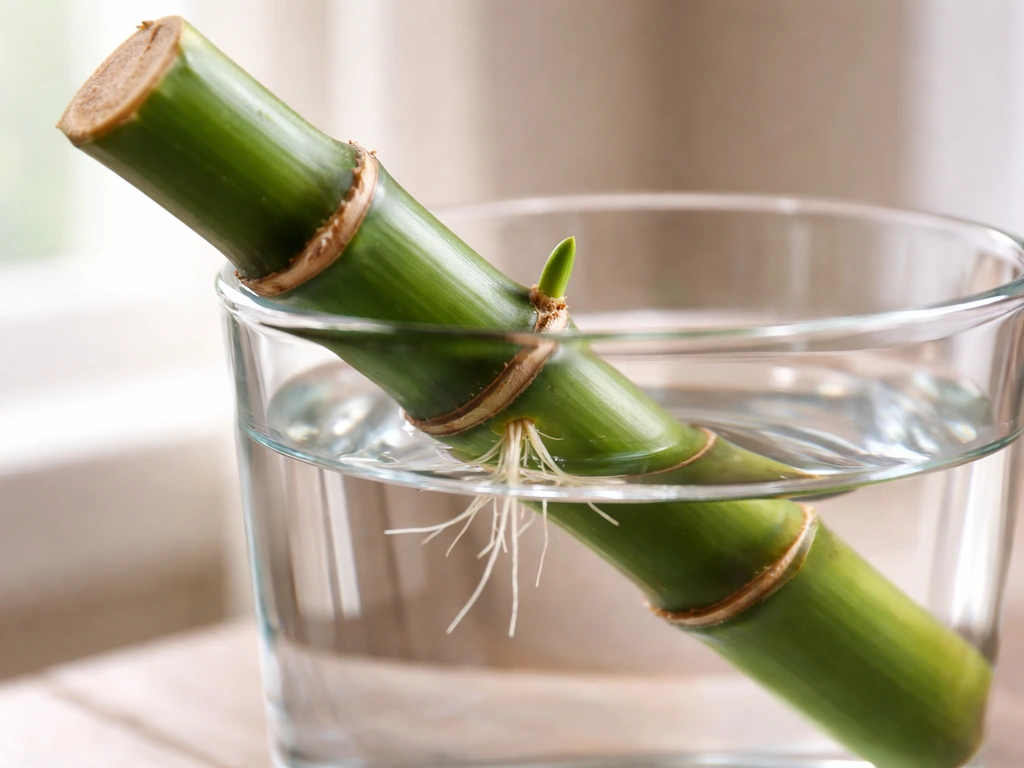
Yes, bamboo almost always grows back after cutting. Cut the stems (culms) above ground and the underground rhizome system will push out new shoots, often with more vigor than before. The only real variable is how much of the root zone you've disturbed. Leave the rhizomes intact and you're basically just pruning. Remove or exhaust the rhizomes and you can eventually stop regrowth, but that takes a lot more than a single cutting session.
If You Cut Bamboo, Will It Grow Back? Regrowth Guide

Marcus Hartwell
22 May 2026
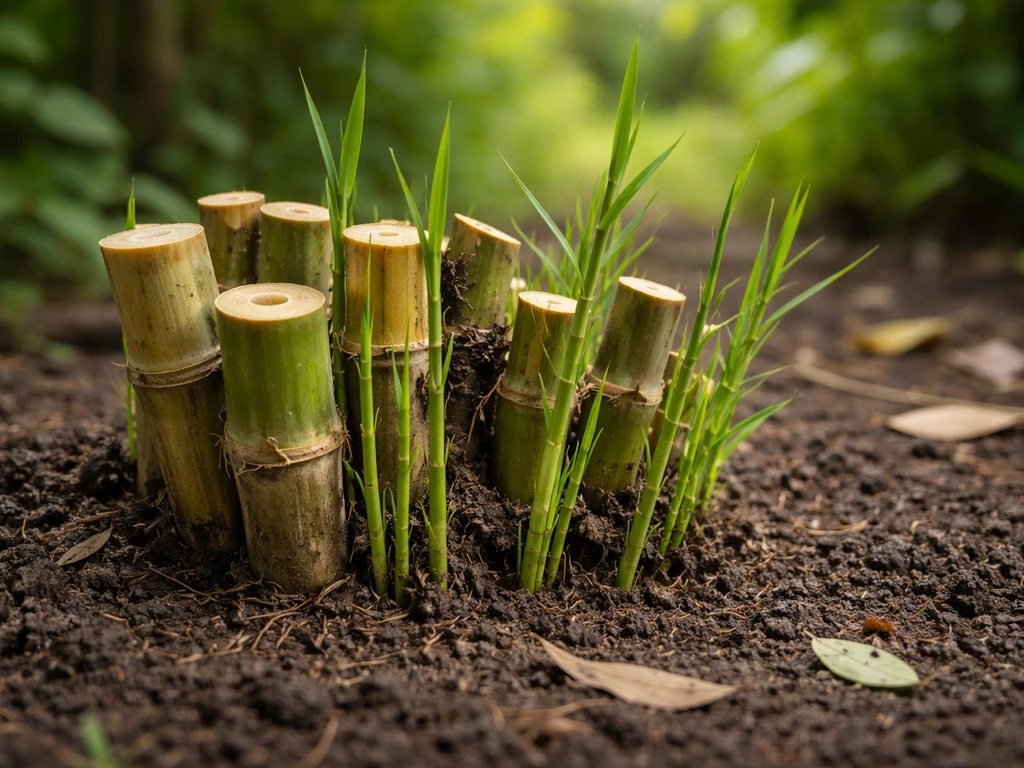
It all comes down to what you actually cut
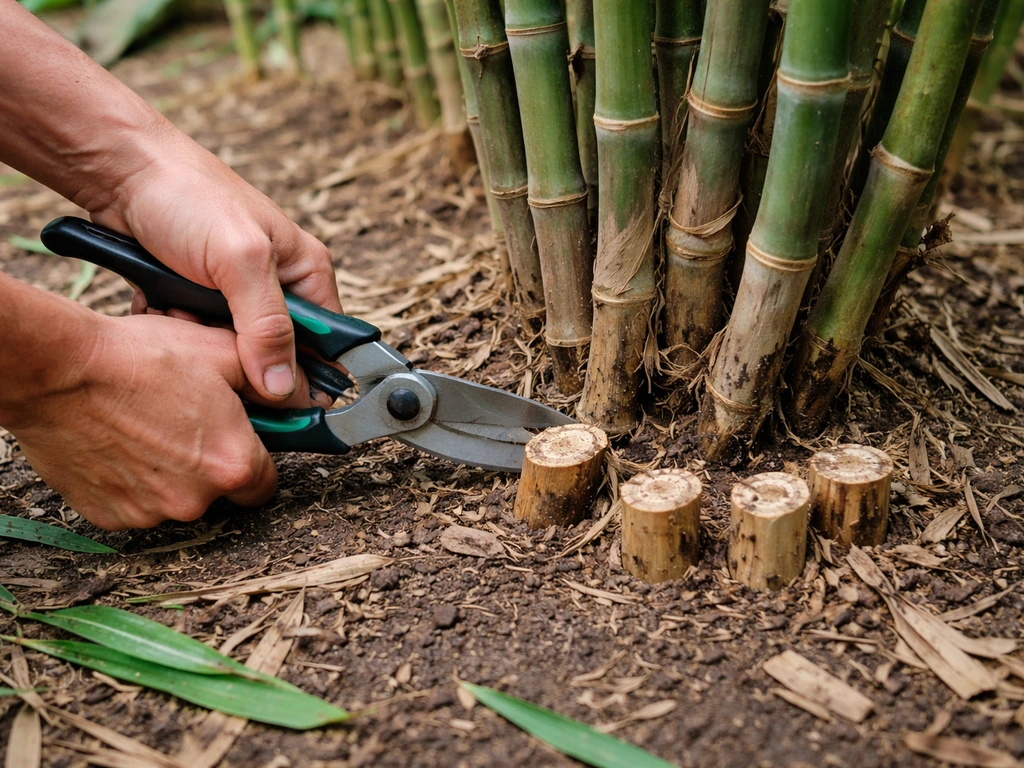
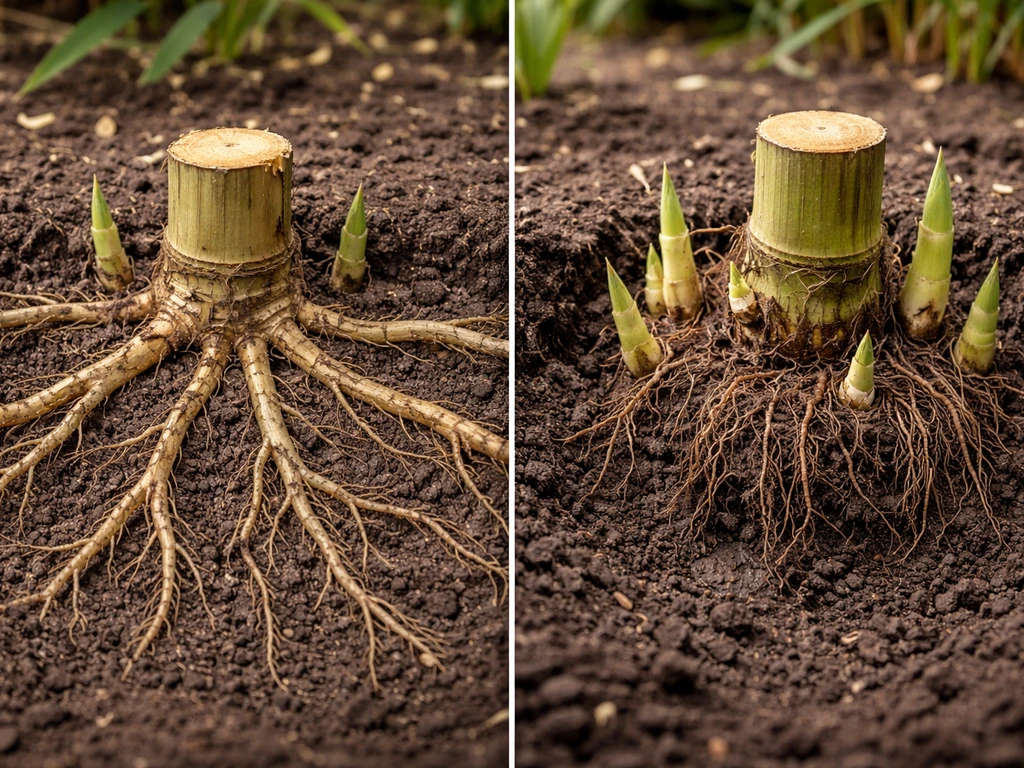
Most people who cut bamboo are cutting the culms, which are the woody stems you see above ground. That matters for height and aesthetics, but it does almost nothing to stop the plant. The real engine behind bamboo is the rhizome network underground. Rhizomes are horizontal root-like structures that store energy and send up new shoots. When you remove the culms, those rhizomes are still fully loaded and ready to push out replacements.
This is why coppicing, which means cutting every single culm down to the ground, typically triggers vigorous regrowth rather than killing the plant. You're not starving the rhizomes; if anything, you're removing the part of the plant that was drawing on rhizome reserves, so those reserves stay available for new shoots. The distinction between culm-cutting and rhizome removal is the most important concept in this whole topic.
There's also a difference between running bamboo and clumping bamboo. Running bamboo (most Phyllostachys species common in North America) has aggressive rhizomes that spread horizontally, sometimes 10–15 feet per year, and the fragments left behind after cutting can resprout from almost anywhere in the colony. In general, the more aggressive the bamboo's rhizomes are, the less likely you are to succeed in stopping it from growing back without roots running bamboo. Clumping bamboo (like Fargesia) keeps its rhizomes tight near the mother plant, so while it still regrows after cutting, the regrowth is more predictable and contained.
What actually happens after you cut, and when
If you cut bamboo culms during the growing season (spring through early summer in most temperate regions), you can expect new shoots to emerge within weeks from remaining rhizome nodes. Does cutting bamboo make it grow faster? Usually it triggers new shoots fairly quickly, because the rhizomes stay ready to send up growth. Those shoots develop fast, reaching their full culm height within a single growing season, typically 3–4 months during the rainy or warm season. The shoots themselves emerge quickly, but branch and leaf development continues for months after that. Research tracking Bambusa oldhamii found branches emerging about 10 weeks after initial culm growth, then taking another 20 or so weeks to fully develop.
If you're cutting a young planting that was established from rhizomes or division rather than a mature colony, the timeline looks different. It can take 4–7 years for a newly started bamboo plant to build up to a full stand producing normal annual shoot output. So if you cut young bamboo that's only a year or two old, regrowth will happen but it'll be slower and lower-density than what you'd see from a mature, well-established colony.
A note for anyone growing bamboo indoors: if what you have is labeled 'lucky bamboo,' it's not actually bamboo at all. It's Dracaena sanderiana, a cane plant with completely different regrowth behavior. Cutting it doesn't trigger rhizome-driven shoot emergence the way true bamboo does. Keep that in mind if your setup is container-based or water-grown.
What controls how well (or fast) bamboo regrows
Several factors determine how quickly and vigorously bamboo comes back after cutting. Some you control, some you don't.
- Bamboo type: Running bamboo regrows faster and more aggressively than clumping bamboo because of its expansive rhizome network.
- Season: Spring cuts, when the plant is heading into its active growth window, result in faster and denser regrowth. Late fall or winter cuts slow the initial comeback but don't prevent it.
- Cut height: Cutting culms close to the ground (1 foot or less) is standard practice, but how high you cut doesn't meaningfully change whether rhizomes send up new shoots.
- Plant health and age: A mature, established colony with deep, extensive rhizomes will bounce back faster than a young plant still building its root system.
- Light and moisture: Bamboo in a warm, humid climate (think the Southeast U.S., Pacific Northwest, or Southeast Asia) regrows much faster than bamboo in a drier or cooler region. Full sun and consistent moisture accelerate new shoot production.
- How many culms you cut: Removing a few culms for thinning has minimal effect on the colony. Cutting everything to the ground stresses the plant but still triggers regrowth from rhizomes.
How to cut if you want healthy regrowth
If your goal is to maintain a healthy stand, encourage fresh growth, or manage height and density, here's the approach that works. Cut culms at a node (the solid ring along the stem) rather than mid-internode. Culms don't get taller after you cut them, so whatever height you cut to is the permanent height for that culm. The plant compensates by sending up new full-height culms in the next shooting season, so you're shaping the stand's future composition, not just trimming existing stems.
For thinning, remove older culms (typically 3–5 years old, which start to look dull and develop surface cracks) at or near the ground. This opens the canopy, encourages the rhizomes to invest in younger, stronger culms, and keeps the stand looking clean. Timing matters: late winter to early spring, just before shooting season, is ideal so the plant can direct energy toward the new shoots you want.
FAO harvest guidelines from managed bamboo plantations reinforce this: avoid cutting culms more than about 30 cm (roughly 1 foot) from the ground, don't remove the roots, and don't cut the youngest emerging shoots. Following those three rules preserves the rhizome system and keeps the stand productive year after year.
If you're trying to stop bamboo from coming back
This is where a lot of people run into frustration. Cutting bamboo alone will not eradicate it. The rhizomes survive, and they will keep sending up new shoots. Cutting the culms actually reduces the plant's ability to photosynthesize and build energy reserves, so repeated cutting does weaken the colony over time, but it's a slow process that takes multiple growing seasons of consistent effort.
The most effective non-chemical approach combines rhizome excavation with repeated cutting of any regrowth. Use an ax or mattock to physically cut through and remove rhizomes where possible. Then mow or cut any new shoots that emerge at ground level throughout the growing season. Repeat this across several seasons. The goal is to exhaust the energy stored in remaining rhizome fragments until they can no longer send up viable shoots.
Running bamboo is genuinely difficult to eradicate this way, especially in warm climates where the growing season is long and rhizomes are extensive. In those cases, some extension services recommend combining physical removal with a systemic herbicide application (timing varies by region but mid-fall is often cited for temperate zones), applied after cutting the culms so the herbicide can reach the rhizomes. Barriers alone don't stop regrowth and aren't a substitute for active removal.
Figure out your situation and take the right next step
Before doing anything else, identify what you actually have and what you actually want. The right action depends completely on your goal.
| Your situation | What's likely happening | Best next step |
|---|---|---|
| You cut culms and want the plant to fill back in | Rhizomes are intact, regrowth will happen naturally | Leave rhizomes alone, water during dry spells, let shooting season do the work |
| You cut and the plant looks slow to recover | Young plant, off-season cutting, or poor growing conditions | Check moisture and sun exposure; if it's spring and no shoots after 6–8 weeks, dig to check rhizome health |
| You cut running bamboo and want to stop spread | Rhizomes are still active well beyond the cut stems | Begin rhizome excavation at the perimeter, mow any new shoots weekly through the growing season |
| You want to thin the stand without killing it | Normal maintenance situation | Remove old culms at ground level in late winter, leave young culms and any current-year shoots |
| You have 'lucky bamboo' indoors | Not true bamboo, different regrowth rules apply | Treat as a Dracaena; cuttings can root in water but rhizome-style regrowth doesn't apply |
| You're in a dry or cold climate and regrowth is sparse | Slower rhizome activity due to climate | Confirm your bamboo species is cold/drought-tolerant for your zone; provide consistent moisture during growing season |
The bottom line: cutting bamboo almost always means it comes back, and usually stronger. If you're maintaining a planting, that's a feature. If you're trying to remove it, cutting is just the first step in what will be a multi-season process. Know which camp you're in, and you'll save yourself a lot of second-guessing about whether something went wrong.
FAQ
If you cut bamboo in winter, will it still grow back?
Usually yes, but the outcome depends on the temperature window. If you cut during a dormant period (late fall to winter in most temperate areas), shoots may not appear until the next growing season, and very cold weather can delay regrowth by months. In warm climates, cutting anytime in the active season typically produces regrowth quickly.
How long does it take to notice bamboo slowing down after repeated cutting?
Cutting culms alone rarely stops regrowth, because rhizomes remain intact. Even repeated culm cutting mainly slows things down, and it can take multiple shooting seasons to noticeably exhaust the colony. If your goal is eradication, plan on removing regrowth while also targeting rhizomes.
Does cutting bamboo all the way to the ground kill it?
You can cut culms to the ground (coppicing), and the plant will usually respond with vigorous shoots, because the rhizome energy is still available. The exception is when you also remove or sever a large portion of the rhizome system, which is what actually changes the plant’s ability to resprout.
If I cut every visible stalk, can bamboo sprout from somewhere else?
Rhyzome nodes can resprout if any viable segments remain. When you cut a culm, the remaining rhizome network can send up shoots not only near the original culm but sometimes from fragments, especially with running types. That is why “staying on top of regrowth” works better than trying to cut a single visible patch.
Can bamboo regrow from small pieces of rhizome left in the ground?
Yes, bamboo can regrow from rhizome fragments left behind in the soil. Small pieces removed late or disturbed during digging can establish new shoots, which is one reason eradication tends to require thorough excavation and consistent follow-up cutting.
Why does cutting at a node matter instead of cutting higher or lower on the culm?
If you cut mid-internode you might leave a segment that still has enough node tissue for future shoots, and it can also change how cleanly you can thin or shape the stand. Cutting at a node gives you a clearer “fixed” height for that culm and makes your management more predictable.
Does cutting bamboo faster growth in a way that makes it harder to manage?
Yes. Cutting can trigger faster visible shoot emergence, but that does not mean the stand becomes easier to control. For many species, more shoots also means more rhizome energy cycling, so management is better framed as “removing culms while exhausting rhizomes,” not as one-time trimming.
When cutting regrowth for control, what size are the shoots I should target?
New shoots are most vulnerable while they are very small and close to the ground, because you can remove them before they develop full culms and contribute energy to the colony. If you wait until shoots reach mature height, you will be cutting the wrong stage for control and the colony will recover more easily.
Is it harder to control running bamboo in a small yard than clumping bamboo?
Running bamboo’s spread makes container or small-plot containment tricky, because rhizomes can escape and fragments can establish new shoots if the barrier is damaged. Clumping bamboo is more predictable, but still regrows. If containment is your concern, choose the right species and inspect barriers regularly for gaps or breaches.
If my bamboo is only 1 to 2 years old, should I worry if regrowth is weak?
For young plantings that were recently established, regrowth may be slower and the stand may look sparse for years even if the plant is healthy. Mature colonies have larger rhizome reserves, so regrowth density is higher and happens sooner. If you cut young bamboo, expect a longer “catch-up” timeline.
How can I tell if my “bamboo” is actually lucky bamboo, and why does it regrow differently?
“Lucky bamboo” is Dracaena, and cutting typically just affects the top growth form, not rhizome-driven emergence like true bamboo. If your plant is in water or a container, regrowth will depend on the cane’s nodes and health rather than an underground spreading rhizome system.
What is the practical plan for long-term bamboo removal without relying on herbicides?
If you repeatedly cut without excavating, the colony can weaken over time but often not on a single season’s schedule. For long-term control, combine ground-level cutting of regrowth with physical rhizome removal where feasible, then continue follow-up cutting for multiple seasons to catch new shoots.
Will installing a bamboo barrier stop regrowth or only stop spreading?
Barriers can reduce spread but do not eradicate bamboo already in the ground. They must be installed correctly and in good condition, and any rhizomes that are already established can still resprout inside the containment area. Think of barriers as a spread limiter, not a cure.
Next Article
Will Cut Bamboo Grow Again? How to Re-Root It
Learn if cut bamboo will re-root and regrow, which cuts work, how to root in water or soil, plus timelines and fixes.