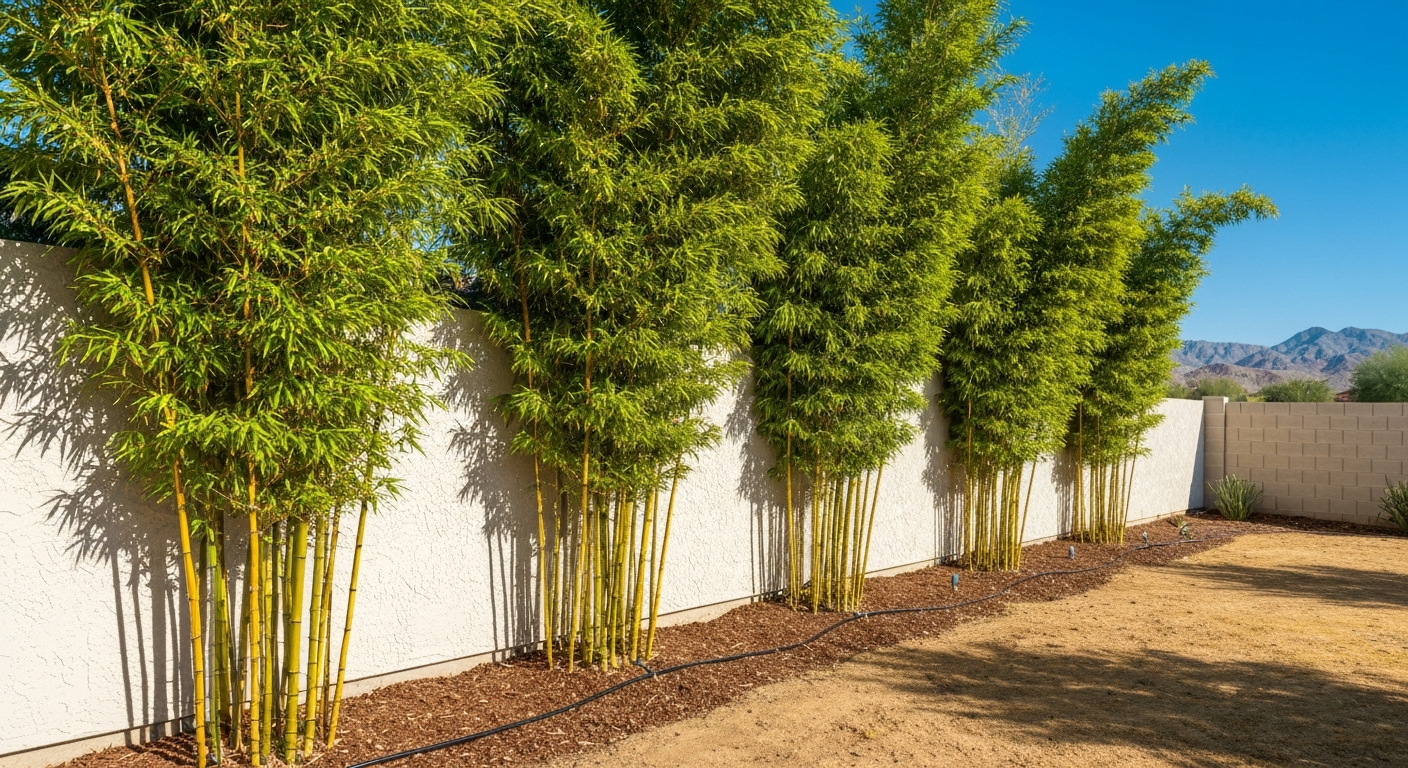
Yes, bamboo can grow with its roots sitting in water, but only under very specific conditions, and no, it cannot survive fully submerged underwater for any meaningful length of time. That distinction matters a lot, because a lot of the advice floating around online is actually about blank" rel="noopener noreferrer">lucky bamboo (Dracaena sanderiana), which is not a true bamboo at all. True bamboo has a completely different biology, and if you treat it like lucky bamboo, you will almost certainly kill it. Here is the honest breakdown of what works, what does not, and how to set things up if you want to try a water-based grow.
Will Bamboo Grow in Water? How to Grow Bamboo Submerged

Marcus Hartwell
6 Apr 2026
Can bamboo actually grow in water (and underwater)?
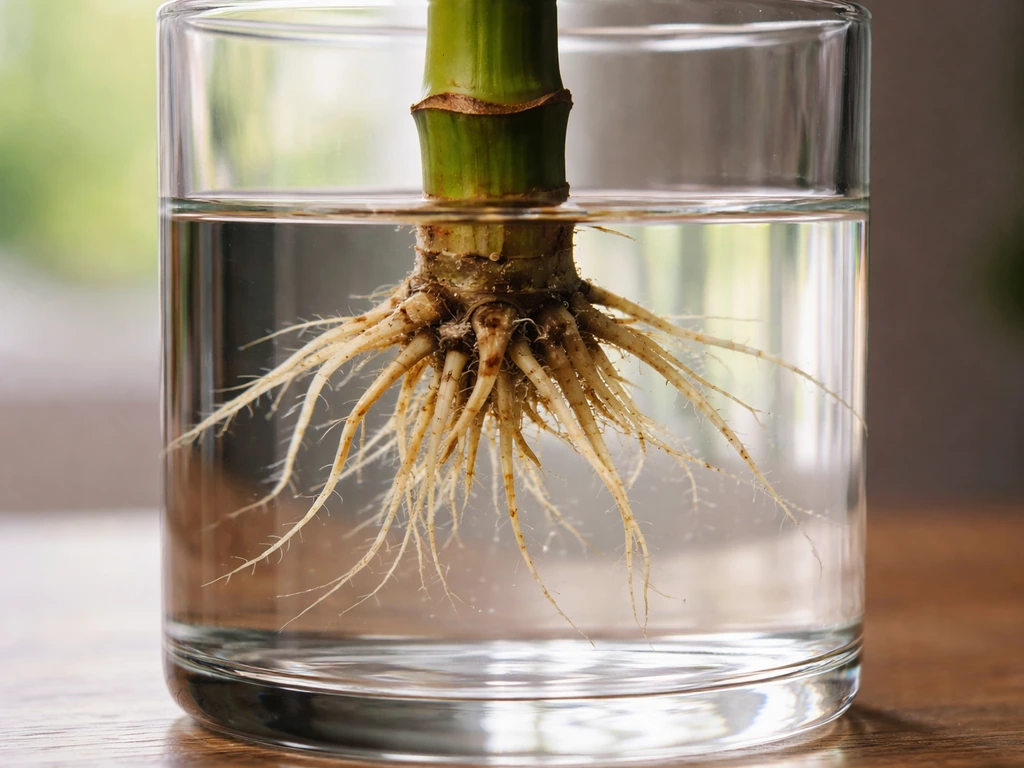
True bamboo can tolerate having its roots partially submerged or consistently wet, but it cannot grow with its rhizome and root system fully underwater for long. The reason is straightforward biology: roots need oxygen. In a waterlogged or submerged environment, oxygen in the root zone drops quickly and the roots go hypoxic or anoxic. Research on bamboo physiology confirms that the positive pressure systems bamboo uses to move oxygen through its tissues are generated in the stems and rhizomes, not in the roots themselves. That means the roots cannot simply oxygenate themselves from within. They depend on dissolved oxygen in the water around them, and still, standing water is notoriously poor at holding enough dissolved O2 to sustain active root respiration.
Studies on bamboo species under hypoxic soil conditions even show rhizomes physically floating upward, which is the plant trying to escape oxygen-depleted zones. That is a stress response, not a sign the plant is thriving. Full submersion, where the culm and leaves are also underwater, is fatal. The culm cannot provide the rhizome with enough oxygen to keep things running. Short-term flooding of a few days? Some species can survive. Permanent submersion? That is a death sentence for essentially every true bamboo species.
How bamboo actually grows when roots are in water
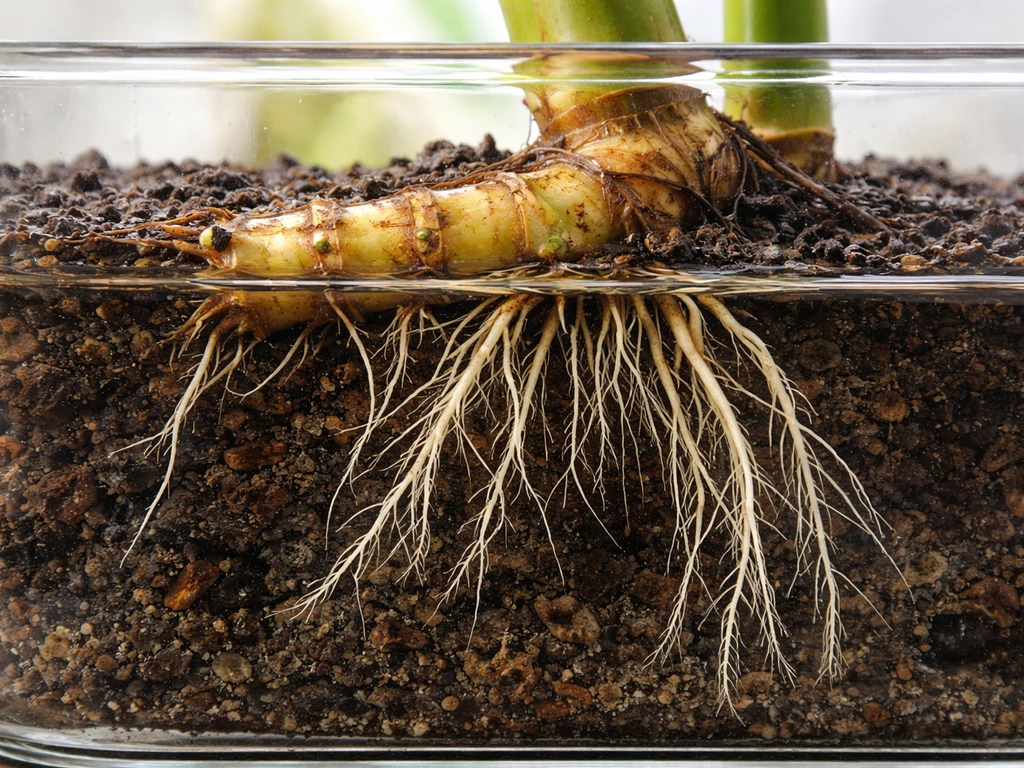
Bamboo spreads through a network of rhizomes (underground stems) that send up new culms (shoots). The rhizomes also produce fibrous roots that anchor the plant and absorb water and nutrients. In a water-based setup, the roots and the lower portion of the rhizome are submerged while the culm and leaves stay above the waterline. The roots can absorb water just fine in this arrangement, and if you keep the water well-oxygenated, they can survive and even support moderate growth.
What you will not get in a water-only setup is the explosive lateral rhizome spread you see in garden-planted bamboo. Rhizomes need a medium to push through, and water does not offer that resistance or structure. What you can expect is steady, if modest, root development and new culm growth from established rhizome nodes, provided the plant is not stressed by oxygen deficiency. Think of it less like growing bamboo in water and more like keeping bamboo alive with its feet in water while it does most of its real growing above the surface.
Setting up a water grow that actually works
Container and water depth
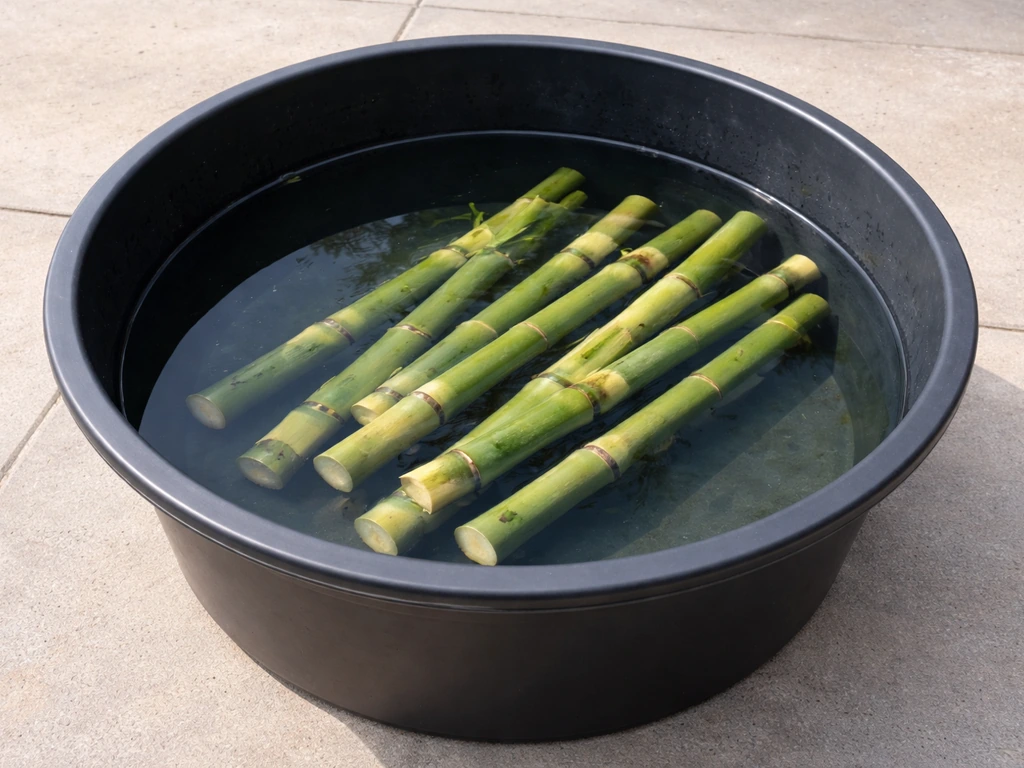
Use a sturdy, opaque container, something like a wide ceramic pot, a dark plastic tub, or a glazed planter. Opaque sides matter because light hitting the water encourages algae growth, which competes for dissolved oxygen. The container should be large enough to hold the root ball with a few inches of water covering only the roots, not the rhizome crown or the base of the culm. A good rule of thumb is to keep the water level 1 to 3 inches below the soil or gravel line if you are using any substrate, or set the plant in a net pot suspended above the water so only the lower roots dip in.
Water quality, temperature, and pH
Chlorine and chloramine in tap water will damage roots over time. Let tap water sit uncovered for 24 hours before use to off-gas chlorine, or use a dechlorinating drop if you are in a hurry. Rainwater or filtered water is even better. Bamboo generally prefers a slightly acidic to neutral pH in the 5.5 to 7.0 range, so check your water's pH with a basic aquarium or soil test kit and adjust with a few drops of pH-down solution if you are running alkaline tap water. Water temperature should stay between 60 and 85 degrees Fahrenheit (15 to 30 Celsius). Cold water slows root respiration; very warm water holds less dissolved oxygen.
Oxygenation
This is the most critical and most overlooked part of a water bamboo setup. Still water becomes oxygen-depleted fast once roots start respiring. The simplest fix is a small aquarium air pump with an airstone placed near the roots. Run it continuously. Change out at least 30 to 50 percent of the water every 5 to 7 days to prevent stagnation and buildup of metabolic waste. If you notice a sulfur or rotten smell from the water, that is anaerobic bacteria telling you the oxygen levels have crashed.
Light requirements
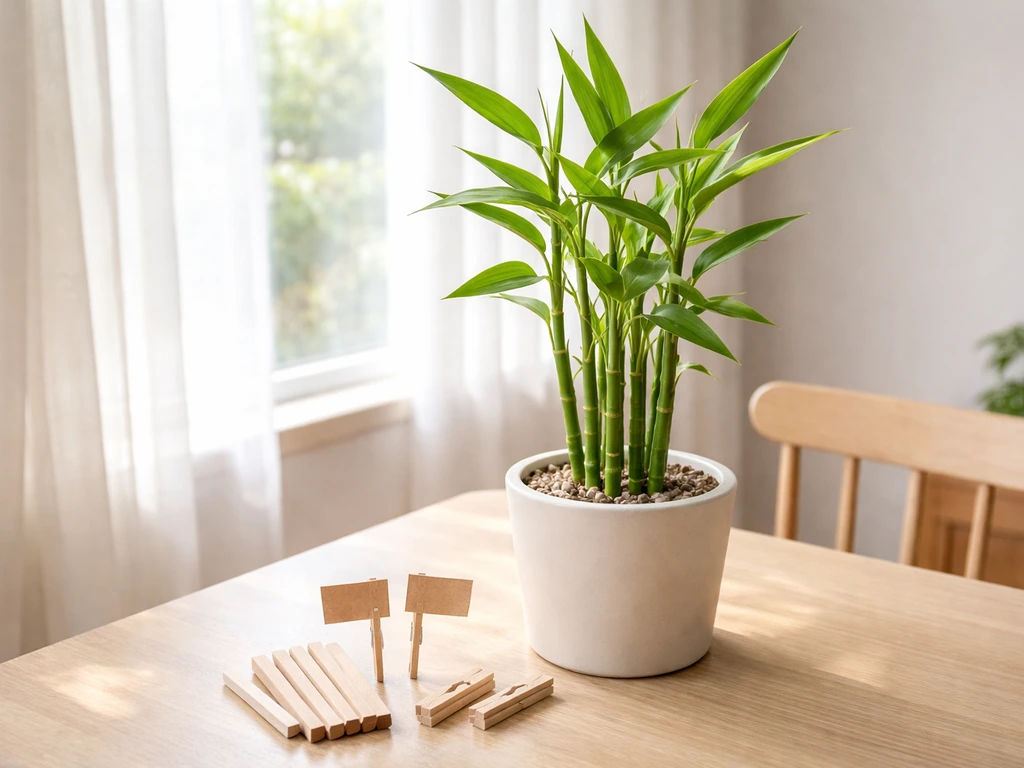
Bamboo grown in water needs the same light as bamboo grown in soil. Most species want 4 to 8 hours of bright, indirect to direct sunlight depending on the variety. Clumping types tend to do a bit better in partial shade, while running types like full sun. Indoors, a south- or west-facing window is ideal. If natural light is limited, a full-spectrum grow light running 12 to 14 hours per day will work. Do not let the setup run in dim light and expect growth; you will just get slow decline.
Can bamboo grow in just water, or does it need nutrients too?
Plain water will keep bamboo alive for a while, but it will not thrive. Bamboo is a heavy feeder, especially for nitrogen, and water alone provides none of the macro or micronutrients the plant needs for real growth. In pure water, you will often see slow yellowing of leaves within a few weeks as the plant exhausts stored nitrogen reserves. The practical fix is to add a diluted liquid fertilizer to the water, something like a half-strength balanced hydroponic nutrient solution (look for N-P-K ratios around 3-1-2 or similar). A small amount of liquid seaweed extract also helps with micronutrients and root health.
If you are curious about how bamboo handles other challenging, nutrient-limited substrates, it is worth checking out what happens when bamboo is grown in sand, where nutrient retention is similarly poor. The lessons there about supplementing and soil amendment carry directly over to water-based growing. Bottom line: treat your water setup like a basic hydroponic system and add nutrients every 7 to 14 days.
Species and climate: what types handle wet conditions best
Not all bamboo species respond the same way to wet conditions, and where you live matters. Here is a practical breakdown of what tends to work where.
| Species / Type | Flood/Wet Tolerance | Best Climate | Notes |
|---|---|---|---|
| Phyllostachys (running) | Moderate; short-term flooding tolerated | USDA zones 5–10; temperate | Most common "Chinese bamboo" types fall here; does not like permanent wet roots |
| Bambusa stenostachya | Higher than most; can handle periodic submersion | Tropical/subtropical zones 9–12 | One of the better choices for wet sites |
| Guadua angustifolia | Moderate; prefers wet riparian soils | Tropical, zones 10–12 | Grows near rivers naturally; tolerates more moisture |
| Fargesia (clumping) | Low tolerance for waterlogging | Zones 5–9; cool/mountain climates | Prefers moist but well-drained soil; will rot quickly in standing water |
| Phyllostachys praecox | Low; research shows rhizome up-floating under hypoxia | Zones 6–9; temperate | Used commercially in China; sensitive to oxygen-depleted soils |
When people search for "Chinese bamboo" in water, they are typically referring to Phyllostachys species, the running bamboos native to China that are extremely common in temperate gardens. These can handle moist soil and brief flooding, but sustained waterlogging will stress them. If you are in a hot, humid subtropical region like the Gulf Coast or Southeast Asia, you have more options and species like Bambusa stenostachya are worth considering. If you are in a dry or extreme climate, keep in mind that the challenges of water growing compound with environmental stress. For context on just how far bamboo can be pushed climate-wise, the question of whether bamboo can grow in the desert is a useful parallel, since both extremes, too wet and too dry, push the plant past its comfortable range.
Will it survive long-term? Waterlogging risks and realistic timelines
Here is what a realistic timeline looks like for bamboo in a water or very wet setup, assuming you are doing things reasonably right:
- Weeks 1 to 2: Plant adjusts. Some minor leaf yellowing or drop is normal as roots acclimate to the new oxygen and nutrient environment.
- Weeks 3 to 6: If oxygenation is good and nutrients are added, you should see stable green foliage and possibly new root growth. No new shoots yet.
- Months 2 to 4: A healthy plant may push a new culm or show rhizome activity. Growth will be slower than in soil.
- Month 6 and beyond: This is where long-term water setups start to diverge. Plants with good oxygen, nutrient management, and appropriate species selection can continue growing. Plants in still, nutrient-poor water begin declining noticeably.
- Year 1+: Permanent water-only growing is possible for some species but marginal for most. Most growers eventually move the plant to a moist, well-draining substrate for best long-term results.
Root rot is the primary long-term killer. It starts when anaerobic bacteria colonize oxygen-starved roots, breaking down root tissue. Early signs are dark, mushy roots (healthy roots should be white to tan and firm), a foul smell from the water, and sudden wilting even though the plant has plenty of water. Once root rot sets in significantly, it is very hard to reverse. Catching it early, trimming the affected roots, treating with a diluted hydrogen peroxide rinse (3 percent, 1 part to 3 parts water), and improving aeration gives the plant a fighting chance.
Some people also wonder about fully aquatic setups, like keeping bamboo growing in a fish tank. That scenario is worth examining separately because the constraints are quite different from a simple water container grow, and the question of whether bamboo can grow in a fish tank gets into specifics around water chemistry, livestock interaction, and light that go beyond what a basic water grow involves.
When it stalls or starts rotting: troubleshooting and next steps
Stalled growth
If your bamboo is alive but not growing after 6 to 8 weeks, check these things in order. First, is it getting enough light? Dim conditions are the most common cause of stalled water-grown bamboo. Second, are you adding nutrients? Plain water grows stall fast. Third, is the water temperature in range? Below 60 degrees Fahrenheit, root metabolism slows significantly. Fourth, is there enough oxygen? Check for smell and consider adding or upgrading the air pump.
Yellowing or browning leaves
Yellow leaves usually mean nitrogen deficiency, especially if the yellowing starts on older, lower leaves and moves upward. Add a nitrogen-rich liquid fertilizer at half strength and reassess in two weeks. Brown leaf tips that are crispy point to low humidity or fluoride/salt buildup in the water. Brown, soft, mushy leaves or stems near the waterline usually mean rot is already underway.
Root rot and mold
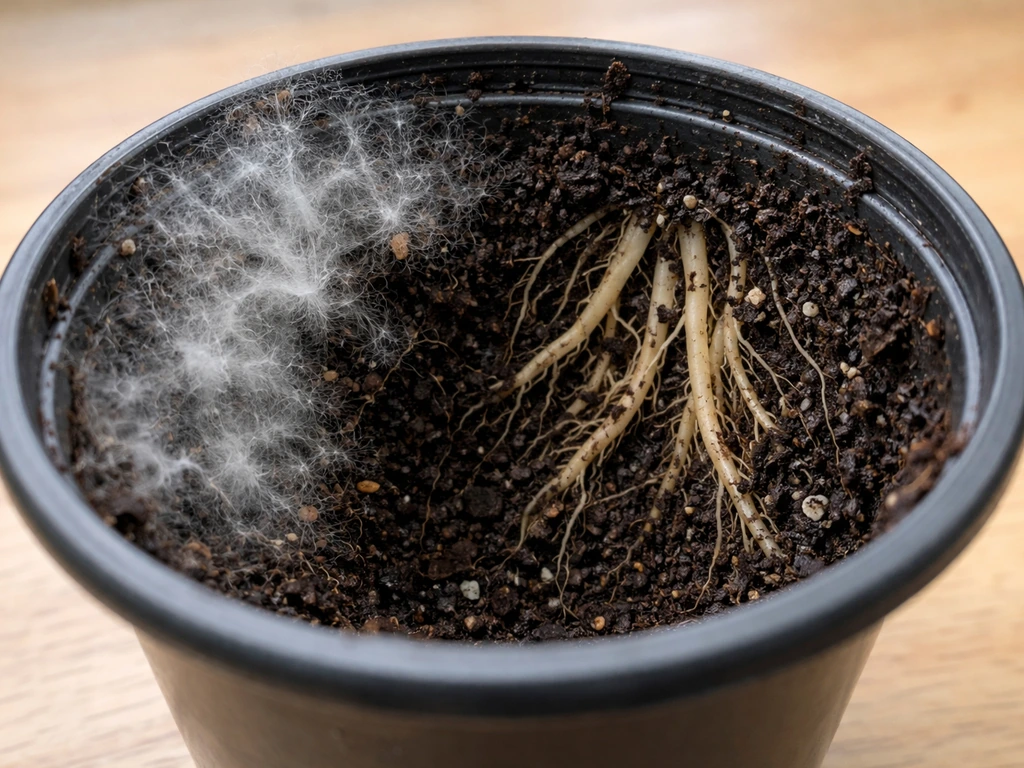
If you see white fuzzy mold on roots or the container walls, increase water changes to every 3 to 4 days and ensure the airstone is running. For root rot, pull the plant, trim all black or mushy roots with sterile scissors, soak the roots in a diluted hydrogen peroxide solution for 5 minutes, then return to clean, freshly aerated water. If more than half the root mass is affected, your odds are not great, but it is worth trying before giving up.
When to switch to soil
If you have addressed light, nutrients, and oxygen and the plant is still declining after 8 to 10 weeks, transition it to a moist, well-draining potting mix with good organic content. Bamboo almost always does better in soil than in water long-term. A mix of loamy garden soil, perlite, and compost in roughly equal parts works well. Keep it consistently moist but never sitting in water. This is the most reliable path to a healthy, vigorous plant, and it is what most experienced growers recommend as the actual target, even for people who started with a water experiment.
One last thought worth keeping in perspective: bamboo is a remarkably adaptable plant that people grow in everything from tropical river banks to mountain forests. The fact that it struggles fully underwater does not mean it is fragile. Understanding its actual biology, especially the oxygen needs of the root zone, is what separates a successful grow from a frustrating one. If you are drawn to pushing bamboo into unusual growing conditions, you are in good company. Even the speculative question of whether bamboo could grow on Mars circles back to these same fundamentals: oxygen, water availability, and the right substrate. Get those three things right, and bamboo will surprise you with how well it adapts.
FAQ
Can I keep bamboo in a fish bowl or vase if I change the water often?
Yes, but only if the water level stays low. Submerge only the roots and lower rhizome portion, keep the rhizome crown and the base of the culm above water, and run continuous aeration. If your setup lets the rhizome nodes sit under water, you are much more likely to trigger hypoxia and rot.
Is a net pot setup better than keeping the whole root area submerged?
A net pot or floating basket can work, but only if the roots get oxygenated. Use an inert medium around the root ball (like gravel or hydroponic clay) so the roots are supported, and keep the waterline just below the medium where the roots dip in. If the net pot blocks water flow or the roots still sit in stagnant water, growth will stall and rot risk rises.
How can I tell the difference between nutrient deficiency and root rot in water-grown bamboo?
Look for a sulfur-like smell, blackening/mushiness at the root zone, and a sudden wilt even though water level is unchanged. If leaves yellow while roots remain firm and light-colored, that is more often nutrients or light than rot. When in doubt, gently inspect the root tips and remove any that are brown, soft, or collapsing.
Will hydrogen peroxide save bamboo if the water smells bad?
If the plant is actively rotting, peroxide rinses can buy time, but the main fix is oxygen and clean water. Remove affected roots with sterile scissors, rinse briefly with diluted 3% hydrogen peroxide (as your article suggests), then return to freshly mixed, well-aerated water with a schedule for frequent water changes. Peroxide alone without aeration usually does not prevent recurrence.
Can I use aquarium water instead of adding hydroponic nutrients?
For long-term setups, avoid “planting” bamboo in plain water with no nutrient source. Instead, dose a diluted hydroponic nutrient and treat it like a hydroponic reservoir by refreshing on a schedule. If you use aquarium water or fish tank water, the nutrient balance can be inconsistent and can include compounds that irritate bamboo roots.
What happens if I accidentally submerge the bamboo stalks and leaves too?
No, running fully underwater is the common failure mode. Even if the water is clean, the root zone typically cannot maintain enough dissolved oxygen for ongoing respiration. If you want a deeper setup, you still need to keep the rhizome crown out of the water and maximize aeration, then expect only modest growth compared with water-logged feet and above-water culms.
How do I know if I need an airstone, and what happens without one?
A small air pump and airstone are usually easier and more reliable than trying to rely on natural surface agitation. Still water can lose oxygen quickly once roots are respiring, so continuous aeration matters. If you see no improvement after adding aeration, check water temperature and whether your water changes are too infrequent.
How strong should the liquid fertilizer be for bamboo in water?
Yes, but only in a controlled way. Add fertilizer at about half strength first, then adjust based on leaf color and growth. Because water systems accumulate waste faster, overfeeding can also accelerate rot, so it is safer to start lower and increase after you confirm the plant has stable roots.
Can I just top off the container instead of doing full or partial water changes?
Rinse and replace the water rather than just topping it off, because salts and waste products concentrate over time. Topping off gradually raises dissolved buildup, which can cause leaf tip browning and stress even when the water level looks correct. If you cannot fully refresh weekly, increase the frequency of partial changes.
If growth has stalled for a month, what should I change first?
Usually, yes. If your bamboo seems stuck after 6 to 8 weeks, you can often fix it by increasing oxygenation and improving light first, then confirming nutrients and temperature second. If it is still declining after that, transition to a moist, well-draining potting mix, because bamboo generally performs better long-term outside a pure water system.
Next Article
Can Bamboo Grow in Las Vegas? Guide to Success in Desert
Yes, bamboo can grow in Las Vegas with the right species, irrigation, shade, and containment; step-by-step planting and保护