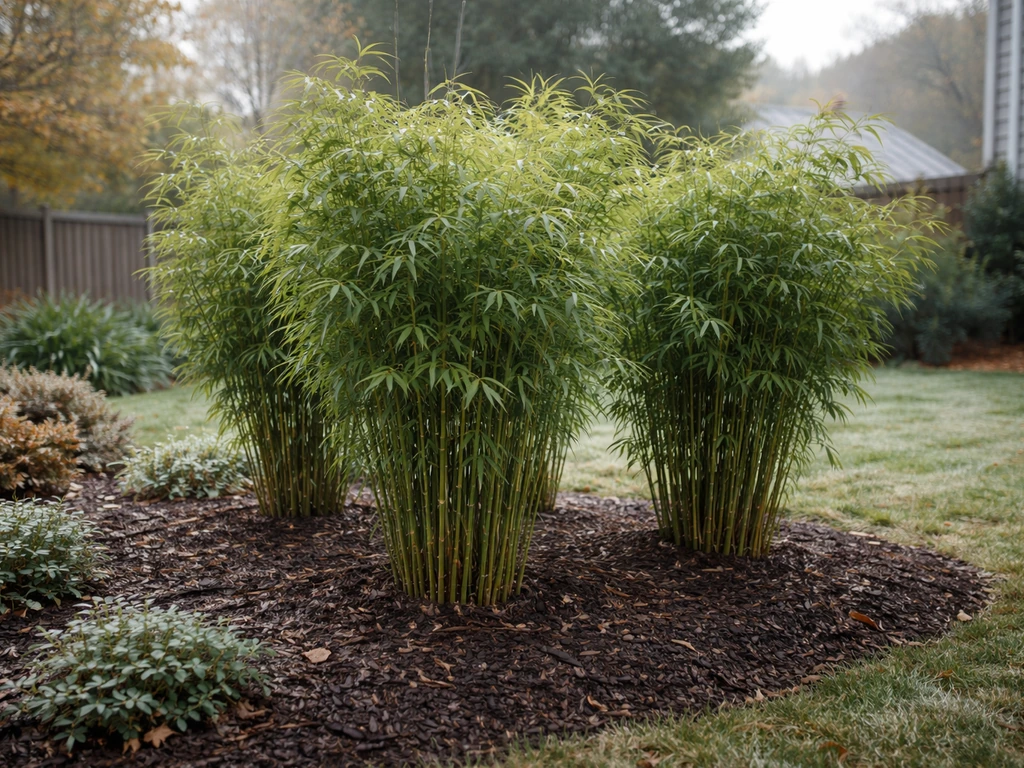
Yes, you can grow bamboo in New Jersey, and it can thrive beautifully there with the right species and a little planning. New Jersey spans USDA hardiness zones 6a in the colder northwest corners all the way to 7b and even 8a along parts of the coast, which means a solid range of cold-hardy bamboo species are genuinely viable across the state. The big caveats are species selection, containment if you choose a running type, and a quick check of your local ordinances before you buy, because New Jersey does regulate some bamboo under its invasive-plant rules, and a handful of municipalities have their own additional restrictions.
Can You Grow Bamboo in New Jersey? Cold‑Hardy Species & Care
Marcus Hartwell
28 Jul 2026
What New Jersey's climate actually means for bamboo
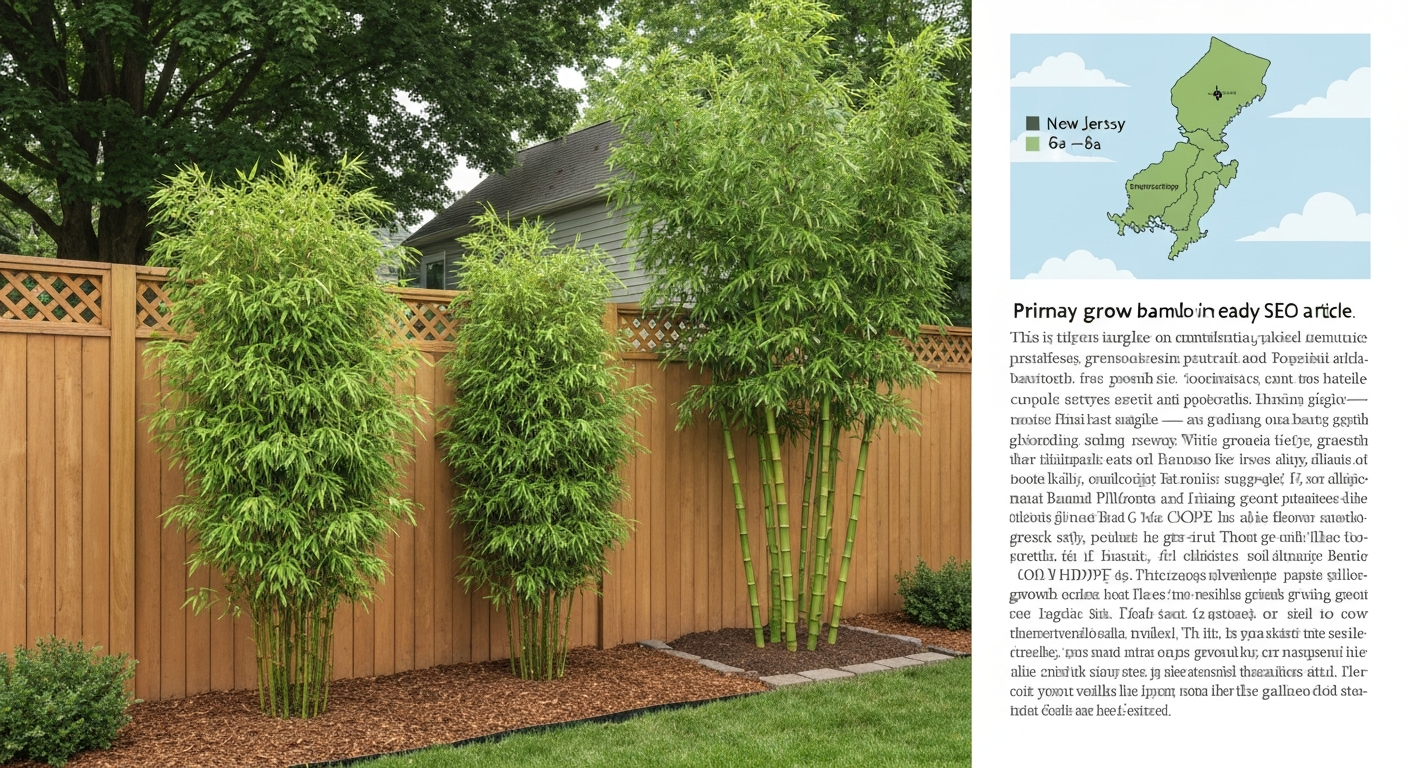
New Jersey's climate is more diverse than most people outside the state realize. The 2023 USDA Plant Hardiness Zone Map places Sussex and Warren counties (the northwest highlands) in zone 6a, where winter lows can reach -10°F. By the time you get to Princeton or the Raritan Valley corridor, you're in zone 6b or 7a. The Jersey Shore and barrier island communities near Cape May can touch zone 7b or even 8a, a meaningful difference that opens up slightly less cold-hardy species. The Office of the New Jersey State Climatologist at Rutgers tracks these microclimatic divisions carefully, and their data shows real variation in freeze-free days and minimum temperatures even within the same county. That matters for bamboo because the difference between zone 6a and zone 7b is roughly 20°F of minimum winter temperature tolerance, which can make or break certain species choices.
Beyond hardiness zones, local microclimates shift the picture further. A south-facing slope in Morris County will behave warmer than its zone number suggests. A low-lying yard in a river valley in Burlington County can trap cold air and experience harder frosts than its neighbors. Before you select a species, spend a winter paying attention to where frost settles in your yard and where the snow melts first. Those observations are more useful than any zone map for deciding exactly what to plant and where to place it.
Bamboo species that actually perform well in New Jersey
Not every bamboo species belongs in a New Jersey landscape, but quite a few do. The split that matters most is between clumping bamboos (pachymorphic, non-spreading rhizomes) and running bamboos (leptomorphic, wide-spreading rhizomes). Both categories include cold-hardy options for NJ, but they come with very different management demands.
Cold-hardy clumping bamboos
Fargesia species are the star performers for NJ gardeners who want a non-invasive, low-maintenance option. Fargesia robusta (umbrella bamboo) and Fargesia nitida (fountain bamboo) are both hardy to zone 5 or 6, making them reliable choices statewide. They form dense, arching clumps typically reaching 10 to 15 feet tall over several years and expand slowly outward at the base rather than sending rhizomes racing underground. Fargesia murielae cultivars like 'Simba' and 'Rufa' are popular for their tighter form and zone 5 hardiness. One thing to know: Fargesia species prefer some afternoon shade and can look stressed in full, hot sun during New Jersey summers, especially in the hotter inland zones. They're much closer in behavior to bamboo grown in cool montane regions of Sichuan, China than to the tropical species you'd see in Florida.
Cold-hardy running bamboos
For taller, faster privacy screens, running Phyllostachys species dominate the options available to NJ growers. Phyllostachys aureosulcata (yellow-groove bamboo) and its cultivar 'Spectabilis' are arguably the most cold-tolerant large bamboos available, hardy well into zone 5 and documented in overwintering trials as among the most freeze-tolerant Phyllostachys taxa. P. bissetii is another workhorse species, hardy to zone 5 and known for reliable culm production even after hard winters. P. atrovaginata (incense bamboo) handles wet soils better than most, useful for NJ yards with drainage challenges. P. aurea (golden bamboo) is also commonly sold, but worth approaching cautiously given its invasive designation in some regional contexts. USDA NRCS PLANTS Database, Phyllostachys aurea (golden bamboo) profile provides an official plant profile and distribution information for this species USDA NRCS PLANTS Database — Phyllostachys aurea (golden bamboo) profile. All running Phyllostachys require containment in a New Jersey residential setting, which I'll cover in detail below.
| Species | Type | Height Range | Min. Cold Hardiness (Zone) | NJ Suitability |
|---|---|---|---|---|
| Fargesia robusta | Clumping | 10–15 ft | Zone 5b | Statewide, excellent |
| Fargesia nitida | Clumping | 8–12 ft | Zone 5 | Statewide, excellent |
| Fargesia murielae 'Rufa' | Clumping | 6–10 ft | Zone 5 | Statewide, excellent |
| Phyllostachys aureosulcata | Running | 15–25 ft | Zone 5 | Statewide with containment |
| Phyllostachys aureosulcata 'Spectabilis' | Running | 15–25 ft | Zone 5 | Statewide with containment |
| Phyllostachys bissetii | Running | 15–20 ft | Zone 5 | Statewide with containment |
| Phyllostachys atrovaginata | Running | 20–30 ft | Zone 6 | Central/South NJ with containment |
| Phyllostachys aurea | Running | 10–20 ft | Zone 6b | Central/South NJ, regulated — check local rules |
Choosing bamboo for a privacy screen: clumping vs. running
This is the question I get most often from New Jersey homeowners: clumping or running? The honest answer is that it depends on how much height and speed you need, how much effort you're willing to put into containment, and whether your municipality has any restrictions in place.
Clumping bamboos like Fargesia are the lower-risk choice. They won't cross into your neighbor's yard, they don't require a rhizome barrier, and they stay where you plant them. The trade-off is height and speed: most Fargesia species max out around 10 to 15 feet and take longer to reach their mature form. For a privacy hedge between two residential lots, that's often plenty. If you need a 20- to 25-foot screen that fills in within three to five years, running bamboo gets you there faster. But running bamboo installed without containment is a genuine liability in New Jersey, both ecologically and legally.
Running bamboos like Phyllostachys grow faster, get taller, and produce the dense culm forest that most people picture when they imagine a bamboo screen. They're widely sold and installed by commercial bamboo landscapers across the state. The key is that a properly installed 60-mil HDPE rhizome barrier (buried vertically to at least 24 to 30 inches, with 2 to 3 inches of the top lip left above grade and angled outward) makes running bamboo a manageable garden plant rather than a spreading problem. Without that barrier, Phyllostachys rhizomes can travel 10 to 15 feet in a single growing season in good NJ soil, and once bamboo crosses a property line, you're in legal territory that the New Jersey Supreme Court addressed directly in Kornbleuth v. Westover in 2020 (more on that below).
My recommendation for most New Jersey homeowners is this: if you're in zone 6a or 6b, start with Fargesia robusta or F. murielae for reliability. If you're in zone 7a or warmer and want height fast, Phyllostachys aureosulcata with a properly installed barrier is a proven performer. If you're near the Shore in zone 7b, you have more flexibility and can consider taller Phyllostachys varieties with confidence.
New Jersey's invasiveness rules and local ordinances: what you need to know before you plant
This section isn't meant to scare you off bamboo. It's meant to keep you out of trouble with your municipality, your neighbors, and potentially a court. New Jersey takes invasive plants seriously, and bamboo sits in a complicated regulatory spot in the state. For readers comparing rules across states, see guidance on whether is it legal to grow bamboo in Virginia for a nearby example of how state and local regulations can differ.
The New Jersey Department of Agriculture, under the Invasive Species Management Act, lists running bamboo (Phyllostachys spp.) among plants subject to regulation concerning sale and propagation. The New Jersey Invasive Species Strike Team (NJISST) maintains a published 'Do Not Plant' list that is actively used by state agencies and municipalities as a procurement and planting guideline, particularly for public lands. Many NJ municipalities have adopted ordinances referencing the NJISST list or enacted their own bamboo-specific rules. The Borough of Matawan and Township of Livingston are both examples of New Jersey municipalities with property maintenance code provisions addressing invasive or spreading bamboo. The Township of Chatham references the NJISST list directly in its environmental regulations.
On the legal side, Kornbleuth v. Westover (241 N.J. 289, 2020) is the landmark case to know. The New Jersey Supreme Court addressed a neighbor dispute specifically involving bamboo that crossed property lines and examined remedies, liability, and the obligations of the planting party. The takeaway for any NJ homeowner is simple: if your bamboo spreads onto a neighbor's property, you can face legal action. Install containment, maintain it annually, and talk to your neighbors before you plant.
- Check whether your municipality has a bamboo ordinance before purchasing (search your town's municipal code for 'bamboo' or 'invasive plants')
- Verify that the species you're buying is not on the NJDA regulated invasive list or the NJISST Do Not Plant list for your intended use
- If planting running bamboo, install a HDPE rhizome barrier rated at 60 mil, minimum 24 inches deep, with the top lip angled outward above grade
- Notify neighbors of your intent to plant, especially near shared property lines
- Inspect and maintain your barrier and boundary edges at least once per year, ideally in late spring when new rhizomes are easiest to see
Picking the right spot in your yard
Bamboo is forgiving about soil in ways many plants are not, but it has firm preferences about light, wind, and drainage. Getting site selection right before you plant makes a significant difference in how fast your stand establishes and how it looks through the seasons.
Most Phyllostachys species want full sun to light shade, at least 4 to 6 hours of direct sun per day. Fargesia is the exception: it prefers partial shade in New Jersey, especially filtered afternoon shade in central and southern NJ where summer heat can stress the foliage. A location that gets morning sun and afternoon shade works particularly well for Fargesia in NJ's warmer zones.
Wind is a bigger factor in NJ than many people anticipate. The northwest highlands and Shore communities both experience persistent wind exposure that can desiccate bamboo foliage in winter, even if the roots survive just fine. A location with a windbreak to the northwest (a fence, existing hedge, or structure) dramatically improves winter foliage retention. Newly planted bamboo is especially vulnerable in its first one to two winters, so siting with wind in mind is worth the extra thought.
Drainage is critical. Bamboo will not tolerate waterlogged roots. Frost pockets, low spots that collect standing water after rain, and heavy clay subsoils without amendment are all problem sites. The USDA NRCS Web Soil Survey (SSURGO) covers all New Jersey counties and lets you look up your parcel's soil drainage class before you commit. If your site has slow or imperfect drainage, raised beds or mounded planting areas combined with organic matter amendments can compensate, but it takes some work upfront.
Soil, timing, and how to plant bamboo step by step
New Jersey soils range from sandy coastal plains (well-drained but low in organic matter) to loamy central soils to clay-heavy glacial deposits in the north. Most landscape bamboos perform best in a fertile, well-drained loam at a slightly acidic to neutral pH, roughly 5. NC State Extension, Extension Gardener Handbook (soil pH and drainage guidance for landscape plants) recommends most ornamental perennials, including landscape bamboos, prefer slightly acidic to neutral soils (about pH 5.5–6.5) and well‑drained loam with consistent moisture during the spring shooting season NC State Extension — Extension Gardener Handbook (soil pH and drainage guidance for landscape plants). 5 to 6.5. If your soil is on the acidic side of that range (common in heavily wooded NJ areas), you typically don't need to adjust. If you have a high-pH soil (above 7.0), adding sulfur or incorporating acidic organic matter like composted pine bark can help. A basic soil test from Rutgers Cooperative Extension is worth doing before you plant.
The best planting window in New Jersey is late spring, after the last frost date for your zone (mid-April in south Jersey, late April to mid-May in the northwest). This gives the plant a full growing season to establish roots before facing its first NJ winter. Early fall (September) is a viable secondary window, giving the plant time to root in before the ground freezes, but spring-planted bamboo consistently establishes faster in my experience.
- Install your rhizome barrier first if planting running bamboo — trench the perimeter to at least 24 inches deep, insert 60-mil HDPE barrier sheeting, overlap the ends by at least 6 inches and fasten with stainless steel clamps, and leave 2–3 inches of the top lip above grade angled slightly outward
- Dig your planting hole at least twice the width of the root ball and the same depth; in compacted clay soils, go slightly deeper and add a 3-inch layer of coarse compost or aged wood chips to the bottom
- Amend the backfill with 25–30% compost by volume to improve both drainage and moisture retention; mix in slow-release balanced fertilizer (10-10-10 or similar) at label rates
- Set the root ball at or very slightly above the surrounding grade — bamboo does not want to sit in a bowl that collects water
- Backfill, firming gently around the roots to eliminate air pockets, and water thoroughly until water drains freely at the base
- Apply a 3- to 4-inch layer of wood chip mulch over the root zone, keeping mulch a few inches away from the culms to prevent rot
- Water deeply every few days for the first three to four weeks, then transition to once or twice per week through the first summer
Spacing, layout, and planting for an effective privacy screen
How you lay out your planting matters as much as which species you choose. The goal with a privacy screen is to get continuous foliage coverage along the desired fence line, and spacing affects both how quickly that happens and how you manage the stand long-term.
For Fargesia clumpers, I recommend spacing plants 3 to 4 feet apart on center for a hedge that fills in reasonably fast. At 5 to 6 feet apart you'll still get a solid screen, but it'll take a couple more years to close the gaps. Each clump expands outward by a few inches per year at the base, so patience is genuinely required, clumping bamboo doesn't race like running bamboo does.
For running Phyllostachys inside a barrier, space rhizome divisions or container plants 5 to 6 feet apart along the screen line. Within a contained barrier bed, the underground rhizomes will fill the spaces between plants within one to two seasons, so you don't need to pack them in tightly. A barrier bed for a linear screen should be at least 4 feet wide (inside the barrier) to give the rhizomes room to spread and produce a thicker canopy above ground. Narrower beds produce thinner, more gap-prone screens.
A staggered double row planted 3 feet apart front-to-back with 4 feet between plants in each row is the layout I've found produces the densest, fastest-filling screen for running bamboo. It uses more plants initially but closes the visual gaps a full season faster than a single-row planting at the same spacing.
Watering, soil amendments, and keeping your bamboo healthy year to year
Bamboo is fairly drought-tolerant once established, but 'once established' typically means after its second or third full growing season in New Jersey's climate. During establishment, consistent moisture is what separates a bamboo that hits the ground running from one that sulks for two years and barely pushes new shoots. Water deeply and infrequently rather than shallowly and often, you want moisture reaching 12 to 18 inches down, not just wetting the surface mulch.
Spring is the critical fertilizing window for bamboo in New Jersey. A high-nitrogen fertilizer applied as new shoots emerge (typically April through May depending on your zone) feeds the flush of growth that accounts for most of the plant's annual height gain. A second lighter application in early summer (June) supports continued leaf expansion and rhizome development. Avoid heavy nitrogen feeding after July because it encourages tender late growth that can be damaged by early autumn frosts. A slow-release granular fertilizer at 21-5-6 or a similar lawn-type high-nitrogen ratio works well and is easy to manage.
Replenishing the mulch layer each spring does double duty: it keeps soil moisture stable during the hot NJ summer and adds organic matter as it breaks down, gradually improving even poor sandy or clay soils. Bamboo in NJ sandy soils (like the Pinelands fringe or Ocean County) benefits especially from annual mulching and additional compost applications because the native soil has minimal water and nutrient holding capacity.
Pests and diseases are rarely a serious problem for well-sited bamboo in New Jersey. The most common issues are spider mites (during hot, dry summers, especially on Fargesia in exposed spots), scale insects on culms, and occasional fungal leaf spots after wet springs. Spider mites respond well to a forceful water spray and, if severe, horticultural oil. Scale can be treated with dormant oil in late winter. Fungal spots are usually cosmetic and self-limiting once weather dries out. Root rot from poor drainage is the real threat, and prevention (proper siting and soil amendment at planting) is far easier than treatment after the fact.
Winter care in New Jersey
Established cold-hardy bamboo in NJ generally needs minimal winter intervention. The roots of species like P. aureosulcata and Fargesia robusta survive well below what New Jersey winters deliver. What you may see is leaf curling or rolling during very cold snaps (a normal thermoregulatory response in bamboo) and occasional foliage browning after a particularly harsh wind event. Don't cut back winter-browned culms until late spring: those culms continue to protect the rhizomes below ground and often push fresh leaf buds in April. New plantings in their first winter benefit from a thicker mulch layer (4 to 6 inches) over the root zone and, in exposed sites, a burlap windscreen on the northwest side.
Realistic growth rates and a timeline to a full privacy screen
I want to be straight with you on this because the internet is full of bamboo growth claims that set people up for disappointment. The 'bamboo grows a foot a day' stories refer to tropical timber bamboos in equatorial climates with year-round growing seasons and deep, rich soils. Temperate bamboo in New Jersey follows a very different pattern, and it's worth understanding the 'establishment curve' before you plant.
The first year after planting, most bamboo does almost nothing visually impressive above ground. The plant is investing energy in root and rhizome development. You may see a few small new shoots that are shorter than the original planting. This is normal and does not mean your bamboo is failing. The second year, root establishment continues and you'll see noticeably more new shoots, some approaching or matching the original height. By the third year, running Phyllostachys species typically enter what's called the 'running' phase in earnest, pushing shoots to 60 to 80 percent of the species' eventual mature height. Clumping Fargesia follows a slightly slower trajectory, with meaningful spread visible from year three onward but full clump width taking five to seven years.
| Year | Running Bamboo (Phyllostachys) | Clumping Bamboo (Fargesia) |
|---|---|---|
| Year 1 | Minimal top growth; root/rhizome establishment; 1–3 small new shoots | Minimal spread; 1–2 small new culms at base; root establishment |
| Year 2 | More shoots; some reaching 50–70% of eventual height; rhizomes spreading | 2–4 new culms; slight outward spread of clump base; 30–50% of mature height |
| Year 3 | Shoots near mature height; canopy thickening; visible 'stand' forming | Clump noticeably wider; 5–8 new culms; approaching 60–70% of mature height |
| Year 4–5 | Dense screen at full height if well-contained; canopy closing | Full clump form; near mature height; adjacent clumps starting to merge if spaced at 3–4 ft |
| Year 6–7 | Full mature stand; annual shoot management needed | Solid, continuous hedge; minimal management needed |
To put real numbers to it: a Phyllostachys aureosulcata planted as a 5-gallon nursery container in central New Jersey can reasonably reach 15 to 18 feet of culm height by year three or four in a good site with proper fertilization. Fargesia robusta planted at 3-foot spacing will form a continuous, dense hedge at roughly 10 to 12 feet tall by year five to six. These are honest, achievable timelines, not worst-case or best-case scenarios.
Container growing and indoor options
Container bamboo is a legitimate option for NJ gardeners who want flexibility, live in condominiums or townhomes with limited ground access, or want to use bamboo on patios and decks. Most cold-hardy species can overwinter outdoors in containers in zones 7a and warmer if the container is large (25+ gallons), the roots are insulated with bubble wrap or moved against a south-facing wall, and the foliage is protected from desiccating wind. In zone 6a and 6b, container bamboo should be moved to an unheated garage, shed, or basement for the winter, the root ball in a container is far more exposed to cold than roots in the ground. Tropical bamboos (Bambusa, Dendrocalamus) are genuinely indoor/greenhouse plants in New Jersey, with no cold hardiness below about 25 to 28°F.
Next steps for New Jersey bamboo growers
Before you buy anything, do three things: check your USDA hardiness zone using the 2023 map, look up your municipality's code for bamboo or invasive plant provisions, and if you're planting near a property line, have a conversation with your neighbor. Those three steps prevent the most common NJ bamboo problems before they start.
For species and sourcing, Rutgers Cooperative Extension offices are a solid local resource, and commercial bamboo landscapers operating in New Jersey (some of whom specialize in ordinance-compliant installation with proper barriers) can source well-acclimated plants that are already adapted to the Mid-Atlantic climate. Be cautious about buying bamboo from non-specialist nurseries that can't confirm cold hardiness to your specific zone. A mislabeled tender species planted in a Sussex County yard will die in its first winter.
If you're curious how New Jersey compares to neighboring states, bamboo cultivation across the broader Northeast involves many of the same species and challenges. For guidance on even colder winters, see can bamboo grow in Vermont for cold-hardy species and site tips. For a broader regional overview, see Can bamboo grow in the Northeast for species, climate, and regulatory comparisons across the region. Gardeners in Connecticut and Maryland deal with similar zone ranges and some of the same regulatory questions around running bamboo. For specifics on bamboo in Connecticut, see does bamboo grow in Connecticut. The patterns across the region are consistent: clumping bamboos for simplicity, running bamboos for speed and height with proper containment, and always a check of local rules first. For state-specific guidance, see our short guide on does bamboo grow in Maryland for species recommendations and hardiness considerations.
FAQ
Can you grow bamboo in New Jersey?
Yes. Bamboo can be grown across New Jersey, but success depends on matching species to your local USDA hardiness zone and microclimate. NJ ranges roughly from zone 6a/6b in the northwest to zone 7a/7b and pockets of 8a on the coast, so pick cold‑hardy taxa for inland/northern sites or milder cultivars near the Jersey Shore. Also check municipal rules and the NJ Invasive Species Strike Team / NJ Department of Agriculture lists before planting.
Which bamboo species are best for New Jersey climates?
For New Jersey choose cold‑tolerant species and cultivars: - Clumping (non‑running) options: Fargesia spp. (e.g., Fargesia rufa, F. nitida, F. robusta) — reliable, noninvasive hedging and winter‑hardy in cooler zones. - Running (fast, tall) but cold‑tolerant options (require containment): Phyllostachys spp. such as P. bissetii, P. aureosulcata (yellow‑groove), P. atrovaginata, and some cultivars hardy into zone 5–6. - Avoid tropical Bambusa unless you have a warm sheltered coastal microclimate or plan winter protection.
What are the differences between clumping and running bamboo and which should I choose?
Clumping bamboos (sympodial: Fargesia and some Bambusa) expand slowly from the clump and are effectively noninvasive — best if you want a low‑maintenance privacy screen. Running bamboos (monopodial: many Phyllostachys) spread via long rhizomes, can form dense tall screens quickly, but will invade adjacent soil unless contained. Choose clumpers for safety and low containment cost; choose runners only if you install effective containment (rhizome barrier, trenching) and are prepared for monitoring.
How do I match bamboo to my specific location (USDA zone, microclimate, soil)?
Steps: 1) Identify your USDA hardiness zone (2023 PHZM) and local microclimate (consult Rutgers Office of the State Climatologist / local weather stations for freeze‑free days). 2) Pick species listed as hardy to your zone (choose one zone colder for exposed sites). 3) Check soil drainage and texture via USDA NRCS Web Soil Survey or a shovel test — bamboo prefers fertile, well‑drained loam with consistent moisture. 4) Favor sheltered sites for marginally hardy cultivars and avoid cold air pockets or shallow soils over rock.
What soil, light, and watering conditions do bamboos need in New Jersey?
General cultural needs: - Soil: fertile, well‑drained loam; pH about 5.5–6.5 preferred. - Light: most temperate bamboos do well in full sun to part shade; Fargesia tolerates deeper shade better than many Phyllostachys. - Water: consistent moisture during establishment and the spring shoot period; not waterlogged. Mulch to conserve moisture and moderate soil temperature. Amend heavy clay with organic matter or plant on raised beds for improved drainage.
How fast will bamboo grow and how long to form a privacy screen?
Growth rates vary: - Running Phyllostachys can put up tall canes and achieve several feet of vertical growth in a single season; expect a usable screen (6–10 ft) in 2–4 growing seasons under good conditions. - Clumping Fargesia grows more slowly; a 3–6 ft screen may take 3–6 seasons depending on starting size and site fertility. Initial establishment (root system and regular shooting) can take 1–2 seasons; faster if planting larger container or field‑grown specimens.
Next Article
Does Bamboo Grow in Maryland? Planting, Legality, Care Tips
Learn if bamboo can grow in Maryland, which types thrive, whether it’s legal, and how to plant and contain it.