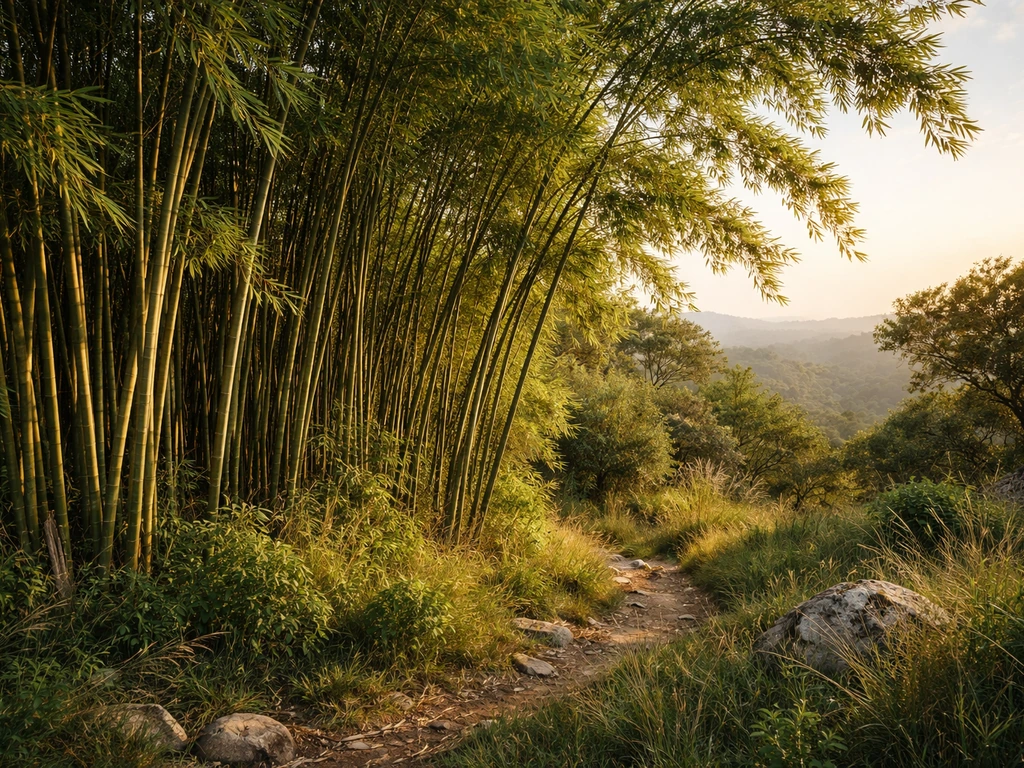
Yes, bamboo grows abundantly in Japan. Bamboo does grow in Africa as well, but it is not as widespread as in Japan and tends to be limited to suitable climates and regions bamboo grows abundantly. It is so well established there that it shapes both the landscape and the culture, from the towering moso groves of Kyoto to the dwarf sasa that blankets roughly 50% of Japan's national forest land. Japan is genuinely one of the world's great bamboo countries, and understanding why it thrives there gives you a solid roadmap for growing bamboo successfully almost anywhere with similar conditions.
Does Bamboo Grow in Japan? Regions, Species, and Care Tips
Marcus Hartwell
29 Apr 2026
Where bamboo grows in Japan
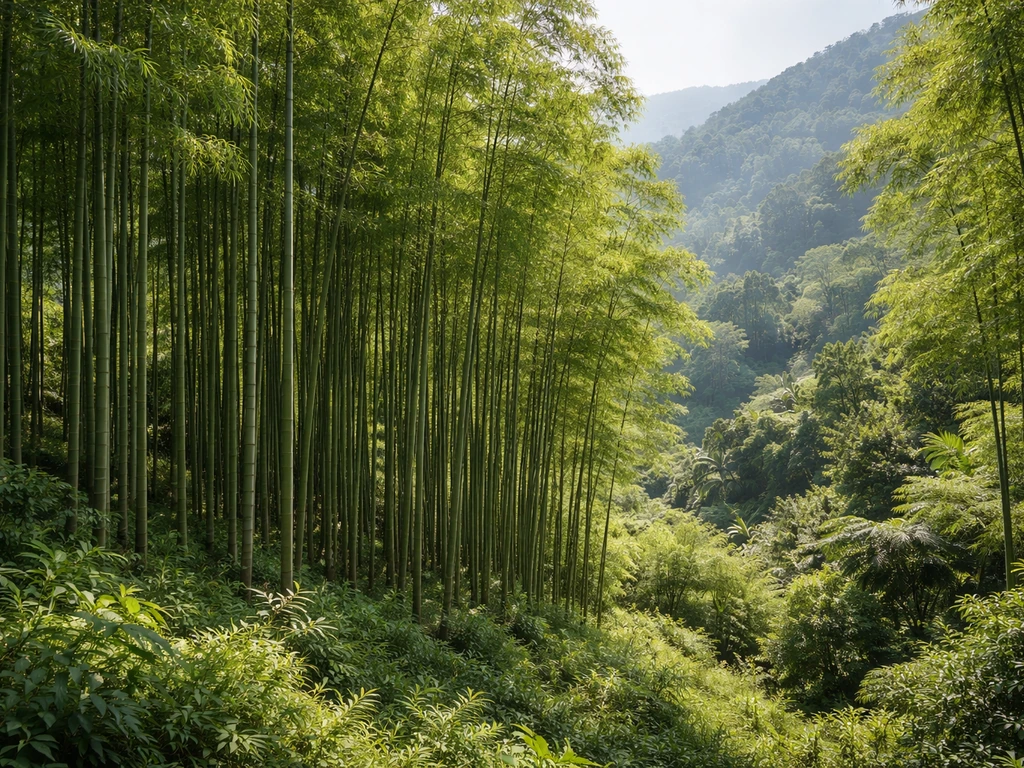
Bamboo in Japan is not limited to warm, humid coastal zones. It grows across a remarkably wide range of climates, from subtropical Kyushu and Okinawa in the south all the way up through the cool, snowy forests of Hokkaido in the north. The fact that you can find green bamboo forests in the middle of a Japanese winter tells you something important: bamboo in Japan is not a tropical plant that just got lucky. Many Japanese species are genuinely cold-hardy.
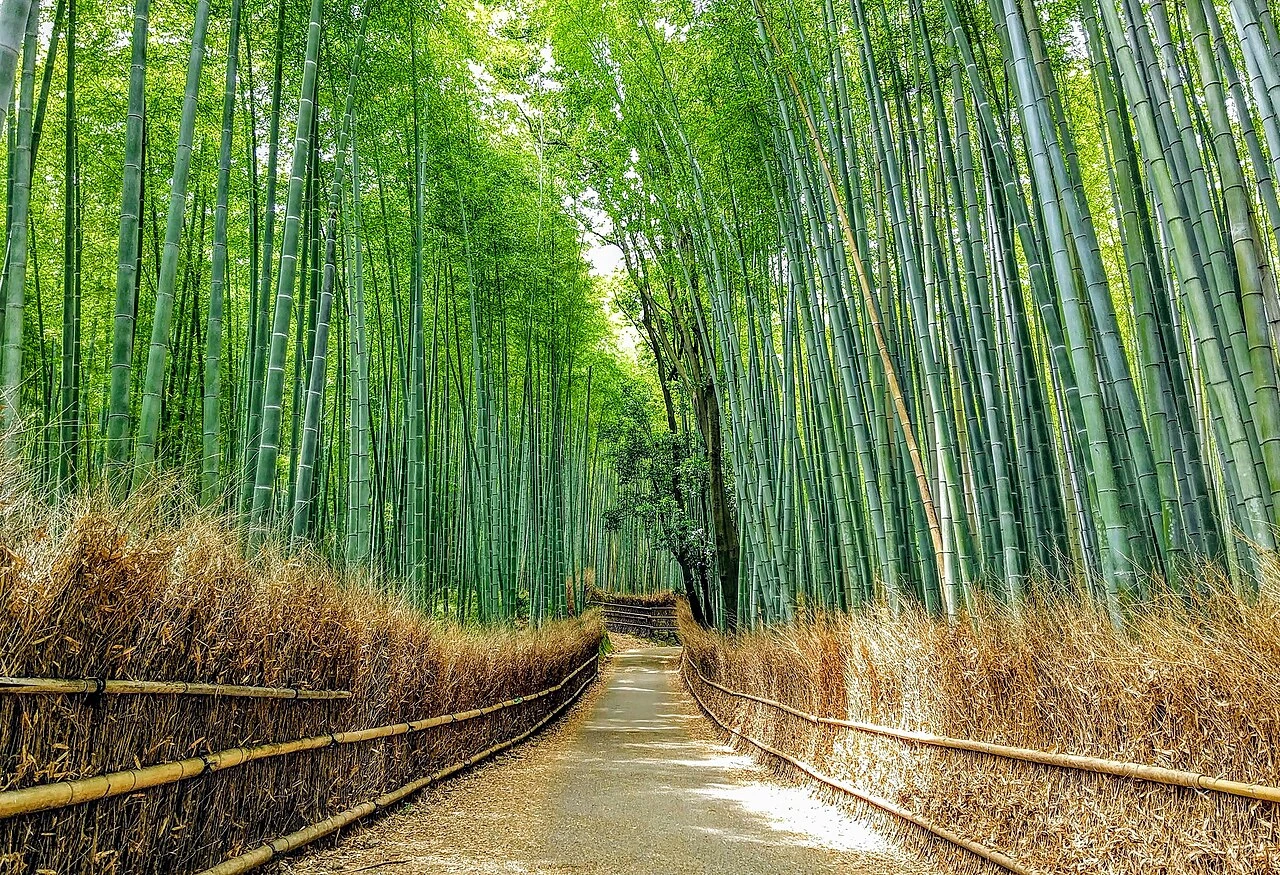
The tall bamboo groves most people picture, including the famous Arashiyama bamboo forest in Kyoto, are concentrated in warmer central and southwestern Honshu, Shikoku, and Kyushu. These areas offer mild winters, warm summers, and high rainfall. But dwarf bamboo (sasa) is everywhere. Scientific surveys have documented it thriving at elevations around 670 meters above sea level near Lake Towada in Akita prefecture, where the mean annual temperature is just 6.7°C (about 44°F) and annual rainfall averages 1,666 mm. That is a genuinely cold, mountain forest setting, not a tropical garden.
Types of bamboo found in Japan
Japanese sources broadly divide bamboo into two categories: 'sasa' (dwarf bamboo or bamboo grass) and 'take' (tall bamboo). That distinction is worth keeping in mind because they behave very differently in a garden.
Dwarf bamboo (sasa)
Sasa species are native to Japan and are ecologically dominant in the country's forest understories. They are low-growing, with many thin culms rising from a highly branched underground rhizome network. Because they are leptomorph (running) rhizome types, they spread laterally rather than forming neat clumps. blank" rel="noopener noreferrer">Pleioblastus viridistriatus, known as kamuro-zasa, is one example of a distinctly Japanese native bamboo in this category. These species are adapted to cold, shaded forest floors with consistent moisture, which is why they cover so much of Japan's mountain forests. In Hokkaido, sasa is considered an essential component of the forest floor, with its distribution directly shaped by winter climate.
Tall bamboo (take)
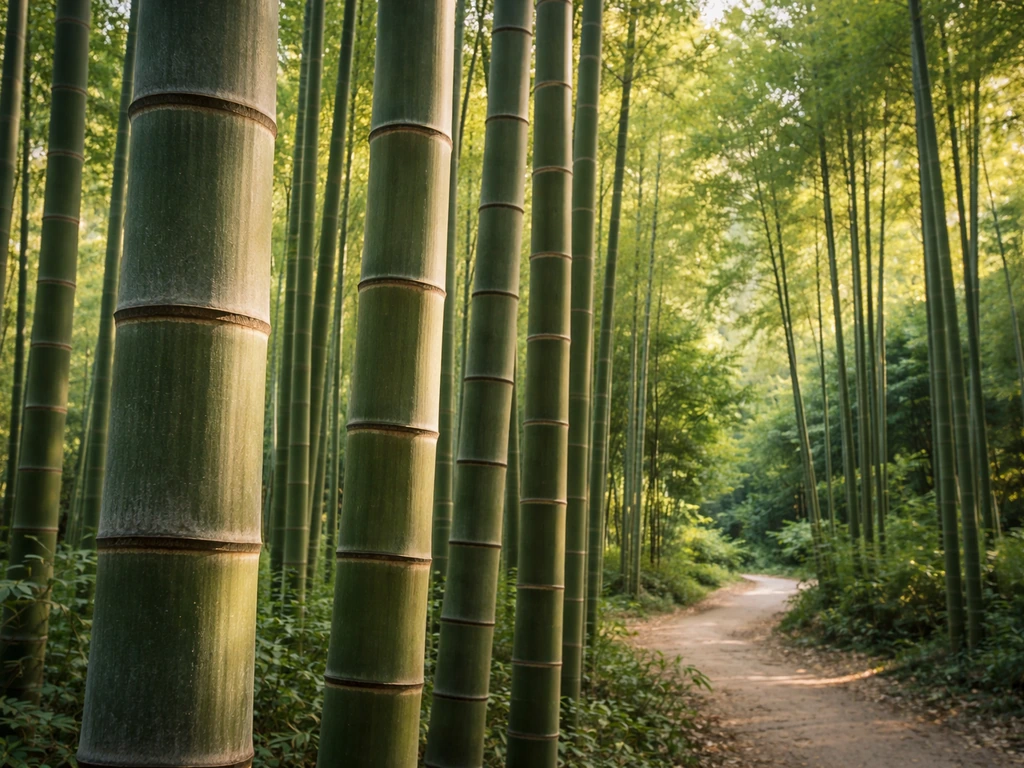
The tall bamboos most familiar to visitors are largely introduced or naturalized species, most notably moso (Phyllostachys edulis) and hachiku (Phyllostachys nigra var. In Kyoto, the Arashiyama Bamboo Grove (Sagano Bamboo Forest) is described as a natural bamboo forest composed mostly of moso bamboo (Phyllostachys edulis) moso (Phyllostachys edulis).
henonis). Moso is a typical East Asian bamboo that can go more than 60 years without flowering, spreading almost entirely through its rhizome system rather than seed. Hachiku is notable for its extremely long flowering cycle, estimated at around 120 years. Hiroshima University actually observed this rare event on campus.
Both species are running types with vigorous rhizomes. The hybrid species Phyllosasa tranquillans is native to woodland in southern Honshu, showing that Japan also has genuinely indigenous tall bamboo diversity beyond the well-known Phyllostachys introductions.
How bamboo actually grows: shoots, culms, and timing
One of the biggest misconceptions I hear is that bamboo 'grows slowly.' What bamboo actually does is spend years building up an underground rhizome system, then shoots up new culms very rapidly once the root network is established. A culm (an individual bamboo stalk) reaches its full height within a single growing season. It does not get taller year after year like a tree. What grows year after year is the underground system, which eventually supports taller and thicker new culms each season.
In Japan, the visual impression of a bamboo forest with hundreds of culms at different heights is actually often a single organism. Many culms in a Japanese bamboo stand share one connected rhizome system underground. This is not just interesting biology. It directly affects how you manage bamboo in a garden, because cutting one culm does nothing to stop rhizome spread.
Shoot emergence timing varies by species and climate. In Japan's warmer regions, moso shoots emerge in spring. Sasa species in colder mountain zones push shoots later in the season. The main practical point is that once a bamboo is well established, new shoot production accelerates noticeably, which is why the old saying 'sleeps, creeps, leaps' holds up.
Can you grow bamboo where you live? Matching Japan-like conditions
Japan's bamboo success comes down to a few climate factors: sufficient rainfall and humidity, moderate to warm growing seasons, and winters that are cold but not brutally so (at least for most of the tall bamboo zones). If your climate broadly matches any part of Japan's range, you can almost certainly grow bamboo.
For the tall running bamboos like Phyllostachys species, cold hardiness is better than most people expect. Phyllostachys aureosulcata, for example, is cold-hardy down to around USDA hardiness zone 5. In practice, this means it can survive winter lows of around -20°C (-4°F) with root survival, even if leaves suffer some damage. If you are in a temperate climate with a genuine warm growing season, these bamboos can perform similarly to how they do in central Japan.
For something closer to a sasa-style planting in a cooler, shadier spot, remember that sasa in Japan thrives at mean annual temperatures around 6.7°C with over 1,600 mm of annual rainfall. You do not need that much rain if you can supplement with irrigation, but the cool tolerance and shade tolerance of dwarf bamboo types are real and useful if you live somewhere with cold winters and shaded garden spaces.
If you are in a climate with very dry summers, intense heat, or poor drainage, bamboo will struggle regardless of species. Japan's bamboo regions all share one thing consistently: moisture. That is the variable most people underestimate.
| Bamboo type | Japan analog | Cold hardiness (approx.) | Best for |
|---|---|---|---|
| Moso (Phyllostachys edulis) | Central/SW Honshu groves | Zone 7+ (-15°C / 5°F) | Large screening, traditional groves |
| Yellow groove (P. aureosulcata) | Cooler Honshu regions | Zone 5 (-20°C / -4°F) | Cold climates, specimen plantings |
| Sasa / dwarf bamboo | Mountain forest understory | Zone 5 and colder | Ground cover, shade gardens, slopes |
| Pleioblastus viridistriatus | Native Japanese woodland | Zone 6–7 | Low hedges, ornamental ground cover |
Growing conditions that actually matter
Sunlight
Most tall bamboos want full sun to partial shade. Sasa-type dwarf bamboos are more shade-tolerant, which is exactly why they dominate forest understories in Japan. If you are planting in a shaded yard and want something Japan-like, a dwarf running bamboo is a better fit than moso.
Soil and drainage
Bamboo prefers fertile, well-draining soil rich in organic matter. It does not like waterlogged conditions. A slightly acidic to neutral soil pH (around 5.5 to 7.0) works well for most species. It is worth doing a simple soil pH test before planting, especially if your site has heavy clay or recent construction fill. Amending with compost improves both drainage and fertility in one step.
Water
Lack of water is the most common reason newly planted bamboo struggles or fails. During hot, windy weather, a new plant can desiccate quickly before it has established enough root mass to support itself. For the first season especially, water deeply and consistently. For established in-ground bamboo in dry climates, supplemental watering during extended dry spells is not optional, it is what keeps growth quality high.
Containers vs. in-ground planting
Growing bamboo in a container is a legitimate option, particularly if you are in a colder climate where winter protection matters, or if you want to avoid any spread issues entirely. Container bamboo dries out much faster than in-ground plants, so you need to water more frequently. The trade-off is total control over spread. For running species like most Japanese-origin bamboos, containers or a physical rhizome barrier are not just good ideas, they are close to essential if you value your neighbors' yard.
Timing your planting
Plant bamboo early enough in the season for the root system to establish and harden off before winter arrives. If you plant late and your first winter is harsh, mulch the base heavily and shield the plant from cold, drying winds. A bamboo that goes into winter as a stressed, newly planted specimen is much more vulnerable than one that had a full growing season to root in.
Containment, spread, and the things people get wrong
This is the part most people skip, and it is the part that causes real regret. The same rhizome-spreading behavior that makes Japanese bamboo forests so visually dramatic is the behavior that can take over a garden or cross a property line within a few years if you are not prepared for it.
Running vs. clumping: know which you have
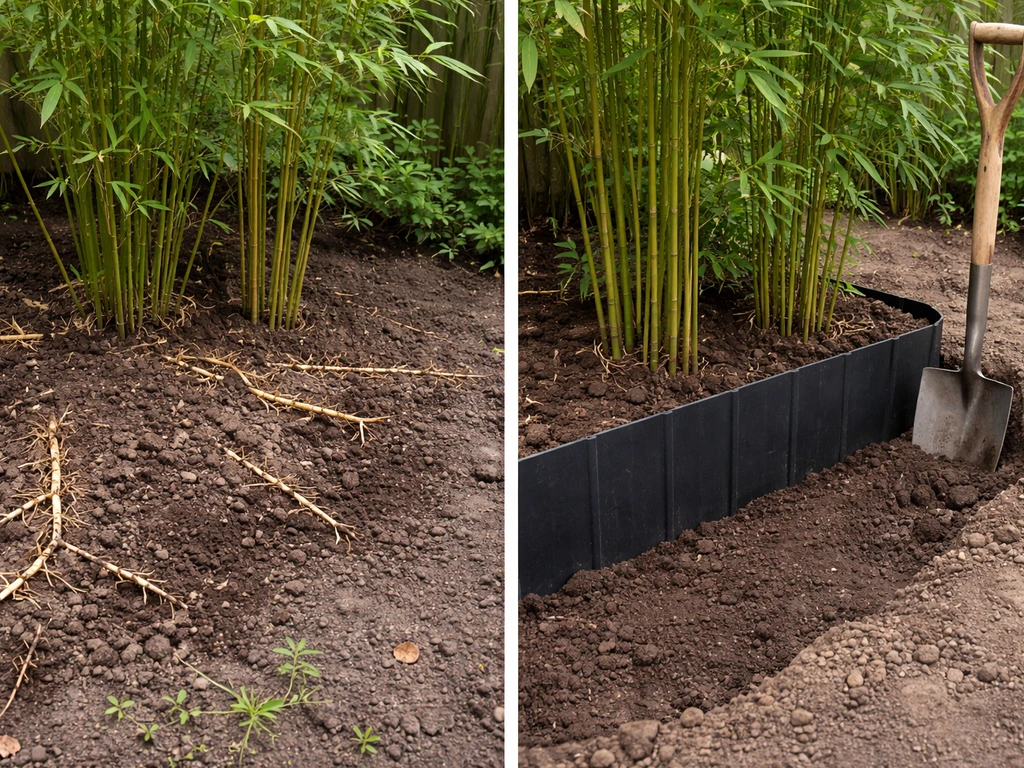
Most Japanese species are running (leptomorph) bamboos. This includes all Phyllostachys, Pleioblastus, and Sasa genera. Running bamboos spread aggressively via underground rhizomes and require active management. Clumping (pachymorph) bamboos expand slowly from a central point and are much easier to contain. If you plant a running bamboo without a plan for containment, assume it will spread.
Rhizome barriers
For running bamboo planted in-ground, a physical rhizome barrier is the most reliable containment method. Bamboo rhizomes typically travel in the top 12 to 18 inches of soil, so a barrier needs to go deeper than that. A 24-inch barrier installed in a trench about 22 to 28 inches deep, with roughly 2 inches left protruding above ground level, is a standard installation approach. The above-ground lip matters: rhizomes that reach the barrier will often try to go over the top, so that protrusion redirects them upward where you can spot and cut them. Use 60 mil thickness HDPE barrier material, not thin plastic sheeting, which rhizomes will eventually punch through.
Ongoing management
Even with a barrier, check the perimeter once or twice a year and cut any rhizomes that have escaped or arched over the top. If you skip this for two or three years, you may return to find a much bigger problem. Removing escaped culms at the surface does not kill the rhizome. You need to dig out the underground runner itself to stop spread from an escaped section.
Common failures and how to avoid them
- Underwatering in the first year: newly planted bamboo cannot tolerate drought before it establishes. Water deeply, not just at the surface.
- Planting a running species without containment: always install a barrier before planting, not after spread has started.
- Expecting fast results in year one: bamboo spends its first one to two seasons building underground. Visible above-ground growth accelerates dramatically in years two and three.
- Ignoring winter hardiness: match the species to your USDA hardiness zone. A zone 7 species planted in zone 5 without protection will die back badly or not survive.
- Poor drainage: bamboo roots sitting in standing water will rot. If your site holds water, amend the soil or build a raised bed before planting.
Your practical next steps
Japan is a useful reference point precisely because it covers such a wide climate range. Whether you are in a cool temperate zone similar to northern Honshu, a warmer region like western Kyushu, or even a shaded woodland environment like the mountain forests where sasa dominates, there is a Japanese bamboo analog that can work for you. The same basic principles apply whether you are in a comparable climate in Europe, North America, or elsewhere.
Bamboo grows in Japan so successfully not because of magic, but because the conditions are right. Get the moisture, drainage, cold hardiness match, and containment plan correct, and you can replicate that success. If you’re wondering can bamboo grow in Ireland, start by matching these moisture, drainage, and cold-hardiness basics and choose a variety suited to your local winters.
In the same way, you can ask whether bamboo grows in India by comparing India’s regional climates to these Japan-like moisture and temperature conditions.
- Identify your USDA hardiness zone (or local equivalent) and match it to a species that fits, using the table above as a starting reference.
- Test your soil pH and amend with compost if needed before planting.
- Decide between in-ground with a rhizome barrier or container growing based on how much space management you are willing to commit to.
- If planting in-ground with a running species, install a 60 mil HDPE barrier at least 24 inches deep with 2 inches above the soil surface before the plant goes in.
- Plan your watering approach for the first full growing season, especially during any hot or windy stretches.
- Set a calendar reminder to inspect your barrier perimeter each spring and cut any escaped rhizomes before they establish.
Bamboo's reputation as difficult or invasive mostly comes from people skipping the containment step. With the right species, the right moisture, and a simple barrier plan, it is genuinely one of the more rewarding plants you can grow. Japan figured that out a long time ago.
FAQ
Does bamboo grow in Japan naturally everywhere, or only in certain areas?
It is widespread, but not uniform. Tall “take” groves concentrate in milder, wetter parts of central and southern Honshu, Shikoku, and Kyushu, while “sasa” dominates shaded forest understories and can persist at higher, colder elevations. The key takeaway is that Japan’s bamboo presence tracks consistent moisture and workable winter severity, not just temperature alone.
If bamboo grows in winter in Japan, can it survive frost where I live?
Many Japanese bamboo types are cold-hardy enough to survive freezing winters, especially for root survival, but leaf damage is still common. Plan for protection of newly planted specimens (mulch and wind shielding) and expect spring regrowth rather than “no damage at all.”
Which is more like Japanese bamboo for a small garden, sasa or moso?
For many yards, sasa-style bamboo is closer to what you see under Japanese forests, because it tolerates shade and stays low. Moso is more aggressive in-ground because it is a running type with strong rhizomes, so it usually needs strict containment or a container system.
Can I grow bamboo in Japan’s style in a dry climate if I water?
You can improve your odds with irrigation, but drainage still matters. In dry climates, the most reliable approach is deep, consistent watering during establishment and supplemental watering during heat waves, while also ensuring the soil does not stay waterlogged after rain. Bamboo fails most often from drought stress plus poor moisture management.
Do bamboo seeds come from Japanese groves for home growing?
Seed propagation is possible but often unreliable for backyard timing because many popular running bamboos flower rarely (sometimes on multi-decade cycles). For most gardeners, division or buying established plants is a more practical route, especially if you want predictable emergence in your local season.
When is the best time to plant bamboo so it matches Japan’s success?
Plant early enough that roots can establish and “harden off” before winter. In colder climates, late planting is a common mistake, the plant enters winter stressed and struggles more, even if it is a cold-tolerant species. If you miss the ideal window, prioritize heavier mulching and wind protection.
If I install a rhizome barrier, do I still need to maintain the perimeter?
Yes. A barrier reduces escape, but it is not a “set and forget” solution. Rhizomes can arc over the top if the above-ground lip is too low or the barrier is installed shallow, so plan to inspect and trim any escapes once or twice per year.
How deep should a rhizome barrier go, and what thickness works?
Plan for a deeper barrier than most people expect because rhizomes typically run within the top 12 to 18 inches of soil. A common effective setup uses a trench around 22 to 28 inches deep with the barrier extending above ground (about a couple inches) and using a robust barrier material (around 60 mil HDPE), not thin plastic sheeting.
Do I have to dig out the rhizome if bamboo shoots pop up later?
For escaped running bamboo, yes. Cutting visible culms does not eliminate the underground system. To stop spread, you usually need to locate and remove the escaped rhizome section, especially if new shoots keep appearing in the same spot.
Is container growing safer if I want bamboo but not an invasion?
It is often the simplest way to prevent spread, and it is helpful in colder climates where winter protection is needed. The trade-off is faster drying, containers require more frequent watering, and you may need to manage winter exposure to avoid root damage from repeated freeze-thaw cycles.
What mistake makes bamboo fail even if the species can handle winter?
Underwatering newly planted bamboo is the most common problem. A new plant has limited root mass, hot or windy conditions can desiccate it quickly, so it may look like “cold hardiness failed” when the real issue is water stress. Give deep, consistent watering through the first season.
Next Article
Does Bamboo Grow in Africa and South Africa? Guide
Learn if bamboo grows in Africa and South Africa, which species fit climates, and how to plant, care, and contain it.