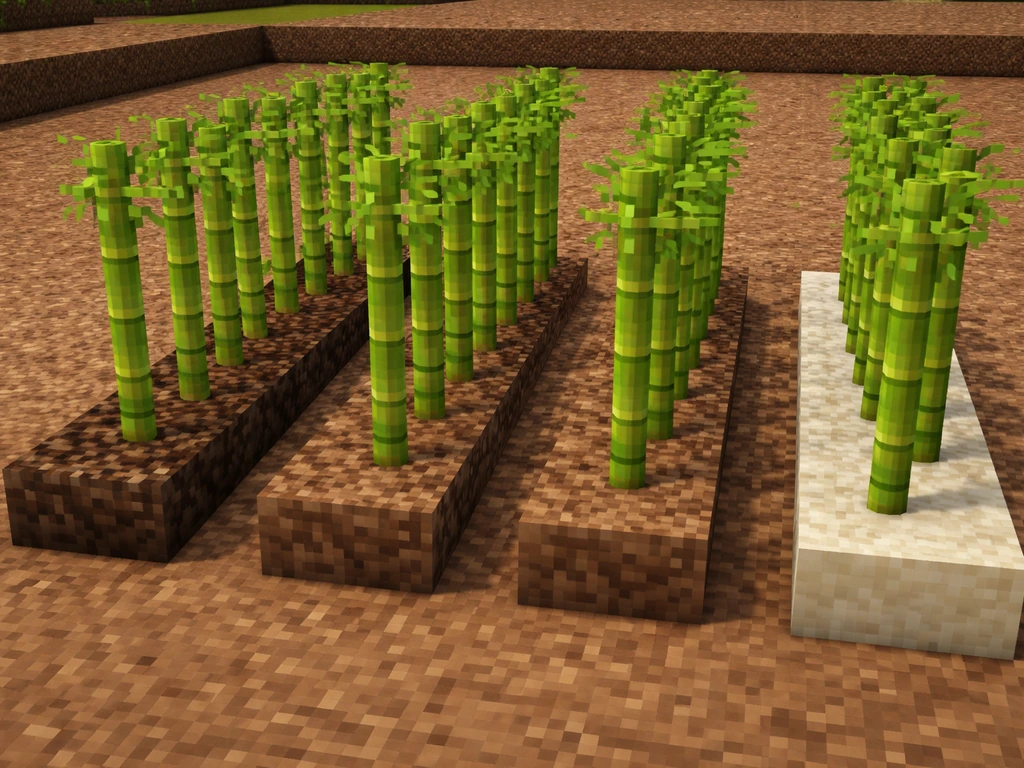
Yes, bamboo can grow in the Nether, but only if you bring the right blocks with you. The Nether itself has no bamboo-compatible surfaces by default, and its native blocks like netherrack, soul sand, and nylium won't support bamboo. Once you import a plantable block, though, the Nether stops being a problem. Bamboo doesn't care about biome, heat, or moisture. It only cares about three things: a compatible block to root in, a light level of at least 9 at its top, and random ticks happening. Get those three right, and bamboo grows in the Nether exactly as it does in the Overworld.
Can Bamboo Grow in the Nether? Requirements and Fixes

Marcus Hartwell
1 Jun 2026

What the Nether's environment actually does to bamboo
A lot of players assume the Nether's extreme heat or lava-heavy environment will kill bamboo or block its growth. That's not how Minecraft works. Bamboo doesn't have a temperature sensitivity mechanic. The Nether doesn't burn plants on contact or suppress random ticks. What makes the Nether genuinely hostile to bamboo farming is purely the lack of compatible ground blocks, not the atmosphere itself.
The Nether's native blocks are netherrack, nether bricks, soul sand, soul soil, basalt, blackstone, nylium (crimson and warped), and glowstone, among others. None of these appear on bamboo's list of plantable surfaces. Soul sand and soul soil might seem like they could work given their 'sand-like' look, but they are not the same block type as regular sand and don't count as valid bamboo substrates. Nylium is another trap: it looks organic, but bamboo can't root into it either, and it decays into netherrack if you place an opaque block above it, which makes it unreliable even if it somehow worked.
The one real Nether-specific issue worth noting is lighting. Parts of the Nether, especially enclosed cave areas or areas under a Nether roof, can be quite dark. Since bamboo needs light level 9 or above at its growing tip, you'll need to think about light sources when setting up your farm underground or in shadowed spots.
Exactly what bamboo needs to grow (Nether or anywhere else)

Bamboo's growth rules are refreshingly simple once you strip away the myths. There's no water requirement, no soil pH mechanic, no biome check. Bamboo growth in Minecraft is not accelerated by adding water, so focus on valid substrate, sufficient light, and random ticks instead no water requirement. Here's the complete list of what bamboo actually needs:
- A compatible plantable block directly beneath it: moss block, grass block, dirt, coarse dirt, rooted dirt, gravel, mycelium, podzol, sand, red sand, suspicious sand, suspicious gravel, or mud. Bamboo can also be placed on top of existing bamboo.
- Light level 9 or higher at the very top of the bamboo stalk. This is checked at the topmost block, not the base.
- Random ticks: at default randomTickSpeed of 3, each bamboo plant grows roughly once every 204.8 seconds (about 4096 game ticks). Raising randomTickSpeed speeds this up significantly.
- Vertical clearance: bamboo can grow up to 12 to 16 blocks tall, so make sure there's enough headroom or it will stop extending.
That's genuinely the whole list. No water, no rainfall simulation, no specific biome. This is actually one of bamboo's big advantages as a farm crop: it's one of the least demanding plants in the game once you meet those four requirements.
How to actually set up a bamboo farm in the Nether today
Here's a practical setup you can build right now. The most efficient approach mirrors what works in the Overworld: bring your substrate blocks with you, lay them down, plant bamboo, confirm your lighting, and let the tick engine do the rest.
- Choose your location in the Nether. Open areas in the Nether Wastes or Basalt Deltas work well because they tend to have more vertical clearance than Nether Fortress corridors. Avoid tight ceilings if you want bamboo to reach full height.
- Bring dirt, grass blocks, mud, or sand from the Overworld. You need at least one of these per bamboo stalk you want to plant. Mud blocks are a solid choice since they're easy to transport in bulk and work perfectly as a bamboo substrate.
- Place your plantable blocks on a flat surface in the Nether. A double row layout, for example two parallel rows of 8 to 10 blocks each, gives you a clean, harvestable farm footprint.
- Plant bamboo on each block. If you're starting from bamboo items, just right-click each substrate block with bamboo in hand.
- Check your light levels. Use a light-level display (F3 screen in Java) or place enough torches, lanterns, or glowstone to ensure the top of each bamboo shoot will hit light level 9 or above as it grows. In practice, placing torches or lanterns every 4 to 5 blocks along the rows is usually sufficient for the lower levels. As stalks grow taller, the tops move further from floor-level light sources, so consider elevated light placement on walls or above the farm.
- Verify randomTickSpeed hasn't been set to 0 (which would stop all plant growth). Type /gamerule randomTickSpeed in chat to check. Default is 3.
- Wait for growth to begin. You'll see the bamboo stalk extend upward. If nothing happens after a couple of minutes at default tick speed, check your light and block placement.
If you want to speed things up, you can raise randomTickSpeed with /gamerule randomTickSpeed 10 or higher. Just know that higher values affect all random-tick-driven processes in loaded chunks, not just your bamboo. Zero-tick farming exploits have also been used historically to grow bamboo almost instantly by manipulating tick scheduling, though the viability of those techniques can vary by game version. The Minecraft Wiki's zero-ticking tutorial describes zero-ticking techniques that exploit random-tick mechanics and explicitly lists bamboo among the plant types affected by random tick scheduling Zero-tick farming exploits have also been used historically to grow bamboo almost instantly.
How long bamboo takes to grow and how to track it
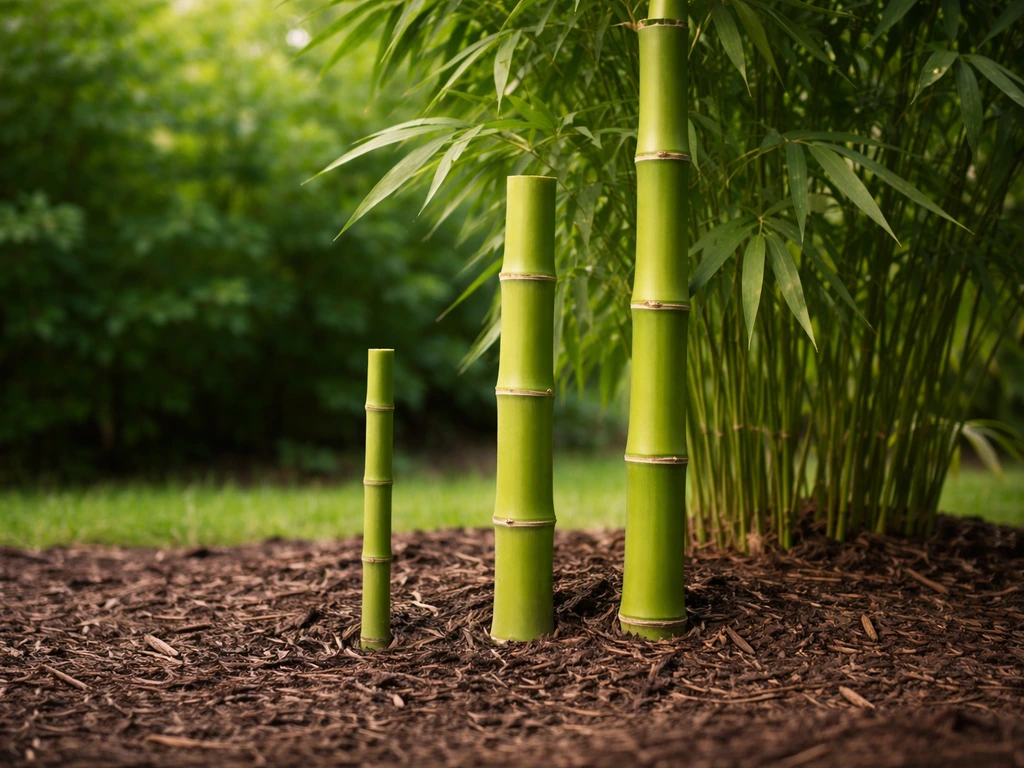
At the default randomTickSpeed of 3, each bamboo plant receives a random tick roughly once every 4096 game ticks, which works out to about 204. In Java Edition, how many blocks get selected for random ticking per chunk tick is governed by the gamerule randomTickSpeed (default 3) the default randomTickSpeed of 3. 8 seconds per growth stage. That's roughly 3.4 minutes per block of height added. To grow from a single shoot to a full 12-block stalk at default speed, you're looking at somewhere around 40 minutes, assuming optimal light the whole time.
The easiest way to track progress is to just watch the stalk height. Mark the starting height when you first plant, come back after a few minutes, and count blocks. If the stalk has grown by at least one block in 5 to 10 minutes, everything is working correctly. In Java Edition, pressing F3 lets you check light levels at any block, which is helpful for confirming your top-of-stalk light is staying above 9 as the plant gets taller.
Why your bamboo might not be growing (and how to fix it)
If you've planted bamboo in the Nether and nothing is happening, the cause is almost always one of three things: wrong block, wrong light, or zero ticks. Here's how to diagnose each one.
| Problem | Symptom | Fix |
|---|---|---|
| Wrong substrate block | Bamboo can't be placed at all, or the item just drops when you try | Replace Nether blocks with dirt, mud, sand, grass block, or another valid substrate brought from the Overworld |
| Light level too low | Bamboo is planted but never grows, and F3 shows light below 9 at the top | Add torches, lanterns, or glowstone near and above the farm; use elevated or wall-mounted light sources as stalks grow |
| randomTickSpeed is 0 | No plants grow anywhere in the game world | Run /gamerule randomTickSpeed 3 to restore default tick speed |
| Ceiling too low | Bamboo stops growing at a certain height | Build the farm in a more open Nether area or expand vertical clearance by 12 to 16 blocks above the substrate |
| Nylium used as substrate | Bamboo won't root into nylium; the block also decays if covered | Swap out nylium for a valid Overworld-origin substrate block |
One mistake worth calling out specifically: if you tried planting bamboo on soul sand or soul soil because they looked like sand-type blocks, that won't work. They're classified differently from regular sand and red sand, and bamboo simply won't root into them. Bring actual sand or dirt instead.
When Nether growth isn't the right move
Honestly, setting up a bamboo farm in the Nether only makes sense if you have a specific reason to be there, like combining it with another Nether project or using the Nether highway system for faster transport between farms. If your goal is simply to grow bamboo efficiently, the Overworld is easier and requires no block importing. A basic double-row bamboo farm on dirt or mud in the Overworld, outdoors with natural sunlight (which always provides maximum light level), will outperform a Nether setup in simplicity and setup time.
If you're exploring other variables, like which block bamboo grows fastest on, whether mud gives any advantage, or whether water placement near a farm matters, those questions connect back to the same core mechanics: compatible substrate, light level 9 or above, and random ticks. In general, bamboo grows faster on the same compatible blocks it can root into, so you still need to pick a valid substrate like dirt or sand what block bamboo grows fastest on.
The block type doesn't change bamboo's growth speed since the tick rate is the same regardless of which valid substrate you use. If you're also wondering what bamboo grows fastest on in Minecraft, the answer comes down to choosing any valid substrate block and keeping the required light and random ticks in place what does bamboo grow fastest on minecraft.
Bamboo growth speed on mud in Minecraft follows the same core rules, so the right light and random ticks matter more than the exact ground block bamboo grow faster on mud. The real levers are light level and randomTickSpeed, not the specific dirt or sand variant you choose.
For most players, the practical takeaway is this: bamboo in the Nether is possible, not difficult, but it requires preparation. Bring your dirt or mud, manage your lighting, and bamboo will grow there just as reliably as it does anywhere else in the game.
FAQ
Do I need to bring dirt or sand, or can I use any Nether block that looks similar like soul soil or nylium?
You need blocks that are valid bamboo substrates (the same kinds bamboo can root into in the Overworld). Soul sand, soul soil, and nylium do not count, even though they resemble sand-like or organic blocks. If you want a safe option, bring standard dirt or sand (and then confirm you have light at the bamboo’s top).
Will water help bamboo grow faster in the Nether, or prevent it from stalling?
Water does not increase bamboo growth speed, and bamboo does not have a moisture requirement. If growth stalls, it is almost always substrate validity, light at the top being below 9, or random ticks not occurring in that area, not water placement.
How do I tell if the light level is failing, especially after the bamboo gets taller?
Check the light level specifically at the top block of the bamboo shoot, not at the base. In dark Nether areas or under overhangs, the top can fall below light 9 as it grows. In Java, use F3 to verify the top’s light value while you monitor growth.
Do I need skylight or open air in the Nether, or will lamps and glowstone work?
Open air is not required. Artificial lighting works as long as it results in light level 9 or above at the bamboo’s growing tip. A practical approach is to place light sources so they still illuminate the upper portion of the stalk after it reaches its target height.
What happens if random ticks are off or my chunk is not being processed?
Bamboo will not grow without random ticks. If you disabled random ticking on the server, are in a far-away or unloaded chunk, or are using a tick-reduction setup, bamboo will stay stuck. Make sure the farm chunks are loaded long enough for tick processing.
Will changing randomTickSpeed speed up bamboo in the Nether, and how does it affect other farms?
Yes, increasing randomTickSpeed speeds up all random-tick driven behavior in loaded chunks, not only bamboo. That means it can also accelerate other systems you may not want to change, like plant spreading or related block updates, so apply the gamerule thoughtfully and test in a copy world.
Is it worth building a large bamboo farm in the Nether versus just doing it in the Overworld?
Nether farming is only simpler if you have a Nether-specific reason (for example, integrating it into an already built Nether route). If your goal is maximum bamboo output with minimum hassle, the Overworld often wins because you do not have to import substrate blocks and you can rely on natural outdoor light.
How can I estimate whether my bamboo farm is working after I plant it?
Use the stalk height as your progress meter. Mark the starting height, then check after 5 to 10 minutes. If you see at least one block of growth in that window, substrate and lighting are likely correct and random ticks are occurring.
Why did bamboo grow in some spots but not others in the same Nether farm?
Most uneven growth comes from inconsistent light at the top, mixed or accidental placement of an invalid substrate block, or some shoots being in areas where random ticks do not reach (for example, due to chunk loading patterns). Walk the farm and verify the substrate type and light placement for the sections that failed.
Can bamboo be replanted right away after harvesting, and does it reset its growth cycle differently in the Nether?
When you harvest bamboo, the remaining bamboo and the newly planted shoots still rely on the same rules (valid substrate, light 9+ at the top, and random ticks). The Nether does not change the growth cycle behavior, so you manage it the same way you would in the Overworld.
Next Article
Does Bamboo Grow Faster on Mud in Minecraft? Tests
Tests show whether bamboo grows on mud, dirt, and sand in Minecraft and if mud speeds growth versus sand.