
In Minecraft, bamboo grows at the same speed regardless of which valid block it's planted on. There is no special "fastest" substrate that gives you extra growth ticks. What actually controls speed is the random tick system, the light level at the top of the plant, and how many bamboo stalks you have actively growing at once. A Minecraft Feedback community post states that the default random tick speed is 3 on Java Edition and 1 on Bedrock Edition Java defaults to 3, Bedrock to 1. If you want faster bamboo, the real levers are light level (keep it at 9 or above), random tick speed (Java defaults to 3, Bedrock to 1), and farm size.
What Block Does Bamboo Grow Fastest on in Minecraft

Marcus Hartwell
9 Jun 2026
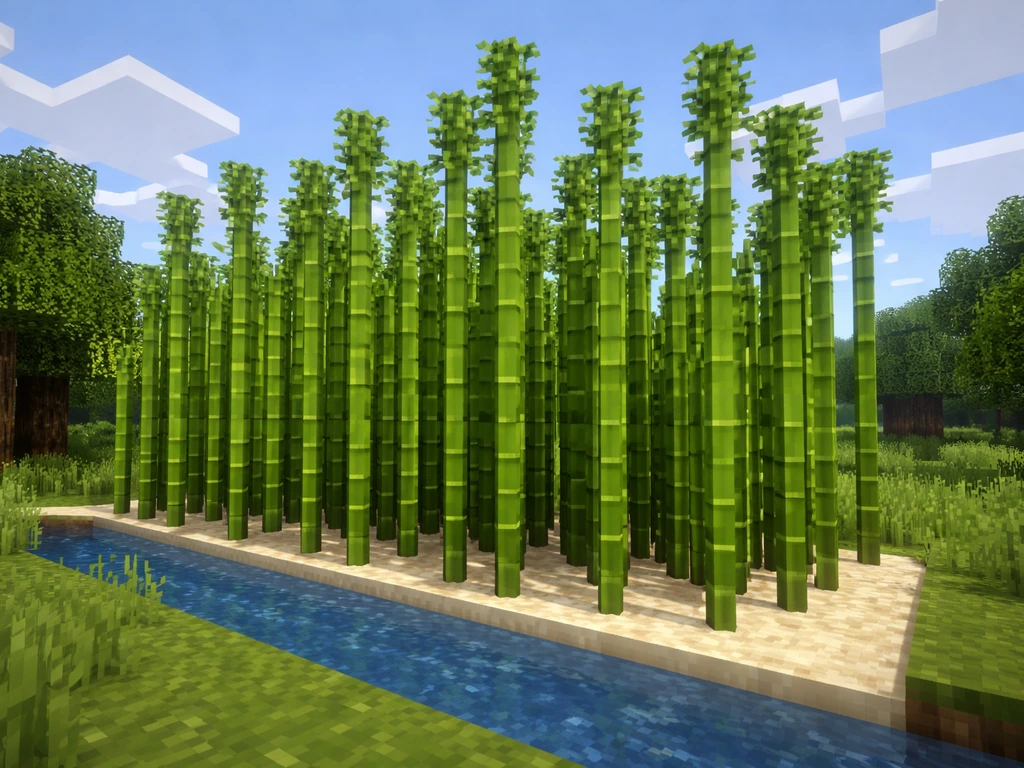
The best block for bamboo: the real answer
Bamboo does not grow faster on any one block over another. The game's growth mechanic is tied to random ticks, not to the substrate type. That said, you do need to plant bamboo on a valid block or it simply won't plant at all. The Minecraft Wiki's bamboo farming tutorial specifically uses mud blocks as the example substrate, and that's a fine practical choice. But grass, dirt, coarse dirt, rooted dirt, gravel, sand, red sand, mycelium, podzol, and moss (Java only) all work equally well. Pick whichever is easiest to source in your world. Mud is cheap and easy to make in bulk, which is probably why it shows up in so many farm guides.
What block bamboo must be planted on (and why it matters)
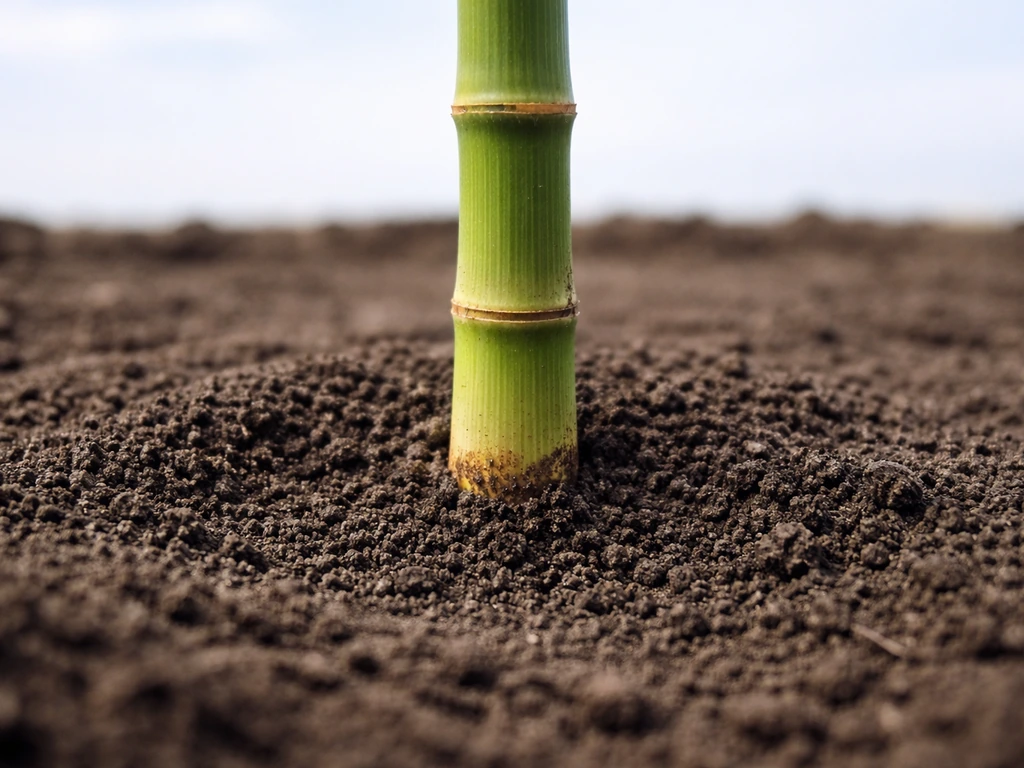
Bamboo is picky about its planting block but not in a speed-related way. It simply won't place on stone, concrete, wood planks, or most other blocks. If you try to plant it on an invalid surface, nothing happens. The valid blocks are all "natural ground" types, which makes sense given bamboo's real-world soil preferences. Here's the full list of valid substrates:
- Dirt
- Grass block
- Coarse dirt
- Rooted dirt
- Mud
- Mycelium
- Podzol
- Gravel
- Sand
- Red sand
- Moss block (Java Edition only)
- Suspicious sand or suspicious gravel
- Bamboo or bamboo shoot (self-planting)
The reason this matters practically is that you should plan your farm floor around what's easy to collect in large quantities. Dirt and mud are the most accessible, so most farms use one of those. There is no mechanical penalty for using gravel or sand over dirt, so don't worry about swapping substrate types trying to squeeze out extra growth. It won't help.
What actually controls growth speed
Bamboo growth is governed by the random tick system. Every game tick, the engine randomly selects blocks in each chunk to "tick," and bamboo only grows when it receives one of those ticks. At the default random tick speed of 3 (Java Edition), each individual bamboo stalk grows roughly once every 4,096 game ticks, which works out to about 204 seconds or a little over 3 minutes per growth stage. On Bedrock Edition, the default random tick speed is 1 instead of 3, which means bamboo farms on Bedrock run approximately three times slower under otherwise identical conditions. This is a very common source of confusion and frustration.
The other critical factor is light. The block directly above the top of the bamboo stalk needs a light level of 9 or higher. If you build a roof too low, or place your farm in a shadowed area, the bamboo will simply stop growing once it hits the dark zone. This is probably the most common reason farms suddenly stall after a few growth stages.
Water and adjacency: does it help?
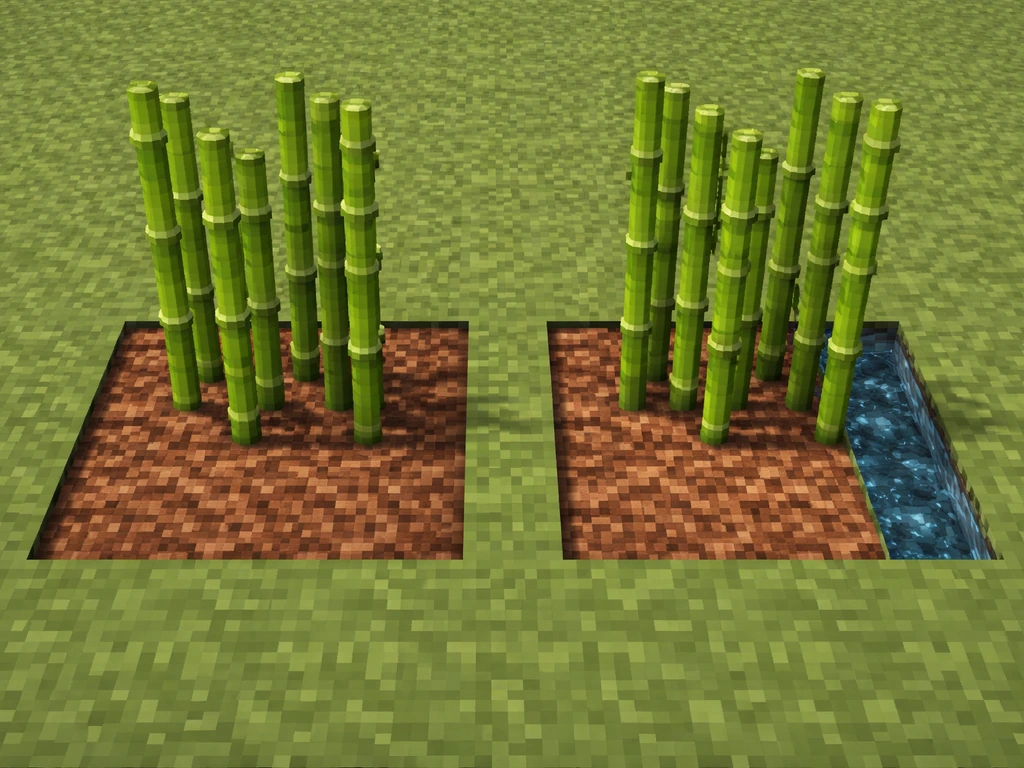
Unlike wheat or most other crops in Minecraft, bamboo does not need water to grow and is not affected by water adjacency in terms of growth speed. You do not need to place water next to bamboo. Water channels are sometimes used in automated bamboo farms to flush harvested stalks into a collection hopper, but that's a logistics feature, not a growth mechanic. Adjacent blocks can matter for bamboo's spreading behavior (bamboo can sometimes convert adjacent dirt or grass-type blocks over time), but that has nothing to do with how fast a single stalk grows vertically.
Java vs. Bedrock: a quick comparison
| Feature | Java Edition | Bedrock Edition |
|---|---|---|
| Default random tick speed | 3 | 1 |
| Avg. growth time per stalk (default) | ~204 seconds | ~612 seconds |
| Can increase with gamerule? | Yes (/gamerule randomTickSpeed) | Yes (/gamerule randomTickSpeed) |
| Light requirement at top | Level 9+ | Level 9+ |
| Valid substrates | All listed above including moss | All listed above except moss |
| Water needed for growth? | No | No |
How to build a fast bamboo farm (step by step)
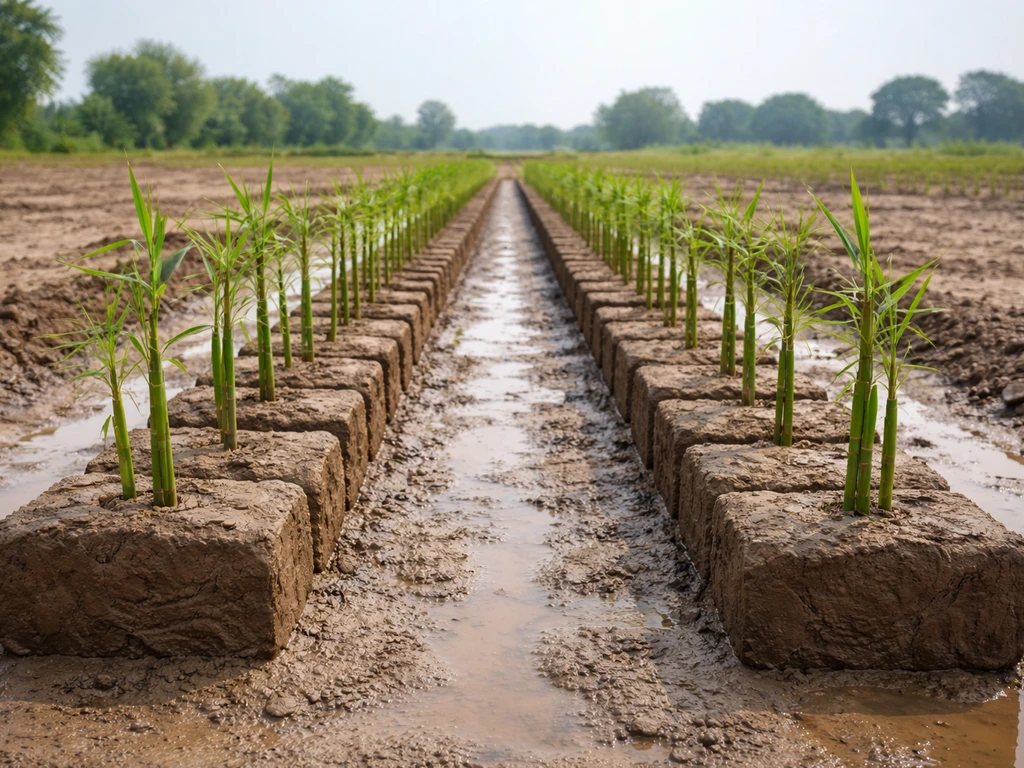
The most efficient approach for a basic bamboo farm is a double row design. The Minecraft Wiki's tutorial recommends planting a double row of 8 bamboo on mud blocks to create a 16-stalk farm. Here's how to build it:
- Choose a flat, open area with full sky access or place torches/glowstone at ceiling level if you're building underground. You need light level 9 or above at the top of each bamboo stalk.
- Lay down a 2x8 floor of mud (or dirt, grass, or any other valid substrate). This gives you 16 planting spots.
- Plant one bamboo shoot in each block. You can get bamboo from jungle biomes or by fishing in jungle biomes.
- If you want auto-collection, dig a 1-block-deep water channel around or under the farm floor and funnel it toward a hopper chest. This flushes knocked-down stalks to your collection point.
- Place pistons at your desired harvest height (typically 2-3 blocks above the floor) if you want automated harvesting. A lever or observer-piston setup can trigger the pistons.
- For max passive yield, just let the bamboo grow to near max height (around 12-16 blocks) and manually harvest. For automated yield, set pistons at height 2 so each plant always has one stalk left to keep growing.
- If you want to boost speed in a non-survival or testing scenario, use the command /gamerule randomTickSpeed 10 (or higher) to dramatically increase random tick frequency across all plants.
The key insight here is that yield scales with the number of actively growing stalks. A 16-stalk farm produces roughly 16 times the bamboo of a single plant. More plants equals more output even though each individual stalk grows at the same rate. This is the real optimization target, not substrate choice.
Troubleshooting slow growth
If your bamboo farm seems unusually slow or has stopped growing entirely, run through this checklist:
- Check the light level at the top of your tallest bamboo stalk. Use the debug screen (F3 on Java) and look at the light value above the stalk. If it's below 9, add light sources or remove anything blocking sunlight.
- Check your edition. If you're on Bedrock, expect growth to be about 3x slower than Java at default settings. This is working as intended, not a bug.
- Make sure your bamboo is actually in a loaded chunk. Plants only receive random ticks in chunks that are actively loaded. If you're too far away, the farm basically pauses.
- Verify you're not accidentally placing bamboo on an invalid block. If you replaced a block in your farm floor with stone or concrete, that stalk won't regrow after harvesting.
- Check that nothing is blocking upward growth. A roof, ceiling, or even a wayward block above a stalk will stop it from growing taller once it hits that ceiling.
- If you increased randomTickSpeed and growth seems broken or erratic, try resetting it to default (3 on Java, 1 on Bedrock) and observe again.
The two most common culprits I see are insufficient light (especially in covered or underground farms) and Bedrock players expecting Java-speed growth. If you are wondering about unusual locations, can bamboo grow in the Nether, and how does it compare to overworld growth? Both are easy fixes once you know what to look for.
Realistic speed expectations and how to verify your farm is working
At default settings on Java, each bamboo stalk takes roughly 3 to 4 minutes to grow one block. A single stalk growing from 1 block to 12 blocks tall will take somewhere around 35 to 50 minutes in real time. That sounds slow for a single plant, but a 16-stalk farm producing in parallel gives you a much more usable output rate. On Bedrock at default settings, multiply those estimates by about 3.
To verify your farm is actually working, place a fresh bamboo shoot and watch it for 5 to 10 minutes. You should see at least one or two growth events in that window on Java at default tick speed. If you're seeing nothing after 10 minutes, something is wrong with light or chunk loading. A quick test is to use /gamerule randomTickSpeed 100 temporarily, watch the bamboo rocket upward, then reset it back to 3. If it grows fast at 100 and doesn't grow at 3, your setup is fine but you may just be impatient with the normal pace.
If you're exploring related mechanics, questions like whether bamboo grows faster on mud specifically, whether bamboo can grow in the Nether, or whether it needs water to grow are all worth understanding as a complete picture of how bamboo behaves in different placement conditions. The answers all circle back to the same core mechanic: random ticks and light level are the real variables. The block under the bamboo is just a planting requirement, not a speed setting.
FAQ
If bamboo grows at the same speed on all blocks, does changing the substrate ever improve output?
No. Bamboo grows at the same vertical rate on any valid substrate when random ticks and light level are the same, so swapping dirt for gravel or sand will not make it faster. However, the block must be valid for placement, otherwise the shoots will not plant or will break and stop growing.
Why is my bamboo farm not growing even though the light level seems correct?
Bamboo only updates while its chunk is being randomly ticked and loaded. If you afk far away, bamboo in an unloaded chunk will not progress, and it can look like the farm is stalled. Use chunk-loading (or build close enough) when testing growth timing.
What exactly should I check for light, and how can I tell if shadows are the real problem?
It can. When the light above the bamboo falls below 9, growth stops for that stalk, even if the dirt block under it is valid. Check for skylight-blocking blocks, slabs, trapdoors, and accidental shadows from nearby builds, then confirm the light calculation is done at the block directly above the top of the bamboo.
What is a good way to test whether my bamboo setup is correct versus a tick-rate problem?
Yes, using the highest random tick speed you can can speed it up, but only temporarily if you change the game rules. If bamboo grows quickly at a high value, your setup is fine and the slowdown is just normal pacing or insufficient tick rates, then you can revert to the default.
If I don’t need water, why do so many bamboo farms include water?
Bamboo does not require water for growth, so adding a water channel does not speed up vertical growth. The most common role for water in bamboo farms is transporting harvested stalks to a collection point, such as into hoppers, rather than affecting how fast the stalks rise.
Does pistons, observers, or other redstone automation make bamboo grow faster?
No, you cannot speed up bamboo by placing it on top of farms or special machinery blocks. The only meaningful requirements are valid placement block under the shoot, enough light at the top, and normal random ticks. Anything else that looks optimized usually just improves collection or layout.
How can I quickly tell whether my bamboo is failing due to an invalid planting block?
If you put bamboo directly on top of a block that is not valid for planting, it will not establish, so you get zero growth. Common invalid surfaces include stone, concrete, wood planks, and most man-made blocks. If you see no growth events, first verify the placement block is one of the valid natural ground types.
Does bamboo spreading mean the farm is growing faster, or is it just adding more stalks?
Yes, bamboo spreading can matter to your farm layout, but it is separate from vertical growth speed. If adjacent blocks are affected, it changes where new shoots appear over time, not how quickly each already-growing stalk grows one block.
Why does my bamboo take so much longer on Bedrock compared to Java guides?
Your timing expectation should scale with edition. Bedrock defaults to a lower random tick speed than Java, so bamboo typically grows about three times slower under the same lighting and farm size. If you use a Java-style build for timing on Bedrock, you will often think it is broken.
What quick observations can confirm whether the farm is truly working?
For vertical growth, bamboo is effectively governed by light at the top, and random ticks. For a practical check, place a fresh shoot and watch for at least one growth event within several minutes on Java at default settings, then compare against the expected pacing. If it never grows, the issue is usually light level, chunk loading, or random tick behavior rather than substrate choice.
Next Article
What Does Bamboo Grow Fastest On in Minecraft?
Bamboo grows slower than sugar cane in Minecraft. Learn timings, comparisons, and how to set up each for max harvest spe