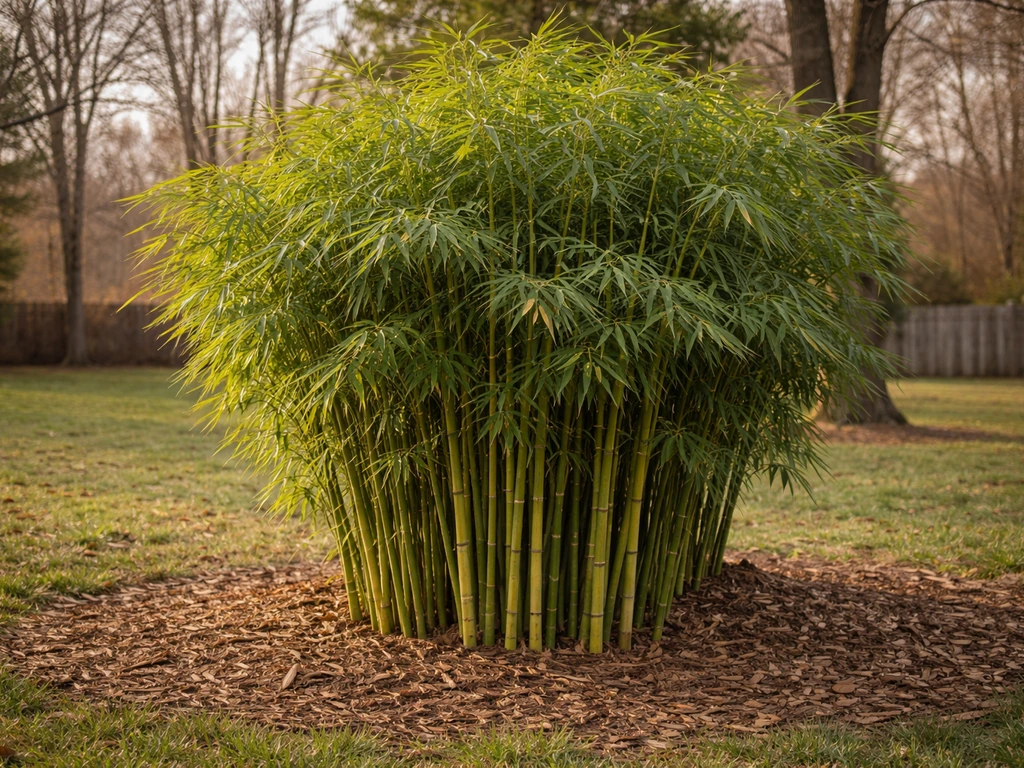
Yes, you can grow bamboo in Kansas, but the honest answer comes with some caveats. The cold-hardy running bamboos (think Phyllostachys aureosulcata, Phyllostachys bissetii, and Phyllostachys nuda) can survive Kansas winters and come back year after year. Missouri Botanical Garden’s Plant Finder lists Phyllostachys aureosulcata as blank" rel="noopener noreferrer">winter hardy to USDA Zone 4, which helps explain why it can fit Kansas gardeners’ colder zone limits. Clumping varieties and tropical types, though, will die outright in a hard winter. Stick to the proven cold-hardy runners, plant in spring, protect new plantings their first two winters, and contain those rhizomes before they spread, and you'll have bamboo that establishes and grows reliably across most of the state.
Can You Grow Bamboo in Kansas? Cold-Hardy Guide
Kansas climate basics for bamboo success
Kansas spans USDA hardiness zones 5a through 6b, depending on where you are. The western and northwestern corners of the state sit in zone 5a, where average annual minimum temperatures can drop to -20°F. Eastern Kansas, around Kansas City and south toward the Oklahoma border, is more forgiving at zone 6a or 6b, with average minimums around -5°F to 0°F. Those numbers are averages, though. The Kansas Office of the State Climatologist has recorded an all-time low of -40°F at Lebanon in February 1905, and even in modern records, NWS Topeka has documented -17°F events. That extreme cold is the variable that wipes out less-hardy bamboo, so hardiness zone labels are your floor, not your ceiling. For station-based climate metrics you can use to judge cold timing and freeze-related conditions, NOAA’s NWS local climate data pages for Weather Forecast Offices provide local, station-level information station-based climate metrics for parts of Kansas.
Beyond raw cold, Kansas throws three more challenges at bamboo: desiccating winter winds that dry out evergreen canes before spring, late-spring hard frosts that can burn emerging shoots, and summer heat spikes where July temperatures regularly exceed 95°F. The growing season runs roughly 185 to 200 days in eastern Kansas and shorter in the west. Bamboo can handle the summer heat fine if it has enough soil moisture, but those freeze-thaw cycles in late winter (warm days followed by nights below 20°F) do the most consistent damage to above-ground canes. The roots, however, are tougher than the canes, and that distinction matters a lot for your expectations.
Which bamboo species to choose for Kansas
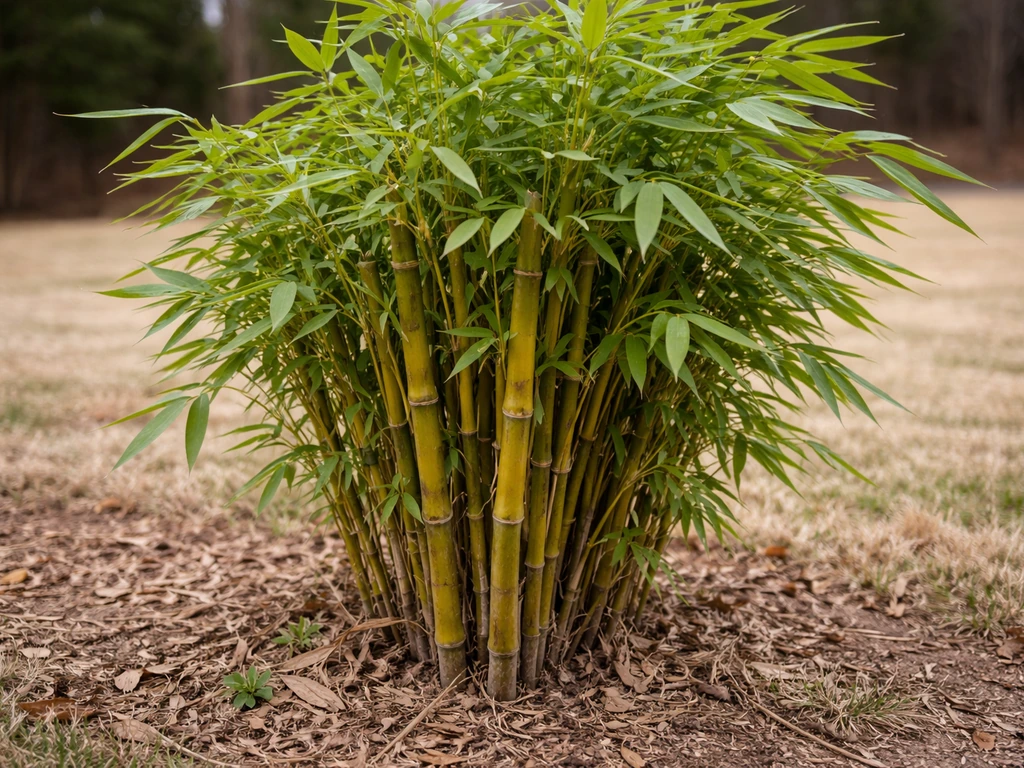
Most bamboo sold at big-box stores is not suitable for Kansas. Golden bamboo (Phyllostachys aurea), many clumping Fargesia species, and anything marketed as 'tropical bamboo' will either die outright or struggle hard in zone 5. The species worth your time in Kansas are the cold-hardy running Phyllostachys types and a few Fargesia that can handle zone 5.
Cold-hardy picks that have a real shot
| Species | Common Name | Hardiness Zone | Max Height | Notes for Kansas |
|---|---|---|---|---|
| Phyllostachys aureosulcata | Yellow Groove Bamboo | Zone 4 | 25–35 ft | One of the hardiest; Missouri Botanical Garden confirms Zone 4. Rhizomes survive even when canes die back. |
| Phyllostachys bissetii | Bisset Bamboo | Zone 5 (to ~-20°F) | 18–25 ft | RHS-rated H6 (to about -15°C/-5°F); tolerates wind better than most. Good wind-screen species. |
| Phyllostachys nuda | Nude Sheath Bamboo | Zone 4–5 | 25–30 ft | Documented Zone 4 survival at Boone County Arboretum; very cold-tolerant rhizomes. |
| Fargesia robusta | Clumping Bamboo | Zone 5b–6 | 10–15 ft | Non-invasive clumper, but less cold-tolerant than Phyllostachys. Best in eastern Kansas only. |
| Fargesia nitida | Fountain Bamboo | Zone 4–5 | 8–12 ft | Shade-tolerant clumper; handles cold well but prefers protection from hot afternoon sun. |
Species to avoid in Kansas
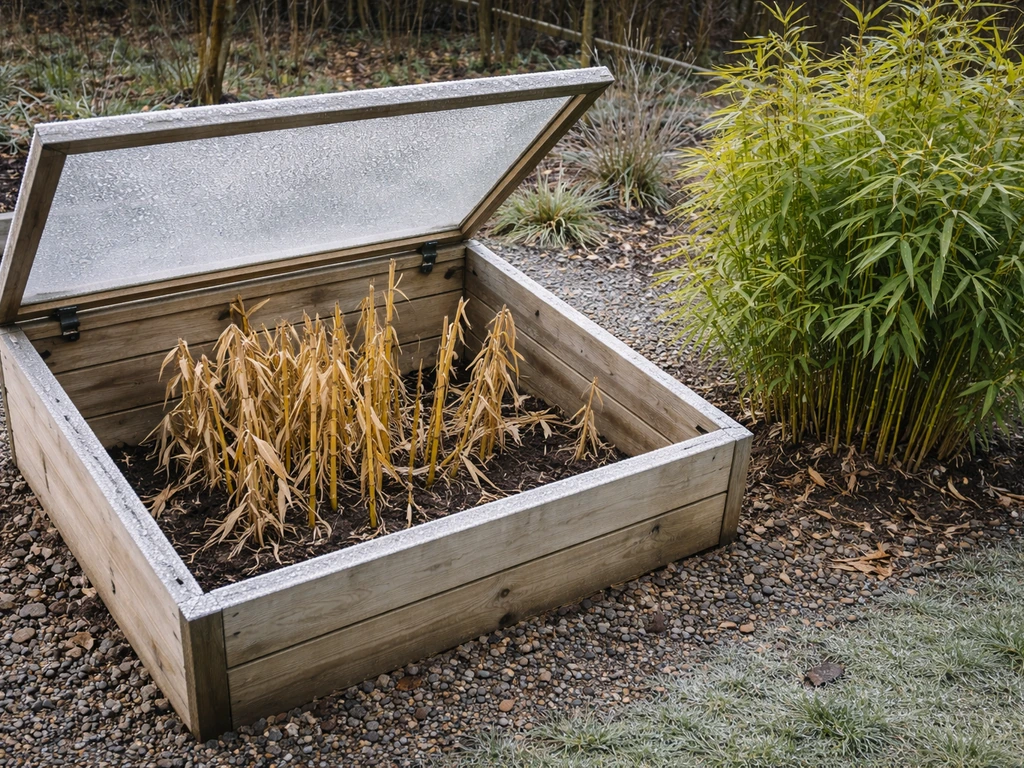
- Phyllostachys aurea (Golden Bamboo): rated zone 6 minimum, will die in most of Kansas winters
- Bambusa species: tropical, zone 8+ only, zero chance outdoors in Kansas
- Dendrocalamus species: subtropical, not remotely cold-hardy enough
- Most Fargesia murielae selections: zone 5b at best, risky west of Wichita
If you're gardening in neighboring states and comparing notes, the species recommendations for Kansas overlap significantly with those for Missouri and Iowa, since all three share that zone 5 to 6 band with cold, windy winters. The main difference is that western Kansas gets drier and colder faster, so you need to be more conservative with your species selection the further west you plant.
Where to grow in Kansas: sun, soil, moisture, and wind exposure
Site selection in Kansas does more work than almost any other variable. Bamboo planted in an exposed, open field in western Kansas will struggle far more than the same species planted on the south or east side of a windbreak, fence, or building in the same zone. Here's what to optimize for.
Sun and wind
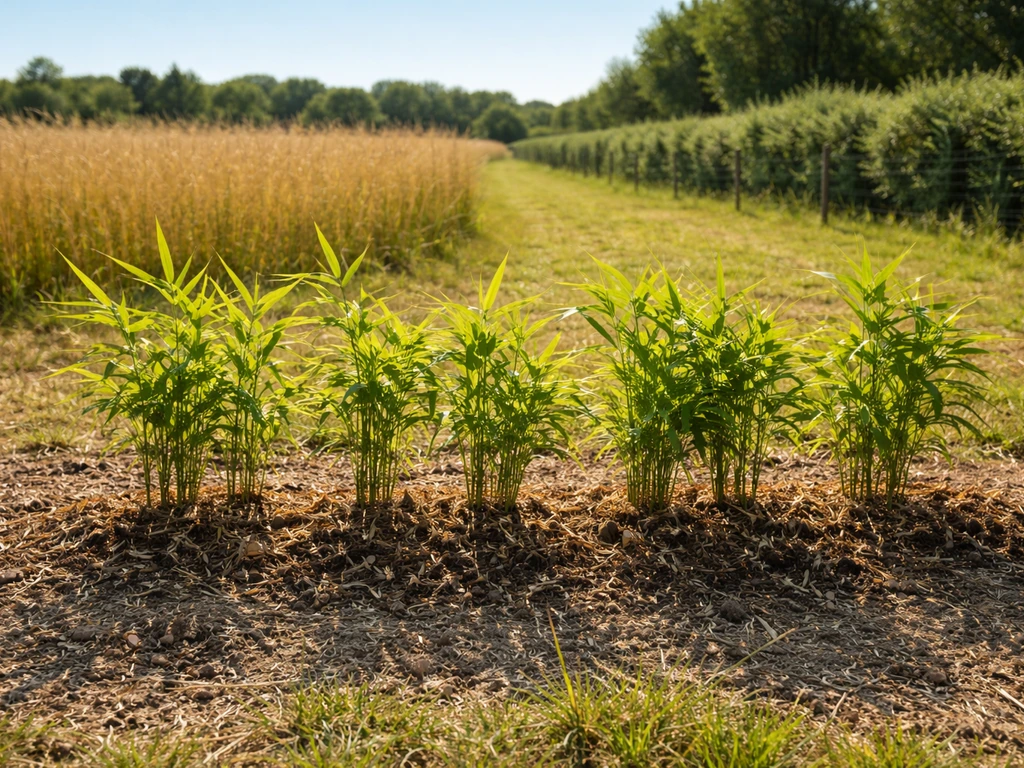
Most Phyllostachys bamboos want full sun, meaning 6 or more hours of direct light per day. That's easy to achieve in Kansas. The wind side of the equation is trickier. Cold, desiccating winter winds from the northwest are responsible for a lot of Kansas bamboo failures. The RHS specifically flags that Phyllostachys bissetii needs protection from cold-drying winds while establishing. Plant on the south or southeast side of a structure, fence, or existing windbreak if at all possible. Once established (3 to 4 years in), the grove itself becomes its own windbreak.
Soil and drainage
Bamboo in Kansas does best in loamy, well-drained soil with a pH between 5.5 and 7.0. The clay-heavy soils common in eastern Kansas can work, but they need amendment with compost to improve drainage. Bamboo sitting in waterlogged soil through winter is almost always going to rot at the crown. Raised beds or slightly sloped sites work in your favor. Sandy soils in western Kansas drain well but hold almost no moisture during summer heat spikes, so you'll need to compensate with mulch and more frequent watering. Aim for 2 to 4 inches of mulch over the root zone year-round.
Moisture
Kansas averages around 28 to 40 inches of rain annually, with eastern areas getting more. Bamboo wants consistent moisture, especially in its first two growing seasons. During summer, that likely means supplemental irrigation at least once a week when temperatures are above 90°F. Drip irrigation works well because it keeps the soil moisture consistent without soaking the foliage. Dry soil heading into winter is a compounding problem: dehydrated roots are more frost-susceptible, and canes lose moisture to dry winter air faster than the roots can replace it.
Planting approach and timing
Spring vs. fall planting
Spring is the clear winner for Kansas bamboo planting. Aim for after the last frost date in your area, which is typically mid-April in Wichita and late April in the northern and western parts of the state. Planting in spring gives bamboo the full growing season to establish roots before facing its first Kansas winter. Fall planting is not recommended in Kansas. A plant installed in September or October has maybe 6 to 8 weeks before the ground starts hardening, and rhizomes that haven't spread or anchored have a much higher chance of heaving or freeze damage.
How to plant
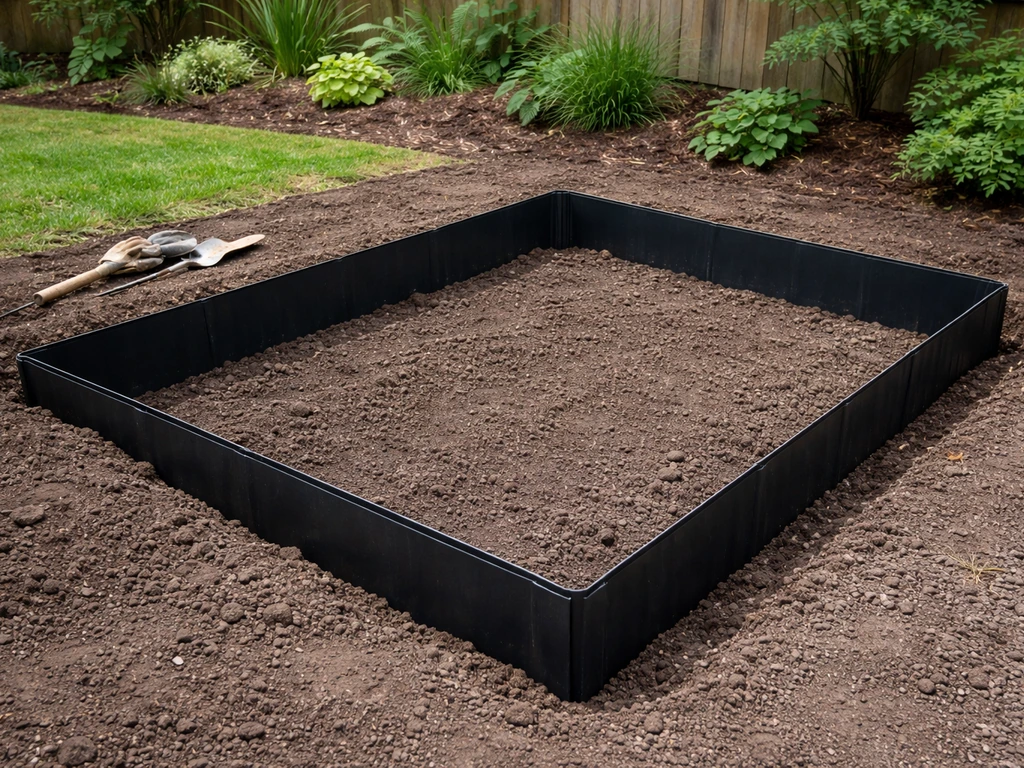
- Install your rhizome barrier first, before planting (see next section). This step is much easier before the plant is in the ground.
- Dig a hole roughly twice as wide as the root ball and the same depth. Bamboo rhizomes spread laterally, not deep.
- Amend heavy clay soil with compost at a roughly 1: 1 ratio in the planting area.
- Set the plant so the top of the root ball is level with or slightly above grade. Do not bury the crown deeper than it was growing in the pot.
- Water deeply immediately after planting and keep soil consistently moist for the first 4 to 6 weeks.
- Apply 3 to 4 inches of wood chip or straw mulch around the base, keeping mulch a few inches away from the canes themselves.
- If wind exposure is a concern, stake taller canes for the first season or install a temporary burlap wind screen on the northwest side.
Root containment and spacing so bamboo doesn't become a problem
Running bamboos like Phyllostachys species are the ones worth growing in Kansas, and they are genuinely aggressive spreaders once established. This is not a scare tactic: these rhizomes can travel 5 to 10 feet from the parent plant in a single season once the grove is mature. Installing containment before planting is not optional if you care about your lawn, your neighbor's lawn, or any nearby garden beds.
HDPE rhizome barrier specs
Use 60 mil HDPE (high-density polyethylene) barrier for most Phyllostachys bamboos, buried 30 inches deep in a trench dug around the planting area. Leave 2 to 3 inches of the barrier above grade so you can spot rhizomes trying to escape over the top. For larger or more aggressive timber-type bamboos, upgrade to 80 mil thickness. Multiple rhizome barrier suppliers confirm these specs: 30-inch depth, 60 or 80 mil thickness depending on species size. Overlap and clamp the barrier seam securely, because rhizomes will exploit any gap. Check the top of the barrier once a year in spring when rhizomes are actively growing and push or cut back any that are trying to climb over.
Spacing
For a privacy screen or grove, space plants 3 to 5 feet apart. They'll fill in within 3 to 5 years. For a specimen planting, a single plant with a contained circular or rectangular barrier works well. Don't plant within 10 feet of a foundation, septic system, or underground utilities unless you have a complete containment barrier on all sides. And don't plant next to a neighbor's property without a clear, deep barrier on that side.
How fast bamboo will grow in Kansas: timelines and what to expect
Managing expectations here is really important, because bamboo growth in Kansas does not look like the viral videos of bamboo in subtropical Asia. The old saying about bamboo (sleeps, creeps, leaps) is accurate, and the Kansas version has a longer 'sleep' phase than you'd see in, say, Missouri or Kentucky further to the east and south.
| Year | What to Expect |
|---|---|
| Year 1 | Little to no visible above-ground growth. The plant is spending its energy establishing rhizomes underground. Some canes may look the same size all season. This is normal. |
| Year 2 | A few new shoots appear, usually similar in size to the original planting. Rhizome spread begins but stays close to the original plant. |
| Year 3 | Noticeably more shoots, and they start growing taller than year one. You'll see the grove beginning to fill in. |
| Year 4–5 | The 'leap' phase. Shoots come up faster, grow taller, and the grove starts looking like bamboo. Running types can add 3–6 feet in height per year at this stage. |
| Year 6+ | A well-established grove in Kansas can produce 10–15 feet of new cane height per shooting season for Phyllostachys aureosulcata, with mature culms eventually reaching 20–30+ feet. |
Cold winters do slow this progression compared to the same species grown in zone 7 or warmer. In Kansas, figure on 4 to 6 years before you have a mature, full-looking grove rather than the 2 to 3 years you might read about in more southerly growing guides. The rhizomes, not the canes, are doing the heavy lifting in the early years, so resist the urge to dig up a plant that looks stagnant in year one.
Winter survival, pests, and troubleshooting common failures
Protecting new plantings through winter
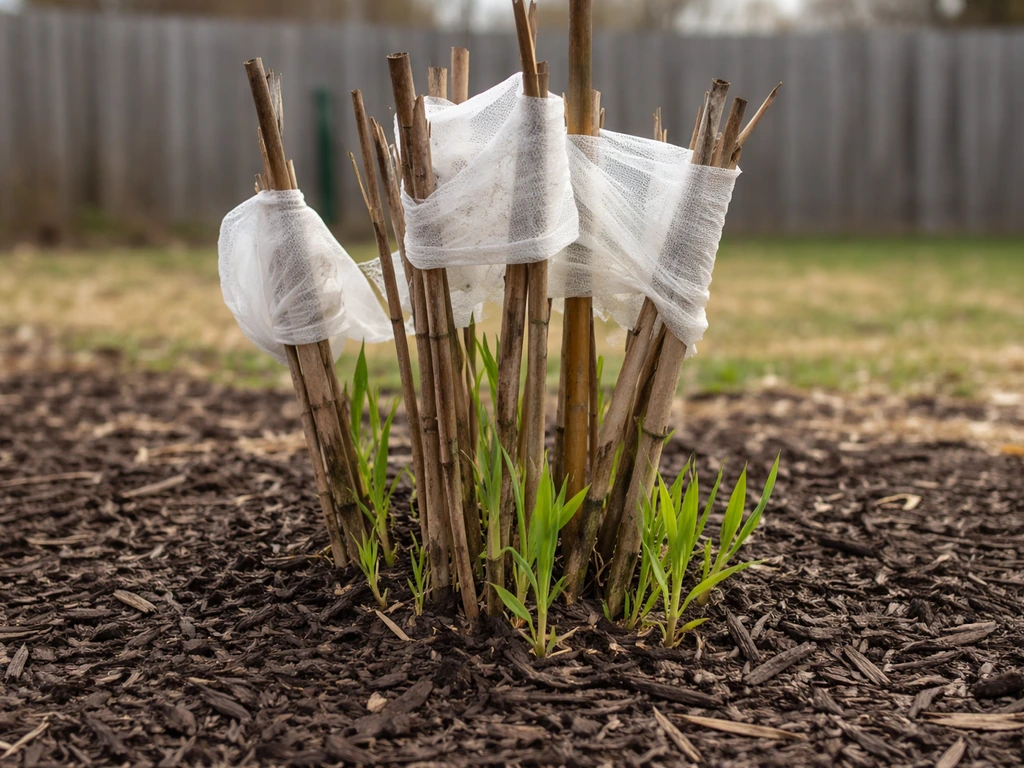
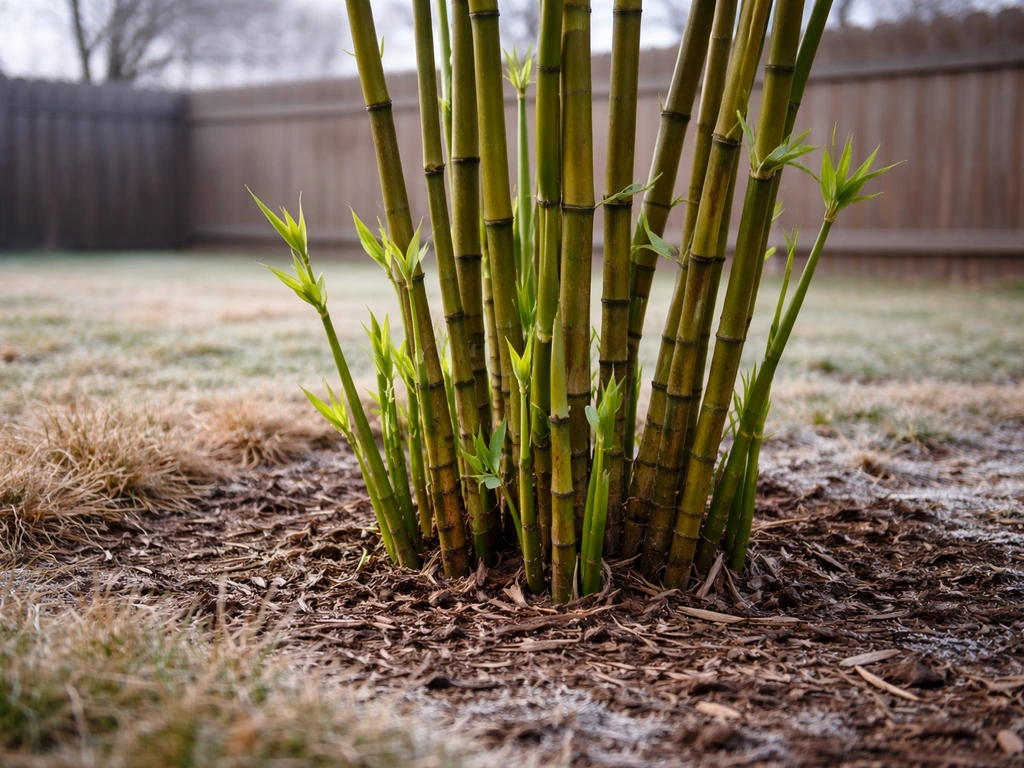
Bamboo planted in spring needs extra protection for its first two winters in Kansas. Before the first hard freeze (usually October in central Kansas), do these things: water deeply one last time to make sure the root zone isn't going into winter dry, top up the mulch layer to 4 to 6 inches over the entire root zone, and wrap the canes loosely in burlap if you're in zone 5 or if the planting is wind-exposed. You're not trying to keep the canes warm as much as you're trying to prevent desiccation from cold wind. The canes may still yellow and die back in a hard winter, and that is okay as long as the rhizomes survive.
What to do after winter dieback
If you walk out in spring and find brown, dead-looking canes, don't panic and don't cut everything down immediately. Wait until late April or early May when soil temperatures warm. If rhizomes are alive, new shoots will push up from the ground. Once you see those new shoots, cut the dead canes to the ground to redirect the plant's energy. The USDA's own weed risk assessment for Phyllostachys aureosulcata specifically notes that in areas with winter temperatures as low as -34°C (-29°F), above-ground portions die but the plant resprouts from rhizomes. That's a direct parallel to what Kansas gardeners experience in harsh winters.
Common problems and fixes
| Problem | Likely Cause | Fix |
|---|---|---|
| No new growth in year 1 or 2 | Normal establishment phase; roots building underground | Be patient. Water consistently. Do not fertilize heavily in year 1. |
| Canes turn yellow-brown in winter | Desiccation from cold wind, or hard freeze damage | Burlap wrap next fall; improve wind shelter; mulch heavily. |
| No new shoots after hard winter | Possible crown or rhizome damage | Wait until May. Scratch rhizomes to check for green tissue. If green, it will reshoot. |
| Bamboo spreading into lawn | No barrier or failed barrier | Install 30-inch HDPE barrier immediately and cut back escaped rhizomes. |
| Slow growth year after year | Poor drainage, wind exposure, or inadequate moisture in summer | Amend soil, increase mulch, add irrigation, improve windbreak. |
| Leaves curling in summer | Heat and moisture stress | Water more frequently; this is normal in Kansas heat above 95°F and the plant will recover. |
Pests in Kansas
Bamboo in Kansas has relatively few serious pest problems. Aphids and mites can appear during hot, dry stretches and are usually knocked back with a hard spray of water or insecticidal soap. Deer are a more consistent issue in rural areas and will browse new shoots and young canes. A simple wire fence around a new planting for the first two or three years solves most deer problems. Mealybugs can occasionally colonize container plants overwintered indoors.
Indoor or container alternatives and when to use them
If your Kansas microclimate is genuinely extreme, like an exposed hilltop in Colby or Norton where wind chill regularly pushes effective temperatures well below zone 5 ratings, or if you want a tropical-looking bamboo species that won't survive outdoors, container growing is a legitimate option. It just requires a different strategy.
Container bamboo (in large pots, 15 gallons or bigger) can spend summers outdoors on a patio in full sun and be moved to an unheated garage or sheltered structure for winter. If you live in Iowa, container growing can be a practical way to try bamboo when outdoor cold hardiness is uncertain Container bamboo. Iowa State University Extension recommends maintaining overwintering container plants at temperatures between 20°F and 45°F: cold enough to let the plant rest, warm enough to prevent the root ball from freezing solid. An unheated garage in Kansas usually fits this range through most of winter. The key issue with containers in Kansas is summer watering: a large bamboo in a pot during a 100°F Kansas July can need water every day or even twice a day, so drip irrigation or self-watering containers make this more manageable.
For purely indoor bamboo, most true bamboos (Phyllostachys, Fargesia, etc.) don't thrive long-term indoors because they need more light than typical indoor conditions provide. Lucky bamboo, the popular houseplant, is actually Dracaena sanderiana and not a bamboo at all. If indoor tropical-looking plants are the goal, those Dracaena options are more practical. For actual bamboo indoors, a south-facing window with supplemental grow lighting can keep smaller species alive, but growth will be slow and the plant will generally be less vigorous than an outdoor specimen.
The bottom line for Kansas gardeners is this: outdoor cold-hardy bamboo is genuinely achievable across most of the state if you choose the right species, give the plant a sheltered site, contain the rhizomes, and accept that the first couple of years look underwhelming. Pick Phyllostachys aureosulcata, bissetii, or nuda, plant in spring with containment already installed, mulch heavily before winter, and you have a realistic shot at a thriving bamboo grove that returns every year. The failures almost always come down to the wrong species, no wind protection, or no patience through the establishment years.
FAQ
If I already have bamboo, can I keep it alive outdoors in Kansas? You don’t know the exact variety.
Probably, but only if it is a cold-hardy running type (typically Phyllostachys), and it depends on where you are in the state. In zone 5a areas, any “tropical” label is a red flag, and even cold-hardy runners need wind protection the first two winters to prevent canes from drying out.
Is it ever okay to plant bamboo in fall in Kansas if I mulch and water well?
Yes, you can. The key is that planting too late reduces the chance rhizomes anchor before hard weather. If you must plant, do it as close as possible to spring (after local last frost), not in fall, and be ready for two winter protection seasons.
My bamboo looks dead after winter. Should I cut it back right away in March?
Winter dieback is common, and it does not always mean the plant died. Wait until soil warms in late April or early May before removing canes. If you see new shoots later, the rhizomes survived, and you should cut dead canes at ground level.
I’m putting in a rhizome barrier. What’s the most common containment mistake that causes escapes?
Containment is still required because running bamboos can exploit small failures. If you use an HDPE barrier, overlap and clamp the seam, bury the barrier to the correct depth, and inspect the top annually in spring. If you cannot guarantee a continuous barrier, switch to clumping types or a different species group.
What’s the best time to plant bamboo in Kansas, and does it matter for growth speed?
The “right” season depends on establishment, not just temperatures. Spring planting gives the root system time to spread before its first Kansas winter. For best results, align planting with your area’s last frost timing (mid to late April across much of the state).
Will deer eat bamboo in Kansas, and how do I protect it without harming the plant?
Deer can chew new shoots even if your bamboo is cold-hardy and contained. The practical approach is a temporary wire fence around the clump for the first two to three years, then reassess once canes thicken.
How often should I water bamboo in Kansas summer, and can I overwater it?
Concentrate watering on the root zone during establishment and droughty spells, but avoid keeping soil waterlogged. Drip irrigation works well because it maintains moisture without wetting foliage, and you should increase frequency during heat spikes (especially when temperatures stay above 90°F).
Why do my bamboo canes die back even when I protected them from winter wind?
It can, especially during winter freeze-thaw cycles combined with dry roots. If the plant goes into winter dehydrated, canes lose moisture to cold, dry air and the recovery slows. Deep watering before the first hard freeze and topping mulch to the recommended depth helps reduce this risk.
How long will bamboo take to look like a mature grove in Kansas? My first year looks slow.
The expectation mismatch is the most common issue. Kansas groves typically take longer to look full, often 4 to 6 years for a mature, dense stand. Early growth is mainly rhizome expansion, so resist digging up a “stagnant” plant after year one.
Can I grow bamboo in a container in Kansas instead of choosing a hardy species?
Yes, but it is more restrictive than outdoor growing because you must solve two problems at once: overwintering temperature for dormancy and summer watering in a hot pot. A large container (15 gallons or more) and a protected winter location that stays roughly in the 20°F to 45°F band are typical for container bamboo success.
I bought a “bamboo” plant from the store. How do I know if it’s a real bamboo that can live in Kansas?
Lucky bamboo is not true bamboo, it will not behave like Phyllostachys or Fargesia outdoors. If you want real outdoor bamboo, you need the correct genus and hardiness for Kansas, especially if you’re buying a plant marketed casually as “bamboo.”
How close can I plant bamboo to a house, driveway, or underground utilities in Kansas?
For Phyllostachys, keep it away from structures unless your containment is fully engineered on all sides. A simple rule is to avoid planting within about 10 feet of foundations, septic systems, and underground utilities unless the barrier fully surrounds the planting and you can maintain it.
Can Bamboo Grow in Kentucky? Types, Care, and Steps
Yes, some bamboo can grow in Kentucky. Learn which types fit, plus site, planting, winter care, and timelines.