What people actually mean when they say they hear bamboo grow
When someone says they heard their bamboo growing, they're usually describing one of a handful of environmental sounds that happen around bamboo rather than from growth itself. The distinction matters because it changes what you should do about it.
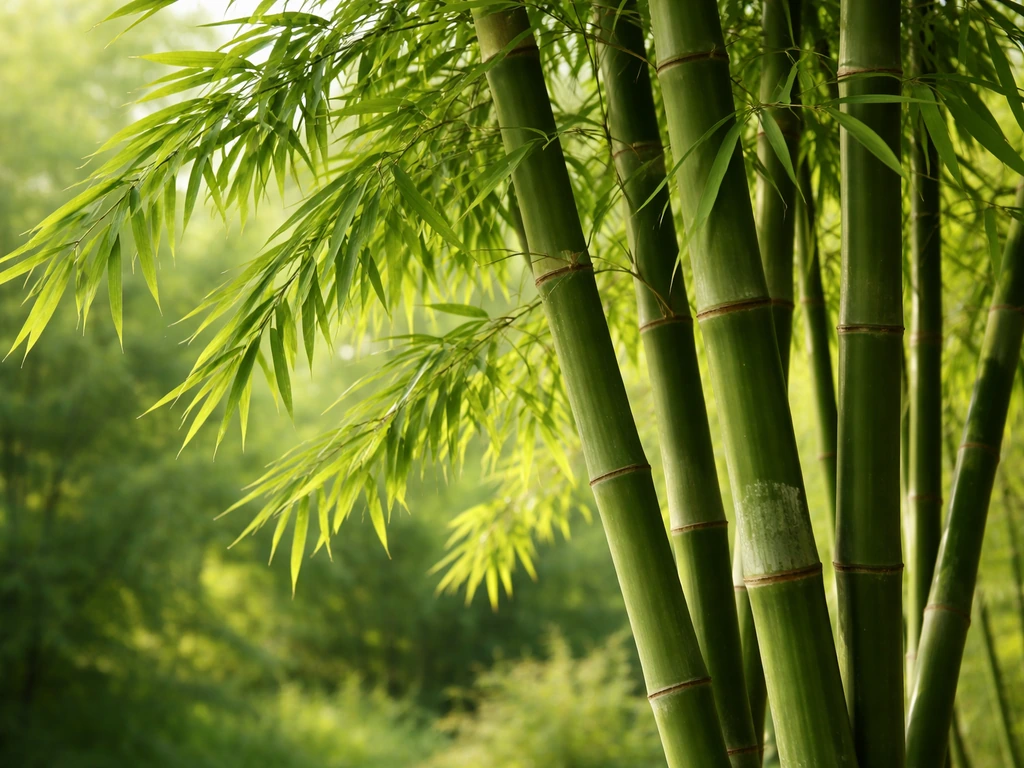
Wind is the most common culprit. Bamboo leaves are narrow, lightweight, and densely packed, so even a gentle breeze creates a constant papery rustling. A grove of running bamboo in a light wind sounds genuinely alive, almost whispering. Culm-on-culm contact is another one: when mature canes rub against each other in wind, the hollow stems can knock and creak in ways that sound like a large plant shifting and adjusting. In traditional Japanese gardens this sound is considered musical and is deliberately designed into plantings.
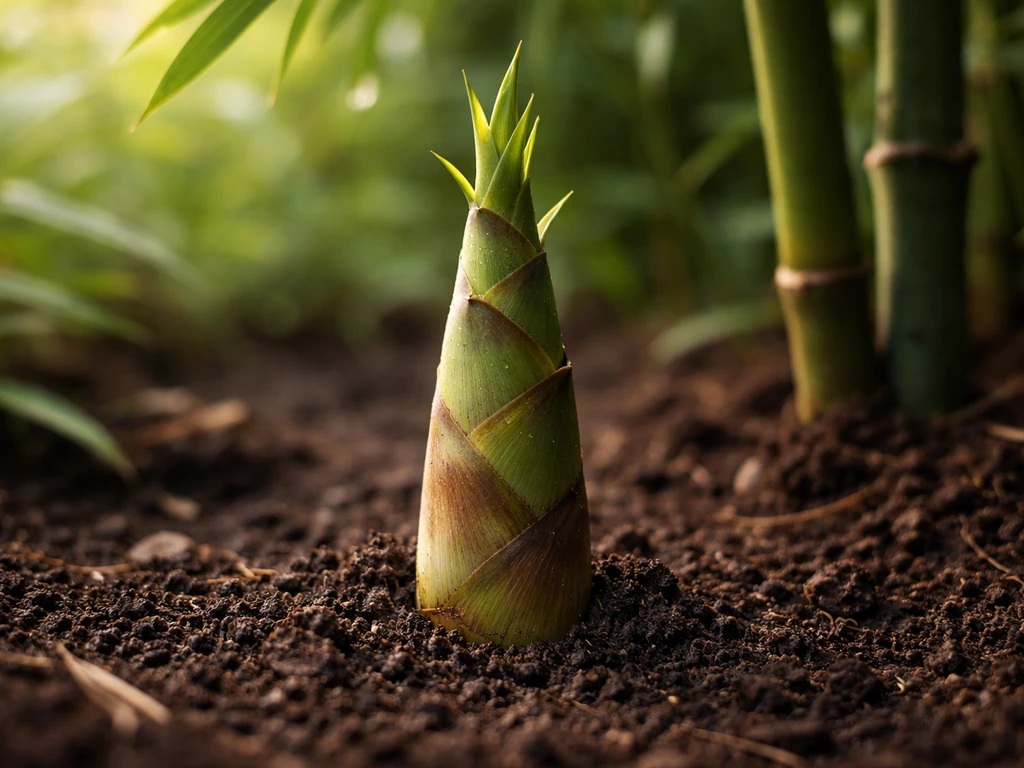
There's also the settling and cracking of fresh shoots. Alabama Cooperative Extension notes that young bamboo culms are fragile and have very high water content right after emergence. As those new shoots push up and the outer sheath dries slightly, some people report faint crackling, similar to what you'd hear from a stiff paper bag. This is real, but it's the sheath drying, not cells dividing. Finally, rapid sap-flow changes during early sprouting (documented in PubMed research on water transfer between culms during sprouting) can theoretically create internal pressure shifts, but these operate at a scale far too small to produce any sound a person standing nearby could detect.
Sound vs vibration: is there a technical case for "hearing" growth?
Technically, if you pressed a contact microphone or stethoscope directly against a bamboo shoot at peak growth rate, you might detect very faint vibrations from turgor pressure and cell wall tension. Researchers studying xylem dynamics in plants have done this in lab settings. But this is not something you can hear by standing in your garden or putting your ear to the stem. The vibrations are far below the threshold of unaided human hearing. So the honest answer to "can you hear bamboo grow" is: not really, not without specialized equipment, and not in any practical gardening sense.
How fast bamboo actually grows, and why it matters here
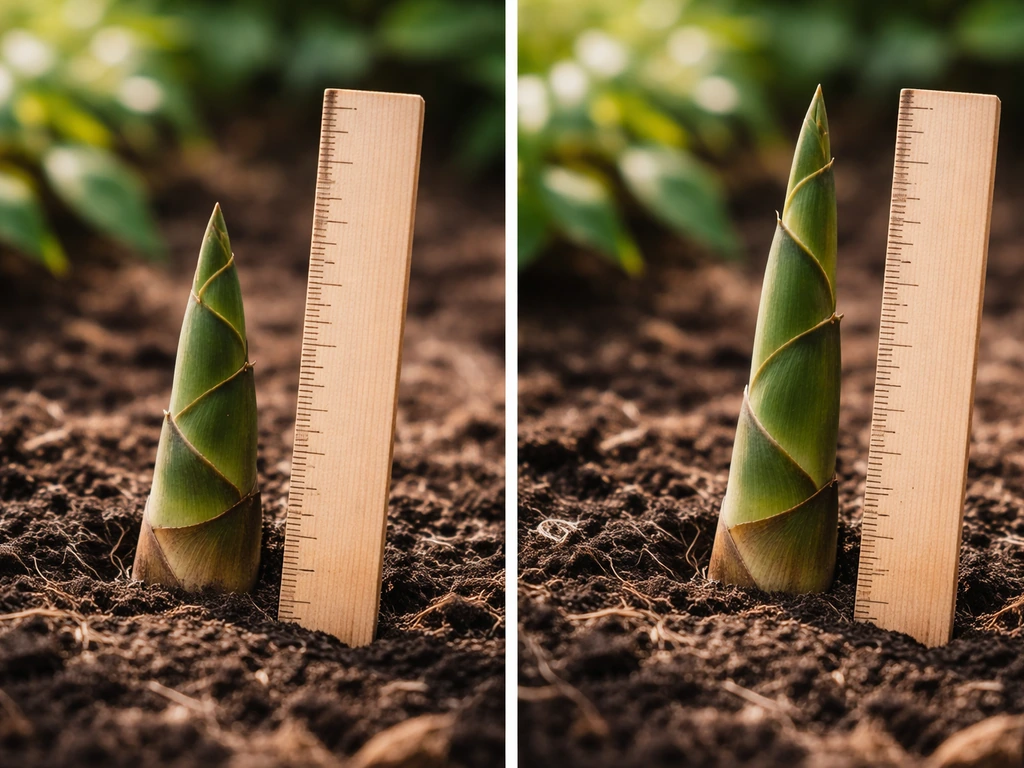
Understanding the real growth pace helps explain why the "hearing it grow" idea has any traction at all. FAO's INBAR data puts average bamboo daily gain at 75 to 400 mm per day, with peak bursts reaching up to 100 cm in 24 hours for fast-growing tropical and subtropical species. Some web sources claim up to 91 cm per day for certain varieties, which lines up with the upper end of peer-reviewed ranges but should be understood as a peak, not a typical daily rate.
To put 100 cm per day in perspective: that's roughly 4 mm every hour, or about the width of a pencil eraser every 15 minutes. That's genuinely impressive for a plant, but it's still completely silent. Compare that to watching a clock hand move: you know it's happening, but you can't see it in real time without staring hard. watching bamboo grow in real time is similarly tricky, even at peak rates, which is why the idea that you could hear it seems plausible to some people but doesn't hold up under scrutiny.
This explosive growth phase is also short-lived. Research on Phyllostachys shoot phenology in Central European climates found that shooting begins when soil temperatures climb above 8 to 8.5°C, peaks as soils warm to 10 to 16°C, and tapers off once soil temperatures hit around 16 to 18.6°C. That means the window when bamboo is growing fastest is a matter of weeks, not months, and is heavily tied to soil temperature thresholds rather than calendar date.
When bamboo seems most "alive" and audible
Even if you can't literally hear bamboo growing, there are specific times and conditions when your bamboo will seem the most active and generate the most environmental noise around it.
- Spring shoot emergence: This is when new culms are pushing up fast and the sheath tissue is drying and crackling slightly. If you're ever going to hear anything from bamboo itself, this is the moment.
- Windy days with mature culms: Dense groves with tall, hollow canes clacking together produce the most dramatic bamboo sounds. The noise has nothing to do with growth rate.
- Harvest and cutting: Cutting a live bamboo cane produces a sharp snap and sometimes a brief hiss as internal pressure releases. Some people interpret this as a sign the plant was "straining" to grow.
- After rain or frost: Water-saturated or recently frozen culms (especially running varieties like Phyllostachys vivax, which can suffer top kill from ice storms) may crack and pop as temperatures change, which sounds a lot like settling wood in a house.
The common thread is that these sounds are all reactions to external forces, temperature, wind, physical cutting, not the growth process generating sound on its own. If you want to know whether your bamboo is genuinely in active growth, a better method than listening is observing whether bamboo is visibly growing by marking a stake next to a new shoot and checking it every 24 hours.
Indoor vs outdoor bamboo: how conditions shape what you notice
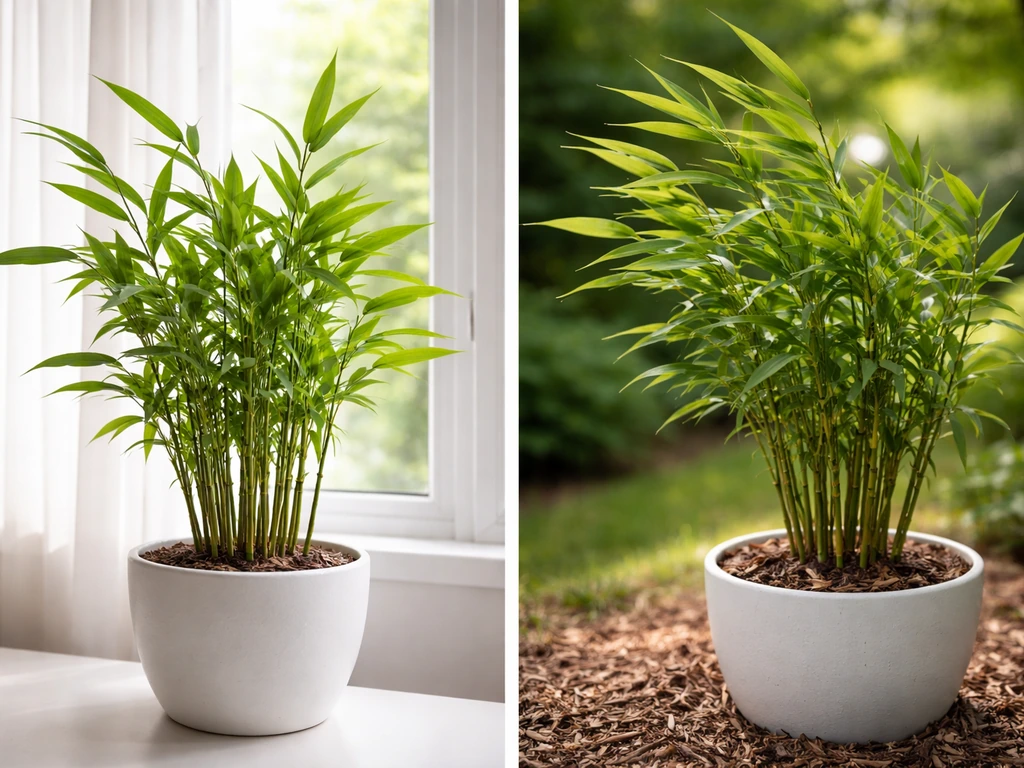
Whether your bamboo is growing in a pot on your patio or in an in-ground planting makes a real difference, not in whether you can hear it, but in whether it's growing at all during any given week. This affects how people interpret (or misinterpret) what they're experiencing.
Outdoor bamboo
Outdoor bamboo follows soil temperature more than air temperature. Research on Bambusa oldhamii found the highest leaf growth rates under a 35/30°C day/night temperature regime, and mulching studies on Phyllostachys violascens showed that anything that keeps soil warmer and moister accelerates shoot emergence. In cooler climates, temperate bamboos essentially go dormant below about 50°F (10°C), meaning there's nothing to hear or see during those months. In USDA Zone 5a, where winter lows can drop to around minus 20°F, outdoor bamboo may spend months with zero visible above-ground activity. When shoots do start in spring, the change can feel sudden and dramatic, which is probably where a lot of the "overnight" and "I swear I heard it" stories come from.
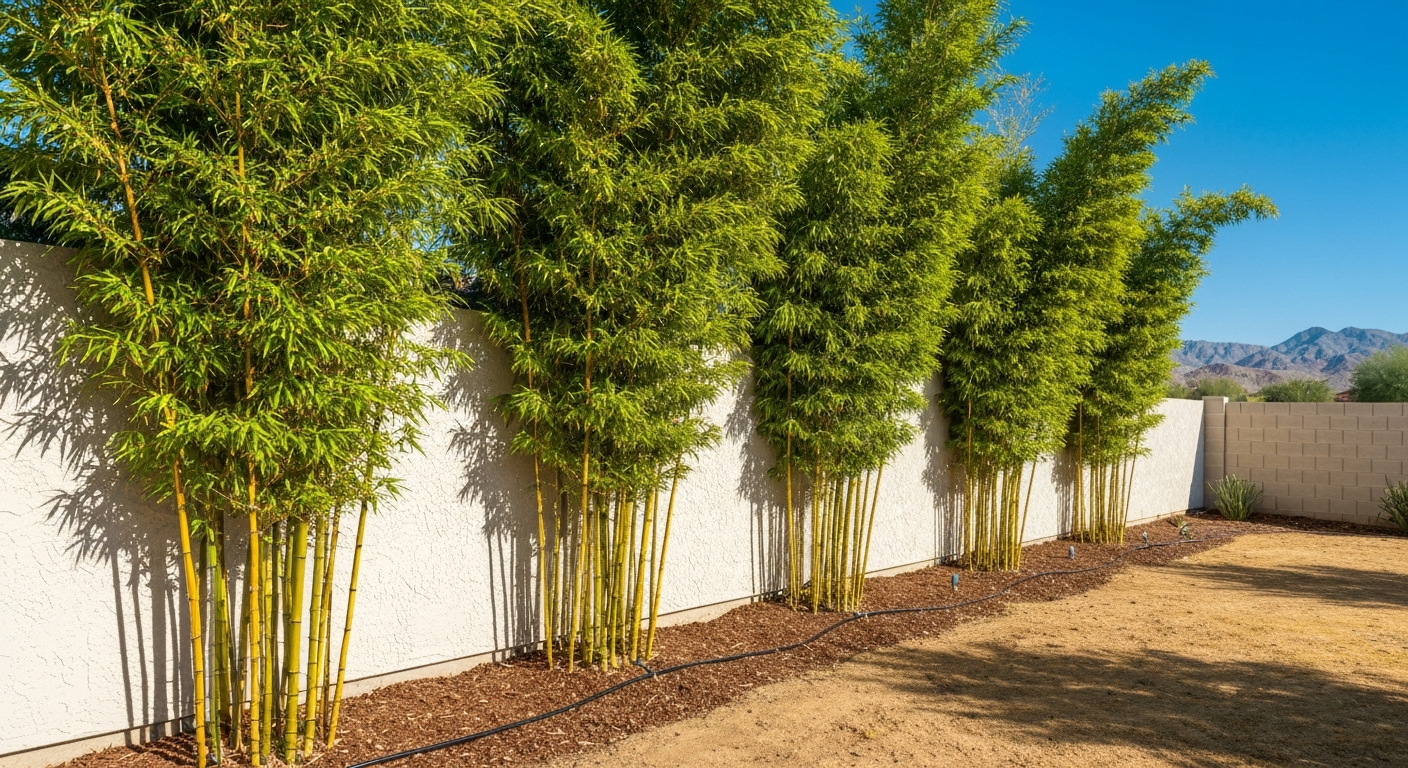
Geography also matters for species choice. UF/IFAS Extension advises against planting running bamboos in Florida home landscapes due to high invasion risk, and in fact large commercial bamboo plantings of 2 or more acres may require a permit in that state. Choosing clumping bamboo instead of running types, as UF/IFAS's clumping bamboo guidance recommends for full or part sun situations, affects how fast new shoots emerge and how much cane-on-cane noise you'll hear once the planting matures. Golden bamboo (Phyllostachys aurea) grows best in rich, deep, well-drained sands according to US Forest Service FEIS data, so site conditions really do determine how close you get to peak growth rates.
Indoor bamboo
Indoor bamboo can behave very differently from outdoor plantings because you're controlling temperature more closely. Commercial seed-growing guides recommend maintaining temperatures between 68 and 78°F (20 to 25°C), with 75°F as an optimal indoor target. This can mean indoor bamboo stays in a mild growth mode year-round rather than entering a hard dormancy, but it also rarely gets warm enough to hit the explosive growth peaks seen outdoors in summer. Indoor plants in pots also tend to spend their first one to three years focused on root development before putting on serious height, which means many indoor bamboo owners don't notice much visible change at all initially.
The result is that indoor bamboo is actually less likely to produce any of the environmental sounds associated with rapid growth. Without wind to move the canes, no culm-on-culm clacking. Without seasonal shoot bursts, no drying sheaths. The plant may be perfectly healthy and growing slowly, just quietly.
Indoor vs outdoor bamboo at a glance
| Factor | Outdoor Bamboo | Indoor Bamboo |
|---|
| Peak growth rate | Up to ~100 cm/day at optimal soil temp | Much slower; rarely hits explosive phase |
| Growth window | Tied to soil temp (8–18°C range) | More consistent year-round if temp stable |
| Dormancy risk | Enters dormancy below ~10°C | Minimal if kept above 20°C |
| Environmental sounds | Wind, culm clacking, sheath crackling | Very quiet; little wind or cane contact |
| Root establishment period | 1–3 years before major height gains | Can be 2–3+ years in a pot |
| Species flexibility | Wide range, climate-dependent | Clumping/dwarf types usually best |
What to do if you want faster, more noticeable growth
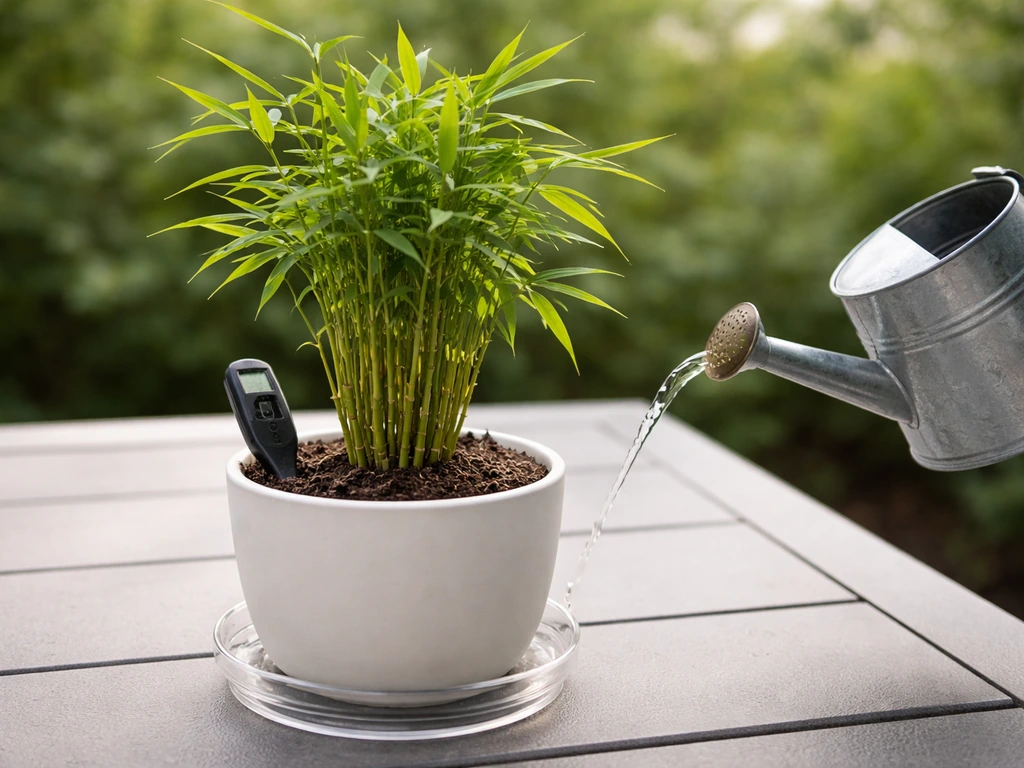
If your bamboo seems stuck or you're not seeing the kind of activity you expected, the fix is almost always one of a handful of environmental variables. Here's how to work through them.
Check your soil temperature first
This is the most underrated factor. A cheap soil thermometer will tell you more than any fertilizer decision. You want soil temps above 10°C (50°F) before expecting new shoots, and the sweet spot for most temperate bamboos is roughly 12 to 16°C. Mulching is one of the most practical ways to push soil temperatures up earlier in the season. Research on mulched Phyllostachys violascens found that mulch layers meaningfully accelerated shoot emergence by retaining both soil heat and moisture. A 5 to 10 cm layer of wood chip mulch applied in late winter can buy you several extra weeks of active growth.
Get the watering and drainage right
Bamboo during its shooting phase has very fast water demand, backed up by sap-flux studies showing rapid hydraulic changes in freshly sprouted culms. But bamboo is also sensitive to waterlogged roots. The goal is consistently moist, well-drained soil, not wet soil. For outdoor plantings in heavy clay, adding organic matter to improve drainage matters as much as irrigation frequency. For pots, make sure drainage holes are actually clear.
Fertilize strategically, not aggressively
A balanced N-P-K fertilizer (15:15:15 compound fertilizer has been used in field studies on subtropical bamboo with measurable results) applied at the start of the shooting season gives bamboo the nitrogen it needs for rapid shoot expansion. UF/IFAS Extension guidance recommends a slow-release fertilizer that is low in phosphorus for established bamboo plantings, which is a reasonable approach once plants are past the establishment phase. Avoid heavy nitrogen applications in fall; you want the plant to harden off before cold weather, not push soft new growth that gets frost-damaged.
Be patient with establishment
A bamboo plant in its first year after transplanting is mostly building roots, not shooting canes. This is normal, expected, and not a sign of failure. Many growers get discouraged when nothing dramatic happens in year one. The three-year rule of thumb (sleep, creep, leap) is real: year one the roots establish, year two you get some new shoots, year three you start to see the growth that made you want to plant it. If you're wondering whether dead-looking bamboo can still recover and grow back, the answer is often yes, especially if the rhizome system underground is intact.
Practical checklist before assuming something is wrong
- Measure soil temperature at 10 cm depth. If it's below 10°C, wait.
- Check for at least 6 hours of direct sun daily for outdoor plantings (or bright indirect light for indoor pots).
- Confirm soil drains well: press a handful and it should hold shape briefly but not ooze water.
- Apply mulch in late winter to warm soil ahead of the shooting season.
- Use a balanced slow-release fertilizer at the start of spring, not mid-winter.
- Mark new shoots with a dated stake so you can actually track growth rather than guess.
A note on bamboo in games versus bamboo in real life
If you arrived here partly from a gaming context, it's worth a quick note: bamboo mechanics in games like Animal Crossing treat growth as a simple time-gated process. how bamboo grows back in Animal Crossing follows game logic, not plant biology. Similarly, survival games like Windbound have their own rules about whether bamboo regrows after you harvest it, which bears little resemblance to how real bamboo rhizome systems regenerate. Real bamboo doesn't respawn on a timer, but a healthy rhizome network can keep producing new culms for decades.
The bottom line
You can't hear bamboo grow in any meaningful sense. The sounds people associate with bamboo, rustling leaves, creaking canes, crackling sheaths, are all real, but they come from wind, cane contact, and drying tissues, not from the growth process itself. Even at peak rates of close to 100 cm per day, bamboo growth is silent. What you can do is create the right conditions (warm soil, good drainage, adequate light, strategic fertilizing) to make sure your bamboo actually hits those peak rates when the seasonal window opens. That's the practical takeaway: stop listening, and start checking your soil temperature.