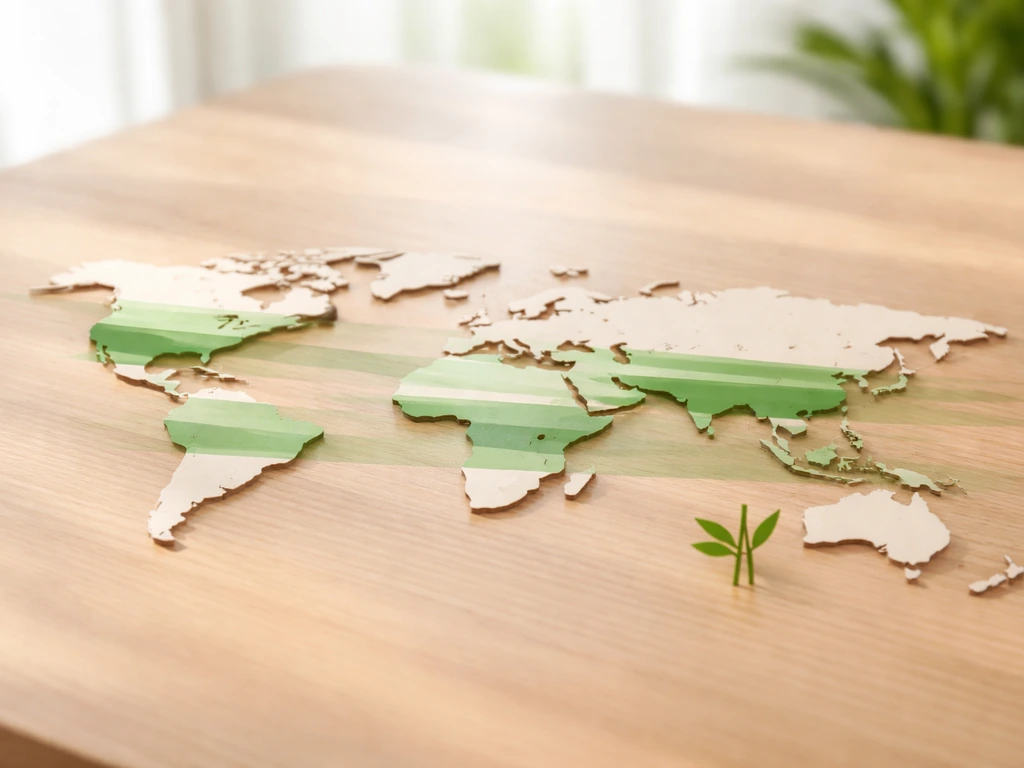
Bamboo grows naturally across a massive swath of the world, from the tropical rainforests of Southeast Asia and Brazil to the cool temperate mountains of China and Japan, and even into southern Argentina. In simple terms: if you live somewhere warm and humid, you almost certainly have bamboo species that will thrive outdoors. If you live somewhere cold or dry, you still have options, but you need to pick the right species carefully.
Where Do Bamboo Trees Grow? Climate and Site Guide
Marcus Hartwell
3 Jun 2026
And if you're in a climate that's simply too harsh, you can grow many bamboo varieties indoors in containers. If you're also wondering where balsa wood grows, it helps to start with the warm, tropical regions where the tree naturally thrives where does balsa wood grow. The key is matching the species to your conditions, not forcing the wrong bamboo into the wrong place.
Where bamboo naturally comes from
Bamboo is one of the most geographically widespread plants on earth. Researchers have documented 1,662 bamboo species across 121 genera, with native species distributed across 122 countries. That's an enormous range, but the distribution is not even. Southeast Asia is by far the global center of bamboo diversity, home to roughly 80% of the world's bamboo species and about 90% of the total bamboo forest area. China, Indochina, and the Indian subcontinent are the core of that zone. Moso bamboo (Phyllostachys edulis), one of the most widely grown species in the world, is native to China and Taiwan and has been naturalized across much of Japan.
Outside Asia, the Americas are the second major center of bamboo diversity. Brazil alone hosts 137 species across 17 genera, making it the most bamboo-diverse country in the Western Hemisphere. The native range in the Americas stretches from about 47 degrees south in southern Argentina and central Chile, up through the tropical rainforests of the Amazon basin, and into the Andes near Ecuador. Africa and parts of Australia also have native bamboo, though far fewer species. The point is: bamboo is not just a tropical curiosity. It spans from steamy lowland jungles to high-altitude mountain slopes, which is exactly why there's likely a variety suited to wherever you are.
Climate and rainfall: what bamboo actually needs to survive
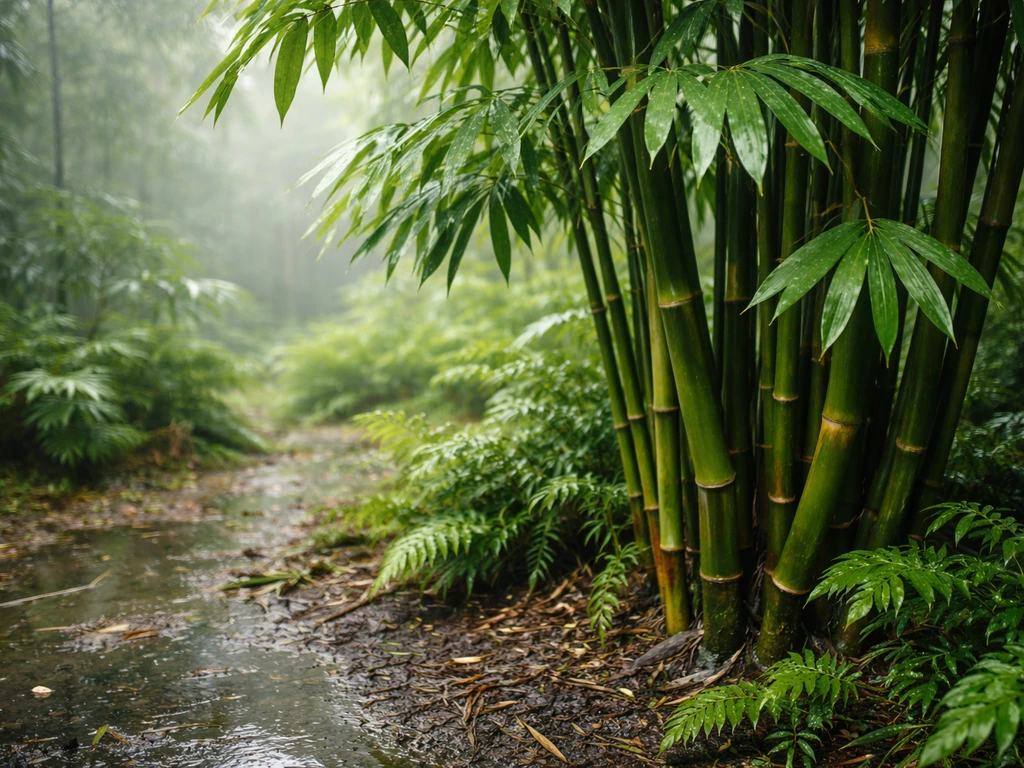
Most bamboo species are native to warm, moist tropical and warm-temperate climates. That's the baseline. But "warm and moist" covers an enormous spectrum, and different species have adapted to very different extremes within that range.
On the cold end, some running bamboos are remarkably tough. Phyllostachys bissetii (Bissett's bamboo) can handle temperatures down to -10°F, which puts it in USDA Zone 5 territory. Phyllostachys heteroclada (water bamboo) is cold hardy to around -5°F and grows well in zones 6b through 10. On the clumping side, Fargesia robusta is rated for USDA Zone 6, with roots hardy down to Zone 5, making it one of the most cold-tolerant clumping options available. Compare that to tropical giants like blank" rel="noopener noreferrer">Dendrocalamus asper, a massive clumping bamboo native to Southeast Asia that needs frost-free subtropical or tropical conditions to perform.
Rainfall and humidity matter just as much as temperature. Bamboo in its native habitats typically receives consistent moisture throughout the growing season. Arid or semi-arid climates are genuinely challenging for bamboo, even if temperatures are fine. You can compensate with irrigation, but you're fighting the plant's natural preferences. If you're in a region with seasonal drought, plan on supplemental watering and mulching heavily to retain soil moisture.
Soil, sunlight, and moisture: getting the site right
Soil
Bamboo is not picky about soil type the way some plants are, but it has clear preferences. It does best in moist, well-drained, slightly acidic soil with a pH somewhere between 5. 5 and 6. 5.
It tolerates a bit lower, down to 5. 0, but performance tends to drop outside that range. Heavy clay that holds water and stays soggy is a problem. Bamboo roots need oxygen, and waterlogged soil will rot them.
If you want to plant bamboo in soil, focus on moist, well-drained earth and avoid heavy, waterlogged spots that can rot the roots grow in soil. Sandy soil that drains too fast is also a challenge because it dries out quickly and starves the plant of moisture. The ideal is a loamy, porous soil with plenty of organic matter. If your native soil is poor, amend it with compost before planting.
Sunlight
Most bamboo species prefer full sun to partial shade. In hot climates, some afternoon shade can actually help prevent leaf scorch, especially for clumping varieties like Fargesia that evolved in mountain shade. Running bamboos like Phyllostachys generally want as much sun as they can get. Indoors or in low-light situations, growth slows dramatically and the plant becomes leggy and weak.
Moisture
Consistent moisture throughout the growing season is one of the most important factors. The goal is evenly moist soil, not soggy and not bone dry. Moso bamboo, for example, appreciates high-quality, evenly moist soil throughout the growing season. Mulching with 3 to 4 inches of wood chips or straw around the base helps regulate moisture and temperature at the root zone. This matters especially in the first two to three years when the plant is establishing its rhizome system.
Outdoors vs. indoors: where your setup makes the difference
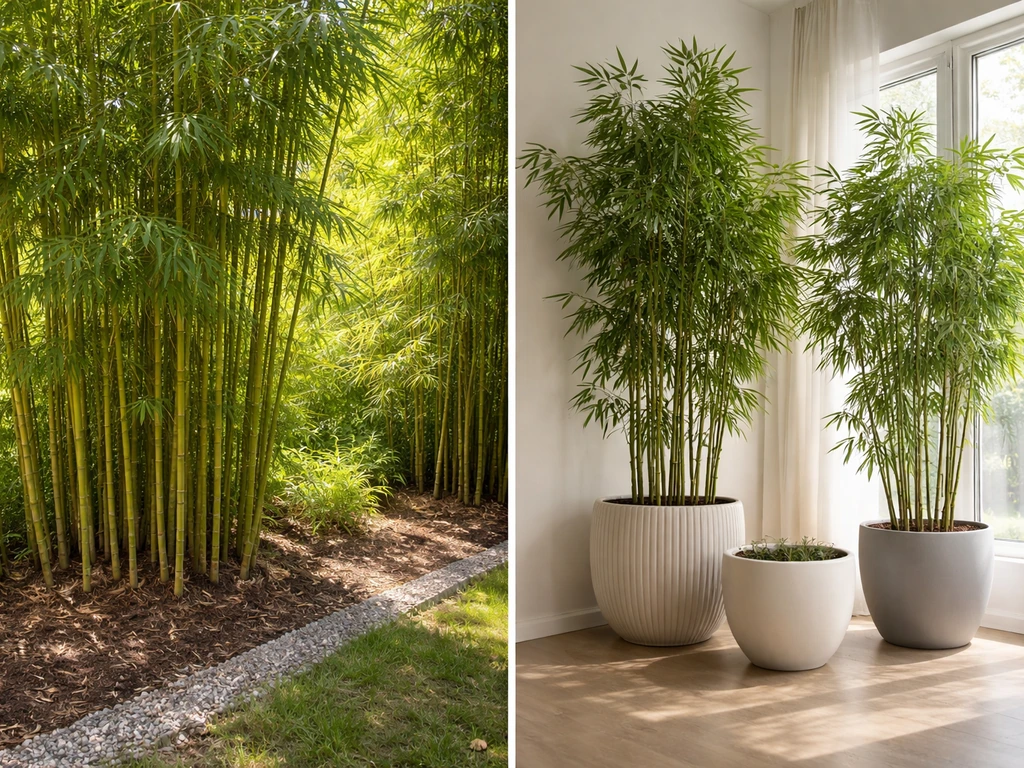
Growing bamboo outdoors
Outdoor growing is where bamboo really shines. Given the right species for your climate, bamboo outdoors can grow fast, form dense screens, and require relatively little maintenance once established. Running bamboo spreads via underground rhizomes and can send out new shoots up to 40 feet away in a single season, so site selection and containment matter enormously. Clumping bamboo expands slowly and predictably from a central root mass, making it far easier to manage in residential gardens. If you're planting running bamboo near structures, keep it at least 10 to 16 feet from foundations, and install a rhizome barrier if you're planting closer than that.
Growing bamboo indoors or in containers
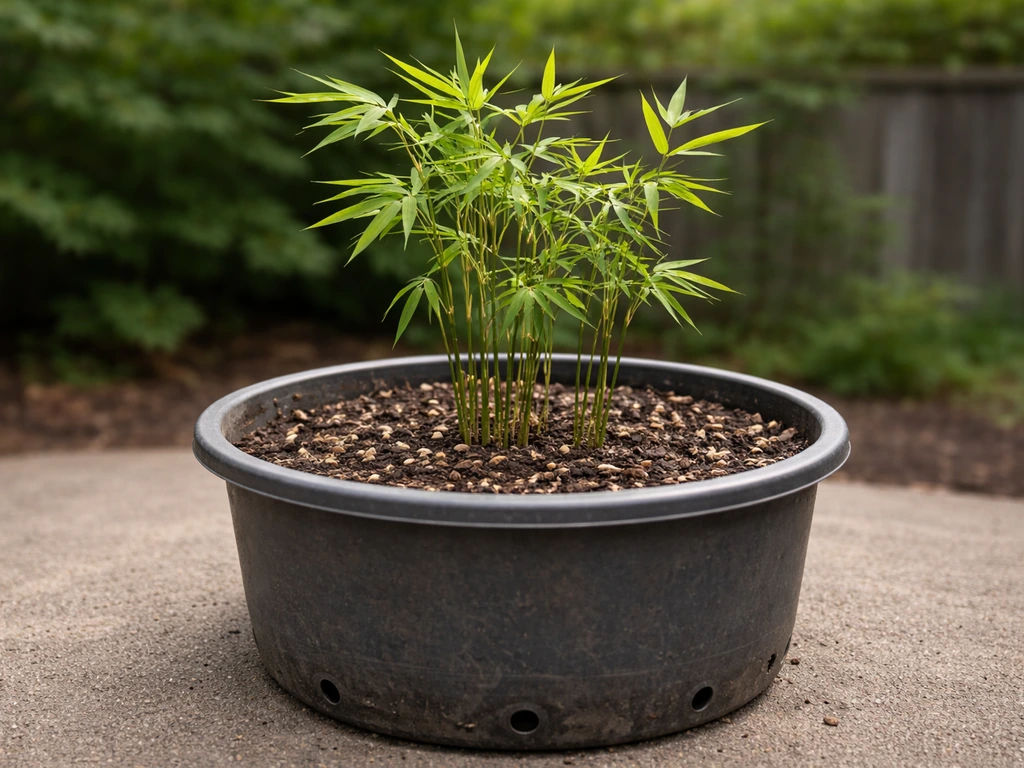
If your climate is too cold, too dry, or otherwise unsuitable for outdoor bamboo, containers are a genuine option. Bamboo in containers needs a large pot (at least 15 to 20 gallons for most species), excellent drainage, bright indirect light, and consistent watering since containers dry out much faster than ground soil. Indoors, the biggest challenge is light. Bamboo wants bright light, ideally from a south-facing window or supplemented with grow lights. Most indoor bamboo will survive in lower light but won't thrive, and you won't see the vigorous growth that makes bamboo so appealing. Average indoor temperatures of 60 to 80°F suit most species well. Container bamboo also needs more frequent feeding since nutrients wash out with regular watering.
| Condition | Outdoor (In-Ground) | Indoor / Container |
|---|---|---|
| Space needed | Large; running types can spread 40+ ft/season | Manageable; contained by pot size |
| Light | Full sun to partial shade preferred | Bright indirect light; south window or grow lights |
| Watering | Evenly moist; mulch helps retain moisture | More frequent; pots dry fast |
| Growth rate | Fast once established | Slower; limited by root space and light |
| Cold hardiness | Species-dependent; some survive to -10°F | Protected indoors; most species tolerate 60-80°F |
| Containment needed | Yes for running types (rhizome barrier) | Built-in by container walls |
| Best bamboo types | Phyllostachys, Fargesia, Bambusa by region | Smaller clumping species; dwarf varieties |
How to figure out if bamboo will grow where you live
The most practical starting point is blank" rel="noopener noreferrer">[your USDA Plant Hardiness Zone](/bamboo-climate-zones/where-can-bamboo-grow). You can look it up for free at planthardiness. If you’re also wondering where do bamboo plants grow, start by matching your local hardiness zone and typical rainfall to a species that’s known to perform nearby planthardiness. ars.
usda. gov by entering your zip code. Once you have your zone, you can cross-reference it with the hardiness ratings of specific bamboo species. You can also use general guidance on where bamboo grows naturally to narrow down which species are most likely to succeed in your area where does bamboo grow. If you want a quick answer to where bamboo grows, start by matching your climate and rainfall to the species' native range where does bamboo grow.
For example, if you're in Zone 6, Fargesia robusta and Phyllostachys bissetii are both solid choices. If you're in Zone 8 or warmer, you have a much wider selection including tropical clumpers like Bambusa species.
Beyond the zone number, think about your microclimate. A south-facing slope or a spot sheltered by a building wall can be a full zone warmer than the official zone average for your area. Conversely, a low-lying frost pocket can kill bamboo that would otherwise survive your winters. Factors like prevailing wind, proximity to pavement, and shade from nearby trees all affect how bamboo performs in a specific spot. Walk your yard and notice which spots stay warmer in winter and which get consistently wet. That kind of site-reading is often more useful than the zone number alone.
If you're on the edge of a zone or unsure, start with a cold-hardy species known to be reliable in your region rather than pushing the limits with a marginally hardy tropical variety. One winter kill after three years of growth is a frustrating and expensive lesson. Talk to local nurseries or bamboo societies in your area as well: they'll know which varieties have actually survived local winters, not just what the catalog ratings say.
- Look up your USDA Hardiness Zone at planthardiness.ars.usda.gov
- Note your average annual rainfall and whether you have a dry season
- Assess your soil: drainage, texture, and pH (a simple soil test kit costs about $15)
- Identify microclimates in your yard: warm walls, frost pockets, shaded areas
- Match a bamboo species to those conditions, not the other way around
- For running types, measure your available space and plan containment before you plant
Planting tips and how to get bamboo established successfully
Once you've confirmed your location is suitable and chosen your species, here's how to give it the best start. Timing matters: spring planting, once the risk of hard frost has passed, gives bamboo a full growing season to build root mass before winter. In warmer climates, fall planting also works well.
Prepare the planting area by loosening the soil to about 12 inches deep and mixing in compost. Dig a hole roughly twice the width of the root ball and the same depth. Plant at the same level the bamboo was growing in its nursery container. Water thoroughly at planting and keep the soil consistently moist through the first full growing season. This is when bamboo is most vulnerable: it's investing energy in extending its rhizome network underground rather than putting on visible above-ground growth. Don't panic if your new bamboo looks small and static for the first year or two. That's normal and expected.
If you're planting a running bamboo, install your rhizome barrier before or at the time of planting, not after. Use a 60 mil HDPE barrier as the minimum, installed in a trench around the planting area. For vigorous species or larger colonies, an 80 mil barrier (commonly sold in 30-inch height sections) is a better investment.
A manufacturer specification for bamboo rhizome barriers notes they are typically made from HDPE and are commonly sold in heights around 18 inches to 48 inches, with height selection tied to trench depth 80 mil barrier (commonly sold in 30-inch height sections). The barrier needs to angle slightly outward at the top to direct rhizomes upward where you can see and cut them.
Check the perimeter once or twice a year and cut any rhizomes that try to escape over the edge.
Fertilize in early spring with a balanced, nitrogen-rich fertilizer to encourage strong cane development. Mulch generously, keep up with watering during dry spells, and by year three most bamboo species are well established and largely self-sufficient. From there, the main tasks are managing spread (for running types) and removing old culms to keep the grove looking clean. If you've done the homework on species selection and site conditions upfront, bamboo is genuinely one of the most rewarding plants you can grow.
FAQ
Can I grow bamboo outdoors if my climate is technically too cold or too dry?
Yes, but only if it’s the right type and you match the conditions. Many bamboos that do well outdoors in warm regions will struggle outdoors in freezing climates, so choose cold-hardy species (often runners or highland clumpers) or grow in containers indoors with strong light. If you can’t provide enough winter protection, container growing is usually the safer path than planting in the ground.
Does my USDA hardiness zone fully predict where bamboo will grow?
For outdoor planting, the “where” question usually comes down to microclimate, not just the hardiness zone number. Wind exposure, frost pockets, and spots that stay wet longer can make or break a planting. If your yard has a south-facing slope or a sheltered area near a wall, bamboo often performs better there than in the rest of the same zone.
If bamboo can grow in my area, is there still a risk of it taking over my property?
Running bamboo is the variety most likely to spread where you do not want it, even if the climate is perfect. Install a rhizome barrier at planting, and keep a practical distance from structures (and especially utilities) because runners can still send shoots beyond what you expect if containment is incomplete or the barrier is shallow or poorly angled.
What’s the most common site mistake that prevents bamboo from thriving?
Bamboo can handle a range of soil textures, but waterlogged soil is the biggest planting mistake. If your site stays soggy after rain, the roots can suffocate and rot even when the temperature is right. Fix drainage before planting by amending with compost plus improving structure, or choose a naturally well-drained spot instead of forcing bamboo into heavy clay.
How much water does bamboo need, and how do I avoid overwatering?
You should plan on consistent moisture while the rhizomes establish, but “consistent” doesn’t mean constantly wet. Use mulch to even out moisture, water deeply during dry spells, and avoid letting the soil cycle between bone-dry and flooded. In containers, check moisture more often because the pot dries out faster than ground soil.
Why does my potted indoor bamboo grow slowly even when temperatures are warm?
Indoors, growth is usually limited by light, not temperature. If you can’t offer very bright light (like a south-facing window or reliable grow lights), bamboo may survive but stay leggy and grow slowly. Also, container size matters, many common indoor failures come from using pots that are too small, which dries out quickly and limits nutrient and root space.
When should I fertilize bamboo, and does it differ for containers versus outdoor beds?
Bamboo fertilization is most helpful when you can pair it with adequate light, moisture, and drainage. In ground plantings, a spring feeding supports cane development, but in containers nutrients wash out faster, so you generally need more regular feeding. Avoid heavy fertilizer right after planting if the soil is dry or light is poor, because it can stress a plant that isn’t actively growing.
What should I do if my area is on the border of a species’ hardiness rating?
If you’re near the edge of a hardiness range, success often depends on choosing a proven cultivar and planting it with extra winter security. Cold-tolerant species can still die if they are planted low in a frost pocket, exposed to drying winds, or left unmulched. When in doubt, pick a reliable cold-hardy option and consider extra mulching to stabilize soil temperatures.
Is there a best time to plant bamboo, and how should I judge early growth?
Start with spring planting after hard frost risk, but if you plant in fall you need to ensure the plant gets enough time to root before winter. Regardless of season, expect the first year or two to be mostly underground growth, so “small and slow” is normal. The key is keeping moisture consistent during establishment rather than chasing above-ground height.
Next Article
Where Does Bamboo Grow Map Guide: Climate, Species, and Steps
Where bamboo grows map guide: climate, frost, rainfall, running vs clumping, and how to judge local suitability step by