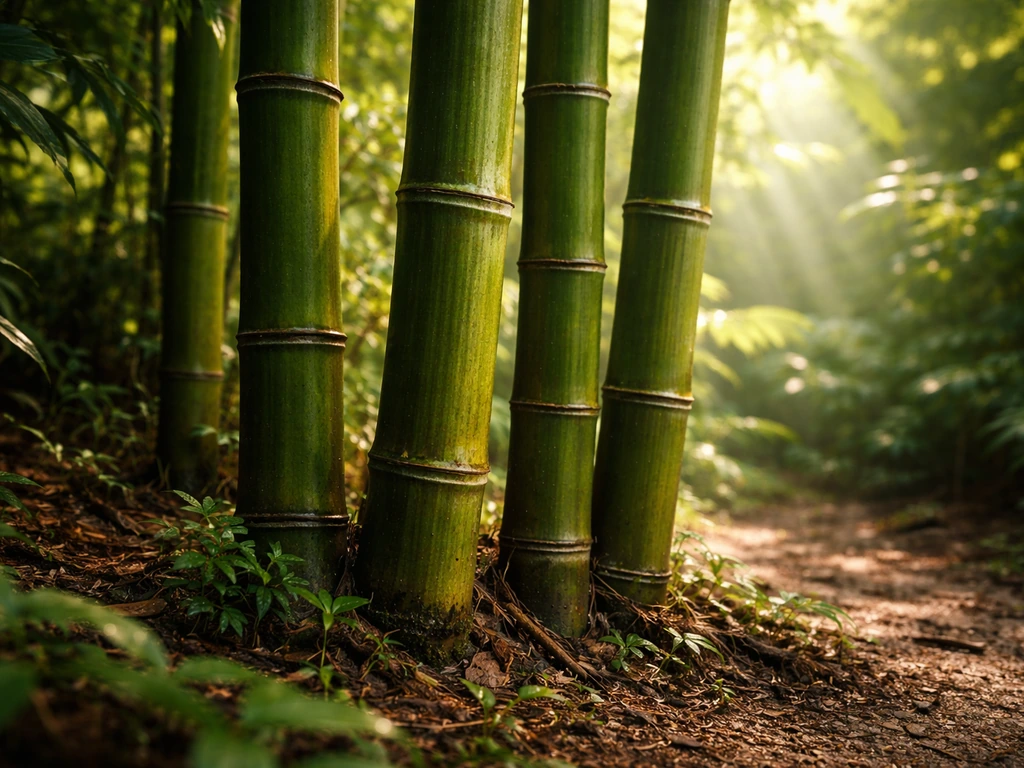
Bamboo grows naturally on every continent except Europe and Antarctica. Its heaviest native concentrations are across Asia, Sub-Saharan Africa, and the Americas, but introduced populations now exist almost everywhere with mild winters. If you're trying to figure out whether bamboo will grow where you live, the short version is this: most of the world can grow at least one species of bamboo. The real question is which species, and how much winter cold, drought, or shade you're asking it to handle.
Where Does Bamboo Grow in the World? Asia by Country
Marcus Hartwell
29 Jun 2026
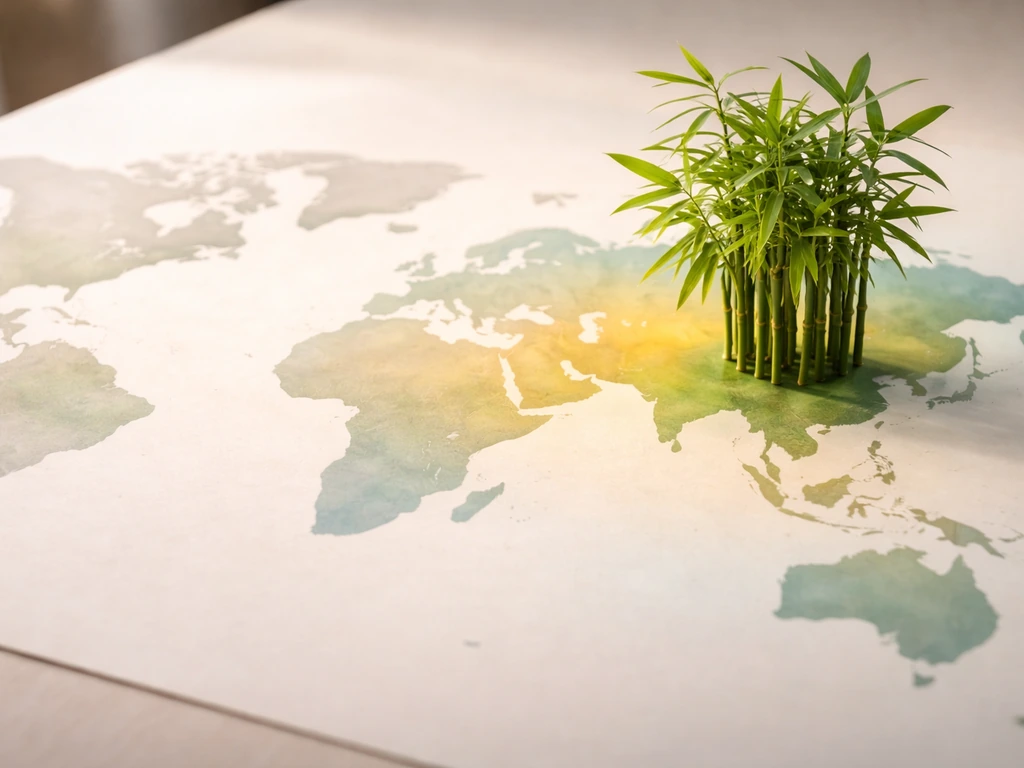
Bamboo's natural range vs where it's actually grown today
There's an important distinction between where bamboo grows natively and where it's been introduced. Bamboo belongs to the grass family Poaceae, subfamily Bambusoideae, and contains roughly 1,700 described species split into temperate woody bamboos (tribe Arundinarieae), tropical woody bamboos (tribe Bambuseae), and herbaceous bamboos (tribe Olyreae). The tropical and temperate woody bamboos are the ones most people are thinking about when they ask where bamboo grows.
Natively, bamboo's range skews heavily toward Asia, with secondary native ranges across tropical Africa, South America, and parts of North and Central America. Outside those zones, bamboo exists almost entirely as an introduced plant. Species like Bambusa vulgaris, whose native range is "Assam to China (Yunnan) and Indo-China" according to Kew's Plants of the World Online, are now cultivated across tropical Africa, Madagascar, the Caribbean, Central and South America, New Guinea, and even parts of Europe.
Golden bamboo (Phyllostachys aurea), a cold-tolerant species from China, was introduced to the U. S. as an ornamental and has escaped cultivation from Texas to Florida and up to North Carolina. So when you see bamboo in a garden center in Georgia or a plantation in Brazil, you're almost certainly looking at an introduced species, not a native one.
For where do bamboo plants grow in the real world, that means introduced species are common wherever suitable climates and habitats exist.
Where bamboo grows in Asia
Asia is unambiguously bamboo's home base. The continent holds the greatest species diversity, the largest natural stands, and the deepest cultural and economic relationship with the plant. Here's how it breaks down by subregion and country.
China
China has more bamboo forest area than any other country, covering tens of millions of hectares. You'll find native bamboo across the subtropical south and southwest (Yunnan, Sichuan, Hunan, Zhejiang, Fujian), but also in temperate zones further north. The iconic moso bamboo (Phyllostachys edulis) dominates southern China. Yunnan alone is one of the world's most bamboo-rich provinces, home to dozens of tropical giant species including Bambusa vulgaris in its native form.
Southeast Asia
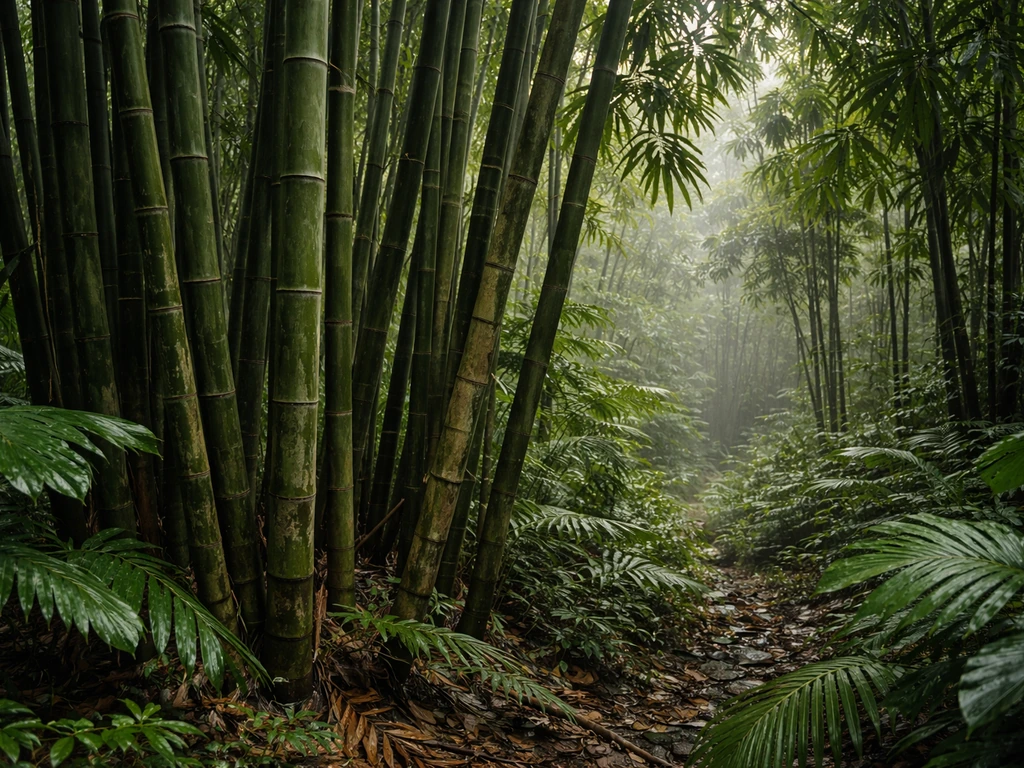
Southeast Asia is the heartland of tropical bamboo diversity. Countries including Myanmar, Thailand, Laos, Vietnam, Cambodia, Malaysia, Indonesia, the Philippines, and Brunei all have extensive native bamboo populations. Giant bamboo species in the genus Gigantochloa (like Gigantochloa verticillata) are native to Cambodia, Myanmar, Thailand, and Vietnam, and extend through Borneo and the broader Sunda region. The genus Gigantochloa alone has native occurrence across Malaysia, Singapore, Brunei, Indonesia, the Philippines, Burma, Thailand, Laos, Vietnam, China, India, and Bangladesh, making it one of the defining features of Southeast Asian forests. If you've ever seen a massive clumping bamboo grove in Thailand or Vietnam, it's almost certainly a Gigantochloa or Dendrocalamus species.
South Asia
India has one of the most diverse native bamboo floras in the world, spanning tropical forests in the northeast (Assam, Meghalaya, Manipur), the Western Ghats, and drier central regions. Assam is part of the native range of Bambusa vulgaris, and the northeast in general is a global hotspot. Bangladesh, Nepal, and Sri Lanka also have significant native bamboo, primarily in forest and hill regions.
Japan and Korea
Japan has both native and introduced bamboo, including Phyllostachys species that have been cultivated there for centuries and have naturalized extensively. Research tracking the latitudinal and altitudinal expansion of bamboo in Japan has found that temperature is a strong driver of distribution, with bamboo stands generally absent where mean annual minimum temperatures drop below about −16.8°C. Korea also has native bamboo in its southern coastal regions, though the flora is less diverse than China or Southeast Asia.
Where bamboo grows outside Asia
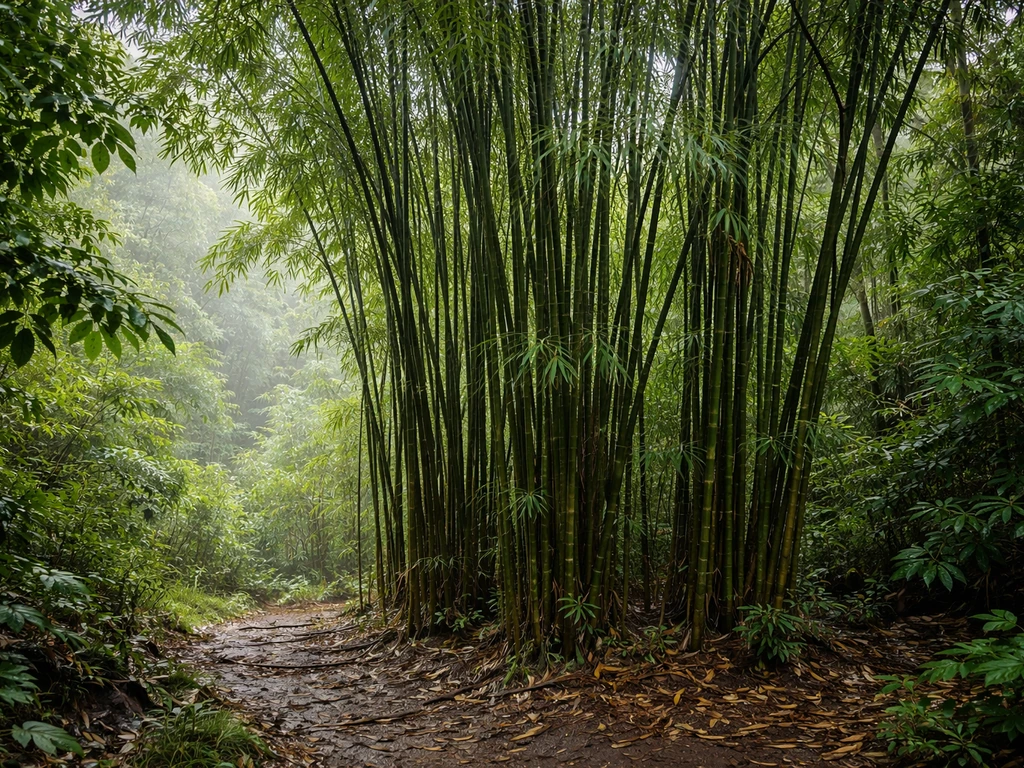
Bamboo outside Asia is a mix of native species in the Americas and Africa, plus introduced populations almost everywhere else.
The Americas
South America has the most native bamboo diversity outside Asia. Brazil in particular has enormous native bamboo forests, especially in the Amazon basin and Atlantic Forest. Colombia, Ecuador, Peru, and Bolivia also have significant native species. The neotropical bamboos (New World clade of tribe Bambuseae) are a distinct evolutionary lineage from Asian bamboos. In North America, the only native bamboos are the canebrakes (Arundinaria species), which grow in the southeastern United States, mainly in floodplain and river-bottom habitats across states like Alabama, Mississippi, and the Carolinas. Everything else you see in a U.S. garden, from Phyllostachys to Bambusa, is introduced.
Africa
Africa has native bamboo primarily in the highlands of East Africa (Ethiopia, Uganda, Kenya, Tanzania), with African alpine bamboo (Yushania alpina, formerly Arundinaria alpina) forming extensive montane forests. There are also native bamboo species in West and Central Africa. Tropical Africa and Madagascar have significant introduced bamboo populations, particularly Bambusa vulgaris, which arrived there through centuries of trade and cultivation.
Europe, Australia, and other regions
Europe has no native bamboo at all. Every bamboo you see in a European garden or park is introduced, typically a cold-hardy Phyllostachys or Fargesia species. The same is true for Australia and New Zealand, where bamboo is grown as an ornamental or crop but is not native. The Pacific Islands and parts of the Middle East also have introduced bamboo in cultivation. Anywhere bamboo is thriving outside its native range, it's been deliberately planted or has escaped from cultivation.
The climate and habitat conditions that decide where bamboo grows
Bamboo's distribution isn't random. It follows predictable climate and habitat patterns, and understanding those patterns is how you judge whether it'll work in your location. If you are trying to figure out where bamboo can grow where you live, start by checking the temperature and moisture patterns in your area where does bamboo grow map.
| Factor | Tropical bamboo (e.g., Bambusa, Gigantochloa) | Temperate bamboo (e.g., Phyllostachys, Fargesia) |
|---|---|---|
| Winter cold tolerance | Frost-sensitive; best above 5°C minimum | Varies widely; some tolerate down to −18°C or colder |
| Rainfall / humidity | High; typically 1500mm+ annually | Moderate; tolerates drier winters if summer moisture is adequate |
| Preferred habitat | Tropical/subtropical forest margins, river valleys | Temperate forest edges, slopes, river margins |
| Growth type | Clumping (non-invasive) | Mostly running (can spread aggressively) |
| Typical native range | SE Asia, South Asia, tropical Americas, Africa | China, Japan, Korea, temperate Himalayas |
Temperature is the single biggest constraint. Research from Japan found bamboo stands were essentially absent where mean annual minimum temperatures fell below −16.8°C, and that's for relatively hardy temperate species. Golden bamboo (Phyllostachys aurea) can tolerate down to −18°C (−4°F), which is one of the colder thresholds for any bamboo. Most tropical species like Gigantochloa and Bambusa will be damaged or killed by any significant frost. This is why bamboo's native distribution in Asia tracks so closely with the subtropical and tropical climate bands.
Moisture matters almost as much as temperature. FAO silviculture guidance consistently frames suitable bamboo habitats as moist forest types: wet evergreen, moist deciduous, and dry deciduous forests. Bamboo doesn't thrive in arid conditions or on droughty, low-organic soils. That said, good drainage is just as important as moisture availability. Bamboo roots sitting in waterlogged soil will rot. The sweet spot is consistently moist but well-drained soil, which is why bamboo so often grows along river banks and forest edges where water is available but doesn't pool.
How to check if bamboo will grow in your location
This is the part that actually matters for most readers. Here's a practical step-by-step process to go from "where does bamboo grow" to "will bamboo grow here. UMD Extension advises a practical containment-and-removal perspective, meaning you may need permission to remove or contain bamboo that is spreading onto a property, so planning should include checking before you plant blank" rel="noopener noreferrer">check before you plant. If you tell me your region, I can help you figure out where bamboo can grow there based on frost, rainfall, and soil. "
- Find your hardiness zone. In the U.S., look up your USDA Plant Hardiness Zone by zip code. In Europe and elsewhere, find your average annual minimum winter temperature. This is your single most important number. If your winters regularly drop below −18°C (−4°F), your species options are limited but not zero (Fargesia species handle colder temperatures than Phyllostachys).
- Match that zone to species, not just 'bamboo.' Don't plant a tropical Bambusa in a climate that gets frost, and don't expect a cold-hardy Fargesia to behave like a giant tropical grove. Tropical bamboos need minimum temps consistently above 5°C. Temperate running bamboos like Phyllostachys nigra or Phyllostachys aurea handle most of USDA zones 6–10. Cold-hardy clumpers like Fargesia work in zones 5 and even zone 4.
- Check your annual rainfall and summer humidity. If your area gets less than 900–1000mm of annual rainfall and summers are hot and dry, you'll need irrigation. Bamboo can handle dry winters as long as summer moisture is adequate, but it won't establish well on droughty sites without consistent watering.
- Assess your soil drainage. Dig a hole about 30cm deep, fill it with water, and see how fast it drains. If water is still sitting there after several hours, you have drainage problems that will stress bamboo roots. Either amend with organic matter and raised planting, or choose a different spot.
- Check sun exposure. Most bamboos prefer full sun to partial shade. Running bamboos like Phyllostachys generally want as much sun as possible. Fargesia species actually prefer some afternoon shade in hot climates, mimicking their native mountain-forest habitat.
- Decide on running vs clumping before you buy. Running bamboos spread via rhizomes and can colonize large areas. In the U.S., golden bamboo (Phyllostachys aurea) was introduced as an ornamental and has become invasive in many southeastern states. If you're planting a running bamboo, plan for a physical rhizome barrier (at least 60–70cm deep) or accept that you'll be actively managing spread for years. Clumping bamboos like Bambusa and Fargesia expand slowly and predictably, which makes them far easier to manage in smaller gardens.
Quick success checklist by climate type
Use this as a fast reference depending on where you are. This covers the most common situations readers ask about. Balsa wood, however, comes from tropical balsa-growing regions rather than the same climates where bamboo spreads balsa wood growth regions.
| Your climate | Best bamboo type | Key things to check |
|---|---|---|
| Tropical (no frost, high humidity) | Tropical clumpers: Bambusa, Gigantochloa, Dendrocalamus | Drainage; avoid waterlogged soil. Full sun preferred. |
| Subtropical (light frost, warm summers) | Bambusa vulgaris, Phyllostachys edulis, Thyrsostachys | Protect young plants first winter. Good drainage essential. |
| Warm temperate (USDA zones 7–9) | Phyllostachys aurea, P. nigra, Bambusa multiplex | Install rhizome barrier for running types. Summer irrigation if dry. |
| Cool temperate (USDA zones 5–6) | Fargesia, cold-hardy Phyllostachys | Site in a sheltered spot. Morning sun with afternoon protection helps. |
| Cold temperate / continental (zone 4 and below) | Fargesia robusta, F. rufa, F. dracocephala | Mulch heavily for first 2–3 winters. Avoid frost pockets and exposed sites. |
| Mediterranean (dry summer, wet winter) | Phyllostachys, Bambusa if frost-free | Irrigation through dry season is non-negotiable. Drainage in wet winters. |
| Northern Europe / UK | Fargesia, Phyllostachys bissetii, P. vivax | Container growing works for borderline species. Mulch for winter protection. |
One thing worth repeating: bamboo is more adaptable than most people realize, but it genuinely hates two things: prolonged hard frost for tropical species, and waterlogged roots for almost all species. Get those two factors right and most locations in the temperate and subtropical world can support a bamboo that looks impressive and grows well.
If you're still unsure about your specific location after working through these steps, the soil and growing conditions questions are often more important than the climate questions, and that's worth exploring in more detail before you buy. For a species-specific home-garden approach, the RHS cultivation notes for Phyllostachys nigra include guidance on how to grow it (including container compost and winter care context) [soil and growing conditions questions](https://www. rhs. org.
uk/plants/12869/phyllostachys-nigra-black-bamboo-kuro-chiku-whangee-cane/details). If you're wondering can bamboo plants grow in soil, focus on moisture balance, drainage, and how much organic matter the soil provides.
FAQ
If bamboo grows on every continent except Europe and Antarctica, why do people have bamboo in European gardens?
Because most European plantings are introduced, not native. Common choices like cold-hardy Phyllostachys or Fargesia are brought in for cultivation, then they can naturalize in sheltered microclimates if winter lows are not sustained.
Does where bamboo grows mean it will spread invasively where it is introduced?
Not automatically, but it can. The ability to spread depends on the species and local conditions, especially winter survival and how easily it can establish new shoots. Clumping types are usually less aggressive than running types, but either can grow well if conditions fit.
What is the best way to check if bamboo will survive winter in my area?
Look at your coldest temperatures (especially mean annual minimums and the likelihood of hard freezes), not just average winter temps. For tropical bamboos, even a few severe frost events can cause dieback or death, while some temperate species tolerate lower lows.
Can bamboo grow in a place with mild winters but dry summers?
Yes, but drought tolerance varies by species and establishment stage. Even if it can survive winter, sustained summer dryness can thin stands or reduce growth, so irrigation and mulching during establishment often make the difference.
Is “full sun” always required for bamboo to thrive?
No. Many species tolerate partial shade, and in hot climates afternoon shade can reduce stress. The main goal is avoiding conditions that cause either overheating or too-dry soil, since bamboo is sensitive to drought and poor moisture balance.
What soil conditions are worst for bamboo, even if the climate seems right?
Waterlogged or poorly drained soil is a common failure mode. Bamboo roots can rot when kept wet for long periods, so if your site stays soggy after rain or has heavy clay with low drainage, you may need raised beds or improved drainage.
Can bamboo grow near rivers, and does it need constant wetness?
It often grows well near water because moisture is available, but it still prefers that water not pool around the roots. Ideally you get consistently moist soil with good drainage, not standing water for days.
Does bamboo need fertilization to establish in a new location?
Usually not at the very start if your soil has organic matter, but light feeding can speed establishment. After planting, a balanced nutrient approach helps, especially in lean soils, but over-fertilizing can increase weak growth that struggles in cold snaps.
How do I choose between clumping and running bamboo when thinking about where it will grow?
Clumping bamboos form tight clusters and are typically easier to manage. Running bamboos spread via rhizomes, so they require barriers or ongoing root management to prevent unwanted spread, even in climates where they are otherwise well suited.
If I buy an ornamental bamboo, how can I tell whether it is likely native or introduced to my region?
Check the species name and its known native range from the plant label or nursery info. In regions outside bamboo’s native Asian and secondary native zones, ornamental purchases are commonly introduced, even when they become established or naturalized.
Can bamboo be grown in containers if my area is near the edge of its climate range?
Yes, containers can help manage cold exposure and drainage, and you can move plants or protect them during extreme events. The tradeoff is that potting soil dries out faster, so consistent watering and appropriate insulation for the root ball matter.
Next Article
Where Do Bamboo Trees Grow? Climate and Site Guide
Find where bamboo grows naturally and how to match climate, rainfall, sun, soil, and drainage for outdoor or indoor grow