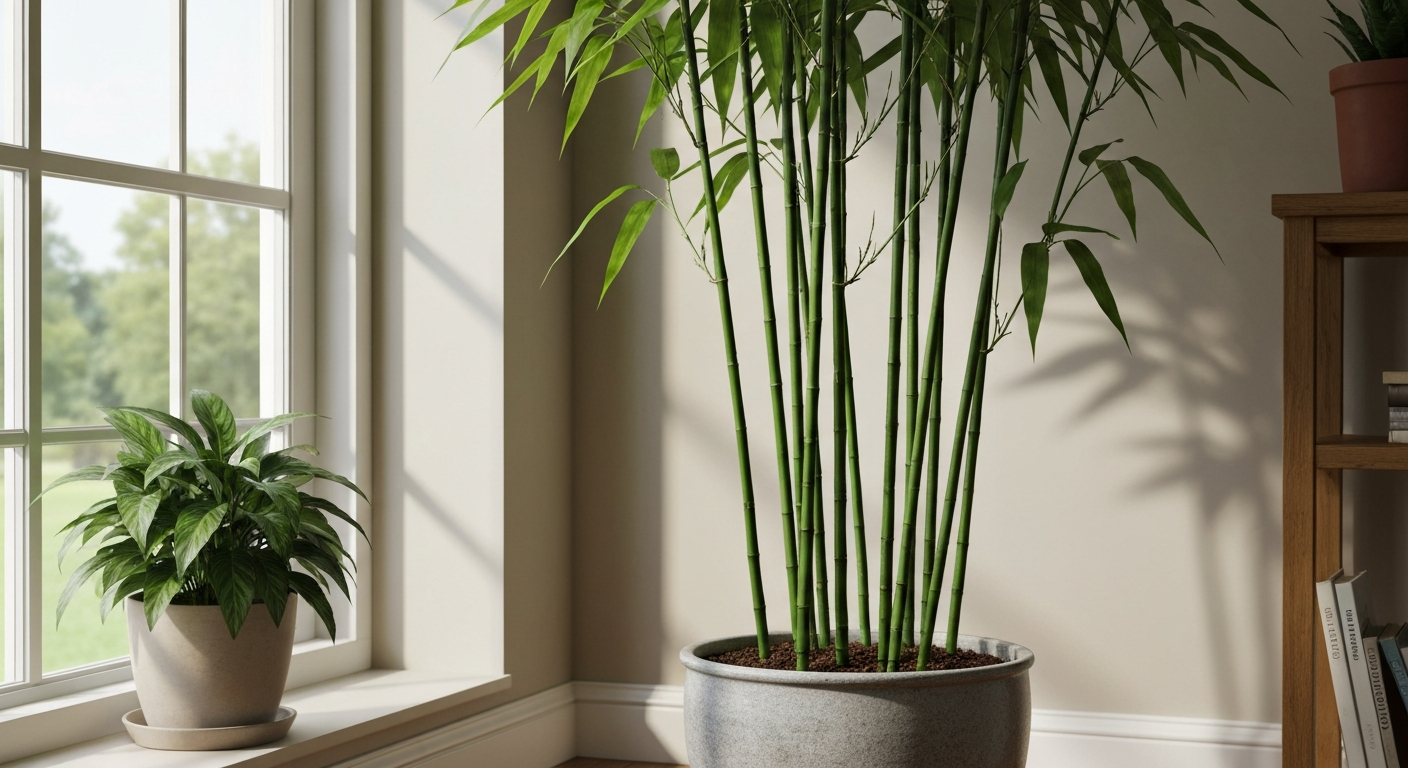
Most bamboo does best with 4 to 6 or more hours of direct sun per day, but the honest answer depends heavily on which bamboo you're growing. For a concise answer to does bamboo need light to grow, see our short guide. Running temperate bamboos like Phyllostachys thrive in full sun and want at least 6 hours to produce thick, strong culms. Shade-tolerant clumping types like Fargesia prefer bright filtered light or morning sun and can manage on 2 to 4 hours of direct exposure. A handful of woodland species can persist in quite dim conditions, though they'll stay thin and slow. Pick your light target based on species first, then site your plant accordingly. For a concise answer, see the internal guide on how much sun does bamboo need to grow.
How Much Light Does Bamboo Need to Grow: A Practical Guide
Marcus Hartwell
6 Aug 2026
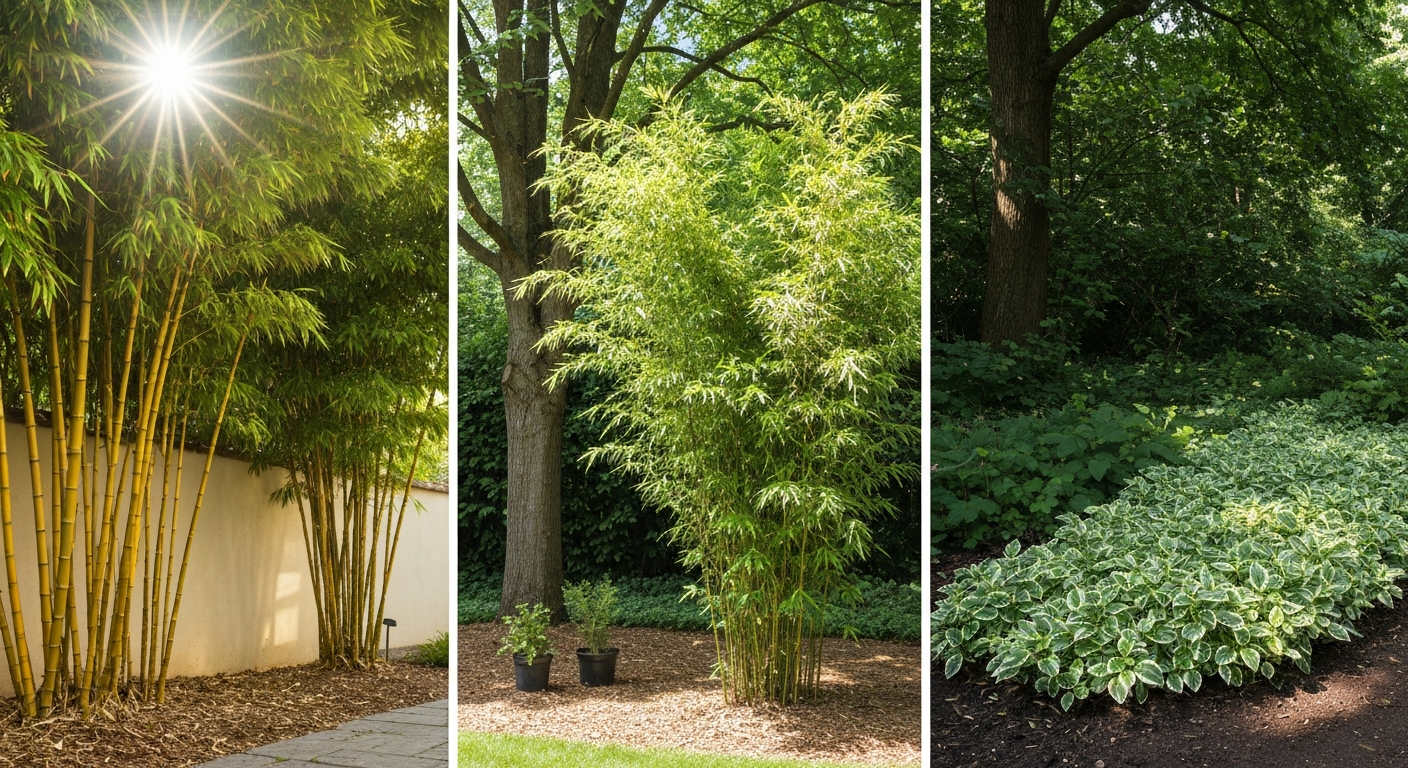
Light needs at a glance: a quick reference table by bamboo type
Before diving into detail, this table gives you a practical starting point. I've matched the most commonly grown types to the light categories used by U.S. extension services, where 'full sun' means at least 6 hours of direct sun per day, 'partial sun/shade' means roughly 2 to 6 hours, and 'shade' means fewer than 2 hours.
| Bamboo type | Example species | Preferred light | Direct sun hours/day | PPFD target (outdoor canopy) |
|---|---|---|---|---|
| Running, temperate (large) | Phyllostachys edulis (Moso), P. aurea | Full sun to light shade | 6+ hours | 400–1,600 µmol·m⁻²·s⁻¹ |
| Running, temperate (groundcover) | Pleioblastus fortunei, Sasa palmata | Partial shade to full shade | 2–4 hours | 100–300 µmol·m⁻²·s⁻¹ |
| Clumping, cold-hardy (Fargesia) | Fargesia rufa, F. murielae | Partial shade / bright filtered | 2–4 hours (morning preferred) | 100–400 µmol·m⁻²·s⁻¹ |
| Clumping, tropical (Bambusa) | Bambusa oldhamii, B. vulgaris | Full sun | 6–8+ hours | 500–1,600 µmol·m⁻²·s⁻¹ |
| Clumping, Andean (Chusquea) | Chusquea culeou, C. gigantea | Partial sun / dappled shade | 3–5 hours | 150–400 µmol·m⁻²·s⁻¹ |
A comparative study across 55 bamboo species confirmed what good nursery guides have long suggested: annual photon absorption and light interception traits track closely with a species' natural habitat. Open-hillside bamboos are genuinely different plants, physiologically, from forest-understory bamboos. That's not marketing language; it's measurable at the leaf level.
Can bamboo grow in low light? Shade tolerance limits explained
Yes, some bamboos can grow in low light, but 'survive' and 'grow well' are not the same thing. Indoor plant guides define low light as roughly 25 to 250 foot-candles (about 270 to 2,700 lux). In practical PPFD terms, that's below about 50 µmol·m⁻²·s⁻¹. At those levels, even the most shade-tolerant bamboos slow down dramatically, produce thin culms, and often drop leaves. I've seen Fargesia rufa sitting in a north-facing corner look acceptable for a season, then gradually decline as stored energy runs out.
The threshold that separates 'surviving' from 'actually growing' is roughly 100 µmol·m⁻²·s⁻¹ (around 5,400 lux) for the most shade-adapted species, and closer to 200 to 400 µmol·m⁻²·s⁻¹ for the majority of garden bamboos. Below these levels, a plant may hold its leaves and look green for months but won't push new culms or fill out an established clump. Phyllostachys species have a light compensation point around 30 to 50 µmol·m⁻²·s⁻¹ (meaning that's where photosynthesis barely breaks even), but their light saturation point sits near 1,000 to 1,600 µmol·m⁻²·s⁻¹, which tells you they really want full sun to perform. Forcing them into shade is like running a car on idle constantly. It runs, but not well.
Groundcover types like Pleioblastus fortunei and various Sasa species sit in a different category. They evolved under forest canopies and tolerate genuine partial to full shade outdoors. Even so, NC State's extension profiles note that Pleioblastus fortunei can handle up to 6 hours of sun but prefers partial shade in hot climates where afternoon sun scorches the variegated leaves. The lesson: shade tolerance is real but species-specific, and 'tolerates shade' never means 'prefers darkness.'
How light needs vary by species: matching bamboo to your conditions
Running temperate bamboos (Phyllostachys)
If you're planting any Phyllostachys in your garden, give it full sun. The RHS profiles these as 'full sun to light shade,' and physiological studies on Moso (P. edulis) show photosynthetic light saturation near 1,000 µmol·m⁻²·s⁻¹. In practical terms that means a south- or west-facing site in the Northern Hemisphere where the canopy receives 6-plus hours of direct midday sun. In shade, Phyllostachys will still creep outward (these are running types, so containment matters regardless of light), but culms will be narrower and the grove will look scraggly. I've grown P. aurea in both a sunny backyard and a sheltered north-facing strip, and the difference in culm thickness after two seasons was dramatic.
Cold-hardy clumpers (Fargesia)
Fargesia is the bamboo most gardeners in temperate climates try indoors or in partly shaded spots, and it's genuinely more tolerant of reduced light than Phyllostachys. NC State's extension profile for Fargesia rufa 'Green Panda' recommends moist, fertile soil with morning sun or dappled light, noting that afternoon sun can stress the plant in warmer zones. NC State Extension's profile for Fargesia rufa 'Green Panda' recommends moist, fertile soil with morning sun or dappled light and notes that afternoon sun can stress the plant in warmer zones Fargesia rufa 'Green Panda' — NC State Extension Plant Toolbox. I'd aim for 2 to 4 hours of direct morning sun and bright indirect light the rest of the day, which in PPFD terms puts you in the 150 to 400 µmol·m⁻²·s⁻¹ range through most of the growing day.
Tropical clumpers (Bambusa)
Tropical Bambusa species like B. oldhamii are sun-hungry plants. University of Hawaii extension materials recommend full sun with reliable moisture for these species, and in cooler temperate zones they'll tolerate some dappled shade but grow sluggishly. CTAH (University of Hawaii) bamboo bulletin / species guide states that tropical Bambusa species require full sun and reliable moisture, tolerating only dappled shade in cooler temperate zones CTAH (University of Hawaii) bamboo bulletin / species guide states that tropical Bambusa species require full sun and reliable moisture, tolerating only dappled shade in cooler temperate zones.. If you're in USDA zones 9 to 12, plant Bambusa in a full-sun spot and make sure water is consistent. In anything much lower than zone 9 outdoors, Bambusa is a container or greenhouse plant.
Groundcover runners (Pleioblastus, Sasa)
These smaller bamboos are the most practical choice for genuinely shady spots in the landscape. They tolerate partial to full shade outdoors, making them useful as groundcover under trees or along shaded borders. The trade-off is that they spread aggressively, so containment with a rhizome barrier is just as important here as with their full-sun cousins. If you're wondering about how much space bamboo needs to grow, that question matters a lot with running types regardless of light level.
Indoor bamboo: window placement and daily light hours
Growing bamboo indoors is possible but requires honest placement. UF/IFAS extension guides are clear on window orientation: north-facing windows deliver low light (often under 250 foot-candles / 2,700 lux), east-facing windows provide bright morning sun that's gentler in intensity, south-facing windows give the longest and strongest natural light year-round and suit high-light needs, and west-facing windows deliver strong afternoon sun that can run hot in summer.
For most bamboos you'd realistically grow indoors (Fargesia or dwarf types), an east- or south-facing window is the target. Aim for at least 4 to 6 hours of bright light at the leaf level. Use a cheap lux meter to measure at pot height rather than guessing; 'bright room' to the human eye is often only 500 to 1,000 lux, which is well below the 5,000 to 10,000 lux that a Fargesia wants for active growth. Shade-tolerant species can manage at 2,700 to 5,400 lux (roughly 250 to 500 fc) for maintenance, but growth will be slow. Below 270 lux (25 fc), no bamboo will thrive long-term.
- South-facing window: best for most bamboos, longest light hours, highest midday intensity
- East-facing window: good for Fargesia and shade-tolerant types, gentle morning sun
- West-facing window: usable but monitor for afternoon heat stress, especially on Fargesia in summer
- North-facing window: not suitable for most bamboos without grow-light supplementation
- Measure light at leaf level with a lux meter or light meter app before committing to a placement
One thing I'd stress: distance from the window matters enormously. Light intensity drops off quickly indoors. A plant sitting 6 feet back from a south window may be receiving only 10 to 20 percent of the light at the glass. Keep bamboo as close to the window as practical, within 1 to 2 feet for high-light species and within 3 to 4 feet for shade-tolerant ones.
Using grow lights for indoor bamboo: when it's worth it and how to set them up
If your natural light falls short, adding a grow light is a practical fix rather than a gimmick. Iowa State Extension recommends full-spectrum LED shop fixtures as an economical and effective option for indoor plants and seedlings. For bamboo, the setup principles are straightforward.
Target a PPFD of 150 to 400 µmol·m⁻²·s⁻¹ at the canopy for shade-tolerant types (Fargesia, dwarf bamboos), and 300 to 600 µmol·m⁻²·s⁻¹ for more light-demanding running types if you're growing them inside. Extension and controlled-environment literature consistently puts the foliage-growth sweet spot for houseplant-scale setups in the 150 to 400 µmol·m⁻²·s⁻¹ range, with vegetative/seedling production using 200 to 400 µmol·m⁻²·s⁻¹.
LED vs fluorescent: which to choose
| Feature | Full-spectrum LED | T5/T8 fluorescent |
|---|---|---|
| Energy efficiency | High (uses ~40–60% less energy) | Moderate |
| Heat output | Low (safe close to foliage) | Moderate (can stress plants if too close) |
| Lifespan | ~50,000 hours | ~10,000–20,000 hours |
| Cost | Higher upfront, lower running cost | Lower upfront, higher running cost |
| PPFD at 12 inches | Varies widely by fixture; check spec sheet | Typically 100–300 µmol·m⁻²·s⁻¹ for T5HO |
| Best use case | Long-term indoor bamboo setups | Budget seedling/supplemental use |
For practical placement: hang LED fixtures 12 to 18 inches above the canopy as a starting point, then measure PPFD or use a lux meter and adjust. Iowa State Extension suggests running lights on a timer for 12 to 16 hours per day for supplemental indoor use. I'd recommend 14 hours for bamboos that want more light (running types) and 12 hours for shade-tolerant clumpers. Don't run lights 24 hours; bamboo, like most plants, benefits from a dark period.
Fluorescent fixtures (T5HO in particular) still work and cost less upfront. If you're doing a simple supplemental setup to boost a north-facing window, a 4-foot T5HO strip placed 10 to 12 inches above the pot can get a Fargesia through winter in reasonable shape. Just plan to replace the tubes annually since output degrades even when the light still appears bright to your eye.
Outdoor siting: aspect, microclimate, and seasonal light changes
Outdoor light is more dynamic than most gardeners account for. The same spot in your yard can deliver 8 hours of direct sun in June and only 4 hours in December, and the sun angle changes how much of a south-facing wall or fence reflects extra light onto a nearby planting. When I site bamboo outdoors, I try to observe the actual sun pattern across both summer and winter before committing, especially for species on the edge of their light tolerance.
Aspect is the starting point. In the Northern Hemisphere, a south-facing slope or wall maximizes sun exposure year-round and suits Phyllostachys or Bambusa in marginal climates. An east-facing aspect is ideal for Fargesia, giving morning sun with protection from hot afternoon exposure. North-facing sites are, with few exceptions, not suitable for bamboo that you want to grow vigorously outdoors, even for shade-tolerant types.
Microclimate factors amplify or reduce effective light. Walls, fences, and paving reflect both heat and light onto nearby plants. A bamboo planted against a south-facing pale render wall in zone 7 can behave as though it's in zone 8 during winter. Conversely, a bamboo sited under a deciduous tree canopy may get full sun from November through April and deep shade from May through October, which suits some species quite well, since that seasonal pattern matches what many forest-edge bamboos experience naturally.
- Check shade patterns at midsummer and midwinter, not just spring when you're planting
- South and west aspects favor high-light species (Phyllostachys, Bambusa)
- East aspects suit partial-shade species (Fargesia, Chusquea)
- Deciduous tree gaps can provide seasonal light that suits forest-edge species
- Reflective walls increase both heat and effective light, useful in cooler zones for sun-hungry species
- In high latitudes (above ~50°N), even 'full sun' sites deliver less total photon load than the same aspect at 35°N
Signs your bamboo is getting too little or too much light
Bamboo communicates light stress clearly if you know what to look for. Too little light shows up as yellowing of lower and inner leaves, long spindly new culms that are narrower than older ones, sparse leaf canopy, and eventually a gradual decline in overall mass even though the plant isn't dead. Variegated types like Pleioblastus fortunei will lose their cream-white patterning in low light as the plant maximizes chlorophyll production to compensate.
Too much direct sun, particularly for shade-adapted species, shows as bleached or scorched leaf tips, brown crispy margins, and in the worst cases full leaf drop during summer heat. Fargesia is particularly prone to this in afternoon sun above roughly 30°C (86°F). If you're seeing scorch on Fargesia, a move to morning-sun-only exposure usually fixes it within a season.
- Yellowing lower leaves, thin new culms, sparse canopy: move to brighter location or add grow lights
- No new culm production over a full growing season: light is likely insufficient, assess with a lux meter
- Bleached or scorched leaf tips on shade-tolerant species: too much direct afternoon sun, resite or add shade cloth (30–40% shade cloth works well for Fargesia)
- Sudden leaf drop after a move: light shock, either too much or too little; acclimate gradually
- Variegated leaves turning fully green: classic response to insufficient light, reposition closer to the light source
How light interacts with water, soil, and nutrients
Light level directly controls how much water your bamboo needs, and getting this interaction wrong is one of the most common reasons bamboo fails even when the species seems right for the climate. A Phyllostachys in full sun during a hot summer will lose water through its leaves far faster than the same plant in shade; you may need to water a sunny outdoor planting two to three times as often in dry weather as a shaded one.
Indoors, the relationship inverts in a useful way. A bamboo in low light photosynthesizes slowly, uses less water, and needs significantly less fertilizer. Overwatering a low-light bamboo is extremely common because owners keep watering at a rate suited to bright conditions. In dim indoor settings, allow the top inch of soil to dry before watering, and hold off on fertilizing through winter unless you're running grow lights to maintain active growth.
For outdoor plantings in full sun, consistent moisture is non-negotiable for most bamboos, especially in the first two to three years of establishment. Well-draining soil with organic matter that retains moisture without waterlogging is the target: something in the loamy range with pH around 5.5 to 7.0. Sandy soils in full sun dry out rapidly and require more frequent irrigation or mulching. A 3 to 4 inch layer of organic mulch over the root zone noticeably reduces water stress in sunny, exposed sites.
Nutrient uptake tracks with photosynthetic activity and therefore with light. A bamboo in full sun is actively building biomass and uses nitrogen most intensively during the culm-shooting period in spring. Supplemental nitrogen (a balanced slow-release fertilizer at the manufacturer's rate) makes a bigger difference on a sunny, well-sited planting than on a shaded one where the plant can't use the nutrients anyway. In shade, over-fertilizing can cause nutrient burn without corresponding growth benefit.
One practical note on spacing and containment: light level affects how aggressively a running bamboo spreads. A Phyllostachys in full sun will push rhizomes further and faster than the same species in shade, so rhizome barriers become more important, not less, in the best-light scenarios. If you're trying to figure out how much room bamboo needs in your garden, factor in that a well-lit, healthy running bamboo is actively working to expand its footprint every season. For a deeper dive on planning spacing and containment, see our guide on how much room does bamboo need to grow.
Putting it all together: practical recommendations by situation
If you're planting outdoors in a sunny garden in a temperate climate, Phyllostachys is your best-performing option and it wants full sun with reliable water. If your outdoor site is partly shaded or you garden in zones 5 to 7 with cool summers, Fargesia gives you better results in dappled or morning-sun conditions. Tropical Bambusa is the right choice for zone 9 and warmer with full sun, but don't try to push it into shade to compensate for a marginal climate. For a quick overview of basic care, what does bamboo need to grow, see the internal guide (55bd7d08-9a20-4c3c-8bdd-c6b5c3377cf5) covering light, water, soil, and spacing essentials.
Indoors, be realistic: very few homes have the natural light to grow Phyllostachys well. Focus on shade-tolerant clumpers, put them in a south or east window, and supplement with a full-spectrum LED on a 12 to 14 hour timer if your natural light measures below 2,700 lux at the canopy during the growing season. Check the actual light level with a meter rather than guessing by eye. That single step will save you more failed bamboo attempts than any other piece of advice I can give.
FAQ
Quick answer: How much light does bamboo need to grow?
Most bamboos fall into three practical light bands: full sun (≥6 hours direct sun/day; aim ≈500–1,600 µmol·m⁻²·s⁻¹ midday peaks), partial sun/bright indirect (~2–6 hours direct or 150–500 µmol·m⁻²·s⁻¹ average), and shade/low light (<2 hours direct or <150 µmol·m⁻²·s⁻¹). Running temperate bamboos (Phyllostachys) generally perform best in full sun to partial shade; shade‑tolerant clumpers (Fargesia, Pleioblastus, Sasa, many Chusquea) prefer partial to bright shaded light. Use these bands as starting points and refine by species and local climate.
How does light need vary by species: clumping vs running, temperate vs tropical?
Running temperate (e.g., Phyllostachys): prefer full sun to partial shade for thicker culms and faster growth—aim toward the higher PPFD range (≈400–1,000 µmol·m⁻²·s⁻¹ for good outdoor performance). Clumping temperate (Fargesia): typically shade‑tolerant—do well in part‑shade or dappled light (≈100–400 µmol·m⁻²·s⁻¹). Tropical clumpers (Bambusa): usually need more light and heat—best in full sun or strong light where warm, moist conditions are available. Groundcover and woodland runners (Pleioblastus, Sasa, many Chusquea): tolerate low light and will persist with bright filtered/partial shade but grow more slowly and produce thinner culms.
Can bamboo grow in low light? What are the limits of shade tolerance?
Yes—many species tolerate low light, but shade tolerance has limits. Shade‑adapted species (certain Fargesia, Chusquea, Pleioblastus/Sasa) can survive and slowly grow under <150 µmol·m⁻²·s⁻¹ (low light / shaded understory). However, at low light you should expect slower shoot production, thinner/longer culms, smaller leaves, and reduced vigor. Shade‑intolerant running bamboos will become spindly and produce weak culms if kept in persistently low light.
Indoor guidance: window placement, hours of bright indirect vs direct sun, and measurement?
Match species to window light: south windows give the most light (best for sun‑loving Phyllostachys), east windows give gentle morning sun (good for many Fargesia), north windows are low light (OK for shade‑tolerant clumpers). Target canopy PPFD/illuminance for indoor growth: 150–400 µmol·m⁻²·s⁻¹ (≈2,700–21,500 lux) for general healthy growth; higher (300–600 µmol·m⁻²·s⁻¹) for sun‑preferring species. If using hours as a simple proxy: provide 6–12 h of bright indirect light (or several hours of direct morning/late afternoon sun) depending on species. Use a handheld lux meter or phone app to measure light at leaf height—then compare to ranges above.
When and how should I use grow lights for indoor bamboo?
Use grow lights when natural light is insufficient (e.g., north windows, deep interior rooms, winter months). Practical setup: aim for 150–400 µmol·m⁻²·s⁻¹ at the canopy for shade‑tolerant clumpers and 300–600 µmol·m⁻²·s⁻¹ for more light‑demanding bamboos. Affordable setup example: full‑spectrum LED panels 12–18 inches above the canopy, run 10–14 hours/day on a timer. For small potted bamboo, a 2'–4' LED fixture (measured output ~150–300 µmol·m⁻²·s⁻¹ at working distance) is usually adequate. Fluorescent T5 fixtures can work for low‑light species if placed closer (6–12"), but LEDs are more efficient and cooler.
Outdoor siting and seasonal light changes — what should landscape planners consider?
Consider daily direct sun hours, seasonal sun angle, and shade from buildings/trees. A site that receives full sun in summer may be shaded in winter by deciduous trees or nearby structures; conversely, steep southern exposures receive stronger winter light. For Phyllostachys choose sites with at least 4–6 hours direct sun in your growing season. For Fargesia and woodland types, place in dappled shade or morning sun with afternoon protection. Account for seasonal irrigation needs—higher light often means higher water demand. Use sun‑maps or measure light at several times of day/season before planting.
Next Article
Can Bamboo Grow in Low Light? Shade-Tolerant Species & Care
Can bamboo grow in low light? Shade-tolerant species, measurable light targets (lux/FC), care & when to add grow lights.