blank" rel="noopener noreferrer">In a pot, most bamboo grows between 1 and 4 feet taller per year once it is established, usually after its second or third season. blank" rel="noopener noreferrer">Clumping types tend to sit at the lower end of that range, adding roughly 1 to 2 feet annually, while running types can push 3 to 5 feet per year under good conditions. Those numbers assume outdoor growing with adequate light, root room, and a solid feeding schedule. In Australia, your specific local climate and seasonality can shift those outdoor growth timelines quite a bit how fast does bamboo grow in australia. Indoors, expect roughly half that speed. The container itself is the single biggest limiter, bamboo in a cramped pot slows down fast.
How Fast Does Bamboo Grow in Pots? Growth Timelines
Marcus Hartwell
27 Jun 2026
Typical growth rates for potted bamboo
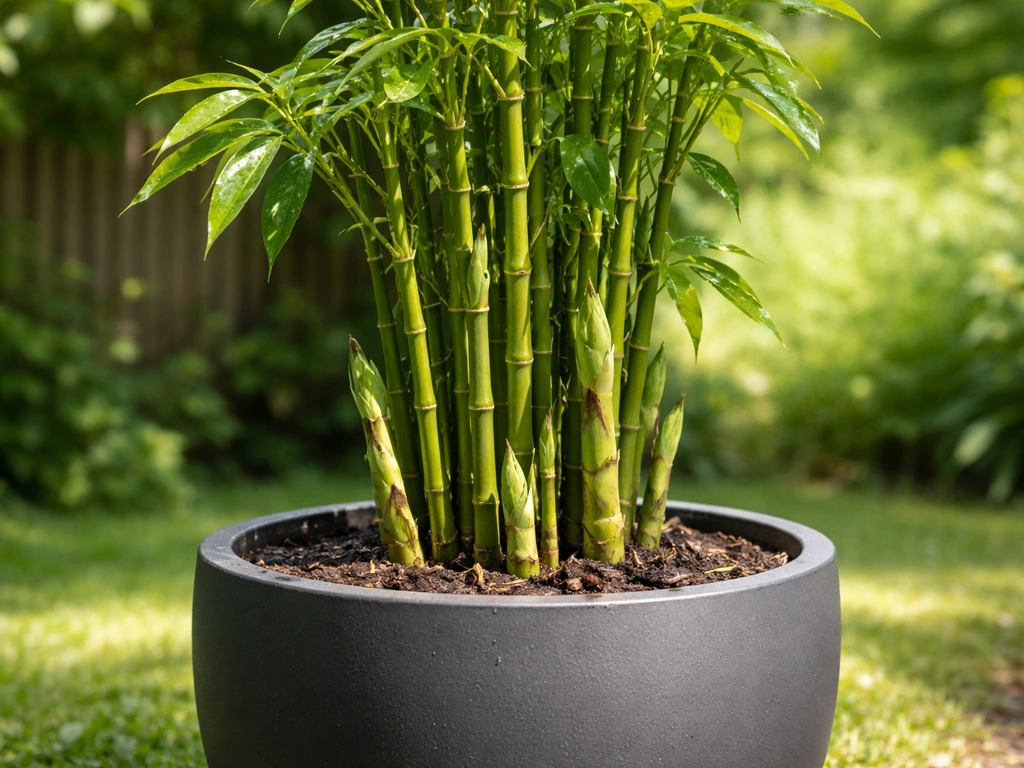
The honest answer is that growth rates vary a lot depending on species type, but there are reliable ranges you can plan around. Clumping bamboos (think Fargesia or Bambusa) are the slower movers. In containers, a clumping variety typically adds 1 to 2 feet of height per year and the clump spreads only a few inches outward. Running bamboos (like Phyllostachys) are more aggressive and, given enough root space, can add 3 to 5 feet of height per year once they are well established.
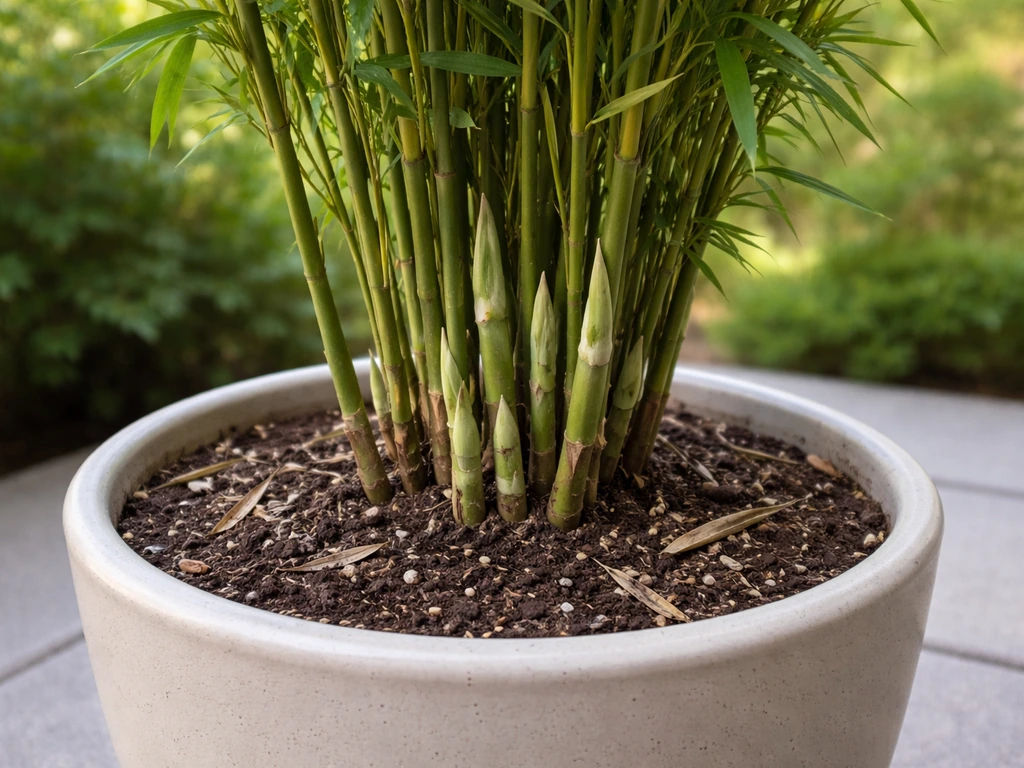
There is an important nuance to understand about how bamboo actually grows. Culms (the individual canes) do not grow slowly like a tree trunk adding rings. Each culm emerges from the soil and reaches its full height in a single growing season, usually a window of about 3 to 4 months. During active shooting, some tropical giants like Phyllostachys edulis can put on centimeters per day. The annual height gain figure you hear is really about how much taller the new culms are compared to last year's culms, which is where the container size and stored energy in the root system really matter.
In the first one to two years, potted bamboo looks like it is barely doing anything. This is normal. The plant is investing almost everything into root development. Year three onward is when you see the payoff, with noticeably taller and thicker new culms each spring or late summer depending on species type.
| Bamboo Type | Annual Height Gain in Pot | Spread per Year | Shooting Season |
|---|---|---|---|
| Clumping (e.g., Fargesia, Bambusa) | 1–2 ft | 2–4 inches | Late summer to fall |
| Running (e.g., Phyllostachys) | 3–5 ft | Contained by pot walls | Spring |
| Tropical clumping giants (e.g., Oldhamii) | 2–4 ft in large pots | Slow spread | Summer to fall |
What actually controls how fast potted bamboo grows
Four things consistently separate fast-growing potted bamboo from slow or stalled bamboo: species choice, pot size, root health, and whether the plant has been in the ground long enough to establish. Everything else, light, water, fertilizer, matters, but these four are the foundation.
Species and clumping vs running behavior
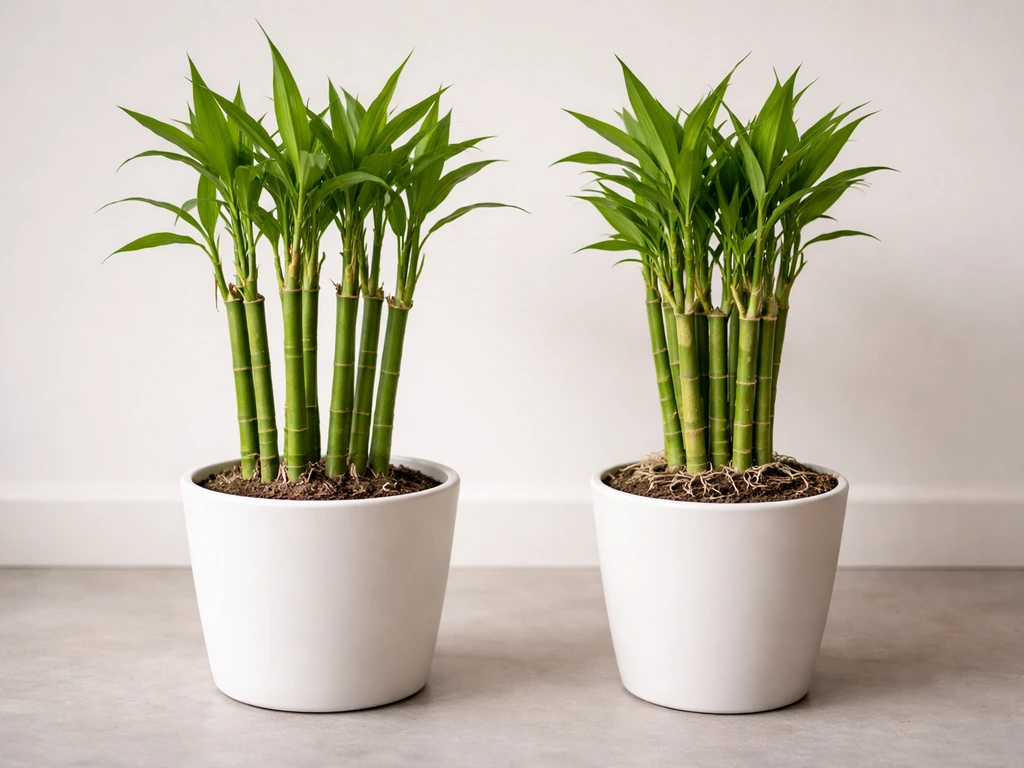
Running bamboos (monopodial, leptomorph rhizomes) naturally want to spread outward aggressively. In a pot, that energy has nowhere to go, so it redirects upward, which can work in your favor if you give them enough root volume. Clumping bamboos (sympodial rhizomes) are naturally more compact and slow-spreading, making them a more practical long-term container plant even if they grow more slowly. If maximum speed is your goal and you are growing outdoors in a large container, a running type will outperform a clumping type almost every time.
Pot size and root volume
This is the single most common mistake I see. A pot that is too small starves bamboo of two things: physical root expansion room and the moisture and nutrient reservoir that roots need to fuel a fast shooting season. For most moderate-sized bamboo, a container that is at least 15 to 20 gallons is a reasonable starting point. Large running types or tropical clumpers will benefit from a 30 to 45 gallon container or larger. The wider the better, bamboo rhizomes spread horizontally, so a wide, shallow container often outperforms a narrow, deep one.
Being rootbound: when it helps and when it hurts
Bamboo can tolerate being mildly rootbound and will sometimes shoot more aggressively when roots are slightly crowded, it senses competition and pushes upward. But once it becomes severely rootbound, growth stalls hard. The roots exhaust the soil nutrients quickly, dry out faster, and the plant cannot store enough energy for a strong shooting season. A good rule: if roots are visibly circling the bottom or poking out of drainage holes, it is time to either repot into a larger container or divide and refresh the soil.
Best growing conditions for fast growth in pots
Light
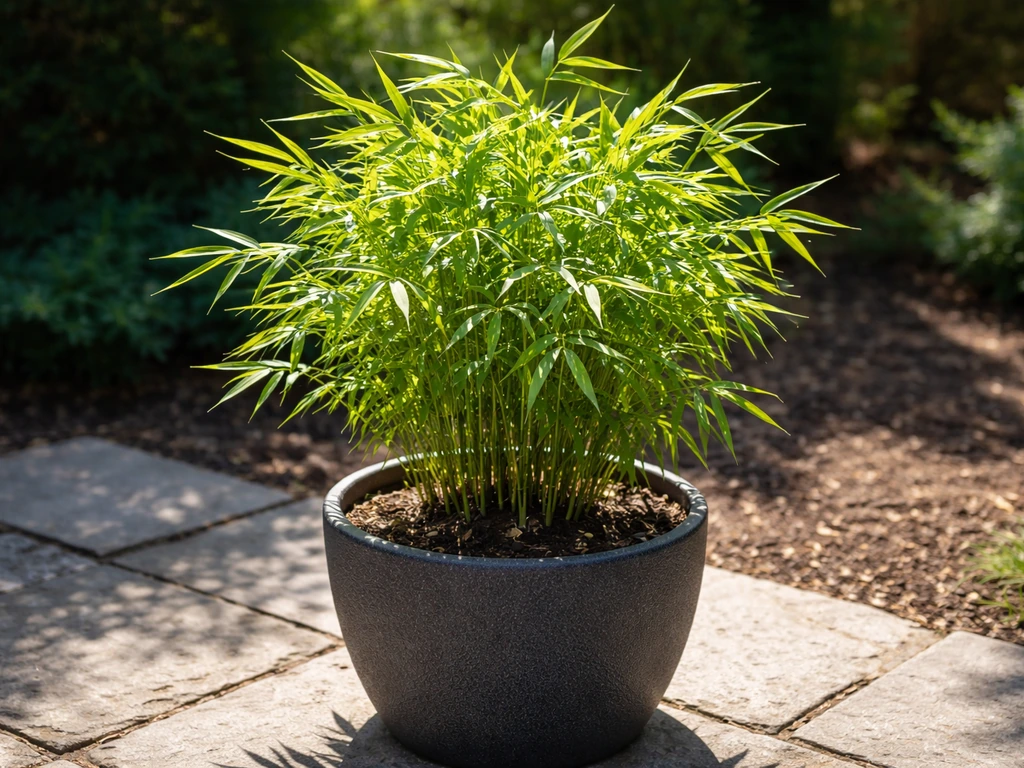
Most fast-growing bamboo species want at least 6 hours of direct sun per day. This is non-negotiable for outdoor pots if you want strong annual growth. Shade substantially reduces growth, I have seen the same species in full sun add 3 feet in a season while a shaded specimen in an identical container added less than 1 foot. Some shade-tolerant clumping types like Fargesia will do fine in partial shade, but even they prefer bright filtered light over deep shade.
Temperature and seasonality
Bamboo is temperature-driven. Temperate running types (Phyllostachys) shoot in spring when soil warms up, usually from late March through May in USDA zones 6 to 9. Tropical and subtropical clumpers shoot in late summer and fall when temperatures are at their warmest. If you move your pot somewhere cold or frost-prone, you interrupt the rhizome energy cycle and sacrifice a season's growth. Outdoor potted bamboo in warm climates (zones 8 to 10) consistently outperforms the same species in cooler zones simply because the growing season is longer.
Watering and drainage
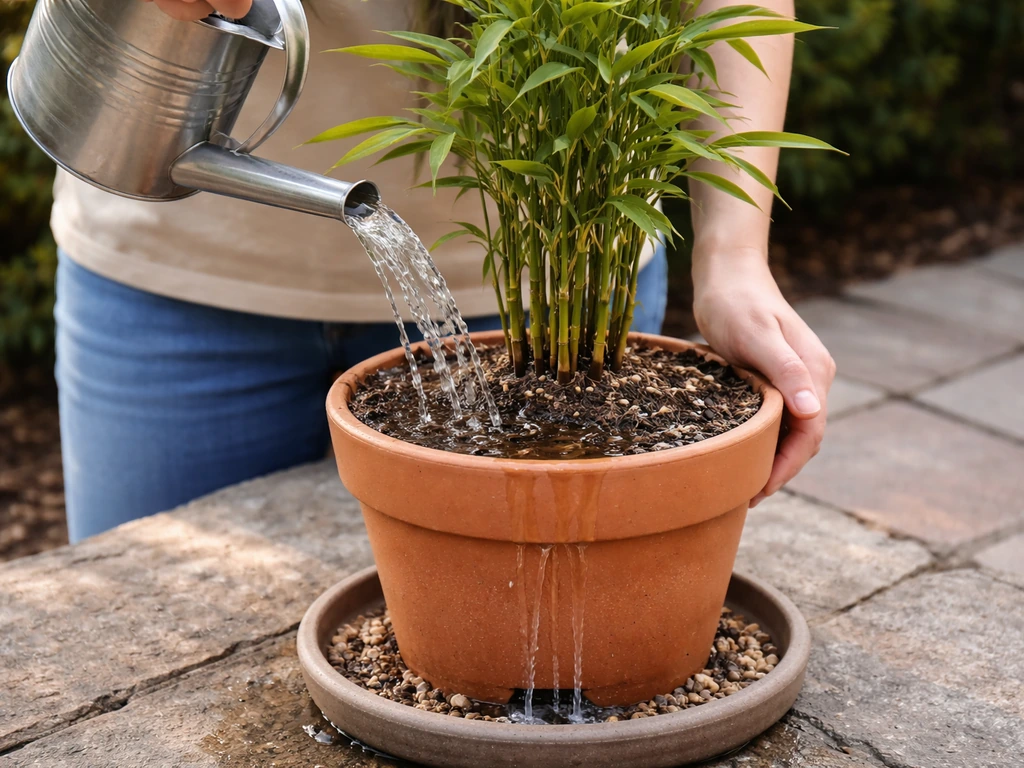
Bamboo in pots dries out significantly faster than in-ground bamboo, especially in summer. During active shooting, potted bamboo often needs watering every 1 to 2 days in hot weather. The soil should stay consistently moist but never waterlogged. Drainage holes are mandatory, roots sitting in standing water rot fast, and root rot is one of the quickest ways to stall or kill a potted bamboo. If your pot does not drain freely, fix that before anything else.
Humidity
Bamboo prefers moderate to high humidity, which is usually not a problem outdoors but can be a real limiting factor indoors. Low indoor humidity causes leaf rolling and tip browning, both of which signal that the plant is stressed and redirecting energy to survival rather than growth. If you are growing indoors, a pebble tray with water, grouping plants together, or a small humidifier nearby can make a meaningful difference.
Soil mix and fertilization for maximum speed
Standard potting mix works, but bamboo grows faster in a mix that is fast-draining yet moisture-retentive. A practical blend is about 60% quality potting mix, 30% perlite or coarse pumice for drainage, and 10% compost for nutrients. Bamboo prefers a slightly acidic to neutral pH, roughly 5.5 to 7.0. Outside that range, nutrient uptake slows even if you are fertilizing correctly.
Fertilizer is genuinely important for potted bamboo because the limited soil volume gets depleted quickly. Bamboo is a grass and responds well to nitrogen. A balanced slow-release granular fertilizer (something like a 10-10-10 or similar) applied in early spring covers the rhizome energy-loading phase. Following up with a nitrogen-heavier fertilizer (like a lawn fertilizer or 20-5-10) during the shooting season pushes taller, thicker culms. Stop fertilizing in late summer or fall so the plant hardens off before any cold weather. Liquid fertilizers every 2 to 3 weeks during the growing season work well too, especially for indoor bamboo where you have more control.
Indoor vs outdoor potted bamboo: realistic timelines
Outdoor potted bamboo in a suitable climate will consistently outpace indoor bamboo because it gets real sun, natural humidity fluctuations, and seasonal temperature cues that trigger shooting. An outdoor container bamboo in zones 8 to 10 with good care can realistically add 2 to 4 feet of height in a single season after establishment. In cooler zones, expect 1 to 3 feet. These are honest averages, not marketing claims. Kelp and bamboo can both grow quickly, but kelp growth is driven by different factors like water temperature, nutrients, and light in the ocean.
Indoor bamboo grows considerably more slowly. Without direct sun (most indoor spaces offer bright indirect light at best), and in typically dry indoor air, indoor potted bamboo might add 6 to 18 inches per year. Lucky bamboo, which is not a true bamboo at all, grows at a different rate entirely, true bamboos indoors need to be near the brightest window you have, preferably south or west-facing, to get anywhere close to their potential. If you live in a climate where outdoor growing is impractical part of the year and bring your bamboo inside seasonally, the indoor months will essentially be a holding period rather than a growth period.
| Setting | Typical Annual Height Gain | Main Limiting Factor |
|---|---|---|
| Outdoor pot, warm climate (zones 8–10) | 2–4 ft (established plant) | Root volume, water consistency |
| Outdoor pot, cooler climate (zones 6–7) | 1–3 ft (established plant) | Shorter growing season, temperature |
| Indoor pot, bright window | 6–18 inches | Light intensity, humidity |
| Indoor pot, low light | Under 6 inches, mostly stalled | Insufficient light for photosynthesis |
How to tell if your bamboo is growing normally
Normal potted bamboo behavior in the first two years looks a lot like nothing happening. Do not panic. The plant is building roots. You may see a few small new culms appear, but they will likely be shorter and thinner than the original stems you planted. This is expected. The real indicator of good establishment is healthy green foliage, firm culms, and no yellowing leaves at the base beyond the natural seasonal leaf drop bamboo does each spring.
From year three onward, you should see new culms each shooting season that are taller than the previous year's culms. If you are wondering does bamboo grow faster than trees, the quick culm shooting habits you can see by year three are a big part of the answer. If new culms are the same height or shorter than last year's, something is limiting growth, usually root restriction, low nutrients, or insufficient light. If you see no new culms at all during the shooting season, that is a stronger warning sign and usually points to root rot, severe root restriction, or extreme environmental stress.
- New culms appear each spring or late summer (depending on species): normal and healthy
- Culms grow progressively taller each year: plant is well established and thriving
- Leaves are green, upright, and mostly flat (not rolled): adequate hydration
- Leaf rolling or browning tips: the plant is water-stressed or humidity is too low
- Yellow leaves at base that drop in spring: normal seasonal leaf renewal, not a problem
- Widespread yellowing across all leaves: usually a nutrient deficiency or overwatering
- No new culms for two full seasons: investigate root health and container size immediately
Common mistakes that slow potted bamboo down
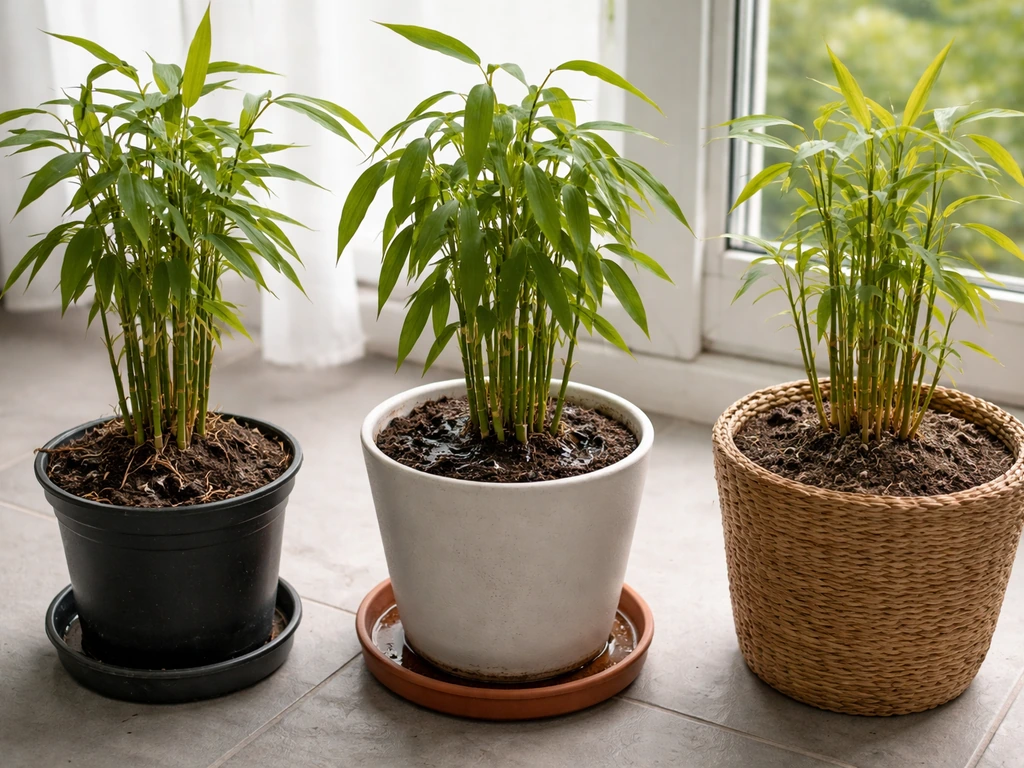
Most slow or stalled potted bamboo comes down to the same handful of errors. Here are the ones I see most often, in rough order of how damaging they are.
- Too small a pot: The fastest way to cap your bamboo's potential. Undersized containers restrict roots, deplete nutrients fast, and dry out within hours in summer heat. Upsize before you do anything else.
- Poor or no drainage: Waterlogged roots rot quickly. Make sure your container has multiple drainage holes and that water flows freely out the bottom within a minute or two of watering.
- Not enough light: Moving a bamboo to a shady corner or keeping it in a dim indoor spot will cut growth dramatically. If you cannot provide 6 hours of direct sun outdoors, choose a shade-tolerant clumping species and manage your expectations for speed.
- Inconsistent watering: Potted bamboo dries out fast. Missing watering days during the shooting season puts the plant into stress mode and the new culms stop elongating. During active growth, check the soil moisture daily in warm weather.
- Skipping fertilizer: In-ground bamboo can scavenge nutrients from surrounding soil. Potted bamboo cannot. If you are not feeding it through the growing season, it will underperform — especially in large, fast-draining containers that flush nutrients quickly.
- Overwatering in cooler months: The flip side of the watering problem. In winter or when bamboo is dormant, overwatering in a pot that is not drying out quickly leads to root rot. Pull back watering frequency significantly when temperatures drop.
- Expecting fast growth in year one: The biggest mindset mistake. Nearly everyone who buys bamboo for a container expects visible fast growth right away. Bamboo plants that establish slowly and build a strong root system in years one and two will dramatically outperform plants that were pushed too hard early. Patience in years one and two pays off in years three through five.
One thing worth keeping in mind: bamboo's speed reputation (and there is genuine science behind it, some species are among the fastest-growing plants on earth) comes from in-ground plants with unrestricted root systems. Whether you are comparing potted bamboo growth to how bamboo performs in Australian climates, how it stacks up against trees, or even how it measures up against fast-growing aquatic plants like kelp, the pot is always the constraint. For specific guidance on whether bamboo can be grown outdoors in Australia, see the answer to does bamboo grow in australia bamboo performs in Australian climates. Give your bamboo the largest practical container, keep the soil consistently fed and moist, put it in the brightest location you have, and you will be surprised at what it can do in season three.
FAQ
How can I tell whether my potted bamboo is “established” and actually ready for its faster growth phase?
Look for repeated new culms during the normal shooting window (spring or late summer). If you get healthy green foliage and firm culms, even if height gain is small, it usually means the root system is building. A common sign of readiness is thicker new shoots and culms that emerge at multiple points around the clump (not just one weak shoot).
Why is my bamboo shooting one year but then slows down the next, even though the care looks the same?
Most often it is a root and energy bookkeeping issue. If the pot dries out hard, goes waterlogged, or gets underfed before the next shooting cycle, the rhizome energy stores do not recharge, so the following season’s culms come up fewer, thinner, or shorter. Consistency in moisture and fertilizer from late winter into early shooting season matters a lot.
Can I grow bamboo fast in pots with grow lights indoors?
Grow lights can help, but you still need to approximate the outdoor light intensity, not just “bright.” Many indoor setups provide enough light for survival but not for a strong shooting season. For fastest results, use the brightest south or west window you have, position the light close enough that leaves do not grow limp or reach, and expect slower growth unless you can sustain strong light for many hours daily.
Should I prune potted bamboo to make it grow faster in height?
Pruning can control appearance, but it rarely increases yearly height gain. If you remove shoots too early in the season or cut culms during active shooting, you can reduce the plant’s energy reserves and delay new culm emergence. If pruning is needed, wait until after the main shooting flush and focus on removing dead or damaged culms rather than shortening healthy ones.
Is it better to choose a wider, shallow pot or a deeper pot for faster growth?
Wider usually wins in containers because bamboo rhizomes spread horizontally. A deeper pot can help as a reserve for moisture, but if it is narrow, you still limit rhizome expansion and you often get slower growth. If you must choose one, prioritize width and use a pot wide enough that roots are not circling tightly at the bottom within a short time.
What pot size should I choose if I do not know whether my bamboo is clumping or running?
Assume you have at least the “running” category for safety. Start with a larger container than you think you need, and watch root behavior after the first season. If you see fast, aggressive outward rhizome movement, faster drying, or roots quickly filling the pot, step up container size or divide, because a small pot will stall even vigorous species.
How soon should I repot potted bamboo, and what’s the sign it is time?
If roots are visibly circling at the bottom or poking out of drainage holes, it is time to increase container size or divide. For most container bamboos, that often happens sooner than people expect, especially for running types. Repotting during active shooting can shock the plant, so aim for timing that avoids disrupting the season’s main shoot cycle.
Can I use garden soil instead of potting mix to make bamboo grow faster?
Usually no. Garden soil compacts in containers, drains poorly, and can reduce oxygen around roots, which directly limits shooting performance and increases rot risk. If you use it, you must amend aggressively for drainage and stability, but it is still harder to keep the moisture and air balance correct than with a proper fast-draining potting mix.
Why does my bamboo look stressed but the soil is “wet,” could it be overwatering?
Yes. A pot can feel wet and still have oxygen-poor conditions if it drains slowly. Root rot symptoms include stalling growth despite adequate water, yellowing that spreads from older leaves, and mushy or foul-smelling roots. The fix is to ensure fast drainage through adequate hole size and avoid dense mixes that stay saturated.
Should I fertilize more when growth slows, or could that make it worse?
More is not always better. If light is low or the pot is root-restricted, extra fertilizer can accumulate salts and stress roots without producing more culms. Increase fertilization only after confirming the basics, bright light, healthy roots, and appropriate watering, then use a nitrogen-focused approach during shooting rather than heavy feeding year-round.
What humidity level do I need indoors for faster growth?
There is no single magic number, but if tips brown or leaves roll, humidity is usually too low to support fast shooting. Indoors, practical targets are “noticeably less dry,” achieved with a humidifier nearby, a pebble tray, or grouping plants to reduce microclimate dryness. If you cannot maintain that, expect slower year-round growth.
How do I prevent root rot in pots while still watering often enough for shooting?
Use drainage holes, a fast-draining yet moisture-retentive mix, and water according to the pot’s drying rhythm rather than a fixed schedule. In hot weather, that can mean watering every 1 to 2 days, but water should flow through and not sit. If a saucer collects runoff, empty it so roots are not in standing water.
Do potted bamboos ever “catch up” after a bad year, or is the growth lost for good?
They can recover, but the lost shooting season does not instantly return. After a setback like root restriction or rot, the plant spends time rebuilding roots and energy stores, so you may see a delayed improvement. With corrected pot size, drainage, and light, the next suitable shooting window is when you judge recovery.
Does feeding kelp or bamboo fertilizer products change how fast potted bamboo grows?
Nutrients help, but they do not override the main growth drivers already covered, light, root space, and root health. Kelp-based products can be useful, but the bigger effect comes from having a consistent nitrogen strategy timed to the shooting cycle. Use supplements as part of a balanced plan, not as a substitute for adequate pot volume and sunlight.
Next Article
Can Bamboo Grow in Las Vegas? Guide to Success in Desert
Yes, bamboo can grow in Las Vegas with the right species, irrigation, shade, and containment; step-by-step planting and保护