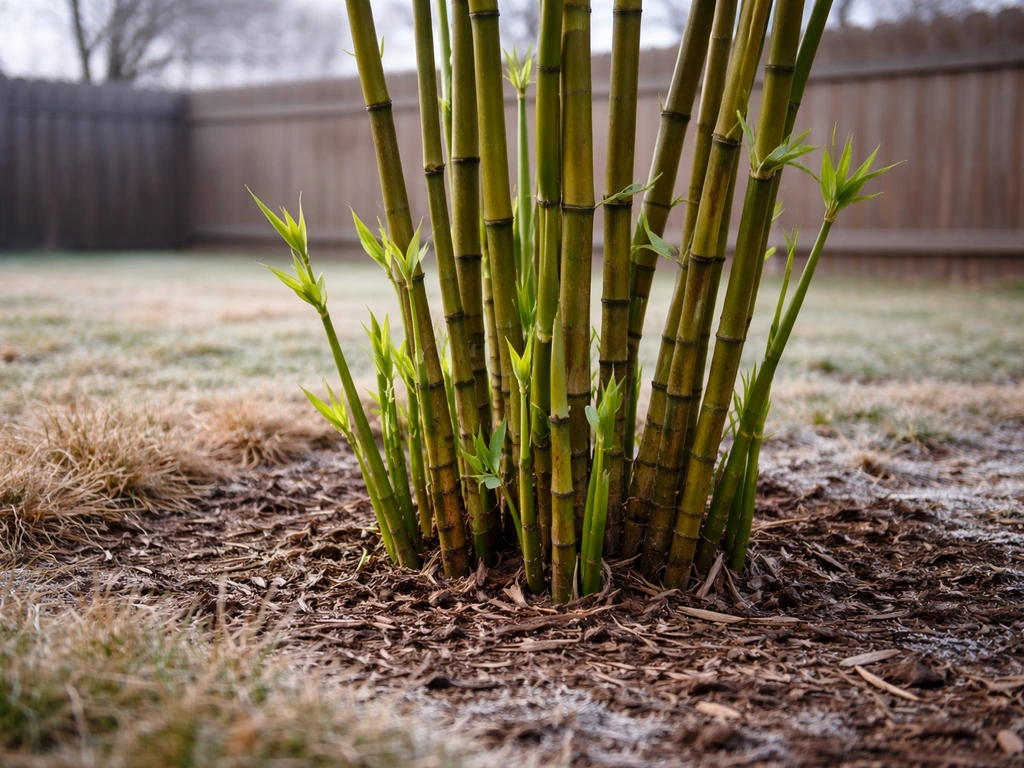
Yes, bamboo will absolutely grow in Kentucky, and it can thrive there with the right species choice. The state spans USDA hardiness zones 5b through 7a, which is cold enough to knock back tender bamboo but warm enough for a solid range of cold-hardy clumping and running species. Your biggest decisions are which species to pick for your specific zone and whether you're willing to install containment for running types. Get those two things right and you'll have a healthy bamboo planting within a single growing season.
Bamboo That Will Grow in KY: Cold-Hardy Species & Care
Marcus Hartwell
29 Jul 2026
Understanding Kentucky's Climate for Bamboo
Kentucky's USDA hardiness zones run from about 5b in the northeastern highlands near the Virginia border up to 7a along the far western lowlands toward the Mississippi River. The central Bluegrass region and most of the state sit in zones 6a and 6b, where average annual minimum temperatures fall between -10°F and 0°F (-23 to -18°C). That range eliminates tropical bamboos entirely but leaves a long list of temperate species well within reach.
Microclimates matter enormously here. A south-facing slope near a brick wall in Louisville can behave like zone 7, while a frost-prone hollow in the Appalachian foothills of eastern Kentucky can feel closer to zone 5a. NOAA Climate Normals (1991–2020) data shows that most Kentucky stations record their last spring frost between late March and mid-April and their first fall frost between mid-October and early November, giving you a growing season of roughly 180 to 200 days depending on elevation. Consult U.S. Climate Normals (NCEI/NOAA) for station normals, frost/freeze dates, snowfall, and growing-degree-day products useful when siting and selecting cold-hardy bamboo varieties in Kentucky and neighboring states. The University of Kentucky Cooperative Extension publishes county-level frost date tables, and I'd strongly recommend pulling that data for your county before you finalize species selection. A bamboo rated to zone 6 planted in a zone 5b hollow is going to struggle, plain and simple.
Soil conditions across the state are mixed but generally workable. The Bluegrass region has deep, fertile, slightly alkaline soils over limestone, which means you may need to acidify slightly for some species. Eastern Kentucky's hillsides tend toward thin, acidic soils. The western coalfields and the Purchase region in the far west have heavier clay. Bamboo prefers well-drained loamy soil with a slightly acidic to neutral pH (around 6.0 to 7.0), and it dislikes waterlogged roots at any time of year. If your site has drainage issues, address them before you plant.
How to Choose the Right Bamboo for Your Site
Before you even look at species lists, nail down four things: your USDA zone (look it up by ZIP code on the 2023 USDA Plant Hardiness Zone Map, not just the general region), what you want the bamboo to do (privacy screen, specimen plant, erosion control, wildlife habitat), how much space you have, and whether you want to deal with containment. Running bamboos are more aggressive but often hardier and faster to form a screen; clumping bamboos are slower to establish but far less management-intensive long term.
Here's a practical decision checklist to work through before buying anything.
- Look up your exact USDA zone using your ZIP code on the 2023 USDA Plant Hardiness Zone Map.
- Identify your microclimate: frost pocket or sheltered, south-facing or exposed, urban heat island or rural open field.
- Decide your primary use: screen, specimen, grove, erosion control, or container feature.
- Measure the available footprint and note any nearby structures, utilities, or property lines.
- Decide whether you're willing to install and annually inspect a 60-mil HDPE root barrier. If not, choose clumping species only.
- Check your county ordinances and HOA rules for any bamboo restrictions before you buy.
- Confirm soil drainage by digging a 12-inch hole, filling it with water, and checking that it drains within an hour.
Cold-Hardy Bamboo Species for Kentucky and the Nearby Midwest
The following species and cultivars are the ones I'd actually recommend planting in Kentucky. I've focused on those with documented cold tolerance backed by botanical garden data, university extension trial notes, and nursery performance records. Heights listed are realistic mature ranges under good Kentucky conditions, not optimistic maximums.
| Species / Cultivar | Type | USDA Zone | Mature Height | Best Use in KY |
|---|---|---|---|---|
| Fargesia murielae (Umbrella Bamboo) | Clumping | 5–8 | 8–12 ft | Screen, specimen, shade garden |
| Fargesia rufa 'Green Panda' | Clumping | 5–7 | 8–10 ft | Screen, container, tight spaces |
| Fargesia nitida (Fountain Bamboo) | Clumping | 5–8 | 10–15 ft | Woodland edge, specimen |
| Fargesia robusta 'Campbell' | Clumping | 6–9 | 12–16 ft | Tall screen, wind buffer |
| Phyllostachys aureosulcata (Yellow-Groove Bamboo) | Running | 5–9 | 20–35 ft | Grove, large screen (containment required) |
| Phyllostachys bissetii | Running | 5–9 | 18–25 ft | Windbreak, privacy hedge (containment required) |
| Phyllostachys nuda | Running | 5–9 | 20–30 ft | Cold-site grove (containment required) |
| Arundinaria gigantea (Native River Cane) | Running/clonal | 5–9 | 10–20 ft | Restoration, wildlife habitat, native planting |
A few notes on this list. The Fargesia species are the ones I consistently recommend to gardeners who don't want the containment headache. Fargesia murielae and F. rufa 'Green Panda' have proven themselves across zone 5 and 6 gardens and stay well within 12 feet, making them manageable for most residential lots. Phyllostachys aureosulcata is a workhorse in the Midwest: its rhizomes survive hard zone 5 winters even when canes get topkilled, and it comes back from the roots reliably. Research on related Phyllostachys species confirms that winter rhizome survival is driven by cold-acclimation mechanisms including soluble sugar accumulation that protect tissue during freeze events. That's why you'll see it bounce back even after a brutal February. Arundinaria gigantea, the native Kentucky river cane, deserves more attention than it gets. It's indigenous to the state, wildlife-friendly, and legal everywhere.
Clumping vs Running Bamboo: What Actually Matters in a Kentucky Garden
This is the single most important distinction for any Kentucky gardener to understand before buying bamboo. Running bamboos (mostly Phyllostachys and related genera) spread via long horizontal rhizomes that can travel 10 to 15 feet or more in a single season. Clumping bamboos (primarily Fargesia and Bambusa) grow from tight, sympodial root systems that expand slowly outward a few inches per year.
Running Bamboo: Pros and Cons
- Pro: Generally harder (many rated to zone 5), faster to form a dense screen or grove
- Pro: More species available at taller heights for large-scale privacy or windbreak use
- Pro: Rhizomes survive winter topkill events and resprout vigorously
- Con: Requires physical root barrier or annual trench inspection to prevent spread
- Con: Can invade neighboring properties and natural areas if uncontained
- Con: Some species (especially P. aurea) are on invasive-plant watch lists in multiple states
- Con: Removal once established is labor-intensive and can take multiple seasons
Clumping Bamboo: Pros and Cons
- Pro: Non-invasive, expands slowly and predictably (a few inches per year)
- Pro: No root barrier required, safe near fences, structures, and property lines
- Pro: Excellent cold tolerance in Fargesia species (most rated to zone 5 or below)
- Pro: Low long-term maintenance once established
- Con: Slower to establish and fill in than running types
- Con: Generally shorter mature heights (under 16 feet in Kentucky) than the tallest running species
- Con: Fargesia dislikes hot afternoon sun; needs shade or eastern exposure in hotter parts of Kentucky
- Con: Fewer species available locally; may need to order from specialty nurseries
My honest recommendation: if you have a standard residential lot in Kentucky, start with a clumping Fargesia. You'll sleep better. If you have acreage, a large buffer strip, or a specific reason to want height fast, a contained running Phyllostachys is workable, but plan the containment before you plant, not after.
Containing Running Bamboo: Root Barriers, Trenching, and Installation
If you're planting any running bamboo in Kentucky, containment is non-negotiable. The standard backed by university extension programs and commercial barrier manufacturers is a continuous HDPE (high-density polyethylene) rhizome barrier, 60-mil (0.060 inch / approximately 1.5 mm) minimum thickness, installed 30 to 36 inches deep. Thinner plastic sheeting, landscape fabric, or shallow barriers will not stop Phyllostachys rhizomes. I've seen 30-mil barriers pushed through within two seasons.
Barrier installation needs to be done before the bamboo goes in the ground. Retrofitting a barrier around established running bamboo is significantly harder and often requires cutting and removing rhizomes first.
- Dig a continuous trench 30 to 36 inches deep around the entire planting area. On slopes or in loose soil, go the full 36 inches.
- Install 60-mil HDPE barrier vertically in the trench, leaving 2 to 6 inches of the barrier lip protruding above the soil surface. That above-grade lip is your early warning system — rhizomes that try to go over the top are visible.
- Overlap seams by at least 4 feet where two barrier sections meet and seal with the manufacturer's supplied tape. Unsealed seams are the most common failure point.
- Backfill the trench and tamp firmly. Avoid leaving air pockets against the barrier.
- Inspect the above-grade lip every spring (April or May) when new growth is active. Any rhizome attempting to arch over the lip should be cut and removed immediately.
- If the planting area adjoins a neighbor's property, install the barrier on that side with extra depth. Legal disputes over bamboo encroachment are real and expensive.
- Keep a 12-inch mow strip or gravel path around the planting edge so you can visually inspect the barrier lip each season without guessing.
Commercial products from vendors like DeepRoot typically come in 60-mil and 80-mil options at 24 to 36 inches in depth. For Kentucky zone 6 conditions with active Phyllostachys species, I wouldn't go shallower than 30 inches. The additional cost of an extra six inches of depth is trivial compared to the cost of removing escaped bamboo from a neighbor's yard.
Container Culture and Restricted Planting
Growing bamboo in containers is a legitimate long-term strategy, not just a temporary measure. It works especially well in Kentucky for two scenarios: gardeners who want a running species on a small urban lot without a full barrier installation, and gardeners in zone 5b or colder microclimates who want to overwinter tender species in a garage or basement.
For outdoor container culture, use a pot at least 24 inches in diameter and 18 to 24 inches deep. Unglazed terra cotta looks beautiful but cracks in Kentucky winters. I use heavy-duty plastic or fiberglass containers for anything staying outdoors year-round. Bamboo in containers dries out fast, so plan to water every one to two days in summer heat. Feed with a balanced slow-release fertilizer (something around 10-10-10 or a dedicated bamboo fertilizer) in spring and again in early summer. Do not feed after July or you'll push late growth that gets caught by fall frosts.
Root-bound container bamboo loses vigor quickly. Plan to divide clumping species every three to four years and running species every two to three years. When dividing, use a sharp spade or handsaw to cut through the root mass, keep a healthy section with several culms and a fist-sized root ball, and replant immediately. Letting divided sections dry out even for a few hours in summer heat will kill them.
- Container minimum size: 24 inches diameter x 18 inches depth for most Fargesia species
- Drainage: ensure at least 3 to 5 drainage holes; bamboo roots rot in standing water
- Soil mix: blend of loamy garden soil, perlite, and compost (roughly 60/20/20 by volume)
- Watering: every 1 to 2 days in summer; reduce to once weekly in cool weather
- Feeding: slow-release balanced fertilizer in April and June, nothing after July
- Winter: move tender species to unheated garage if temps will drop below their zone minimum
- Repotting/division: every 2 to 4 years depending on species growth rate
Step-by-Step Planting Guide for Kentucky
Site Preparation and Soil
Pick a location with full sun to partial shade. Fargesia species genuinely prefer some afternoon shade in hotter parts of the state (zones 6b and 7a), while Phyllostachys species tolerate and even prefer full sun. Avoid frost pockets if you're in zone 5b or 6a. Amend the planting area with 3 to 4 inches of compost worked in 12 inches deep. Target a soil pH of 6.0 to 7.0; test with a simple home kit or through your local cooperative extension office. If you're on the limestone-derived soils of central Kentucky and pH is above 7.0, work in sulfur to bring it down. Apply a 2 to 3 inch layer of organic mulch (wood chips, shredded bark, or pine straw) over the planting area after backfilling, keeping it pulled back 2 to 3 inches from culm bases.
Planting Timing
Spring is the optimal planting window in Kentucky, specifically from mid-April through early June after the last frost date for your county. This gives rhizomes a full growing season to establish before their first Kentucky winter. Fall planting (September through mid-October) is the second-best option if spring plants are unavailable, but water consistently through fall and apply an extra inch of mulch before the first frost. Avoid planting in July or August when heat stress is highest.
Initial Care Checklist
- Dig a planting hole twice the width of the root ball and the same depth. Do not plant deeper than the container soil line.
- If planting running bamboo, install the 60-mil HDPE barrier before backfilling the planting hole.
- Backfill with native soil amended with compost. Tamp gently to remove air pockets.
- Water deeply at planting: 2 to 3 gallons per plant, then keep soil consistently moist (not saturated) for the first 8 weeks.
- Apply 2 to 3 inches of mulch over the root zone.
- Do not fertilize in the first 4 to 6 weeks after transplanting. Begin light fertilization (balanced granular) once you see new culm or leaf growth.
- Expect some leaf drop or yellowing in the first few weeks. This is transplant stress, not disease. New leaves will emerge once roots establish.
- In the first winter, add an extra inch of mulch around the base to insulate rhizomes. This is especially important for new plantings in zone 5b and 6a.
- In the second spring, begin a regular feeding schedule: early April and again in early June.
Realistic Growth Rates and What to Expect Year by Year
Bamboo follows a predictable pattern sometimes called 'sleep, creep, leap.' In year one, most of the plant's energy goes underground to build rhizome mass. You'll see modest top growth, maybe one or two new culms that are smaller than what you started with. In year two, you'll notice rhizomes spreading (or in the case of Fargesia, the clump thickening) and culm diameters starting to increase. By year three, a well-sited Kentucky planting should be putting up noticeably taller and thicker culms. A Phyllostachys aureosulcata can begin producing 15 to 20-foot culms by years three to five in good Kentucky soil. Fargesia takes a season longer to hit its stride but is reliably full and dense by year four.
Don't make the common mistake of removing culms in the first two years to 'clean up' the planting. Every culm, even a small one, is photosynthesizing and feeding the rhizome system. Let year-one and year-two culms stand until they're naturally replaced by larger ones in subsequent seasons.
Propagation Methods for Kentucky Growers
Division is the most reliable propagation method for Kentucky gardeners. In early spring, just as soil temps are rising above 50°F (typically late March to April in most of the state), dig around the edge of an established clump or grove and cut a division that includes at least three to five culms and a healthy section of rhizome. Keep the division moist and plant it immediately. Divisions from clumping Fargesia should include as much root mass as possible since their compact rhizomes don't like to be disturbed heavily.
Culm cuttings are less reliable for temperate bamboos like Phyllostachys and Fargesia than they are for tropical species. You'll see success rates of maybe 30 to 50 percent even under ideal conditions, and the resulting plants take longer to establish. Division is simply more efficient and almost always results in a viable plant within a single growing season.
Legal Considerations and How Rules Differ in Neighboring States
Kentucky does not currently have a statewide ban on planting running bamboo, but that doesn't mean you're in the clear everywhere. Local ordinances matter. Multiple municipalities across the Midwest have placed Phyllostachys varieties on prohibited or invasive plant lists, sometimes through nuisance ordinances that allow neighbors to demand removal if bamboo encroaches. Check with your city or county government before planting any running species.
The legal landscape shifts as you move to neighboring states. Missouri, which shares a similar climate zone range with Kentucky, has multiple municipalities that explicitly prohibit Phyllostachys varieties in local landscaping ordinances. If you're comparing notes with a Missouri gardener, the practical growing conditions are similar but the legal context may differ more than you'd expect. Iowa and Kansas, which are colder and drier respectively, have their own zone constraints that change the species shortlist significantly. For specifics on whether you can grow bamboo in Kansas, see our guide Can you grow bamboo in Kansas for Kansas-specific zone maps, species recommendations, and dry-site tips. For specific guidance on growing bamboo in cooler Midwestern climates, see our regional guide titled 'can bamboo grow in Iowa'. A gardener in Iowa working in zone 5 will have a shorter list of reliable performers than a Kentucky gardener in zone 6b. The core Fargesia recommendations hold across all four states, while the running Phyllostachys options need to be evaluated against both cold hardiness and local regulations wherever you are.
Seasonal Care Through the Kentucky Year
| Season | Task | Notes |
|---|---|---|
| Early Spring (Mar–Apr) | Inspect root barrier lip; remove any escaped rhizomes | Do this before new growth obscures escapes |
| Spring (Apr–May) | Apply balanced fertilizer (10-10-10 or similar) | Granular slow-release; water in after application |
| Spring (May) | New culm emergence: do not prune or disturb | New shoots reach full height in 4–8 weeks |
| Early Summer (Jun) | Second fertilizer application; water deeply 1–2x per week | Bamboo needs consistent moisture during culm elongation |
| Summer (Jul–Aug) | Monitor for spider mites in dry spells; water to prevent drought stress | No fertilizer after July; late growth gets frost-killed |
| Fall (Sep–Oct) | Add or refresh 2–3 inch mulch layer over root zone | Insulates rhizomes through winter freeze-thaw cycles |
| Late Fall (Nov) | Final deep watering before ground freezes | Prevents desiccation damage over winter |
| Winter (Dec–Feb) | Monitor for deer browsing; wrap young Fargesia in burlap in zone 5b | Deer damage culms in hard winters; burlap cuts desiccating wind |
Troubleshooting Common Problems
Pests and Diseases
Kentucky bamboo faces a short list of serious pests. Spider mites are the most common in hot, dry summers, showing up as dusty, stippled foliage. Knock them back with a strong water spray or insecticidal soap; avoid broad-spectrum pesticides that kill beneficial insects. Aphids occasionally colonize new shoots in spring but rarely cause lasting damage and are usually handled by natural predators. Fungal culm diseases (typically Culm Blight or leaf spot) are more common in humid Kentucky summers when air circulation is poor. Thin overcrowded groves to improve airflow rather than reaching for fungicide.
Common Planting Mistakes
- Planting a running species without a root barrier and being surprised when it spreads
- Buying a bamboo rated only to zone 7 or 8 for a zone 5b or 6a Kentucky site
- Planting in waterlogged or poorly drained soil, which causes rhizome rot
- Over-fertilizing with high-nitrogen lawn fertilizer, which pushes weak, floppy growth
- Removing new culms in the first two years before the root system is established
- Planting Fargesia in full afternoon sun in hot central or western Kentucky, causing leaf scorch and decline
- Assuming winter topkill of canes means the plant is dead — check rhizomes in April before writing it off
Where to Buy Cold-Hardy Bamboo for Kentucky
Big-box garden centers in Kentucky carry bamboo inconsistently and often stock species that aren't well-suited to local zones. Your best sources are specialty bamboo nurseries that ship nationally (look for vendors that specifically list cold-hardiness data and USDA zone ratings), local native plant nurseries for Arundinaria gigantea, and University of Kentucky Cooperative Extension-affiliated plant sales that occasionally carry regionally tested varieties. When ordering online, buy in spring when nurseries ship actively growing plants rather than dormant divisions. Ask specifically for zone 5 or 6 cold-hardiness documentation. A vendor who can't tell you the zone rating of the plant they're selling you is not a vendor you want to trust.
FAQ
Short answer: Can bamboo reliably grow in Kentucky (KY) and nearby Midwestern states and be safely contained at home?
Yes — many cold‑hardy bamboo species will reliably grow across Kentucky’s USDA zones (roughly 5b/6a through 7a), and in nearby states (MO, IA, KS) when properly sited and protected. For home gardeners who want low‑risk planting, choose clumping (non‑running) species (Fargesia spp. and cold‑hardy cultivars) or use robust containment for running Phyllostachys. Use local USDA hardiness, county extension frost/freeze data, and microclimate (shelter, slope, soil drainage) to refine choices and winter‑protection needs.
What USDA hardiness zones and microclimate considerations matter for Kentucky?
Kentucky spans roughly USDA zones 5b/6a through 7a — check your exact ZIP/county on the 2023 USDA Plant Hardiness map. Key microclimate factors to assess: typical absolute minimum winter temperature, late‑spring frost risk, prevailing winter winds, soil drainage, and cold pockets (low spots) or warm pockets (south‑facing walls, heat islands). Use NOAA/NCEI normals and your county extension frost/freeze dates for site‑specific timing and to decide whether additional winter protection (mulch, windbreaks) is needed.
Which cold‑hardy bamboo species and cultivars are prioritized for Kentucky (with expected height and zone ratings)?
Prioritized cold‑hardy options (clumping first for low invasion risk): - Fargesia murielae (umbrella bamboo): clumping; mature height 8–12 ft; USDA zones ~4–7. - Fargesia rufa / 'Green Panda': clumping; 6–10 ft; USDA zones ~5–7. - Fargesia nitida / 'Blue Fountain' (cultivar dependent): clumping; 8–12 ft; zones ~5–7. - Phyllostachys bissetii: running; narrow clump, 10–20 ft; zones ~5–7 (very cold‑tolerant running bamboo). - Phyllostachys aureosulcata (yellow‑groove): running; 15–25 ft; zones ~5–7 (can survive rhizomes in cold but may have topkill). - Semiarundinaria fastuosa (or native Arundinaria spp. where appropriate): running/arch; 6–12 ft depending on species; zones vary but some are adapted to eastern U.S. Note: height and zone ranges vary by cultivar and microclimate. Prefer Fargesia clumpers if strict non‑invasiveness is required.
Clumping vs running: which should I pick and why?
Decision points: - Choose clumping (Fargesia) when you want low invasion risk, easier containment, and a reliable privacy screen in cold climates. Clumpers expand slowly and are contained by regular division or pot culture. - Choose running (Phyllostachys) only if you need taller, faster screens, are prepared to install and maintain rigorous containment (HDPE barrier, regular rhizome checks), or want a grove effect. Running bamboos can be invasive and are often regulated locally. Consider neighbors and local ordinances before planting runners.
Containment recommendations for running bamboo (root barriers, trenching, containers) — what are the standards?
Standard containment checklist for running bamboo: - Barrier: install continuous 60‑mil HDPE (or thicker geomembrane) rhizome barrier 30–36 in (75–90 cm) deep; leave 2–6 in (5–15 cm) above grade. - Seams: overlap/seal seams per manufacturer guidance; use approved tape to seal penetrations. - Trenching: if not using barrier, trench 30–36 in and cut rhizomes twice per growing season; impractical long‑term. - Containers/raised beds: use thick‑walled pots or lined raised beds with periodic root pruning; containers help restrict spread and make removal easier. - Inspection: annually inspect barrier lip for rhizomes arching over; remove escapes promptly. Follow local extension/manufacturer instructions for soil type and slope adjustments.
Step‑by‑step planting checklist (soil, light, watering, fertilizing, mulching, first year care)
Planting and first‑year checklist: 1) Site selection: full sun to partial shade depending on species (Fargesia tolerates more shade); well‑drained loamy soil, avoid waterlogged areas. 2) Soil prep: amend heavy soils with compost; aim for slightly acidic to neutral pH. 3) Hole: dig a hole twice as wide as rootball, same depth. 4) Planting: set crown slightly higher than surrounding soil, backfill, firm gently. 5) Watering: keep evenly moist (not waterlogged) — deep watering 1–2× per week in dry weather first year. 6) Mulch: 2–3 in organic mulch, keep 2–3 in clear around culms to avoid rot. 7) Fertilizer: apply a balanced slow‑release fertilizer in spring (e.g., 10‑10‑10 or a bamboo formula) and again midseason if vigorous growth is desired. 8) Protection: in zones 5/6, add extra mulch over the root zone before harsh freezes; provide windbreaks for young plants. 9) Containment: install barrier or plan for container/periodic division before planting runners. 10) Record keeping: note planting date, cultivar, and exact location for future monitoring.
Next Article
Can You Grow Bamboo in Kansas? Cold-Hardy Guide
Can you grow bamboo in Kansas? Get cold-hardy picks, planting steps, containment tips, and winter protection for success