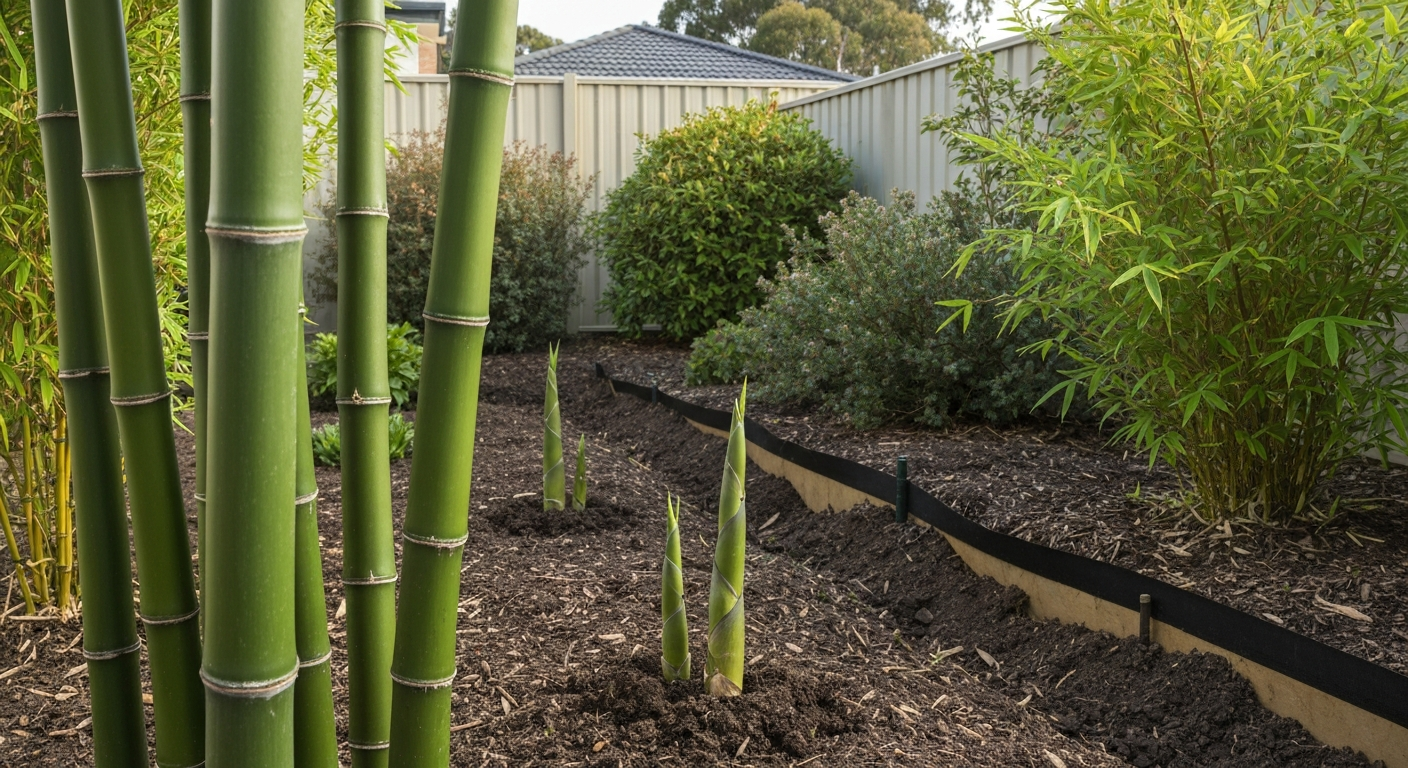
Miracle-Gro works on bamboo, but it is not automatically the best choice, and picking the wrong formulation or applying too much can do real harm. For outdoor woody bamboo growing in the ground, a water-soluble or slow-release Miracle-Gro product can deliver a useful nitrogen boost during the spring shooting season. For potted bamboo, dilution matters a lot more than it does in the garden. For lucky bamboo (which is actually a Dracaena, not a bamboo at all), standard Miracle-Gro at full label strength is too strong and can burn roots or foul the water. The short version: use it carefully, lean toward slow-release or heavily diluted formulas, and understand what type of 'bamboo' you are actually feeding before you mix anything.
Is Miracle‑Gro Good for Bamboo? Feeding & Care Tips

Marcus Hartwell
12 Aug 2026
First, which plant are we actually talking about?
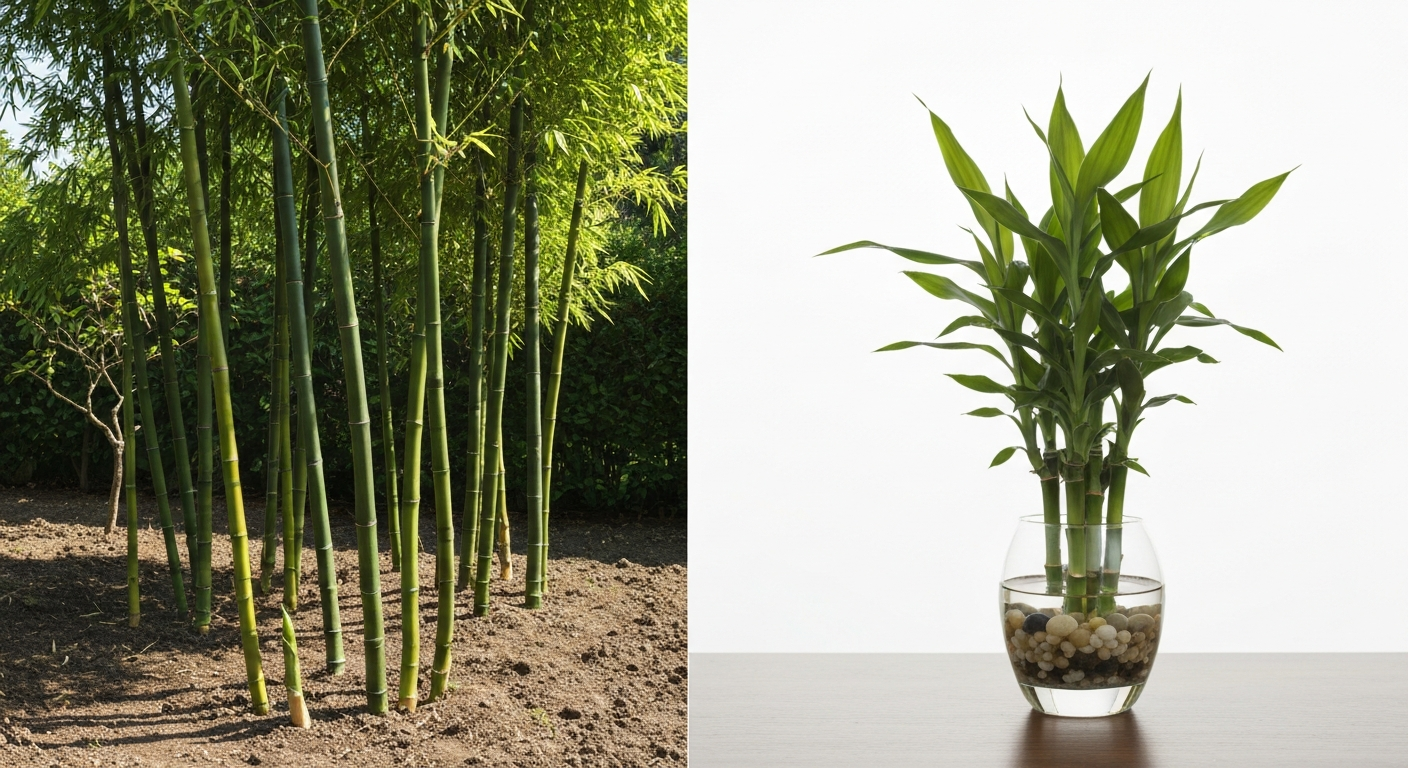
This question comes up constantly, and it matters more than most people realize. There are two completely different plants that gardeners call 'bamboo' when searching for fertilizer advice, and they have almost nothing in common nutritionally or structurally. If you're unsure which one you have, read our guide what type of plant is bamboo in Grow a Garden for help identifying yours. If you're wondering "is bamboo a tropical plant" and what that means for growing bamboo in a garden, see our guide on bamboo types and climate suitability for clear, practical advice. For a related question about whether 'bamboo' is a prickly fruit, see is bamboo a prickly fruit in grow a garden.
Outdoor woody bamboo refers to true grasses in the subfamily Bambusoideae, which includes running species like Phyllostachys and clumping species like Fargesia or Bambusa. These are large, fast-growing woody grasses that behave like landscape plants and can consume nutrients at a scale comparable to a lawn or a small tree. If you are growing bamboo in your yard or in a large planter on a patio, this is what you have. For guidance on the largest bamboo varieties to grow in a garden, see the article what is the biggest bamboo in Grow a Garden.
Lucky bamboo is Dracaena sanderiana, a tropical houseplant with zero botanical relationship to real bamboo. It gets sold in small vases of water at grocery stores and garden centers, often with its stems twisted into spirals. Because it is frequently kept in plain water with no soil, it is dramatically more sensitive to fertilizer salts than any outdoor bamboo. Anything you read about fertilizing 'bamboo' may not apply to it at all, and vice versa. Keep that distinction in mind throughout this article. For information on the rarity and availability of variegated or 'rainbow' bamboo cultivars, see how rare is a rainbow bamboo in Grow a Garden.
What bamboo actually needs from a fertilizer
True woody bamboo is a heavy nitrogen feeder. That is the single most important thing to understand about its nutrient needs. Research consistently shows that nitrogen fertilization drives shoot production, culm height, and overall biomass more than phosphorus or potassium does. If you are choosing between products, prioritize nitrogen (the first number in any N-P-K ratio) over everything else.
Phosphorus (the middle number) matters most during establishment, when roots are developing. Mature, established clumps in good soil rarely need heavy phosphorus supplementation, and excess phosphorus can actually suppress mycorrhizal fungi that help bamboo scavenge nutrients naturally. Potassium (the third number) supports overall plant health, stress tolerance, and cold hardiness, so it is more relevant for bamboo growing near the edge of its cold hardiness range.
Beyond N-P-K, bamboo benefits from micronutrients including iron, manganese, zinc, and magnesium. Iron deficiency is the most common micronutrient problem I see, particularly in alkaline soils above pH 7.0, where iron becomes chemically unavailable even if it is physically present. Yellowing between the leaf veins (interveinal chlorosis) on younger leaves is the giveaway. Most complete fertilizers, including Miracle-Gro All Purpose, include chelated micronutrients that address this.
How nutrient needs shift with growth stage
Bamboo has a pronounced seasonal rhythm that should shape your feeding schedule. In early spring, when shoots are pushing up, nitrogen demand spikes hard and fast. A single well-timed nitrogen application just before or at the start of shooting season can meaningfully increase shoot count and culm height for that year. During summer, the plant consolidates and hardens new culms, and a lighter maintenance feed can support that process. In fall, you want to back off nitrogen almost entirely to encourage the plant to harden off before frost. Feeding bamboo nitrogen in September or October in a climate with cold winters is a way to get frost-damaged new growth. In winter, do not feed at all.
The Miracle-Gro lineup: what is actually in each product
Miracle-Gro is not one product. It is a brand with dozens of formulations, and they behave very differently on bamboo. Here are the main types you will encounter.
| Product | N-P-K | Form | How it works |
|---|---|---|---|
| Water Soluble All Purpose Plant Food | 24-8-16 | Dissolvable powder/packet | Mixed with water and applied to soil; fast-acting, short-lived |
| Liquid All Purpose Plant Food Concentrate | 12-4-8 | Ready-to-dilute liquid | Mixed at 1 tsp per gallon for houseplants; feeds roots quickly |
| LiquaFeed All Purpose Plant Food | 12-4-8 | Liquid refill for feeder system | Applies through hose-end feeder; fast-acting |
| Shake 'n Feed All Purpose Continuous Release | 12-4-8 | Slow-release granular | Breaks down over 3–6 months; low spike risk, low maintenance |
| Miracid Plant Food | 30-10-10 | Water soluble | Formulated for acid-loving plants; high nitrogen, lowers pH slightly |
The water-soluble 24-8-16 powder is the product most people picture when they hear 'Miracle-Gro.' It has the highest analysis in the lineup and is designed to be applied every 7 to 14 days in outdoor garden settings using a hose-end feeder. The label-directed frequency assumes a garden bed with regular watering and drainage, not a container or a water vase. The liquid concentrate at 12-4-8 is gentler and easier to control for indoor or potted applications. The slow-release Shake 'n Feed granular at 12-4-8 is the most forgiving option for in-ground bamboo because it releases nutrients gradually and does not create large soluble salt spikes after each application.
Which Miracle-Gro products to use (and which to skip)
For garden bamboo growing in the ground
The slow-release Shake 'n Feed granular is my first recommendation for established in-ground bamboo. You broadcast it over the root zone in early spring, water it in, and it works for three to six months without further attention. That low-maintenance rhythm fits well with how bamboo grows. The water-soluble 24-8-16 powder is also fine for in-ground use, applied with a hose-end feeder at the start of shooting season and once more in late spring or early summer. Just do not follow the every-7-day label direction for bamboo. Two to three applications per growing season is plenty for an established clump.
One formulation worth considering specifically for bamboo is Miracle-Gro's Miracid, which runs 30-10-10. That elevated nitrogen ratio is actually well-matched to what woody bamboos prefer, and the slight acidifying effect is useful if your soil is drifting above pH 6.5. I would not use it if your soil is already below pH 5.8, but for neutral or mildly alkaline garden soil it is a reasonable fit.
For potted or container bamboo
Containers require more caution. Salt accumulates in potting mix much faster than it does in open ground because there is no way for excess nutrients to migrate away from the root zone. For container bamboo, the liquid concentrate at 12-4-8, mixed at half to three-quarters of the label rate, applied every two to three weeks during active growth, gives you more control than the high-analysis soluble powder. The slow-release Shake 'n Feed granular also works in containers when used at the lower end of the recommended rate.
What I avoid in containers is the full-strength 24-8-16 water-soluble powder applied on the feeder schedule. The combination of high analysis and frequent application in a limited soil volume is a reliable recipe for salt buildup and eventually root burn.
What to avoid entirely
- Full-strength 24-8-16 water-soluble formula applied more than 2–3 times per season on in-ground bamboo
- Any Miracle-Gro product at full label strength on lucky bamboo (Dracaena) grown in water
- Bloom boosters or high-phosphorus formulas on established outdoor bamboo (bamboo rarely flowers and does not benefit from bloom-biased N-P-K)
- Fertilizing in late summer or fall in cold climates (zones 6 and below), which pushes tender new growth before frost
- Applying granular fertilizer directly onto rhizomes or crowns without watering in thoroughly
Honest pros and cons of using Miracle-Gro on bamboo
Miracle-Gro's real strengths are convenience, availability, and speed. The soluble formulas are immediately available to roots, so if your bamboo is showing signs of nitrogen deficiency (pale green or yellow leaves, slow growth, small-diameter culms) you will see a response within a few weeks of a well-timed application. The products include chelated micronutrients, which matters in alkaline soils where micronutrients lock up. And they are cheap and sold everywhere, which is genuinely useful.
The downsides are real too. High-analysis water-soluble products carry a meaningful salt load, and repeated applications without adequate leaching cause electrical conductivity to climb in container media, eventually damaging roots. Controlled‑release fertilizers typically produce lower short‑term leachate electrical conductivity spikes than equivalent frequent soluble fertilizer programs, and placement and rate of the CRF influence soluble salt and leachate EC behavior (Container‑Grown Plant Production, nursery research proceedings) blank" rel="noopener noreferrer">Container‑Grown Plant Production — nursery research proceedings (controlled‑release vs soluble fertilizer data and leachate EC observations). Greenhouse Best Management Practices (UMass), pH/EC monitoring and SME method recommends monitoring substrate pH and electrical conductivity (EC) using a saturated media extract (SME), noting that EC is the standard indicator of soluble salts in soilless media blank" rel="noopener noreferrer">Greenhouse Best Management Practices (UMass) — pH/EC monitoring and SME method. In open ground this is less of a crisis, but in compacted or clay soils with poor drainage it can still accumulate. Miracle-Gro products are also almost entirely synthetic, meaning they contribute no organic matter to the soil, feed no microbial life directly, and do nothing for soil structure. Over years of exclusive synthetic feeding, soil biology can degrade, which indirectly affects nutrient cycling and moisture retention, both of which bamboo depends on heavily.
| Factor | Miracle-Gro (synthetic) | Organic fertilizers |
|---|---|---|
| Speed of effect | Fast (days to weeks) | Slow (weeks to months) |
| Nitrogen content | High and precise (e.g., 24-8-16) | Lower, variable (e.g., 5-3-2 typical for fish emulsion) |
| Salt risk | Moderate to high if overused | Low |
| Soil biology benefit | None direct | Feeds microbial activity directly |
| Organic matter contribution | None | Adds humus over time (compost, meals) |
| Micronutrient inclusion | Yes (chelated) | Varies; often yes in kelp/fish products |
| Cost | Low to moderate | Moderate to high per unit of N |
| Ease of use | Very easy, precise dilution | More variable; some mess involved |
| Environmental runoff risk | Higher (soluble N leaches) | Lower (slower release) |
| Best for | Quick correction, active season boost | Long-term soil health, low-maintenance maintenance feeding |
Miracle-Gro vs organic fertilizers: which is actually better for bamboo?
I use both, and the honest answer is that the best approach combines them. For a quick spring boost at the start of shooting season, a synthetic high-nitrogen product (whether Miracle-Gro or a high-N lawn fertilizer at roughly 20-5-6) delivers nitrogen faster than any organic option. That timing window matters because bamboo shoots spend only a few weeks above ground before hardening into culms, and whatever nutrients are available during that sprint determine the final size of the culm.
But for the long-term health of the planting, organic amendments do things synthetic fertilizers cannot. A two-inch layer of compost worked into the soil around a bamboo grove in fall or early spring improves moisture retention, feeds earthworms and fungi, and gradually improves soil structure. Fish emulsion or seaweed extract applied in mid-summer gives a light nitrogen top-up along with a range of growth hormones and trace elements that no synthetic product replicates. If I had to choose one approach, I would use a slow-release organic fertilizer (composted chicken manure or soy meal at roughly 6-4-3 or similar) as the base program, and add a single shot of soluble high-N synthetic fertilizer at the start of shooting season if the grove needs an extra push.
From an environmental standpoint, soluble synthetic nitrogen is the most likely fertilizer input to leach into waterways, particularly after heavy rain. For bamboo planted near streams or drainage areas, choosing slow-release or organic inputs is worth the trade-off in convenience.
Safe application: garden and in-ground bamboo
The two most important principles for feeding in-ground bamboo are timing and watering-in. Always apply fertilizer to moist soil, never dry. Dry soil plus concentrated fertilizer granules sitting against roots is a classic root-burn setup. Water the area the day before, apply the fertilizer, then water again thoroughly to move it down into the root zone.
For the water-soluble 24-8-16 powder used with a hose-end feeder, two applications are usually sufficient for established bamboo: one in early spring (just before or as the first shoots appear) and one in late spring or early summer once the new culms have leafed out. A third application in early summer is reasonable for large, vigorous running groves or for bamboo you are trying to establish quickly, but skip it if the plant looks healthy and is growing well. More fertilizer on top of an already vigorous bamboo does not produce proportionally more growth, it just increases salt and runoff.
For the slow-release Shake 'n Feed granular, one application in early spring, broadcast evenly over the rhizome zone and raked lightly into the soil surface, is sufficient for most established groves. The label gives you a weight-per-area rate. Follow it, or go slightly below it. Bamboo groves are efficient, and the temptation to over-apply because the plant looks hungry is almost always the wrong call.
Soil pH deserves a specific mention here. Bamboo grows best in soil between pH 5.5 and 7.0, with a sweet spot around 6.0 to 6.5. If your soil pH is significantly outside that range, fertilizer efficiency drops regardless of what product you use. A basic soil test from your local extension office or a mail-in lab (collected 6 to 8 inches deep, composite sample from several points across the planting) will tell you where you stand. If pH is above 7.0, iron chlorosis becomes likely and you may want to incorporate sulfur or use an acidifying fertilizer like Miracid. If pH is below 5.5, lime is the fix, not more fertilizer.
Safe application: containers, potted bamboo, and lucky bamboo
Potted and container bamboo
For bamboo growing in pots or planters, dilute more and feed less often than the product label suggests. My standard approach with the Miracle-Gro liquid concentrate (12-4-8) for container bamboo is to mix it at roughly half to three-quarters of the recommended houseplant rate (so about one-half to three-quarters teaspoon per gallon, rather than the labeled one teaspoon per gallon) and apply it every two to three weeks from late spring through midsummer. That is two to four applications over the whole season, which is enough for a containerized plant that is not trying to grow into a full-scale grove.
Always water your container bamboo before applying any fertilizer solution, not after and not on a dry root ball. Moist roots absorb fertilizer without the concentration shock that dry roots experience. After each fertilizer application, water again gently to distribute the solution to the bottom of the pot.
Every four to six weeks during the growing season, flush the container thoroughly with plain water, running enough through the pot that water flows freely out the drainage holes for a couple of minutes. This leaches accumulated salts before they build to damaging levels. If you see a white crusty deposit forming on the soil surface or on the outside of a terracotta pot, that is a sign salts are already accumulating and you should flush immediately and reduce your fertilizer frequency or concentration going forward.
Stop fertilizing container bamboo entirely by late August if you are in a climate with cold winters. The plant needs to harden off, and late nitrogen pushes tender new growth that will take frost damage.
Lucky bamboo (Dracaena sanderiana) in water or moist media
Lucky bamboo is categorically more sensitive to fertilizer salts than any true bamboo, and the fact that it is often grown in plain water makes that even more critical. When a plant is sitting in a vase of water, any fertilizer you add stays dissolved in that water, concentrating around the roots with every evaporation cycle rather than draining away as it would in soil.
If you want to use Miracle-Gro on lucky bamboo, use only the liquid concentrate (12-4-8), diluted to one-quarter of the houseplant label rate. That means roughly one-quarter teaspoon per gallon of water, or even less. Apply it no more than once per month during spring and summer, and skip it entirely in fall and winter when the plant is not actively growing. Between feedings, change the water in the vase every one to two weeks with fresh, room-temperature water. Fluoride and chlorine in tap water can also cause leaf tip browning on lucky bamboo, so if you notice that symptom, switch to filtered or distilled water.
For lucky bamboo grown in a pebble-and-water setup, I honestly find that most healthy specimens need almost no fertilizer at all. A very occasional dilute feed two or three times a year is more than enough. These plants grow slowly by design in most indoor conditions, and overfeeding is a far more common problem than underfeeding.
Signs your bamboo is overfed or underfed (and what to do)
Overfertilization in bamboo shows up as leaf tip browning, brown leaf margins, leaf drop, or in severe cases, wilting despite adequate soil moisture (because damaged roots can no longer absorb water even when it is available). In containers, white salt crust on the soil surface or pot walls is a visible early warning. In water-grown lucky bamboo, yellow or brown stalks and mushy root tips indicate salt stress or rot driven partly by excess nutrients. If you suspect overfertilization in a container, flush immediately with large volumes of plain water, stop fertilizing for at least four to six weeks, and trim any dead roots or leaves.
Underfeeding in outdoor bamboo is less dramatic but shows up as pale green or yellowish foliage across the whole plant (not just older leaves), slow or absent shoot production in spring, and small-diameter new culms compared to previous years. If you have not fertilized in two or more years and growth has slowed noticeably, a soil test is the right first step before adding any fertilizer. The problem may be pH, drainage, or compaction rather than nutrient deficiency.
Practical feeding schedule to follow
- Early spring (just before shoots emerge): apply slow-release granular (Shake 'n Feed 12-4-8) at the lower end of label rate for in-ground bamboo, OR apply water-soluble 24-8-16 via hose feeder once; water in thoroughly
- Late spring (when new culms are leafing out): optional second water-soluble application for in-ground bamboo or containers showing active growth; use half-rate liquid concentrate for pots
- Early to midsummer: light maintenance feed for containers only (diluted liquid at half to three-quarter rate); skip for established in-ground bamboo unless growth looks poor
- Late summer (no later than mid-August in cold climates): stop all nitrogen fertilization for in-ground bamboo in zones 6 and colder
- Fall: apply compost or organic mulch around the root zone of in-ground bamboo; no synthetic fertilizer
- Winter: no fertilization at all for outdoor or container bamboo; reduce lucky bamboo feeding to zero until spring
Next steps worth taking
Before buying any fertilizer, take a soil test if you have not done one recently. A basic test costs under twenty dollars through most extension services or mail-in labs and tells you your pH, available phosphorus and potassium, and often organic matter percentage. That information will show you whether a general fertilizer like Miracle-Gro is even what your bamboo needs, or whether a pH correction or organic matter addition would do more good. For guidance on relocating established plants, see Can you move bamboo for practical, step-by-step advice on timing and technique. For specific guidance on whether bamboo regrows in garden settings, see does bamboo grow back in grow a garden. Feeding a plant growing in pH 7.5 soil is far less effective than addressing the pH first.
If you are growing bamboo in containers, also think about potting mix quality and repotting schedule. Bamboo roots are vigorous and will exhaust the nutrients and structure of a potting mix within one to two growing seasons in a smaller pot. No fertilizer program fully compensates for a root-bound plant in degraded media. If you have not repotted in two or more years and the plant is struggling despite feeding, that is likely the real issue.
For anyone managing outdoor bamboo, watering consistency matters as much as fertilizer. A plant under drought stress cannot use nitrogen efficiently regardless of how much you apply, and applying nitrogen to stressed bamboo can make root problems worse. If you're wondering whether sprinklers are an effective irrigation method for bamboo, see the article Do sprinklers work on bamboo in Grow a Garden for practical advice on sprinkler use and alternatives. Getting irrigation right is foundational to any fertilizer program, whether you are relying on rainfall or an active watering setup.
FAQ
Bottom line: Is Miracle‑Gro good for bamboo (outdoor woody bamboo and 'lucky bamboo')?
Yes — with qualifications. Miracle‑Gro formulations can be used successfully on outdoor woody bamboos when you choose the right formulation, rate, and timing (bamboo responds strongly to nitrogen). For indoor “lucky bamboo” (Dracaena sold as bamboo) you must dilute much more and feed far less often because Dracaena is salt‑sensitive and is often grown in water or small containers. Many growers prefer slow‑release or organic options for long‑term soil health, but Miracle‑Gro (liquid, soluble or slow‑release) is an acceptable, convenient tool if applied carefully to avoid salt build‑up and root burn.
What nutrients does bamboo need and why does that matter for fertilizer choice?
Bamboo is most responsive to nitrogen (N) — N drives shoot and culm growth. Phosphorus (P) and potassium (K) matter too (root health, stress tolerance) but usually at lower ratios than N. Micronutrients (Fe, Mn, Zn, Mg) are important where soils are deficient. Choose a fertilizer with a higher N:P:K ratio for active shoot growth (e.g., high‑N formulations), but ensure adequate micronutrients or correct deficiencies identified by symptoms or a soil test.
How do different Miracle‑Gro formulations compare for bamboo (water‑soluble, liquid concentrate, granular/slow‑release)?
- Water‑soluble (e.g., 24‑8‑16) and liquid concentrates (e.g., 12‑4‑8) deliver nutrients quickly and are good for rapid green‑up or container top‑ups, but can spike soluble salts and require careful dilution. - Shake ’n Feed / slow‑release granular (e.g., 12‑4‑8) provides longer steady nutrient release, fewer applications, and typically lower short‑term salt spikes — good for established clumps and containers where steady feeding is preferred. - LiquaFeed/refill systems are similar to liquid concentrates; follow label rates. For landscape bamboo, either high‑N soluble program or an appropriately sized slow‑release product will work; for containers and houseplants, slow‑release or very dilute soluble feeds are safer.
What specific rates and dilution should I use for outdoor/landscape woody bamboo?
General safe guidelines: - Established clumps: use a high‑N granular or slow‑release fertilizer at a label rate for shrubs/trees; a common landscape rate is roughly 1 lb of actual N per 1000 sq ft per growing season, split into 1–2 applications (adjust by product N concentration). - If using water‑soluble Miracle‑Gro (e.g., 24‑8‑16): apply at label‑recommended garden rate but avoid weekly full‑strength feeding; for soil application, a biweekly to monthly schedule during active growth (spring–early summer) is typical. - Target feeding at the start of shoot season (early spring) and again in late spring/early summer; mature clumps often need only 1–3 total applications per season. Always follow the product label, and if you are unsure, use ¾ to ½ label rates.
What about container bamboo (woody bamboo in pots)?
Containers need more frequent feeding but are more vulnerable to salt build‑up. Use either: - Slow‑release (controlled‑release) pellets incorporated at repotting or top‑dressed according to label for containers, or - Diluted water‑soluble/liquid feed: use ¼–½ label strength for houseplant/formula rates and feed every 2–4 weeks during active growth. Always periodically flush containers (water thoroughly until runoff is low‑salt) every 2–3 months or after several feeds to avoid salt accumulation.
How should I feed indoor 'lucky bamboo' (Dracaena sanderiana)?
Treat lucky bamboo as a sensitive houseplant: - If grown in water: use only very dilute liquid feed (e.g., 1/10 to 1/4 of the full houseplant dilution) and change the water regularly (weekly–biweekly). - If grown in potting mix: use 1/4–1/2 the label strength for water‑soluble feeds every 4–8 weeks during growth, or a small amount of slow‑release at repotting. - Avoid high‑concentration feeds, frequent full‑strength applications, or leaving concentrated fertilizer in the vase — these cause brown tips, leaf scorch, and root damage.
Next Article
Is Bamboo a Prickly Fruit in Grow a Garden? Quick Guide
Is bamboo a prickly fruit? Learn whether bamboo is prickly, safe to handle, how it reproduces, and garden care tips.