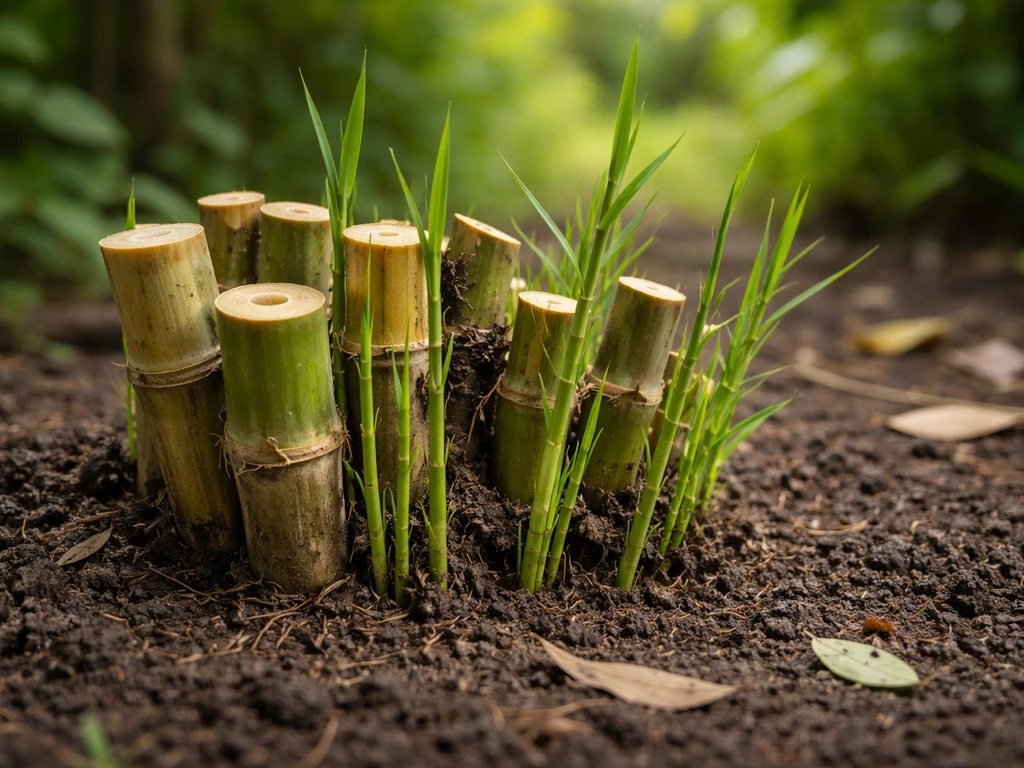
Yes, cut bamboo can grow new roots, but the details matter a lot. For lucky bamboo (Dracaena sanderiana), a cut stem segment placed in water or moist soil will typically sprout roots within 4 to 8 weeks as long as you cut near a node and keep conditions right. North Carolina State University Extension notes that [Dracaena sanderiana (ribbon plant or lucky bamboo) can root from the bottom of green canes in water culture](https://plants. ces.
Will Cut Bamboo Grow Roots? How to Propagate Cuttings

Marcus Hartwell
30 Jun 2026
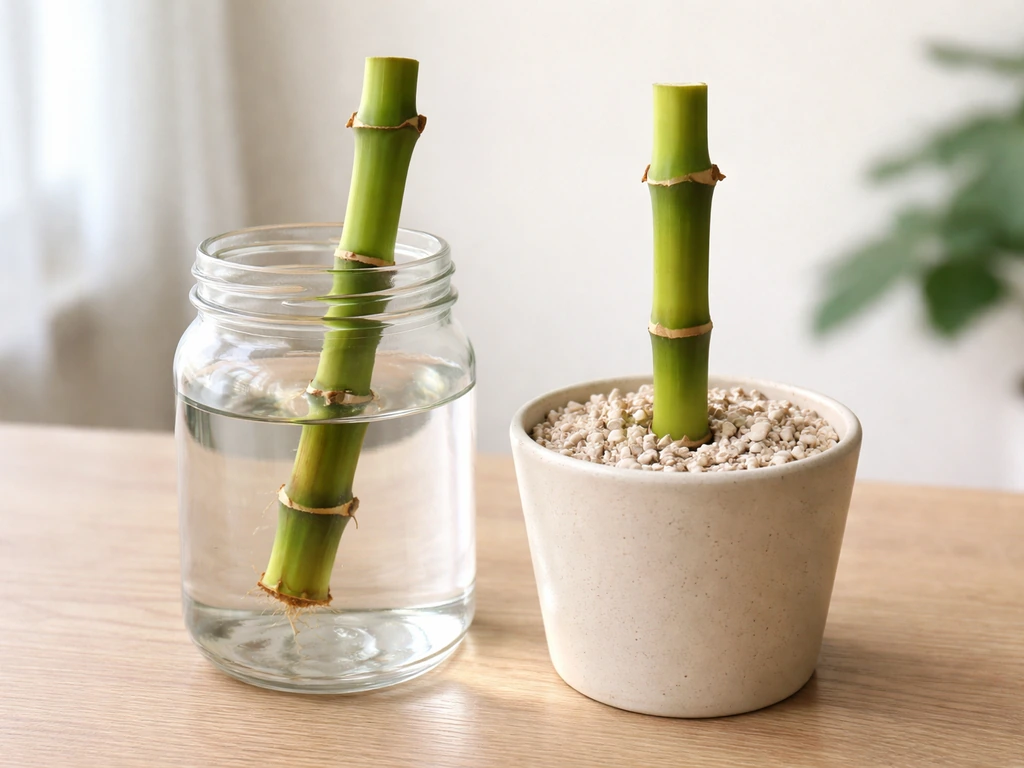
ncsu. edu/plants/dracaena-sanderiana/common-name/ribbon-plant/), and it is an easy-to-grow plant outside the tropical zone. For true bamboo culm cuttings, rooting takes longer, from about 2 to 4 months, and success depends heavily on having healthy nodal tissue in your cutting. Neither type will root from a bare, node-free section of stem, so where you cut is the single most important decision you'll make.
If you want bamboo to grow faster, focus on healthy nodes, proper moisture, and the right method for the type of bamboo you have rather than just the act of cutting cut is the single most important decision.
Lucky bamboo vs. true bamboo: they're not the same plant
Before getting into the how-to, it's worth clearing up a common point of confusion. Lucky bamboo is Dracaena sanderiana, a tropical houseplant with ringed stems that looks like bamboo but is actually a member of the asparagus family. It roots easily in water, tolerates low light, and is the plant most people are working with when they search this question.
True bamboo, on the other hand, is a grass (family Poaceae), and propagating it from cut culm segments is a different, slower process that's more commonly done outdoors or in a greenhouse. Both can regrow roots from cuttings, but the methods, timelines, and success rates are quite different. This article covers both, but if you have the spiraling green stalks in a vase on your desk, you're working with lucky bamboo.
What kind of cut actually matters
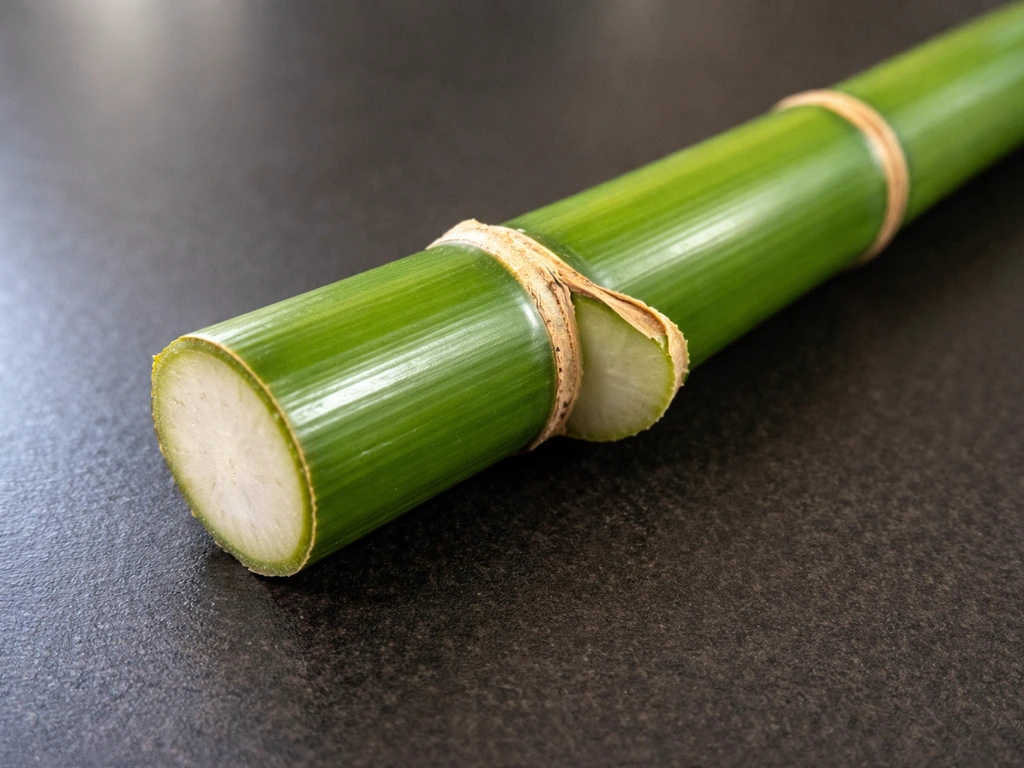
Not every cut creates a cutting that can root. The key structure you need is a node, the visible ring or joint along the stem. In lucky bamboo, nodes are the raised rings you can see clearly on the cane. In true bamboo, nodes are the solid joints that separate each hollow section of the culm. Root emergence happens at or very near these nodes, so a cutting without at least one node has essentially no chance of producing roots.
Here's how to think about the different cuts you might make. Cutting a lucky bamboo stem just above a node (leaving the node at the bottom of your new cutting) gives that node the best chance to push out roots. Cutting in the middle of a section between two nodes gives you less favorable tissue for rooting. For true bamboo, a culm cutting should include at least two nodes, with blank" rel="noopener noreferrer">roughly an inch of stem below the lower node.
Trimming just the tops or leaves of either plant does not produce a rooting cutting at all, but it also won't prevent regrowth from the existing root system if one is already established. That's a separate question about whether bamboo grows back after being cut, which has its own answer. Whether bamboo grows back after being cut depends on where and how you cut, but nodes are the key.
Setting up water rooting today (lucky bamboo)
Water rooting is the easiest and most reliable method for lucky bamboo, and you can set it up in about five minutes. Here's exactly what to do:
- Make a clean cut just below a node using sharp, sterilized scissors or a blade. An angled cut adds a bit more surface area near the node, which can help root emergence.
- Remove any leaves from the bottom two to three inches of the stem so no foliage is submerged.
- Place the cutting in a clean glass or vase. Fill it with filtered or distilled water, or tap water that has been left out overnight to off-gas chlorine. Water level should cover the node at the base of the cutting, roughly one to two inches deep. Do not submerge the entire stem.
- Position the glass in bright, indirect light. Avoid direct sun, which heats the water and promotes algae. Keep the temperature above 65°F (18°C), since cooler temps noticeably slow rooting.
- Change the water every seven to ten days without fail. This is the single most important maintenance step. Stale water breeds bacteria, which leads to the rot and yellowing that kills cuttings before they ever root.
That's genuinely all there is to the basic setup. Resist the urge to move the cutting around to check for roots. Every time you disturb it in the early weeks, you're risking damage to the first tiny root initials trying to form.
Setting up soil rooting today (lucky bamboo and true bamboo)
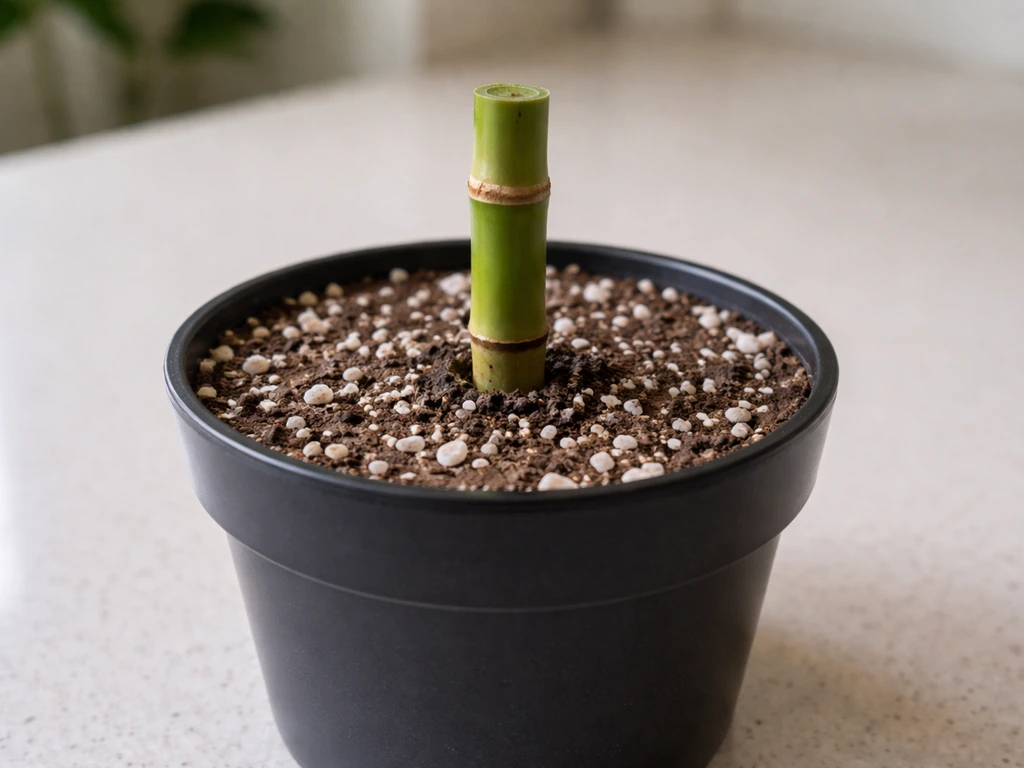
Soil or medium rooting works for both lucky bamboo and true bamboo cuttings. For lucky bamboo, some growers prefer this method because it avoids the ongoing water-change routine. For true bamboo culm cuttings, a well-drained growing medium is actually the standard propagation approach.
- Prepare a mix of potting soil and perlite in roughly a 1: 1 ratio, or use straight perlite or coarse sand. The goal is good drainage with enough moisture retention to keep the node area consistently damp but never waterlogged.
- For lucky bamboo: make your node-proximal cut as described above, let the cut end dry in open air for 30 to 60 minutes to begin callusing (this reduces rot risk), then insert the bottom two inches into the medium with the node just below the surface.
- For true bamboo culm cuttings: position the cutting horizontally just below the soil surface (horizontal burial is the most reliable method), or place it vertically with the lower node buried about one inch deep. The horizontal method works because either side of a node can produce both roots and shoots.
- Water the medium lightly so it's evenly moist but not soggy. Squeeze a handful and it should barely release a drop.
- Cover the container loosely with a clear plastic bag or a cut plastic bottle to create humidity around the cutting. This dramatically reduces moisture loss through the stem before roots form.
- Place in a warm spot (70 to 85°F / 21 to 29°C) with indirect light. Check moisture every few days and mist if the medium is drying out near the surface.
- Optional but helpful: dip the cut end in powdered rooting hormone (IBA-based) before planting. It's not required, but it can speed up root initiation, especially for true bamboo species that are harder to propagate.
How long until you actually see roots
Timeline expectations differ quite a bit between lucky bamboo and true bamboo, and between water and soil methods. Here's a realistic breakdown:
| Plant type | Method | First signs of rooting | Good root development |
|---|---|---|---|
| Lucky bamboo (Dracaena sanderiana) | Water | 2 to 4 weeks (sometimes as early as 1 week under ideal warmth) | 4 to 8 weeks |
| Lucky bamboo (Dracaena sanderiana) | Soil/medium | 3 to 6 weeks (not visible without removing from medium) | 6 to 10 weeks |
| True bamboo (culm cutting) | Soil/medium | Callus forms first; shoot sprouting visible at 7 to 20 days in some species | Full rooting at 2 to 4 months, or up to 55 to 70 days for cuttings started in cooler months |
For true bamboo, you'll often see a new shoot push up from the buried node before you can confirm root development, which is encouraging but doesn't mean roots are fully established. If you’re dealing with chipped bamboo, the key is still that a cutting needs a node and stable rooting conditions to establish new growth buried node. Don't transplant until you feel resistance when you gently tug the cutting, which confirms anchoring roots have formed.
Troubleshooting: when it won't root, starts rotting, or looks wrong
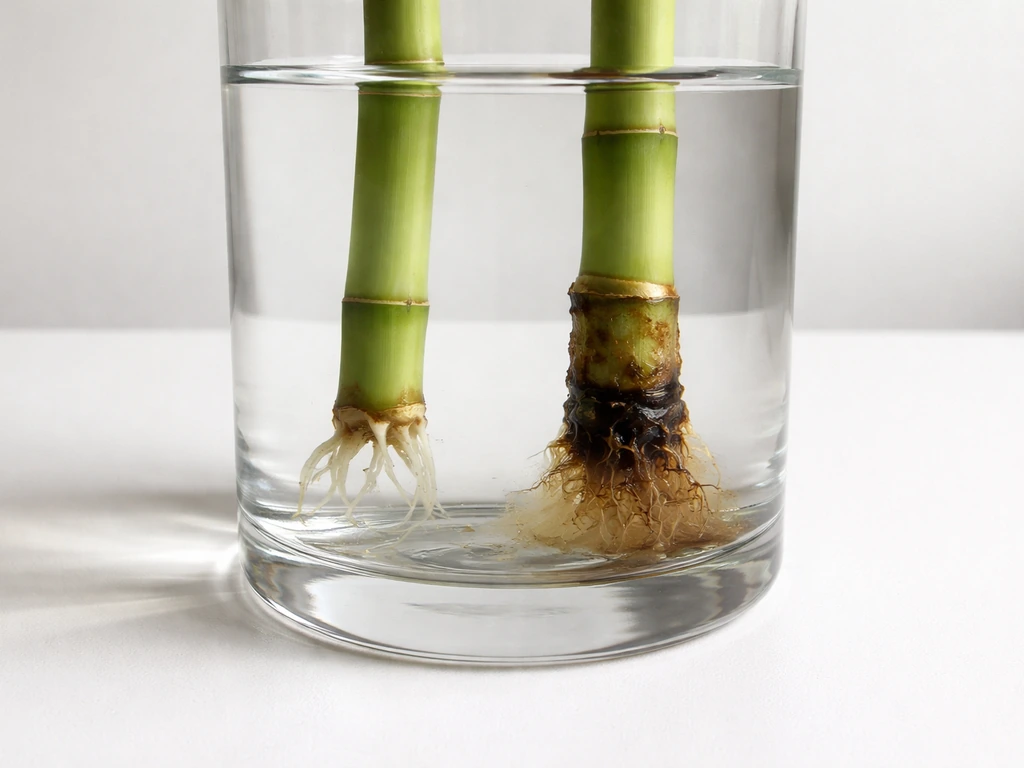
The cutting won't root at all
If you're past six to eight weeks with zero sign of roots on a lucky bamboo cutting, or past three months with true bamboo, check these factors first. Is there a node at or just below the waterline or soil surface? If not, the cutting can't root regardless of how long you wait. A cut stem generally cannot grow roots unless it includes at least one node where new growth can start.
Is the temperature consistently above 65°F? Cold is the silent killer of rooting cuttings. Is the cutting still firm and green, or has it started to soften? A soft, mushy base means rot has set in and you need to act immediately (see below).
For true bamboo, also consider whether the culm was healthy before cutting: overly young (less than one year old) or very old culm sections root less reliably than culms from one- to two-year-old canes.
Rot, sliminess, and algae in water
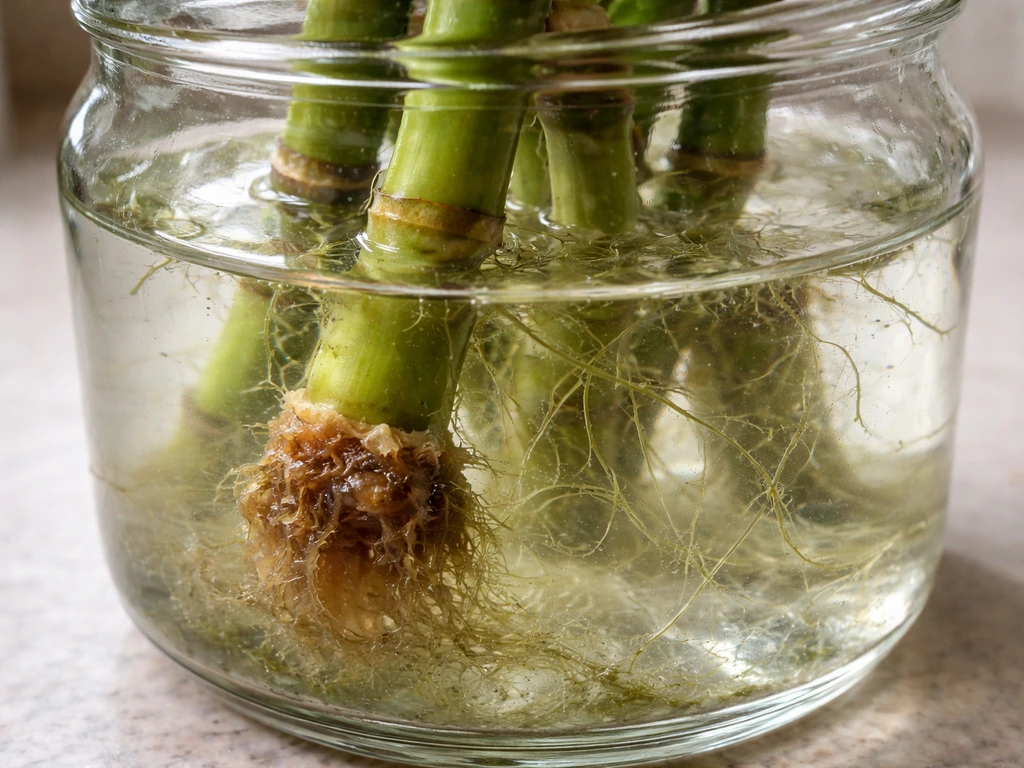
Slimy brown roots, a mushy or dark stem base, or an off smell when you lift the cutting out of the water are all signs of root rot. This is the most common failure mode in water propagation. When you see it, act the same day. Trim off all slimy or dark root tissue with clean scissors, cutting back to firm, light-colored tissue.
If the stem base itself is soft, cut above the soft section until you reach firm tissue, then re-root the salvaged cutting. Rinse the vase thoroughly, refill with fresh filtered or aged tap water, and resume the weekly water-change schedule.
Green algae on the container walls is less serious but competes with your cutting and signals too much light is hitting the water. Switch to an opaque container or wrap the clear glass with paper to block light from the water while still letting light reach the stem.
Yellowing stems or leaves
Yellowing on lucky bamboo cuttings in water often comes down to water quality. Chlorine and fluoride in tap water accumulate over time and damage root tissue, showing up as yellowing. Switch to filtered, distilled, or collected rainwater. If you've been changing water regularly and still see yellowing, check whether the submerged portion of the stem is sitting too deep. Only the lowest node and the inch or so below it should be underwater. Submerging more of the stem than necessary dramatically increases rot risk.
When to re-cut and when to move on
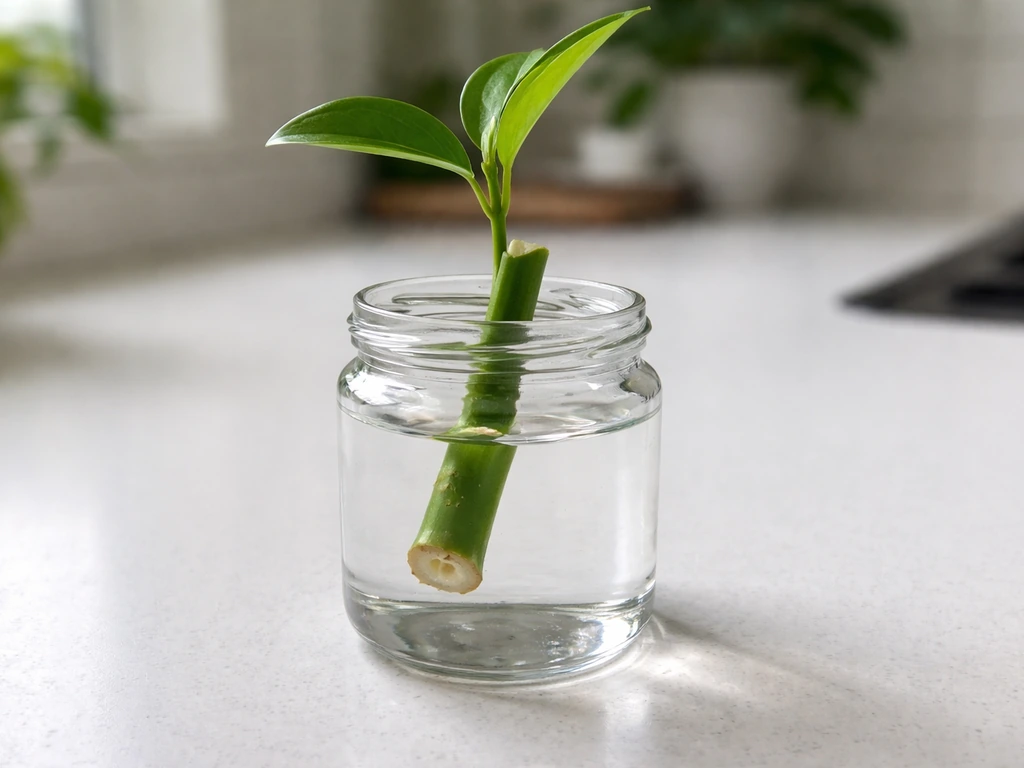
If you've trimmed rot and the remaining cutting is still at least three to four inches of firm, green stem with a healthy node, give it another full rooting cycle. A shorter but still-viable cutting can absolutely root successfully. If the cutting has gone completely soft, turned yellow throughout, or the stem base has blackened past any usable tissue, it's not worth trying to save. Start fresh with a new cutting from a healthy parent plant.
The good news is that if your parent lucky bamboo plant is still alive and rooted, you can take another cutting any time and apply everything you've learned from the first attempt. Whether bamboo can grow without any roots at all is a related question worth exploring separately, but in practice the answer for cuttings is that you need those nodes and you need to protect them carefully through the early rooting window.
Whether a will cut bamboo grow depends on the type of bamboo and whether your cutting includes at least one node.
FAQ
How long does it take before I should see roots, and when is it safe to assume failure?
For lucky bamboo in water, you usually see root initials within 4 to 8 weeks, with established roots by the end of that window. For true bamboo, root development commonly takes 2 to 4 months. If you have no node at the waterline or soil surface, you can rule out rooting early (waiting longer will not fix it). If the base stays firm and green but you still see nothing past the typical window, reassess temperature, node position, and rot signs rather than simply waiting longer.
Can I root bamboo cuttings from a stem that has no obvious node ring or joint?
No. Root emergence only starts at or very near nodal tissue. If your cutting is node-free, it generally will not form roots, even if the stem is healthy. If the ring is hard to spot, check both sides of the culm and look for the joint separating hollow sections (true bamboo) or the raised cane rings (lucky bamboo).
Should I leave leaves on my cutting when propagating, or remove them?
Leaves or top trimming does not create rooting tissue by itself, nodes do. For lucky bamboo, many growers remove or minimize foliage to reduce stress and slow water contamination, but the crucial factor remains having the submerged node positioned correctly. For true bamboo, avoid reducing the cutting to leaf-only pieces, because those won’t include the nodal area needed for rooting.
My lucky bamboo cutting is rooting in water, but the container keeps getting cloudy. What should I change?
Cloudiness usually points to microbial growth and poor water quality. Use filtered, distilled, or rainwater instead of fresh tap water each time, and stick to a regular weekly water change. Also confirm the cutting is not sitting too deep, only the lowest node and about an inch below it should be underwater, because excess submerged stem increases rot risk.
How deep should the node sit in the water or medium?
Target the lowest node to be just at the waterline (or at the medium surface for soil). Only the node and roughly an inch of stem below should be submerged. If the node is too high, it can’t activate rooting. If it is too deep, it increases the chance the base will rot before roots can establish.
Is it better to use clear glass or a darker container for water rooting?
Both can work, but light exposure drives algae growth. If you see green algae building up, switch to an opaque container or cover the outside of clear glass with paper so light reaches the stem but not the water. Algae competition is not usually the direct cause of failure, but it can worsen water quality and slow rooting.
What temperature is best for rooting bamboo cuttings?
Keep conditions consistently above 65°F. Cold temperatures slow cell activity and increase the likelihood of rot, even when the node position is correct. If your home is cool, place the propagation container near a warmer window or on a gentle heat mat set to a safe, stable temperature.
Why do I sometimes see new shoots before I can confirm roots, especially with true bamboo?
A shoot can start from nodal reserves before a robust root system is visible. That means it’s a good sign, but it does not confirm rooting is complete. Wait until you feel resistance when you gently tug the cutting, that anchoring sensation indicates roots have formed enough to hold it.
My cutting smells bad or turns dark at the base, can I save it or should I restart?
Act immediately. Trim away slimy or dark tissue with clean scissors, cutting back to firm, light-colored stem. If the stem base is still salvageable, re-root the cleaned cutting and resume water changes or replant into a well-drained medium. If the cutting turns completely soft or blackened beyond usable tissue, restart with a new cutting from a healthy parent plant.
If my cutting yellowed in water, does that always mean rot?
Not always. Yellowing commonly comes from water quality issues like chlorine or fluoride buildup, especially with repeated tap-water use over time. Try filtered, distilled, or rainwater and check that you are not submerging too much of the stem. If the base becomes mushy or you detect an off smell, then it likely indicates rot and trimming is needed.
Should I disturb the cutting during the first weeks to check for roots?
No. Avoid moving or lifting the cutting to “check” because tiny root initials are easily damaged. Instead, rely on visual cues like the cutting’s firmness, the absence of rot smell, and the expected rooting timeline, then only inspect when the typical window has passed or when failure signs appear.
For true bamboo cuttings, does cutting from very young or very old culms change success?
Yes. Very young culm segments (around less than one year old) and very old sections root less reliably. Cuttings taken from one- to two-year-old culms tend to establish better, assuming the cutting includes at least two nodes and proper stem length below the lower node.
When should I transplant my rooted lucky bamboo into soil?
If you plan to move it to soil, wait until roots are clearly formed and firm rather than only root tips. A common practical trigger is when roots are long enough that the cutting holds steady without wobbling. Also ensure the node area stays positioned correctly in the new medium, do not bury the cutting so deeply that the base stays wet beyond what it needs.
Next Article
If You Cut Bamboo, Will It Grow Back? Regrowth Guide
Yes, cut bamboo can regrow, but it depends on cutting height, rhizomes kept, and care; get timelines and next steps.