True bamboo can technically survive with its roots in a fish tank setup, but it will not thrive fully submerged and it will not behave like an aquatic plant. The plant most people are actually growing in aquariums is lucky bamboo, which is not bamboo at all. If you want to grow real bamboo near or around a fish tank, it is absolutely possible with the right partially-submerged or emersed container approach. But if you drop true bamboo canes into a tank and flood the roots, they will rot within weeks.
Can Bamboo Grow in a Fish Tank? How to Do It

Marcus Hartwell
24 May 2026
True bamboo vs lucky bamboo: get this straight first
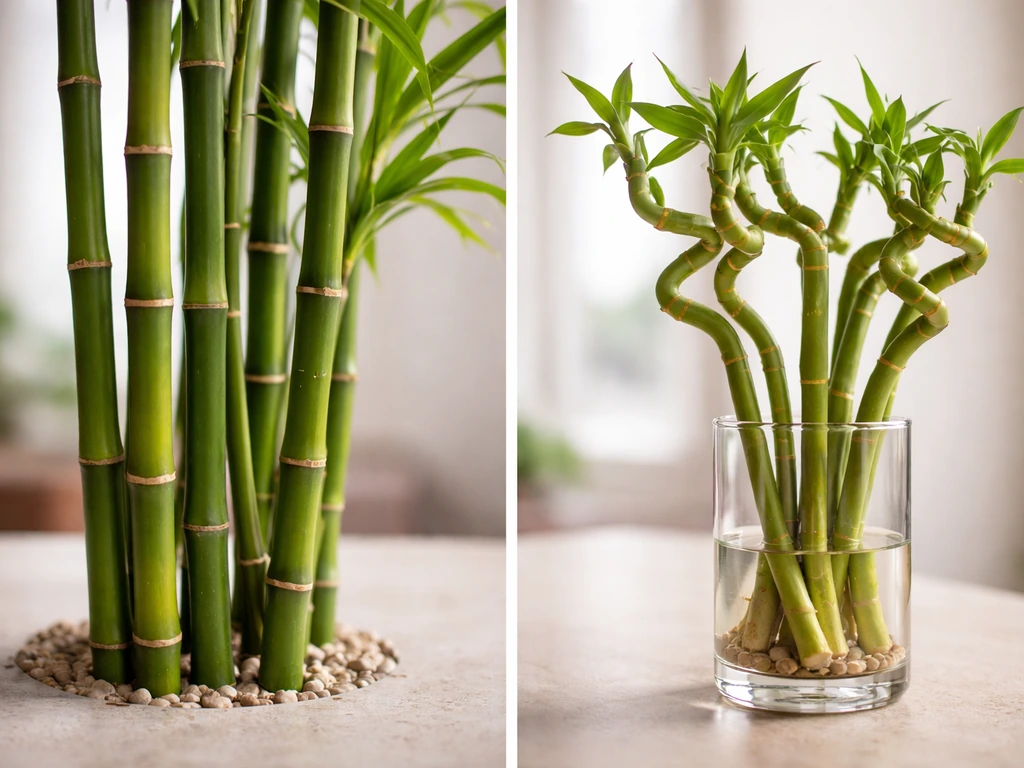
This is the single biggest source of confusion in every aquarium bamboo forum thread. Lucky bamboo, the spiral-stalked plant sold at every grocery store and pet shop, is Dracaena sanderiana, a member of the asparagus family. It is not bamboo. It does not belong to Bambusoideae, the true bamboo subfamily of grasses. It just looks like bamboo to the average shopper, and the name stuck.
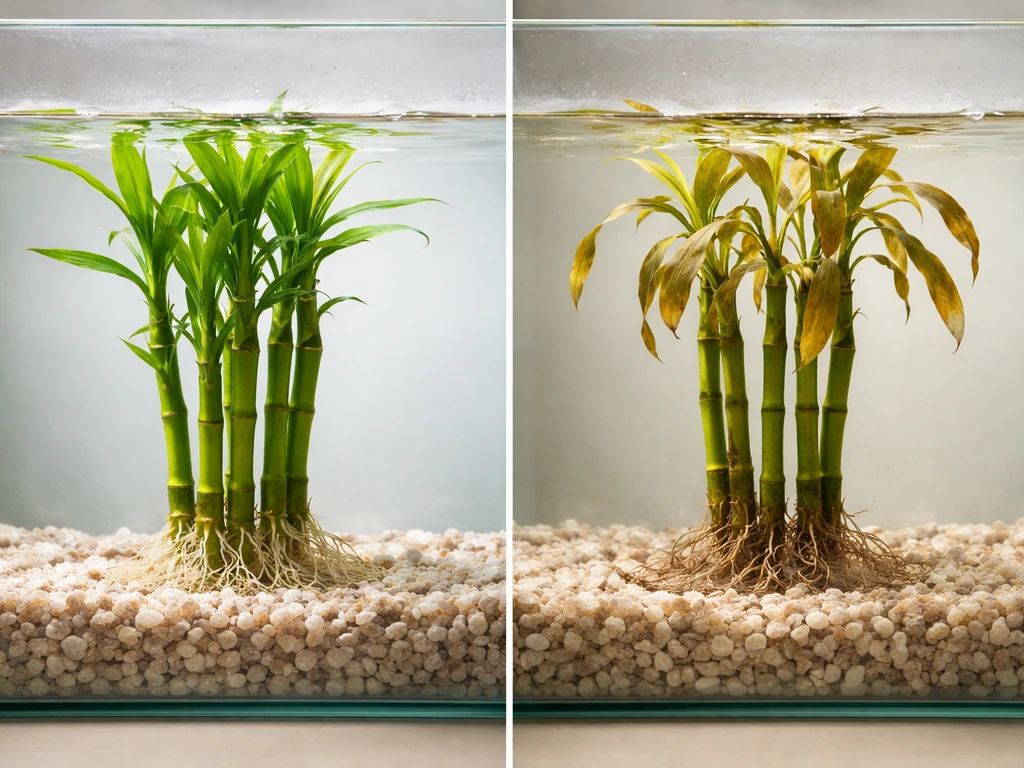
Dracaena sanderiana evolved in shaded, humid tropical environments and genuinely tolerates having its roots submerged in water for extended periods, which is why it works so well in vases, bowls, and aquarium setups. True bamboo, on the other hand, is a grass. It evolved in well-drained soils, riparian banks, and forest floors, not ponds. It has no aerenchyma, the specialized internal air channels that aquatic and semi-aquatic plants use to deliver oxygen to submerged roots. Without those channels, submerged bamboo roots quickly suffocate and rot.
So when someone asks whether bamboo can grow in a fish tank, the honest answer splits into two paths: lucky bamboo (Dracaena) works well in aquariums with some caveats, and true bamboo can work in a partial, emersed setup but not fully submerged. If you are wondering, “will bamboo grow in water?”, the answer depends on whether you mean lucky bamboo or true bamboo and how much of the plant is submerged bamboo can grow in a fish tank. Knowing which plant you actually have changes everything about how you care for it.
What bamboo needs vs what a fish tank actually offers
True bamboo wants well-oxygenated soil, good drainage, consistent moisture, and room for rhizomes to spread. A fish tank offers standing or slow-moving water, warm temperatures, high humidity above the water line, and moderate ambient light. Those two sets of conditions overlap in some places and clash badly in others.
| Condition | What True Bamboo Needs | What a Fish Tank Provides | Match? |
|---|---|---|---|
| Root oxygen | Well-aerated soil with air pockets | Standing water with low dissolved O2 at root zone | No |
| Drainage | Free-draining substrate, no waterlogging | Fully flooded or saturated substrate | No |
| Humidity | Moderate to high (50–80%) | High above the waterline | Yes |
| Temperature | 15–30°C depending on species | Typically 22–28°C for tropical tanks | Mostly yes |
| Light | Bright indirect to full sun | Aquarium LEDs, often limited spectrum | Partial |
| Root moisture | Consistent moisture, not saturation | Consistent, but saturated | Partial |
| Lucky bamboo root conditions | Roots in water, foliage above | Roots submerged, foliage above waterline | Yes |
The takeaway here is that lucky bamboo and a fish tank are a near-perfect match if you manage the setup correctly. True bamboo and a fish tank are workable only if you keep the roots out of the water or in a gravel-and-pot arrangement that allows some oxygen exchange. The fish tank becomes more of a humid planter shelf than an aquatic growing medium for true bamboo.
Which true bamboo species can handle wet conditions
Not all true bamboos are equally intolerant of wet feet. Phyllostachys heteroclada, commonly called water bamboo or fishscale bamboo, is one of the most waterlogging-tolerant species available. It grows naturally in riparian zones and saturated soils and is actively marketed for wet or poorly drained garden sites. Research from 2022 confirmed that it has strategies for managing oxygen dynamics in its roots under waterlogged conditions, making it genuinely more resilient than a typical Phyllostachys aurea or Bambusa multiplex in soggy ground.
Arundinaria tecta, the native switchcane or small cane of the southeastern US, is another option. It grows naturally in moist to wet, loamy soils in wetland understories and floodplain forests. It will not handle full submersion, but it tolerates saturated root conditions better than most bamboos. Neither of these species is an aquarium plant in the traditional sense, but if you are building an emersed paludarium-style setup, these are your best bets among true bamboos.
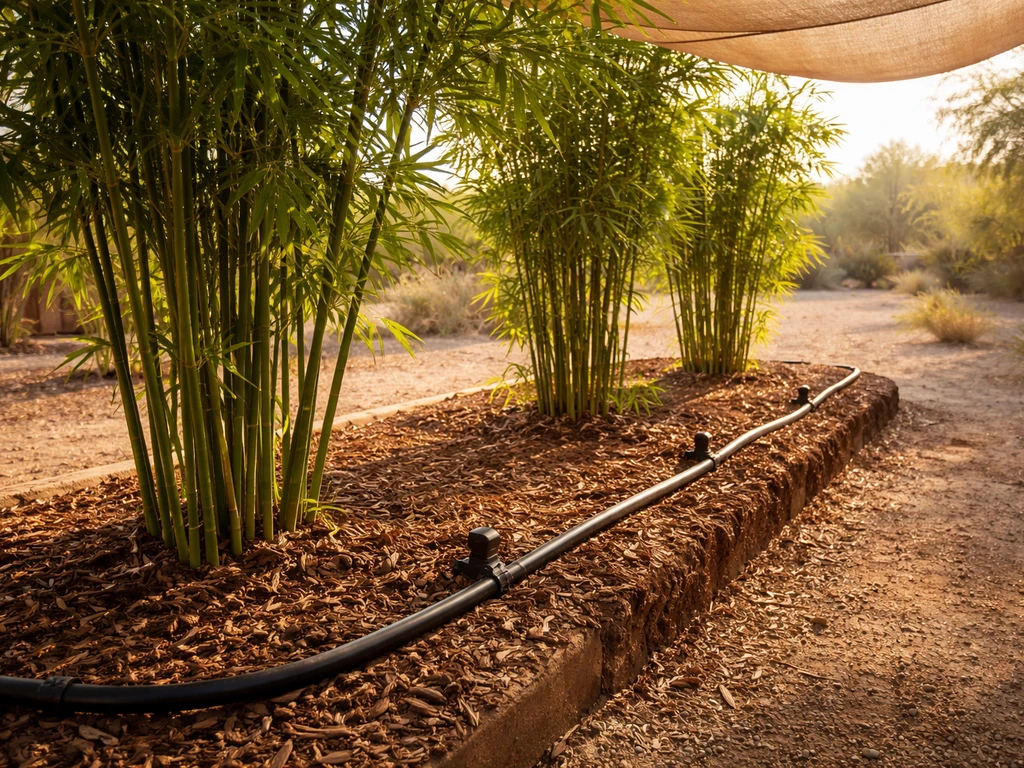
This is a completely different situation from questions like whether bamboo can grow in sand or in desert conditions, where moisture is the limiting factor. This same idea applies to whether can bamboo grow in sand, where drainage and moisture control matter most whether bamboo can grow in sand. Whether bamboo can grow in the desert depends on the species and how much moisture it can access can bamboo grow in the desert.
Here, the problem is too much water, not too little.
Setting up your fish tank for bamboo: the three approaches
Option 1: Lucky bamboo with roots fully in the water column
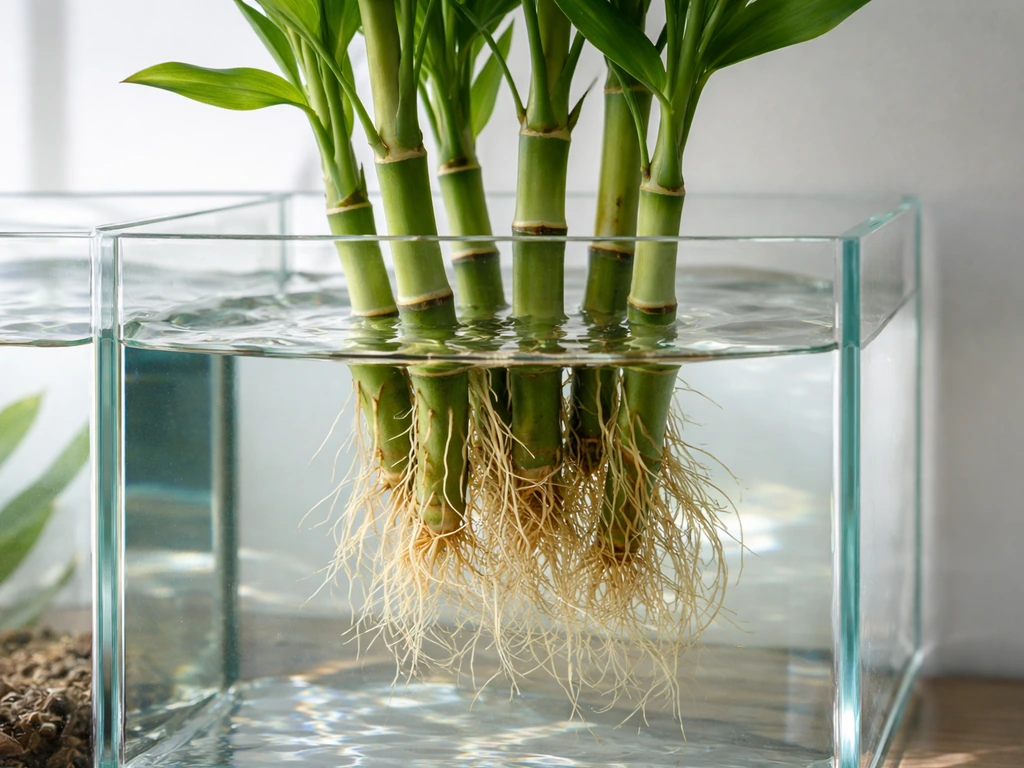
This is the easiest and most reliable setup. Place Dracaena sanderiana stalks so the roots hang into the tank water and the canes and leaves extend above the waterline. The roots will absorb nutrients directly from the water, which can actually benefit the fish by reducing nitrates. Use smooth gravel or aquarium-safe rocks to anchor the stalks at the waterline.
Never push the stalks fully underwater, the crown and foliage must stay above the surface or they will rot. OurHouseplants notes that with lucky bamboo (Dracaena sanderiana), the crown and foliage must stay above the surface so it does not rot underwater, even when the roots are submerged the crown and foliage must stay above the surface or they will rot.
Option 2: True bamboo in a gravel pot inside or beside the tank
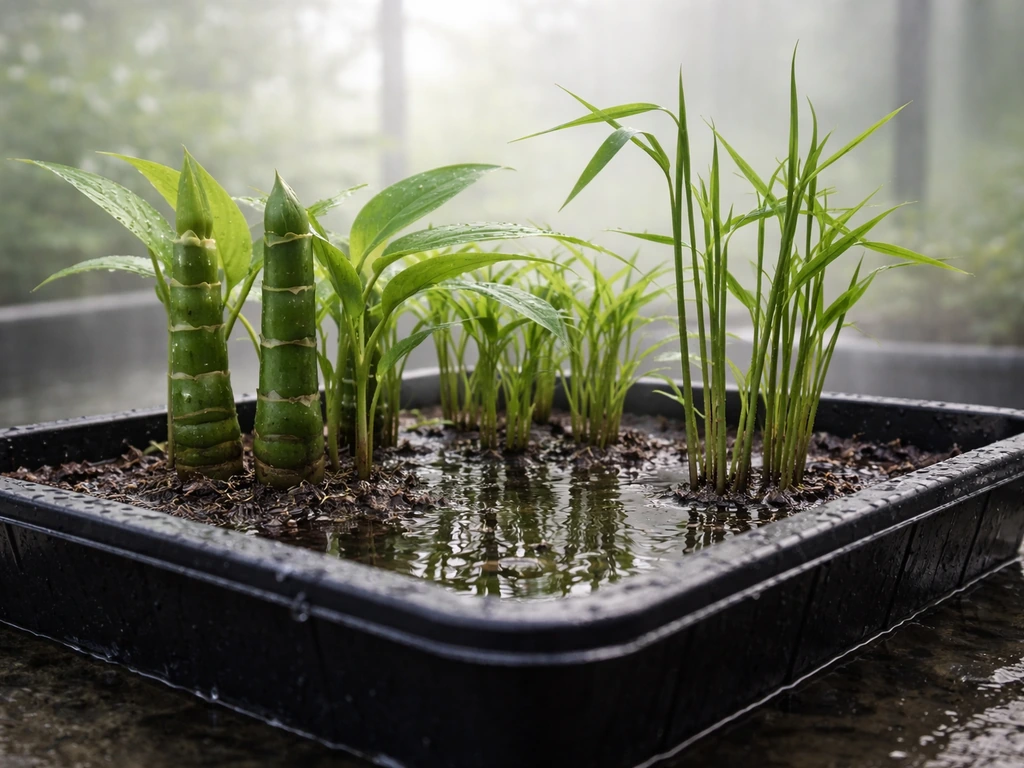
For true bamboo, the practical approach is a small pot filled with coarse gravel or a mix of coarse grit and standard potting soil, placed on a shelf inside or directly beside the tank. The pot bottom can sit in a shallow tray of tank water (about 2 to 3 cm deep) to provide consistent moisture and humidity, but the root zone itself should never be waterlogged for more than a few hours at a time. Think of it as growing bamboo in a riparian bank condition rather than a pond. This works especially well with P. heteroclada or A. tecta. Drill drainage holes in the pot if using a solid container.
Option 3: Paludarium or emersed aquascape
A paludarium is a tank that combines aquatic and terrestrial zones. In this setup, you build a raised terrestrial section using hardscape materials, substrate, and soil above the water level. True bamboo, particularly compact or dwarf species, can be planted in this section with its roots in moist but well-drained substrate while the lower part of the tank contains your fish. This is the most ambitious approach but it gives bamboo what it actually needs: humid air, moist but oxygenated soil, and consistent warmth. Species like Pleioblastus pygmaeus (dwarf green stripe bamboo) work well here given their compact root systems.
Light, temperature, and water quality
Light is where most indoor bamboo-in-a-tank setups fail. blank" rel="noopener noreferrer">True bamboo wants bright, indirect to direct light and will struggle under the warm-white LED strips most aquariums use. For a paludarium or emersed bamboo setup, supplement with a full-spectrum grow light positioned 15 to 30 cm above the canopy. Aim for 8 to 12 hours of light per day. Avoid direct, unfiltered sunlight through a glass tank wall since it will superheat the water and trigger aggressive algae growth.
Lucky bamboo tolerates lower light but grows much better under moderate indirect light. Avoid placing the tank in direct afternoon sun. The standard aquarium LED strip light is adequate for maintaining lucky bamboo, though it may not drive fast growth.
Temperature for lucky bamboo in an aquarium should stay between 18 and 30°C, which aligns neatly with tropical fish tank parameters. Most community fish tanks run at 24 to 27°C, which is ideal. For true bamboo in an emersed setup, temperate species like P. heteroclada prefer slightly cooler air (15 to 25°C) while tropical species tolerate warmer conditions. Keep the tank away from cold drafts and heating vents, which cause temperature swings that stress both the fish and the plants.
Water quality matters more than most people expect. Lucky bamboo grown in fish tanks benefits directly from the nitrate-rich water, but the water should not be stagnant. Some gentle filtration or circulation keeps the water oxygenated and prevents anaerobic bacteria from colonizing the root zone. Change 20 to 25 percent of the water weekly as you would for fish care. If you use tap water, let it sit for 24 hours or use a dechlorinator before adding it to the tank, as chlorine damages Dracaena roots.
How to actually do this today: a step-by-step plan
- Decide which plant you are using. If you want a simple, reliable setup, buy lucky bamboo (Dracaena sanderiana) from a garden center or pet shop. If you want true bamboo, source P. heteroclada or a compact dwarf species like Pleioblastus pygmaeus.
- Prepare your stalks or plant. For lucky bamboo, rinse the roots gently under room-temperature water. Trim any brown or mushy root tips with clean scissors. For true bamboo, pot into a coarse grit and potting mix blend in a well-draining container.
- Position in the tank. For lucky bamboo, wedge the base between smooth aquarium rocks so the roots hang into the water and the foliage clears the waterline by at least 5 cm. For true bamboo, place the pot on a tank shelf or in a paludarium section where roots stay moist but not flooded.
- Set up your light. If your tank hood light is a standard LED strip, add a clip-on full-spectrum grow light for true bamboo setups. For lucky bamboo, the existing tank lighting is usually sufficient.
- Check water parameters. Aim for a pH of 6.0 to 7.5. Lucky bamboo tolerates the same water chemistry your tropical fish prefer. True bamboo roots exposed to tank water should not be sitting in water with a pH below 5.5 or above 8.0.
- Establish a maintenance routine. Do a 20 to 25 percent water change weekly. Top off evaporated water with dechlorinated tap water. Wipe any algae off the tank glass monthly.
- Monitor for the first two weeks. Watch for yellowing leaves (too much direct sun or chlorine stress), brown tips (fluoride or salt buildup), or soft mushy roots (root rot from full submersion or stagnant water).
Growth rate, timelines, and what success looks like
Lucky bamboo in a fish tank grows slowly compared to the same plant in nutrient-rich potting mix. Expect 5 to 15 cm of new growth over a three to six month period under moderate aquarium light. In a well-lit setup with weekly water changes and fish-produced nitrates, growth can accelerate noticeably after the first two months once the root system establishes itself. You will know it is working when you see white, firm new roots emerging from the base and green new leaf growth from the crown.
True bamboo in a paludarium or emersed container grows much more slowly in a tank environment than it would outdoors. In the first year, do not expect rapid culm production. A small P. heteroclada in a paludarium might produce one or two new culms in the first growing season, reaching 30 to 60 cm in height depending on light and temperature. Think of it as bonsai-style growth rather than the explosive outdoor spread bamboo is known for.
Success looks like firm green culms, no yellowing except for the oldest leaves at the base cycling out naturally, white or tan-colored healthy roots, and a stable water column without unusual cloudiness. Failure looks like slimy brown roots, yellowing that moves upward from the base to the newest growth, soft mushy culm bases, and a sulfur or rotten smell from the root zone.
Troubleshooting the most common problems
Root rot
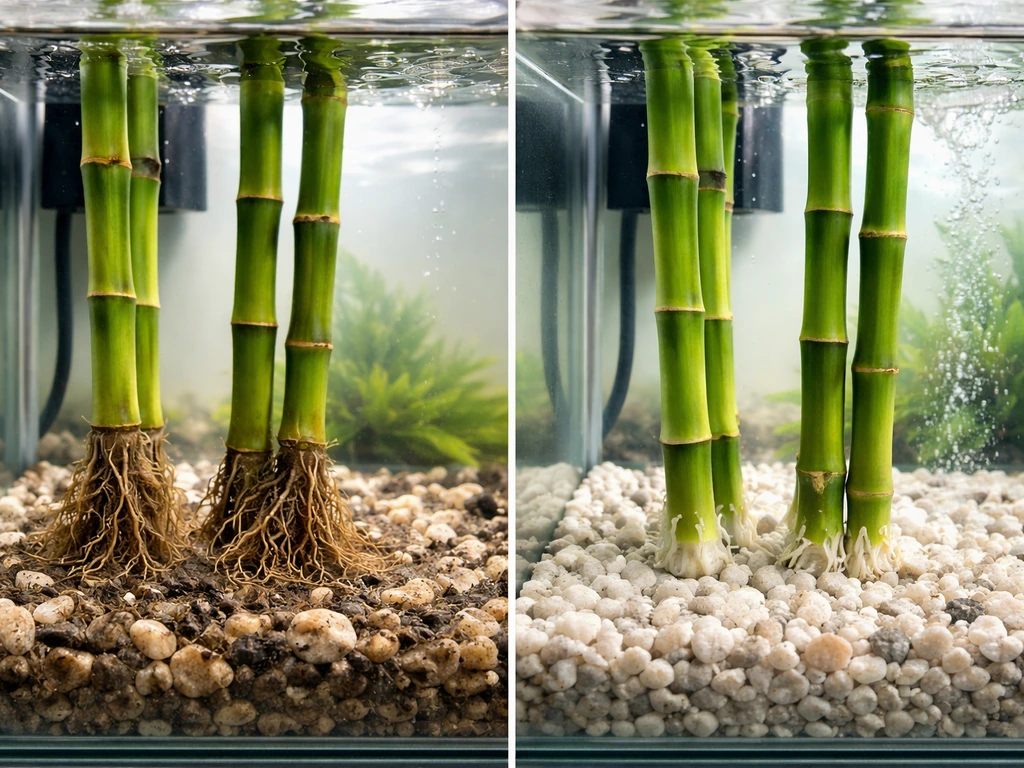
Root rot is the number one killer of both lucky bamboo and true bamboo in aquarium setups. For lucky bamboo, it almost always comes from two causes: the crown or lower foliage is submerged when it should not be, or the water is completely stagnant. Fix it by removing the plant, trimming all soft or brown roots back to firm tissue, rinsing with clean water, and repositioning so only the roots are submerged. Add gentle water circulation if you do not already have a filter running. For true bamboo, root rot means the root zone is staying saturated too long. Improve drainage or elevate the pot so water can drain freely.
Algae on stalks and roots
Algae growing on submerged roots and lower stalks is normal in a fish tank and is not itself harmful, but heavy algae buildup can restrict root function. Reduce light intensity or shorten the photoperiod to 8 hours per day if algae becomes a problem. A small bristlenose pleco or nerite snail in the tank will graze on algae without harming the plant roots. Avoid placing the tank in a spot that receives direct sunlight for more than an hour a day.
Yellow leaves and slow growth
Yellow leaves on lucky bamboo in a fish tank usually point to one of three things: fluoride toxicity from tap water (use filtered or distilled water), too much direct light causing stress, or insufficient light causing chlorophyll breakdown. Diagnose it by checking which leaves are yellowing first. If it is the tips, that is usually fluoride or salt. If whole leaves are yellowing from the base upward, that is often low light or root problems. True bamboo yellowing in a tank setup almost always signals insufficient light or root oxygen deprivation.
Species mismatch
Using the wrong bamboo species is a setup failure from day one. Running bamboo species with aggressive rhizome systems, like Phyllostachys edulis or P. bambusoides, will be unhappy and rootbound in any tank container within one growing season. Stick to compact or clumping species for paludarium setups, or go with lucky bamboo for a simple aquarium display.
If you are specifically interested in whether bamboo can grow in water more broadly, including outdoor pond or stream setups, that is a related question with its own set of answers depending on how much of the plant is actually submerged.
If you are specifically interested in whether bamboo can grow in water more broadly, including outdoor pond or stream setups, that is a related question with its own set of answers depending on how much of the plant is actually submerged can bamboo grow on mars.
Cloudy water and fish health
If you add lucky bamboo to a fish tank and notice the water becoming cloudy or the fish acting stressed, check whether any foliage has died and decomposed in the water. Dead leaves leaching into the tank spike ammonia levels. Remove and trim any dead or dying foliage immediately. Maintain your regular water change schedule and test ammonia and nitrite levels if you see unusual fish behavior after adding a new plant.
The honest bottom line
Lucky bamboo in a fish tank is a proven, low-maintenance combination that actually benefits your fish water quality while giving you a living, green display. True bamboo in a fish tank requires more engineering, specifically an emersed or paludarium setup, the right waterlogging-tolerant species, and supplemental lighting, but it is achievable and genuinely rewarding. What does not work at all is dropping true bamboo canes into a flooded tank and hoping for the best. Bamboo is a grass, not a water plant, and it will behave like one unless you design the setup around that fundamental fact.
FAQ
If I put lucky bamboo in my fish tank, will it poison the water or my fish?
Yes, but only if you remove what you can’t control. Any dead leaf pieces or mushy roots will decompose and can spike ammonia. Keep all foliage above the waterline for lucky bamboo, use trimmed healthy roots only, and if you see cloudiness right after planting, test ammonia and nitrite before assuming the plant is fine.
What light schedule should I use so bamboo does not cause algae blooms?
For most setups, aim for bright light that does not overheat the tank. If your tank is lit by the aquarium LED plus strong room light, that is usually enough for lucky bamboo, but true bamboo generally needs a separate full-spectrum grow light. A quick check is algae load, if algae increases fast when you increase light, reduce intensity or photoperiod.
How can I tell early whether my bamboo is starting to rot?
The biggest red flag is crown or lower foliage staying underwater. If you see soft rot at the base or leaves turning yellow quickly, reposition so only the root system is in contact with water (lucky bamboo) or so the root zone drains properly (true bamboo in a gravel/soil pot). Don’t wait for smell, rot can start before it becomes obvious.
Should I fertilize bamboo in a fish tank?
For lucky bamboo, you can usually skip fertilizer if your tank has fish waste and you keep doing weekly water changes, because the plant can use nitrates. If growth is stalled, use a very light, low-salt approach (preferably a diluted aquarium-safe liquid formulated for non-aquatic plants), and never add a concentrated fertilizer directly to the root zone.
What substrate or rocks are safest for anchoring bamboo inside the aquarium?
Use clean, aquarium-safe rock or smooth gravel to anchor the stalks so the crown stays dry, and avoid porous stones that can trap detritus and create dead spots. If the roots are in water, ensure gentle flow or filtration so oxygen does not drop around the base.
Can I pot true bamboo beside my tank and keep it watered without flooding the roots?
If you keep roots wet but not waterlogged, you can repurpose a small container well. Drill drainage holes, use coarse gravel or a fast-draining grit mix under the plant, and place the pot so a shallow tray holds humidity rather than soaking the entire root ball continuously.
Is it okay to remove the bamboo from the tank during maintenance or vacation?
Probably not. Frequent complete draining or leaving the root zone to dry out will stress most aquarium setups, and true bamboo in a paludarium needs consistently moist, oxygenated substrate rather than dry cycling. If you must move it, keep the root zone damp during transport and re-establish it quickly under the same light.
Which true bamboo species are most likely to work in a tank container long-term?
Yes, and it is a common mismatch. Strong spreaders with aggressive rhizomes can become rootbound and stressed in containers, even if the tank is large. For paludariums, choose compact or clumping options and verify the adult size and rhizome behavior before buying.
Will algae growing on bamboo roots harm the plant, and should I scrape it off?
If you have algae, the fix is usually reducing light, improving water circulation, and removing dead plant matter, not scrubbing roots. Brief grazing helpers like snails or algae-eaters can reduce visible algae on stems, but you still need to keep the tank out of direct afternoon sun and keep photoperiod reasonable.
What kind of filtration or water movement is safest for bamboo in a tank?
Filter flow should support oxygen around the root zone, but avoid strong suction that uproots or constantly batters the stalks. A gentle flow rate and placement that creates indirect circulation, plus weekly water testing when you introduce the plant, is the safest way to balance oxygen and stability.
Next Article
Can Bamboo Grow in the Desert? A Practical Guide
Can bamboo grow in the desert? Learn which species survive heat, how to plant, water, and prevent failure.