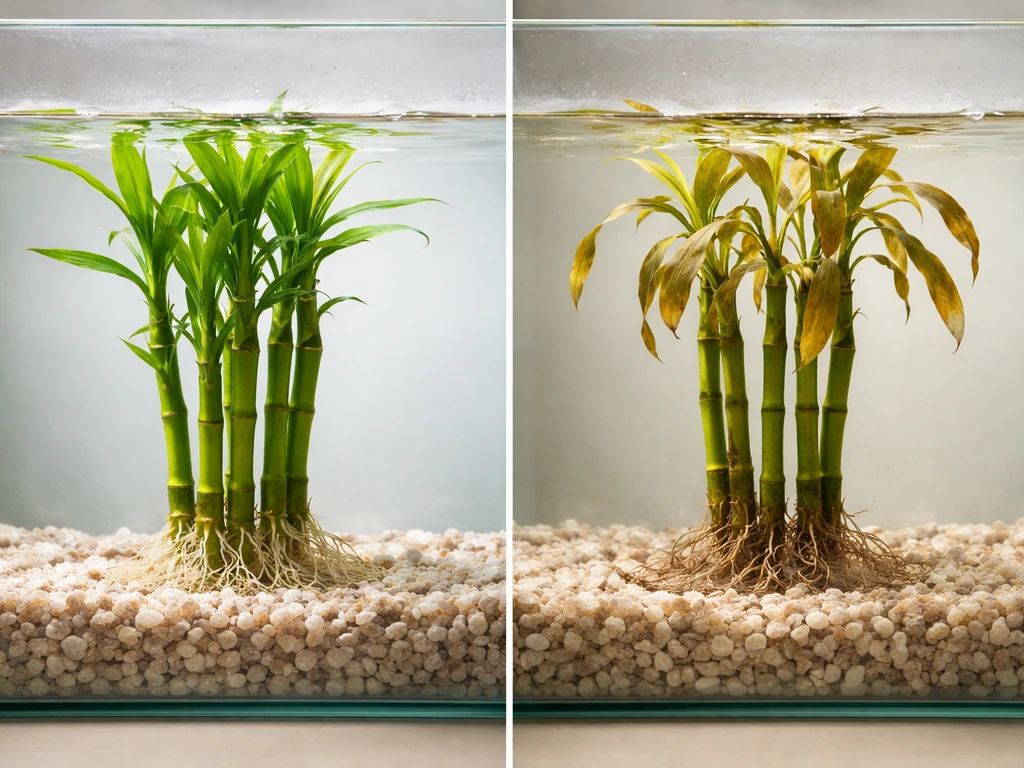
Yes, bamboo can grow in sandy soil, but it needs real help to do it well. Sand drains so fast that bamboo roots dry out before they can establish, and the low organic matter means nutrients flush through before the plant can use them. With the right amendments and a consistent watering routine, though, you can absolutely get bamboo growing in sandy ground or a sandy container mix. If you are wondering whether bamboo can grow on Mars, the biggest hurdle is creating the right moisture and nutrient conditions in an extremely dry, resource-limited environment can bamboo grow on mars. It just takes more intentional setup than planting in average garden loam.
Can Bamboo Grow in Sand? How to Plant and Care

Marcus Hartwell
31 May 2026
What bamboo actually needs from its soil
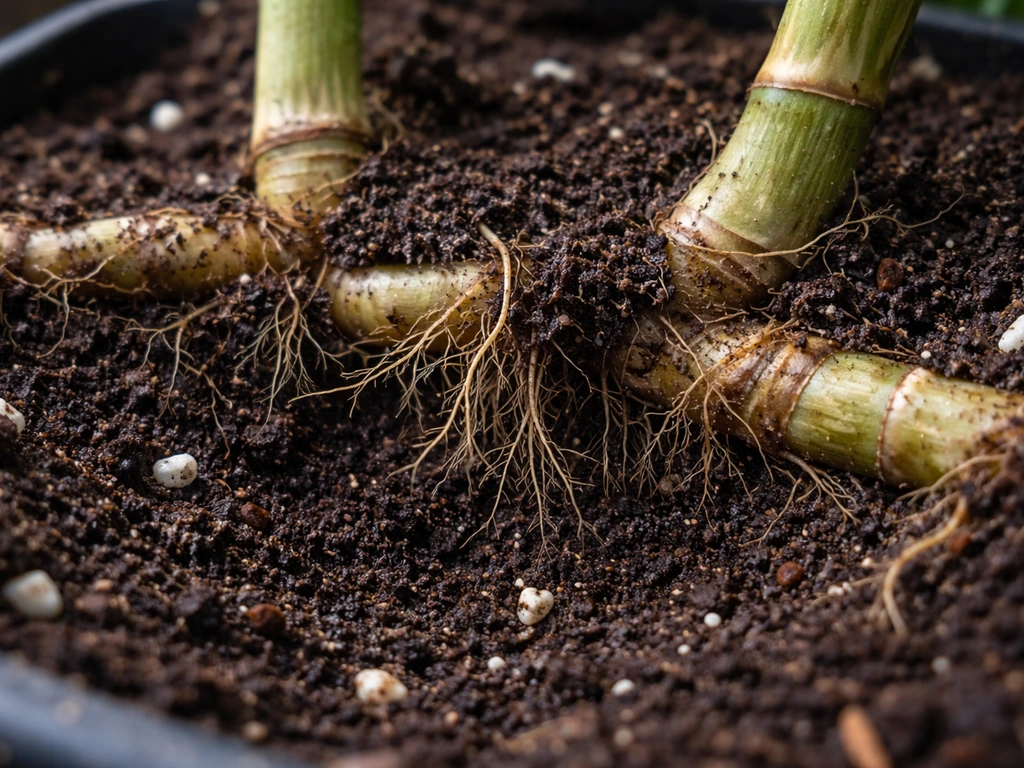
Before diving into sand-specific fixes, it helps to understand what bamboo is asking for. Bamboo is not particularly fussy about soil texture, but it is very particular about three things: consistent moisture, good drainage (not waterlogged), and a decent supply of nutrients. The root and rhizome system needs to stay moist during the establishment phase, which can stretch from a few months to over a year. If the rhizomes dry out or rot, the plant simply stops growing above ground, and the whole investment stalls. The ideal soil pH sits between 5.5 and 6.5, slightly acidic, with rich organic matter to hold both water and nutrients in the root zone.
The rhizome is the underground engine of bamboo. All the dramatic above-ground growth people associate with bamboo, the fast-shooting culms, the spreading clumps, none of that happens until the rhizome network has spread and stored enough energy. In good conditions, year one is mostly invisible root work. That underground system also matters for whether bamboo can grow in water, since water culture changes how the rhizomes get moisture and oxygen will bamboo grow in water. In sand, if the rhizomes dry out repeatedly, that underground establishment phase stalls, and you end up wondering why your bamboo looks the same as the day you planted it.
Why sand is a real challenge (but not a dealbreaker)
Sandy soil has a water holding capacity of roughly 0.25 to 0.75 inches per foot of depth, compared to 1.5 to 2.5 inches per foot in a loamy soil. Its infiltration rate runs around 2 inches per hour, which means water moves through very quickly and does not linger where roots can use it. For bamboo, which wants consistent moisture without waterlogging, sand is essentially the opposite of ideal, not because it is too wet (like clay can be), but because it is too dry too fast. Nutrients follow water, so they leach out quickly too, leaving roots in a low-fertility, fast-draining environment that fights against establishment at every step.
That said, sand never gets waterlogged, and waterlogged soil rots bamboo rhizomes just as surely as drought does. So sand does have one thing going for it: drainage is never the problem. Every fix you make to sand is about slowing water and nutrients down, not speeding them up.
How to make sandy soil actually work for bamboo
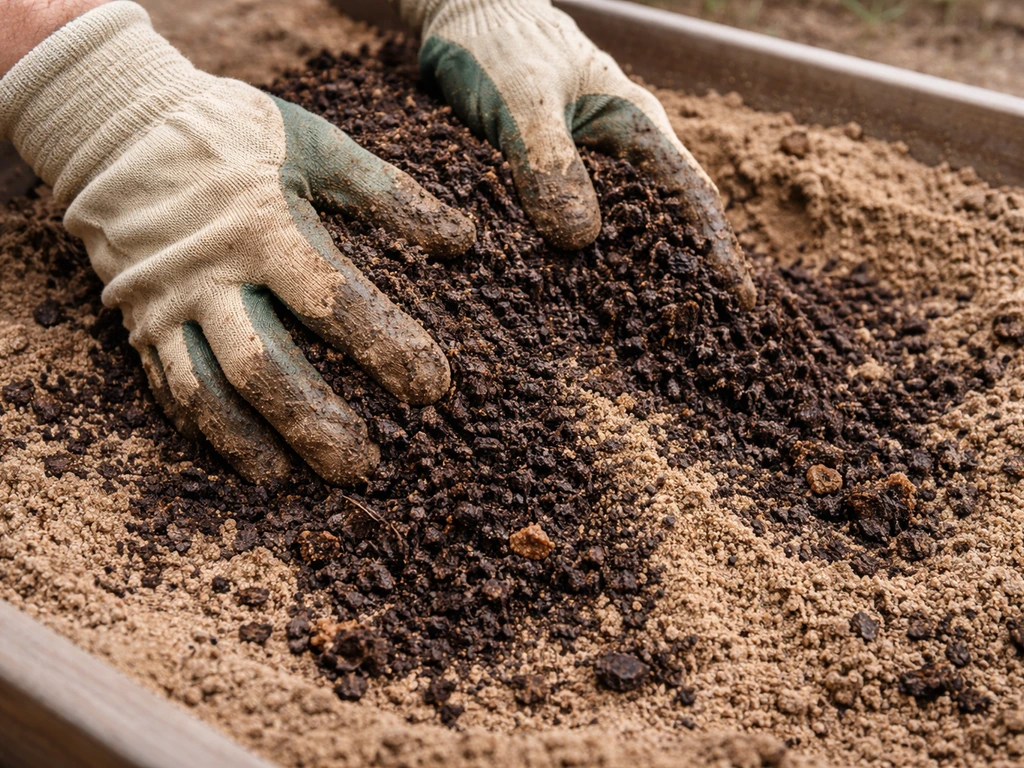
The goal with any amendment strategy is to increase the soil's water holding capacity and organic matter content without eliminating drainage. You want sand that behaves more like loam, not like clay. There are several approaches, and the best results usually come from combining two or three of them.
Organic amendments: compost, peat, bark, and manure
This is the most accessible and reliable approach. Mixing generous amounts of compost, aged manure, peat moss, or bark chips directly into your sandy planting area transforms the soil texture over time and feeds the microbiology that makes nutrients available to roots. Aim to work in several inches of compost across the planting zone and mix it into the top 12 to 18 inches of soil. This will not eliminate the drainage advantage of sand, but it significantly slows water movement and gives roots something to hold onto. Plan to add more organic material as mulch each year, since it breaks down and needs to be replenished.
Clay amendment: a surprisingly practical fix
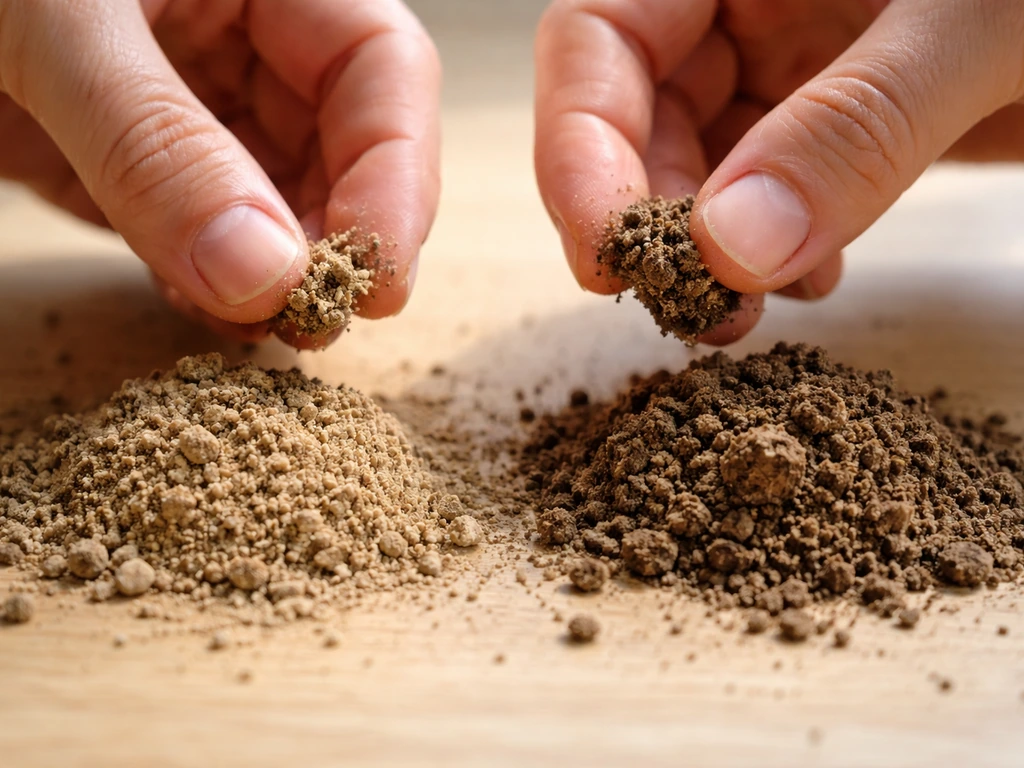
Mixing clay-based material into sandy soil improves both moisture retention and nutrient-holding capacity. One practical approach that experienced growers have used is incorporating unscented clay cat litter into the planting hole. It sounds unconventional, but plain clay cat litter is essentially just pelletized clay, and it blends into sandy soil to slow drainage at the root zone without causing the compaction problems of adding heavy garden clay. It is inexpensive and widely available, which makes it worth keeping in mind for container plantings especially.
Biochar and hydrogel: more advanced options
Biochar, a porous charcoal product, has shown real promise for improving water holding capacity in sandy soils. Research on loamy sand shows measurable improvements in available water capacity depending on application rate and particle size. It also adds long-term carbon structure to the soil rather than breaking down like compost. Hydrogel polymers, specifically sodium polyacrylate products, can increase plant-available water in sandy soil dramatically, with some studies reporting increases in the range of 300% under the right conditions.
At higher application rates, hydrogels also reduce how fast water moves downward through the sand, which is exactly what you want at root depth. These are worth considering for difficult or very coarse sandy sites, though cost and sourcing make them less common in typical home garden projects.
Best bamboo species for sandy conditions, and planter versus ground
Not all bamboo handles dry, fast-draining conditions equally well. Clumping bamboos (sympodial or pachymorph types) tend to have shorter, denser root systems that form a compact network. In a sandy bed, this can work in your favor because the root zone is more contained and easier to keep consistently moist. Running bamboos spread aggressively via long rhizomes, which means more root length exposed to dry sandy soil between waterings. Some Phyllostachys species are noted to remain more clump-like in poor or dry soils, which gives them a slight edge in marginal conditions.
For pure sandy yards, clumping species like Bambusa, Fargesia, or Chusquea are generally safer bets than aggressive runners. If your heart is set on a running type, container growing is a much more manageable option. If you mean keeping bamboo in a fish tank style setup, the key challenge is that the roots still need consistent moisture, airflow, and adequate nutrients, which is much harder to manage in a fully submerged or poorly filtered tank container growing.
In a container, you control the soil mix entirely, you can include exactly the right ratio of amendments, and you only need to maintain moisture in a defined volume. A well-amended potting mix in a large container (think 25 to 30 gallons or more for full-sized bamboo) will outperform in-ground sandy soil for at least the first two to three years.
It is also worth noting that bamboo grown in containers faces some of the same challenges as sandy in-ground growing since many commercial potting mixes are perlite-heavy and drain quickly.
| Factor | In-Ground Sandy Soil | Container with Amended Mix |
|---|---|---|
| Moisture control | Difficult, requires very frequent watering | Easier to manage with correct mix |
| Nutrient retention | Poor without heavy amendment | Good with compost-rich mix |
| Root spread | Unrestricted, harder to keep moist | Contained, easier to saturate fully |
| Best bamboo type | Clumping species preferred | Running or clumping both viable |
| Amendment cost | Higher (large volume) | Lower (smaller contained volume) |
| Long-term establishment | Slower, higher failure risk | Faster with consistent care |
Step-by-step planting and care plan
Soil prep and planting
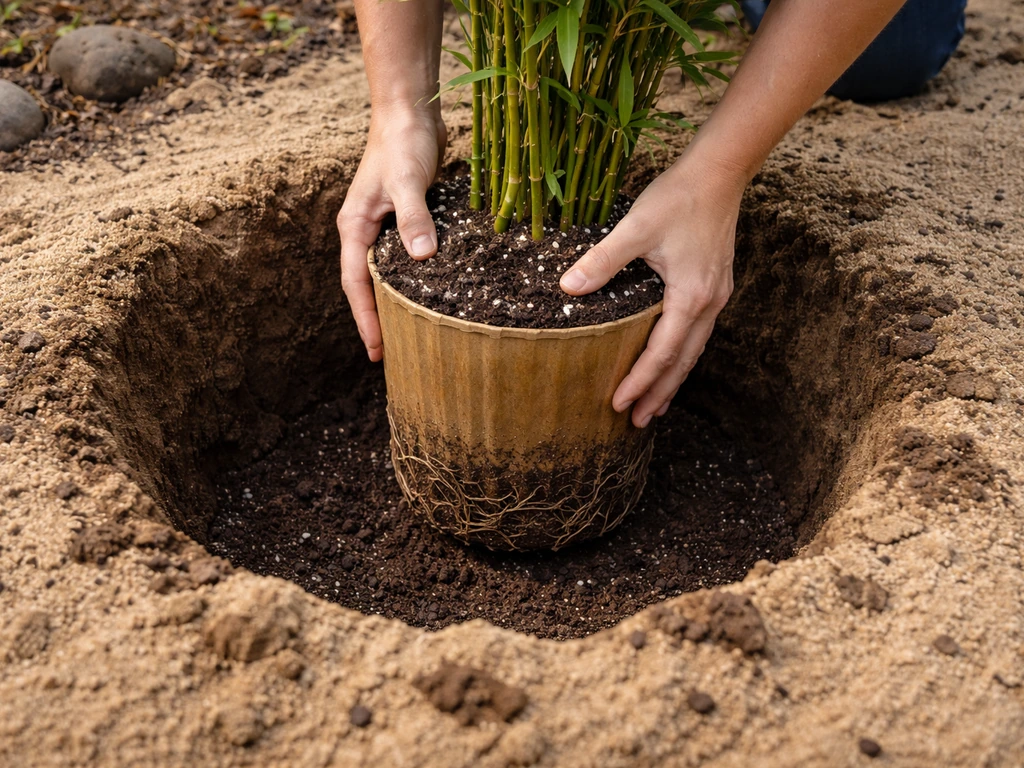
- Dig a planting hole at least twice as wide as the root ball and roughly the same depth. For in-ground sand, wider is better because you are creating an amended zone for roots to establish in before hitting native sand.
- Mix the excavated sand with compost at a 50/50 ratio by volume, and add aged manure, bark chips, or peat if available. If using clay cat litter, add a few generous handfuls to the mix for a small to medium planting hole.
- If using biochar, incorporate it at roughly 5 to 10 percent of the total soil volume for measurable water retention improvement.
- Place the plant so the root ball sits at the same depth it was growing in the nursery container. Backfill with your amended mix, pressing gently to eliminate air pockets.
- Water thoroughly immediately after planting to settle the soil and fully saturate the root zone.
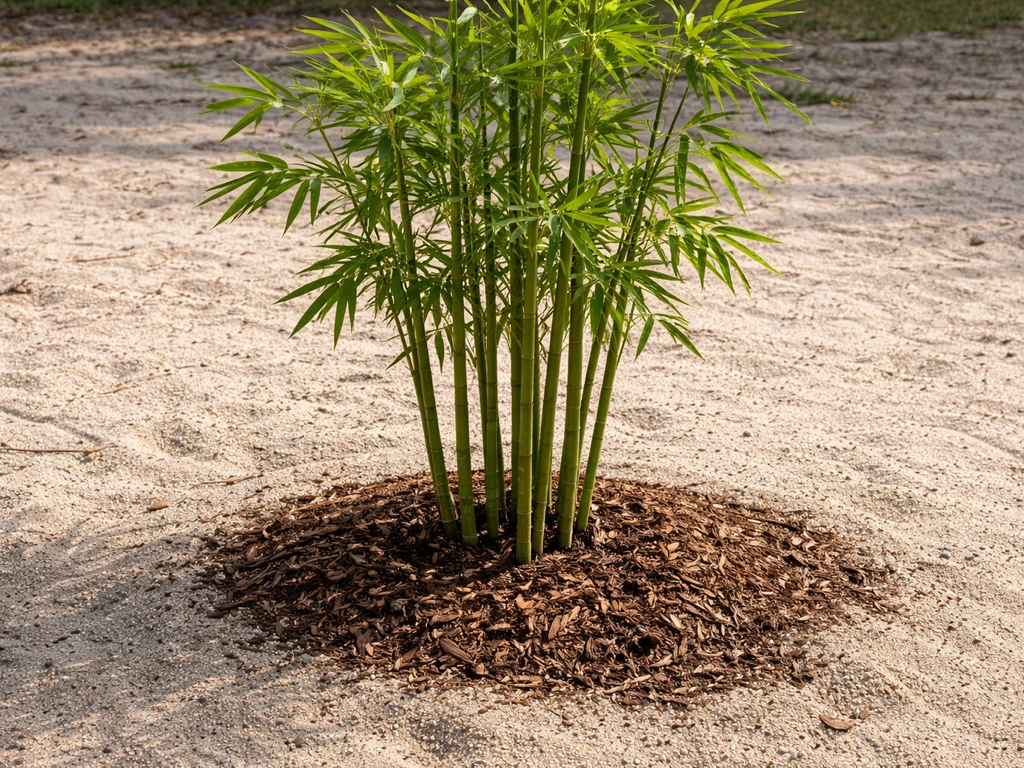
- Apply 3 to 4 inches of organic mulch (wood chips, straw, or shredded bark) over the entire planting area, keeping it a few inches clear of the main culm. This is one of the most important steps for sand: mulch dramatically slows surface evaporation and moderates soil temperature.
Watering schedule
In sandy soil, watering frequency is your most important management tool. For the first three to six months, plan to water one to two times per week, adjusting based on rainfall and temperature. A rough rule of thumb for newly planted bamboo is about 1 gallon of water per 5 gallons of nursery container size per watering session in conditions that require frequent irrigation. In hot, dry weather or very coarse sand, you may need to water more often. The goal is to keep the root zone consistently moist but never puddling. Deep, infrequent watering that soaks to 12 inches is better than frequent shallow sprinkles that wet only the top inch or two.
Fertilizing
Hold off on fertilizing for the first four to six weeks after planting. Roots stressed from transplanting into fast-draining sand can burn if you hit them with fertilizer too soon. After that initial window, a granular balanced or high-nitrogen fertilizer applied in spring gives bamboo the nitrogen push it needs for new culm production. Apply a lower-nitrogen formula in fall to harden growth before dormancy. Aim for roughly three applications per year: spring, mid-summer, and early fall. In sandy soil, where nutrients leach quickly, consistent light feeding is more effective than one heavy annual application. For dug or bare-root plants (rather than nursery-container plants), wait until after the first growing season before fertilizing at all.
Mulch maintenance
Replenish mulch every spring to maintain a 3 to 4 inch layer. In sandy beds, mulch is doing heavy lifting: it reduces moisture evaporation from the surface, keeps soil temperature stable, and breaks down slowly to add organic matter back into your amended zone. Do not skip this step or let it thin out. It is one of the lowest-cost, highest-impact things you can do for bamboo in sandy ground.
Common problems and how to fix them
Drying out and wilting
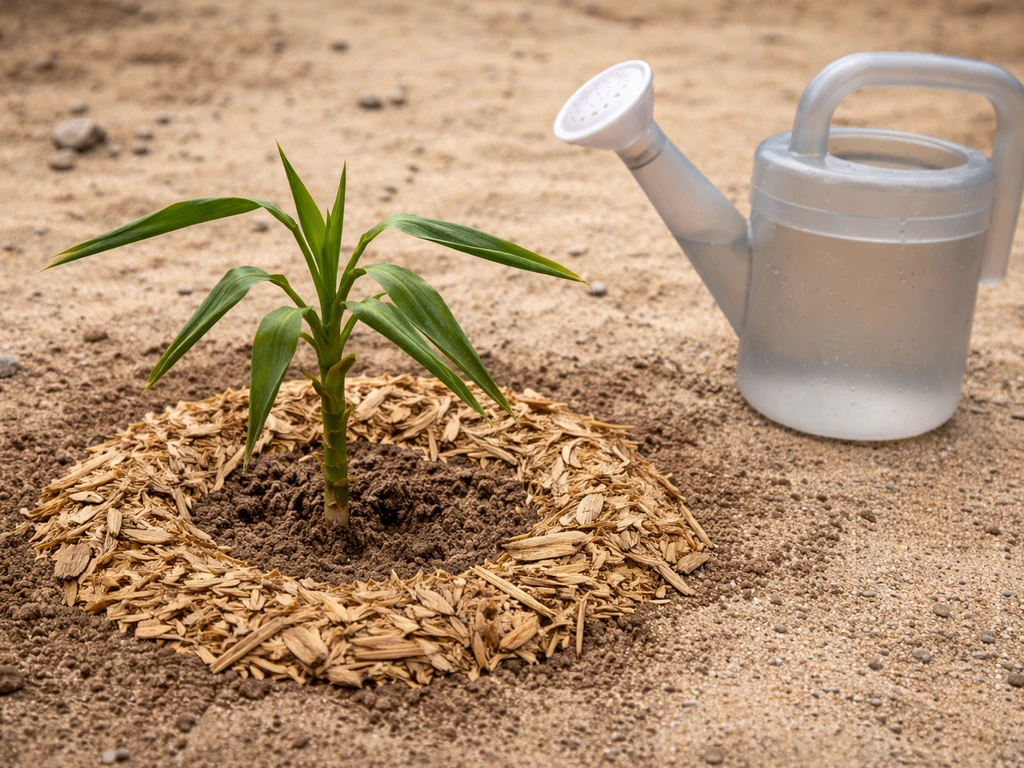
The most common failure mode for bamboo in sand is simple dehydration. If leaves are rolling or curling lengthwise (a stress response to water loss), the plant is telling you it is not getting enough water, or that water is not reaching deep enough. Increase watering frequency immediately and check that water is penetrating to 10 to 12 inches rather than just wetting the surface. If it is running off or pooling before soaking in, the sandy surface may be hydrophobic, which can happen when sand gets very dry. Water slowly and in multiple passes to allow penetration. First-year underwatering is genuinely the top cause of bamboo failure, so take this seriously.
Nutrient deficiency
Yellow leaves, pale foliage, or weak spindly new shoots in sandy soil often signal nitrogen deficiency caused by nutrient leaching. If you see this after the establishment window, apply a granular high-nitrogen fertilizer and water it in well. Check your mulch layer too: thin or absent mulch accelerates the problem. Repeating light fertilizer applications two to three times per growing season is the best prevention in sandy conditions.
Poor establishment and no new shoots
If your bamboo looks the same six months after planting, do not panic. Bamboo prioritizes underground rhizome expansion before pushing new above-ground growth, and that process takes longer when roots are fighting inconsistent moisture. Make sure you are hitting the watering schedule consistently, that your mulch is thick, and that your amendment zone is wide enough for roots to expand into before hitting raw sand. Patience plus consistent moisture is the answer here, not more fertilizer or additional planting.
Root rot (rare in sand, but possible)
This is unlikely in true sandy soil but can happen if you overamended with clay or if a container has poor drainage. If leaves yellow and drop while the soil feels consistently wet, ease off watering and check that drainage holes are clear. Unlike desert or extremely arid climates where this is rarely an issue, heavily amended sandy soil in a wet climate can occasionally tip toward waterlogging. In very dry regions, such as desert conditions, you need the same focus on consistent moisture and organic matter, but you may have to water more aggressively than you would in sandy coastal areas. It is a less likely problem in sand than in clay, but worth keeping in mind.
What to realistically expect: timelines and growth rates
Here is an honest timeline for bamboo in sandy soil with proper amendments and consistent care. Year one is almost entirely underground. The rhizome network is expanding and the plant is storing energy. You will see little to no new above-ground growth, and that is completely normal. In ideal loamy soil this phase is shorter. In amended sand, even with good care, expect it to take a full growing season before the plant looks like it has done anything at all. This is not failure; it is how bamboo works.
By year two, if you have maintained moisture and nutrients, you should start seeing new culms emerge during the spring shooting season. These will likely be similar in size to the original culms. By year three, in well-amended sandy soil, you can expect noticeably larger culms and a spreading clump (for clumping types) or expanding rhizome network (for runners). The exponential growth that bamboo is famous for, where each year's new culms are larger than the last, typically kicks in once the rhizome system has enough stored energy, usually after year two or three in challenging soil. In fast-draining sand without amendments, the timeline stretches or the plant simply fails to establish at all.
Sandy soil bamboo is a realistic project, not a desperate one, but it rewards preparation over improvisation. Get the soil amended before you plant, commit to the watering schedule, keep that mulch layer thick, and you give your bamboo a genuine chance to establish. The readers who struggle with bamboo in sand are almost always the ones who underwatered in year one or skipped the soil prep. The ones who succeed are the ones who treated the first season like a nurturing phase, not a plant-and-forget situation.
FAQ
Can bamboo grow in sand in a container, and is it easier than in-ground sand?
Yes, but only if it stays moist through the establishment phase. In pure sand, those temporary roots can dry out in days, especially in wind or heat. Use a container with drainage holes, fill it with a heavily amended mix, and plan to water more frequently than you would in-ground. Also expect slower above-ground growth, because the rhizome still needs time to expand and store energy.
How do I know if my sand is staying too wet for bamboo?
Over-watering in sand is less common than under-watering, but it can happen when the site gets frequent rain or you over-amended with clay. If the soil stays wet consistently, check for drainage failure, clear clogged holes or compacted amended layers, and reduce watering until the top few inches start to dry slightly. You should aim for moist root zone, not constantly saturated conditions.
What mulch problems cause bamboo to struggle in sandy soil?
Mulch thickness matters. If mulch is less than about 1 inch or it is constantly washed away, you lose moisture buffering and bamboo often shows drought stress even when you water. Keep a steady 3 to 4 inch layer and pull mulch back slightly from the base of young culms to reduce the chance of rot.
How deep should I plant bamboo in sandy soil?
Choose the planting depth based on the plant type. For potted plants, keep the root ball at the same height it was in the pot, then extend your amended zone wider than the hole. For bare-root or dug plants, make sure rhizomes are covered with amended soil and are not left exposed to air, because exposed rhizomes dry out quickly.
My bamboo wilts even though I water, how can I tell if water is reaching the root zone?
If the soil is very coarse, your first instinct to water more often is correct, but also verify penetration. Water in multiple slow passes, then use a probe or long screwdriver to confirm moisture reached roughly 10 to 12 inches. If water runs off the surface, you may have a hydrophobic crust from repeated drying, so you need slower irrigation and possibly more organic amendment in the top zone.
Will bamboo in sand need different fertilizer amounts than bamboo in loam?
Yes, but for sand it is usually better to add nitrogen in split, lighter doses rather than one big feeding. Start after the transplant stress window, then apply spring, mid-summer, and early fall as described. Watch for pale foliage, weak shoots, and slow growth, these often respond better to small repeated feedings than to a single heavy application.
How can I pre-check my sandy soil to see if it is workable for bamboo?
A simple test helps: before planting, moisten the amended zone and observe whether water soaks in within a few hours rather than puddling or immediately running off. If it drains too fast, you likely need more organic matter and possibly a moisture-retaining additive like biochar. If you do puddle, ease off on clay-heavy or overly fine amendments and ensure the planting area is not compacted.
If my bamboo is struggling in sand during year one, should I re-amend immediately or adjust watering first?
Yes, but not as an emergency fix. Extra amendments help, yet in year one the dominant factor is whether rhizomes keep consistently moist. If you need to intervene mid-season, focus on correcting watering penetration and re-thickening mulch first, then consider topping up compost and biochar around the root zone rather than disturbing the rhizomes by digging deeply.
Does bamboo type (clumping vs running) change how I manage sandy soil?
For runners, root spread in sand can still be more aggressive to dry out areas between waterings. You can manage this by using larger watering basins, keeping mulch consistent across a wider perimeter, and installing rhizome barriers if you are controlling spread. Clumping types generally need less perimeter management because their root network is denser and more contained.
Can I grow bamboo in a fully submerged or poorly filtered water setup instead of sand?
If you are using a “fish tank style” setup or any container without real soil, you are managing an entirely different oxygen and moisture environment. Even when roots are wet, they can be short on oxygen, or nutrients can be imbalanced, which prevents healthy rhizome function. If your goal is bamboo, soil-based containers with drainage, or true hydroponic conditions that maintain oxygen and stable nutrients, are much more reliable than poorly filtered wet setups.
Next Article
Can Bamboo Grow in a Fish Tank? How to Do It
Can bamboo grow in a fish tank? Learn which types work, how to plant roots, and setup light, water, and fixes.