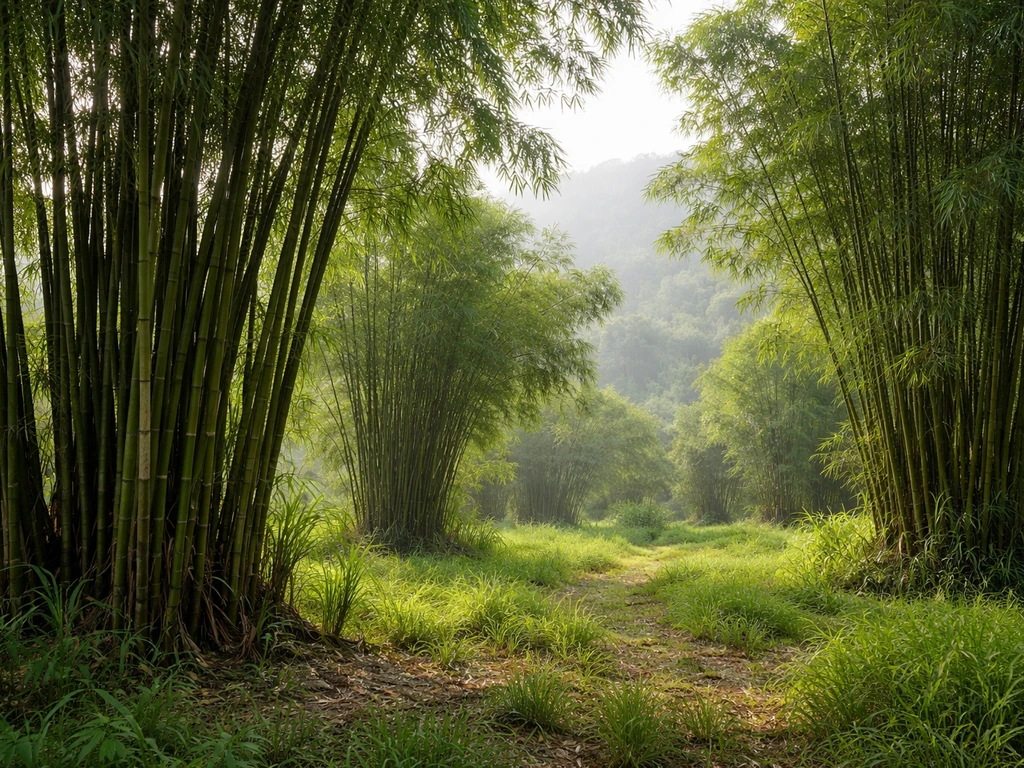
Yes, bamboo grows in China, and not just in a modest way. China is the single most bamboo-rich country on Earth, home to somewhere between 512 and 837 documented species depending on the taxonomic source you use, spread across roughly 7.56 million hectares of bamboo forest. That's around one-third of the world's total bamboo forest area packed into one country. From the tropical lowlands of Hainan island all the way up to subalpine slopes above 3,800 metres in Sichuan and Tibet, bamboo is woven into China's landscapes, economies, and ecosystems in ways that most people outside the country don't fully appreciate.
Does Bamboo Grow in China? Regions, Species & Growing Guide

Marcus Hartwell
16 Jul 2026
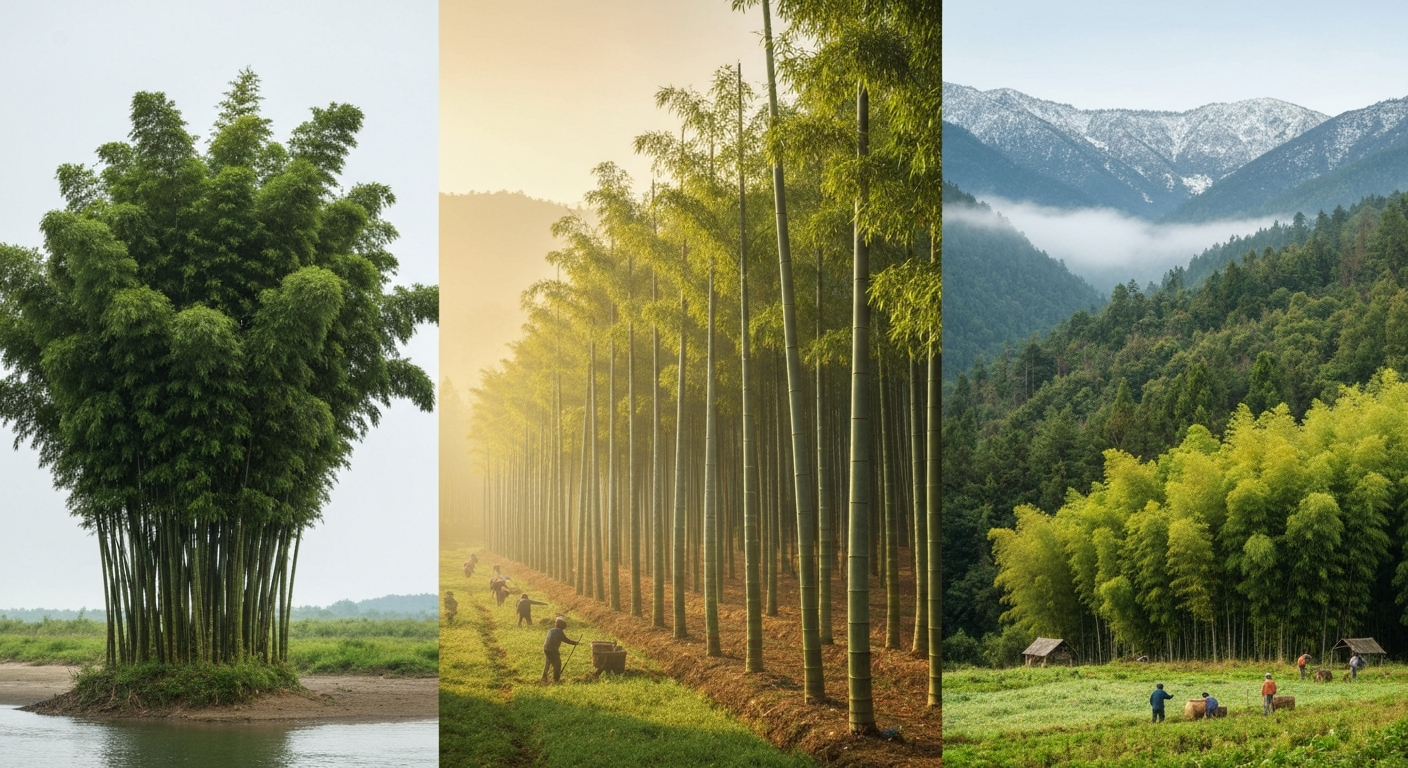
Just how much bamboo does China actually have?
The numbers are genuinely staggering once you dig into them. China's 9th National Forest Resources Inventory, published by the National Forestry and Grassland Administration, recorded 7. According to the 国家林业和草原局's 9th National Forest Resources Inventory, China has about 7.56 million hectares (approximately 756.27 万 hm²) of bamboo forest. 56 million hectares (approximately 756.27 wan hm²) of bamboo forest. The FAO and international bamboo reviews consistently place China's share of global bamboo forest at 30 to 35 percent. In terms of species, the Illustrated Flora of Bambusoideae in China, the modern taxonomic baseline for Chinese bamboos, covers 351 species across 25 genera in its first volume, with more in the second. A 2026 checklist analysis of Chinese grasses puts the Bambusoideae count at 712 species across 46 genera, while some Chinese government summaries cite 837 species. The discrepancies come down to ongoing taxonomic revision and how you count subspecies and varieties, but the core point is the same: China's bamboo diversity is extraordinary.
This isn't just ecological trivia. China's bamboo forests generate a major industrial sector, support rural livelihoods across six or seven southern and southwestern provinces, provide erosion control along river systems, and supply giant pandas with their primary food source. Understanding the scale of bamboo in China matters whether you're a researcher, a gardener wanting to grow Chinese species at home, or someone trying to understand why bamboo behaves the way it does in cultivation. For information on whether bamboo grows in Africa, see Does bamboo grow in Africa (reference ID 8422b13e-f7dc-41ec-9eec-ced601d00c45).
Where bamboo grows in China: regions, provinces, and distribution
Bamboo in China isn't evenly distributed. The heaviest concentration sits in the humid subtropical belt that runs across the country's central and southern provinces, with the southwestern mountains adding a distinct high-altitude layer. If you draw a rough triangle connecting Zhejiang on the east coast, Yunnan in the southwest, and Hainan in the south, you've covered the heart of Chinese bamboo country.
Southern and southeastern provinces
Fujian, Zhejiang, Jiangxi, Guangdong, Guangxi, and Hainan form the commercial and ecological core of Chinese bamboo production. These provinces have warm, humid summers, mild winters, and annual rainfall of 1,200 to 2,000 mm or more, which suits Phyllostachys species (including the economically dominant moso, Phyllostachys edulis) and tropical clumping bamboos like Bambusa and Dendrocalamus. Zhejiang and Fujian are particularly important for moso plantation management, shoot production, and culm harvesting at industrial scale.
Central China
Hunan, Hubei, and Sichuan's lower elevations carry substantial bamboo coverage, with moso and other Phyllostachys species the dominant genus. Sichuan's river valleys and mid-elevation hills are particularly bamboo-rich, partly because the Sichuan Basin creates a sheltered, humid microclimate that allows bamboo to thrive at latitudes where it would otherwise struggle.
Southwestern mountains (Yunnan, Guizhou, and Sichuan highlands)
The southwest is where China's bamboo story gets most interesting botanically. Yunnan, Guizhou, and the highland portions of Sichuan and Tibet host enormous genus diversity, including most of China's Fargesia species, much of its Yushania diversity, and several Dendrocalamus species that push the limits of tropical bamboo into warmer subtropical valleys. The Hengduan Mountain range, running through western Sichuan and northwestern Yunnan, is effectively the evolutionary heartland of Chinese highland bamboos and one of the most bamboo-diverse regions anywhere on Earth.
Altitude bands and natural habitats
One of the most useful things to understand about Chinese bamboo is that different genera occupy sharply different altitude bands. This is directly relevant if you're trying to grow a Chinese species outside China, because altitude band maps closely onto temperature and frost tolerance.
- Sea level to ~600 m (coastal lowlands, river deltas, tropical south): Bambusa, Dendrocalamus, and related tropical-subtropical clumping genera dominate. Hainan, coastal Guangdong, and Guangxi fall here. Frost-free winters are the norm.
- 600 m to ~1,400 m (subtropical hills and valleys): Phyllostachys species (including moso) are most productive here. This altitude band covers most of Fujian, Zhejiang, and the Sichuan Basin lowlands. Light frost is tolerated.
- 1,400 m to ~2,800 m (montane forests): Fargesia and Yushania enter the picture here, often forming dense understorey stands in mixed conifer-broadleaf forests. These species handle regular hard frost and some snow.
- 2,800 m to ~3,800 m (subalpine): High-altitude Fargesia species (e.g., F. dracocephala, F. robusta, F. nitida) persist into subalpine zones, sometimes alongside rhododendron and spruce. These are cold-hardy clumpers that experience significant snowfall and temperatures well below freezing.
The practical takeaway for gardeners: if you're in a temperate climate in Europe, the UK, or North America and want to grow a Chinese bamboo species, you're most likely to succeed with Fargesia and Yushania species from the upper altitude bands. If you're in a warmer subtropical or Mediterranean climate, Phyllostachys and even some Bambusa species become options. This same logic applies when comparing bamboo growing regions across countries, and it's worth knowing that the climate matchmaking principle used for Chinese species works just as well when selecting bamboo for Japan, India, or Ireland.
Native and commonly cultivated bamboo species in China
China's dominant bamboo genera split fairly cleanly into two growth-form categories: running (monopodial) bamboos, which spread via long underground rhizomes, and clumping (sympodial) bamboos, which expand slowly outward from a central base. Both categories include economically and ecologically important species.
- Phyllostachys (running): The most commercially significant genus in China. Includes moso (P. edulis / P. pubescens), the dominant plantation species covering around 2.42 million hectares historically, as well as P. bambusoides, P. nigra (black bamboo), P. aureosulcata, and dozens more. Native to central and southern China, Hainan, and Taiwan.
- Fargesia (clumping): The key high-altitude genus, centred on the Hengduan Mountains and southwest China. Species include F. robusta, F. nitida, F. dracocephala, and F. rufa. Cold-hardy, clumping, and the primary food bamboo for giant pandas in Sichuan and Shaanxi.
- Yushania (clumping): Closely related to Fargesia, also predominantly southwestern China and high-altitude. Includes Y. anceps (widely sold in Western horticulture) and many others.
- Bambusa (clumping): Large tropical and subtropical clumping bamboos. Widespread in southern China (Guangdong, Guangxi, Yunnan lowlands, Hainan). Includes B. oldhamii (giant timber bamboo) and B. multiplex (hedge bamboo).
- Dendrocalamus (clumping): Very large tropical clumpers. D. giganteus and D. latiflorus are grown commercially in Yunnan and Guangxi for shoots and timber. Frost-sensitive.
- Chimonobambusa and Pleioblastus: Smaller genera with cold-hardier species; Chimonobambusa in particular is native to Sichuan and mountain valleys.
Major Chinese bamboo species compared
| Species / Genus | Growth Form | Climate Tolerance | Preferred Soil | Typical Height | Primary Uses |
|---|---|---|---|---|---|
| Phyllostachys edulis (Moso) | Running | Subtropical, -15°C short term | Loamy, pH 5.5–6.5, well-drained | 15–28 m | Culm timber, shoots, flooring, paper |
| Phyllostachys nigra (Black bamboo) | Running | Temperate-subtropical, -18°C | Loamy, pH 5.5–7.0 | 3–8 m | Ornamental, crafts, poles |
| Fargesia robusta | Clumping | Cold-hardy, -20°C+ | Humus-rich, pH 5.5–7.0, moist | 3–5 m | Ornamental, windbreak, panda habitat |
| Fargesia nitida | Clumping | Cold-hardy, -25°C+ | Humus-rich, pH 5.5–7.0, moist | 2–4 m | Ornamental, container, hedge |
| Bambusa oldhamii | Clumping | Subtropical, -5°C limit | Sandy-loam, pH 5.5–7.0 | 8–15 m | Shoots, timber, screens |
| Dendrocalamus latiflorus | Clumping | Tropical, frost-sensitive | Rich loam, pH 5.5–6.5, moist | 10–20 m | Edible shoots, construction |
| Yushania anceps | Clumping | Temperate, -18°C | Loamy, pH 5.5–7.0 | 2–4 m | Ornamental, hedging |
Growth rates and timelines under Chinese climates
Growth rates in Chinese bamboo vary enormously by species, climate zone, and management regime. Moso (Phyllostachys edulis) is the benchmark because it's the most intensively studied. New moso shoots emerge in spring (typically March to May at lower elevations in Fujian and Zhejiang), and a culm can reach close to its full height in 40 to 60 days due to the intercalary meristem growth pattern. During peak growth, individual moso culms have been recorded growing 30 to 100 cm per day in warm, humid conditions, though averages of 20 to 40 cm per day over the full growth flush are more representative in managed stands. Full culm height (often 15 to 20 m in productive plantations) is reached within a single season.
It's worth being honest about what this means practically. A newly planted moso rhizome won't produce 20-metre culms in year one. The plant spends its first two to three years building rhizome mass underground. Most growers see small culms in year two, noticeably larger ones in year three, and genuinely impressive growth from year four or five onward. The local saying 'bamboo sleeps, creeps, then leaps' holds true across Chinese growing regions.
FAO and plantation management studies cite culm yields of 10 to 15 tonnes per hectare per year in well-managed Phyllostachys stands, and shoot yields of 20 to 30 tonnes of fresh shoots per hectare per year at high-productivity sites in Zhejiang, Fujian, and Guangdong. Those are plantation-scale numbers under intensive management, not backyard garden expectations. A garden planting of moso or P. nigra might yield a modest harvest of shoots and a few harvestable culms per year by years five to seven.
Fargesia and Yushania species are slower growing and don't exhibit the same dramatic spring flush. They add height gradually over the season. Expect 20 to 50 cm of new culm height per year in young plants, increasing to 1 to 3 m per year in established clumps, depending on species and conditions.
Step-by-step planting guide for growing bamboo in China (and similar climates)
This guide is written primarily for gardeners in China's subtropical and temperate zones but applies directly to anyone in a climatically similar region, whether that's northern Italy, the Pacific Northwest, or southeastern Australia.
Site selection
- Choose a spot with full sun to partial shade. Phyllostachys species produce their best growth in full sun. Fargesia and Yushania tolerate and often prefer partial shade, especially in hot climates.
- Ensure good drainage. Bamboo tolerates moist soils but will not survive waterlogged roots for extended periods. Avoid depressions where water pools after rain.
- Assess wind exposure. Young culms can be snapped by strong winds. A sheltered aspect or windbreak is beneficial for large-culm species in their first few years.
- Check proximity to boundaries and structures. Running bamboos (Phyllostachys) will spread. Allow at least 1 to 2 metres from walls, fences, or neighbouring properties, and plan your containment strategy before planting, not after.
Soil preparation
- Target a soil pH of 5.5 to 6.5 for most species. Test your soil before planting. Slightly acidic, loamy soil is the sweet spot for the majority of Chinese bamboo species.
- Incorporate organic matter. Dig in well-rotted compost or leaf mould to a depth of 30 to 40 cm. Bamboo is a heavy feeder and responds well to improved organic content.
- Break up compacted subsoil. Bamboo rhizomes spread horizontally in the top 20 to 30 cm of soil. Hard compacted layers beneath restrict spread and reduce vigour.
- Avoid heavy clay without amendment. If your soil is predominantly clay, improve drainage by raising the planting bed or mixing in coarse sand and compost.
Planting technique and spacing
- Plant in spring or early autumn to give roots time to establish before temperature extremes.
- Dig a hole twice the width of the root ball and approximately the same depth. Place the plant so the root crown sits at or just below soil level.
- Backfill with the improved soil mix and water thoroughly. Avoid air pockets around the root ball.
- Mulch generously with 5 to 10 cm of wood chips, straw, or leaf mould to retain moisture and regulate soil temperature.
- For large running species like moso or P. bambusoides, space plants 3 to 5 metres apart to allow for rhizome spread without overcrowding in years two through five.
- For medium running species like P. nigra or P. aureosulcata, space 2 to 3 metres apart.
- For clumping species (Fargesia, Yushania, Bambusa), space 1.5 to 2.5 metres apart for hedging or screening, or 3 to 4 metres apart as specimen plants.
- Water every two to three days for the first four to six weeks, then reduce to weekly unless conditions are unusually dry.
Ongoing care and seasonal maintenance
Watering
Established bamboo in China's southern and central provinces typically receives sufficient rainfall during the growing season, but supplemental irrigation during dry spells (particularly in spring when new shoots are emerging) pays dividends. Target roughly 30 to 50 mm of water per week during active growth if rainfall is insufficient. Container-grown bamboo needs more frequent watering, sometimes daily in summer heat.
Fertilising
Bamboo is a grass and responds to nitrogen in the same way a lawn does, but much more dramatically. Apply a balanced high-nitrogen fertiliser (or a dedicated bamboo fertiliser) in early spring as shoots begin to emerge and again in early summer. For plantation-scale Phyllostachys management in China, nitrogen application rates of 100 to 200 kg/ha/year are common. At garden scale, a generous application of well-rotted manure or compost in late winter plus a liquid nitrogen feed in spring covers most needs. Avoid heavy fertilising in late summer, which can stimulate soft growth vulnerable to early autumn cold.
Mulching and pruning
Maintain a 5 to 10 cm mulch layer year-round. This is one of the most cost-effective things you can do for bamboo health, regulating moisture, suppressing weeds, moderating soil temperature, and gradually improving soil organic content as it breaks down. For pruning, remove dead or weak culms at ground level each spring. On running bamboos, remove any culms that have clearly lost vigour (identified by pale or yellowing foliage). Never remove more than one-third of the active culms in a single year if the planting is not yet mature.
Winter care
Most Phyllostachys species tolerate winter temperatures down to -15°C to -20°C for short periods, though foliage may die back in severe frosts. Fargesia and Yushania are generally hardier, tolerating -20°C to -25°C. In northern China's colder zones, consider wrapping the root zone with additional mulch (15 to 20 cm) before the first hard frost. In areas where cold wind is a bigger problem than temperature, a simple hessian windbreak around young plantings in the first two winters significantly reduces culm damage.
Propagation methods: how to multiply your bamboo
Division (most reliable)
Division is the standard method for both running and clumping bamboos. In spring, just before new shoots emerge, dig up a section of established rhizome with at least two to three culms attached and a healthy root mass. Replant immediately and water well. This is the quickest route to an established plant because you're transplanting a mature rhizome section rather than starting from scratch.
Rhizome cuttings
For running bamboos, rhizome sections of 20 to 30 cm with at least two nodes can be harvested in early spring and planted horizontally 5 to 10 cm deep in prepared soil. Success rates vary (expect 50 to 70 percent take under good conditions). Keep the soil consistently moist until shoots emerge.
Culm cuttings
Single-node culm cuttings placed in a moist rooting medium can root for some species (Bambusa and Dendrocalamus respond better to this than Phyllostachys does). Cut a section with one node and the associated branch bud, plant at an angle, and maintain high humidity. This method is more labour-intensive and less predictable than division, but useful when rhizome material is scarce.
Seed propagation
Bamboo seed is rare and viable for a short time after the gregarious flowering event. Most bamboo species flower only once every 40 to 120 years, then die. When seed is available (after a mass flowering), sow fresh seed in a well-drained seedling mix, maintain warmth and moisture, and expect germination in two to four weeks. Seedling bamboo grows slowly in year one. Seed is not a practical propagation route for most gardeners, but it's important for species conservation and breeding programs.
Containment and invasive-risk management
Running bamboos (Phyllostachys and related genera) are genuinely invasive in garden settings if not managed. This isn't fearmongering: moso rhizomes can extend several metres per year under ideal conditions, and once established in a neighbour's garden, removal is a serious undertaking. In parts of Europe and North America, some Phyllostachys species are flagged as invasive in certain jurisdictions. Before planting any running bamboo, check your local regulations and discuss plans with adjacent landowners.
Root barriers
Install HDPE root barriers (minimum 60 cm deep, 2 mm thick) around the entire intended growing area before planting. Leave 5 to 10 cm of the barrier above soil level so rhizomes don't arch over the top. Join sections carefully to avoid gaps. This is a one-time installation cost that eliminates the main headache of running bamboo management.
Regular rhizome patrol
Even with barriers in place, walk the perimeter of your bamboo planting each spring. Any rhizomes that have escaped the barrier or are pushing through the above-ground lip should be cut off with a spade immediately. The earlier you intercept them, the less effort it takes.
Container growing
Growing running bamboos in large containers (minimum 100 to 150 litres for a medium Phyllostachys) effectively eliminates spreading risk. Repot every two to three years when the rhizome mass fills the container. This works particularly well for P. nigra and smaller Phyllostachys species. Clumping bamboos (Fargesia, Yushania) are naturally suited to containers and need less aggressive root management.
Common pests and diseases in Chinese bamboo
Bamboo mites (Schizotetranychus celarius)
One of the most widespread pest problems on Chinese bamboos, particularly in dry, warm conditions. Affected leaves show yellowing or bronzing with a distinctive dusty or stippled appearance on the upper surface. Manage by increasing humidity (overhead watering helps), removing heavily affected foliage, and applying horticultural oil or miticide sprays in serious infestations. Good air circulation through the canopy reduces susceptibility.
Bamboo aphids and scale insects
Several aphid species and soft scales attack bamboo foliage and young culms in China. Look for sticky honeydew deposits, sooty mould on leaves, and distorted new growth. Encourage natural predators (ladybirds, lacewings), use insecticidal soap for light infestations, or apply a systemic insecticide for severe outbreaks. Scale is harder to control once established and may require repeated applications.
Shoot borers
Larvae of several moth and beetle species bore into new shoots in spring. Affected shoots show entry holes and may collapse or fail to harden properly. Remove and destroy affected shoots promptly. In high-pressure areas, a soil-applied insecticide applied before shoot emergence can reduce damage.
Root rot and crown rot
Phytophthora and Pythium species cause root and crown rot, almost always in waterlogged or poorly drained soil. Symptoms include sudden wilting, yellowing foliage, and soft, discoloured roots and rhizomes. Prevention is far easier than cure: ensure good drainage, avoid overwatering, and don't mulch right against culm bases. There is no effective chemical cure for established Phytophthora infection; affected sections must be removed and disposed of.
Bamboo mosaic virus (BaMV)
Recorded in several Chinese bamboo species, presenting as mosaic patterning on leaves. Spread by aphids and through contaminated cutting tools. There's no cure. Remove and destroy infected plants, control aphid populations, and sterilise cutting tools between plants.
Practical uses and harvest notes for growers
Edible shoots
Many Chinese bamboo species produce edible shoots, with moso (Phyllostachys edulis) and Dendrocalamus latiflorus among the most commercially important. Harvest shoots when they emerge 10 to 20 cm above soil level but before they have fully unfurled and hardened. Cut at or just below ground level with a sharp spade or knife. Shoots should be cooked within 24 hours of harvest; they contain cyanogenic glycosides that dissipate with boiling. Blanching in water for 20 minutes before eating or processing is standard practice in China.
Culm timber and crafts
Culms are ready for harvest when three to five years old, when lignification is complete and the culm has maximum strength. Harvesting younger culms wastes the plant's investment and produces weaker material. Leave at least 40 to 50 percent of the culm population standing after each harvest to maintain grove vigour. Moso culms at four to five years old are used for flooring, furniture, engineered board products, pulp, and construction. Smaller species like P. nigra and Bambusa multiplex are used for furniture, craft, and decorative poles.
Erosion control and carbon sequestration
Bamboo's extensive shallow rhizome network makes it highly effective for stabilising slopes, riverbanks, and disturbed land. This is widely used in China's reforestation and erosion control programs. The rapid above-ground growth also means bamboo sequesters carbon quickly relative to most tree species, which is why it features in China's national carbon accounting frameworks and why international interest in bamboo as a climate solution has grown sharply in recent years.
Recommendations by Chinese climate zone (and what they mean for gardeners elsewhere)
China's climate zones span a range that maps reasonably well onto many growing regions globally. Here's how to translate Chinese growing conditions into practical species selection wherever you are.
| Chinese Climate Zone | Representative Provinces | Equivalent Climate Elsewhere | Best Bamboo Choices | Key Caution |
|---|---|---|---|---|
| Tropical (frost-free) | Hainan, southern Guangdong, southern Guangxi | Florida (US), Queensland (AU), Mediterranean coast | Dendrocalamus, Bambusa, Gigantochloa | Heat and humidity; root rot risk in poor drainage |
| Humid Subtropical | Fujian, Zhejiang, Hunan, Jiangxi, lower Sichuan | Southeast US, southern Japan, coastal NSW (AU) | Phyllostachys edulis, P. bambusoides, P. nigra, Bambusa oldhamii | Running bamboos need containment; manage rhizomes annually |
| Temperate (mild) | Central Sichuan, parts of Shaanxi and Anhui | UK south coast, Pacific Northwest (US/Canada), northern Italy | P. nigra, P. aureosulcata, Fargesia robusta, Yushania anceps | Late spring frosts can damage emerging shoots |
| Temperate (cold) | Northern Sichuan, parts of Yunnan highlands | Ireland, Scotland, interior Pacific Northwest | Fargesia nitida, F. dracocephala, Yushania maculata | Stick to cold-hardy clumpers; avoid running bamboos |
| Subalpine / Continental | Western Sichuan, Tibet border zones, parts of Gansu | Canadian Rockies, high Alpine Europe | Fargesia nitida only, or no bamboo outdoors | Very short growing season limits establishment |
If you're in Ireland or Scotland, for example, the relevant comparison is the cold temperate highland zone of western Sichuan or northern Yunnan, and Fargesia species are your reliable choice. If you're in the southeastern United States, you're working with conditions close to those of Fujian or Zhejiang, and moso or other Phyllostachys species will perform well, though containment is non-negotiable. The same climate-matching approach applies when comparing bamboo growing across Asia, whether in Japan, India, or other bamboo-rich countries. For details on whether bamboo grows in India and which species are common there, see does bamboo grow in India. If you're wondering does bamboo grow in Japan, many species are native and widely cultivated there, so Japan is an important comparison for climate-matching and species selection.
Useful maps, images, and visual references
For anyone mapping bamboo in China or planning a planting based on regional species data, several visual resources are genuinely useful. The GBIF occurrence database provides freely downloadable point-map data for individual species across Chinese provinces, searchable by genus and species name. The Plants of the World Online (Kew/POWO) taxon pages include native range maps by country and major administrative region. The Chinese Virtual Herbarium (CVH) provides province-level specimen records and is particularly strong for southwest China species. For garden planning, a climate overlay map combining USDA hardiness zones or RHS hardiness ratings with altitude data gives a practical framework for species selection. Species ID photos are best sourced from the Kew herbarium image database and from Chinese botanical illustration archives, particularly for distinguishing similar Fargesia and Phyllostachys species in the field.
Further resources for growers
If you want to go deeper into growing bamboo in China or working with Chinese species in your own garden, these are the most reliable starting points.
- National Forestry and Grassland Administration of China (国家林业和草原局, www.forestry.gov.cn): Publishes national bamboo resource inventories, plantation management standards, and industry policy documents. Most content is in Chinese but Google Translate handles the pages reasonably well.
- International Bamboo and Rattan Center (INBAR, www.inbar.int): The primary international body for bamboo and rattan research. Publishes technical guides, FAO co-authored reports, and policy briefs in English covering Chinese and global bamboo cultivation, trade, and sustainable use.
- Plants of the World Online (powo.science.kew.org): Kew's authoritative taxonomic database. Use it to check native range, synonym history, and distribution maps for any Chinese bamboo species. Essential for getting species names right.
- GBIF (www.gbif.org): Global Biodiversity Information Facility. Search for any bamboo genus or species to access mapped occurrence records from Chinese herbaria and field surveys. Downloadable as CSV for GIS mapping.
- Chinese Virtual Herbarium (CVH, www.cvh.ac.cn): The national aggregator for Chinese herbarium specimen data. Province-level records for all major bamboo genera, with specimen images for many accessions.
- American Bamboo Society (www.bamboo.org) and the European Bamboo Society (www.bambus.eu): Both maintain cultivar directories, grower networks, and nursery supplier lists. Useful for sourcing authenticated Chinese species outside China.
- Illustrated Flora of Bambusoideae in China (Springer): The modern taxonomic benchmark for Chinese bamboos. Two-volume set; expensive but available through university library systems and worth accessing if you're working with species identification at a serious level.
FAQ
Does bamboo grow in China?
Yes. Bamboo (subfamily Bambusoideae) is native to and widely distributed across China, from tropical Hainan and southern provinces through subtropical river valleys to temperate and alpine zones in Sichuan, Yunnan and Tibet.
Where in China does bamboo grow (regions, provinces, altitude bands, and habitats)?
Bamboo occurs across much of China: tropical and subtropical provinces (Hainan, Guangdong, Guangxi, Fujian, Yunnan) and temperate to montane provinces (Zhejiang, Jiangxi, Hunan, Sichuan, Chongqing, Shaanxi, Guizhou, Tibet). Habitats include lowland river valleys and farmland edges, karst hills in the south, managed plantations, montane forests and subalpine slopes. Altitude ranges vary by genus/species — many lowland species at sea level to ~1,500 m, while alpine clumping genera (e.g., Fargesia, Yushania) occur roughly from 1,400 up to ~3,800 m in the Hengduan Mountains and Tibetan foothills.
Which bamboo genera and species are native or commonly cultivated in China?
Major native and cultivated genera include: Phyllostachys (running bamboos; e.g., Phyllostachys edulis/‘moso’ group and P. aurea), Fargesia and Yushania (clumping, high‑altitude species), Bambusa and Dendrocalamus (tropical/subtropical clumpers). China’s flora contains hundreds of species—sources report several hundred to 800+ taxa depending on the checklist—so local lists are important for precise identification.
What climates and soils do common Chinese bamboo species prefer?
General preferences by group: Phyllostachys: temperate–subtropical, fertile, well‑drained loamy soils, full sun to partial shade; prefers mild winters and humid summers. Fargesia/Yushania: cool‑temperate to montane, acidic to neutral forest soils, partial shade, tolerates colder winters and higher elevation. Bambusa/Dendrocalamus: tropical–subtropical, warm frost‑free climates, rich moist soils, full sun. Most bamboos prefer well‑drained soils with organic matter; pH generally 5.5–7.0 depending on species.
How fast do bamboo species grow in Chinese climates, and what are expected timelines?
Growth rates vary: tropical clumpers (Bambusa, Dendrocalamus) can produce giant culms in a single growing season and reach full height in 1–2 seasons once established. Temperate runners like Phyllostachys produce new culms each spring after a 1–3 year establishment period; commercial moso stands produce harvestable culms after 4–6 years and peak productivity typically by 10–20 years. High‑altitude clumpers (Fargesia) grow more slowly, reaching mature clump size in several years; annual shoot emergence and incremental culm thickening are typical.
Step‑by‑step planting and site selection advice for gardeners in China
1) Site: choose a location matching species climate (warm sites for Bambusa; cooler, shaded sites for Fargesia; sunny fertile spots for Phyllostachys). 2) Soil: prepare well‑drained soil enriched with compost; aim for loam with good organic matter. 3) Timing: plant in spring after frost or in early autumn in mild regions. 4) Spacing: clumpers 2–4 m between plants (species dependent); runners 3–5 m between clumps or larger when establishing screening. 5) Planting: dig a hole twice root‑ball size, set plant so top of root ball matches ground level, backfill and water well. 6) Mulch: apply 5–10 cm organic mulch, keep mulched to conserve moisture. 7) Watering: regular watering first 1–2 years; thereafter match to species needs (see watering section). 8) Fertiliser: apply balanced NPK or higher‑N fertiliser in spring and early summer; apply organic compost annually.
Next Article
Does Bamboo Grow in India? Regions, Climate, and Tips
Learn if bamboo grows in India, which regions suit it, and key climate, soil, and planting tips to succeed.