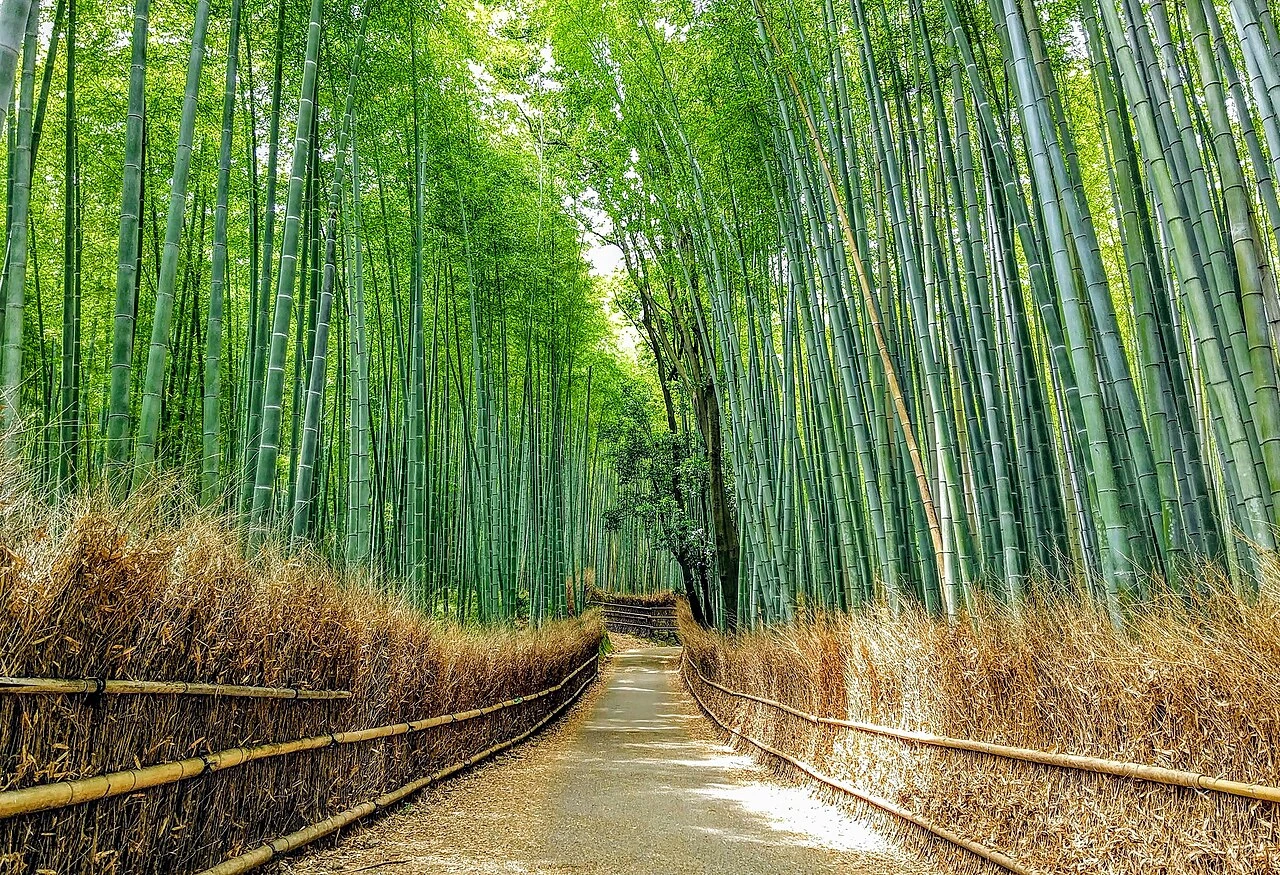
Yes, bamboo grows very well in India. In fact, India is one of the most bamboo-rich countries on the planet, with roughly 9.57 million hectares of forest area containing bamboo, which works out to about 12.8% of the country's total forest cover. Bamboo grows naturally across tropical, sub-tropical, and temperate zones in India, from the dense evergreen forests of the Western Ghats and the Andaman & Nicobar Islands to the dry deciduous forests of Madhya Pradesh and the Himalayan foothills. If you're wondering whether you can grow it in your garden or on your land, the short answer is almost certainly yes, as long as you pick the right species for your region.
Does Bamboo Grow in India? Regions, Climate, and Tips
Marcus Hartwell
20 Jun 2026
Where bamboo actually grows in India
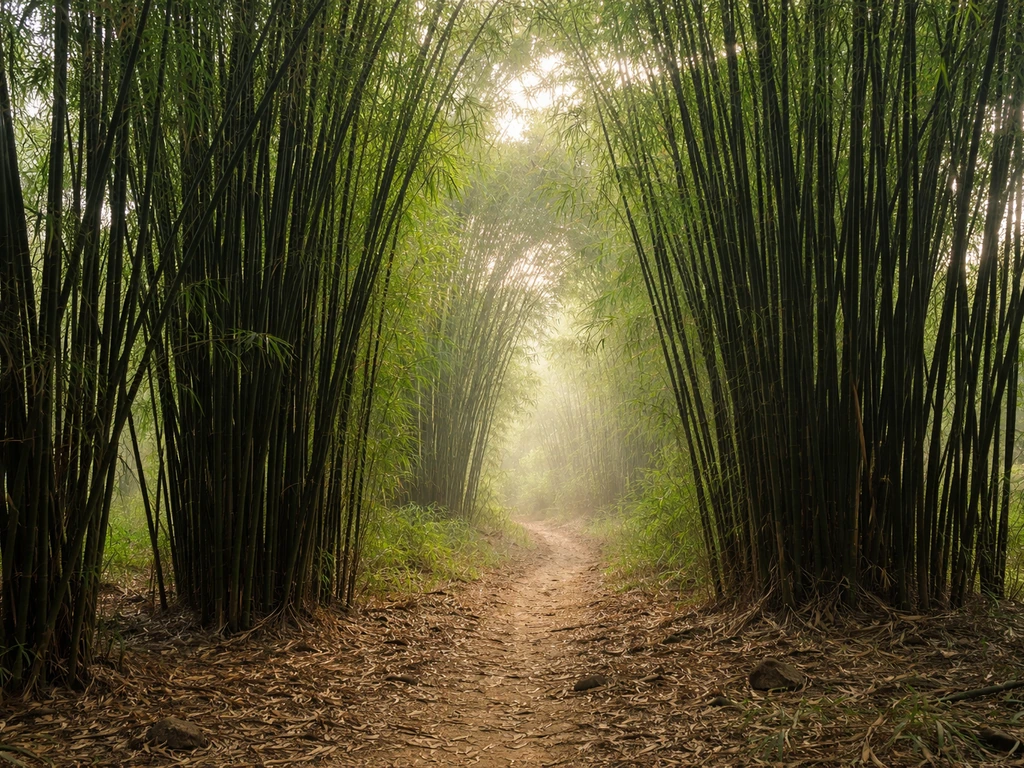
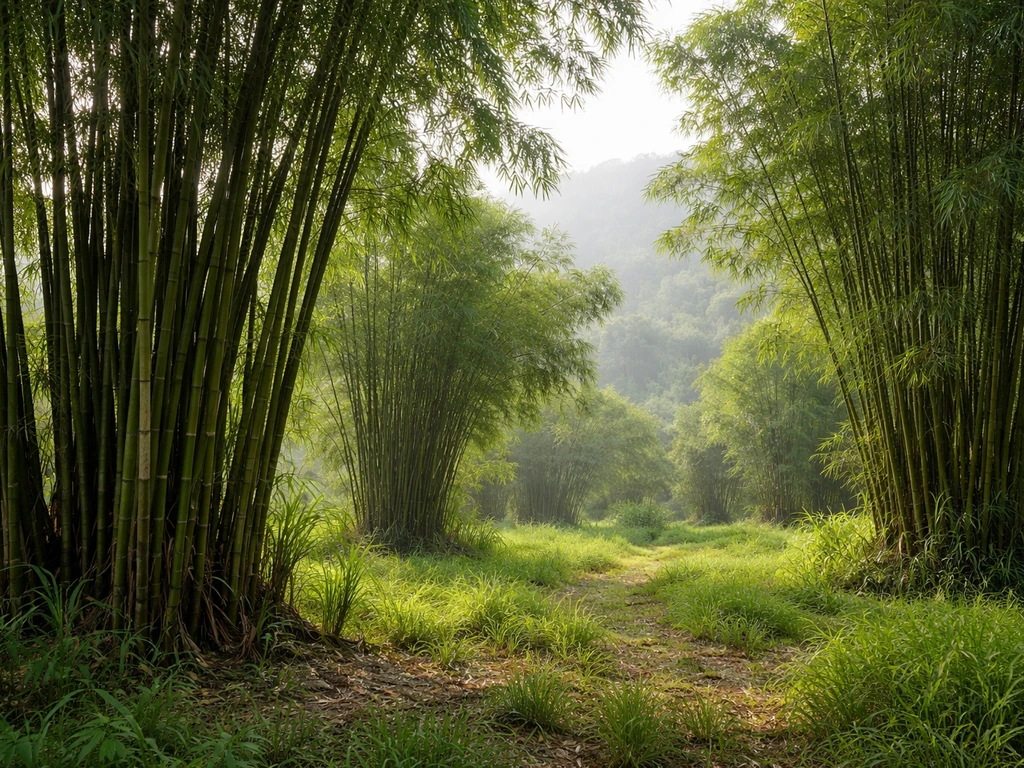
Bamboo in India isn't evenly spread. The Forest Survey of India links its distribution directly to annual precipitation, altitude, and soil conditions, which is why you'll find it thriving in some states and barely present in others. The Northeast, including Assam, Meghalaya, Manipur, and Mizoram, is the richest bamboo zone in the country. Species like Dendrocalamus hamiltonii and Melocanna baccifera dominate here, driven by heavy monsoon rainfall and high humidity. Northern Bengal and the Eastern Himalayan foothills also support dense stands of Dendrocalamus hamiltonii.
Central India, covering Chhattisgarh, Madhya Pradesh, and Odisha, is another major bamboo belt. Here the dry deciduous forests are dominated by Dendrocalamus strictus, one of the toughest and most widely planted species in the country. An FAO Unasylva article on bamboo silviculture in northern India notes that under certain forest types Arundinaria is the most frequent, while under dry deciduous forests Dendrocalamus strictus is the most common under dry deciduous forests Dendrocalamus strictus is most common. The Western Ghats states, including Kerala, Karnataka, and Maharashtra, support moist bamboo brakes along streams and in sheltered slopes within semi-evergreen and moist deciduous forests. The Andaman & Nicobar Islands have their own endemic species like Oxytenanthera nigrociliata. Even the Himalayan foothills from Uttarakhand to Himachal Pradesh and Jammu have their bamboo zones, with species like Bambusa balcooa and Bambusa nutans thriving at elevations up to around 1,500 meters.
States with very low rainfall, like Rajasthan's arid interior, or extremely cold high-altitude zones are the exceptions where bamboo struggles without irrigation and shelter. If you're also asking about whether bamboo grows in Africa, the answer depends heavily on climate, much like it does across Indian regions. But even then, selected drought-tolerant species can be made to work with the right management.
How India's climate matches up with what bamboo needs
Before choosing a species, it's worth knowing exactly what bamboo wants from a climate, so you can compare it against your state or city's conditions. If you are asking does bamboo grow in China, bamboo can also thrive there where climate and precipitation suit it, so comparing your local conditions is the key compare it against your state or city's conditions.
| Climate Factor | What Bamboo Prefers | India's Range |
|---|---|---|
| Temperature | 20–30°C optimal; most tropical species tolerate up to 45°C and down to about −5°C | 15–45°C depending on region and season |
| Annual Rainfall | 1,000–3,500 mm optimal; Dendrocalamus strictus manages on lower end, Northeast species need higher | 200 mm (Rajasthan) to 11,000 mm+ (Cherrapunji) |
| Humidity | 75–95% during active growing season preferred by most Indian species | High in Northeast, coastal, and Ghat regions; lower in central and north plains |
| Sunlight | Full sun to partial shade; most clumping species prefer open sunny sites | Abundant across most of India year-round |
| Monsoon Alignment | Growth flush timed with monsoon rainfall is ideal; shoot emergence typically June–October | Indian monsoon season aligns almost perfectly with bamboo's active growth window |
The monsoon is genuinely one of the biggest advantages for growing bamboo in India. Research on Dendrocalamus hamiltonii shows that during monsoon conditions, with temperatures around 21–28°C and humidity between 75–95%, bamboo can grow over 14 meters in height across roughly 14 weeks. That growth rate isn't an exaggeration. It's what makes bamboo so productive in Indian conditions compared to, say, temperate climates where growth seasons are shorter and cooler. For comparison, bamboo growth in Ireland or northern Europe works on a much more modest timeline because the warm, humid growth window is far narrower. Ireland and northern Europe can work only with the right hardy bamboo and suitable protection, since the growing season is much shorter than in India bamboo in Ireland.
Bamboo types that work well in Indian conditions
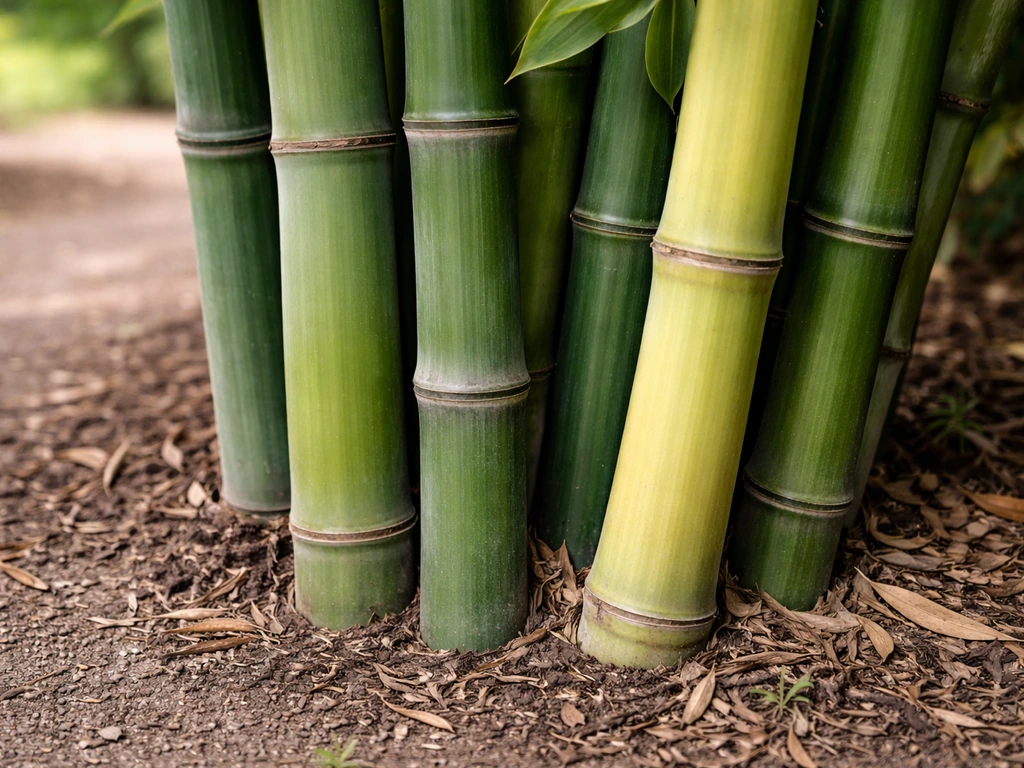
India hosts dozens of bamboo species, but a handful are both widely available and reliably productive across different climate zones. Here's a practical breakdown of the best options depending on where you are.
| Species | Best Suited Regions | Rainfall Needed | Altitude Range | Key Trait |
|---|---|---|---|---|
| Dendrocalamus strictus | Central India, dry deciduous zones (MP, Chhattisgarh, Maharashtra interior) | 1,000–3,500 mm; tolerates drier conditions | Up to 1,200 m | Drought-tolerant, solid culm, very hardy (survives −5°C to +45°C) |
| Bambusa balcooa | Assam, West Bengal, Bihar, Eastern UP, Odisha | Moderate to high rainfall | Up to 600 m | Fast-growing, good for timber and construction |
| Bambusa nutans | Northeast hill regions, sub-tropical zones | High humidity tropics/sub-tropics | 700–1,500 m | Good for mid-elevation sites in hilly states |
| Dendrocalamus hamiltonii | Northeast India, Eastern Himalayan foothills, northern Bengal | High monsoon rainfall | Himalayan foothill zones | Major commercial species, edible shoots |
| Dendrocalamus asper | Tropical and sub-tropical zones with reliable monsoon | Moderate to high | Tropical lowlands to ~500 m | Edible shoots ready 5–6 weeks from emergence |
| Bambusa bambos (arundinacea) | Western Ghats, Southern India, moist deciduous forests | High rainfall zones | Tropical lowlands | Large clumping species, excellent wind-break |
| Melocanna baccifera | Assam, Cachar, Northeast India | Very high monsoon rainfall | Lower Assam plains and foothills | Used for weaving; note ~40–50 year flowering cycle |
For most home gardeners in India, Dendrocalamus strictus is the most forgiving starting point if you're in central or peninsular India. It handles temperature swings, slightly dry spells, and a wide range of soils better than most. If you're in the Northeast or a high-rainfall coastal state, Bambusa balcooa or Dendrocalamus hamiltonii will give you faster and more impressive results. If you're in a hilly state above 700 meters, Bambusa nutans is worth a close look.
Soil, site prep, and how to actually get bamboo in the ground
What soil bamboo needs
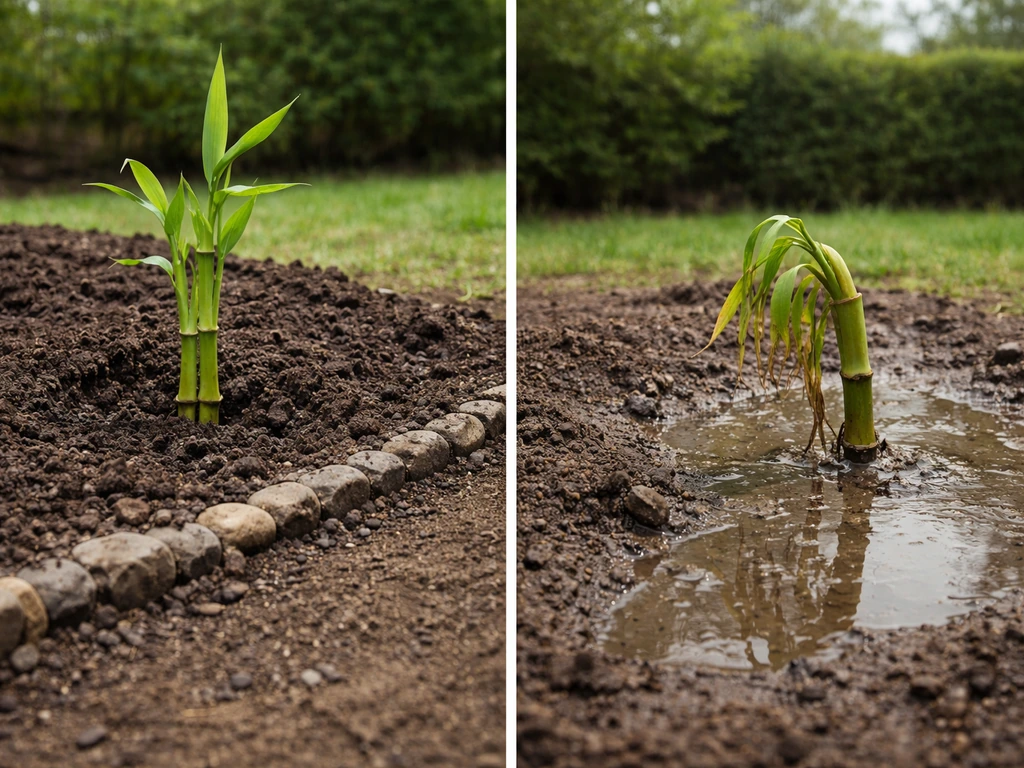
Bamboo isn't fussy about soil type, but it absolutely requires good drainage. Waterlogged roots will kill a bamboo clump faster than drought. Most Indian bamboo species do best in a soil pH range of about 5.0 to 6.5, though Dendrocalamus strictus tolerates a slightly wider band of around 5.5 to 7.5. Sandy loam to loamy soils with reasonable organic matter are ideal. Heavy clay soils need to be broken up with compost or organic material before planting to prevent root suffocation.
Preparing your site
- Choose a location with full sun to light shade and good air circulation. Avoid low-lying spots where water pools after rain.
- Dig planting pits about 45–60 cm deep and 60 cm wide. For large plantation spacing, standard recommendations suggest 4x4 meters to 5x5 meters between clumps for most Indian species.
- Mix the excavated soil with well-rotted compost or farmyard manure. A good starting ratio is roughly 1 part compost to 3 parts soil.
- If your soil is very acidic (below pH 5.0), a light application of lime can bring it into the preferred range before planting.
- Test drainage by filling the pit with water and watching how quickly it drains. If it pools for more than a few hours, improve the drainage or raise the planting mound.
Planting rhizomes and offsets
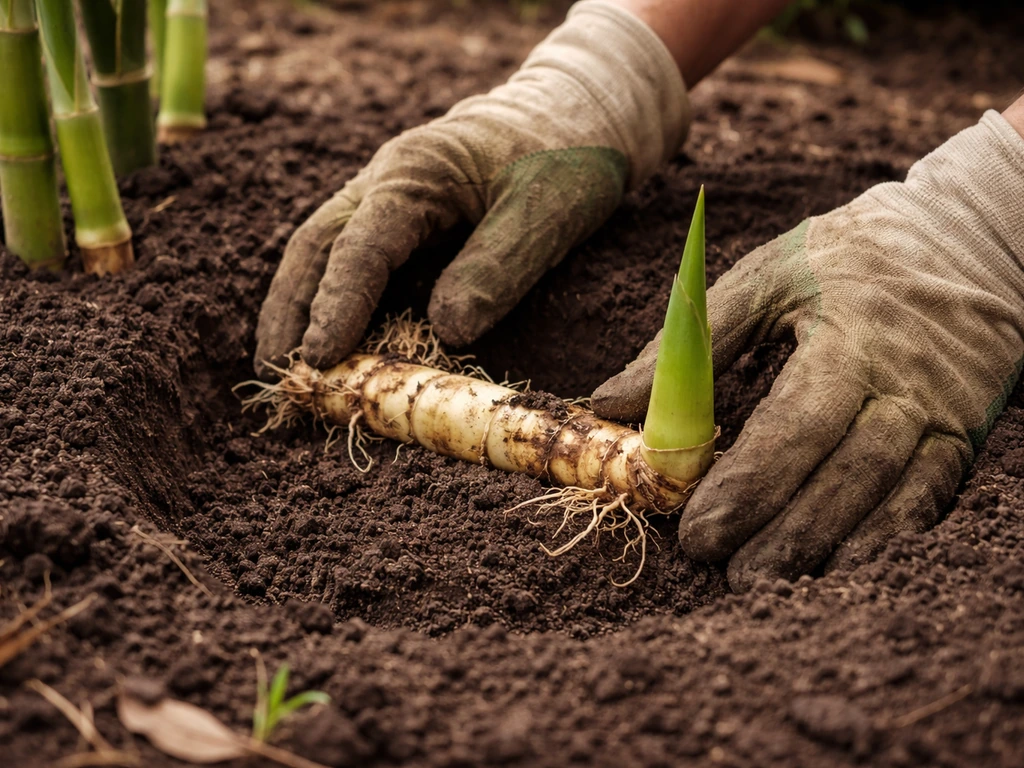
Most bamboo in India is propagated vegetatively, through rhizomes, offsets, or culm cuttings, because seeds are unreliable and infrequent (bamboo can go decades between flowering cycles). When planting a rhizome or offset, place it vertically in the pit and backfill firmly. Water thoroughly immediately after planting. The most important thing in the first few weeks is consistent moisture: watering is essential during the establishment phase, and any prolonged drought during this period can kill the plant before it gets established. February to May is a common nursery and propagation window for many species, but field planting just before or at the start of the monsoon (June) is often the most practical approach because the rain does much of the watering work for you.
After one to two months from planting, start adding organic fertilizer. A good benchmark is 15 to 20 kg of well-rotted manure or compost per clump per year, supplemented with an NPK dose once the plant is establishing actively. Keep weeds down for the first year or two, as young bamboo competes poorly with aggressive ground cover.
What to realistically expect: growth timelines in India
Here's where a lot of beginner bamboo growers get tripped up. The first year after planting is mostly underground. The bamboo is building its rhizome network and root structure, and you'll see modest or slow above-ground growth. Don't panic. This is normal and necessary. By year two you'll see noticeably more culms, and by year three to four most clumping species will be visibly filling out into a proper clump.
Once established, the annual monsoon growth flush is where bamboo earns its reputation. New culms emerge typically between June and October during the rainy season. For a species like Dendrocalamus hamiltonii in high-rainfall Northeast conditions, a new culm can reach its full height of around 14 meters in about 14 weeks during the monsoon. Dendrocalamus asper produces edible shoots that are harvest-ready within 5 to 6 weeks of emerging during the rainy season. The key thing to understand is that each new culm reaches its full diameter and height within a single growing season. Bamboo culms don't thicken or grow taller year after year the way a tree trunk does. What grows in size year over year is the clump itself, producing more and larger culms as the rhizome system matures.
A realistic timeline for a home planting or small farm plot in India looks something like this: year one is establishment with minimal visible growth, year two brings a few strong new culms, year three to four gives you a productive clump with regular culm emergence each monsoon season, and by year five most species are at or near their productive maturity. That's an honest timeline, not a worst-case scenario.
One long-term planning note: be aware of flowering cycles. Dendrocalamus strictus has a gregarious flowering cycle of roughly 25 to 45 years, and Melocanna baccifera around 40 to 50 years. When mass flowering occurs, the entire clump (or even an entire regional population) flowers, sets seed, and often dies. This is decades away for any plant you put in the ground today, but it's worth knowing if you're making a long-term land investment.
How to pick the right bamboo and get started
The single most useful thing you can do before buying any plant or offset is to identify which climate zone your location falls into. Are you in a high-rainfall, humid zone like Assam, Kerala, or the Western Ghats? A medium-rainfall central India zone like Madhya Pradesh or Chhattisgarh? A drier plains region in Rajasthan, Haryana, or western UP? Or a cooler hilly state like Uttarakhand or Himachal? That one answer will narrow your species choice dramatically.
From there, here are practical next steps to get going:
- Check your annual rainfall and average minimum winter temperature against the species tolerance ranges in the table above. These two numbers eliminate most mismatches.
- Contact your nearest ICFRE (Indian Council of Forestry Research and Education) office or state forest nursery. They often sell rhizomes and offsets of locally adapted species at low cost, and they can confirm which species are recommended for your district.
- If you're in a monsoon-reliable region, plan to plant just before or at the onset of the monsoon (late May to June) to take advantage of natural rainfall during the critical establishment phase.
- Prepare your soil with compost, confirm drainage is adequate, and dig pits to at least 45–60 cm depth before your planting date.
- Start with one or two clumps before scaling up. Get comfortable with establishment care, watering during the first dry spells post-planting, and basic fertilization, then expand.
- For container or indoor growing, Bambusa nutans and smaller clumping varieties can work in large pots with very good drainage, but expect slower growth and smaller culm size compared to open ground.
India's climate, especially the monsoon season, is genuinely one of the best natural advantages you can have for growing bamboo. Most of the country sits squarely in the temperature and moisture ranges that bamboo thrives in. The countries often cited as bamboo strongholds, China and Japan, share broadly similar climate dynamics in their bamboo-growing regions. Bamboo can grow in Japan under the right conditions, particularly in regions with warm summers and reliable rainfall China and Japan. With the right species selection and a bit of patience through that first establishment year, bamboo is one of the most rewarding and low-maintenance plants you can grow in India.
FAQ
Does bamboo grow in India even in small pots or backyards, or does it need open land?
It can grow in a container, but choose a clumping species and use a large, well-draining pot (often at least 30 to 50 liters). Container plants still need consistent moisture during establishment, and you should plan to refresh or top up compost annually because nutrients drain faster in pots.
If bamboo grows naturally in India, can I just plant any bamboo I find locally?
Not always. “Local bamboo” can be the right species for your rainfall and temperature, but different species have different growth speed, culm size, and drought tolerance. Ask the supplier what species you are buying, then match it to your zone and elevation before planting.
What’s the biggest reason bamboo fails in Indian gardens, even when the climate seems suitable?
Poor drainage and wrong planting depth. Waterlogged soil suffocates roots, especially during monsoon. When planting rhizomes or offsets, set them properly and avoid covering them too deeply, then ensure the pit has a drainage-friendly mix.
Can bamboo survive Rajasthan-like arid conditions without heavy irrigation?
Many bamboo species will struggle without irrigation in very dry interiors, but some can survive if you provide deep, infrequent watering and wind or sun shelter for the first year. If irrigation is limited, consider shade-providing companion plants and select a more drought-tolerant species rather than trying to force a high-moisture type.
Will bamboo spread aggressively and take over my property in India?
That depends on the species type. Clumping bamboos expand outward slowly, while running types spread through rhizomes and can invade beds and structures. If you are unsure, install a rhizome barrier and maintain a rhizome inspection routine, especially after the first monsoon flush.
When should I expect visible growth after planting bamboo rhizomes or offsets?
Expect most early progress underground. Above-ground growth can look slow for the first year, even in good monsoon conditions. If you see no new culms by year two, check drainage and nutrient timing, but don’t confuse lack of culms with total failure during the first establishment months.
How do I protect bamboo plants during extreme cold snaps in northern hill areas?
Choose species known to handle cooler winters and plant in a sheltered spot (reduced wind exposure, morning sun). Mulch the root zone to moderate temperature swings, and avoid waterlogging during winter because cold plus wet soil is more damaging than cold alone.
Does bamboo flowering mean my clump will die immediately every time it flowers?
Often yes, many species flower gregariously and the clump can decline after seeding, but timing and severity vary by species and local population behavior. Plan for a long-term land decision by setting expectation that a flowering event can affect production, even if it is decades away.
If I want edible bamboo shoots, does the best species for shoots differ from the best species for building culms?
Yes. Some species are selected for shoot yield and taste, while others are valued mainly for culm quality and overall clump productivity. If your goal is food, ask specifically about shoot-bearing species and the typical harvest window in rainy season conditions.
How can I tell whether I should plant bamboo before monsoon or wait for monsoon rains?
Planting just before or at the start of monsoon is usually practical because rain supports establishment. If you plant earlier, you must maintain consistent moisture from planting until rains arrive, otherwise young plants can fail before their rhizome network stabilizes.
Next Article
Does Bamboo Grow in Japan? Regions, Species, and Care Tips
Yes, bamboo grows in Japan. Learn regions, native vs introduced species, and practical care and spread control.