Is bamboo actually illegal to grow in the US?
No, there is no federal law that bans growing bamboo in the United States. The USDA and APHIS regulate the import and interstate movement of plants for phytosanitary reasons, but those rules are about what can cross borders or state lines, not about whether you can grow bamboo in your backyard. So if you searched this expecting a nationwide ban, you can relax. Bamboo is not federally prohibited. That said, "not federally banned" and "completely unrestricted everywhere" are two very different things, and the devil is very much in the local details.
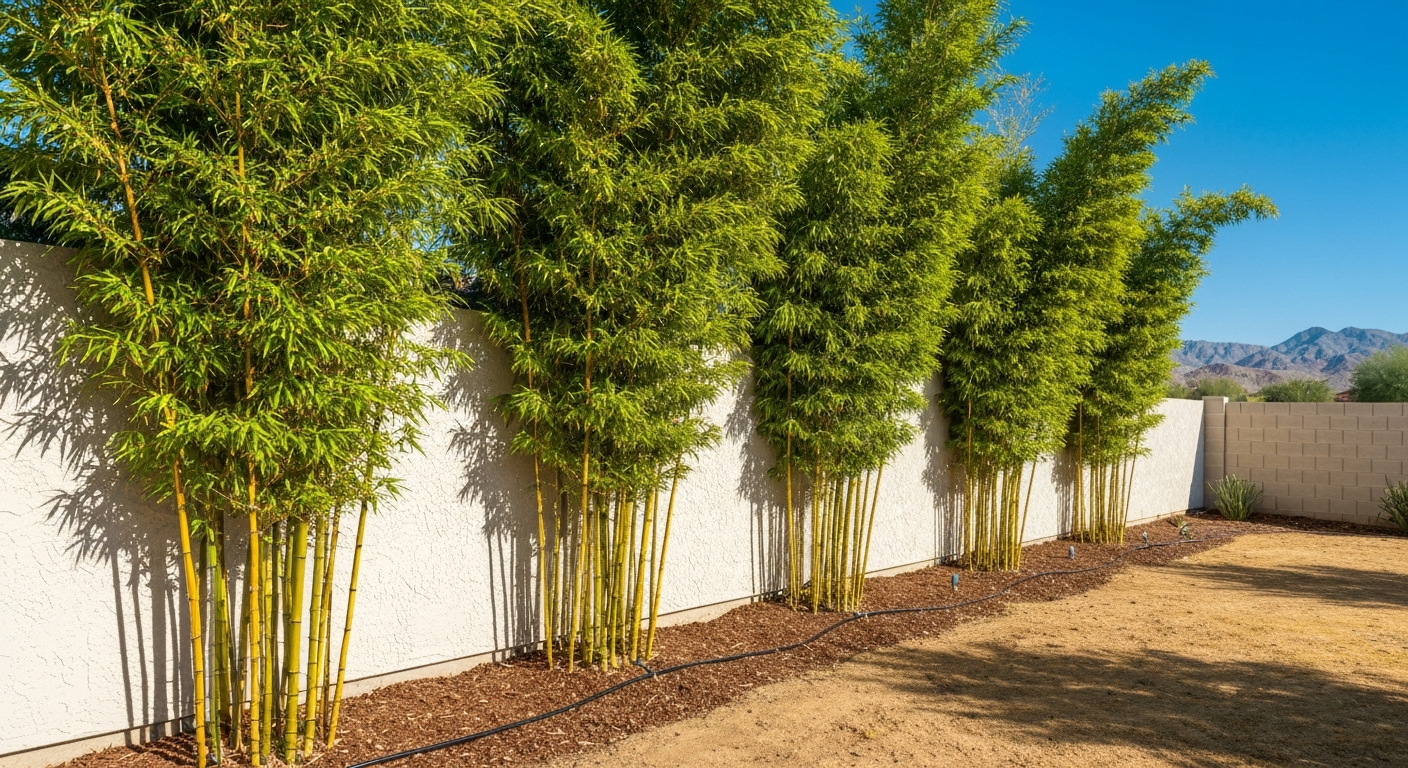
The real legal risk with bamboo almost always comes from one specific type: running bamboo. Running bamboo spreads through underground rhizomes that can travel 10 feet or more in a single season, invade neighboring yards, and crack pavement. That aggressive habit is what triggers local ordinances, HOA rules, and nuisance complaints. Clumping bamboo, by contrast, stays relatively contained and is rarely the target of any restriction. Understanding that distinction is the single most important thing you can do before you plant. Bamboo does grow across the US, but where and how you grow it is where the rules come in.
What California's rules usually look like
California does not have a statewide law that flatly bans bamboo. However, the California Invasive Plant Council explicitly warns against planting running bamboo varieties, listing genera like Phyllostachys and Pseudosasa under their "Don't Plant a Pest" guidance. The UC Integrated Pest Management program similarly treats running bamboo as a woody weed management problem for urban residents, not something you just plant and forget. None of that is a criminal law, but it signals the official state-level attitude: running bamboo is a problem plant.
Where California gets genuinely strict is at the city and county level, and in fire hazard zones. Beverly Hills, for example, explicitly lists "Bamboo" as prohibited vegetation in its Fire Department's fuel modification and prohibited plant list. If your property falls within a fire hazard severity zone, bamboo may be banned outright under defensible-space or fuel modification rules, regardless of what your neighbor grows. That's the kind of local restriction that catches people off guard. If you're in Southern California, the foothills, or anywhere near wildland-urban interface zones, this is a real thing to check before you buy a single plant.
Sacramento County's public law library guidance makes another California-specific mechanism clear: even if bamboo isn't banned in your city, letting it encroach onto a neighbor's property can expose you to a civil nuisance claim. Sacramento County explicitly recommends root barriers for aggressive invasive plants like bamboo, noting the barrier should be on the plant owner's side of the property line. In California's dense suburban neighborhoods, that kind of civil liability risk is just as real as any ordinance violation.
How bamboo restrictions actually work
Most bamboo restrictions in the US are not outright cultivation bans. They are containment requirements. The typical ordinance says something like: you may grow running bamboo, but you must prevent it from spreading beyond your property line, and you are responsible for abating any spread that has already occurred. Fairfax County, Virginia is a useful example. Their running bamboo ordinance, which took effect January 1, treats running bamboo as an undesirable invasive species and requires property owners to contain it using physical barriers. Bamboo in Virginia sits in exactly this category: legal to grow, but legally required to be managed.
Ordinances typically define "running bamboo" by genus, not just by common name. blank" rel="noopener noreferrer">Town of Oyster Bay, New York, for example, has an ordinance listing specific genera like Phyllostachys as running bamboo subject to regulation. This matters because if your bamboo is sold under a vague trade name, you need to know the genus to know whether it falls under the local rule. Growing bamboo in New York is entirely possible, but the ordinance environment means you have to do that homework first.
Enforcement usually happens one of two ways: a neighbor files a complaint with the local code compliance office, or the encroachment creates a civil dispute. Most jurisdictions that have bamboo ordinances publish a complaint intake path. The practical consequence is that ordinances with active enforcement mean you could be ordered to remove bamboo that has spread or install a barrier at your own expense after the fact. Doing the containment upfront is dramatically cheaper.
How to check legality for your specific address today
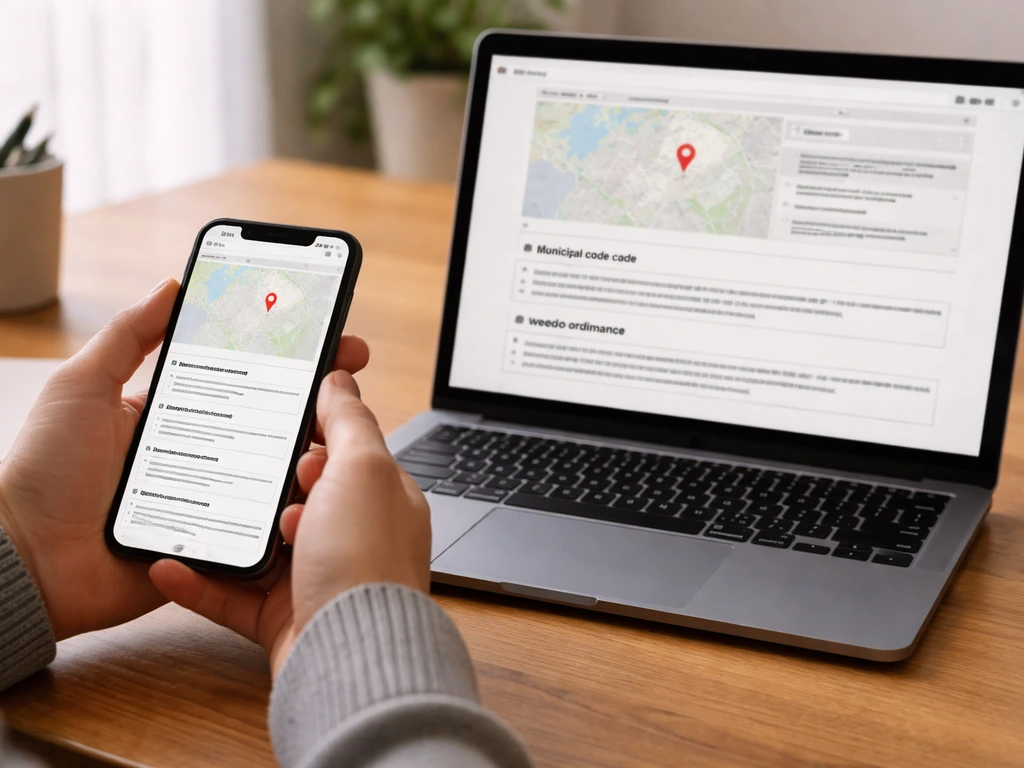
This is the part most people skip, and it's the most important step. Here's a practical sequence you can run through in about 30 minutes: CAL FIRE instructs homeowners to blank" rel="noopener noreferrer">check with local fire departments or fire protection districts for defensible-space or weed-abatement requirements, since vegetation rules can be tied to parcel zones and local enforcement.
- Search your city or county's municipal code online using terms like "running bamboo," "bamboo ordinance," "weed abatement," and "prohibited vegetation." Most municipalities post their codes publicly through platforms like Municode or American Legal Publishing.
- If you're in California, check whether your property is in a Fire Hazard Severity Zone using the California Department of Forestry and Fire Protection (CAL FIRE) map. If it is, look at any fuel modification or defensible space requirements that apply to your parcel.
- Check your HOA's CC&Rs and landscaping rules. HOAs can be more restrictive than local codes and are completely independent of municipal ordinances. Some HOAs ban running bamboo by name; others ban any plant that can spread beyond your lot.
- If you rent, check your lease. Landlords sometimes restrict planting in lease agreements, and bamboo removal is expensive enough that a landlord will notice.
- Contact your local planning or code enforcement department directly if you can't find a clear answer. Ask specifically: "Is running bamboo restricted in my zone, and are there barrier or containment requirements?" Getting this in writing (even an email) is worth doing.
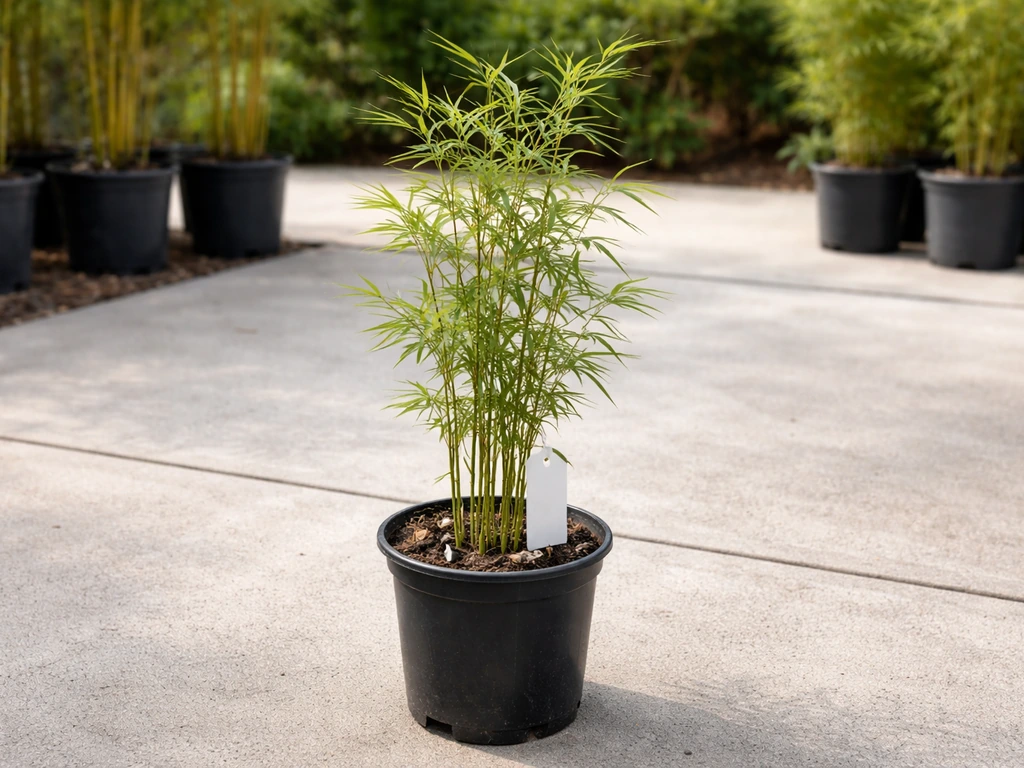
- Identify your bamboo's genus and species before buying. Ask the nursery for the Latin name. If it's in the genus Phyllostachys, Pseudosasa, or another running genus, apply the running-bamboo rules. If it's Fargesia or another clumping genus, the risk profile is much lower.
The states where bamboo enthusiasm runs highest often have the densest patchwork of local rules. Growing bamboo in Pennsylvania or growing bamboo in Massachusetts both involve checking county and municipal codes, because state law in neither place settles the question at the local level.
Your compliant options if bamboo is restricted
Being told bamboo is restricted in your area doesn't mean you can't grow it. It usually means you need to choose a different type, add containment, or change where you're growing it. Here's how those three paths break down.
Clumping bamboo vs. running bamboo
| Feature | Running Bamboo (e.g., Phyllostachys) | Clumping Bamboo (e.g., Fargesia) |
|---|
| Spread mechanism | Aggressive underground rhizomes, spreads laterally | Tight root mass, expands slowly outward from center |
| Typical spread per year | Up to 10+ feet from the plant | A few inches to 1 foot from the center |
| Legal risk | High: often targeted by ordinances | Low: rarely restricted by name |
| Cold hardiness | Many species hardy to USDA Zone 5 or 6 | Many species hardy to Zone 5 or even Zone 4 |
| Barrier required? | Yes, strongly recommended even where legal | Generally not necessary |
| Best use | Screening, large properties with space | Patio, small yards, urban gardens |
If your ordinance restricts running bamboo, switching to a clumping variety like Fargesia robusta or Fargesia nitida is the cleanest solution. These grow well in cooler climates too. Bamboo in New England often means choosing cold-hardy clumping varieties precisely because they perform better in those winters anyway, so the restriction and the climate recommendation point in the same direction.
Root barriers for running bamboo
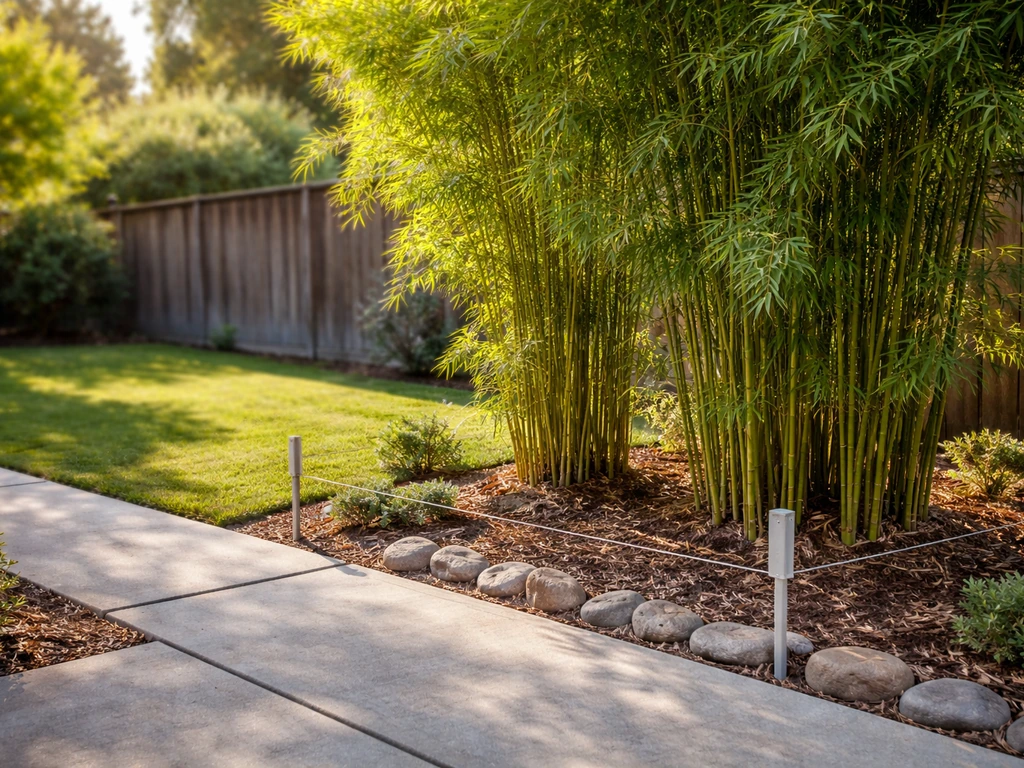
If you're committed to a running variety and it's allowed with containment, installing a physical rhizome barrier is non-negotiable. UC Master Gardeners of Placer County are explicit about this: running bamboo should be planted with an effective underground barrier, and containment depth matters. A properly installed high-density polyethylene barrier, 60 to 80 mil thickness, buried at least 24 to 30 inches deep with 2 inches above the soil surface, will stop most rhizome spread. The barrier needs to be checked annually because rhizomes that reach the top can flip over it. This is maintenance you commit to for as long as the bamboo is in the ground.
Container growing
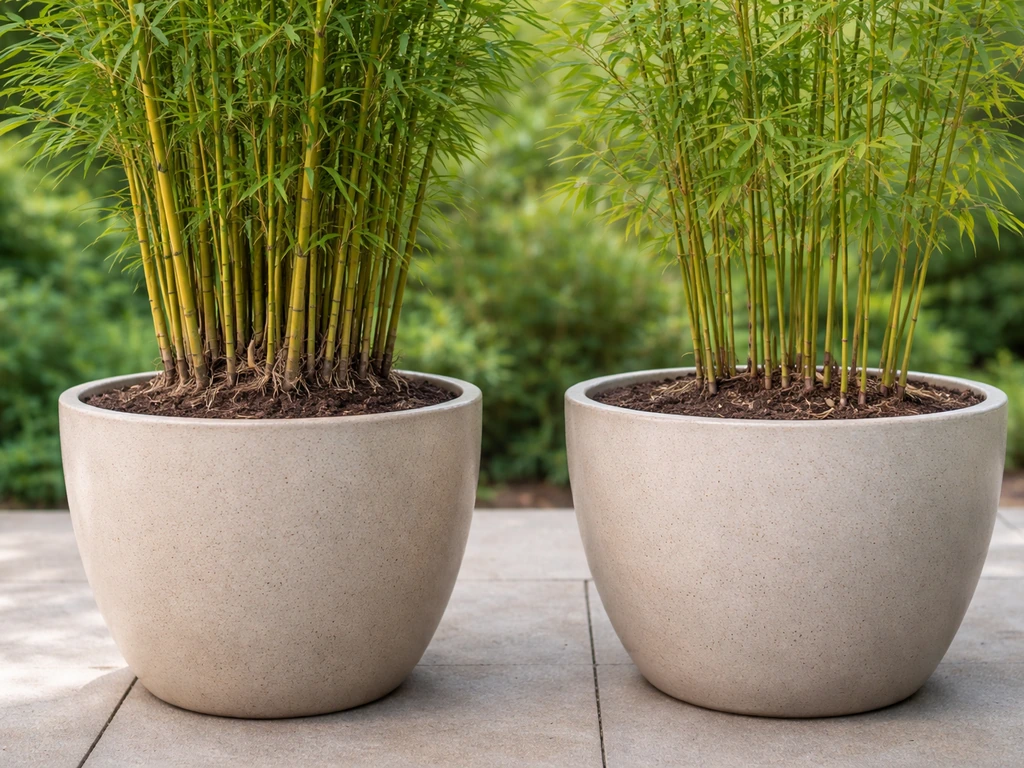
Container growing is a legitimate option for both running and clumping bamboo, and it sidesteps most ordinance concerns entirely since there's no soil spread possible. Large half-barrel planters or dedicated bamboo containers work well for smaller running varieties. The trade-off is watering frequency (containers dry out faster) and the need to divide the root mass every two to three years. Growing bamboo in Maine, for example, often makes more sense in containers both for the cold-hardiness management and because containment is built into the method.
What to confirm before you plant
Here's the practical checklist before any bamboo goes in the ground. Think of this as the five things that protect you legally and practically:
- Know your bamboo's genus and species. "Bamboo" on a nursery tag is not enough. You need the Latin name to determine whether it's running or clumping and whether it falls under any local ordinance definition.
- Check your municipal code for bamboo, running bamboo, prohibited vegetation, and weed abatement rules before purchasing. Do this online in 15 minutes, not after the plant is in the ground.
- If you're in a California fire hazard severity zone, verify your parcel's defensible space requirements. Beverly Hills-style prohibited vegetation lists are tied to those zones.
- Review your HOA rules in writing. Verbal confirmation from a neighbor or board member isn't binding. Get the CC&R section in hand.
- If you're planting running bamboo even where it's legal, plan and budget for the barrier installation before you plant. Retrofitting a barrier around established running bamboo is significantly harder and more expensive than installing it at planting time.
- Don't assume your bamboo situation mirrors your neighbor's. Local ordinances can apply differently based on zone, lot size, or proximity to property lines. Your situation is your responsibility to verify.
The clearest mistake people make is assuming that because bamboo is sold freely at nurseries, it must be unrestricted. That's not how local ordinances work. A nursery in Fairfax County can legally sell you running bamboo while the county has an active ordinance requiring you to contain it. The sale is legal; the uncontained planting is not. Treat the nursery purchase and the legal compliance question as completely separate things.
The bottom line: bamboo is not illegal to grow in the US, but running bamboo is increasingly regulated at the local level through containment ordinances, nuisance law, fire safety codes, and HOA rules. Clumping bamboo is almost always the path of least resistance. If you're set on running bamboo, do the local code check first, install a proper barrier, and keep the rhizomes on your side of the property line. That combination keeps you legal, keeps your neighbors happy, and keeps the bamboo from becoming a problem you spend years trying to fix.