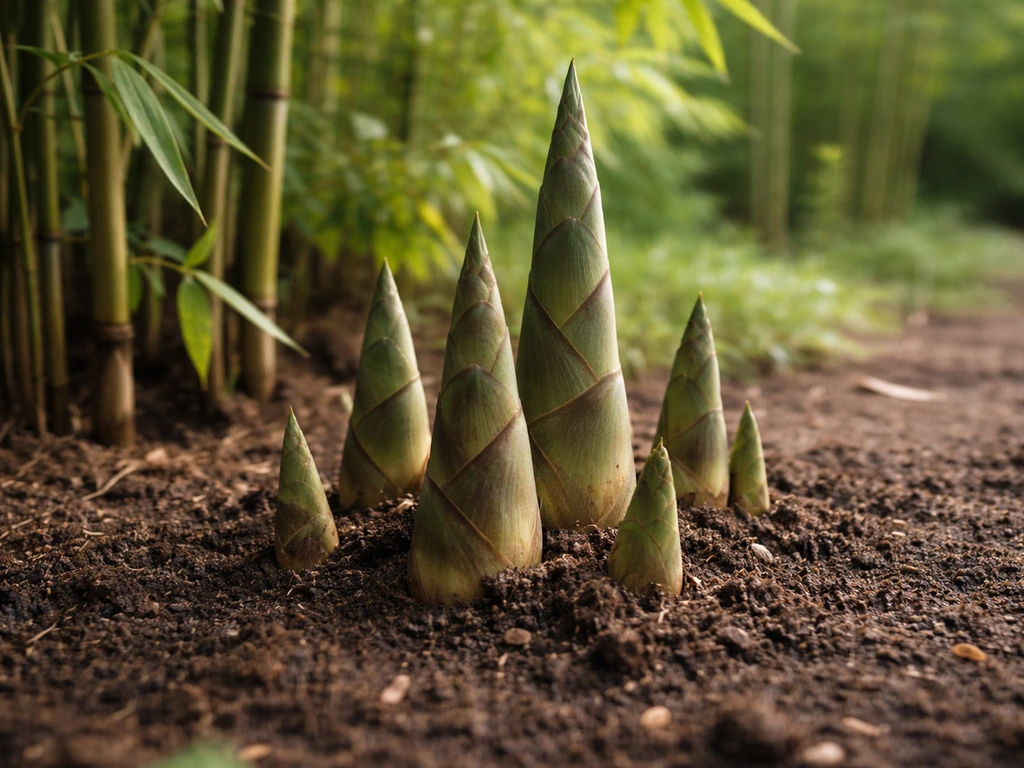
Bamboo grows in a remarkably wide range of conditions, from tropical lowlands to mountain slopes at 13,000 feet, and from rainy rainforests to drier temperate gardens. If you live anywhere in USDA Hardiness Zones 5 through 10, there is almost certainly a bamboo species that will grow for you. The key is matching the right species to your actual climate, light, and soil, rather than assuming all bamboo has the same requirements.
Does Bamboo Grow in Your Climate, Soil, and Pots?
Marcus Hartwell
18 May 2026
Where bamboo naturally grows
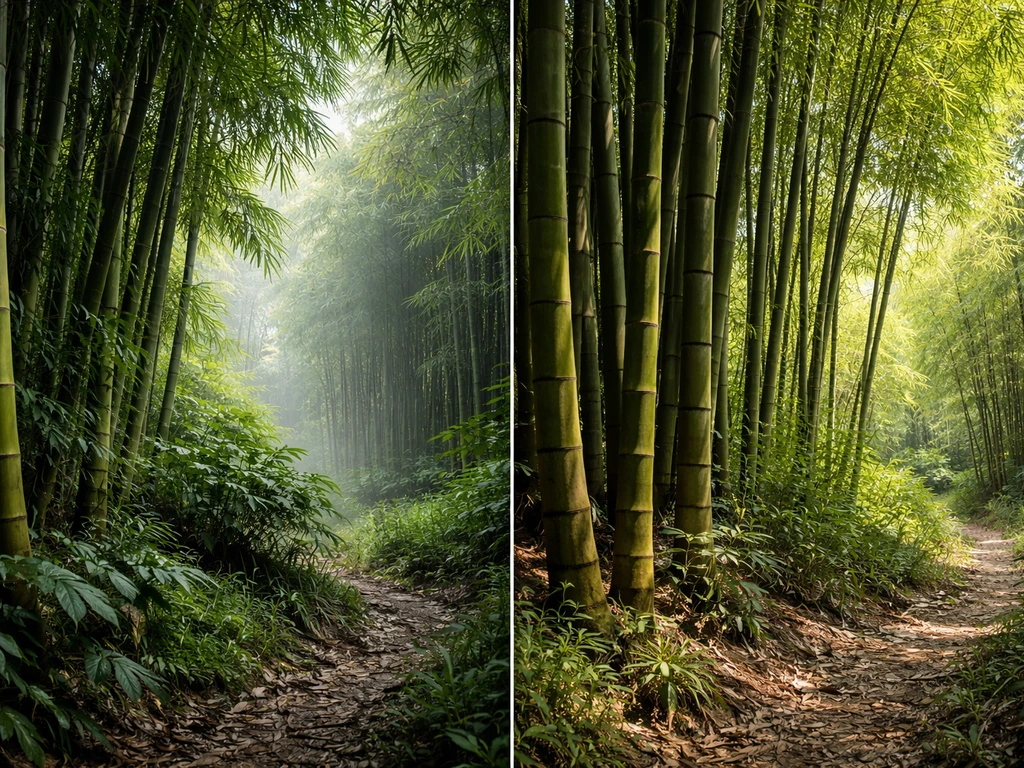
Bamboo is native to every continent except Europe and Antarctica. In the wild it grows across a staggering range of environments: tropical Asia, subtropical Africa, the temperate mountain forests of China and Japan, and even parts of the Americas. Annual rainfall in bamboo's natural range runs from around 30 inches (76 cm) all the way up to 250 inches (635 cm), which tells you something important: bamboo is not locked into one narrow climate niche. What most wild bamboo habitats share is a forest-type environment with organic-rich soil, decent moisture, and some shelter from extreme drying winds.
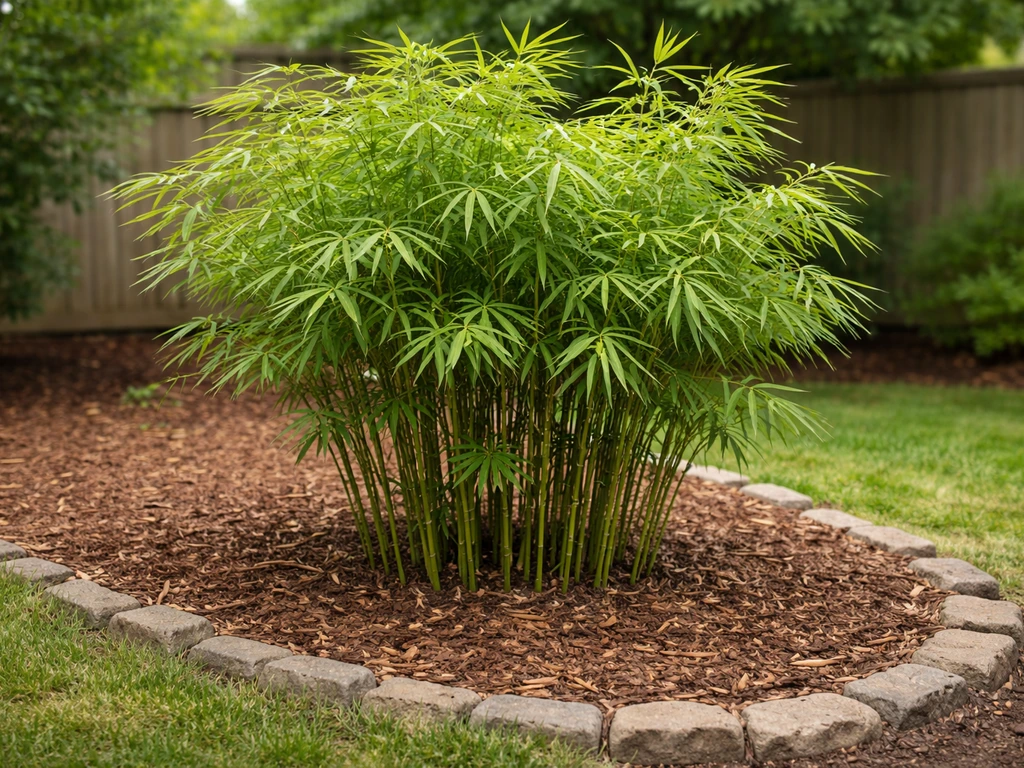
Before anything else, it helps to know whether you are working with a clumping or running bamboo. Clumping types (sympodial) expand slowly outward from a central point, making them much more manageable in most gardens. Running types (leptomorph) send rhizomes outward underground, sometimes more than 100 feet from the mother plant, which is why they can seem invasive if you do not plan for containment. This distinction matters for where and how you grow bamboo, not just how you contain it.
Climate, temperature, and light requirements
Cold tolerance and hardiness zones
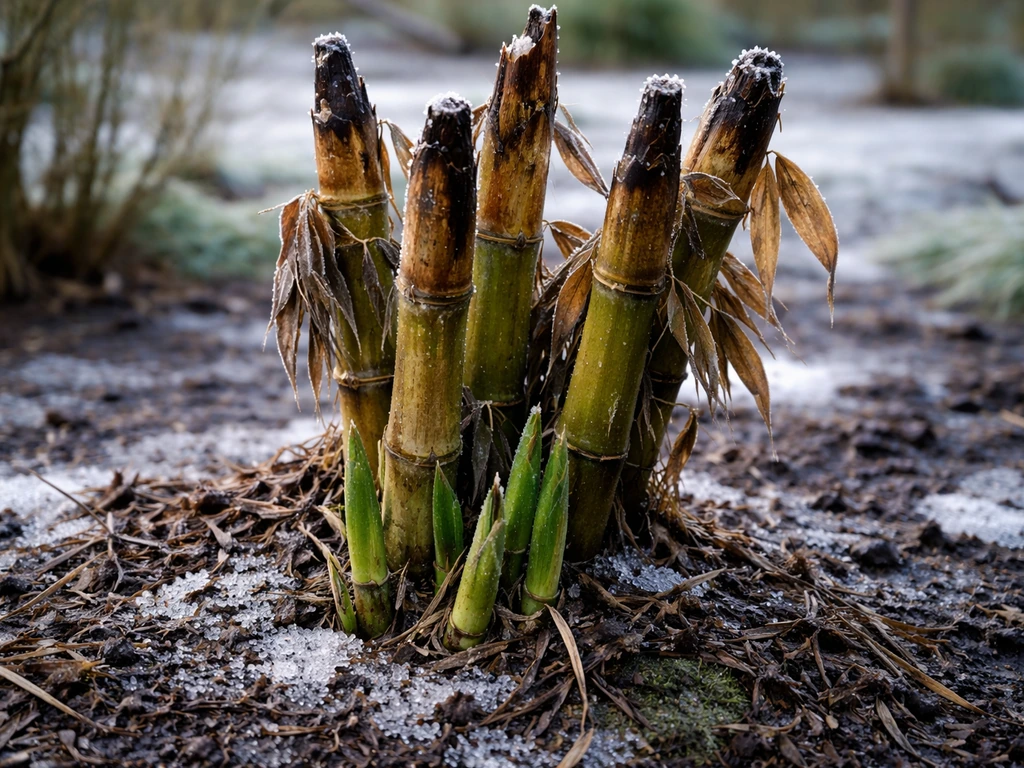
Cold tolerance is probably the biggest deciding factor for most gardeners. is bamboo easy to grow cold tolerance is probably the biggest deciding factor for most gardeners. The good news is that some bamboos are genuinely cold-hardy. Fargesia murielae (Umbrella bamboo) is rated for USDA Zones 5 through 9 and survives winters that would kill most tropical plants. Fargesia nitida has been documented surviving as low as negative 20°F. Running bamboos, as a group, tend to be hardier in cold than most clumping types, with Fargesias being the notable exception among clumpers.
When a hard freeze does hit, you may see aboveground culms die back completely, but that does not mean the plant is dead. The rhizome mass underground typically survives colder temperatures than the canes above ground, and new shoots will push up in spring if the roots pulled through. So if bamboo looks dead after a brutal winter, give it until late spring before writing it off.
Sunlight needs
Most large bamboo species grow best in full sun. If you have a spot that gets at least six hours of direct sun per day, you are in good shape for the majority of species. Smaller or shade-tolerant bamboos, like many Fargesias, can handle partial shade and actually prefer some afternoon shade in very hot climates. As a general rule, the bigger the bamboo you want, the more sun it needs. Tall, fast-growing running bamboos in particular reach their full potential in open, sunny spots.
Wind exposure
Bamboo handles wind better than many plants, but very exposed, windy sites create two problems: the canes dry out faster, and tall culms can whip and snap. Mulching heavily (more on that below) helps with moisture stress. In especially windy spots, some growers stake or guy taller canes while they establish. A windbreak on the prevailing wind side is worth considering if you are in a genuinely exposed location.
Soil and growing media: what bamboo actually wants
pH and fertility
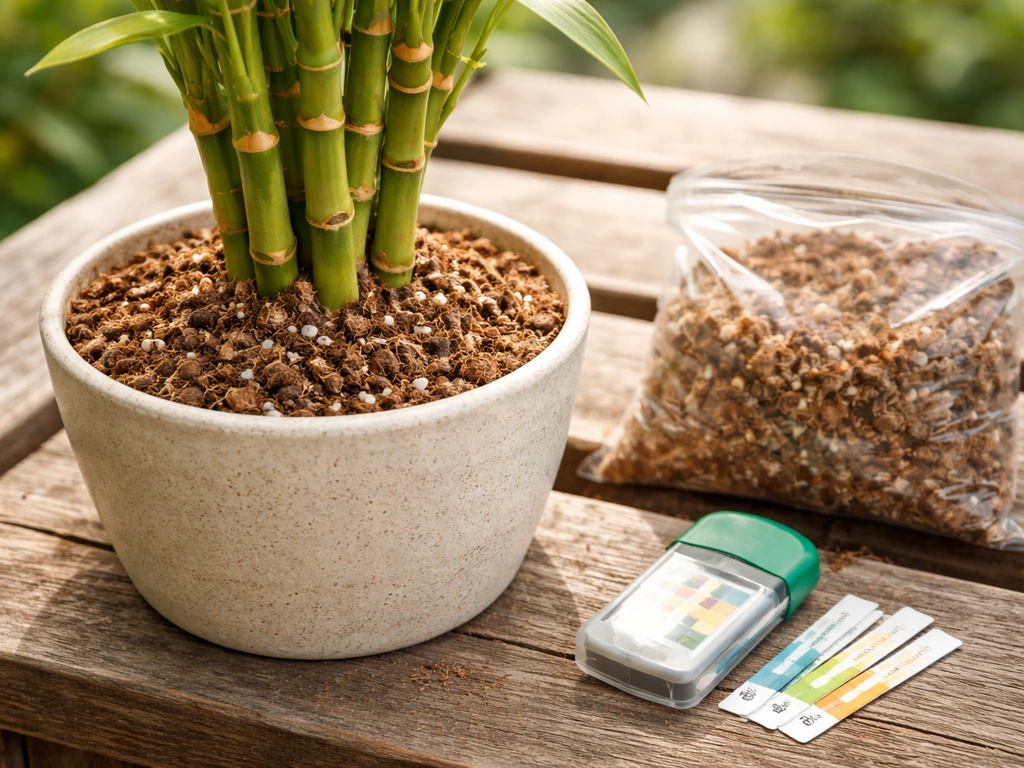
Bamboo thrives in slightly acidic soil with a pH of roughly 5.5 to 6.5. Some species tolerate a wider range, down to about pH 5.0, but staying in that 5.5 to 6.5 window keeps nutrients most available and growth most consistent. If you are unsure where your soil sits, a basic soil test from your local cooperative extension service will tell you exactly what you are working with and what amendments you need to adjust pH or add nutrients. Do not skip this step if your soil is unknown, especially if you have clay or sandy extremes.
Drainage is non-negotiable
If there is one thing bamboo will not tolerate, it is sitting in waterlogged soil. Poor drainage kills bamboo roots fast. The simplest check: after a normal rain, does water pool on the surface for more than 30 minutes? If yes, you have a drainage problem you need to address before planting. Amending with organic matter, building a raised bed, or choosing a better-draining spot are all practical fixes. Bamboo is a forest plant that likes consistent moisture, but it needs that moisture moving through the soil, not stagnating around its roots.
Mulching matters more than most people realize
Bamboo is described as a forest-type plant for a reason: in nature, it grows in soil blanketed by organic debris. Replicating that with a 2 to 3 inch layer of coarse mulch over the planting area does a lot of work: it retains moisture, moderates soil temperature, suppresses weeds, and slowly adds organic matter as it breaks down. This one step makes a measurable difference in how fast bamboo establishes and how well it handles dry or hot periods.
Where you can actually grow bamboo at home
In-ground planting in the yard
This is where bamboo does best, full stop. In the ground, rhizomes have room to establish, the soil mass insulates roots from temperature swings, and the plant can draw on a larger nutrient and moisture reservoir. For running bamboos in the yard, you need to plan for containment from day one. Rhizome barriers should be buried at least 24 inches deep (with the top edge sitting about 2 inches above grade), and trenching along the barrier annually keeps rhizomes from escaping over the top. Clumping bamboos in the yard need much less management and are the better choice if you do not want to deal with barriers.
Raised beds
Raised beds are an underrated option for bamboo, especially if your native soil has drainage problems or is heavily compacted. A raised bed gives you control over your growing mix and naturally improves drainage. The loose, fertile topsoil in a well-built raised bed is actually excellent for rhizome development. If you use a raised bed for running bamboo, the bed walls act as partial containment, but rhizomes can still escape underneath if the bed is open-bottomed, so lining the base with a barrier material or using a closed-bottom design helps.
Pots and containers
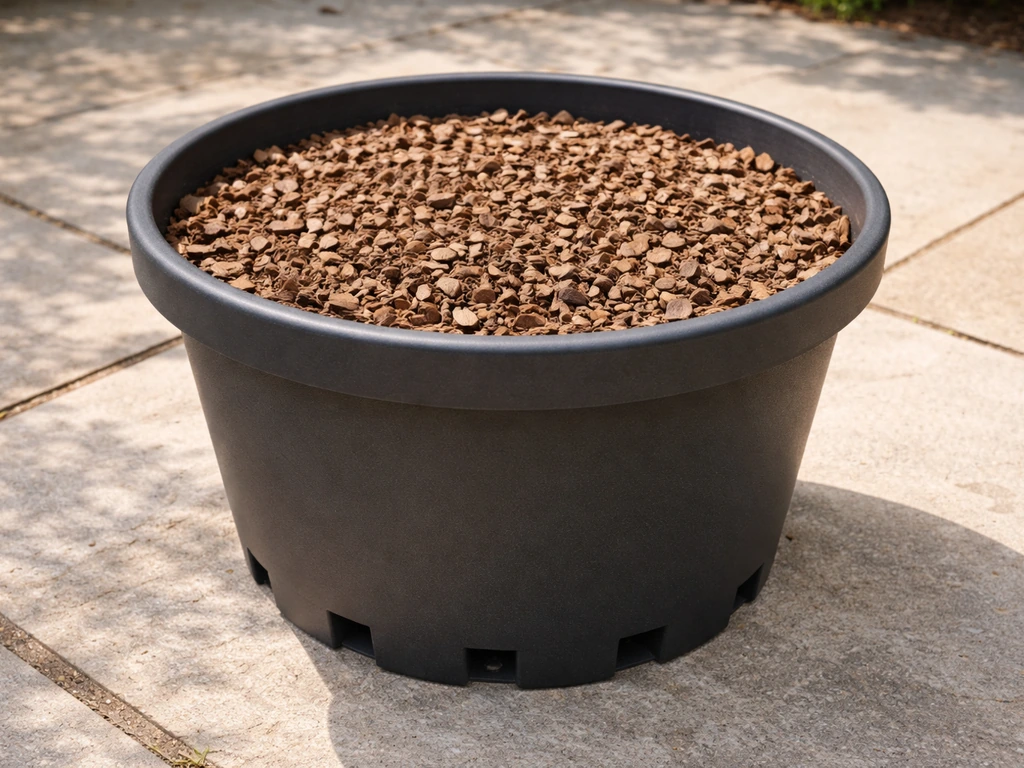
Bamboo can do well in containers if you get the setup right. The minimum pot size for most species is around 20 gallons, roughly 24 inches wide by 18 inches deep. Drainage holes are absolutely essential; a pot sitting in a saucer that collects water will rot the roots. Do not fill containers with native garden soil because it compacts in a pot and blocks drainage. Use a proper container mix amended with about 15% perlite or pumice for aeration. Repot or divide before the plant becomes severely root-bound, and water more frequently than you would in-ground, typically one to two times per week for the first several months and then as needed once established.
One important cold-weather note for containers: roots in pots freeze much faster than roots in the ground because there is no surrounding soil mass for insulation. In cold climates, move containers to a sheltered spot, an unheated garage or against a south-facing wall, before hard freezes arrive.
Indoors and in greenhouses
Genuine bamboo (not lucky bamboo, which is actually a Dracaena and a completely different plant) is a challenging indoor subject long-term. Most species need more light than a typical indoor environment provides. A greenhouse with good light is a more realistic setting, and supplemental LED grow lights can fill the gap during short winter days. If you want a bamboo look indoors, a container-grown clumping bamboo near a very bright south or west window can work for a season, but it will eventually need to go outside or into a proper greenhouse to thrive.
Matching bamboo to your conditions: quick checks and next steps
Here is how to assess whether your situation will work for bamboo, and what to do about it if there are gaps. If you are curious what bamboo looks like when it starts to grow, new shoots usually emerge from the ground and expand quickly into fresh culms assess whether your situation will work for bamboo. If you are wondering when bamboo grows, the growing season usually starts in spring and can continue through summer depending on the species and your local climate. To understand how do bamboo grow, start by matching the right species to your climate, then focus on sun, soil pH, and drainage.
| Condition to check | What you want | If it falls short |
|---|---|---|
| USDA Hardiness Zone | Zone 5 or warmer for most species | Choose Fargesia nitida or F. murielae for Zones 5–6 |
| Sunlight | 6+ hours direct sun for large species; partial shade OK for Fargesias | Move to sunnier spot or choose a shade-tolerant clumper |
| Soil drainage | No pooling 30 min after rain | Amend with organic matter, build a raised bed, or pick a better-draining location |
| Soil pH | 5.5–6.5 ideally | Get a soil test; add sulfur to lower pH or lime to raise it |
| Wind exposure | Moderate shelter preferred | Mulch heavily; stake tall canes; add a windbreak |
| Space / spread control | Enough room or containment plan | Use clumping species or install a 24-inch rhizome barrier before planting |
Concrete next steps to get started
- Find your USDA Hardiness Zone and use it to narrow down species with the right cold tolerance before you buy anything.
- Run a simple drainage test: water your proposed planting spot thoroughly and check whether it drains within 30 minutes. If not, fix that first.
- Get a basic soil test through your local cooperative extension service to confirm pH and find out if you need amendments.
- Decide between clumping and running bamboo based on how much space you have and how much ongoing management you want to do.
- If going in-ground with a running type, order your rhizome barrier material before the plant arrives. A 24-inch barrier installed at planting is far easier than trying to contain an established grove.
- Mulch 2 to 3 inches deep over the root zone immediately after planting, and water one to two times per week for the first three to six months until established.
The bottom line is that bamboo is far more adaptable than most people expect, but it is not foolproof. Get the drainage, pH, and cold-hardiness match right from the start, and bamboo will reward you quickly. Skip those basics and you will spend years wondering why it never really took off.
FAQ
Does bamboo grow in winter, or does it die back?
Yes, but you need to match the species to your winter lows. In-ground bamboo can survive dieback above ground and regrow if the rhizomes stay alive, while containers freeze faster, so in cold climates you often need to move pots to shelter before hard freezes.
Why does my bamboo look dead after winter, and when should I expect new shoots?
Bamboo usually starts new growth in spring, but it is not guaranteed to show shoots right away after a cold winter. Give established plants time until late spring, especially after a hard freeze, because new culms often emerge from surviving rhizomes.
Is lucky bamboo the same as garden bamboo, and will it grow the same way?
No, “bamboo” can mean very different plants. Lucky bamboo sold for indoors is typically Dracaena, not true bamboo, and it will not grow like garden bamboo outdoors. If you want real bamboo, check that the plant is labeled as a true bamboo species (often genus like Fargesia or Bambusa).
Will bamboo take over my yard, especially if I plant it in one spot?
It depends on the type and your definition of “invasive.” Running bamboo can send rhizomes far from the parent plant, so containment is required even if you start with a small clump. Clumping bamboo spreads slowly outward and is usually far easier to control.
How can I tell if my soil drainage is good enough for bamboo?
A simple rule is to test after heavy rain, not after watering by hand. If you see pooling for more than about 30 minutes, that is a drainage red flag. Improving drainage (raised bed, amended soil, better site selection) before planting prevents root failure.
If my soil pH is off, can bamboo still grow, or will it fail?
Bamboo can tolerate some variation, but the long-term risk is either nutrient lockout or weak growth if pH is far off. If your pH is outside the roughly 5.5 to 6.5 target, correct it with appropriate amendments and recheck with a soil test rather than guessing.
Can bamboo grow in partial shade?
Probably, if the site gets enough direct sun and the species is shade-tolerant. Many large bamboos want at least around six hours of direct sun, while some clumping types like Fargesias can handle partial shade and may prefer afternoon shade in very hot areas.
What are the most common container mistakes that stop bamboo from growing?
For containers, pick a large pot and prioritize drainage. Most species do fine starting around a 20-gallon size, use a container mix with added perlite or pumice for aeration, and never let the pot sit in a saucer of water.
How should I care for bamboo in pots during cold weather?
Yes, but you usually need to adjust your approach because bamboo in pots can dry out faster and also freeze faster. In cold weather, shelter the pot (unheated garage or near a warm wall) before hard freezes, and monitor watering more closely than you would in-ground.
Can bamboo grow indoors long-term without a greenhouse?
Container-grown clumping bamboo can work indoors temporarily if the light is very strong, such as a bright south or west window, but most bamboo species eventually need outdoor conditions or a greenhouse. If shoots slow down or leaves thin, plan to move it to an outdoor spot.
If I plant running bamboo with a barrier, what maintenance should I do each year?
You typically do not want to plant running bamboo without a barrier plan, and you should check containment gaps routinely. Annual trenching along the barrier helps keep rhizomes from slipping over the top or finding weak spots around edges.
Citations
Bamboo grows across a very wide elevation range—from sea level up to about 13,000 feet (3,962 meters).
https://animals.sandiegozoo.org/plants/bamboo
Bamboo is associated with annual rainfall roughly in the range of ~30 inches (76.2 cm) to ~250 inches (635 cm).
https://animals.sandiegozoo.org/plants/bamboo
Bamboo species are categorized as “clumping” (sympodial/pachymorph) or “running” (leptomorph), which affects how they spread in landscapes.
https://extension.arizona.edu/sites/extension.arizona.edu/files/attachment/Bamboo.pdf
Running bamboos’ underground rhizomes can spread more than 100 feet from the mother plant; clumping bamboos produce culms at the tip of the rhizome clump.
https://homegarden.cahnr.uconn.edu/factsheets/bamboo/
Bamboo described as a forest-type plant; it “thrives when well mulched.”
https://animals.sandiegozoo.org/plants/bamboo
Bamboo’s rhizome growth habit (running vs clumping) is strongly tied to containment difficulty and where it can persist/spread in the landscape.
https://homegarden.cahnr.uconn.edu/factsheets/bamboo/
For new plantings, bamboo is recommended to be watered 1–2 times per week (depending on soil type) for the first 3–6 months until established.
https://extension.uga.edu/publications/detail.html?number=B1357
A common pattern in cold events: the root mass often survives colder temperatures even when culms die back, and new shoots can emerge in spring if the rhizomes survive.
https://www.bamboogarden.com/cold-hardy-bamboo
The fact sheet notes that some bamboos are cold tolerant around USDA Hardiness Zone 5 while others are less tolerant (species selection matters).
https://extension.arizona.edu/sites/extension.arizona.edu/files/attachment/Bamboo.pdf
Umbrella bamboo (Fargesia murielae) is listed as USDA plant hardiness zone 5 through 9 (useful for cold-tolerance matching).
https://en.wikipedia.org/wiki/Fargesia_murielae
RHS provides minimum temperature ranges (in °C) for Fargesia murielae as part of its hardiness information.
https://www.rhs.org.uk/plants/details?plantid=786
Many hardier bamboo cultivars show survival/escape via rhizomes even when aboveground culms are damaged or die back.
https://www.bamboogarden.com/cold-hardy-bamboo
The resource notes some clumping bamboos can survive very low temperatures (example given: Fargesia nitida stated as surviving as low as negative 20°F).
https://www.bamboogarden.com/browse-hardy-clumping-bamboo
Cold-hardiness differs by growth habit: the nursery notes that except for Fargesias, clumping types tend to be less cold-hardy than running bamboos.
https://bamboosourcery.com/project/runners-vs-clumpers/
Many large bamboos do best in full sun (placement guidance).
https://www.americanbamboo.org/bamboo-planting-and-care/
The same guidance also notes that tall/slender bamboos may need staking/guying to handle stress once established.
https://www.americanbamboo.org/bamboo-planting-and-care/
The extension guidance emphasizes correct rhizome barrier setup details; successful establishment depends on long-term rhizome control (relevant where wind/canopy shelter doesn’t address belowground spread).
https://extension.umd.edu/resource/containing-and-removing-bamboo/
Bamboo “thrives when well mulched,” which can reduce soil moisture stress and help with stress tolerance under sun/wind conditions.
https://animals.sandiegozoo.org/plants/bamboo
A common cultivation guideline: bamboo thrives in well-draining, slightly acidic soil with pH roughly 5.5–6.5 (and high organic matter).
https://bamboohq.co/growing-bamboo/soil-fertilizer-seasonal/
This cultivation page states a suitable bamboo soil pH range as about 5.0–6.5 (with some species able to grow even at pH ~3.5).
https://www.bambooinfo.in/cultivation/soil-requirement-for-bamboo-cultivation.asp
The same guide stresses that drainage is critical; if water pools after rain, drainage is inadequate.
https://bamboohq.co/growing-bamboo/soil-fertilizer-seasonal/
The PDF recommends mulching with about 2–3 inches of coarse mulch over the planting bed.
https://www.rockmountain.com/assets/pdf/RockMountainProducts-2024PlantingCaringForAndControllingBamboo.pdf
The document highlights that if bamboo is thinned/harvested, leaving enough canes to shade the ground can prevent drying.
https://nrcs.usda.gov/plantmaterials/lapmcpg7408.pdf
The leaflet mentions improving rhizome establishment with site prep and states a depth recommendation of about 15 cm (about 6 inches) to improve soil moisture/ensure better rhizome growth (context: planting/cultivation).
https://www.bambooinfo.in/publications/pdf-p/bamboo-cultivation-leaflet-en.pdf
Container success depends on drainage: containers must have drain holes and should not sit in saucers where water collects; good drainage is “extremely important” for containers.
https://bamboosourcery.com/wp-content/uploads/2017/03/Bamboo-in-Planters-and-Containers-Special-Considerations-2017.pdf
The container guidance recommends dividing or re-potting into a larger container before the plant becomes root-bound (to avoid confinement stress).
https://bamboosourcery.com/wp-content/uploads/2017/03/Bamboo-in-Planters-and-Containers-Special-Considerations-2017.pdf
A “minimum pot size” guideline provided: about 20 gallons for most species (with an example dimension range around 24 in wide x 18 in deep).
https://plantnative.org/growing-bamboo-in-pots.htm
This guide states a container mix ingredient guideline including ~15% perlite or pumice to improve drainage/aeration.
https://plantnative.org/growing-bamboo-in-pots.htm
The container guidance warns against filling containers with native landscape soil because it can compact and hinder drainage; recommends a container-appropriate mix for drainage/consistent moisture.
https://www.wilsonbrosgardens.com/planting-bamboo-in-containers.html
For barrier installation, the site describes a typical installation concept: e.g., using a 24-inch rhizome barrier with a trench depth about 22 inches and barrier rising about 2 inches above grade (shows depth constraints relevant to in-ground success).
https://www.rhizomebarrier.com/how-to-contain-bamboo-a-helpful-illustrated-guide/
For running bamboos, the extension emphasizes digging and barrier approach details; successful containment is tied to barrier placement/installation so rhizomes can’t bypass along the barrier edges.
https://extension.umd.edu/resource/containing-and-removing-bamboo/
The extension blog states barriers must be buried to a depth of at least 2 feet to prevent rhizomes from growing underneath the barrier.
https://www.aces.edu/blog/topics/forestry-wildlife/bamboo-growth-and-control/
A PDF on containment discusses raised bed/berm approaches; it includes planting-on-berms/raised beds as useful because loose, rich topsoil can support healthy growing conditions for running bamboo.
https://www.cga.ct.gov/2014/envdata/tmy/2014SB-00072-R000219-Holly%20Johnson%2C%20Summer%20Hill%20Nursery%20Bamboo%2C%20Options%20data-TMY.PDF
The PDF gives establishment and control advice (including mulch and barrier-related depth guidance elsewhere in the document), intended to improve survival by managing moisture and rhizome spread.
https://www.rockmountain.com/assets/pdf/RockMountainProducts-2024PlantingCaringForAndControllingBamboo.pdf
The UCANR myth-buster material explicitly notes “Lucky bamboo is NOT a bamboo” (it’s a Dracaena), which is relevant to indoor feasibility discussions because people often misapply bamboo care indoors.
https://ucanr.edu/sites/ucmgplacer/files/178847.pdf
RHS includes minimum temperature ranges (°C) for a cold-hardy clumping bamboo type, which helps determine what’s realistically possible in a greenhouse/indoors without winter exposure to lethal cold.
https://www.rhs.org.uk/plants/details?plantid=786
A greenhouse technique guide notes that for plants requiring high light intensity, supplemental LED grow lights may be considered—especially during shorter winter days.
https://www.compostcheck.com/academy/home-gardening/advanced-techniques-for-building-a-bamboo-and-pvc-greenhouse
Container roots freeze more readily than in-ground soil; the extension notes freezing can be prevented by having a large soil mass in a well-insulated container located in a protected area.
https://extension.illinois.edu/container-gardens/overwintering-plants-containers
Above-ground container roots can be about as cold as winter air; practical overwintering guidance includes protecting container roots and watering appropriately before freeze.
https://extension.psu.edu/overwintering-plants-in-containers/
After planting, establishing irrigation frequency (1–2x weekly for 3–6 months) is a key early success factor, which is especially relevant for indoor/greenhouse transplants when potting mix dries faster.
https://extension.uga.edu/publications/detail.html?number=B1357
The Clemson extension material emphasizes that pH affects nutrient availability (general soil principle); soil testing can guide amendments.
https://media.clemson.edu/public/extension/community_gardening.pdf
UMN Extension recommends using soil test services (their lab and local county extensions) to get actionable soil and amendment information.
https://extension.umn.edu/managing-soil-and-nutrients/soil-testing-lawns-and-gardens
Clemson’s extension guidance states that soil tests can determine if fertilizer is needed and also identify amendments needed to adjust soil pH and nutrient availability.
https://www.clemson.edu/extension/carolinayards/action/maintain-healthy-soil.html
A practical success checklist includes soil drainage (no pooling after rain) plus aiming for slightly acidic pH (about 5.5–6.5) and adequate organic matter/mulch.
https://bamboohq.co/growing-bamboo/soil-fertilizer-seasonal/
Bamboo is described as a forest-type plant that thrives with mulching, which supports a practical “next step” if soil moisture/stress is the issue.
https://animals.sandiegozoo.org/plants/bamboo
Shade from remaining canes/thinning management is highlighted as a way to reduce soil drying (useful as an action when conditions are too hot/dry or wind-exposed).
https://nrcs.usda.gov/plantmaterials/lapmcpg7408.pdf
The extension PDF notes species cold tolerance varies (some cold tolerant around USDA Zone 5), reinforcing the “match bamboo to USDA zone/frost risk” step.
https://extension.arizona.edu/sites/extension.arizona.edu/files/attachment/Bamboo.pdf
The nursery provides decision context: running vs clumping affects cold hardiness tendencies (clumpers generally less cold hardy, except Fargesias) and determines whether you need containment.
https://bamboosourcery.com/project/runners-vs-clumpers/
The “if freeze damage occurs” management concept: aboveground culms may die back, but rhizomes/root mass surviving allows new shoots to emerge in spring (so gardeners should assess the rhizome base, not assume total loss).
https://www.bamboogarden.com/cold-hardy-bamboo
The extension notes that containment via rhizome barriers can be an ongoing management requirement (where that’s the limiting success factor, the next step is containment trenching rather than only changing light/water).
https://extension.umd.edu/resource/containing-and-removing-bamboo/
Next Article
When Does Bamboo Grow? Timing, Cycles, and How to Boost It
When bamboo grows: seasonal shoot cycles, indoor vs outdoor timing, growth timelines, and fixes to restart stalled growt