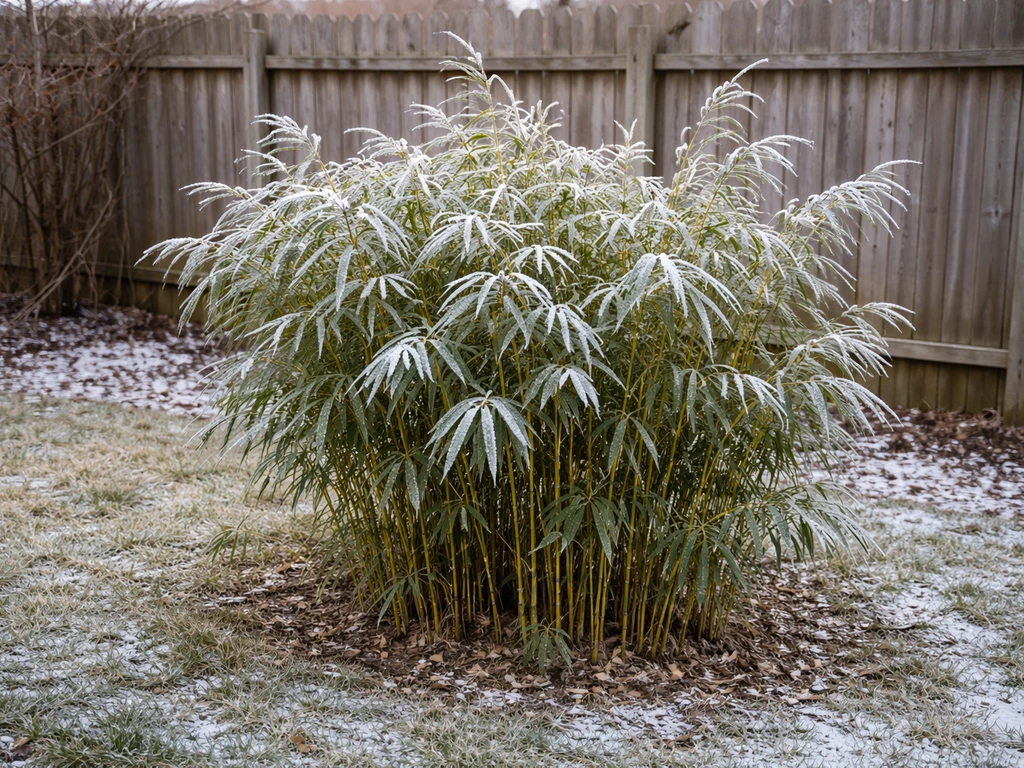
Yes, you can grow bamboo in Ohio. Most of the state sits in USDA hardiness zones 5b to 6b, and there are bamboo species that handle those conditions without much fuss. That said, "Ohio" covers a lot of ground, and where exactly you are in the state makes a real difference in which species survive, how fast they grow, and how much winter protection you'll need. This guide will walk you through all of it.
Can I Grow Bamboo in Ohio? Yes, Here’s What to Know

Marcus Hartwell
10 Apr 2026
Will bamboo actually grow in Ohio?
Ohio spans USDA hardiness zones 5a through 6b, with the colder zones concentrated in the northeast and the milder zones in the south. That range is genuinely workable for cold-hardy bamboo. The key is picking species rated for your specific zone rather than generic "bamboo" from a big-box store, which could be a tropical species that dies the first winter.
Worth noting: hardiness zone maps are updated periodically, and many locations have seen zone shifts over the past decade due to warming trends. Before you plant, look up your specific city or zip code on the current USDA zone map rather than relying on old gardening books or general state-level guidance. A few miles can mean half a zone difference, especially near Lake Erie or the Ohio River.
The bottom line is that cold-hardy running bamboos and a handful of cold-tolerant clumping types can thrive in Ohio's climate. The challenge isn't whether bamboo will grow here, it's choosing the right kind and managing it once it gets going.
Northeast Ohio vs. the rest of the state
Northeast Ohio is the trickiest part of the state for bamboo. Zones 5a and 5b dominate the region, meaning average annual extreme minimum temperatures can dip to -20°F to -15°F. That eliminates a lot of bamboo species that would grow just fine in Columbus or Cincinnati, where zone 6a and 6b conditions are more common.
There's also the Lake Erie effect to consider. The lake moderates temperatures somewhat along its immediate shoreline, but it also brings heavy snowfall and persistent cold that can linger into spring. Inland areas of northeast Ohio (Portage, Geauga, and Ashtabula counties, for example) often see harsher winters than the lakefront. If you're in one of those inland counties, you should treat your site as a firm zone 5b and choose bamboo species rated to at least zone 5 or lower.
Southern Ohio is a different story. The Cincinnati metro and much of the Ohio River valley run in zones 6a to 6b, giving you a noticeably wider selection of bamboo species and less risk of serious winter dieback. Central Ohio falls in between, and most of it handles zone 6a bamboo reliably. Knowing your exact zone is the single most important thing you can do before buying any plant.
Best bamboo to grow in Ohio: clumping vs. running, and which cultivars to pick
This is the question I get most often, and it deserves a direct answer. For Ohio, running bamboos are your most reliable outdoor option. Clumping bamboos are generally tropical or subtropical and don't survive Ohio winters outdoors. There's one partial exception, Fargesia species, which are clumping bamboos that are genuinely cold-hardy, and those are worth knowing about.
Cold-hardy running bamboos for Ohio
Running bamboos in the Phyllostachys and Pleioblastus genera are your best bet for most of Ohio. Phyllostachys aureosulcata (Yellow Groove bamboo) is one of the most cold-hardy options available, rated to zone 5 and sometimes surviving zone 4 conditions with protection. It's tall, attractive, and grows quickly once established. Phyllostachys nuda is similarly cold-hardy and handles northeastern Ohio conditions better than most. For northeast Ohio specifically, these two are my top recommendations.
Phyllostachys bissetii is another solid performer rated to zone 5, and it's slightly more forgiving in terms of soil and moisture conditions. All of these are running bamboos, which means containment is non-negotiable, more on that below.
Cold-hardy clumping bamboos (Fargesia)
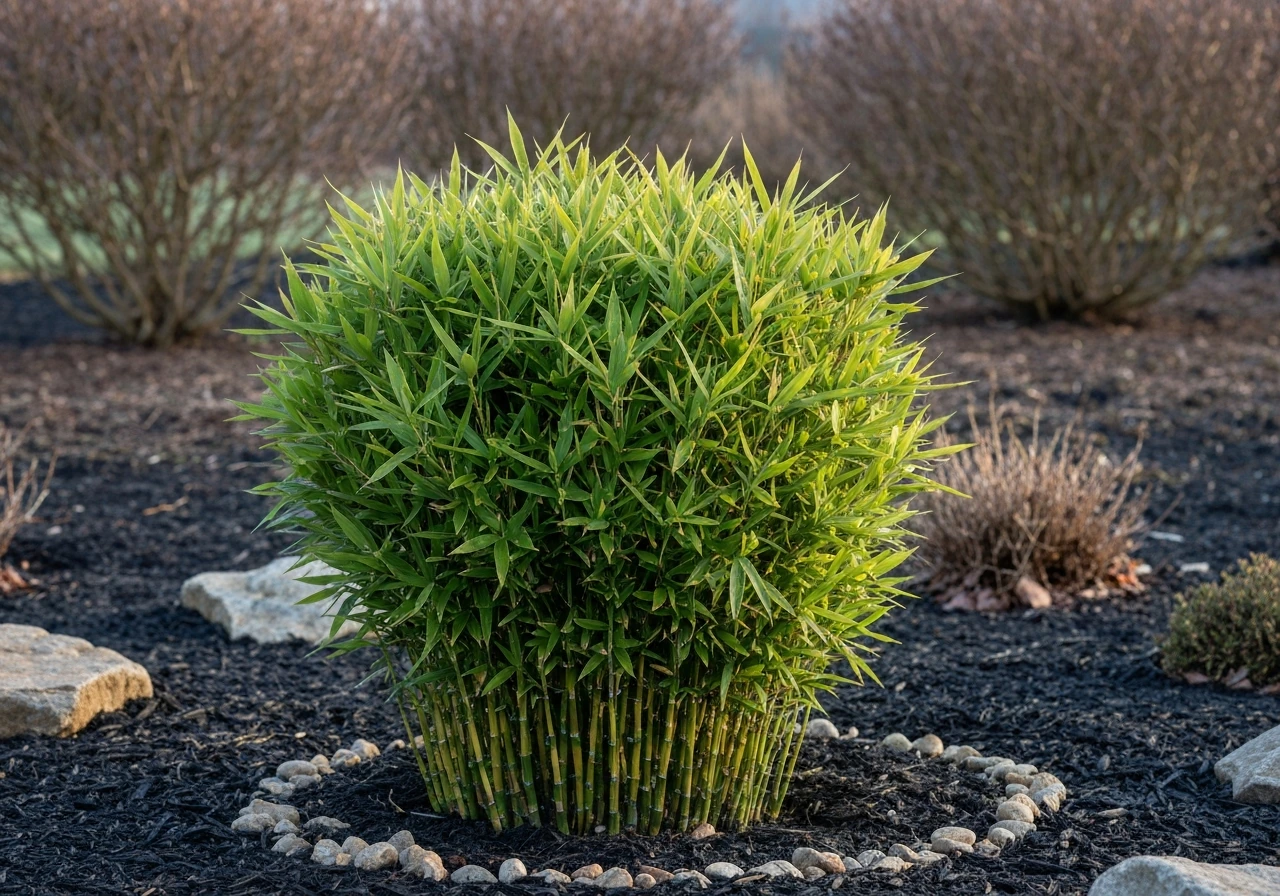
If you want a clumping bamboo that actually survives Ohio winters outdoors, Fargesia is your only realistic choice. Fargesia robusta and Fargesia rufa are rated to zones 5 and 6, respectively, and they don't spread aggressively. They stay more compact (usually 6 to 12 feet tall), making them a great option for privacy screens or ornamental plantings where you don't want to deal with rhizome management. The tradeoff is that they're slower to establish and won't give you the dramatic height of a Phyllostachys.
| Species | Type | Cold Hardiness | Height | Best For |
|---|---|---|---|---|
| Phyllostachys aureosulcata | Running | Zone 5 (to -20°F) | 20–35 ft | Northeast Ohio, cold sites |
| Phyllostachys nuda | Running | Zone 5 (to -20°F) | 20–30 ft | Northeast Ohio, cold sites |
| Phyllostachys bissetii | Running | Zone 5 (to -15°F) | 15–25 ft | All of Ohio |
| Fargesia robusta | Clumping | Zone 5 (to -20°F) | 10–15 ft | Low-maintenance screens |
| Fargesia rufa | Clumping | Zone 6 (to -10°F) | 6–10 ft | Central and southern Ohio |
Is it legal to grow bamboo in Ohio?
Growing bamboo is legal in Ohio at the state level. There is no statewide ban or invasive species listing for bamboo in Ohio as of 2026. However, local ordinances can and do restrict bamboo in some municipalities, particularly running varieties, because of their spreading habit. Some cities require homeowners to install containment barriers or maintain a setback distance from property lines.
Before planting, check with your local zoning office or city code. A quick search for your city's municipal code (or a call to your zoning office) will tell you if there are any bamboo-specific restrictions. This is especially worth doing if you're in a suburban area with close neighbors, since bamboo that crosses a property line can create disputes even where no ordinance exists. Being proactive about containment keeps you legally protected and on good terms with neighbors.
Ohio is part of a broader Midwest region where gardeners are actively navigating these questions. If you're curious how neighboring states handle it, the rules for growing bamboo in Illinois offer a useful comparison, since Illinois has taken a more active regulatory approach in some counties.
How to grow bamboo in Ohio: site, soil, planting, and water
Choosing your site
Pick a spot with full sun to partial shade. Bamboo in Ohio benefits from at least 4 to 6 hours of direct sun per day for good cane development. In northeast Ohio, a south-facing or sheltered spot dramatically reduces winter wind damage. A fence, wall, or building to the north acts as a windbreak and keeps the root zone warmer, which is often the difference between thriving canes and significant dieback in harsh winters.
Avoid low-lying areas where cold air settles or where water pools after rain. Bamboo tolerates moisture but not waterlogged soil, and frost pockets created by topography can push your effective hardiness zone a half-step colder than your official USDA designation.
Soil prep
Bamboo prefers slightly acidic, well-drained soil with a pH between 5.5 and 6.5. Most Ohio soils fall in a workable range, though clay-heavy soils in central and northwestern Ohio can cause drainage problems. Work compost into the planting area to improve drainage and add organic matter. If you're planting in clay, consider raising the bed 6 to 8 inches or adding coarse sand and compost to open up the soil structure.
When to plant
Spring is the best time to plant bamboo in Ohio, ideally after the last frost (late April to mid-May for most of the state, later for northeast Ohio). Planting in spring gives the root system a full growing season to establish before facing its first Ohio winter. Fall planting is possible but riskier, especially in zones 5a and 5b, since the plant has less time to settle in before freeze temperatures arrive.
Watering and fertilizing
Water deeply and consistently through the first growing season, aim for about 1 inch per week if rain doesn't provide it. Once established (usually after 2 to 3 years), bamboo is fairly drought-tolerant, but it performs best with consistent moisture during the growing season. Fertilize with a balanced, nitrogen-rich fertilizer in early spring when new shoots emerge, and again in midsummer. A 10-10-10 or similar formulation works well, but anything with a higher nitrogen ratio supports cane growth.
What to expect in year one and beyond
Here's what most first-time growers don't understand: bamboo spends its first year doing almost nothing visible above ground. The plant is building its root system, and that's the right thing for it to be doing. You might see a few small shoots emerge in spring, but don't expect impressive canes the first season. This is normal and it's not a sign something is wrong.
Year two usually brings more noticeable shoot activity. By year three, most established Phyllostachys stands in Ohio start producing canes closer to their mature diameter. The saying in the bamboo world is "first year sleeps, second year creeps, third year leaps," and that's a pretty accurate description of what to expect. Running bamboos in Ohio can spread 3 to 5 feet laterally per year once fully established, while mature canes on Phyllostachys aureosulcata can eventually reach 20 to 30 feet in Ohio conditions, though growth rates here will be slower than in warmer climates like the Southeast.
This timeline is similar to what gardeners in neighboring states experience. If you want to compare notes, the experience of growing bamboo in Indiana is very close to Ohio's situation, since the two states share similar zone ranges and winter patterns.
Ongoing care: containment, winter protection, and indoor options
Containing running bamboo
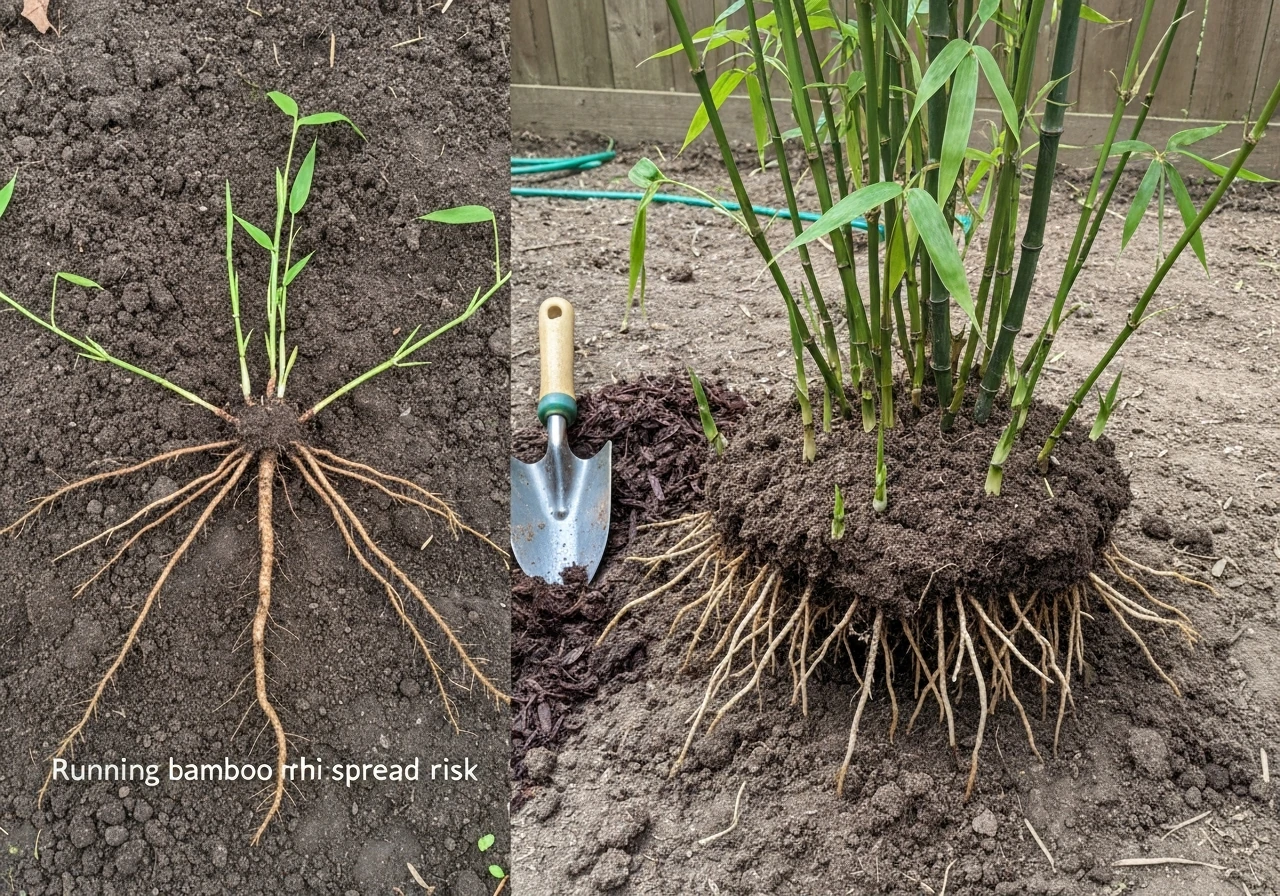
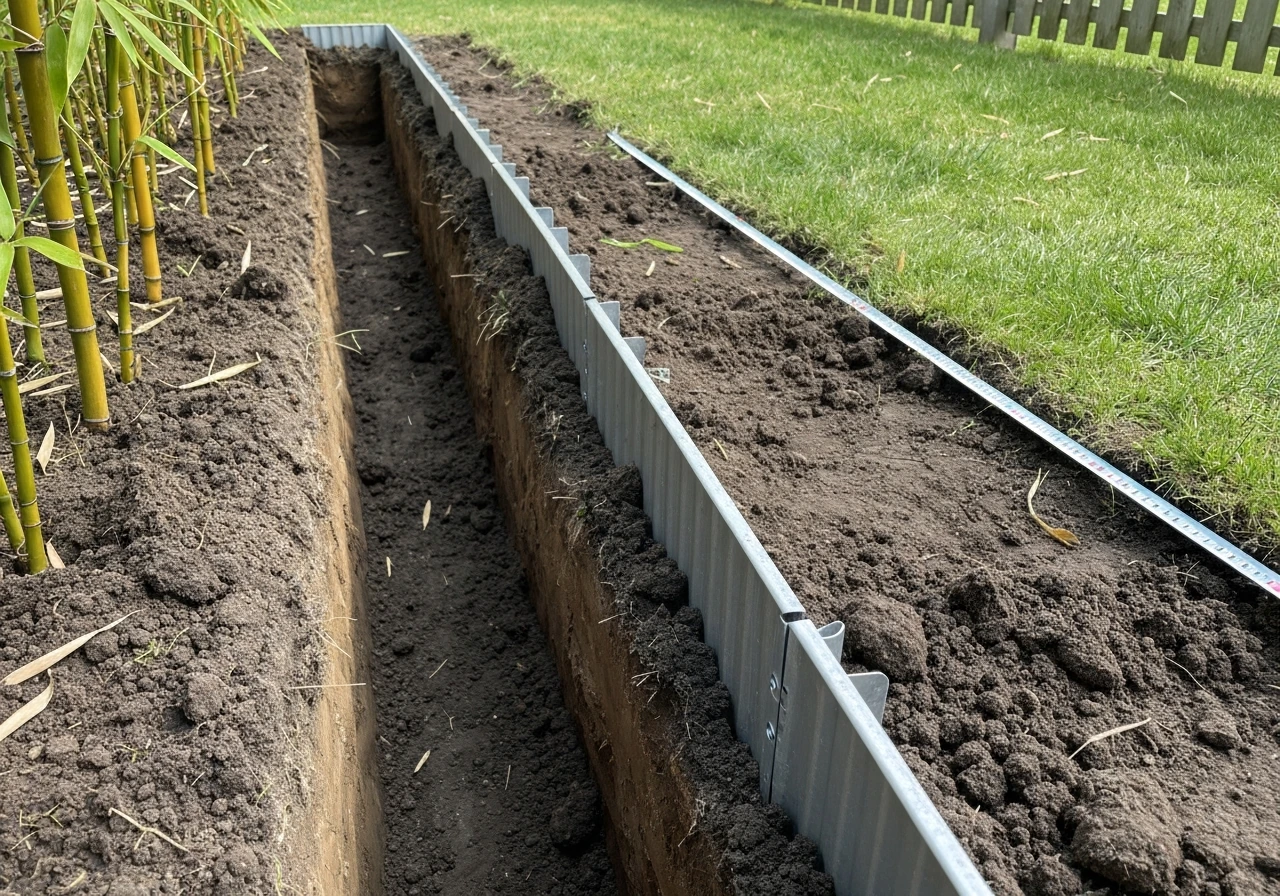
If you're growing a running bamboo (and for Ohio, you probably are), containment is not optional. Install a rhizome barrier at least 30 inches deep around the perimeter of your planting area before you put any plants in the ground. High-density polyethylene (HDPE) barrier, at least 60 mil thick, is the standard. Overlap the barrier ends by at least 6 inches and secure them tightly, leaving 2 to 3 inches of barrier above ground so you can spot any rhizomes trying to escape over the top.
Even with a barrier, do a perimeter check every spring. Look for rhizomes that have pushed up against or over the top of the barrier, and cut them back with a spade or pruning saw. You can also create an open-bottom trench around the planting and mow the edges regularly to prevent escape. Rhizomes that breach the barrier can travel 5 to 10 feet in a single season, so catching them early is much easier than dealing with an established escape.
Winter protection in Ohio
In zone 6a and 6b (most of central and southern Ohio), cold-hardy bamboo species generally survive winter without much help. You may see some leaf browning or cane dieback in particularly harsh winters, but the rhizomes typically survive and push new growth in spring. In northeast Ohio's zone 5 areas, extra protection makes a real difference.
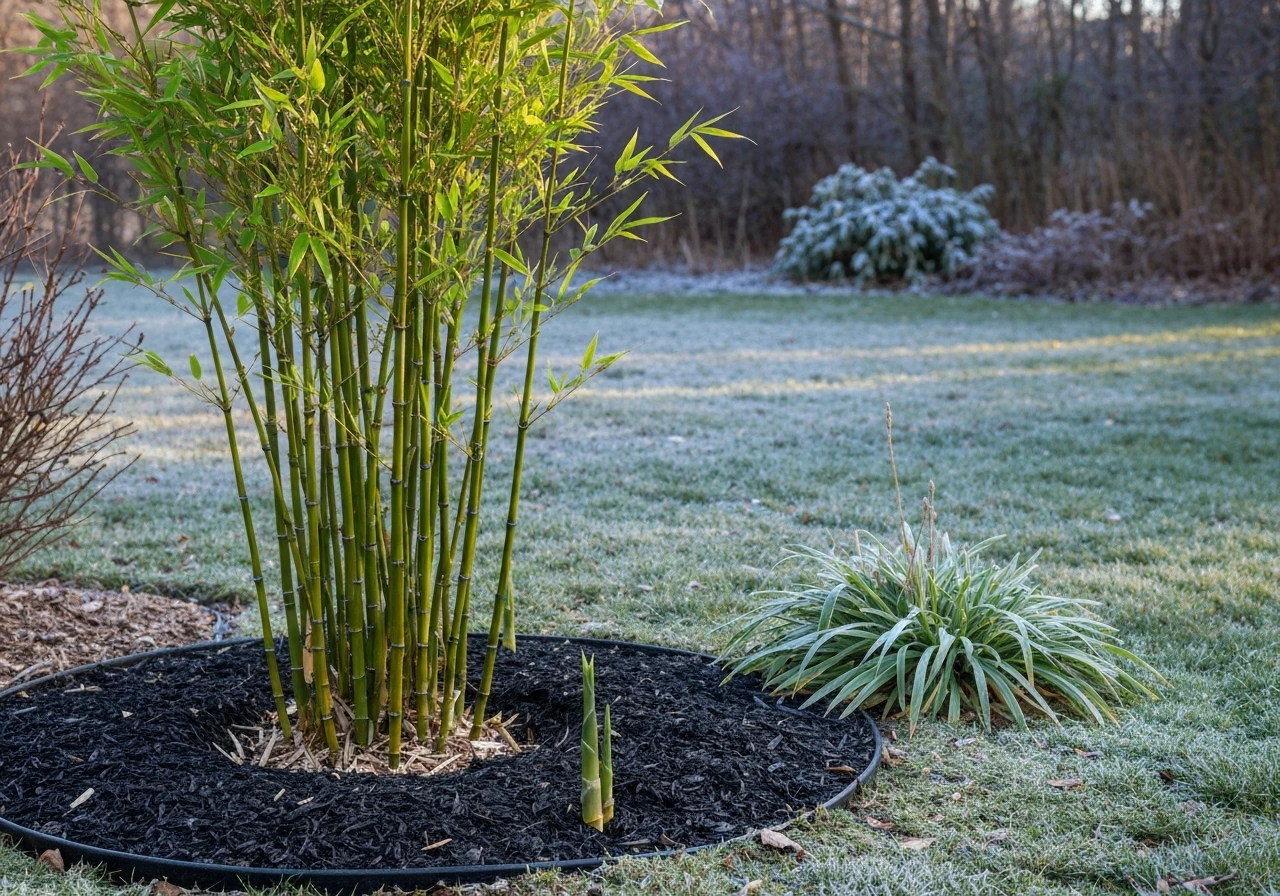
- Mulch heavily: Apply 4 to 6 inches of wood chip or straw mulch over the root zone in late November before the ground freezes. This insulates the rhizomes, which is what matters most for winter survival.
- Wrap young plants: In the first one or two winters, wrap small canes with burlap or frost cloth to reduce wind desiccation and freeze damage.
- Don't cut back dead canes until spring: Even brown, seemingly dead canes provide some wind protection and insulation through winter. Wait until late March or April, then cut dead canes to the ground. If the rhizomes survived, new shoots will emerge.
- Leave the mulch on: Keep the mulch in place until the last frost date, then pull it back from the base of the canes to prevent crown rot as temperatures warm.
If winter kills the canes back to the ground but the rhizomes survive, don't panic. Many Ohio growers experience this in harsh winters and still have thriving plants by midsummer. The rhizome network is more cold-hardy than the canes above it, and recovery is usually vigorous once the soil warms.
Indoor and container growing as an alternative
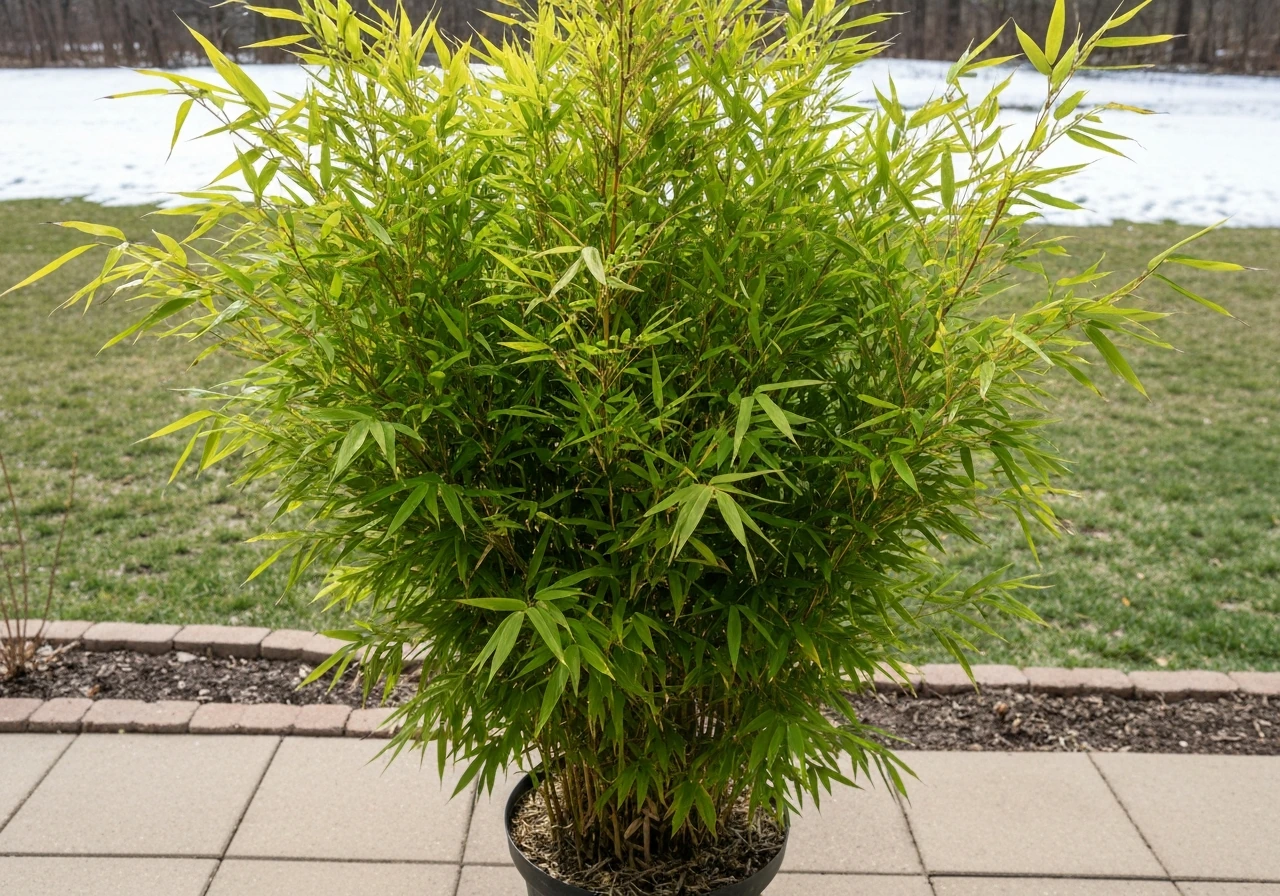
If you're in the colder corners of northeast Ohio and you're not sure you want to deal with winter protection every year, container growing is a legitimate option. Lucky bamboo (Dracaena sanderiana) is a common houseplant, but for real bamboo indoors, look at smaller Fargesia cultivars or dwarf Pleioblastus species in large containers. Keep them in a cool, bright space (not directly over a heat vent) and water consistently. In summer, move the containers outside to a patio or deck for the growing season.
Container growing also gives you flexibility in zone 5a areas where outdoor survival is uncertain. You get the look and feel of bamboo without the all-or-nothing risk of an outdoor planting. The tradeoff is that containerized bamboo won't reach the same size as an in-ground planting, and you'll need to repot or divide roots every two to three years to prevent crowding.
Ohio's climate challenges are shared across the upper Midwest, and gardeners in nearby states are working through the same decisions. The experience of growing bamboo in Michigan is particularly relevant for northeast Ohio readers, since Michigan's lower peninsula shares similar zone ranges and lake-effect conditions. And if you're curious how the approach changes in a colder, shorter-season state, the realities of growing bamboo in Wisconsin show what pushing the limits of bamboo hardiness looks like in practice.
Where to go from here
Ohio is a workable state for bamboo, not the easiest, but far from the hardest. Your two biggest decisions are which species to plant (match it to your specific zone, not the state average) and whether you'll use a containment barrier for running types (you should). Get those two things right, and bamboo in Ohio is genuinely rewarding: fast-growing once established, striking in the landscape, and tough enough to handle most Ohio winters with the right cultivar choice and basic preparation.
FAQ
Can I plant bamboo in Ohio in the fall instead of spring?
Yes, but plan on worse odds and extra protection. In Ohio’s zone 5 areas, newly planted bamboo often loses canes (sometimes to the ground) before its rhizome network is fully established. If you must start in fall, plant early enough that roots can settle before consistent freezing, mulch heavily (an insulating layer of leaves or shredded bark), and leave the barrier exposed so you can still check for rhizome escape.
What should I check in Ohio soil before planting bamboo?
Do a small drainage test first. Dig a hole about 12 inches deep, fill it with water, and see how fast it drains. If water sits for many hours after rain, bamboo will struggle and is more likely to rot during cold snaps. In that case, raise the planting bed, mix compost with your native soil, and consider installing tile or improving slope away from the rhizomes.
Will pruning bamboo keep a running bamboo from spreading in Ohio?
You generally should not, especially with running bamboo. A rhizome barrier reduces the chance of spread, but cutting canes or thinning by hand does not control underground growth. If you want a hard size limit, use the barrier plus routine spring inspections. For long-term boundary control, consider digging and re-setting the barrier if you ever find repeated breaches.
How often do I need to repot container bamboo in Ohio?
It depends on whether your bamboo is running or clumping, and on the container size. Running bamboos can be managed in pots, but the roots will crowd quickly, leading to slower growth and dieback. Plan to divide or repot every 2 to 3 years for most containers, and ensure the pot has drainage holes and a gap of air space from the ground to reduce winter wet-cold stress.
Can I grow clumping bamboo outdoors in all of Ohio without containment?
Yes, but only for specific cold-hardy clumping types, and even then choose wisely. Fargesia cultivars can work outdoors, while most true clumping bamboos sold generically are still too tender for Ohio winters. In zone 5a/5b, protect the crown from drying winter winds and consider tying canes upright and mulching to moderate freeze-thaw cycles.
Why do rhizomes escape even when I install a rhizome barrier?
Check the barrier depth and overlap, and keep it tight. Most escapes happen when the barrier is too shallow, the seams are not overlapped, or the top edge is left above soil without a plan to inspect. Leave a small amount of barrier above grade like your article suggests, and re-seat any sections that shift due to frost heave.
How can I tell whether “slow growth” is normal in Ohio or a problem?
It’s often normal. After planting, many Ohio growers see little above-ground progress in year one because the plant prioritizes roots. If you see no new shoots by mid-summer, then check moisture balance (not waterlogged), verify sun exposure, and confirm the plant actually matched your zone rating. Also remember that canes may appear later or be smaller in colder inland pockets.
Should I fertilize bamboo in Ohio after midsummer?
Avoid fertilizer with excessive nitrogen late in the season. In Ohio, heavy feeding in late summer or fall can push tender new growth that gets damaged by early freezes. Use the recommended early-spring and midsummer timing, then stop feeding so new shoots mature before winter.
How often should I water bamboo in Ohio, and how do I avoid overwatering?
Water deeply right after planting and keep moisture consistent during active shoot growth, but don’t keep the soil constantly soggy. The key is “even moisture, good drainage.” If you have clay soil, watering too frequently can create waterlogged conditions that worsen winter damage. If possible, water in the morning so foliage and soil surface dry during the day.
What bamboo is best for privacy in Ohio if I want results sooner?
If your goal is quick privacy, running bamboo generally performs faster after establishment, but you still need patience for zone 5. For the first year, expect minimal above-ground height. If you want earlier screening in colder areas, use the most cold-hardy Phyllostachys options plus a wind-protected site, and pair bamboo with a temporary visual screen while it establishes.
How do I tell if winter dieback is from cold stress or pests?
Bagworm-like pests and common plant stress issues can show up, but winter injury often looks like pest damage. Focus on diagnosis first: inspect new shoots in spring, check leaves for patterned feeding, and look for canes that died back uniformly from wind exposure or freeze. If you do see insect activity, treat early in the active season, but prioritize correcting site stress (wind, wet feet, poor drainage) because that’s frequently the root cause.
Next Article
Can Bamboo Grow in Michigan? Best Types and How to Grow
See if bamboo can grow in Michigan, best cold-hardy types, and step-by-step planting and winter care tips.