Yes, bamboo can grow in USDA Zone 4, but you have to be selective about species. A handful of genuinely cold-hardy bamboos, primarily clumping Fargesia species and a few running Phyllostachys types, can survive the brutal average annual extreme minimums of −30°F to −20°F (−34.4°C to −28.9°C) that define Zone 4. That said, tropical and rainforest bamboos are completely off the table here. If you pick the right species, site it thoughtfully, and give it some basic winter protection, you can grow a healthy, attractive bamboo in one of North America's coldest gardening zones.
Can Bamboo Grow in Zone 4? Cold-Hardy Species & Winter Care
Marcus Hartwell
10 Aug 2026
What Zone 4 actually means for your bamboo
The USDA Plant Hardiness Zone Map is based on average annual extreme minimum temperatures observed over decades of NOAA/NCEI climate normals data. Zone 4 splits into two sub-zones: 4a runs from −30°F to −25°F (−34.4°C to −31.7°C) and 4b runs from −25°F to −20°F (−31.7°C to −28.9°C). That distinction matters. A bamboo rated to Zone 4 might sail through a 4b winter with minor tip damage but get killed to the ground or lose rhizomes entirely in a 4a winter without protection.
One thing the zone map does not capture is the microclimate variation within those boundaries. A south-facing slope beside a masonry wall in Minneapolis can behave more like Zone 5b during a cold snap, while an exposed, low-lying frost pocket on the same property might drop several degrees colder than the zone average. Snow cover is another huge variable. U.S. Forest Service snowpack research confirms that a consistent, deep snowpack insulates soil and rhizomes dramatically, reducing frost penetration and moderating the soil temperatures that bamboo roots actually experience. In many Zone 4 locations with reliable winter snow, rhizome survival is substantially better than the air temperature alone would suggest. I always encourage people to think carefully about their specific site, not just their zip code.
Cold-hardy temperate bamboo vs tropical bamboo: why the distinction is everything in Zone 4
Bamboo divides into two broad climate groups, and confusing them is the most common mistake I see Zone 4 gardeners make. Temperate bamboos, which include Fargesia and many Phyllostachys species, evolved in mountainous, seasonally cold regions of China and Japan. They go through genuine cold acclimation in autumn, building physiological freeze tolerance through osmotic changes, stored non-structural carbohydrates, and xylem adaptations that help them manage freeze-thaw embolism. Recent peer‑reviewed work documents embolism formation and repair and seasonal non‑structural carbohydrate dynamics in Phyllostachys vivax f. aureocaulis, supporting that these processes are central to bamboo winter survival (Embolism formation and repair of Phyllostachys vivax f. aureocaulis in winter and the role of non‑structural carbohydrates (Frontiers / PMC)). Research on species like Phyllostachys propinqua and Phyllostachys vivax confirms these are real, measurable physiological strategies, not just luck. These are the bamboos that belong in Zone 4 conversations.
Tropical and subtropical bamboos, including the large, dramatic species you might associate with rainforests or Southeast Asian gardens, have none of that cold acclimation machinery. They start dying below about 28°F and suffer severe damage well above the Zone 4 minimum. If you want a screen, grove, or specimen plant in Zone 4, you are working entirely within the temperate bamboo category. For context, the difference is a bit like comparing a Japanese alpine larch to a coconut palm: they are both trees, but they are adapted to completely different worlds.
Cold-hardy bamboo species that reliably survive Zone 4
The list of species that can genuinely handle Zone 4 is shorter than nursery marketing sometimes suggests. These are the ones backed by arboretum cultivation records, university extension trials, and physiological research. I have organized them by growth habit, which also affects how you manage them long-term.
Clumping bamboos (Fargesia spp.): the safest bet
- Fargesia murielae (Umbrella Bamboo): Widely regarded as one of the hardiest clumping bamboos available. Hardy to around −20°F to −25°F, placing it solidly in Zone 4b and marginal in 4a with protection. Forms a graceful, arching clump to 10–12 feet. Tolerates partial shade well, which also reduces winter desiccation stress.
- Fargesia rufa (Green Panda Bamboo): Slightly less towering than murielae, topping out around 8–10 feet, with attractive orange-green canes. Hardy to approximately −20°F, dependable in Zone 4b. The RHS and multiple botanical collections list this as a reliable cold-climate garden bamboo. Great for smaller spaces.
- Fargesia nitida (Fountain Bamboo): Another arching clumper with fine-textured foliage, hardy into Zone 4. Often listed to −20°F. Prefers some afternoon shade, especially in Zone 4 sites where winter sun can desiccate foliage.
- Fargesia robusta: A slightly more upright Fargesia reaching 12–15 feet. Cold hardiness is generally cited at Zone 5, but in sheltered Zone 4b microclimates with mulch protection, established plants have overwintered successfully. Treat this as a conditional choice rather than a sure thing in Zone 4.
Running bamboos (Phyllostachys spp.): cold-tolerant but needs containment
- Phyllostachys nuda: Consistently cited by arboreta, including the Boone County Arboretum, as one of the most cold-tolerant running bamboos in North America. Reports of survival approaching −20°F to −25°F in favorable sites. Can reach 20–30 feet at maturity in milder zones, though it stays smaller in Zone 4. Requires a rhizome barrier.
- Phyllostachys bissetii (Bisset Bamboo): Another top-tier cold-hardy runner, frequently paired with nuda in cold-climate nursery recommendations. Hardy into the upper Zone 4 range. Dense, upright habit makes it useful as a windbreak or screen. Barrier required.
- Phyllostachys aureosulcata (Yellow Groove Bamboo): USDA and state regulatory hardiness assessments list this species as cultivated in zones corresponding to Zone 4 through Zone 10. Striking yellow-grooved green canes. One of the few running species I feel reasonably confident recommending for Zone 4b sites with good snow cover and protection. Barrier required.
Species at a glance
| Botanical Name | Common Name | Hardiness (Min °F) | Growth Habit | Mature Height (Zone 4) | Notes |
|---|---|---|---|---|---|
| Fargesia murielae | Umbrella Bamboo | −20 to −25°F (Zone 4b) | Clumping | 10–12 ft | Best all-around Zone 4 choice; tolerates shade; no barrier needed |
| Fargesia rufa | Green Panda Bamboo | −20°F (Zone 4b) | Clumping | 8–10 ft | Compact, orange-green canes; good for smaller gardens; no barrier needed |
| Fargesia nitida | Fountain Bamboo | −20°F (Zone 4) | Clumping | 8–12 ft | Fine-textured foliage; prefers afternoon shade; no barrier needed |
| Fargesia robusta | Clumping Bamboo | −10°F (Zone 5, marginal 4b) | Clumping | 10–14 ft | Upright habit; only for sheltered Zone 4b microclimates with mulch |
| Phyllostachys nuda | Nude Sheath Bamboo | −20 to −25°F (Zone 4) | Running | 15–20 ft | One of the hardiest runners; rhizome barrier required |
| Phyllostachys bissetii | Bisset Bamboo | −20°F (Zone 4) | Running | 15–18 ft | Dense screening habit; very cold-tolerant runner; barrier required |
| Phyllostachys aureosulcata | Yellow Groove Bamboo | −20°F (Zone 4) | Running | 15–20 ft | Ornamental canes; documented in Zone 4 cultivation; barrier required |
What growth actually looks like in Zone 4
I want to be straight with you about this: Zone 4 bamboo grows more slowly and stays shorter than the same species planted in Zone 6 or 7. That is not a flaw in your technique. It is physics. The growing season is shorter, soil warms later in spring, and the plant spends a portion of its annual energy budget recovering from winter stress and replacing any top-killed culms. Fargesia murielae might reach 6–8 feet in Zone 4 after four or five years, while the same plant in Zone 6 could be pushing 12 feet in the same timeframe.
The active shooting season in Zone 4 generally runs from late May through June once soil temperatures climb above roughly 50°F. New culms emerge, expand to their full diameter within a few weeks (bamboo culms do not thicken after they emerge), and then harden off through summer. The plant goes dormant after the first hard frosts in autumn, typically September to October in most Zone 4 locations. Do not expect visible growth during winter. If you're wondering whether does bamboo grow in the winter, see our concise guide on bamboo winter growth and care for details. Foliage on Fargesia species tends to persist through winter on established plants, though it may roll, curl, or brown at the tips during extreme cold. That is normal and not a sign the plant is dying.
Running bamboos like Phyllostachys nuda take two to three years to establish before they push vigorous new canes. The old nursery saying holds: 'First year it sleeps, second year it creeps, third year it leaps.' In Zone 4, add a year to that mental model. Patient gardeners are rewarded; impatient ones think their bamboo has failed when it is simply acclimating.
How to set up your Zone 4 bamboo for success
Soil and drainage
Bamboo tolerates a fairly wide soil pH range, roughly 5.5 to 7.0, but it insists on good drainage. This is especially critical in Zone 4 because saturated soil freezes harder and deeper, increasing freeze-thaw mechanical stress on rhizomes. Research on bamboo freeze-thaw degradation confirms that tissue moisture content directly amplifies structural damage during freeze cycles. A materials‑science study, "Moisture‑mediated freeze‑thaw degradation in bamboo from cellulose hydration to macroscale fracture (ScienceDirect)", documents that freeze–thaw damage increases with tissue moisture and repeated cycles, supporting the need to limit tissue wetness before freezing. If your site has heavy clay or sits in a low spot that holds water after snowmelt, amend with compost and coarse grit before planting, or build a slightly raised planting bed. Waterlogged roots going into winter are one of the fastest ways to lose a Zone 4 bamboo.
Sun, shade, and wind
Most cold-hardy Fargesia species actually prefer partial shade, especially in afternoon. This serves Zone 4 gardeners well because afternoon and winter shade reduces desiccating solar radiation on foliage during cold, dry winters when frozen ground prevents roots from replacing lost moisture. Phyllostachys species prefer full sun but benefit from a windbreak on the north and northwest sides. A sheltered south or east-facing exposure against a building, fence, or established tree line is about the best Zone 4 microclimate you can provide. Extension guidance from Washington State University specifically recommends these sheltered exposures for cold-margin bamboo planting, and in my experience that advice holds up.
Planting timing
Plant in spring after the last frost, or in early autumn at least six to eight weeks before the first hard frost. Spring planting gives a full growing season for root establishment before the first winter, which is ideal in Zone 4. Autumn planting can work if timed correctly and the plant is well mulched, but a bamboo that goes into its first Zone 4 winter with limited root establishment is at real risk. Avoid summer planting in Zone 4 if possible because the shortened warm season leaves little recovery time before cold arrives.
Mulching and winter protection
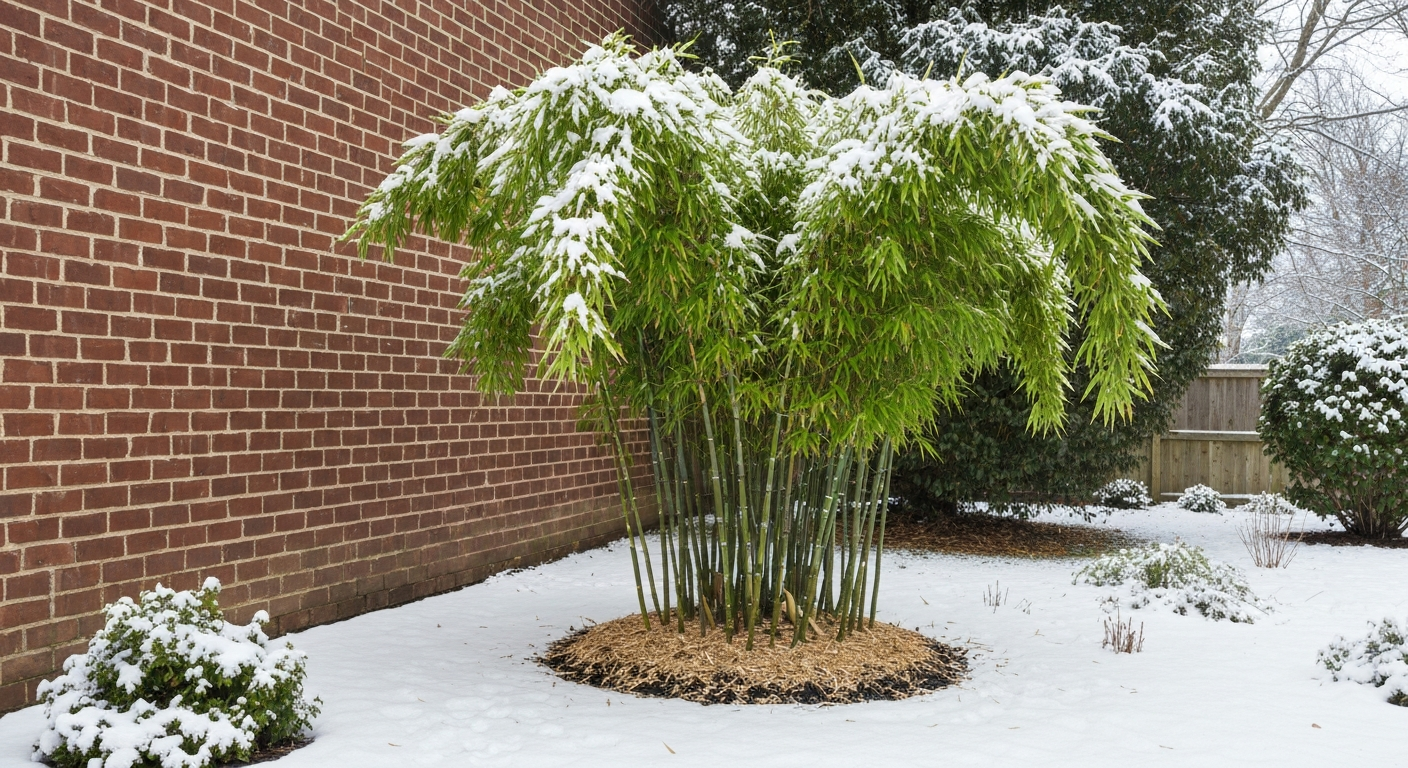
A 4 to 8 inch layer of organic mulch (shredded bark, wood chips, or straw) applied over the entire rhizome zone before the ground freezes is the single most impactful winter-protection step you can take. This mirrors the insulating function of natural snowpack and directly protects the rhizomes from the worst cold. WSU Extension and NC State both emphasize this practice for cold-margin bamboo. If your site is exposed and windy, a burlap windscreen around the plant during December through March reduces desiccation damage considerably. Do not cut down culms in autumn. Leaving them standing helps trap insulating snow around the crown and the culms themselves serve as markers for spring. Prune out any dead or winter-damaged canes in late spring, after new growth has clearly started.
Fertilizing
Avoid high-nitrogen fertilization after midsummer. Late-season feeding pushes tender new growth that does not have time to harden before frost, which is a common cause of unnecessary winter dieback in Zone 4. Feed in spring and again in early summer with a balanced, nitrogen-forward fertilizer (bamboo is a grass and benefits from nitrogen), but let the plant slow and harden naturally going into autumn.
Clumping vs running bamboo in Zone 4: which should you choose?
This decision involves more than cold hardiness. Fargesia clumpers are non-invasive, expanding slowly from their central root mass without sending out long horizontal rhizomes. They do not require a barrier, they are easier to manage long-term, and several species are genuinely Zone 4-rated. For most Zone 4 homeowners, a clumping Fargesia is the responsible and lower-maintenance choice.
Running Phyllostachys species can spread aggressively via underground rhizomes that travel 10 to 15 feet or more per year in favorable conditions. In Zone 4, establishment is slower and spread is less aggressive than in warmer zones, but the species do not lose their running habit just because the winters are cold. If you plant a Phyllostachys in Zone 4, install a high-density polyethylene (HDPE) rhizome barrier at least 24 inches deep around the planting area. NC State Extension and other guides are explicit about this. The running species do offer some of the highest cold tolerance available (Phyllostachys nuda and bissetii are among the hardiest bamboos you can plant anywhere), so if you need maximum cold resilience and are willing to manage containment, they remain valid options.
Container growing and marginal Zone 4a sites
If your site is Zone 4a, particularly exposed, or you are renting and want flexibility, container growing is an option, but it comes with trade-offs. Bamboo roots in containers are fully exposed to ambient air temperatures on all sides, making the effective cold challenge significantly worse than in-ground plants where soil mass provides thermal buffering. To overwinter a container bamboo in Zone 4, move the pot into an unheated garage or shed (temperatures between 15°F and 35°F are fine), water occasionally so the root ball does not completely desiccate, and return it outdoors after the last frost. Alternatively, sink the container into the ground in autumn and mulch heavily over it. In-ground planting is always preferable for Zone 4 if long-term establishment is the goal.
Troubleshooting common Zone 4 bamboo problems
- Brown, rolled leaves in winter: Normal cold-desiccation response in Fargesia species. Not a death sign. Leaves typically recover or are replaced in spring. A burlap windscreen reduces this significantly.
- No new growth in spring: If it is before late May in Zone 4, wait. Bamboo breaks dormancy later than most ornamentals. Scratch a cane with your fingernail; if the underlying tissue is green, the plant is alive.
- Canes killed to the ground: If rhizomes are alive and mulched, new culms will emerge. This is a common first-winter experience in Zone 4. The plant is not dead; it is rebuilding. This is more common in the first one to two winters before the plant is well established.
- Slow spread or few new canes: Expected in Zone 4. The growing season is short and establishment takes longer. Consistent spring fertilization and adequate moisture during the shooting season help.
- Pests: Bamboo mites and aphids can appear during dry summers. A strong spray of water handles minor infestations. Serious pest pressure is uncommon on cold-hardy bamboos in Zone 4 climates.
- Root rot: Almost always a drainage problem. Improve drainage before replanting rather than treating with fungicide.
Where to source cold-hardy Zone 4 bamboo
Buy from a nursery that specializes in cold-hardy bamboo or a reputable online bamboo nursery that ships established divisions. Big-box garden centers frequently sell bamboo species mislabeled as 'hardy' that are actually Zone 6 or 7 plants. Ask specifically for the botanical name and the documented cold hardiness rating. Fargesia murielae, Fargesia rufa, Phyllostachys nuda, and Phyllostachys bissetii should be easy to source from specialist growers. Request container-grown or field-divided plants with intact rhizome structure rather than bare-root material, which establishes more slowly in Zone 4's short growing season.
Making your decision: is Zone 4 bamboo right for you?
If you are in Zone 4b with a reasonably sheltered site, reliable snow cover, and well-drained soil, planting a Fargesia murielae or Fargesia rufa is a realistic and rewarding project. These are handsome, well-behaved plants that provide year-round structure in a zone where evergreen options are limited. Expect a few years of establishment before you see the plant hit its stride, and budget for good mulch every autumn. If you are in Zone 4a or a particularly exposed, low-lying frost pocket, your odds improve dramatically with wind protection, deep mulch, and a clumping species rather than a runner. The bamboo is not impossible; it just requires more deliberate setup. And if your site is truly at the cold edge, growing in a container that you overwinter in a sheltered spot is a practical middle ground until you are ready to commit to in-ground planting.
The broader question of what climate conditions bamboo needs, how it behaves in cold climates generally, and whether it does anything useful in winter are all topics worth exploring as you build your understanding of this plant. See our guide on what zone does bamboo grow in for more on climate limits and species selection. For a broader overview of this topic, see our guide on can bamboo grow in cold climates. For a concise guide to the climates bamboo prefers, see what climate does bamboo grow in. Zone 4 sits right at the limit of what temperate bamboo can handle, which makes getting the species selection and site preparation right more important than it would be in a gentler zone. Get those two things right, and bamboo can absolutely be part of your cold-climate garden.
FAQ
Can bamboo grow in USDA hardiness zone 4?
Yes — many temperate (cold‑hardy) bamboos can survive in USDA Zone 4 (average annual extreme minima −30°F to −20°F / −34.4°C to −28.9°C) if you choose genuinely cold‑tolerant species, plant in a favorable microclimate, and follow proper establishment and winter‑protection practices.
Which bamboo species reliably survive in Zone 4? (short list)
Cold‑hardy clumpers: Fargesia murielae, Fargesia rufa (and cultivars like ‘Green Panda’), Fargesia nitida. Cold‑hardy runners: Phyllostachys nuda, Phyllostachys bissetii, Phyllostachys aureosulcata (select clones). These species are repeatedly cited by arboreta, extension services, and nurseries as hardy toward Zone 4 when well sited.
How do temperate (cold‑hardy) bamboos differ from tropical/rainforest bamboos?
Temperate bamboos (e.g., Fargesia, Phyllostachys) have physiological cold‑acclimation mechanisms, tolerate freeze‑thaw cycles, and enter winter dormancy. Tropical/rainforest bamboos lack freezing tolerance and will be killed by Zone 4 winters — they need milder zones or heated/indoor conditions.
What role do USDA zones and microclimates play in bamboo survival?
USDA hardiness zones give average extreme minima but don’t capture local variation. Microclimates (south‑facing walls, urban heat islands, snowpack depth, sheltered valleys) can raise minima and improve survival. Check local normals and choose sheltered sites to effectively extend survivability beyond nominal zone limits.
What are practical planting and site requirements for Zone 4 bamboo?
Plant in spring after last frost or early autumn with 6–8 weeks before first hard frost. Choose well‑drained loamy soil, a sheltered south/east exposure if possible, and avoid waterlogged sites. Amend planting holes with compost, keep roots moist while establishing, and apply 2–3 in of mulch initially, increasing to a heavier winter mulch later.
How should I protect bamboo over winter in Zone 4?
Key protections: leave established culms for wind buffering; apply 4–8 in (10–20 cm) of organic mulch over the rhizome zone before deep freeze; provide windbreaks or burlap for exposed plantings; avoid late fertilization that stimulates tender growth; for containers, insulate or move indoors. Snowpack is beneficial — don’t remove insulating snow.
Next Article
Does Bamboo Grow in the Rainforest? Species and Care Guide
Yes. Find which bamboo species thrive in humid rainforest conditions and learn care tips, light needs, and drainage to g