Texas climate suitability by region
blank" rel="noopener noreferrer">Texas spans multiple USDA Plant Hardiness Zones, and that range is exactly why some bamboo species thrive here while others struggle. USDA zones are built on 30-year averages of extreme minimum winter temperatures, so they give you a reliable baseline for cold-hardiness planning even though any given winter can surprise you.
Houston sits in Zone 9b, where winter lows typically hover around 25–35°F. That is about as gentle as it gets in Texas, and most bamboo species marketed as cold-hardy will do well there without any protection at all. San Antonio is generally Zone 9a (15–25°F range depending on location), and Austin comes in at Zone 8b with typical winter lows of about 15–20°F. As you push north toward Dallas-Fort Worth (Zone 8a, lows around 10–15°F) and west toward El Paso and the Panhandle (Zone 7b down to Zone 6), winters get serious enough that species selection becomes critical.
East Texas, which shares conditions with Louisiana and the Deep South, is warm and humid enough for a wide range of subtropical clumping bamboos. West Texas and the Hill Country experience more extreme temperature swings, more alkaline soil, and much drier air, so you need species that can handle both cold snaps and drought. The Gulf Coast strip from Beaumont to Corpus Christi is the most forgiving zone in the state for bamboo, high humidity, rarely freezing hard, and long shooting seasons.
Winter cold: the number to watch
The practical threshold most Texas bamboo growers watch is around 13–18°F. Growers in the Houston area note their cold-hardy clumping stock handles down to 13°F, and general Texas bamboo cultivation guidance suggests that both clumping and running bamboos thrive where winter temps do not drop below about 18°F. Running species like Phyllostachys vivax are rated to around 5°F, and cold-hardy clumping Fargesia cultivars like Fargesia rufa are rated to -10°F, so even north Texas gardeners have options. The key point is that even when culms die back in a hard freeze, bamboo rhizomes typically survive underground and push new growth in spring with proper care.
Legality in Texas: check before you plant
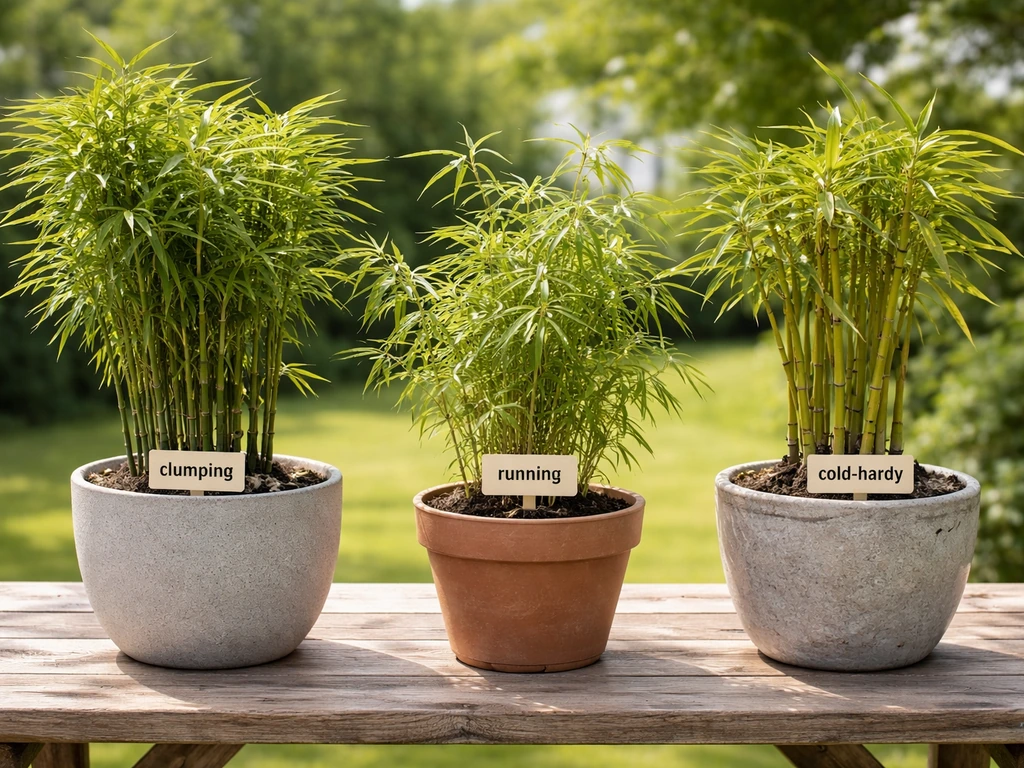
This is the step most Texas gardeners skip, and it can cause real headaches later. There is no statewide Texas law banning bamboo outright, but specific species are flagged as invasive, and individual municipalities have their own rules.
Golden bamboo (Phyllostachys aurea) is the species you need to be most careful about. It appears in the Texas Invasive Species Institute's plant database, is listed as a candidate in the Texas Invasive Plant Inventory, and the City of Austin includes it on its official invasive plant list. The UF/IFAS Center for Aquatic and Invasive Plants puts it plainly: golden bamboo is currently invading the Southeast from Texas to Louisiana and beyond, up into Kentucky and Virginia. Planting it without serious containment measures is a risk both to your neighborhood and to your legal standing if local rules prohibit it.
Your actionable checklist before planting any bamboo in Texas:
- Look up your city or county's invasive plant ordinance. Search '[your city] invasive plant ordinance' and '[your city] bamboo restriction.'
- Cross-reference your chosen species against the Texas Invasive Species Institute's plant database.
- Call your HOA if applicable — many neighborhood associations have their own planting rules.
- If you live near a waterway or green space, check with the Texas Commission on Environmental Quality (TCEQ) for any riparian buffer restrictions.
- If you plan to use running bamboo, have a containment plan ready before you purchase. Some municipalities implicitly require it.
The safest legal position in Texas is to plant a non-invasive clumping species and skip golden bamboo and other aggressive Phyllostachys runners entirely. That also happens to be the lowest-maintenance approach.
Best bamboo to grow in Texas
The clumping versus running distinction is the single most important decision you'll make. Clumping bamboos expand slowly outward from a central crown, filling a limited diameter over many years. Running bamboos spread via horizontal rhizomes that can travel many feet from the original planting in a single season. Both can work in Texas, but they require very different management approaches.
Clumping bamboo (recommended for most Texas gardeners)
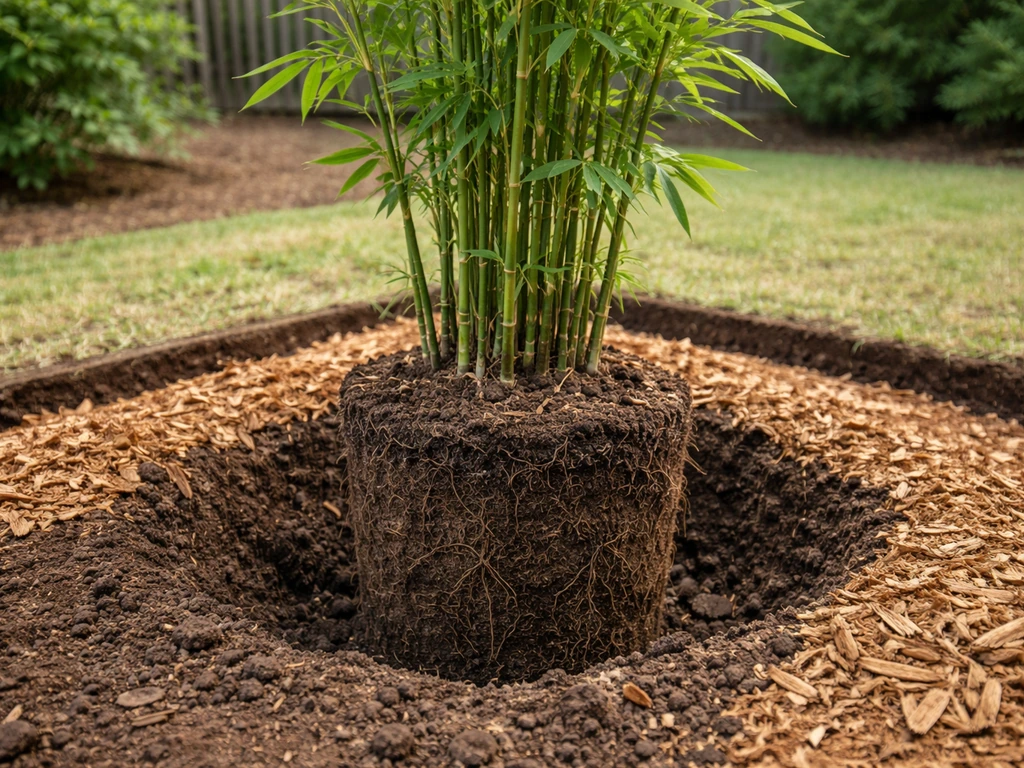
For most Texas homeowners, a clumping species is the right call. They are non-invasive by nature, lower maintenance, and increasingly available from Texas-based nurseries. Gardeners in Georgia and other Southern states face the same climate tradeoffs and tend to land on the same conclusion: clumping bamboos give you the look and function without the containment burden. Here are the top choices for Texas:
- Fargesia rufa (Rufa bamboo): Cold-hardy to -10°F, making it one of the most cold-tolerant clumping bamboos available. Reaches about 6–10 feet tall. Does best with afternoon shade protection, which is especially important in Texas's intense summer heat. Ideal for north Texas and the Hill Country.
- Fargesia nitida and Fargesia robusta: Similar cold-hardiness profiles to Fargesia rufa, moderate size, well-suited for partial shade conditions in Central and North Texas.
- Bambusa multiplex (Hedge bamboo): A subtropical clumper that handles lows down to around 12–15°F. Great for Houston, San Antonio, and South Texas. More heat-tolerant than Fargesia varieties, grows larger (up to 20–25 feet), and is widely available from Gulf Coast nurseries.
- Bambusa oldhamii (Giant timber clumping bamboo): A large-scale option for South Texas and the Gulf Coast, where hard freezes are rare. Can reach 40+ feet in ideal conditions.
Running bamboo (use only with proper containment)
Running bamboos are fast, tall, and impressive, but they require rhizome barriers and active management to stay where you put them. If you are set on a running species, here are the most relevant options for Texas, along with realistic cold-hardiness numbers:
- Phyllostachys vivax (Chinese timber bamboo): Hardy to about 5°F, grows very large (30–45 feet), and can become a dense thicket unless contained. Best in Central and East Texas with barriers in place.
- Phyllostachys heteroclada (Water/fishscale bamboo): Cold-hardy to around -5°F, one of the toughest Phyllostachys species for colder parts of North Texas.
- Phyllostachys aurea (Golden bamboo): Tolerates lows near -4°F and grows readily in Texas — but given its invasive status in the state, this is the one species to avoid planting unless you have ironclad containment and no local ordinance issues.
Side-by-side comparison
| Species | Type | Cold Hardiness | Height | Best Texas Region | Invasive Risk |
|---|
| Fargesia rufa | Clumping | -10°F | 6–10 ft | North/Central TX | None |
| Bambusa multiplex | Clumping | 12–15°F | 15–25 ft | South TX / Gulf Coast | None |
| Bambusa oldhamii | Clumping | 22–25°F | 30–45 ft | South TX / Houston | Low |
| Phyllostachys vivax | Running | 5°F | 30–45 ft | Central/East TX (barrier) | Moderate |
| Phyllostachys heteroclada | Running | -5°F | 20–30 ft | North/Central TX (barrier) | Moderate |
| Phyllostachys aurea | Running | -4°F | 20–30 ft | Not recommended in TX | High — invasive |
How to grow bamboo in Texas: setup from the ground up
Growing bamboo in Texas successfully is mostly about picking the right site and getting establishment watering right in that brutal first summer. Everything else is relatively forgiving.
Site selection and microclimates
Most bamboo species want full sun to partial shade. In the Hill Country and West Texas, that means finding a spot that gets morning sun and protection from the harsh western afternoon sun, reflected heat off fences and walls can stress or scorch bamboo even in species rated for your zone. In North Texas, the opposite is sometimes true: a south-facing wall adds enough radiant warmth in winter to bump your effective hardiness zone up by half a zone. In Houston and coastal areas, full sun is generally fine year-round. Fargesia rufa in particular needs afternoon shade protection; a spot under a tall tree canopy or on the east side of a structure is ideal for this species in Texas.
Soil
Bamboo is not fussy about soil type by nature, but it has clear preferences. It does best in well-draining, slightly acidic to neutral soil (pH around 5.5–7.0). Much of Central Texas has alkaline clay or caliche soil that needs amendment. Work in 3–4 inches of compost before planting to improve drainage and nudge the pH closer to neutral. In East Texas, sandy loam soils drain fast and may need organic matter added to hold moisture. Avoid planting in low-lying areas that hold standing water after rain, bamboo roots do not tolerate waterlogged conditions, and this is a common early failure point.
Watering
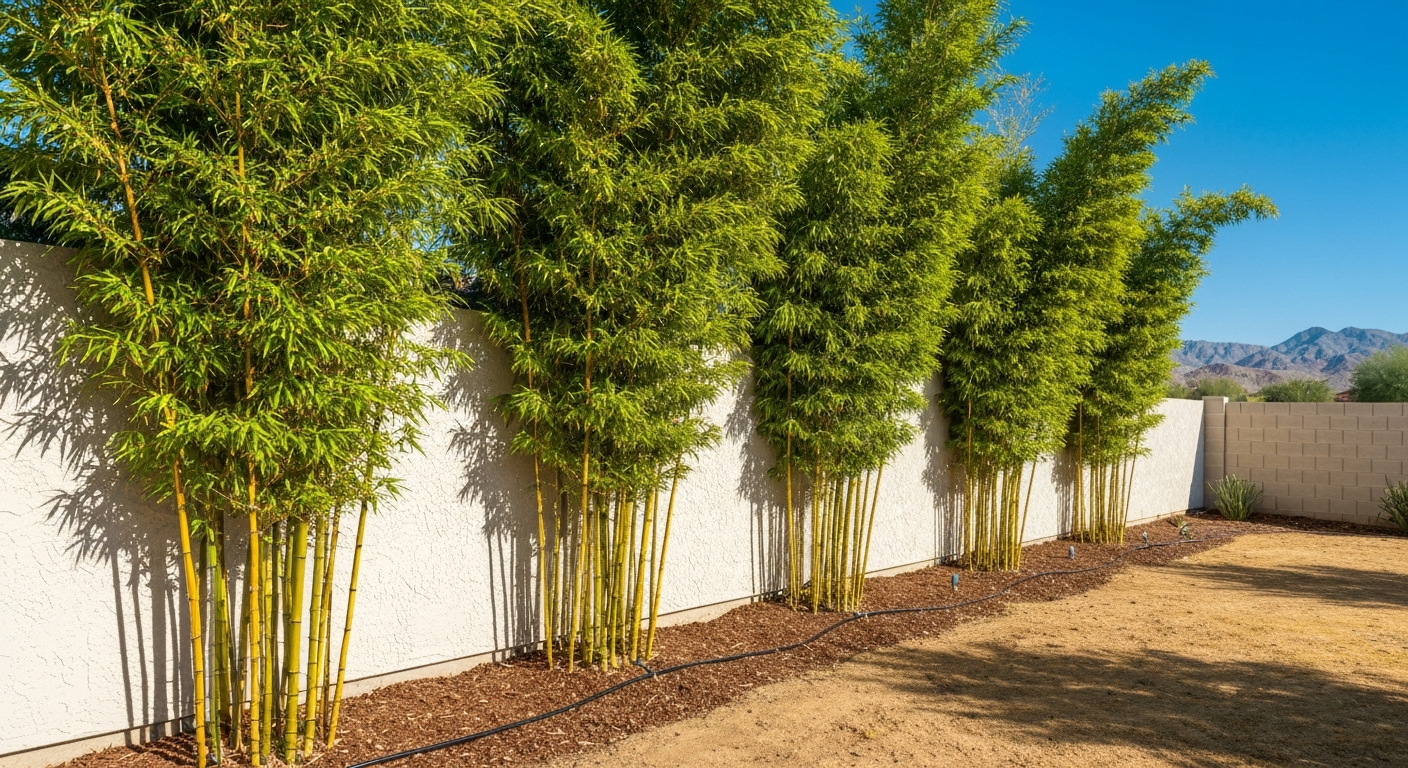
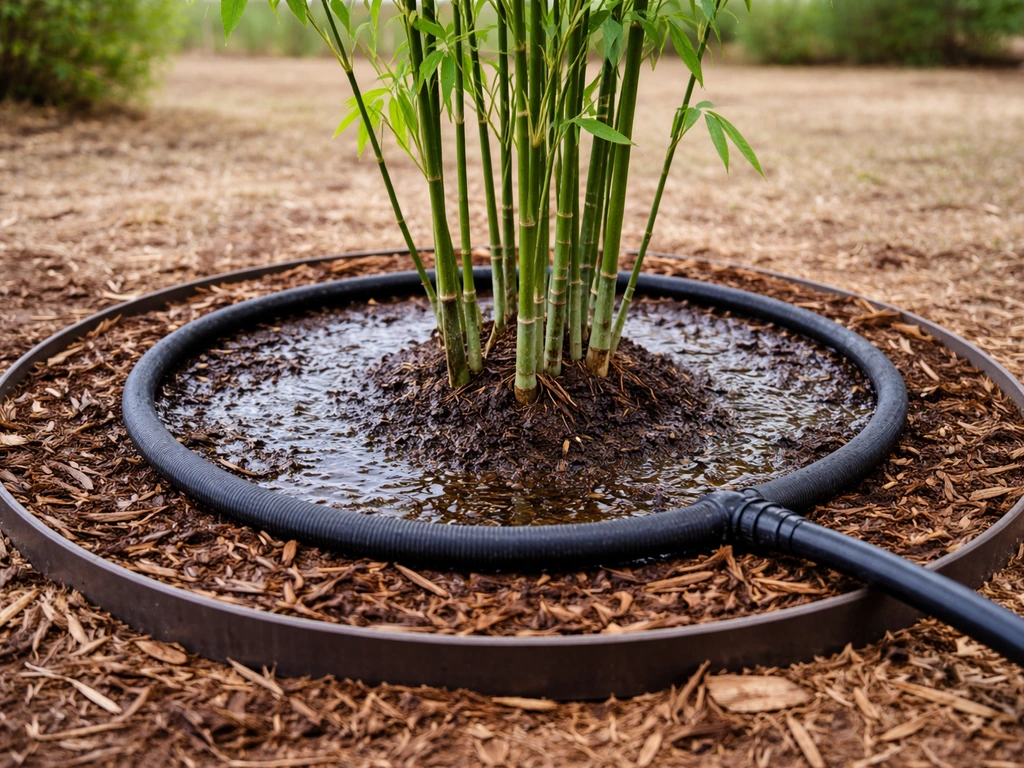
This is where most Texas bamboo plantings succeed or fail. In peak summer, newly planted bamboo needs frequent, deep watering during establishment. A practical rule of thumb from a Houston-based bamboo nursery: give each plant roughly 30 seconds of full hose pressure, one to two times per day, through the hot establishment period. Once bamboo is well-rooted (typically after one full growing season), it becomes significantly more drought-tolerant. Mulching planted beds heavily (3–4 inches of wood chip mulch) is one of the highest-impact things you can do, it retains moisture, moderates soil temperature, and reduces how often you need to water by a meaningful margin. Smart irrigation scheduling paired with mulch is the standard approach used by experienced Texas growers.
Fertilizing
Bamboo responds well to nitrogen-rich fertilizer applied in sync with its growing season. Feed in mid-March (as new growth begins) and again in mid-July, which aligns with the shooting season and gives the plant fuel for its most active growth periods. A balanced slow-release granular fertilizer or a lawn-type high-nitrogen fertilizer works well. Avoid over-fertilizing, salt buildup from excessive fertilizer can cause leaf tip burn and root stress, which often gets mistaken for a disease problem.
Planting options and controlling spread
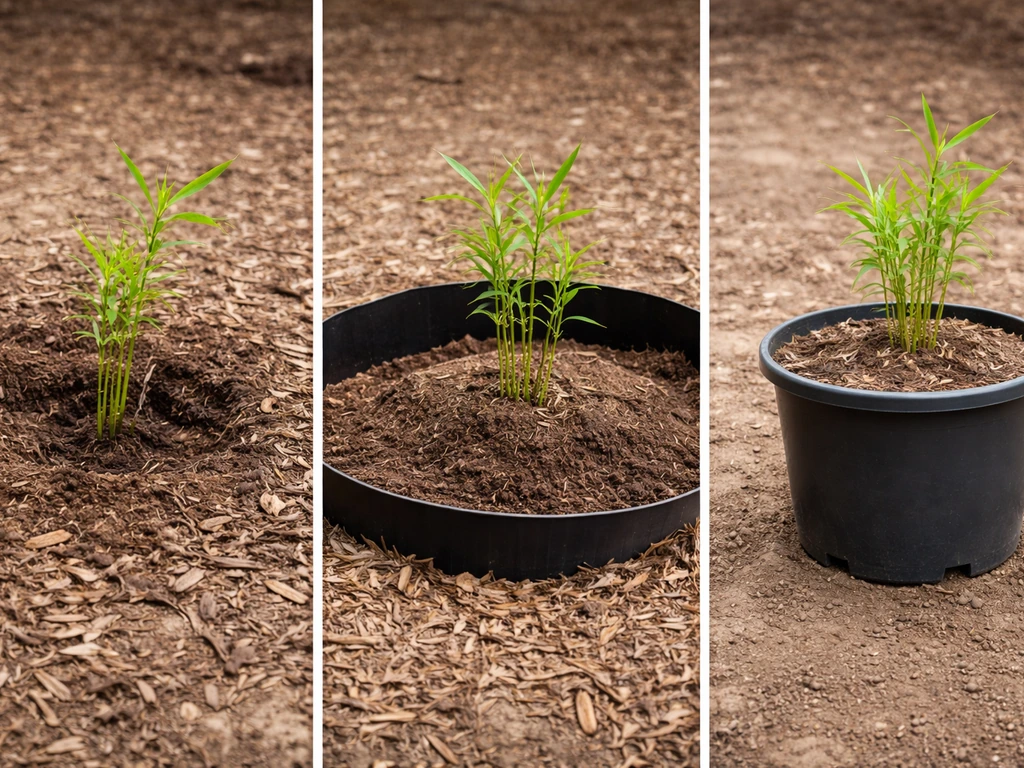
You have three main ways to plant bamboo in Texas: in-ground with no barrier, in-ground with a rhizome barrier, or in containers. The right choice depends on your species and your goals.
In-ground clumping bamboo
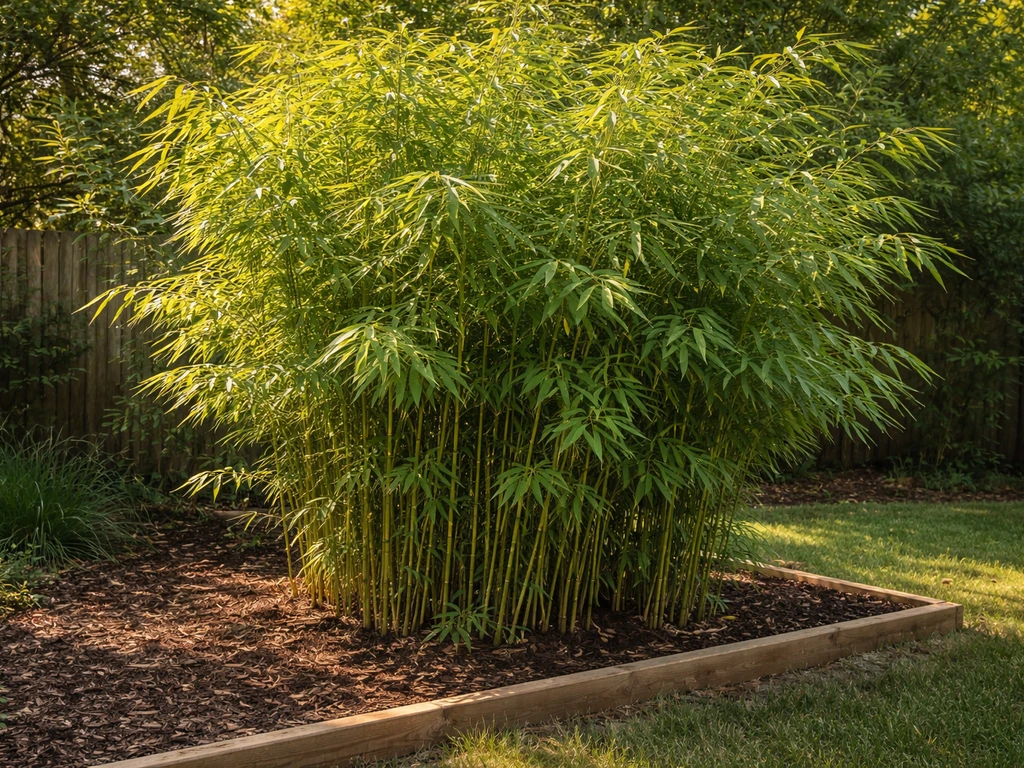
Clumping bamboos can go in-ground without a barrier and are the simplest approach. Dig a hole about twice the width of the root ball, amend the soil, plant at the same depth the plant was in its nursery container, water deeply, and mulch heavily. Space plants based on the mature spread of the variety, Bambusa multiplex clumps, for example, spread 3–5 feet wide over several years, so you can plant them 4–6 feet apart for an eventual privacy screen.
In-ground running bamboo with rhizome barriers
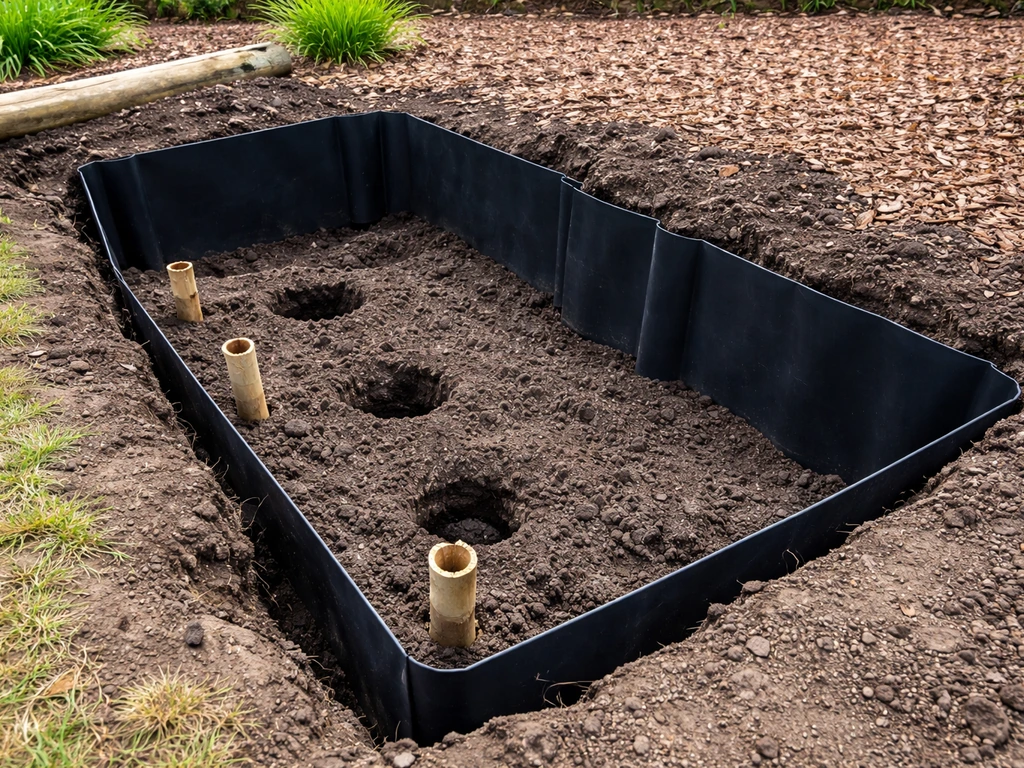
If you choose a running species, a proper rhizome barrier is non-negotiable. The standard recommendation is a 60 mil (about 1/16 inch thick) HDPE barrier installed at least 24–30 inches deep. For timber-sized running bamboos like Phyllostachys vivax, step up to 80 mil thickness. The barrier should extend 2–3 inches above the soil surface so you can see if rhizomes are trying to climb over it, which they will attempt.
Overlap barrier seams by at least 6 inches and use a sealant or connector clamp rated for the product. A barrier installed too shallow or too thin is effectively no barrier at all, this is one of those cases where the cheap option costs more in the long run when you are digging out escaped rhizomes from your neighbor's yard.
Gardeners in North Carolina deal with the same spread-control challenges on running bamboos and have learned the same lesson the hard way.
Container growing
Growing bamboo in large containers is an excellent approach for Texas gardeners who want total control over spread, or who are renting and want to take their plants with them. Use a container at least 20–30 gallons in size with drainage holes. Clumping bamboos do especially well in containers, Fargesia rufa and Bambusa multiplex both adapt readily. Container bamboo dries out faster than in-ground plants, so plan to water more frequently in Texas summers.
Repot every 2–3 years as the root mass fills the container, or divide the clump and replant. The tradeoff is that containers limit ultimate size and may need more winter protection in north Texas (a pot full of frozen soil has less insulating mass than the ground).
What to expect in the first few years
There is an old saying in bamboo growing: sleeps the first year, creeps the second, leaps the third. It is broadly accurate for Texas conditions. Bamboo culms (canes) grow from rhizomes, and a new planting spends its first year building that underground rhizome network rather than putting on dramatic above-ground growth. Do not panic if your first-year plant looks like it barely grew, it is doing most of its work underground. Establishing a new bamboo grove typically takes 2–3 full growing seasons before you see the rapid, impressive expansion bamboo is known for.
By year two, you will see noticeably more shoots and slightly larger culm diameter than the first year. By year three, in a good Texas growing location with proper watering and fertilizing, the planting can look genuinely established and impressive. Similar timelines are seen in Tennessee, where warm summers push strong growth but winters require rhizome resilience.
Winter recovery
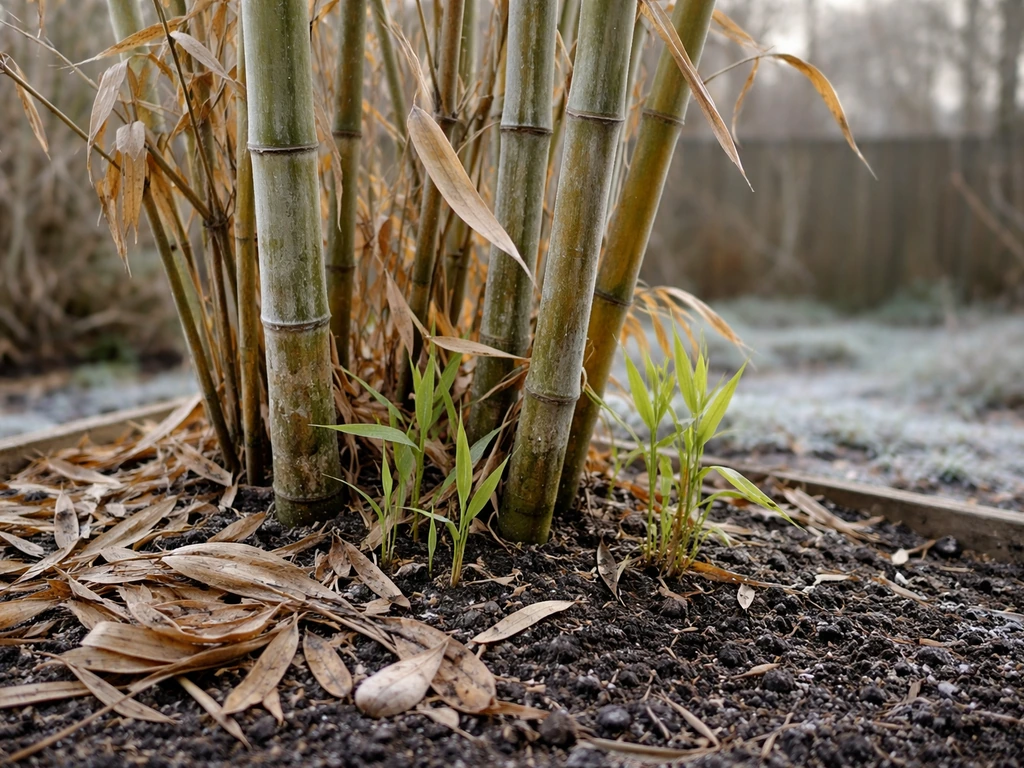
If you are in Central or North Texas and get a hard freeze, you may see leaf drop or culm damage. This looks alarming but usually is not fatal. As long as the rhizomes survived (which they typically do even when culms are damaged), your bamboo will push new leaves and shoots in spring.
The recovery protocol is straightforward: wait until late February or March to cut back dead culms, water regularly as temperatures warm up, and fertilize in mid-March to support the recovery flush. Rhizomes can survive temperatures that would kill the above-ground portions entirely, a cold snap that kills your culms is not necessarily the end of the plant. Gardeners in Alabama experience the same freeze-and-recover cycle with Phyllostachys and clumping species and typically see full recovery by mid-spring.
Troubleshooting common problems
Yellowing leaves are the most common concern Texas bamboo growers report. The cause is usually one of four things: underwatering (most common in the first Texas summer), over-fertilizing causing salt/root burn, low light, or pest pressure from spider mites or aphids, which tend to spike in hot dry conditions. Check soil moisture first. If the soil is fine, look under the leaves for mites or aphid colonies. If you recently fertilized heavily, flush the root zone with deep watering to leach excess salts. Oklahoma gardeners growing bamboo deal with the same hot, dry-summer stress patterns and report the same yellowing symptoms when establishment watering is insufficient.
One more issue specific to Texas: alkaline water. If your tap water is high in calcium carbonate (common in Central and West Texas), long-term irrigation can gradually raise soil pH and lock out iron and manganese, leading to interveinal yellowing (chlorosis). Adding sulfur or iron sulfate to the soil annually and using mulch to build organic matter helps keep pH in the right range for bamboo.
Your next steps based on where you are in Texas
If you are in Houston, Corpus Christi, or South Texas: you have the most options of anyone in the state. Go with Bambusa multiplex or Bambusa oldhamii for a large clumping screen, or Phyllostachys vivax with a barrier if you want height fast. Check your city's rules and plant in spring after the last cold snap.
If you are in Austin or San Antonio: Zone 8b–9a gives you solid options. Fargesia rufa handles the occasional hard freeze and is a safe, low-drama choice. Bambusa multiplex works too, though it may die back slightly in a bad winter and recover in spring. Avoid Phyllostachys aurea given Austin's explicit invasive listing.
If you are in Dallas-Fort Worth or North Texas: Focus on the most cold-hardy species. Fargesia rufa (rated to -10°F) is your best clumping bet. Phyllostachys heteroclada (rated to -5°F) is the running option if you want a larger plant with a barrier. Mulch heavily in fall and plant near a south-facing wall for extra warmth. For context, Florida gardeners have the inverse problem: too warm for cold-hardy Fargesia, but the species selection logic, matching cold hardiness to your zone, is the same core exercise.
If you are in West Texas or the Panhandle: This is the hardest region for bamboo. Zone 6–7 winters can drop below 0°F, which eliminates most subtropical clumpers. Fargesia rufa and Fargesia nitida are your best shots, ideally in a protected microclimate or containers you can move to a garage during hard freezes. It can be done, but manage expectations: you are working against both cold and dry air, and establishment will be slower than in the rest of the state. The climate dynamics are not unlike what gardeners face when asking whether bamboo grows in Tennessee's colder mountain regions, possible with the right species and site, but you need to be deliberate about it.