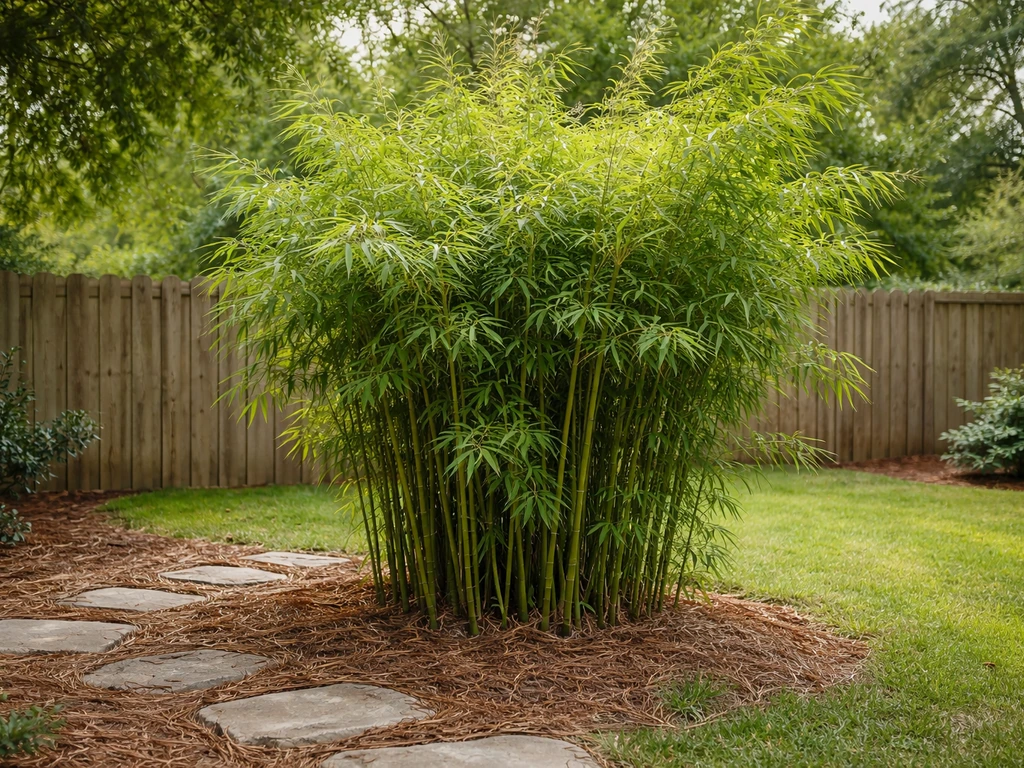
Yes, bamboo grows very well in Alabama. The state's climate spans USDA hardiness zones 7b through 9a, which covers the cold tolerance range of dozens of practical bamboo species. Alabama has its own native bamboo (rivercane, Arundinaria gigantea) growing wild in riparian corridors, introduced ornamental species are naturalized across the state, and there is even a long-running commercial bamboo nursery operating out of Oakman, Alabama that ships plants nationwide. Whether you want a towering timber screen in Birmingham or a compact clumping specimen near the Gulf Coast, the right bamboo exists for your yard.
Does Bamboo Grow in Alabama? Best Species, Care & Tips
Marcus Hartwell
12 Jul 2026
Alabama's climate and what it means for bamboo
Alabama covers a surprising range of climates for a single state. The northeast corner, particularly DeKalb and Cherokee counties up on Sand Mountain and the Cumberland Plateau, sits in USDA zone 7b, where winter lows can dip to around 5 to 10 degrees Fahrenheit in hard years. The broad central and southern belt of the state falls into zones 8a and 8b, with typical winter minimums between 10 and 20 degrees F. The Mobile Bay area and the Gulf Coast push into zone 9a, where hard freezes are rare and winters are more subtropical in character.
Growing seasons follow the same gradient. Based on NOAA climate normals (1991 to 2020), the last spring frost arrives as early as late February in Mobile County but not until late March or early April in parts of northern Alabama. That gives most of the state a growing season somewhere between 220 and 260 days, which is more than enough for bamboo to establish, push new culms, and harden off before winter. Rainfall averages 55 to 65 inches annually across most of the state, which bamboo appreciates, as long as drainage is adequate.
| Region | USDA Zones | Typical Winter Low (°F) | Last Frost (Approx.) | Growing Season |
|---|---|---|---|---|
| Northeast (Ft. Payne, Gadsden area) | 7b | 5–10°F | Late March – Early April | ~220 days |
| North-Central (Huntsville, Tuscaloosa) | 7b–8a | 10–15°F | Mid-to-Late March | ~230 days |
| Central (Birmingham, Montgomery) | 8a–8b | 15–20°F | Early-to-Mid March | ~240 days |
| Southwest (Selma, Demopolis) | 8b | 15–20°F | Early March | ~250 days |
| Gulf Coast (Mobile, Baldwin County) | 8b–9a | 20–25°F | Late February | ~260 days |
Clumping vs. running bamboo: the decision that matters most in Alabama
This is where I see most Alabama gardeners make their first, and biggest, mistake. Running bamboos (Phyllostachys and related genera) spread through aggressive underground rhizomes that can travel 5 to 15 feet or more in a single season. They establish faster and often grow taller than clumpers, but in Alabama's warm, moist climate they can turn into a genuine problem quickly. The Alabama Cooperative Extension System has an entire fact sheet (FOR-2088) dedicated to bamboo control, and the majority of calls they receive are from homeowners trying to remove Phyllostachys aurea (golden bamboo) that was planted years ago without containment. Once it escapes into a neighbor's property or a drainage ditch, you have a legal and logistical headache.
Clumping bamboos (Fargesia, Bambusa, and a few others) expand slowly outward from a central crown and are far easier to manage long-term. The tradeoff is that many tropical clumpers in the Bambusa genus lack cold hardiness for northern Alabama's zone 7b winters. Fargesia species are the exception: they are genuinely cold-hardy clumpers that handle zone 7 and sometimes zone 6 winters without protection. For most Alabama homeowners who want bamboo without containment headaches, a hardy Fargesia is the practical answer. If you want a running bamboo, use a physical rhizome barrier (high-density polyethylene, at least 60 mil thick, buried 24 to 30 inches deep with 2 inches above grade) and plan on annual rhizome pruning at the barrier edge.
A word on Alabama's native bamboo
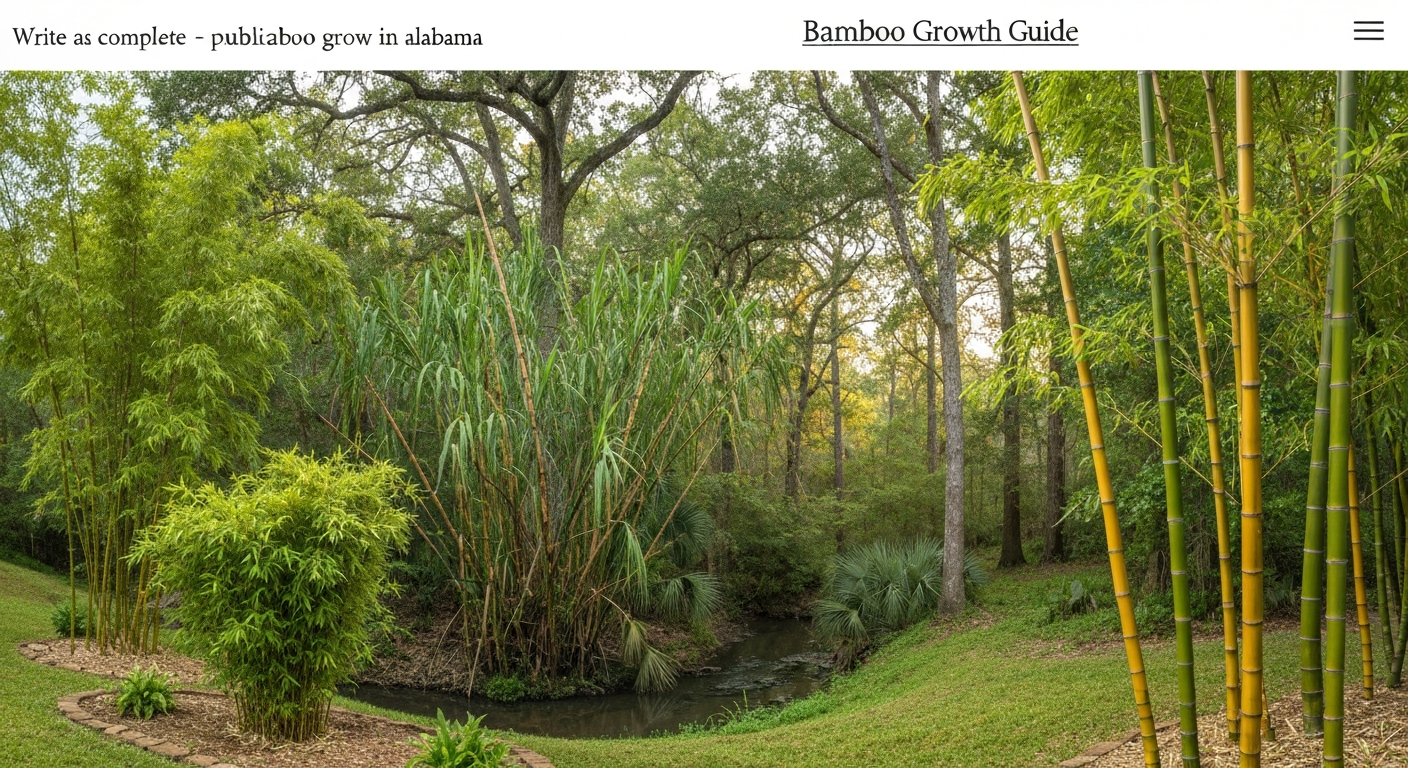
Arundinaria gigantea, commonly called rivercane, is a native grass that grows naturally in Alabama's floodplain corridors and wet bottomlands. It forms dense canebrakes along rivers and streams and has significant ecological value for wildlife. If you have a wet, riparian area on your property, rivercane is worth considering as both a habitat restoration plant and a low-maintenance screening option. It is a running bamboo by rhizome behavior, but it is native, so its spread is part of a natural system rather than an introduced invasion.
Best bamboo species and cultivars for Alabama
Choosing a species without matching it to your specific zone is how you end up with dead culms after the first hard winter. The recommendations below draw on cold-hardiness data from the American Bamboo Society source lists, peer-reviewed cold-tolerance research, and the practical experience of growers who have tested these plants in Alabama and the broader Southeast.
| Species / Cultivar | Type | Cold Hardiness | Alabama Zones | Height | Notes |
|---|---|---|---|---|---|
| Fargesia murielae 'Jumbo' | Clumping | to -20°F (Zone 5) | 7b–9a | 8–12 ft | Ideal privacy screen; no containment needed; shade tolerant |
| Fargesia robusta 'Campbell' | Clumping | to -5°F (Zone 6b) | 7b–9a | 10–15 ft | Fast-establishing for a clumper; handles Alabama summers well |
| Fargesia nitida 'Jiuzhaigou' | Clumping | to -20°F (Zone 5) | 7b–9a | 8–12 ft | Reddish culms; good ornamental value; prefers afternoon shade |
| Phyllostachys aurea (Golden Bamboo) | Running | to 0°F (Zone 7) | 7b–9a | 20–30 ft | Very common in Alabama; requires strict containment; invasive risk |
| Phyllostachys aureosulcata 'Spectabilis' | Running | to -10°F (Zone 6) | 7b–9a | 25–35 ft | Stunning yellow/green culms; use barrier; popular screen bamboo |
| Phyllostachys bissetii | Running | to -15°F (Zone 5b) | 7b–9a | 18–25 ft | One of the hardiest runners; excellent windbreak; still needs barrier |
| Phyllostachys vivax 'Aureocaulis' | Running | to -5°F (Zone 6b) | 8a–9a | 35–50 ft | Timber-scale bamboo; dramatic statement plant; barrier essential |
| Bambusa multiplex 'Alphonse Karr' | Clumping | to 15°F (Zone 8a) | 8a–9a | 15–25 ft | Colorful striped culms; good for Gulf Coast and central AL |
| Bambusa oldhamii | Clumping | to 18°F (Zone 8b) | 8b–9a | 40–55 ft | Timber clumper; only for coastal/south AL; not hardy in north |
| Arundinaria gigantea (Rivercane) | Running (native) | to -20°F (Zone 5) | 7b–9a | 10–20 ft | Native; ideal for riparian/wet sites; ecological restoration value |
For northern Alabama (zone 7b), stick with Fargesia species or the cold-hardiest Phyllostachys like P. bissetii. For the Birmingham corridor (zones 8a to 8b), your options open up considerably, and most Phyllostachys and hardy Bambusa will perform. Down near Mobile and the Baldwin County coast (zone 9a), you can experiment with larger tropical clumpers like Bambusa oldhamii that simply will not survive a north Alabama winter. If you are comparing notes with gardeners in neighboring states, similar zone-matching logic applies in Georgia and Tennessee, though Tennessee's northern counties push colder than anything Alabama experiences.
Picking the right spot in your yard
Sun exposure is the first thing I look at. Most timber-scale bamboos (Phyllostachys, Bambusa) want full sun or at least 6 hours of direct light to achieve their advertised height. Fargesia species are a real exception here: they actively prefer partial shade, especially in central and south Alabama where summer afternoon temperatures regularly push above 90 degrees F. I have seen Fargesia robusta planted in full sun in Birmingham scorch at the leaf tips every August, while the same cultivar planted on a north-facing wall with afternoon shade stays lush through the heat.
Wind protection matters more than most people realize. Alabama's storm systems, including tornado-prone spring weather and Gulf tropical systems, can snap or permanently lean young culms. A location with a building, fence, or established tree line on the northwest side (the direction of most winter cold fronts) does double duty: it buffers both cold desiccating winds in winter and severe summer storm winds. This kind of sheltered microclimate can effectively bump a planting site up half a zone in practice.
Drainage is non-negotiable for most ornamental bamboos. While Arundinaria rivercane thrives in wet bottomlands, the ornamental species most people want, especially Phyllostachys and Fargesia, need soil that drains well after rain. Standing water around the root zone for more than a day or two will rot rhizomes. Avoid low spots, compacted clay flats, and any area downhill from a gutter or drainage pipe. If your yard's natural drainage is poor but the rest of the location is ideal, raised planting beds or amended mounds are a practical solution.
Preparing Alabama soil for bamboo
Alabama soils vary a lot. The red clay of the Piedmont and the Tennessee Valley's darker, more fertile soils behave very differently from the sandy coastal plain soils of south Alabama. Clay soils are often poorly drained and compact, which bamboo roots dislike. Sandy coastal soils drain too fast and hold few nutrients. In both cases, the goal is the same: a loamy, well-aerated growing medium with a pH between 5.5 and 7.0 and good organic matter content.
Before you plant, I strongly recommend pulling a soil test through the Alabama Cooperative Extension System. It costs a few dollars and tells you exactly where your pH and nutrient levels stand. Most Alabama soils are naturally somewhat acidic (often pH 5.0 to 6.0), which is on the low end of bamboo's preferred range. If your test comes back below 5.5, work agricultural lime into the top 12 inches of soil a few weeks before planting. If your test shows compacted, high-clay content, incorporate 3 to 4 inches of aged compost and coarse sand into the planting area to improve drainage and aeration.
- Test soil pH and nutrients before planting (target pH 5.5 to 7.0)
- For heavy clay soils: incorporate 3 to 4 inches of aged compost plus coarse sand, working to a depth of 12 inches
- For sandy coastal soils: add aged compost and a layer of mulch to improve moisture retention
- Apply lime if pH is below 5.5, sulfur if above 7.0 — retest after 6 to 8 weeks
- Avoid fresh manure or high-nitrogen fertilizers at planting; they can burn new roots
- A 3 to 4 inch layer of wood chip or bark mulch after planting conserves moisture and regulates root-zone temperature
When to plant bamboo in Alabama
Spring is the best time to plant bamboo in Alabama, and more specifically, the window from late March through early May is ideal for most of the state. By then, soil temperatures have climbed above 50 degrees F (bamboo rhizomes become active around this threshold), the risk of a damaging late frost has passed in most zones, and the plant has a full growing season ahead to establish before winter. Container-grown nursery plants can technically be planted year-round in zones 8 and above, but summer planting requires consistent irrigation to prevent heat stress, and fall planting gives the roots less time to anchor before cold weather arrives.
For northern Alabama in zone 7b, I would wait until the first two weeks of April before putting bamboo in the ground. The extra week or two of waiting makes a real difference if a late frost sneaks through in late March, which it does some years around Huntsville and Fort Payne. In the Mobile area and along the Gulf Coast, you can reasonably plant as early as late February or early March, though a mulch layer over the root zone is good insurance even there.
How to plant bamboo in the ground: step by step
The first year in the ground is when bamboo either takes off or sulks. Getting the planting process right saves you months of frustration. Here is what I do and what I recommend for Alabama conditions.
- Mark and prepare the site: Clear the planting area of weeds, grass, and debris. If installing a rhizome barrier for running bamboo, dig the barrier trench first (18 to 30 inches deep around the perimeter of the intended grove, with the top 2 inches of 60-mil HDPE barrier above grade) before you amend the interior soil.
- Amend and till the soil: Work compost and any lime or sulfur amendments into the top 10 to 12 inches. For heavy Alabama clay, incorporate coarse sand as well. Rake smooth and allow soil to settle for a few days if time permits.
- Dig the planting hole: Make it at least twice as wide as the container or root ball and roughly the same depth. Bamboo roots spread laterally, so width matters more than depth.
- Check the planting depth: Set the root ball so its top sits at or just slightly below the surrounding soil grade. Planting too deep buries the crown and invites rot. Planting too shallow leaves roots exposed to temperature swings.
- Backfill and firm the soil: Fill the hole with the native amended soil, firming it gently around the root ball to eliminate air pockets. Do not pack it hard.
- Water deeply at planting: Soak the root zone until water drains freely from the base. This initial deep watering settles the soil and makes the first contact between roots and new soil.
- Apply mulch: Spread 3 to 4 inches of wood chip or bark mulch over the root zone, keeping it 2 to 3 inches away from the base of the culms. Mulch retains moisture, suppresses weeds, and moderates soil temperature — all critical in Alabama's hot summers.
- Water consistently through the first season: In the absence of rain, water deeply two to three times per week during the first summer. Bamboo is not a drought-tolerant plant in its first year, and Alabama summers can be brutal. A drip line or soaker hose around the perimeter of the planting area is worth setting up.
- Hold off on heavy fertilizing for the first 4 to 6 weeks: Once the plant shows new growth and you are confident the roots have settled, apply a balanced slow-release fertilizer or a nitrogen-rich lawn fertilizer (bamboo responds well to nitrogen). In subsequent growing seasons, fertilize in early spring as new shoots emerge.
- Inspect the rhizome barrier (for running bamboo) at least once per season: Use a flat spade or mattock to cut back any rhizomes that have reached or surfaced at the barrier edge. The best time to do this in Alabama is late autumn, after shooting season ends.
What to expect in year one and beyond
There is an old saying about bamboo: 'sleeps, creeps, then leaps.' The first year after planting, most bamboo puts the majority of its energy underground, building out the rhizome network rather than pushing dramatic above-ground growth. New shoots may be shorter than the parent culms you planted. Do not panic and do not over-fertilize trying to force growth. By year two, you will typically see more and taller shoots. By year three and into year four, a well-established clump in central Alabama should be performing close to its potential height for the species. Running bamboos often show faster above-ground expansion in years two and three than clumpers, which is one reason containment needs to be in place from day one.
Managing invasive spread: containment and legal considerations
This section deserves honest attention. Running bamboo encroaching onto a neighbor's property is a real issue in Alabama, and it causes genuine disputes. Before planting any running species, talk to your neighbors, understand your property lines, and put a rhizome barrier in the ground. A 60-mil HDPE barrier (not cheaper, thinner materials) buried to 28 to 30 inches with 2 inches above grade is the standard recommendation from extension specialists. At each barrier edge, probe and cut back escaping rhizomes once a year, ideally in late fall. If rhizomes have already escaped, cutting them at the barrier and repeatedly mowing or cutting regrowth will weaken but not immediately kill escaped stands. The Alabama Cooperative Extension Service (ACES) fact sheet FOR-2088 outlines herbicide options (glyphosate and imazapyr are the most commonly used for bamboo control) for situations that have gotten beyond mechanical management. A multi‑university extension FAQ (Clemson, ACES, UF, UGA) provides additional best‑practice guidance on commercial bamboo production in the southeastern U.S., including species differences, management needs, and invasive‑spread risks Growing bamboo for commercial purposes in the southeastern U.S. — multi‑university extension FAQ (Clemson / ACES / UF / UGA).
Winter care and cold protection
Once established, most bamboo species rated for zone 7b and warmer need little special winter care in Alabama. Culm leaves will yellow and drop if temperatures drop hard, but as long as the rhizomes do not freeze, the plant pushes new growth in spring. The critical threshold varies by species, so match your cultivar to your zone using the table above. For newly planted bamboo in its first winter (especially in northern Alabama), a generous layer of mulch (4 to 6 inches) over the root zone provides meaningful insulation for the rhizomes. Wrapping culms in burlap is rarely necessary in Alabama's zones, but it can help a marginally hardy species through an unusually cold snap.
Common pests and disease problems in Alabama
Bamboo is largely pest-resistant compared to most garden plants, but Alabama's humid climate creates a few issues worth knowing. Bamboo mites (Schizotetranychus celarius) can cause a fine bronzing of leaves in dry, hot summers, particularly on Phyllostachys species. A strong water spray or insecticidal soap handles minor infestations. Scale insects occasionally appear on culms, particularly in shaded, humid spots. Root rot (caused by Pythium and related water molds) is the most common problem I see, and it almost always traces back to poor drainage at the planting site rather than a soil pathogen issue per se. Sooty mold can show up on culms as a secondary growth following scale or aphid infestations but is not itself damaging to the plant. Overall, bamboo grown in the right site with good drainage and appropriate sun exposure in Alabama tends to be a low-maintenance, trouble-free plant.
Where to buy bamboo in Alabama
One advantage of growing bamboo in Alabama specifically is that there is an established commercial nursery already operating here. Lewis Bamboo in Oakman, Alabama has been growing and shipping cold-hardy bamboo varieties for years and carries a wide range of both clumping and running species suited to southeastern climates. Buying from a nursery that has grown plants in Alabama's climate gives you a meaningful head start over ordering bare-root divisions shipped from a cooler region. Beyond Lewis Bamboo, check with regional native plant nurseries for Arundinaria gigantea if you are interested in the native rivercane for a riparian or wet site. The Birmingham Botanical Gardens maintains a bamboo grove in their Japanese Garden section, which is worth visiting in person to see mature specimens of several species growing in Alabama conditions before you commit to a purchase.
How Alabama compares to neighboring states
Gardeners who have been researching bamboo across the South often wonder how Alabama stacks up against its neighbors. Georgia shares essentially the same zone range as Alabama (zones 7b to 9a) and the same species palette, with slightly more maritime influence in the coastal southeast. For region-specific details, see does bamboo grow in georgia for a focused guide on species and planting considerations in neighboring Georgia. Tennessee's northern counties push into zone 6b, which is colder than anything Alabama experiences, making cold-hardiness selection more critical there. If you’re asking does bamboo grow in Tennessee, see the Tennessee guide for zone-specific recommendations and species that tolerate its colder northern counties. Florida's central and south regions are warmer (zones 9b to 11) and favor tropical clumpers that would not survive Alabama winters. For specifics on species and zones in the Sunshine State, see the article does bamboo grow in Florida. Louisiana's climate is comparable to southern Alabama, with zones 8a to 9b, and the same humidity-related management considerations apply. If you’re asking "does bamboo grow in Louisiana," the answer is yes, zones roughly 8a to 9b support many of the same bamboo species that thrive in southern Alabama. Texas covers an enormous range, from zone 6 in the panhandle to zone 10 in the Rio Grande valley, so zone-matching there depends heavily on which part of the state you are comparing. For region-specific details on bamboo in that state, see does bamboo grow in Texas. North Carolina's piedmont and mountain regions are colder than most of Alabama, restricting species choices similarly to Tennessee's northern tier. For a focused comparison of species and zones specific to that state, see does bamboo grow in North Carolina. The common thread across all of these neighboring states is the same: matching species cold hardiness to your specific zone is the single most important variable, and Alabama's zones are favorable enough that most temperate ornamental bamboos have a practical home somewhere in the state. If you’re curious about conditions in neighboring states, see our short guide on does bamboo grow in Oklahoma for zone-specific recommendations and tips.
Your next steps for growing bamboo in Alabama
Start by looking up your exact USDA hardiness zone using your ZIP code on the 2023 USDA interactive map, it matters more than your general region. Then decide whether you want a contained running bamboo or a no-fuss clumping species before you visit a nursery or browse species lists, because that decision shapes everything that follows. Pull a soil test from ACES, plan your site for drainage and appropriate sun, install any rhizome barrier before the plant goes in the ground, and plant in that late March to early May window for the best first-year establishment. Alabama's long growing season, abundant rainfall, and mild winters make it one of the better states in the country for bamboo cultivation, and with the right species in the right spot, you will have a thriving grove in three to four years.
FAQ
Does bamboo grow in Alabama?
Yes. Both native rivercane (Arundinaria gigantea) and introduced ornamental bamboos (clumping and cold‑hardy running types) are established in Alabama. Success depends on choosing species matched to your USDA zone, site microclimate, and management approach.
Which bamboo species and cultivars work best in Alabama?
For Alabama’s range of zones (roughly 7b–9): - Native: Arundinaria gigantea (rivercane) — ideal for wet riparian spots and restoration plantings. - Cold‑hardy temperate clumpers/runners: Bambusa multiplex cultivars (in warmer southern coastal areas), Phyllostachys spp. for much of the state (e.g., Phyllostachys aurea, Phyllostachys nigra — choose cold‑hardy selections), Fargesia spp. (clumping, cold tolerant) in cooler northern counties. - Consult the American Bamboo Society species list and local nurseries for cultivar hardiness ratings and proven Alabama selections; avoid tropical Dendrocalamus and many Bambusa in northern/colder inland counties.
How do USDA hardiness zones and Alabama’s climate affect bamboo choice?
Alabama spans roughly USDA 7b–9. Temperate genera such as Phyllostachys and Fargesia tolerate colder zones (7–8), while many tropical clumpers need zone 9 or protected microclimates. Check your ZIP/county on the 2023 USDA Plant Hardiness Map and pick species with equal or better cold‑hardiness than your zone.
What soil, sun, and watering conditions do bamboos prefer in Alabama?
General preferences: well‑drained fertile loam, pH ~5.5–7.0 for most ornamentals; rivercane prefers wetter, floodplain soils. Most species like full sun to part shade — temperate running bamboos often do best with 4–6+ hours sun; Fargesia tolerates more shade. Keep soil consistently moist especially during establishment; avoid waterlogged conditions for non‑riparian species.
When is the best time to plant bamboo in Alabama?
Plant in early spring after last hard frost in your area (late winter–spring timing shifts north to south) or in early fall where winters are mild (southernmost counties) to allow roots to establish before extremes. In colder northern counties, spring planting gives plants a full growing season to establish.
How fast does bamboo grow and what timelines should I expect in Alabama?
Growth rates vary by species and conditions. Fast‑growing temperate runners (Phyllostachys) can reach full screening height in 3–5 years under good conditions. Clumpers (Fargesia, many Bambusa) are slower vertically but can thicken into an effective screen in 3–7 years. Native rivercane forms colonies over longer timescales depending on hydrology and disturbance.
Next Article
Does Bamboo Grow in Louisiana? Types, Care, and Success Steps
Learn if bamboo grows in Louisiana, which types thrive, and exact planting and care steps for heat, humidity, and winter