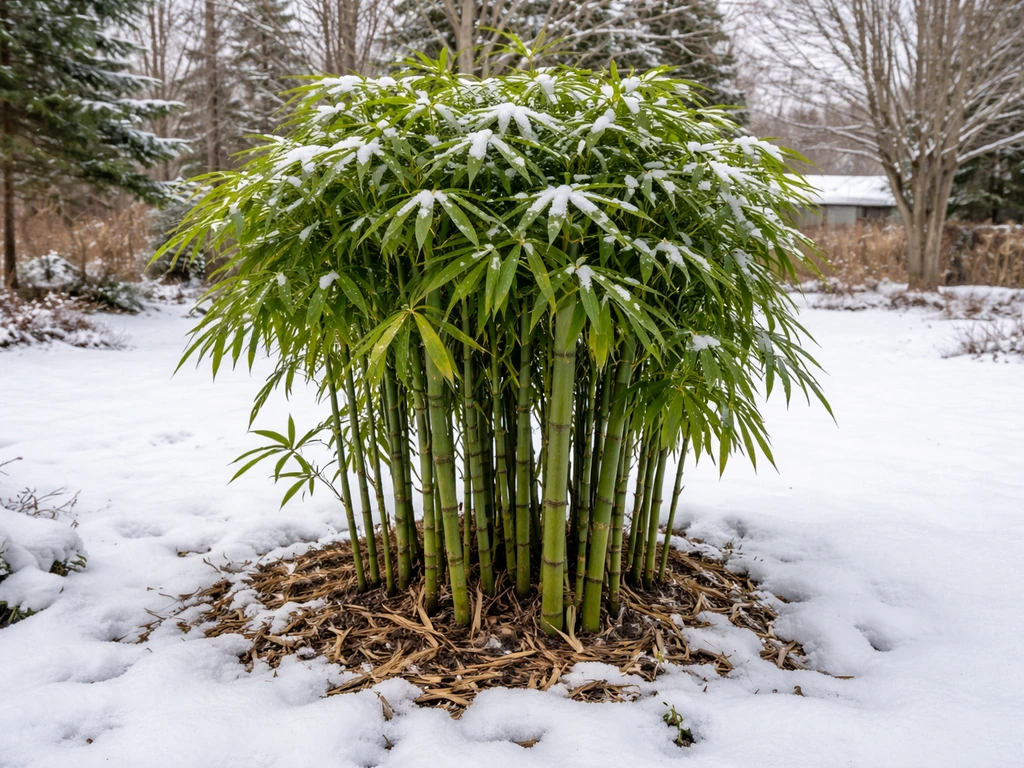
Yes, bamboo can grow in Maine outdoors, but you have to be picky about the species and deliberate about how you plant it. In New York, bamboo can also work outdoors in the right microclimate, but the species and winter protection still matter a lot can grow in Maine outdoors. [Maine spans USDA Hardiness Zones 3 through 6](https://extension. umaine.
Does Bamboo Grow in Maine? Conditions, Cold Hardy Types
Marcus Hartwell
24 Jun 2026
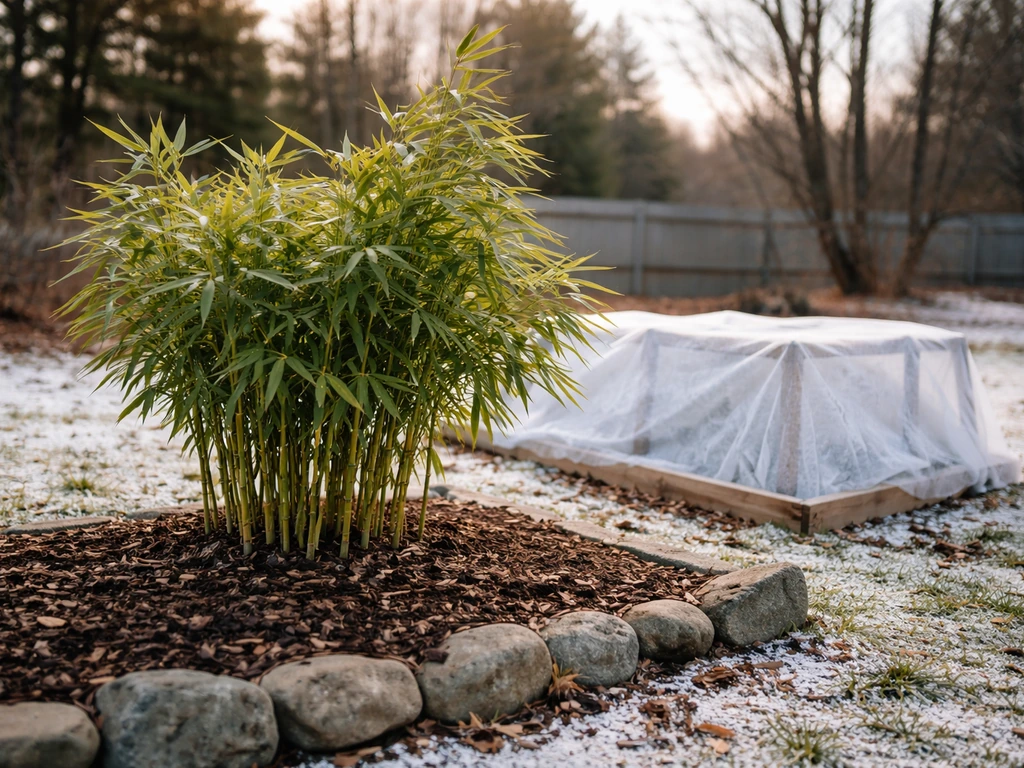
edu/gardening/manual/usda-plant-hardiness-zone-map/), and most bamboo varieties can't handle those extremes. The species that do survive here are cold-hardy Fargesia clumpers and a handful of tough Phyllostachys runners, and even those need shelter, good soil drainage, and heavy mulch to get through a typical Maine winter. Go in with the wrong variety or skip the protection steps and you'll likely be left with dead culms and a bare rhizome patch come spring.
Outdoor vs. indoor growing in Maine: the honest breakdown
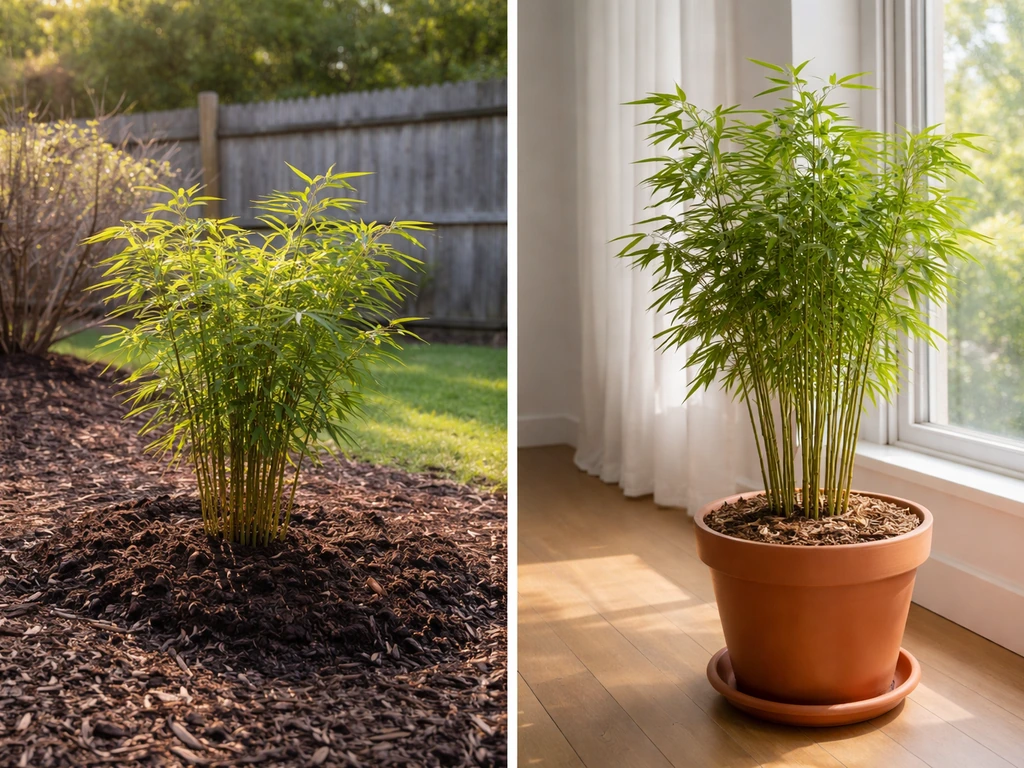
Outdoor bamboo in Maine is genuinely doable in Zones 5 and 6, which covers coastal areas, the Kittery-to-Portland corridor, and parts of the Kennebec Valley. In most parts of New England, including much of Maine, bamboo can grow if you choose cold-hardy types and plan for winter protection bamboo in New England. In those zones you can realistically grow Fargesia clumpers and cold-hardy Phyllostachys runners with the right microclimate and winter prep.
Zone 4 areas like Bangor or Augusta push into challenging territory but aren't impossible for the very hardiest picks. Zone 3 in northern and western Maine is a different story. Up there, most bamboo rhizomes won't survive repeated -30°F winters even under mulch, and you're better off treating bamboo as a container plant you overwinter in an unheated garage or cool greenhouse.
Indoor and container growing works anywhere in the state. Yes, can bamboo grow in Massachusetts outdoors in the right conditions, but cold-hardy species and winter protection are key. Use a large pot (at least 15 gallons for a meaningful plant), keep it in bright indirect light indoors during winter, and move it outside to a sheltered sunny spot from late May through September. You won't get the towering grove effect, but you'll get a healthy, attractive plant and avoid all the cold-hardiness drama entirely.
Which bamboo types can actually survive a Maine winter
Before picking a species, you need to understand two things: how cold-hardy the plant is, and whether its rhizomes run or clump. Those two factors drive everything about success in Maine, from winter survival to whether you'll spend years fighting a spreading rhizome system.
Clumping vs. running: why it matters here
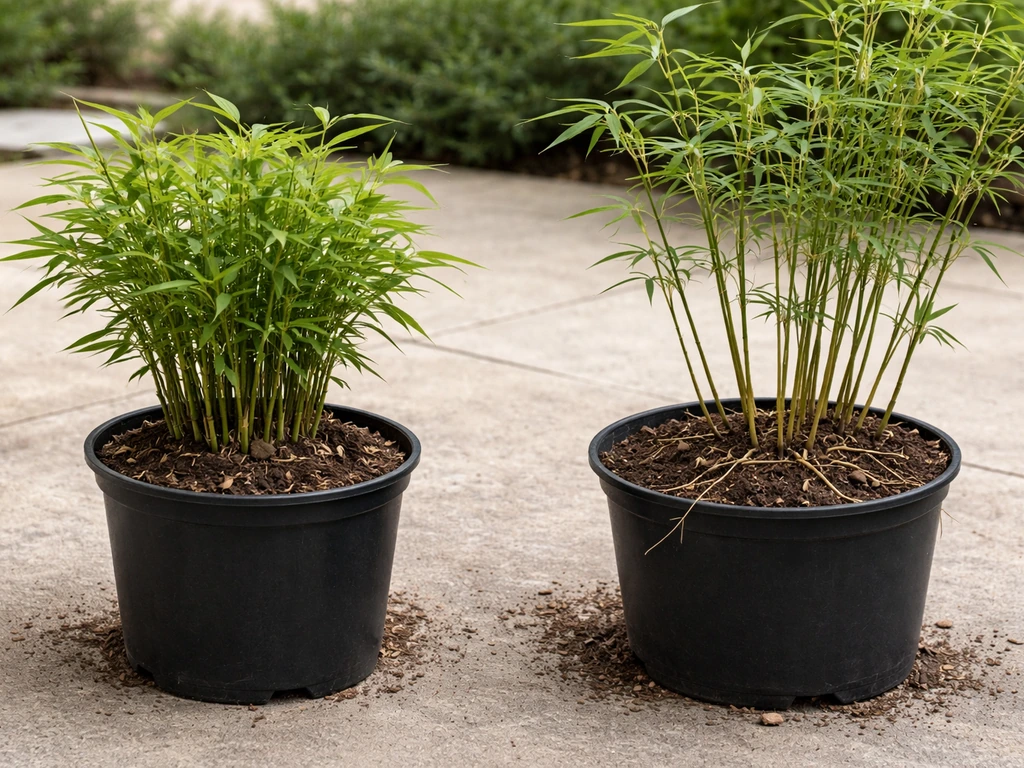
Clumping bamboos (sympodial rhizome type) push new culms from the tips of short, tight rhizomes. The plant expands slowly outward and stays roughly where you put it. Running bamboos (monopodial rhizome type) send long horizontal rhizomes that can travel several feet in a single season, popping up culms well outside your intended planting area. Both types store energy in their underground rhizomes, which is what survives a Maine winter even when the above-ground culms freeze and die back. The rhizome survival question is the whole game in cold climates.
The best species choices for Maine
For most Maine gardeners, start with Fargesia. The American Bamboo Society specifically calls out Fargesia and Thamnocalamus as the hardiest clumping types. Fargesia rufa (clumping) is described by multiple nurseries as exceptionally cold hardy, handles sun and wind better than most Fargesia, and is rated for Zone 5 with solid real-world performance near that edge. Fargesia murielae (umbrella bamboo) is hardy to around -15°C (Zone 5-9) and is another reliable choice with a graceful, arching form. These clumpers spread slowly, stay where you plant them, and are not on Maine's regulated invasive plant list.
If you're in Zone 5-6 and want a running type for a larger grove effect, Phyllostachys bissetii is the most cold-hardy Phyllostachys commonly available, rated to -10°F by most specialty growers, which puts it at the Zone 4 boundary. That said, two Phyllostachys species are specifically listed on Maine's regulated invasive terrestrial plant list: Phyllostachys aurea (golden bamboo) and Phyllostachys aureosulcata (yellow groove bamboo).
If you mean the legal side, some bamboo species can be regulated or prohibited in Maine depending on their invasiveness Maine's regulated invasive terrestrial plant list. Those are off the table. Before buying any Phyllostachys, check Maine's current do-not-sell list through the Department of Agriculture, Conservation and Forestry, because the list can expand. If you go with a runner, containment isn't optional.
It's a legal and practical requirement.
| Species | Type | Hardiness (approx.) | Maine Zone Suitability | Spread Risk |
|---|---|---|---|---|
| Fargesia rufa | Clumping | Zone 5 (-20°F) | Zones 5–6 (best choice) | Low |
| Fargesia murielae | Clumping | Zone 5 (-15°C) | Zones 5–6 | Low |
| Phyllostachys bissetii | Running | Zone 4 (-10°F) | Zones 5–6 with barrier | High — requires containment |
| Phyllostachys aurea | Running | Zone 6 | Regulated/prohibited in Maine | Very High — do not plant |
| Phyllostachys aureosulcata | Running | Zone 5-6 | Regulated/prohibited in Maine | Very High — do not plant |
My honest recommendation for Maine: start with Fargesia rufa. You get cold hardiness, manageable spread, no regulatory headaches, and a plant that genuinely performs in Zone 5. If you are wondering does bamboo grow in Virginia, the answer is yes, but success depends heavily on choosing the right cold-tolerant clumping species like Fargesia rather than assuming any bamboo will survive winter. Save the running types for when you have experience and are fully prepared for containment infrastructure.
How to set up your planting site for success
Microclimate and sun exposure
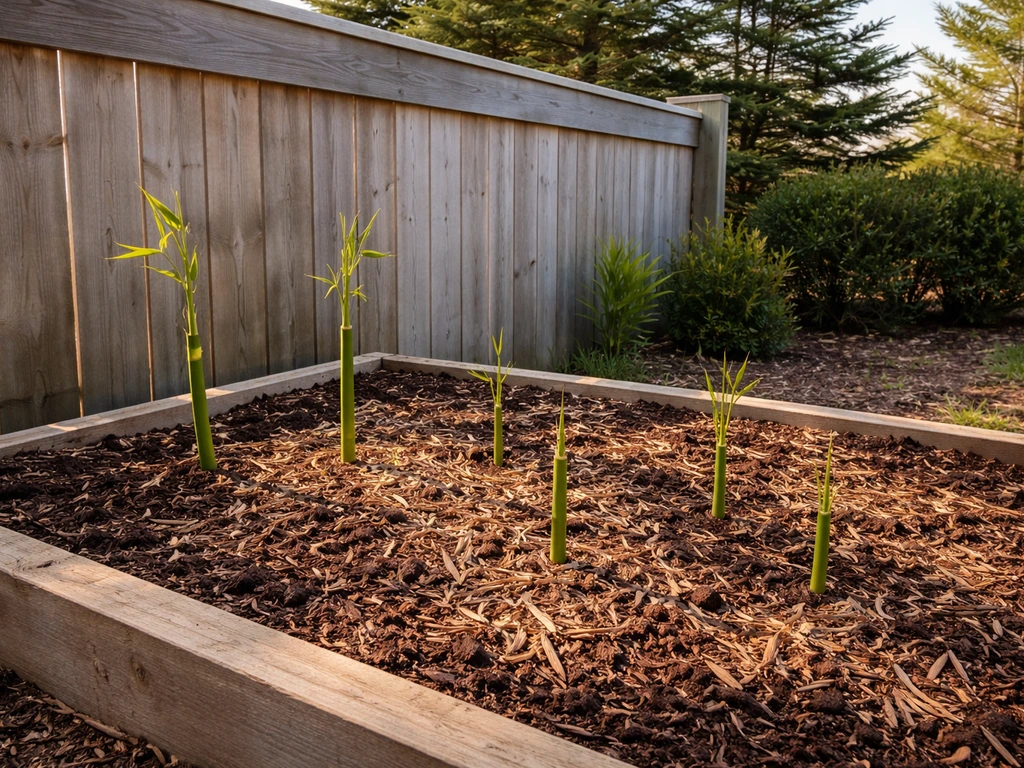
Microclimate selection is one of the biggest levers you have in Maine. A south or southeast-facing wall, fence, or tree line that blocks prevailing north and northwest winter winds can move your effective growing conditions up half a zone. Cold drying winds in winter are as dangerous as low temperatures themselves, killing culms through desiccation even when the rhizomes below survive just fine. Fargesia rufa tolerates partial shade well, but all bamboos establish faster and grow more vigorously with at least four to six hours of direct sun. Avoid low frost pockets where cold air settles.
Soil structure and drainage
Bamboo does not want to sit in wet, waterlogged soil, especially heading into winter. Heavy, compacted clay causes rhizome rot. If your native soil is clay-dominant, amend with compost and coarse sand to improve drainage, or build a slightly raised planting bed. A loamy, well-drained soil with reasonable organic matter is ideal. Bamboo is fairly pH-tolerant but does best in a range of roughly 5.5 to 7.0, which covers most of Maine's naturally slightly acidic soils without much amendment needed.
Wind protection
If you're planting in a naturally exposed spot, build some protection before the plant goes in. A section of burlap screening on the north and west sides, a wooden fence, or even a dense evergreen windbreak planted in advance will pay dividends through the first two winters while the rhizome system builds up enough energy reserves to bounce back from top kill. Tall, slender culms can also be staked or guyed to prevent wind uprooting, which is worth doing in the first season.
When to plant and what to expect in years one through three
Spring planting after frost risk passes is the strongest recommendation for Maine, typically late May to early June. If you’re wondering whether bamboo can grow in Pennsylvania, the key is choosing cold-hardy clumping or running types that match your local winter lows and protecting them from wind and freezes. Planting in spring gives the rhizomes a full growing season to establish before they face their first Maine winter. If you miss spring and need to plant in late summer, aim to get the plant in the ground no later than mid-September, and on a sheltered, partially shaded site. Any later than that and the roots won't have enough time to anchor before hard freezes arrive.
Year-by-year expectations
Year one is the hardest to be patient through. Bamboo follows the rule of 'sleep, creep, leap': the first year it sleeps, meaning most of the energy goes underground to build rhizome mass. You may see little to no above-ground growth and wonder if the plant is dead. It almost certainly isn't. In Maine, year-one culms often die back in winter even on hardy species, especially at the tops. Don't panic. Check the rhizome zone in early spring by gently probing the soil for firm, alive-looking tissue.
Year two, the plant starts to creep. You'll see new shoots emerge in spring, typically between late April and late May in Maine depending on soil temperature. These culms will be bigger than what came up in year one, and the plant will fill out noticeably. Year three is when the leap begins. A well-established Fargesia rufa in a Zone 5 Maine location can reach 6 to 8 feet in height and start producing the full visual effect you were after. Running types that survived establishment will begin to show more lateral spread from year two onward, which is exactly when your containment system needs to be working.
Containment, spread control, and staying on the right side of Maine law
If you plant any running bamboo, containment is not a nice-to-have, it's required both for your own sanity and to avoid liability for rhizomes escaping onto neighboring property. For Fargesia clumpers, this is much less of a concern, but it's still worth putting a physical check in place if you're near a property line.
HDPE rhizome barrier: the reliable method
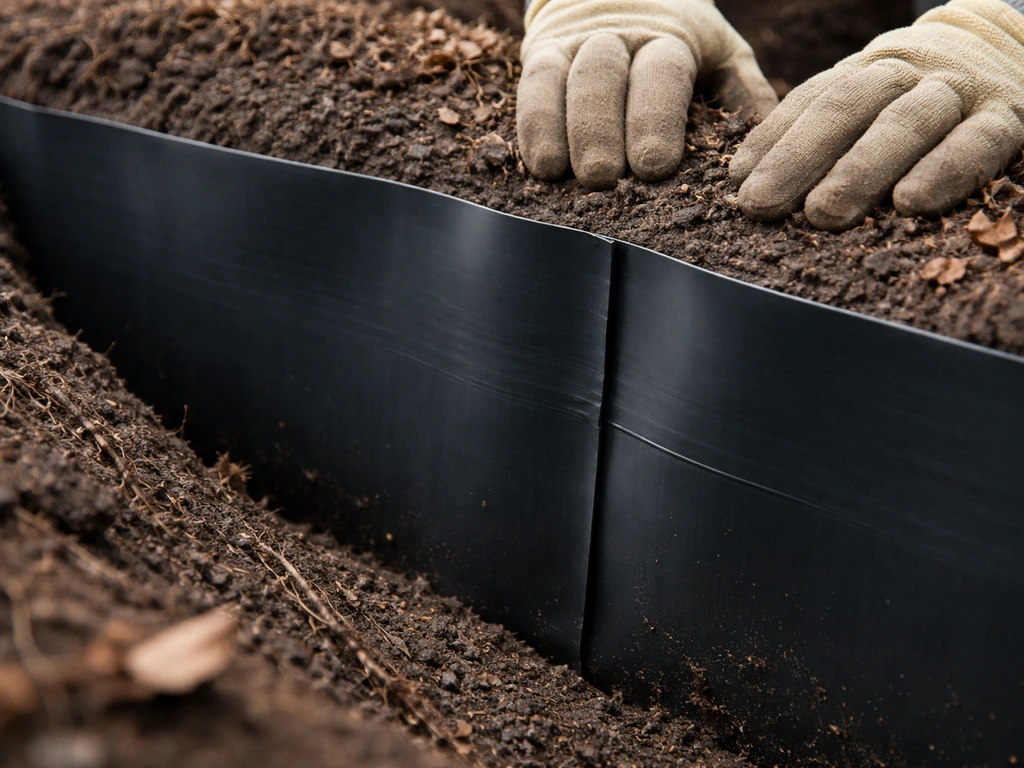
The American Bamboo Society recommends HDPE (high-density polyethylene) rhizome barrier at 60 to 80 mil thickness, installed 30 to 36 inches deep around the planting area. In colder climates like Maine, lean toward the heavier 80 mil product because thinner barriers are more prone to cracking and puncture in freeze-thaw cycles. Install the barrier in a continuous loop, leaving a 2-inch lip above grade so you can visually inspect it. Overlap the ends of the barrier by at least 12 inches and clamp them securely. A common installation size is 30-inch-wide barrier material set into a trench dug 27 to 28 inches deep.
One maintenance point most people miss: soil and decomposing debris gradually build up along the inside edge of the barrier. If that debris pile gets tall enough, rhizomes can grow over the barrier top and escape. Check and clear the inside edge once a year, typically in early spring before new shoots emerge.
The trench method: cheaper but needs consistent attention
A shallower open trench around the planting (around 8 to 10 inches deep) can intercept spreading rhizomes if you check and cut them back annually. This is less reliable than a buried HDPE barrier for aggressive running types, but can work for Fargesia as a belt-and-suspenders check on slow lateral expansion.
Check Maine's regulated plant list before you buy
Phyllostachys aurea and Phyllostachys aureosulcata are specifically named on Maine's regulated invasive terrestrial plant species list. Don't buy them, don't accept them as gifts, and don't transplant them from an old property. Always verify the Latin species name when purchasing because common names like 'golden bamboo' or 'yellow groove bamboo' can be mislabeled. If you're disposing of running rhizome material, do not compost it. Bag it and dispose of it as solid waste, because viable rhizome fragments left in a compost pile can re-establish.
Your seasonal care plan for Maine bamboo
Watering
Water deeply at planting and keep the soil consistently moist through the first growing season. Bamboo is not drought-tolerant during establishment. Once established (typically from year two onward), it's more resilient, but new culms emerging in spring need adequate moisture. In late fall, water well before the ground freezes, but time it so the soil drains before a hard freeze event rather than going into freeze with saturated conditions around the roots.
Mulching
Mulch is your most important cold-protection tool. Bamboo is a forest plant that naturally grows with accumulated organic matter over its root and rhizome zone. Apply a thick layer of wood chip or leaf mulch over the entire planting area every fall, at least 4 to 6 inches deep, extending well beyond the visible culms to protect the outermost rhizomes. The RHS recommends a minimum of 5 cm (about 2 inches), but in Maine's colder zones you want to double or triple that. Pull mulch back from the base of culms in early spring once frost risk drops to avoid creating conditions for crown rot.
Fertilizing
Fertilize in spring once new shoots are emerging, using a balanced slow-release granular fertilizer or a high-nitrogen lawn fertilizer, which bamboo responds well to. Don't fertilize after July in Maine. Late-season nitrogen pushes soft new growth that won't harden off before fall frosts and will increase winter dieback.
Winterizing step by step
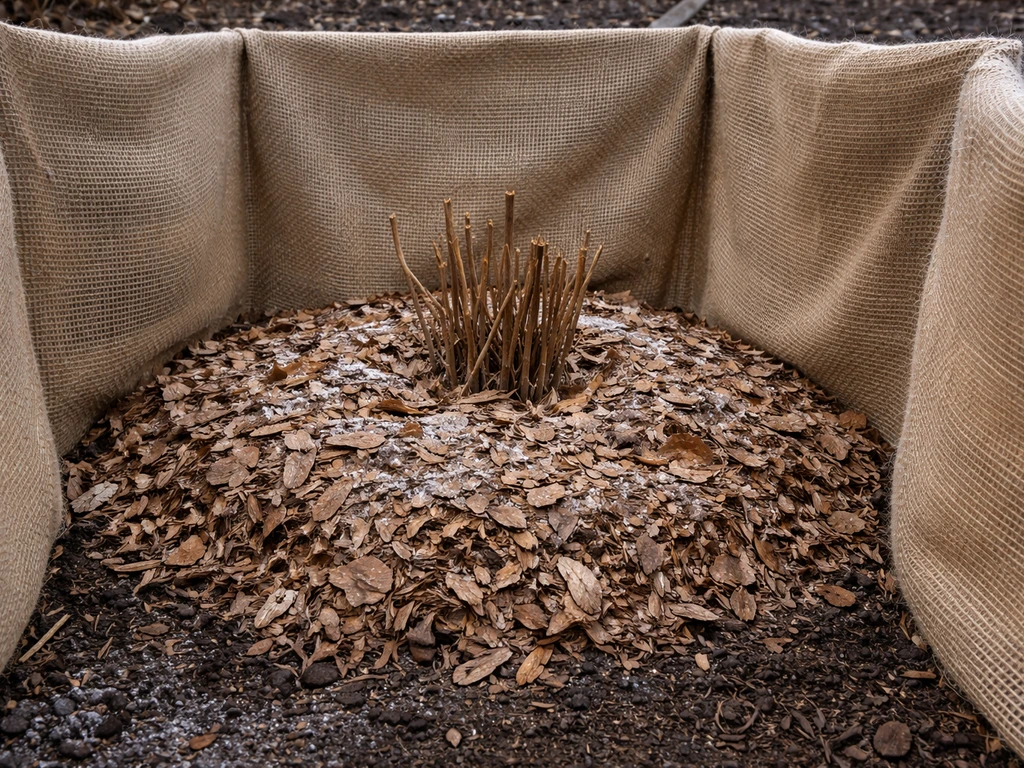
- In late October or early November (before hard freezes), apply a 4 to 6 inch layer of wood chip or shredded leaf mulch over the entire root and rhizome zone.
- Set up a burlap windscreen on the north and west sides of the planting if it's in an exposed location. Stake it so it doesn't blow over in winter winds.
- Stake or guy any tall culms (over 6 feet) to prevent wind rocking and uprooting.
- Water the root zone thoroughly in late October before freeze-up, timing it so the soil drains before the first hard freeze.
- In late March or early April, clear away dead culm material from the previous year. Cut dead culms to the ground. Don't remove them earlier because they provide some wind protection during the worst winter months.
- Pull mulch back from the base of culms (but leave it between the culms over the rhizome zone) once consistent above-freezing temps arrive.
- Check the inside edge of any HDPE barrier for debris buildup and clear it before new rhizome growth kicks off in late April.
Where to buy, what to look for, and what to do when things go wrong
Sourcing: local vs. shipped plants
Locally sourced plants are always preferable when you can find them. A plant that's been growing in a Maine or northern New England nursery has already acclimated to the region's temperature swings. Ask specifically whether the plant was grown outdoors or in a greenhouse, because a greenhouse-grown plant will need a hardening-off period before it goes into the ground.
True local sources for cold-hardy bamboo are limited in Maine, so you'll often need to buy from a specialty bamboo nursery that ships bare-root or potted plants. When ordering online, look for nurseries that list specific USDA zone ratings, not just general claims of 'cold hardy. ' Order in late April or early May so the plant arrives when you're ready to put it in the ground.
For plant size, a 1-gallon or 2-gallon container plant establishes fine and is often a better investment than a large specimen because smaller plants experience less transplant shock. The root-to-shoot balance of a well-grown 2-gallon Fargesia rufa from a reputable specialty nursery will outperform a 5-gallon plant that was dug and stressed at the wrong time.
Troubleshooting common Maine problems
- All culms died over winter but nothing is coming up in spring: Don't give up until June. Rhizomes can survive and push new shoots weeks after you'd expect. Gently probe the soil for firm, cream-colored rhizome tissue. If it's firm, not mushy, the plant is alive.
- New shoots came up in spring but the plant is not getting bigger year over year: This is usually a drainage problem or a Zone 3-4 location where the rhizome mass keeps getting partially killed back before it can build reserves. Move it to a better microclimate or shift to container growing.
- Culm tips are brown and dead but lower sections are green: Normal winter tip dieback in marginal zones. Cut back to the last healthy node. The plant is fine.
- Running bamboo is escaping the barrier: Check for debris buildup inside the barrier lip and clear it. Inspect the barrier seam for gaps. Cut any escaped rhizomes immediately and trace them back to the barrier breach.
- Plant looks healthy but grows very slowly in year two: Give it one more season. Bamboo's rhizome-building phase genuinely is slow and frustrating, but the leap in year three is real when site conditions are right.
- Considering giving up and growing indoors: Totally valid for Zone 3-4 areas. A large container of Fargesia or even a tropical bamboo in a bright window or sunroom gives you the plant without the winter stress cycle.
Maine is on the edge of what bamboo can reliably handle outdoors, but it's not outside bamboo's reach, at least in the warmer zones of the state. The gardeners who succeed with it here aren't the ones who plant it and hope for the best. They're the ones who pick the right species, set up a sheltered south-facing site, mulch heavily every fall, and give the plant two to three years to prove itself.
If you're also curious how bamboo performs in neighboring states, the growing conditions and species selection in Massachusetts and New York share a lot of overlap with southern Maine's Zone 5 and 6 areas, and those comparisons can sharpen your expectations for what's realistic close to the coast versus inland. If you're wondering whether bamboo grows beyond Maine, the answer depends heavily on your USDA hardiness zone and which cold-hardy species you choose.
FAQ
Does bamboo survive Maine winters if the culms die back completely?
Often yes. In Maine, the visible stems commonly freeze and die while the rhizome system survives. In early spring, probe the planting area for firm, alive-looking tissue and avoid digging too early, because healthy rhizomes may still be dormant until soil temperatures rise.
What’s the best way to protect bamboo from winter wind damage in Maine?
Focus on wind desiccation, not just temperature. Put a north and west windbreak in place before winter (dense evergreens, solid fencing, or burlap screening) and keep plants in a sheltered microclimate. Even hardy rhizomes can fail if culms dry out repeatedly during cold, dry spells.
Can I grow bamboo in Maine in a colder area like Augusta or Bangor without losing it every year?
Yes for the very hardiest options, but expect more variability. Use clumping species first, plant in the warmest available spot (south or southeast exposure, no frost pocket), and mulch heavily every fall. If you regularly see prolonged lows near the bamboo’s limit, consider container overwintering as a safer fallback.
Is it better to plant bamboo in the ground or keep it in a container in Maine?
For most Maine gardeners, clumping types in-ground are the most practical. Containers work anywhere in the state and reduce winter survival risk, but they require consistent moisture management and a plan for keeping pots from freezing too solid. If you containerize, use a very large pot and give the plant bright light indoors during winter, then gradually re-acclimate outdoors.
How do I prevent running bamboo from escaping if I live near a property line?
Containment must be both physical and maintained. Install a continuous HDPE barrier deep enough (thicker is safer in freeze-thaw climates), check overlaps, and clear debris that can build up along the inside edge. Even with barriers, run bamboo can get through if the barrier is punctured, lifted, or bridged by soil build-up.
What’s the correct mulch depth for Maine, and should I remove it in spring?
In Maine, aim for a thick organic layer, typically 4 to 6 inches or more, extending beyond the outermost culms to cover the farthest rhizomes. Pull mulch back from the base of culms in early spring once frost risk drops to reduce the risk of crown or culm rot from trapped moisture.
Can I fertilize bamboo in fall in Maine to help it overwinter?
Avoid late-season nitrogen. Fertilize only in spring when shoots are emerging, and stop after mid-summer. Late nitrogen encourages soft growth that doesn’t harden before frost, which increases winter dieback.
How much sun does bamboo need in Maine for good growth?
Most bamboos establish faster with direct sun, roughly 4 to 6 hours daily. Clumpers tolerate partial shade, but in Maine the difference can be big between a protected, sunnier site that builds rhizome reserves and a darker spot where the plant struggles to recover after winter.
Does bamboo need well-drained soil in Maine, and what should I do if my yard is clay?
Yes, drainage is critical because waterlogged soil can lead to rhizome rot before winter. If you have clay, amend with compost plus coarse material to improve porosity, or build a slightly raised bed so the planting area drains better. Keep the soil consistently moist during establishment, then transition to normal drainage once the plant is established.
How long should I expect no visible growth after planting bamboo in Maine?
Plan on a multi-year establishment cycle. Year one is often the slow phase, with little above-ground growth and possible winter dieback of stems. Verify early spring survival by checking rhizomes rather than assuming failure, because Fargesia can look dormant even when the underground system is alive.
Are there any common buying mistakes when choosing bamboo for Maine?
Yes. Don’t rely on common names, verify the Latin species to avoid mislabeled plants, and double-check that the exact species is allowed to be sold in Maine. Also, confirm USDA zone ratings from the nursery, because general claims like “cold hardy” can hide a plant that is only marginal for your specific winter lows.
Should I compost bamboo rhizome pieces in Maine if I remove them?
No. If you dispose of running rhizome fragments, bag and discard them as solid waste. Viable rhizome pieces left in compost can regrow, which creates both a management problem and potential regulatory issues.
Next Article
Does Bamboo Grow in New England? Cold-Hardy Options and How-To
Yes, some bamboo can survive New England winters. Choose cold-hardy clumping types, site, plant, and winterize for succe